


How Robotics Could Shape the Future of Eye Surgery
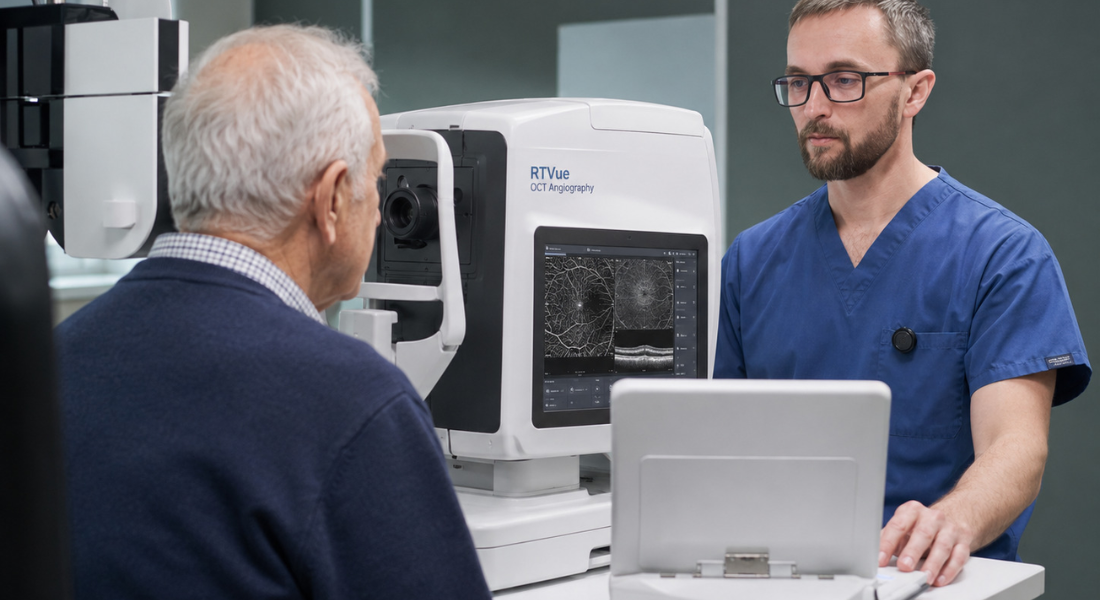
Your eye contains extremely small and delicate structures, so your surgeon must perform highly controlled movements during an operation. Robotic systems are being developed to filter tremor, stabilise instruments and support movements that may be difficult to maintain manually.
Most ophthalmic robotic systems remain within research studies or early specialist clinical evaluation. Although your future care may benefit from these technologies, current evidence does not show that robotic eye surgery consistently produces better results than established manual surgery.
What Is Robotic Eye Surgery?
Your robotic eye surgery uses a mechanical and computer-assisted system to support the positioning or movement of surgical instruments. Depending on the system, your surgeon may use a controller, physically guide the instrument or supervise a defined automated task.
Most systems used in human eye research remain surgeon-controlled. Your surgeon retains responsibility for your surgical plan, clinical decisions and management of any complication.
Why Does Eye Surgery Require Precision?
Your retina, cornea, lens and ocular blood vessels contain structures measured in fractions of a millimetre. Your surgeon must position and move instruments carefully to avoid damaging tissue that may be essential for your sight.
Small unintended movements can matter during selected microsurgical steps. However, your outcome depends on more than instrument precision and may also be influenced by your condition, tissue health, surgical technique and postoperative recovery.
How Can Robots Reduce Hand Tremor?
A robotic system may detect or filter some of your surgeon’s natural hand tremor and translate larger hand movements into smaller instrument movements. Some systems can also hold an instrument in a stable position for a prolonged period.
These functions may support technically demanding tasks, but they do not prove that your operation will be safer or more successful. Your surgeon must still manage movement of your eye, tissue deformation and other factors that the robot may not predict.
Are Robotic Systems Fully Autonomous?
Most robotic systems tested in patients are not autonomous surgeons. Your surgeon directly controls or guides the instruments and remains responsible for your procedure.
Researchers have developed systems that automate tightly defined tasks, such as locating and cannulating a vessel in laboratory models. These experiments do not mean that a robot can independently plan or perform your complete eye operation.
What Is Shared-Control Surgery?
During your shared-control operation, your surgeon physically guides the instrument while the robotic system responds to those movements. Depending on the system, the robot may filter some tremor, resist movement outside a planned area or help your surgeon hold the instrument steadily.
Your surgeon remains responsible for your surgical plan and every clinical decision. Although shared control may improve instrument stability during selected experimental tasks, it has not yet been shown to provide you with consistently better vision, fewer complications or a faster recovery.
Key Features of Your Shared-Control Surgery
| Aspect | What It Means for You | Important Limitation for You |
| Your surgeon’s guidance | Your surgeon directs the instrument and makes your clinical decisions | Your robot does not determine where your surgeon should operate |
| Your robotic assistance | Your system may filter tremor or support stable positioning | Improved instrument stability does not guarantee a better outcome for you |
| Your movement control | Your system may resist selected unintended movements | Your eye and tissues can still move or deform during your operation |
| Your safety controls | Your robot may apply programmed movement or force limits | Your surgeon must still recognise and manage unexpected events |
| Your surgical team | Your surgeon and theatre team supervise your system throughout your procedure | Your team must be able to stop robotic assistance and continue safely if required |
Has Retinal-Vein Cannulation Been Tested in People?
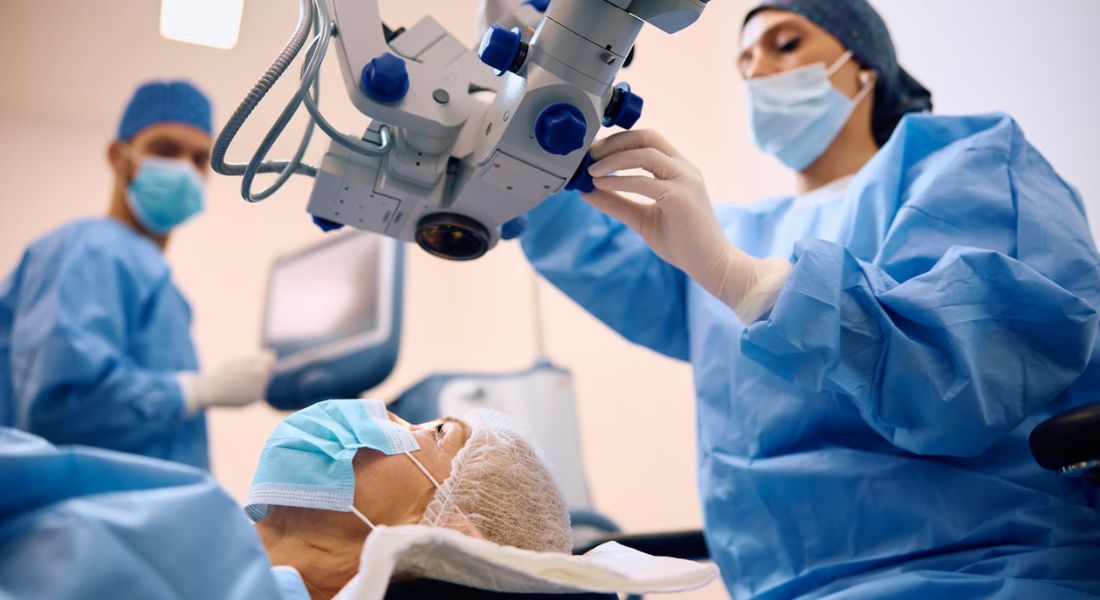
A phase 1 study included four people with central retinal-vein occlusion. Your surgeon’s robotic system successfully supported retinal-vein cannulation and ocriplasmin infusion in all four eyes, but a needle tip broke in one eye and had to be removed with another surgical instrument.
Your visual results in this study were inconsistent: sight improved in one eye, worsened in one eye and remained at counting-fingers level in two eyes. The study showed that your surgeon could complete the procedure, but four cases cannot establish its general safety, effectiveness or benefit over your established treatment.
Retinal Membrane Peeling
If you have an epiretinal membrane or require an internal limiting membrane peel, your surgeon must separate an extremely thin layer from the surface of your retina.
A robotic system may help your surgeon initiate or control the peel while filtering tremor. Human studies have demonstrated technical feasibility, but they have not established that your visual or anatomical outcome will be better than with conventional surgery.
Subretinal Injections
Your subretinal injection places treatment into the narrow space beneath your retina. This technique may be used for selected medicines and gene therapies and requires careful control of your needle position and injection.
A robotic system may help your surgeon hold the needle steadily during a slow injection. Your current evidence is limited, and robot assistance has not yet been shown to provide better long-term vision or fewer complications than an appropriately performed manual injection.
What Did Recent Subretinal Research Find?
A randomised study published in 2022 included 12 people with submacular haemorrhage caused by neovascular AMD. Six people received a robot-assisted subretinal injection of tissue plasminogen activator, while six received the injection manually.
The study showed that your surgeon could use the system to complete this specific injection under local anaesthesia. The small study demonstrated feasibility but was not large enough to prove that robotic treatment provides you with better safety, vision or long-term outcomes.
Retinal Vein Cannulation
Your retinal-vein cannulation would involve placing a microscopic needle within a small retinal vein and maintaining its position while a treatment is delivered.
This is exceptionally difficult to perform manually and remains experimental. Your current treatment for retinal-vein occlusion should continue to follow established retinal assessment and management rather than relying on cannulation.
Has Retinal Vein Cannulation Been Tested in Patients?
A phase 1 study performed robot-assisted retinal-vein cannulation and ocriplasmin infusion in four eyes. Cannulation and infusion were technically completed in all four cases, but your interpretation must account for the extremely small sample and variable visual outcomes.
This evidence does not establish that retinal-vein cannulation improves your sight or provides a better treatment than established care. Larger controlled studies would be needed before it could be offered routinely.
Could Robots Treat Retinal Vein Occlusion?

Researchers hope that direct cannulation could allow a medicine to be delivered into your obstructed retinal vein. The aim would be to act more directly on the blockage than current treatments that manage complications such as macular swelling.
This remains an experimental concept. You should not be told that robot-assisted cannulation can currently remove your blockage, restore your vision or replace established retinal-vein-occlusion treatment.
Autonomous Retinal Procedures
Artificial intelligence and imaging systems are being developed to help robotic systems recognise instruments, tissues and blood vessels during eye surgery. These technologies may support increasing levels of automation for specific surgical tasks.
- AI recognition: Artificial intelligence can help identify surgical structures, instruments and important features during procedures
- Imaging support: Advanced imaging technologies such as intraoperative OCT can provide detailed views during surgery
- Automated tasks: Robotic systems may assist with precise movements and specific steps of complex retinal procedures
- Research development: Studies are exploring how deep learning can improve robotic accuracy and surgical performance
- Experimental stage: Autonomous retinal procedures are still being researched and are not currently part of routine clinical care
Although autonomous technology shows potential for improving precision in retinal surgery, further research and validation are needed before it can be widely used. Your surgeon’s expertise and clinical judgement will remain central to safe and effective eye care.
Robotic Cataract Surgery
Your cataract surgery already uses advanced microscopes, imaging, lens calculations and microsurgical instruments. Researchers are now evaluating whether a robotic system can allow your surgeon to control more of the operation from a console while receiving enhanced imaging and movement support.
A first-in-human study conducted in October 2025 involved 10 people who underwent robot-assisted cataract surgery. No adverse events were reported in the institutional announcement, but detailed peer-reviewed comparative results have not yet established whether the system provides you with better vision, fewer complications or a more accurate lens result.
Could Robotics Improve the Consistency of Your Cataract Surgery?
Your robotic system may eventually help your surgeon standardise selected movements, such as creating an incision, accessing your lens or removing lens material. It may also collect information about your procedure that could support future training and system development.
Early technical success does not prove that robotic surgery is safer or more effective for you. Conventional cataract surgery remains your established treatment, and larger controlled studies, regulatory assessment and longer follow-up are required before robotic platforms can become part of your routine care.
Intraoperative OCT Guidance
Your intraoperative OCT can provide cross-sectional images of your eye while your surgeon is operating. It may help your surgeon assess your instrument depth, retinal layers or changes occurring beneath the surface of your tissue.
OCT is an imaging system rather than a surgical robot. When it is combined with robotics, its images may help guide or constrain instrument movement, but your clinical benefit from this combination remains unproven.
Could Robots Support Your Surgeon’s Training?
Robotic and simulation systems may record your surgeon’s instrument path, speed, steadiness and interaction with simulated tissue. These measurements could provide objective feedback during training.
Improved scores in a simulator do not automatically mean that your surgery will be safer. Your surgeon still requires supervised clinical training, assessment, experience and the ability to respond appropriately to unexpected events.
Is Robotic Eye Surgery Safer for You?

A 2024 systematic review identified only 12 human studies: three randomised trials, seven case series and two case reports. Comparative studies found no clear difference in eye-related harm between robot-assisted and conventional procedures.
The review also found no consistent advantage in effectiveness or practicality. Your available evidence is too limited and varied to conclude that robotic eye surgery is safer or more effective than established manual surgery.
What Are the Main Limitations?
Your robotic procedure may require costly equipment, additional theatre space, specialist training and longer operating times during early use. Equipment setup or system failure could also interrupt your surgical workflow.
Your safety depends on reliable controls, appropriate sterilisation, secure software and a trained team that can immediately take over or convert to a conventional technique. Larger comparative trials are required before these systems can be offered routinely.
Myth vs Fact
| Myth | What You Should Know |
| Your robot will perform your entire eye operation independently. | Your current clinical systems normally remain under your surgeon’s direct control or supervision. |
| Your robotic procedure is automatically more precise and safer. | Your system may support finer movement, but improved clinical outcomes have not been established. |
| Your robot-assisted subretinal injection was first tested in people in 2026. | Your first randomised human study was published in 2022 and included 12 people—six treated with robotic assistance and six treated manually. |
| Your autonomous retinal surgery has already been tested in patients. | Your autonomous studies have mainly used laboratory and animal-eye models. |
| Your retinal-vein cannulation is an established treatment. | Your procedure remains experimental and has been tested in only a very small number of human eyes. |
| Your robotic cataract surgery is already proven safe. | Your first-in-human report involved only 10 people and cannot establish that robotic cataract surgery is generally safer or more effective for you. |
| Your intraoperative OCT is a type of robot. | Your OCT provides images that may be integrated with a robotic system. |
| Your robot removes the need for an experienced surgeon. | Your surgeon and wider team remain responsible for your planning, operation and complications. |
| Your robotic system removes all hand tremor and tissue movement. | Your system may filter some instrument tremor but cannot eliminate movement of your eye or tissue. |
Key Takeaways
- Your robotic eye procedure would normally remain under the control or supervision of a trained surgeon.
- Your robot may filter tremor or scale movements, but it cannot eliminate every surgical risk.
- Your retinal surgery is currently the most clinically studied area of ophthalmic robotics.
- Your first human robot-assisted retinal procedures involved very small numbers of patients.
- Your robot-assisted subretinal injection evidence was published in 2022, not 2026.
- Your retinal-vein cannulation remains an experimental treatment rather than standard care.
- Your autonomous retinal procedures have been demonstrated mainly in animal or laboratory models.
- Your robotic cataract evidence is limited to early announcements and small clinical studies.
- Your intraoperative OCT can guide your surgeon but is not itself a surgical robot.
- Your established eye surgery remains the standard unless you are enrolled in an appropriately governed study.
Frequently Asked Questions
- Will a robot perform your eye surgery in the future?
Your robot may assist with specific movements or defined tasks, but your surgeon will remain responsible for your operation and clinical decisions. Fully independent human eye surgery is not part of your routine care. - Is robotic eye surgery available to you now?
Most robotic eye procedures are limited to research studies or highly specialised early clinical evaluation. Your established manual or microscope-assisted operation remains the standard treatment for most eye conditions. - How could robotics support your eye surgery?
Your robotic system may filter tremor, scale your surgeon’s movements or hold an instrument steadily. These technical functions have not yet been shown consistently to improve your vision or reduce your complications. - Which of your eye operations are being studied with robotics?
Your possible research applications include retinal membrane peeling, subretinal injection, retinal-vein cannulation and cataract surgery. Each application remains at a different stage of development. - Can your robotic system prevent surgical complications?
No. Your system may help control instrument movement, but it cannot remove your risks from tissue damage, bleeding, infection, equipment problems or the underlying complexity of your condition. - What is shared-control robotic surgery for you?
During your shared-control procedure, your surgeon guides the instrument while the robot may filter tremor or resist certain unwanted movements. Your surgeon remains responsible for directing the operation. - Could robotics improve your cataract surgery?
Robotics may eventually support selected cataract-surgery steps, but your current evidence does not show better vision, fewer complications or more accurate lens outcomes than modern conventional surgery. - Are robotic retinal procedures safe for you?
Small studies suggest that selected robot-assisted retinal tasks can be completed without a clear increase in harm. Your evidence remains too limited to establish general safety or superiority over conventional surgery. - Will artificial intelligence make your eye surgery fully autonomous?
AI may help your system identify instruments, tissue or target structures and automate narrowly defined tasks. Your complete autonomous operation has not been demonstrated as routine safe care in human patients. - When will robotic eye surgery become widely available to you?
Your timeline remains uncertain because larger clinical trials, regulatory assessment, training and cost-effectiveness evidence are still required. You should base your current treatment on established options rather than expected future availability.
Final Thoughts: The Future of Robotic Eye Surgery
Your future eye surgery may use robotic assistance to filter tremor, stabilise an instrument or support a narrowly defined surgical movement. The most developed human research has involved selected retinal procedures, while autonomous retinal tasks and robot-assisted cataract surgery remain at an early stage of evaluation.
Your robotic system cannot currently guarantee safer surgery, better vision or fewer complications than an established manual procedure. Your outcome will continue to depend on your eye condition, tissue health, surgical technique, surgeon and wider clinical team. If you would like to discuss your eye health or explore your treatment options, contact us at Eye Clinic London to arrange a consultation.
References
- Posarelli, C., Sartini, F., Casini, G., Passani, A., Toro, M.D., Vella, G. and Figus, M. (2020) ‘What is the impact of intraoperative microscope-integrated OCT in ophthalmic surgery? Relevant applications and outcomes: a systematic review’, Journal of Clinical Medicine, 9(6), article 1682. Available at: https://pmc.ncbi.nlm.nih.gov/articles/PMC7356858/
- Royal College of Surgeons of England (2025) Robotic-assisted surgery: a pathway to the future. Available at: https://www.rcseng.ac.uk/standards-and-research/standards-and-guidance/good-practice-guides/robotic-assisted-surgery/
- Thirunavukarasu, A.J., Hu, M.L., Foster, W.P., Xue, K., Cehajic-Kapetanovic, J. and MacLaren, R.E. (2024) ‘Robot-assisted eye surgery: a systematic review of effectiveness, safety, and practicality in clinical settings’, Translational Vision Science & Technology, 13(6), article 20. Available at: https://pmc.ncbi.nlm.nih.gov/articles/PMC11210629/
- Zhang, P., Gehlbach, P., Taylor, R.H., Iordachita, I. and Kobilarov, M. (2025) ‘Deep learning-based autonomous retinal vein cannulation in ex vivo porcine eyes’, Science Robotics, 10(109), article eadw2969. Available at: https://pubmed.ncbi.nlm.nih.gov/41406252/
- Zhang, X., Yu, Y. and Yao, K. (2026) ‘Advances in cataract surgery: is a new era on the horizon?’, Current Opinion in Ophthalmology, 37(4), pp. 317–328. Available at: https://pmc.ncbi.nlm.nih.gov/articles/PMC13236040/