


What Is a Multifocal Lens for Cataract Surgery?
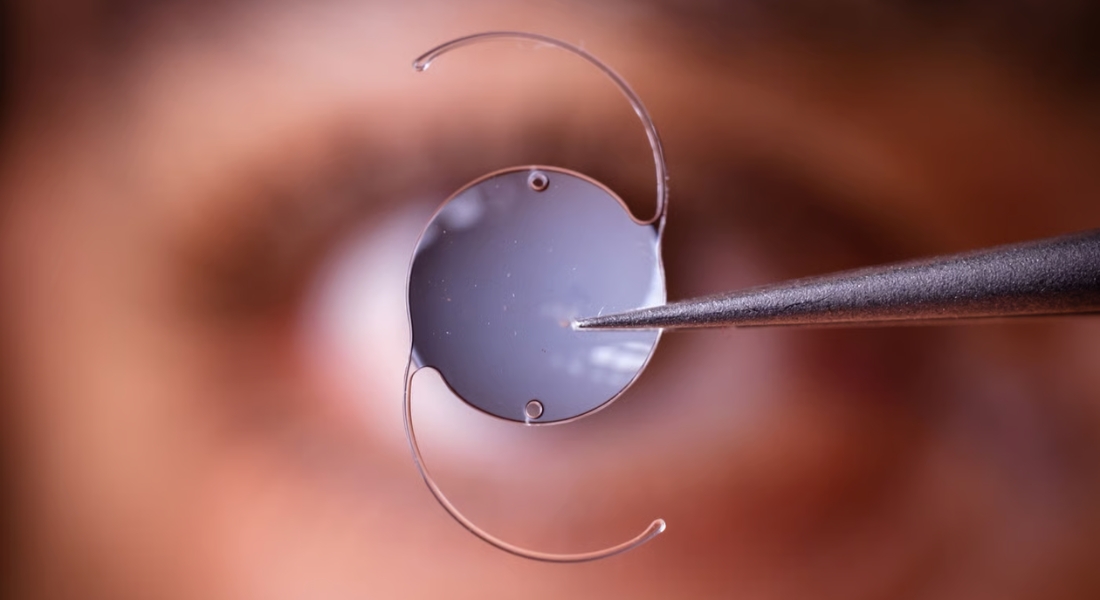
If you are having cataract surgery, you may choose a multifocal intraocular lens (IOL) to replace your cloudy natural lens. Unlike a monofocal lens, a multifocal IOL is designed to give you useful vision at more than one distance, which may reduce your need for reading glasses.
You may be able to see across a room, use a computer and read without glasses, but you should know that multifocal lenses can also cause halos, glare or reduced contrast in some people. Your surgeon can discuss your eye health, daily activities and expectations to help you understand whether this type of lens suits you.
What Exactly Is a Multifocal Intraocular Lens?
A multifocal intraocular lens (IOL) is a small artificial lens placed permanently inside your eye during cataract surgery after your cloudy natural lens is removed. Unlike a monofocal lens, it is designed to provide useful focus at more than one distance, such as near, intermediate and distance.
You may need fewer glasses after surgery, although you should not expect perfect vision at every distance. Your results can depend on your eye measurements, astigmatism, eye health and how well you adapt to the lens.
How Does a Multifocal Lens Work?
A multifocal lens does not restore the natural focusing ability you had when you were younger. Instead, its optical design divides incoming light between more than one focal point, giving useful focus at different distances.
You may therefore rely less on glasses for distance, intermediate or near tasks. Different multifocal lenses provide different ranges, so discuss the distances that matter most to you with your surgeon.
What Distances Can You See With a Multifocal Lens?
Depending on the implant, a multifocal lens can provide useful distance, intermediate and near vision. Trifocal designs aim to broaden this range, including intermediate tasks such as computer use.
- Distance vision: You may see clearly across a room, outdoors or at distant objects without glasses.
- Intermediate vision: Screens, dashboards and arm’s-length tasks may be easier to see, particularly with a trifocal design.
- Near vision: You may have useful vision for reading, using your phone or viewing small objects.
- Your usual working distance matters: Tell your surgeon how you normally hold your phone, book or tablet because sharpness varies by distance.
Your result depends on the specific lens and your eye measurements. Discuss the distances that matter most to you so the lens choice reflects your everyday needs.
Will You Be Completely Free From Glasses?
A multifocal lens can reduce how often you need glasses, but complete spectacle independence cannot be guaranteed. You may still prefer glasses for very small print, detailed tasks or prolonged reading.
Residual short-sightedness, long-sightedness or astigmatism can also affect your result. Needing glasses occasionally does not necessarily mean that your cataract surgery has been unsuccessful.
Why Can Multifocal Lenses Cause Halos Around Lights?
You may notice halos or rings around headlights and streetlights, especially against a dark background. This can happen because a multifocal lens creates more than one focal point.
Your brain may become less aware of these effects with time, although halos can remain noticeable. If you regularly drive at night, discuss this with your surgeon before choosing a lens.
Research Insight
A 2025 overview of systematic reviews found that multifocal and EDOF lenses generally improve spectacle independence compared with conventional monofocal lenses. Trifocal lenses tended to provide stronger unaided near vision, while trifocal and bifocal designs produced more glare and halos.
A 2024 Cochrane review found similar distance vision between trifocal and EDOF lenses and possible better near vision with trifocals, but rated the evidence low certainty because studies were small and short.
What Is Glare and How Can It Affect You?

Glare can make vision less comfortable or clear around bright lights such as headlights, sunlight or strong indoor lighting. Multifocal lenses can make glare more noticeable in some people.
You may notice glare even when your eye-chart vision is good. If night driving or bright-light sensitivity is important to you, discuss this with your surgeon before choosing a multifocal lens.
What Does Reduced Contrast Sensitivity Mean?
Reduced contrast sensitivity means finding it harder to distinguish an object from a similar-toned background, particularly in dim light. Some multifocal lenses can reduce contrast compared with monofocal lenses.
You may notice less crisp vision at dusk or in poor lighting. Glaucoma, macular disease and corneal problems can also reduce contrast, so your overall eye health should be assessed.
Does Your Brain Need Time to Adjust to a Multifocal Lens?
You may need time to adapt because your brain receives visual information differently through a multifocal lens. Halos, glare or unusual images can become less noticeable during this adjustment.
Neuroadaptation does not mean every visual effect will disappear. The adjustment period varies between people, so realistic expectations before surgery are important.
Who May Be a Good Candidate for a Multifocal Lens?
You may be suitable if your cornea, retina, macula and optic nerve are healthy enough to support good-quality vision. Reducing your dependence on glasses should also be important to you.
You should have realistic expectations about halos, contrast and occasional glasses use. Your surgeon can consider your prescription, astigmatism, eye health and daily activities before recommending a lens.
Who May Not Be Ideally Suited to a Multifocal Lens?
You may be less suited to a multifocal lens if glaucoma, significant corneal disease, retinal disease, severe dry eye or irregular astigmatism already reduces your visual quality.
These conditions do not automatically rule out a multifocal lens. Your surgeon can assess your cornea, retina, macula and optic nerve and discuss the likely visual result with you.
Can Multifocal Lenses Correct Astigmatism?
You can have a toric multifocal lens if you have suitable regular corneal astigmatism. This type of lens combines multiple focal ranges with astigmatism correction, which may help you achieve clearer vision at several distances.
You should know that the lens needs to be accurately selected and positioned for the correction to work effectively. Your surgeon can measure the amount and direction of your astigmatism and assess whether a toric multifocal lens is suitable for you.
How Do Multifocal Lenses Compare With Monofocal Lenses?

You may have good distance vision with either lens type, but they offer different ranges of focus. A monofocal lens focuses mainly at one distance, while a multifocal lens is designed to provide useful vision at more than one distance and may reduce your need for glasses.
You should know that multifocal lenses can also cause more noticeable halos or glare and may affect contrast sensitivity for some people. Your surgeon can discuss these trade-offs with you based on your eye health, lifestyle and how comfortable you are wearing glasses.
Evidence Note
Systematic reviews show the main trade-off: multifocal intraocular lenses generally improve unaided near vision and increase spectacle independence compared with conventional monofocal lenses.
They are also associated with more halos and glare. These findings describe average group outcomes and cannot predict exactly what you will experience.
How Are Multifocal Lenses Different From EDOF Lenses?
You may hear multifocal and EDOF lenses discussed together because both are designed to reduce your dependence on glasses. Multifocal lenses provide distinct focal ranges for distance, intermediate and near vision, while EDOF lenses mainly extend the range of clear vision from distance towards intermediate activities.
You may find an EDOF lens useful if computer work and arm’s-length tasks are important to you but you are comfortable using glasses for small print. Your surgeon can explain the specific distances and possible visual effects of each lens design, as these can vary between different implants.
Comparing Monofocal, Multifocal and EDOF Lenses
| Feature | Monofocal Lens | Multifocal/Trifocal Lens | EDOF Lens |
| Main visual aim | Best unaided focus at one principal distance | Useful vision at multiple focal distances | Extended range of focus, commonly emphasising distance and intermediate vision |
| Distance vision | Usually good when targeted for distance | Can provide good distance vision in suitable eyes | Can provide good distance vision in suitable eyes |
| Intermediate vision | Usually requires glasses unless specifically targeted | Often useful, particularly with trifocal designs | Usually an important strength of the design |
| Near vision | Reading glasses are usually required when targeted for distance | Often better unaided near vision than conventional monofocal lenses | Near performance varies; reading glasses may still be needed for small print |
| Dependence on glasses | Usually greater | Generally lower | Generally lower than conventional monofocal lenses |
| Halos and glare | Usually less common than with multifocal designs | More likely than with conventional monofocal lenses | Can occur; frequency varies between designs |
| Contrast sensitivity | Generally strong optical quality | Some designs may reduce contrast, particularly in challenging lighting | Can vary according to lens design |
| Best suited to | People who prioritise predictable single-distance vision and accept glasses for other distances | Carefully selected patients who place high value on reducing spectacle dependence and accept possible optical effects | Selected patients who value distance/intermediate range and accept that near glasses may still be needed |
How Are Multifocal Lens Power and Position Planned?
Before your cataract surgery, your eye will be measured using biometry to help your surgeon calculate the appropriate multifocal lens power. Your corneal shape, astigmatism and any previous laser eye surgery also need to be considered, as these can affect the accuracy of the calculations.
You should tell your surgeon about previous eye surgery and any problems with dry eye before your measurements are finalised. Careful planning can improve the predictability of your result, but you should know that an exact postoperative prescription cannot be guaranteed.
Clinical Tip
Think about your most demanding visual activities before choosing a multifocal lens. Frequent night driving, prolonged computer work, reading small print and visually precise hobbies may place different demands on your vision. It can help to note the distances at which you use your phone, laptop and desktop screen, because different lens designs provide different ranges of clear functional vision.
Tell your surgeon which activities matter most to you rather than focusing only on the goal of avoiding glasses. A lens that reduces spectacle dependence may still involve visual compromises that are important in your everyday life. Also explain whether avoiding glasses or reducing visual effects at night is more important to you in everyday life.
Are Multifocal Lenses Available With NHS Cataract Surgery?
Routine NHS cataract surgery generally uses a monofocal lens, and NICE guideline NG77 says multifocal intraocular lenses should not be offered. Multifocal lenses are therefore more commonly encountered in private cataract care.
If you are considering private surgery, your surgeon can assess your eye health, prescription, astigmatism and visual priorities before discussing whether a multifocal lens is suitable.
UK Guidance Note
NICE guideline NG77 states that multifocal intraocular lenses should not be offered as part of its cataract-surgery pathway. NICE also notes that the refractive implications of different intraocular lenses should be discussed with patients before cataract surgery.
Multifocal lenses are more commonly encountered in private cataract care. Availability of EDOF lenses can vary between services. If you are considering either option privately, your surgeon should explain the expected visual range, likelihood of still needing glasses and possible effects such as glare, halos and reduced contrast before you decide.
What Should You Consider Before Choosing a Multifocal Lens?

You should think about which activities matter most to you, such as reading, using screens, hobbies or driving at night. You may value less dependence on glasses, but you should also consider whether halos, glare or reduced contrast would bother you.
Your existing eye health, previous laser surgery and dry eye can also affect how well a multifocal lens performs. You should discuss the specific lens design, your visual priorities and the possible trade-offs with your surgeon so your expectations are realistic.
Myth vs Fact
| Myth | Fact |
| A multifocal lens guarantees that you will never need glasses again. | Multifocal lenses can reduce dependence on glasses, but you may still need them for very small print, prolonged close work, difficult lighting or residual prescription. |
| Multifocal lenses restore the natural focusing ability of a young eye. | They do not restore natural accommodation. Their optical design provides more than one focal range so that useful vision can be available at different distances. |
| Everyone adapts completely to halos and glare. | Many people become less aware of optical effects over time, but halos, glare or other visual phenomena can remain noticeable for some patients. |
| A multifocal lens is automatically better than a monofocal lens. | The lenses have different benefits and compromises. Multifocal lenses generally reduce spectacle dependence, while conventional monofocal lenses usually produce fewer halos and glare. |
| If your distance vision is good, a multifocal lens cannot affect night vision. | You can have good eye-chart distance acuity and still notice halos, glare or reduced visual quality in low-light conditions. |
| Anyone having cataract surgery can choose a multifocal lens. | Suitability depends on eye health, corneal measurements, astigmatism, retinal and optic-nerve health, visual priorities and tolerance of possible optical effects. |
Key Takeaways
- Multifocal intraocular lenses are designed to provide useful vision at more than one distance after cataract surgery.
- They may reduce your dependence on reading and distance glasses, but complete spectacle independence cannot be guaranteed.
- Multifocal and trifocal lenses can provide better unaided near vision than conventional monofocal lenses.
- Halos, glare and other optical phenomena are more common with multifocal lenses than with conventional monofocal lenses.
- Some multifocal designs may reduce contrast sensitivity, which can be particularly relevant in dim lighting.
- Your cornea, retina, macula, optic nerve, astigmatism and ocular surface should be assessed when considering this type of lens.
- Night driving, reading requirements, screen use and other everyday visual priorities should be discussed before choosing a lens.
- NICE guideline NG77 does not recommend multifocal IOLs within its cataract-surgery pathway, and these lenses are generally encountered through private rather than routine NHS cataract care.
Frequently Asked Questions
- What is a multifocal lens for cataract surgery?
A multifocal lens is an artificial lens designed to provide useful vision at more than one distance after cataract surgery. You may be able to see at distance, intermediate and near ranges with less reliance on glasses. - Will you be completely free from glasses with a multifocal lens?
Not necessarily. You may still prefer glasses for prolonged reading, very small print, detailed tasks or poor lighting, and residual prescription or astigmatism can also affect your vision. - Can multifocal lenses cause halos around lights?
Yes, you may notice halos or rings around headlights and streetlights, particularly at night. Your brain may become less aware of these effects over time, although they can remain noticeable for some people. - Can multifocal lenses cause glare?
Yes, you may experience more noticeable glare from bright lights such as headlights or strong indoor lighting. You should discuss this with your surgeon if you regularly drive at night or are sensitive to bright lights. - Can multifocal lenses reduce your contrast sensitivity?
Yes, multifocal lenses can reduce contrast sensitivity compared with monofocal lenses in some people. You may notice less crisp vision in dim lighting or when objects have little contrast with their background. - Do you need time to adjust to a multifocal lens?
Yes, you may need time for your brain to adapt to the way the multifocal lens provides visual information. Halos, glare or unusual visual effects can become less noticeable as you adapt. - Who may be suitable for a multifocal lens?
You may be suitable if your cornea, retina, macula and optic nerve are healthy enough to provide good-quality vision. Your lifestyle and how important reducing your dependence on glasses is will also be considered. - Can you have a multifocal lens if you have astigmatism?
Yes, a toric multifocal lens may be suitable if you have regular corneal astigmatism. Your surgeon can measure your astigmatism and determine whether this type of lens is appropriate for you. - How do multifocal lenses compare with monofocal lenses?
A monofocal lens mainly focuses your vision at one distance, while a multifocal lens is designed to provide useful vision at several distances. You may need fewer glasses with a multifocal lens, but you may also experience more halos, glare or reduced contrast. - What should you consider before choosing a multifocal lens?
You should consider your usual activities, such as reading, computer work, hobbies and driving at night, as well as your eye health and tolerance for visual effects. Your surgeon can explain the specific lens design and help you understand the potential benefits and compromises.
Final Thoughts: Choosing a Multifocal Lens for Cataract Surgery
A multifocal lens can provide useful vision at more than one distance and may reduce your reliance on glasses. However, halos, glare or reduced contrast can still occur, particularly in certain lighting conditions.
If you’re exploring whether cataract surgery in London could benefit you, you can contact our team at Eye Clinic London to arrange a consultation.
References:
- Gil, M.Á., Varón, C., Cardona, G. and Buil, J.A. (2022) ‘Far and near contrast sensitivity and quality of vision with six presbyopia correcting intraocular lenses’, Journal of Clinical Medicine, 11(14), 4150. DOI: 10.3390/jcm11144150. Available at: https://www.mdpi.com/2077-0383/11/14/4150
- Pusnik, A., Petrovski, G. and Lumi, X. (2023) ‘Dysphotopsias or unwanted visual phenomena after cataract surgery’, Life, 13(1), 53. DOI: 10.3390/life13010053. Available at: https://www.mdpi.com/2075-1729/13/1/53
- Daka, Q., Henein, C., Fang, C.E.H., Mustafa, R., Cocaj, E., Azuara-Blanco, A., Willoughby, C.E., Bokre, D. and Nanavaty, M.A. (2025) ‘Effectiveness of intraocular lenses designed to correct presbyopia after cataract surgery: an overview of systematic reviews’, British Journal of Ophthalmology, 109(12), pp. 1323–1329. DOI: 10.1136/bjo-2025-327363. Available at: https://pubmed.ncbi.nlm.nih.gov/40623803/
- Tavassoli, S., Ziaei, H., Yadegarfar, M.E., Gokul, A., Kernohan, A., Evans, J.R. and Ziaei, M. (2024) ‘Trifocal versus extended depth of focus (EDOF) intraocular lenses after cataract extraction’, Cochrane Database of Systematic Reviews, 2024(7), CD014891. DOI: 10.1002/14651858.CD014891.pub2. Available at: https://pubmed.ncbi.nlm.nih.gov/38984608/
- de Silva, S.R., Evans, J.R., Kirthi, V., Ziaei, M. and Leyland, M. (2016) ‘Multifocal versus monofocal intraocular lenses after cataract extraction’, Cochrane Database of Systematic Reviews, 2016(12), CD003169. DOI: 10.1002/14651858.CD003169.pub4. Available at: https://pmc.ncbi.nlm.nih.gov/articles/PMC6463930/