


ICL vs Refractive Lens Exchange (RLE): What’s the Difference?
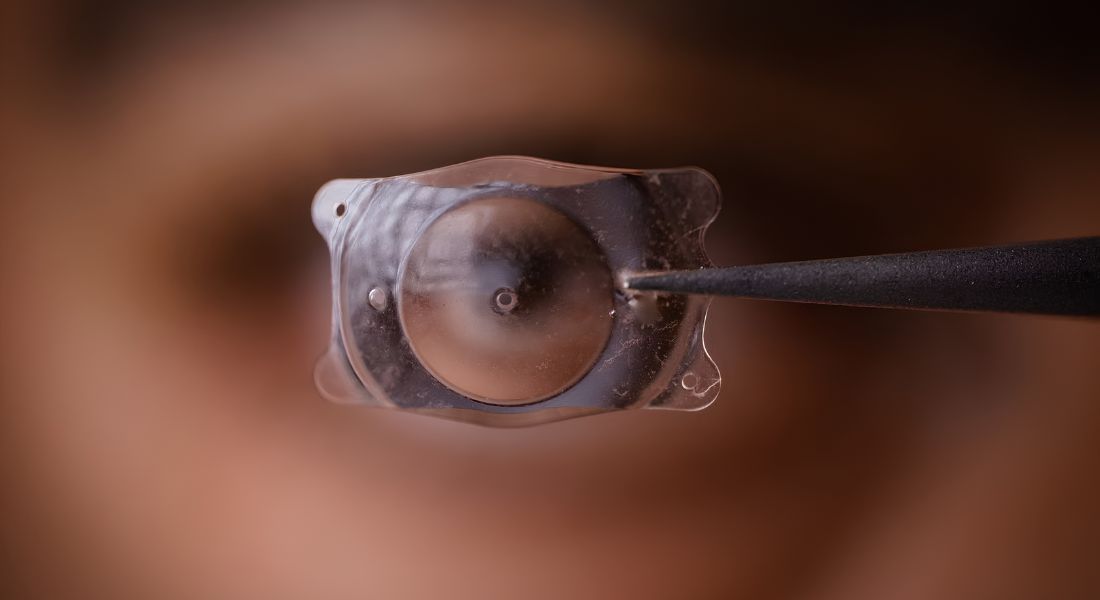
ICL and RLE both use an artificial lens to correct your vision, but they work differently. With ICL, your natural lens stays in place and an additional lens is implanted inside your eye, while RLE removes your natural lens and replaces it with an artificial one.
Your age, prescription, focusing ability and overall eye health can influence which option may be suitable for you. Understanding these differences can help you have a clearer discussion with your surgeon.
What Is ICL Surgery?
ICL surgery is a refractive procedure where an artificial lens is placed inside your eye without removing your natural crystalline lens. The lens usually sits behind your iris and in front of your natural lens to help correct your refractive error.
Because your natural lens remains in place, ICL can be relevant for younger people who still have useful natural focusing ability. Your surgeon will assess your prescription, eye health and the space inside your eye to determine whether ICL is suitable for you.
What Is Refractive Lens Exchange?
Refractive lens exchange (RLE) removes your natural crystalline lens and replaces it with an artificial intraocular lens. It works similarly to cataract surgery, but the aim is to reduce your dependence on glasses or contact lenses rather than treat a cataract.
Because your natural lens is removed, it cannot later develop a cataract, but you also lose its natural focusing ability. This makes your age, prescription and focusing needs important when comparing RLE with ICL.
What Is the Main Difference Between ICL and RLE?
The main difference is what happens to your natural lens. With ICL, your natural lens stays in place and an additional lens is implanted, while RLE removes your natural lens and replaces it with an artificial one.
Your natural lens provides focusing ability, particularly when you are younger. As this ability reduces with age, your surgeon will consider your age, prescription and focusing needs when comparing ICL with RLE.
How Do ICL and Refractive Lens Exchange Compare?
| Feature | ICL | Refractive Lens Exchange |
| Natural lens | Remains in the eye | Permanently removed |
| Natural accommodation | Preserved while your natural lens still accommodates | Permanently lost |
| Presbyopia | Can still develop as your natural lens ages | Managed through the chosen IOL strategy, with limitations |
| Cataract later | Natural lens can still develop a cataract | No cataract can develop in the removed natural lens |
| Removal/exchange | ICL can usually be surgically removed or exchanged | Artificial IOL can sometimes be exchanged, but your original natural lens cannot be restored |
| Often considered in | Younger people with useful accommodation and suitable anatomy, including some higher prescriptions | More commonly considered in presbyopic or older patients for whom lens replacement is appropriate |
| Important risks | Infection, pressure changes, cataract, endothelial-cell changes and lens-position/vault issues | Infection, retinal detachment, PCO, optical effects, refractive error and IOL-related complications |
| Future lens ageing | Natural lens continues to age | Natural lens has already been replaced |
How Does ICL Correct Your Vision?
ICL corrects your vision by adding optical power inside your eye, helping incoming light focus more accurately on your retina. The lens is placed behind your iris and in front of your natural lens.
Unlike LASIK, ICL does not reshape or remove corneal tissue. Your natural lens also remains in place, making ICL different from both laser procedures and RLE.
How Does RLE Correct Your Vision?
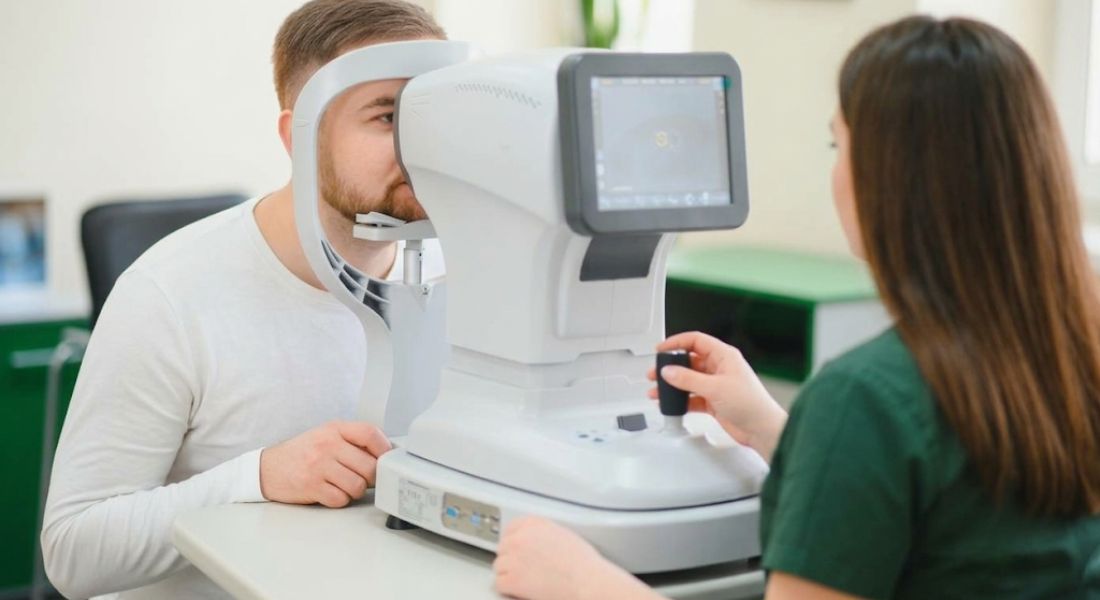
RLE corrects your vision by removing your natural lens and replacing it with an artificial intraocular lens. Your surgeon selects the lens power using your eye measurements and the vision goals you have discussed.
Different lens options can provide different balances of distance, intermediate and near vision. Your artificial lens cannot perfectly recreate the focusing ability of a young natural lens, so you should discuss realistic expectations with your surgeon.
How Does Age Affect the Choice?
Your age can influence whether ICL or RLE is considered, but it should not be treated as a fixed cut-off. When you are younger, keeping your natural lens may help you retain more of your natural focusing ability, making ICL a possible option for you.
As you move into the presbyopic age range, your natural focusing ability gradually reduces. RLE may then become an option for you, particularly when lens ageing and future cataract development are relevant to your treatment plan.
UK Guidance Note
Phakic lenses such as ICL are commonly considered in younger patients because the natural lens and its focusing ability remain in place, while RLE may be considered later when accommodation has reduced. These are general patterns rather than fixed age cut-offs, so suitability still depends on your prescription, anatomy and eye health.
What Role Does Presbyopia Play?
Presbyopia is the gradual loss of your eye’s ability to focus on close objects as your natural lens becomes less flexible with age. You may notice this when you need reading glasses, hold text further away or increase the size on your phone.
ICL keeps your natural lens in place, so you can still develop presbyopia later and may need reading glasses. RLE removes the natural lens, allowing your replacement lens to be chosen around your visual needs, although different lens options have their own benefits and potential compromises.
Which Procedure May Be Considered for Higher Prescriptions?
ICL can be considered for significant prescriptions, including certain levels of myopia and myopic astigmatism with toric lenses. RLE can also correct substantial refractive errors by replacing your natural lens with an artificial one.
Your prescription alone does not determine which procedure is suitable for you. Your age, retinal health, eye anatomy, corneal measurements and visual priorities will also be assessed before your surgeon recommends an option.
Does ICL Preserve Your Natural Focusing Ability?
Yes, ICL keeps your natural crystalline lens in place, so you can retain any useful accommodation you still have. The implanted lens corrects your refractive error while your natural lens continues its focusing function.
However, your natural lens will continue to age after ICL surgery, so you can still develop presbyopia. You should therefore understand that ICL corrects your prescription but does not stop the normal ageing process of your eyes.
Does RLE Remove Natural Accommodation?
Yes. RLE removes your natural crystalline lens, so any accommodation it still provides is permanently lost. This can be particularly important for you if you are younger and still have useful near-focusing ability.
Different artificial lenses can provide different ranges of vision, including monofocal, multifocal and extended-depth-of-focus options. Your reading needs, computer use, driving and tolerance for optical effects can help your surgeon plan the most suitable visual outcome for you.
What Should You Think About for Your Longer-Term Vision?
Your vision needs can continue to change after either procedure. It is useful to consider how each option may affect you as your eyes age.
- Reading vision: After ICL, you can still develop presbyopia as your natural lens ages.
- Future cataracts: Your natural lens remains after ICL, so cataracts can still develop later.
- Dependence on glasses: Neither procedure can guarantee that you will never need glasses again.
- Future eye treatment: Tell your surgeon about your long-term visual priorities and any existing eye conditions that could affect future care.
Thinking beyond your immediate prescription can help you compare how ICL and RLE may fit your visual needs over time.
Can ICL Be Removed?
Yes, an ICL can generally be surgically removed or exchanged if there is a clinical reason. However, you should not think of ICL as completely reversible, as removal requires another procedure inside your eye with its own risks.
RLE is different because your natural lens is permanently removed and cannot be put back. Although an artificial lens can sometimes be exchanged, it cannot restore your original natural lens, making RLE a permanent change to your eye.
What Eye Measurements Are Needed Before ICL?
Before ICL, your ophthalmologist will take detailed measurements to check whether your eye anatomy is suitable. These may include your anterior chamber depth, corneal endothelial health, prescription stability and other measurements needed to assess the lens position and safety.
Your retina, optic nerve, eye pressure and overall eye health may also be checked. These tests help your surgeon assess more than just your lens power and identify factors that could affect your safety or visual outcome.
What Assessment Is Needed Before RLE?
Before RLE, your surgeon will take detailed measurements to calculate the appropriate intraocular lens power and check the health of your eyes. Your cornea, eye length, retina and other eye structures may all need assessment, particularly if you have significant short-sightedness or other retinal risk factors.
Your visual needs are also important when choosing the lens strategy. You should discuss how you use your eyes for driving, reading, computer work and other activities so your surgeon can consider these alongside your measurements.
Clinical Tip
Tell your surgeon how important reading, computer work and night driving are to you, rather than focusing only on whether you want to avoid glasses. This helps them discuss whether a particular lens strategy could provide the range of vision you want and which optical compromises you may notice.
What Are the Risks of ICL Surgery?
ICL is a procedure inside your eye, so it carries surgical risks even though recovery is often relatively quick. Possible complications include infection, inflammation, raised eye pressure, cataract formation, corneal endothelial cell loss or problems with the lens position or vault.
You may also experience visual effects such as glare or halos, particularly in certain lighting conditions. Your individual risks depend on your eye anatomy, prescription, overall eye health and the lens used, so you should discuss these carefully with your surgeon.
What Are the Risks of RLE?

RLE is intraocular surgery, so it carries risks such as infection, inflammation, changes in eye pressure, retinal detachment and lens-position issues. You may also experience unwanted optical effects depending on the type of lens selected.
Posterior capsule opacification can develop later and can be treated with a YAG laser capsulotomy when appropriate. Your age, prescription and retinal health can affect your individual risks, so you should discuss these with your surgeon based on your own examination.
Research Insight
A 2025 systematic review and meta-analysis of 40 studies included 20,264 eyes treated with refractive lens exchange and more than 8.5 million eyes treated with cataract surgery. With at least 24 months of follow-up, retinal detachment occurred at approximately twice the rate after RLE compared with cataract surgery. Individual risk still varies, particularly in people with factors such as high myopia, so careful retinal assessment and patient selection remain important.
What Happens to Cataract Risk?
With ICL, your natural lens remains in place, so it can continue to age and may eventually develop a cataract. Having an ICL does not mean you will develop a cataract early, but the natural lens remains capable of age-related changes.
With RLE, your natural lens is removed, so you cannot develop a cataract in that lens later. However, you can still develop posterior capsule opacification, which causes cloudiness behind the artificial lens and is different from a true cataract.
Evidence Note
ICL preserves your natural lens, which means it also preserves any accommodation you still have but leaves the lens capable of developing age-related cataract changes. RLE removes the natural lens permanently, so cataract cannot later develop in that lens, although posterior capsule opacification can still occur behind the artificial implant.
How Do Recovery and Aftercare Compare?
Both ICL and RLE require eye drops, follow-up appointments and care during your early recovery. After ICL, your surgeon will check your vision, eye pressure, healing and lens position, while RLE follow-up also considers your vision and how you are adapting to the replacement lens.
You should follow your surgeon’s advice about rubbing your eyes, swimming, exercise and returning to work. Seek urgent eye assessment if you develop sudden new or increasing flashes or floaters, a dark curtain or shadow across your vision, sudden blurred or lost vision, or severe eye pain after surgery.
How Do Your Lifestyle and Visual Priorities Affect the Decision?
Your everyday visual needs can influence whether ICL or RLE is considered. You should think about activities such as driving at night, computer work, reading, sport and detailed close-up tasks, as well as how much you want to reduce your dependence on glasses.
Your expectations also matter when discussing the right procedure and lens strategy. You should tell your surgeon what you want from surgery, while being prepared to discuss whether complete freedom from glasses is realistic for your eyes and age.
How Do You Decide Between ICL and RLE?

There is no single procedure that is right for everyone. If you are younger and still have useful natural focusing ability, keeping your natural lens with ICL may be considered, while RLE may become more relevant as you develop presbyopia or age-related lens changes.
Your surgeon will also assess your prescription, corneal health, eye anatomy, retina, eye pressure and overall eye health. You should discuss your lifestyle, visual expectations, alternatives and what you may gain or give up with each option before deciding which approach is suitable for you.
Myth vs Fact
| Myth | Fact |
| RLE is simply a better ICL because it replaces the whole lens. | The procedures suit different eyes and visual needs; removing a clear natural lens also has irreversible consequences. |
| ICL means you will never need reading glasses. | Your natural lens continues ageing, so you can still develop presbyopia after ICL. |
| An ICL is completely reversible. | It can usually be removed or exchanged, but removal requires another intraocular procedure and cannot guarantee that all effects are reversed. |
| RLE means you can never develop cloudiness again. | You cannot develop another natural-lens cataract, but posterior capsule opacification can develop behind the IOL. |
| The same procedure is best for everyone with a high prescription. | Age, retinal health, anatomy, accommodation, prescription and visual priorities all influence the choice. |
Key Takeaways
- ICL adds an artificial lens while keeping your natural crystalline lens in place.
- RLE permanently removes your natural lens and replaces it with an intraocular lens.
- ICL preserves any natural accommodation you still have, but it does not prevent future presbyopia or cataract development.
- RLE removes natural accommodation and requires careful choice of IOL strategy for distance, intermediate and near vision.
- Retinal-detachment risk is an important consideration with RLE, particularly in people with high myopia.
- Your age, prescription, eye anatomy, retinal health and visual priorities should all be considered before choosing either procedure.
Frequently Asked Questions
- What is the main difference between ICL and RLE?
With ICL, your natural lens stays in place and an additional lens is implanted inside your eye. With RLE, your natural lens is removed and replaced with an artificial intraocular lens. - Is ICL more suitable for younger people?
ICL may be considered for younger people who still have useful natural focusing ability because your natural lens remains in place. Your age, prescription and overall eye health will still need to be assessed. - Does RLE permanently remove your natural focusing ability?
Yes. RLE removes your natural crystalline lens, so any accommodation it still provides is permanently lost. Different replacement lenses can provide different ranges of vision, but they cannot perfectly recreate a young natural lens. - Can you develop presbyopia after ICL?
Yes. Because your natural lens remains after ICL, it continues to age and you can develop presbyopia later. You may therefore need reading glasses as your natural focusing ability decreases. - Which procedure can be considered for higher prescriptions?
Both ICL and RLE can be used for significant prescriptions in suitable patients. ICL can correct certain levels of myopia and myopic astigmatism, while RLE corrects refractive errors by replacing the natural lens. Your prescription is only one factor in the decision. - Can an ICL be removed?
An ICL can generally be surgically removed or exchanged if there is a clinical reason. However, removal is another procedure inside your eye and is not the same as simply reversing the treatment. - What happens to cataract risk after ICL or RLE?
With ICL, your natural lens remains and can develop age-related cataract changes in the future. With RLE, your natural lens has been removed, so a cataract cannot develop in that lens, although posterior capsule opacification can occur later. - What tests are needed before ICL surgery?
Your ophthalmologist may assess your prescription, anterior chamber depth, corneal endothelial health, eye pressure, retina, optic nerve and overall eye anatomy. These measurements help determine whether the ICL can be positioned safely. - What are the main risks of ICL and RLE?
Both are procedures inside the eye and can involve risks such as infection, inflammation, eye-pressure changes and lens-position problems. ICL can also involve cataract formation or corneal endothelial changes, while RLE can involve retinal problems and posterior capsule opacification. - How will you decide between ICL and RLE?
Your surgeon will consider your age, prescription, focusing ability, retinal and corneal health, eye anatomy, eye pressure, lifestyle and visual expectations. You should discuss what you may gain or give up with each procedure before deciding which option is suitable for you.
Final Thoughts: ICL vs RLE
ICL and RLE both use an artificial lens to correct your vision, but they involve very different changes to your eye. ICL keeps your natural lens in place, allowing you to retain any useful natural focusing ability, while RLE permanently removes the natural lens and replaces it with an artificial one. Your age, prescription, lens health and visual needs can therefore be important when comparing the two procedures.
If you’re considering ICL surgery in London and want to know if it’s the right option, you can get in touch with Eye Clinic London to arrange a consultation.
References:
- Passaro, M.L., Kilic, D., Virgili, G., Romano, V., Lucenteforte, E., Dick, B. and Taneri, S. (2025) ‘Retinal detachment incidence in refractive lens exchange versus cataract surgery: uncommon versus rare – systematic review and meta-analysis’, British Journal of Ophthalmology, 109(7), pp. 756–764. Available at: https://pubmed.ncbi.nlm.nih.gov/40015940/
- Passaro, M.L., Buzzi, M., Qureshi, R., Zou, Y., Chan, V.F., Mencucci, R., Lucenteforte, E., Romano, V. and Virgili, G. (2026) ‘Potential harms of posterior chamber phakic IOL: a systematic review and meta-analysis of complication incidence’, American Journal of Ophthalmology, 285, pp. 73–82. Available at: https://pubmed.ncbi.nlm.nih.gov/41611001/
- Wannapanich, T., Kasetsuwan, N. and Reinprayoon, U. (2023) ‘Intraocular Implantable Collamer Lens with a central hole implantation: safety, efficacy, and patient outcomes’, Clinical Ophthalmology, 17, pp. 969–980. Available at: https://pmc.ncbi.nlm.nih.gov/articles/PMC10046236/
- Stern, B. and Gatinel, D. (2025) ‘Presbyopia correction in lens replacement surgery: a review’, Clinical & Experimental Ophthalmology, 53(6), pp. 668–681. Available at: https://pmc.ncbi.nlm.nih.gov/articles/PMC12326228/
- Dick, H.B., Gerste, R.D. and Taneri, S. (2026) ‘Multifocal intraocular lenses in refractive lens exchange: guidelines to optimize their use and indications’, Archivos de la Sociedad Española de Oftalmología (English Edition), 101(9), 502615. Available at: https://www.sciencedirect.com/science/article/pii/S2173579426001787