


Can ICL Surgery Be Removed or Exchanged Later?

If you are considering ICL surgery, you may feel reassured knowing that the lens can potentially be removed or exchanged in the future. Unlike laser eye surgery, which permanently reshapes your cornea, an ICL is a separate lens placed inside your eye while your natural lens remains in place.
You may therefore be able to have the ICL removed or replaced if there is a specific clinical reason or your visual needs change. However, removable does not mean completely reversible, so you should discuss the potential benefits, risks and long-term considerations with your eye surgeon before treatment.
What Does It Mean When an ICL Is Described as Removable?
When an ICL is described as removable, it means your implanted lens can potentially be taken out during another eye operation. Unlike laser eye surgery, which permanently changes the shape of your cornea, an ICL remains as a separate lens inside your eye while your natural lens stays in place.
Your ICL is intended to provide long-term vision correction rather than be routinely removed or replaced. You should therefore see removability as an option if your circumstances change or a clinical reason develops, rather than assuming you will eventually need to have the lens taken out.
Is ICL Surgery Really Reversible?
“Reversible” does not mean your eye or vision will definitely return to exactly how it was before surgery. Although your ICL can potentially be removed, both insertion and removal involve surgery inside your eye.
Your prescription can also change naturally over time, and your natural lens may develop age-related changes such as cataracts. You should therefore think of an ICL as removable rather than completely reversible.
Evidence Note
Clinical studies show that ICL exchange or explantation is uncommon but may be needed for reasons such as unsuitable vault, toric lens misalignment, cataract formation, raised eye pressure or inaccurate refractive correction. Because removal or exchange requires another intraocular operation, it is more accurate to describe an ICL as removable rather than completely reversible.
Why Might an ICL Need to Be Removed?
You may need your ICL removed if your prescription changes significantly or the lens is no longer providing suitable vision correction. However, small changes in your prescription do not automatically mean your ICL needs to be removed.
Your ophthalmologist may also consider removal or exchange if you develop a cataract, progressive corneal endothelial cell loss, persistently unsuitable vault, significant lens misalignment or pressure-related problems that cannot be managed appropriately in another way.
When Might an ICL Be Exchanged Rather Than Simply Removed?
Sometimes your surgeon may remove your original ICL and replace it with another lens better suited to your eye. This is known as an ICL exchange and may be considered if the lens power, size or position is not suitable.
Your replacement ICL may have a different optical power or size. However, your surgeon will first assess whether the issue is with the ICL itself, a change in your prescription or another eye condition before deciding whether an exchange is appropriate.
What Might Happen If There Is a Problem With an ICL?
| Finding or situation | Possible approach |
| Small prescription change | Glasses, contact lenses or monitoring may be enough |
| Residual refractive error | Further assessment; selected patients may be considered for another correction strategy |
| Toric ICL rotation | Repositioning may be considered |
| Persistently unsuitable high or low vault | Monitoring, repositioning or ICL exchange depending on its effect on the eye |
| Raised eye pressure | Treat the underlying cause; medication or another procedure may be needed |
| Cataract develops | The ICL is removed as part of the cataract-surgery plan, and the cloudy natural lens is replaced with an intraocular lens (IOL). |
| ICL no longer suitable for the eye | Removal or exchange may be considered |
| Patient requests removal without a complication | Individual assessment of likely benefit versus risks of another intraocular procedure |
Can an Incorrect ICL Size Lead to an Exchange?
Your surgeon uses detailed measurements to choose an ICL that should sit appropriately inside your eye. After surgery, your ophthalmologist may also check the vault, which describes the space between your ICL and natural lens.
If your vault is significantly higher or lower than expected, you may need monitoring or further treatment. However, an unusual measurement does not automatically mean you need an ICL exchange, as your eye pressure, symptoms and other findings will also be considered.
What If Your Prescription Changes After ICL Surgery?

Your ICL corrects the prescription measured when you have surgery, but your eyes can still change naturally afterwards. A small prescription change does not usually mean you need your ICL removed, especially if you still have good vision.
If your prescription changes significantly, your ophthalmologist will assess why it has happened and consider your eye health, age and visual needs. An ICL exchange may be an option in some cases, but regular eye examinations can help you monitor any changes.
Could ICL Removal Be Necessary If You Develop a Cataract?
Your ICL sits in front of your natural lens, so your natural lens can still age and develop a cataract. If you later need cataract surgery, your ophthalmologist will consider your ICL as part of the treatment plan.
Your ICL may need to be removed before or during cataract surgery, with your cloudy natural lens replaced by a new intraocular lens. This is different from simply exchanging one ICL for another, as your eye will no longer have its natural lens.
Can High Eye Pressure Lead to ICL Removal?
Your eye pressure is checked before and after ICL surgery because the lens sits inside the front of your eye. If your pressure rises, your ophthalmologist will first look for the cause rather than automatically removing your ICL.
You may need medication or other treatment depending on what is causing the pressure increase. If your ICL is contributing to the problem, your surgeon may consider repositioning, exchanging or removing it.
Can the Position of an ICL Change?
Your ICL is designed to remain stable inside your eye, but its position can occasionally change. This is particularly important with a toric ICL, as significant rotation can affect how well it corrects your astigmatism.
If your ICL moves, your ophthalmologist may be able to reposition it rather than replace it. If there is a sizing or stability problem, you may need an exchange, depending on your vision and examination findings.
How Is an ICL Removed?
Your ICL is removed through a small corneal incision, with your surgeon carefully accessing and removing the lens from inside your eye. The exact technique depends on your lens, eye and reason for removal.
If you are having an ICL exchange, your surgeon may insert the replacement lens during the same procedure. Although the ICL itself can be removed, this is still eye surgery and requires careful planning and follow-up.
Is Removing an ICL Easier Than the Original Surgery?

You should not assume that removing an ICL is always simpler than having it implanted. Your surgeon will consider how your eye has healed, why the lens needs removing and whether another procedure is needed at the same time.
Your surgeon will aim to protect your cornea, iris, natural lens and other delicate eye structures during removal. You should discuss the potential benefits and risks with your ophthalmologist before deciding on another operation.
What Are the Risks of ICL Removal or Exchange?
Like any surgery inside your eye, ICL removal or exchange carries potential risks. These can include infection, inflammation, changes in eye pressure, damage to nearby structures and changes in your vision.
Your individual risk depends on why you need the procedure and the condition of your eye at the time. Your ophthalmologist will weigh the potential benefits against the risks before recommending removal or exchange.
UK Guidance Note
Before ICL removal or exchange, you should understand why another operation is being recommended, what reasonable alternatives are available, the possible risks and whether additional procedures may be needed. You should also discuss what visual outcome can realistically be expected before deciding whether to proceed.
Will Your Vision Return to What It Was Before ICL Surgery?
Removing your ICL removes the vision correction it provides, but your eyesight may not return to exactly how it was before surgery. Your prescription can change over time, and your natural lens or other parts of your eye may also change.
If your ICL is removed without replacement, you may need glasses, contact lenses or another form of vision correction. You should therefore understand that removable does not guarantee a complete return to your original vision.
Can You Choose to Have Your ICL Removed Without a Complication?
You can discuss ICL removal with your ophthalmologist if you have concerns about your lens, even if you have not developed a complication. However, your surgeon may not recommend another operation if your ICL is healthy and your concerns can be managed in another way.
Your ophthalmologist will assess your eyes and explain what removal could realistically achieve. You should also consider that removing the ICL takes away its vision correction and involves the risks of another eye operation.
What Happens If the ICL Is Removed Without Being Replaced?
If your ICL is removed without a replacement, you will lose the vision correction provided by the lens. Depending on your prescription, you may need glasses or contact lenses again to see clearly.
Removing your ICL does not necessarily mean something has gone wrong. Your surgeon may recommend waiting before choosing another form of correction, depending on your eye health and how your vision develops.
What Should You Ask Before ICL Removal or Exchange?
If further surgery is being considered, make sure you understand why it is recommended and what you can realistically expect afterwards. This can help you compare removal, exchange and other possible options.
- Why is another procedure needed? Ask whether the concern relates to your prescription, lens position, eye pressure, cataract or another issue.
- Are there alternatives? Find out whether monitoring, glasses, medication or repositioning could be appropriate instead.
- What will happen to your vision? Ask whether you are likely to need glasses, contact lenses or another corrective procedure afterwards.
- What are the additional risks? Discuss the risks of another intraocular operation based on your current eye health.
Understanding these points can help you make a more informed decision about whether ICL removal or exchange is appropriate for you.
Could You Have Another Vision Correction Procedure Afterwards?
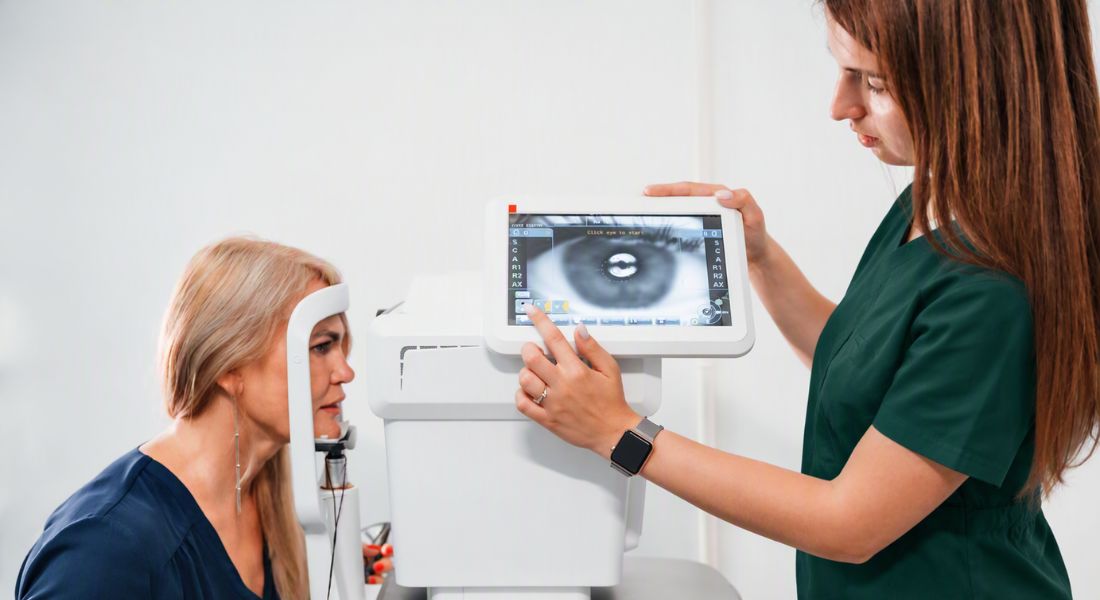
Possibly, but having your ICL removed does not automatically mean you can have LASIK, PRK, another ICL or refractive lens exchange. Your suitability will depend on your eyes, prescription and the reason your ICL was removed.
Your age also matters, as your natural lens and vision needs change over time. Your surgeon will assess your cornea, natural lens, eye pressure and overall eye health before discussing another procedure.
How Long Can an ICL Stay in Your Eye?
Your ICL is designed for long-term use and does not normally need to be removed after a fixed number of years. If your vision and eye health remain stable, there may be no reason to replace or remove it.
Your ophthalmologist will monitor your vision, eye pressure, cornea, natural lens and ICL position during follow-up. As you age, your natural lens can still develop changes such as presbyopia or cataracts, which may affect your future treatment needs.
Clinical Tip
Keep details of your ICL model and previous surgery and continue with the eye checks recommended by your ophthalmologist, even if your vision remains good. Long-term follow-up may include your prescription, eye pressure, corneal health, natural lens and ICL position or vault.
Myth vs Fact
| Myth | Fact |
| ICL surgery is completely reversible. | The lens can usually be removed, but another intraocular operation is required and the eye may not return exactly to its pre-surgery state. |
| Every prescription change means the ICL needs replacing. | Small refractive changes may be managed without removing or exchanging the lens. |
| An unusual vault automatically means another operation. | Vault is interpreted alongside eye pressure, anatomy, symptoms and other clinical findings. |
| If a toric ICL rotates, it always needs replacing. | Repositioning may sometimes correct the problem without exchanging the lens. |
| An ICL has to be replaced after a certain number of years. | There is no routine fixed replacement interval when the lens remains suitable and the eye is healthy. |
Key Takeaways
- An ICL can usually be surgically removed or exchanged when there is an appropriate clinical reason.
- Removable does not mean completely reversible, because removal requires another intraocular operation.
- Vault, lens position, eye pressure, cataract development and refractive needs can all influence whether further treatment is considered.
- Toric ICL rotation may sometimes be treated by repositioning rather than replacing the lens.
- If cataract surgery becomes necessary, the ICL is incorporated into the surgical plan and the natural lens is replaced with an intraocular lens.
- An ICL does not have a routine expiry date, but ongoing eye examinations remain important for long-term monitoring.
Frequently Asked Questions
- Can an ICL be removed after surgery?
Yes, an ICL can usually be surgically removed if there is a clinical reason to do so. However, removal is still an intraocular procedure and does not guarantee that your eye or vision will return exactly to its pre-surgery state. - Is ICL surgery completely reversible?
ICL surgery is considered removable rather than completely reversible. Removing the lens does not guarantee that your prescription, eye condition or vision will be exactly as they were before the original surgery. - Why might you need an ICL removed?
An ICL may need to be removed because of a significant change in your prescription, cataract development, problems with its position or concerns such as raised eye pressure. Your ophthalmologist will assess the specific cause before recommending removal. - When might an ICL be exchanged rather than removed?
An ICL may be exchanged when the existing lens is not providing the appropriate correction or its size or position is unsuitable. Your surgeon may remove the original lens and replace it with another ICL if this is considered appropriate for your eye. - Can an incorrect ICL size lead to an exchange?
In some circumstances, an ICL that is judged to be unsuitable in size or position may require further treatment, including exchange. Your ophthalmologist will consider factors such as vault, eye pressure, symptoms and the relationship between the ICL and your natural lens before recommending another operation. - What happens if your prescription changes after ICL surgery?
A change in your prescription does not automatically mean that your ICL needs to be removed. Your ophthalmologist will investigate why your prescription has changed and may discuss glasses, monitoring, an ICL exchange or another option depending on your circumstances. - Will an ICL need to be removed if you develop a cataract?
If you later need cataract surgery, your existing ICL will usually need to be considered as part of the surgical plan and may be removed. Your natural lens is then replaced with an intraocular lens chosen according to your visual needs. - Can high eye pressure or ICL movement lead to removal?
Raised eye pressure or significant movement of an ICL can sometimes require further treatment, although removal is not automatically necessary. Depending on the cause, your ophthalmologist may consider medication, repositioning, exchange or removal. - What are the risks of ICL removal or exchange?
Like any surgery inside the eye, ICL removal or exchange carries potential risks, including infection, inflammation, changes in eye pressure, damage to nearby structures and changes in vision. Your individual risk depends on your eye health and the reason for the additional procedure. - Can you have another vision correction procedure after ICL removal?
Possibly, but your suitability depends on factors such as your age, prescription, corneal health, natural lens, eye pressure and overall eye health. Your ophthalmologist can explain whether another ICL, laser vision correction or another form of lens surgery is appropriate for you.
Final Thoughts: Understanding Your Options After ICL Surgery
An ICL can usually be removed or exchanged when there is a clear clinical reason, but this does not mean the procedure is completely reversible. Changes in your prescription, cataract development, ICL position, eye pressure or other eye-related concerns may mean that further surgery needs to be considered based on your individual circumstances.
If you’d like to find out whether ICL surgery in London is suitable for you, feel free to contact us at Eye Clinic London to arrange a consultation.
References:
- Hirabayashi, M., Virdi, G., Nasser, T., Libfraind, L., Zapata, E.A., Abramson, A.J. and Parkhurst, G. (2025) ‘ICL exchanges or explants due to sizing in a United States high volume center’, Clinical Ophthalmology, 19, pp. 2609–2614. Available at: https://pmc.ncbi.nlm.nih.gov/articles/PMC12341550/
- Wei, R., Li, M., Aruma, A., Knorz, M.C., Yang, D., Yu, Y., Wang, X., Choi, J., Yao, P. and Zhou, X. (2022) ‘Factors leading to realignment or exchange after implantable collamer lens implantation in 10,258 eyes’, Journal of Cataract & Refractive Surgery, 48(10), pp. 1190–1196. Available at: https://pmc.ncbi.nlm.nih.gov/articles/PMC9514736/
- Yoon, H.Y., Byun, Y.-S., Kim, H.S. and Chung, S.-H. (2024) ‘Causes and outcomes of implantable collamer lens explantation in patients with corneal endothelial cell loss’, Journal of Cataract & Refractive Surgery, 50(5), pp. 453–459. Available at: https://pubmed.ncbi.nlm.nih.gov/38270485/
- Alhamzah, A., Alharbi, S.S., Alfardan, F., Aldebasi, T. and Almudhaiyan, T. (2021) ‘Indications for exchange or explantation of phakic implantable collamer lens with central port in patients with and without keratoconus’, International Journal of Ophthalmology, 14(11), pp. 1714–1720. Available at: https://pubmed.ncbi.nlm.nih.gov/34804861/
- Del Risco, N.E., Talbot, C.L., Moin, K.A., Manion, G.N., Brown, A.H., Walker, S.M., Zhong, P.-S., Zhang, H., Hoopes, P.C. and Moshirfar, M. (2024) ‘Visual outcomes of cataract surgery in patients with previous history of implantable collamer lens’, Journal of Clinical Medicine, 13(15), 4292. Available at: https://www.mdpi.com/2077-0383/13/15/4292