


The History of Intraocular Lens Implants
Modern cataract surgery does more than remove your cloudy natural lens. An artificial intraocular lens (IOL) is usually placed inside your eye to restore focusing power and help you achieve clearer vision after surgery.
This was not always possible. The development of IOLs began in the 1940s and has progressed to include foldable, toric, multifocal and extended-depth-of-focus lenses designed to suit your individual visual needs.
What Happened Before Intraocular Lenses?
Before IOLs, cataract surgery could remove your cloudy lens but left your eye without much of its natural focusing power. This significantly affected how clearly you could see after the procedure.
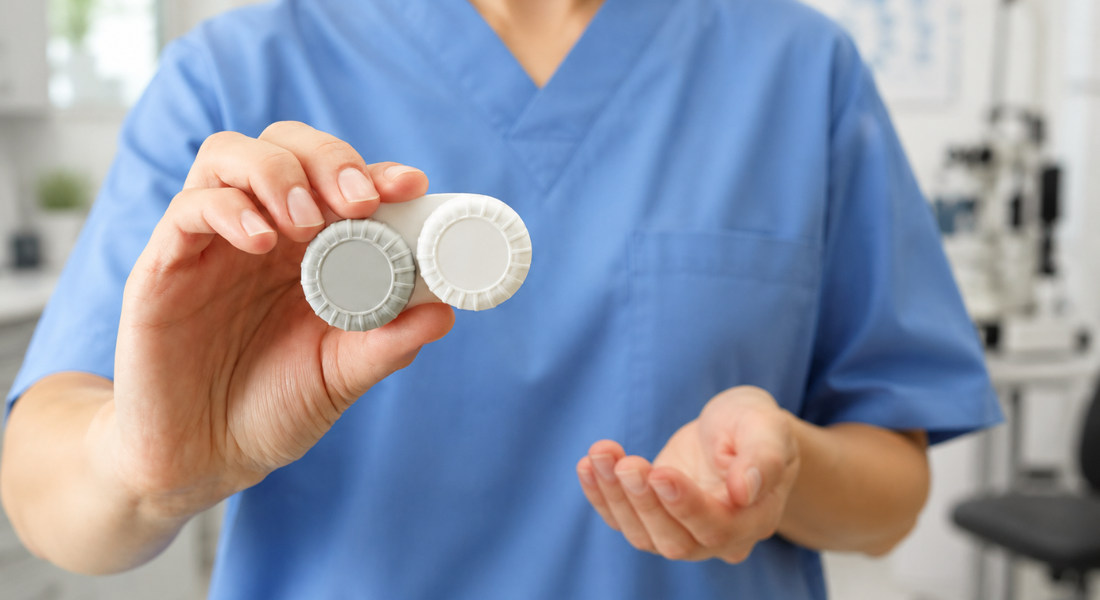
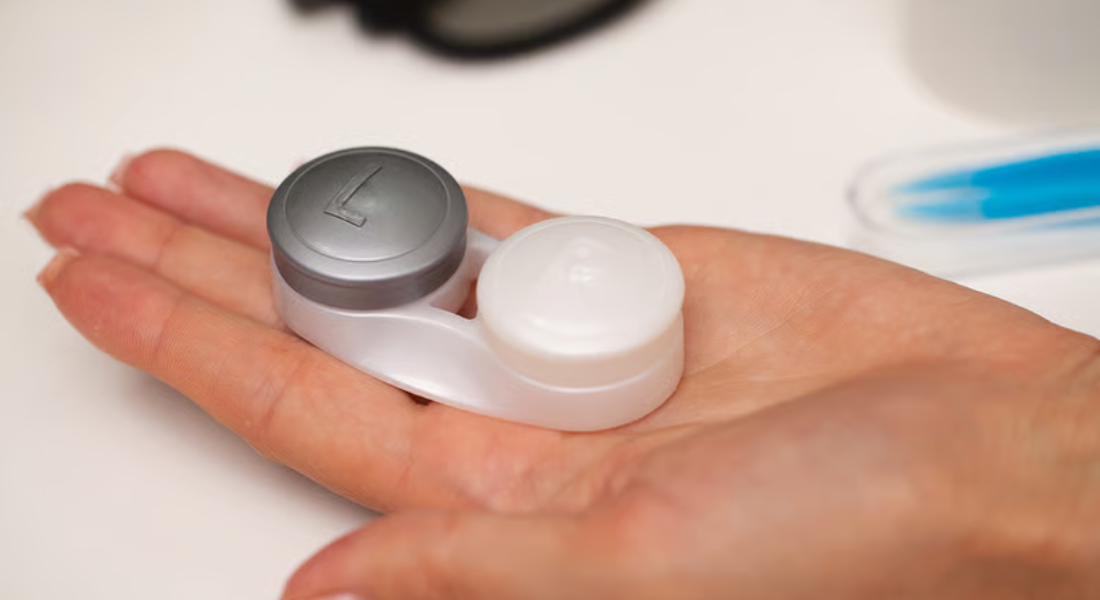
You often depended on thick aphakic spectacles or contact lenses to restore some level of vision. These options could be inconvenient and did not fully replicate the function of your natural lens.
Who Was Sir Harold Ridley?
Sir Harold Ridley was a British ophthalmologist who pioneered the idea of permanently replacing your natural lens with an artificial implant. This concept was a major shift in how cataract surgery could restore your vision.
His work ultimately changed cataract treatment worldwide. It laid the foundation for modern intraocular lens surgery used today.
What Inspired Ridley’s Idea?
During the Second World War, Harold Ridley treated and observed aircrew who had suffered eye injuries involving fragments of acrylic material from aircraft canopies. He noted that this material could sometimes remain inside your eye with relatively little inflammatory reaction compared with many other foreign materials.
These observations contributed to his idea that a transparent acrylic material might be suitable for an artificial lens placed permanently inside your eye after cataract removal.
The First Intraocular Lens Implant
Harold Ridley pioneered your modern intraocular lens at St Thomas’ Hospital in London. His first IOL operation dates to 29 November 1949, while the first artificial lens left permanently inside an eye was implanted on 8 February 1950.
Your early Ridley lens was made from Perspex CQ, a form of PMMA, and was very different from the lens you may receive today. Your modern IOL developed through decades of improvements in lens power, positioning, materials and surgical technique.
Why Was Ridley’s Idea Initially Controversial?
Permanently placing artificial material inside your eye challenged established surgical thinking at the time. Ridley’s early implants also experienced problems involving lens power, positioning, inflammation and other complications.
Your modern IOL therefore did not emerge fully developed from Ridley’s first operation. Decades of improvements in lens design, materials, sterilisation, surgical technique and power calculation were needed before intraocular lens implantation became routine.
Early IOLs Had Limitations
Early intraocular lenses were relatively large and rigid, meaning your surgeon needed to make much larger incisions than are used in modern cataract procedures. This increased the complexity of surgery and the time required for your eye to heal.
Problems involving lens position, inflammation and other complications encouraged further improvements in IOL design. These challenges helped drive the development of smaller, more flexible lenses used in your treatment today.
The Development of PMMA Lenses
PMMA became an important material for early generations of intraocular lenses because it was transparent and tolerated reasonably well inside your eye. This made it suitable for replacing your natural lens after cataract surgery.
However, its rigidity meant that lenses could not be folded for insertion through a very small incision. As a result, larger surgical openings were required compared with the techniques used in your procedure today.
Phacoemulsification Changes Cataract Surgery
Charles Kelman introduced phacoemulsification in 1967, using ultrasound to break the cataract into smaller pieces so the lens could be removed through a smaller incision. This advance also encouraged the development of intraocular lenses that could fit through these smaller surgical openings.
Key Developments in Phacoemulsification
| Aspect | What It Means | Why It Matters |
| Introduction | Charles Kelman introduced phacoemulsification in 1967 | Marked an important change in cataract surgery |
| Ultrasound technology | Uses ultrasound energy to break the cataract into smaller pieces | Makes lens removal easier through a small incision |
| Smaller incision | Allows the cataract to be removed through a smaller surgical opening | Supports less invasive cataract surgery |
| Intraocular lenses | Created demand for lenses that could pass through smaller incisions | Encouraged new lens designs |
| Lens innovation | IOL technology developed alongside surgical techniques | Improved compatibility with modern cataract surgery |
| Surgical advancement | Combined ultrasound technology with improved IOLs | Helped shape modern cataract surgery |
The Arrival of Foldable Lenses

Flexible silicone and later acrylic materials allowed your intraocular lens to be folded or compressed before insertion. Clinical development accelerated during the 1980s, with small-incision foldable-lens surgery becoming an important milestone during this period.
Once your foldable lens passes through the incision, it opens inside your eye and is positioned in the intended location. This allowed cataract surgeons to preserve much more of the small-incision advantage provided by phacoemulsification.
The Growth of Foldable Acrylic IOLs
Foldable acrylic intraocular lenses became increasingly important during the 1990s. Hydrophobic and hydrophilic acrylic materials offered surgeons alternatives to rigid PMMA and earlier silicone designs.
For your surgery, these materials made it possible to combine a small incision with an IOL designed for long-term placement inside the capsular bag. Modern acrylic lenses have subsequently evolved through changes in material properties, edge design, haptics and optical design.
Why Did Smaller IOLs Matter?
Your foldable IOL can be inserted through a considerably smaller incision than a rigid PMMA lens. This helped cataract surgery move towards the small-incision procedures commonly used today.
Smaller wounds can reduce surgically induced changes to your corneal shape and support faster wound recovery. They do not make your cataract operation risk-free, and your outcome still depends on your eye, surgical technique and any other eye conditions you have.
Improving Lens Position and Stability
Intraocular lens design gradually improved to help your lens remain centred and stable within the capsular bag that previously contained your natural lens. This stability is important for maintaining consistent vision after your surgery.
Modern designs combine a central optical section with supporting structures known as haptics. These haptics help hold your lens in place, reducing the risk of movement or misalignment over time.
Monofocal Intraocular Lenses
Monofocal lenses are designed to provide your eye with clear focus at one selected distance, most commonly for distance vision. This means you may still need glasses for near tasks such as reading.
They remain an important standard option in modern cataract surgery. Their reliability and predictable outcomes make them a widely used choice in your treatment.
The Development of Toric IOLs
Toric lenses were developed to correct your corneal astigmatism while also replacing your cloudy natural lens. This means your cataract surgery can address both lens opacity and some of the refractive error affecting your vision.
- Astigmatism correction: Toric IOLs are designed to compensate for corneal astigmatism and improve your visual focus
- Cataract treatment: The lens replaces your cloudy natural lens as part of cataract surgery
- Combined correction: A toric IOL can address cataract and corneal astigmatism during the same procedure
- Clinical development: Research into toric IOL implantation became established by the early 2000s
- Visual outcomes: Correcting astigmatism during cataract surgery can reduce your dependence on glasses for some activities
Toric IOLs expanded the options available to you when cataract surgery is combined with a need for astigmatism correction. Your suitability depends on factors such as the amount and type of astigmatism in your eye, as well as your visual priorities.
The Arrival of Multifocal IOLs
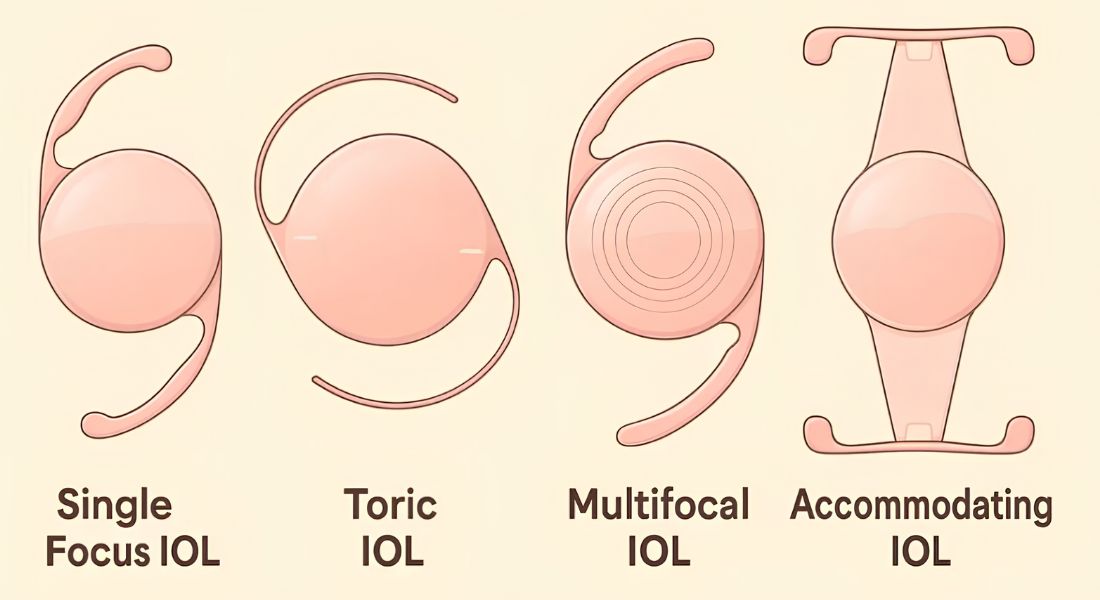
Multifocal intraocular lenses use different optical principles to provide more than one focal range. Clinical research into refractive and diffractive multifocal IOLs was already well established by 1990, and subsequent generations were developed to improve distance and near vision.
Your potential benefit is reduced dependence on spectacles across more than one distance. However, multifocal optics can also produce trade-offs such as glare, haloes or reduced contrast, so your eye health and visual priorities need careful assessment.
Extended-Depth-of-Focus Lenses
Extended-depth-of-focus lenses became an increasingly important development in cataract surgery during the 2010s, with designs intended to extend the useful range of vision beyond that provided by a conventional monofocal lens.
Your EDOF lens may improve intermediate vision while maintaining useful distance vision, but you may still need glasses for some near tasks. Your visual result and optical symptoms depend on the particular lens design and your individual eye.
How Have Modern IOLs Become More Personalised?
Your cataract treatment now involves much more than selecting an artificial lens material. Detailed biometry is used to estimate the IOL power required for your eye, while your corneal astigmatism, previous eye surgery, eye health and preferred focusing distance can influence the lens chosen.
Your available options may include monofocal and toric lenses and, in selected settings, lenses designed to extend your range of focus. No IOL can reproduce every function of your young natural lens or guarantee that you will never require glasses.
UK Guidance Note
If you are having cataract surgery in the UK, your lens choice should be discussed in the context of your eye health, refractive goals and current clinical guidance. Multifocal IOLs therefore remain important in the history and development of lens technology, but this does not mean that they are recommended within current NICE cataract guidance in the UK.
What Could the Future of IOLs Look Like?
Researchers continue to investigate lenses intended to provide you with a wider range of useful vision while reducing compromises such as glare, haloes or loss of contrast.
Future developments may include improved accommodating or adjustable lens concepts, new optical designs, improved biomaterials and increasingly accurate methods of calculating your postoperative refractive result. These approaches remain at different stages of development, so they should not be presented as established replacements for current IOL technology.
Myth vs Fact
| Myth | What You Should Know |
| Your cataract surgery always included an artificial lens. | Before IOLs became established, your cataract could be removed while your eye was left aphakic and required powerful optical correction. |
| Harold Ridley’s first IOL was identical to your modern lens. | Your modern IOL is the result of decades of improvements in material, power calculation, haptics and optical design. |
| The history of the first IOL can be reduced to one uncontested 1949 date. | Your historical account is more precise if it recognises the 1949 first operation and the first permanent implantation in February 1950. |
| PMMA disappeared because it was unsafe inside your eye. | PMMA proved useful as an IOL material, but its rigidity limited how small your surgical incision could be. |
| Phacoemulsification alone created modern small-incision cataract surgery. | Your small-incision procedure also depended on the development of foldable IOLs that could pass through the smaller wound. |
| Your foldable IOL is always made from silicone. | Your modern foldable lenses are commonly made from acrylic materials, although silicone lenses have also played an important historical role. |
| Your monofocal lens means you will definitely never need distance glasses. | Your surgeon selects a refractive target, but your final result cannot be guaranteed and you may still require glasses. |
| Your toric IOL corrects every type of astigmatism. | Your toric lens is mainly designed for suitable regular corneal astigmatism and requires accurate measurement and alignment. |
| Your multifocal or EDOF lens guarantees complete spectacle independence. | Your lens may reduce your dependence on glasses, but you may still require them for certain distances or activities. |
| The newest IOL is automatically the best choice for your eye. | Your safest and most appropriate lens depends on your eye health, measurements, visual priorities and the evidence supporting the lens design. |
Key Takeaways
- Your cataract surgery once left your eye without its natural focusing lens, requiring powerful aphakic spectacles or contact lenses.
- Harold Ridley pioneered modern intraocular lens surgery at St Thomas’ Hospital in London around 1949–1950.
- Your first IOLs were made from rigid PMMA and were very different from modern foldable lenses.
- Your modern IOL developed through decades of improvements in lens materials, positioning, power calculation and surgical technique.
- Phacoemulsification created demand for lenses that could pass through increasingly small surgical incisions.
- Your foldable silicone and acrylic lenses helped make small-incision cataract surgery more practical.
- Your toric IOL can reduce regular corneal astigmatism when appropriately selected and aligned.
- Your multifocal lenses were being clinically investigated by the late 1980s and early 1990s.
- Your EDOF lens is designed to extend your useful range of focus, particularly towards intermediate vision.
- Your modern IOL choice should be based on your eye measurements, eye health and realistic visual priorities rather than assuming one lens is best for everyone.
Frequently Asked Questions
- What is an intraocular lens (IOL)?
Your intraocular lens is an artificial lens implanted inside your eye after your cloudy natural lens has been removed during cataract surgery. It restores much of the focusing power lost when your cataract is removed. - Why are IOLs used in cataract surgery?
Your IOL allows focusing correction to be provided from inside your eye rather than relying only on the powerful aphakic spectacles or contact lenses used before lens implants became established. - When was the first intraocular lens developed?
Harold Ridley pioneered IOL surgery at St Thomas’ Hospital in London around 1949–1950. Historical accounts commonly cite a first operation in November 1949, while the first permanent implantation is now documented as February 1950. - What did you need before intraocular lenses existed?
After your cataract was removed, you generally needed very strong aphakic spectacles or contact lenses because your eye had lost much of its natural focusing power. - What are modern IOLs made from?
Your modern IOL is commonly made from a foldable acrylic material, although silicone and other materials have also been used. Foldability allows your lens to pass through a small surgical incision. - What is the difference between your monofocal and multifocal IOL?
Your monofocal lens has one principal focal point, whereas a multifocal design divides light to provide more than one focusing range. Multifocal optics can reduce spectacle dependence but may also produce optical trade-offs. - Can your IOL correct astigmatism?
Yes. A toric IOL can reduce suitable regular corneal astigmatism while replacing your cataractous natural lens. Accurate measurements and correct rotational alignment are important for the intended result. - What is an extended-depth-of-focus IOL?
Your EDOF lens is designed to extend the useful range over which your vision remains in focus, often improving intermediate vision compared with a conventional monofocal lens. You may still need glasses for some tasks. - Is your intraocular lens individually customised?
Your IOL power is calculated using measurements from your individual eye, and your surgeon can select a lens category based on factors such as astigmatism, eye health and visual priorities. The physical lens itself is usually selected from manufactured powers and designs rather than being uniquely manufactured for you. - What is the future of intraocular lens technology?
Future lens technology may give you a wider range of focus, more adjustable refractive results or better simulation of your natural lens. These technologies remain at different stages of research and clinical development.
Final Thoughts: The Evolution of Intraocular Lens Implants
Your modern cataract surgery developed from Ridley’s pioneering rigid PMMA lens into foldable monofocal, toric and extended-range lens designs. Your IOL power can now be selected using detailed measurements of your eye, although no lens can guarantee that you will never need glasses.
Your most appropriate lens depends on your eye health, measurements and realistic visual priorities rather than simply choosing the newest technology. If you are exploring alternatives such as ICL surgery in London or would like personalised advice on the most suitable solution for your vision, contact us at Eye Clinic London to arrange a consultation and discuss your options.
References
- Apple, D.J. and Sims, J. (1996) ‘Harold Ridley and the invention of the intraocular lens’, Survey of Ophthalmology, 40(4), pp. 279–292. Available at: https://pubmed.ncbi.nlm.nih.gov/8658339/
- de Silva, S.R., Evans, J.R., Kirthi, V., Ziaei, M. and Leyland, M. (2016) ‘Multifocal versus monofocal intraocular lenses after cataract extraction’, Cochrane Database of Systematic Reviews, 12(12), article CD003169. Available at: https://pmc.ncbi.nlm.nih.gov/articles/PMC6463930/
- Duffey, R.J., Zabel, R.W. and Lindstrom, R.L. (1990) ‘Multifocal intraocular lenses’, Journal of Cataract and Refractive Surgery, 16(4), pp. 423–429. Available at: https://pubmed.ncbi.nlm.nih.gov/2199664/
- Kelman, C.D. (1967) ‘Phaco-emulsification and aspiration: a new technique of cataract removal. A preliminary report’, American Journal of Ophthalmology, 64(1), pp. 23–35. Available at: https://pubmed.ncbi.nlm.nih.gov/6028631/
- Liu, J., Dong, Y. and Wang, Y. (2019) ‘Efficacy and safety of extended depth of focus intraocular lenses in cataract surgery: a systematic review and meta-analysis’, BMC Ophthalmology, 19(1), article 198. Available at: https://pmc.ncbi.nlm.nih.gov/articles/PMC6719364/