
New Research on Childhood Myopia and Screen Time

2026-06-23T11:06:53+00:00

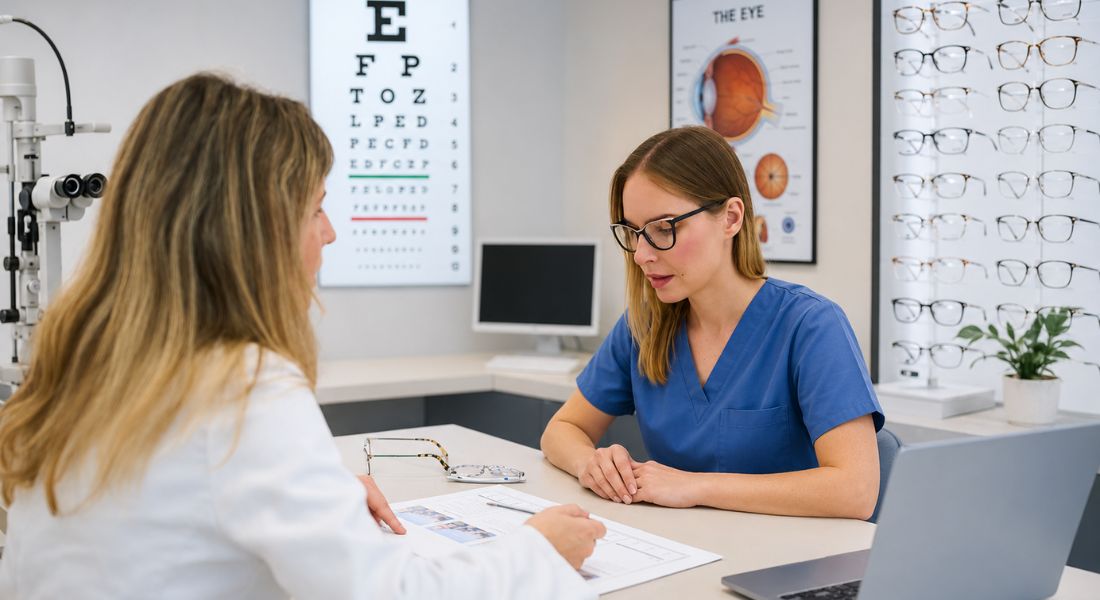
Childhood myopia, also known as short-sightedness, has become one of the fastest increasing vision conditions worldwide. In recent years, researchers have been closely examining whether modern lifestyle factors, especially screen time, may be contributing to this rise. If you are a parent, you may find this particularly relevant as children today spend more time on smartphones, tablets, and computers than ever before. While genetics still play an important role in the development of myopia, environmental influences are now considered equally

New Research on Childhood Myopia and Screen Time2026-06-23T11:06:53+00:00

Latest Research on Myopia Control in Children

2026-06-23T11:06:22+00:00

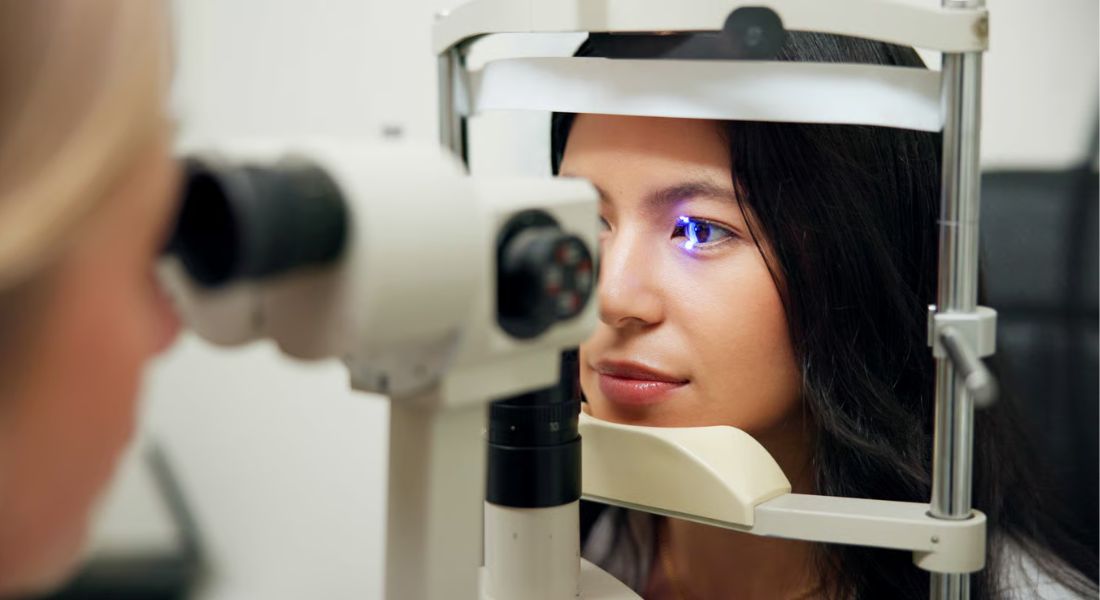
Myopia, commonly known as short-sightedness, is becoming increasingly common in children around the world. It is a condition where distant objects appear blurry while close objects remain clear. Over the past decade, rates of myopia have risen significantly, particularly in urban environments where children spend more time on screens and less time outdoors. Because of this global increase, paediatric ophthalmology has placed greater focus on myopia control rather than simply correcting vision with glasses. If you are a parent, you

Latest Research on Myopia Control in Children2026-06-23T11:06:22+00:00

Do Lifestyle and Cultural Factors Influence Expectations After Laser Eye Surgery?

2026-06-22T11:26:30+00:00

Laser eye surgery has become one of the most widely performed methods of vision correction worldwide, with procedures such as LASIK, LASEK, and SMILE helping millions of people reduce their reliance on glasses and contact lenses. While surgical technology and clinical expertise are essential, patient satisfaction is not based on visual outcomes alone. Research shows that expectations play a major role in how you perceive the success of treatment. These expectations are often shaped by your lifestyle, daily visual demands,

Do Lifestyle and Cultural Factors Influence Expectations After Laser Eye Surgery?2026-06-22T11:26:30+00:00

Why Is Laser Eye Surgery So Popular in South Korea?

2026-06-22T11:25:23+00:00

If you are researching laser eye surgery around the world, you may have noticed that South Korea is often mentioned as a leading destination for vision correction procedures. The country has built a strong reputation for medical innovation and advanced healthcare, attracting both local and international patients who want to reduce their dependence on glasses or contact lenses. The popularity of laser eye surgery in South Korea is not due to a single factor. Instead, it reflects a combination of

Why Is Laser Eye Surgery So Popular in South Korea?2026-06-22T11:25:23+00:00

Can Anatomical Differences Between Ethnic Groups Affect Laser Eye Surgery?

2026-06-22T11:24:23+00:00

Laser eye surgery is widely used to correct vision problems such as short-sightedness, long-sightedness, and astigmatism. If you are considering this procedure, you may already know that it works by reshaping the cornea so that light focuses correctly on the retina. While the technology is highly advanced, treatment planning is not the same for everyone. You may find that surgeons take into account anatomical differences such as corneal thickness, curvature, and tear film stability when assessing suitability and planning treatment.

Can Anatomical Differences Between Ethnic Groups Affect Laser Eye Surgery?2026-06-22T11:24:23+00:00

Does Ethnicity Affect Laser Eye Surgery Outcomes?

2026-06-19T11:21:25+00:00

If you are considering laser eye surgery such as LASIK, SMILE, or PRK, you may be wondering whether ethnicity has any impact on the outcome. These procedures are widely used to correct refractive errors and reduce dependence on glasses or contact lenses, and this question often comes up during consultation. Current evidence shows that your visual outcomes, safety, and overall satisfaction are mainly determined by individual factors such as eye anatomy, corneal measurements, tear film health, and surgical technique. These

Does Ethnicity Affect Laser Eye Surgery Outcomes?2026-06-19T11:21:25+00:00

Is Laser Eye Surgery Suitable for Asian Eyes? What Does the Research Show?

2026-06-19T11:21:00+00:00

If you are considering laser eye surgery, you may be wondering whether it is suitable for Asian eyes. Procedures such as LASIK, SMILE, and PRK are widely used to correct refractive errors and reduce dependence on glasses or contact lenses, and they are performed safely in patients around the world. However, certain anatomical and refractive characteristics can vary between individuals and populations. In Asian eyes, factors such as corneal curvature, anterior chamber depth, pupil size, and the higher prevalence of

Is Laser Eye Surgery Suitable for Asian Eyes? What Does the Research Show?2026-06-19T11:21:00+00:00

Do Lifestyle and Cultural Factors Influence Expectations After RLE Surgery?

2026-06-19T11:20:28+00:00

If you are considering RLE surgery, it is important to understand that while the procedure is the same for everyone, your expectations and satisfaction can vary depending on your lifestyle and cultural background. RLE surgery aims to improve your vision and reduce your dependence on glasses or contact lenses, but what feels like a successful outcome can differ from person to person. You may prioritise different aspects of vision depending on how you live your daily life. Some people value

Do Lifestyle and Cultural Factors Influence Expectations After RLE Surgery?2026-06-19T11:20:28+00:00

Why Is RLE Surgery Becoming More Popular in Asia?

2026-06-18T11:56:02+00:00

Refractive Lens Exchange (RLE) is now being discussed and performed more frequently in many Asian countries. This increasing interest reflects broader changes in lifestyle, evolving eye health patterns, and continuous improvements in refractive surgery technology. RLE works by replacing your eye’s natural lens with an artificial intraocular lens to correct refractive error and reduce dependence on glasses or contact lenses. It is the same surgical technique used in cataract surgery, but it is performed for vision correction purposes rather than

Why Is RLE Surgery Becoming More Popular in Asia?2026-06-18T11:56:02+00:00

Can Anatomical Differences Between Ethnic Groups Affect RLE Surgery?

2026-06-18T11:53:21+00:00

Refractive Lens Exchange (RLE) is a procedure where your eye’s natural lens is replaced with an artificial intraocular lens to improve vision. It is commonly used for presbyopia and higher refractive errors, especially when laser eye surgery is not suitable for your eyes. A common question in both research and clinical discussions is whether anatomical differences between ethnic groups can influence RLE planning and outcomes. While there are some small average variations in eye anatomy across populations, these differences do

Can Anatomical Differences Between Ethnic Groups Affect RLE Surgery?2026-06-18T11:53:21+00:00