


Contact Lenses After Menopause: Why Comfort Changes
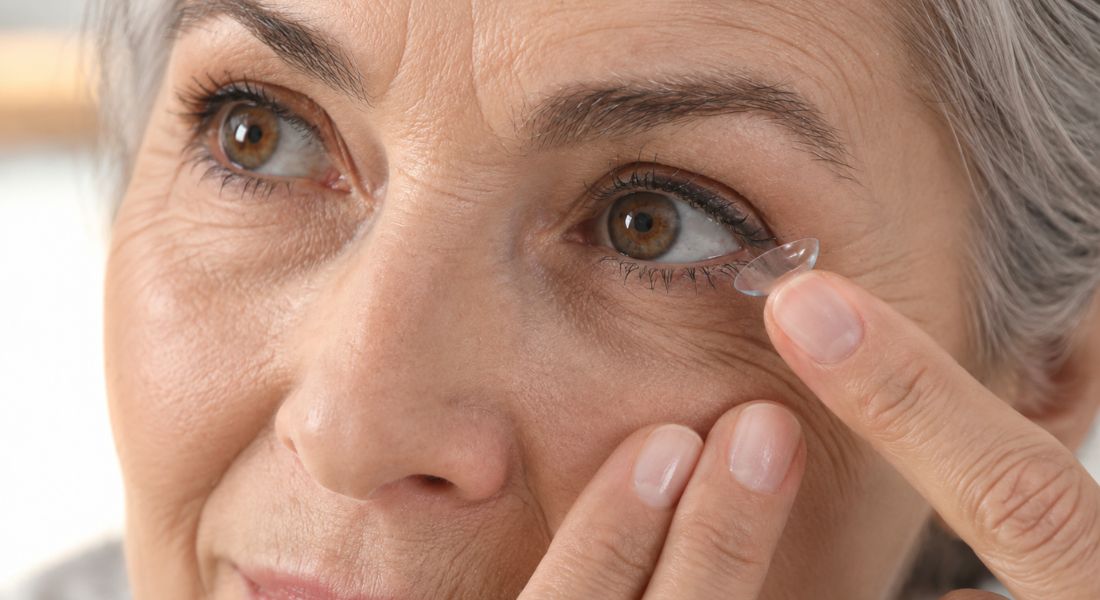
Your contact lenses may become less comfortable after menopause because hormonal changes can affect your tear film, eyelids and meibomian glands. Your eyes may become drier, making lenses feel gritty or uncomfortable.
Your contact lenses are not necessarily the problem. Your eye-care professional can check for dry eye, meibomian gland dysfunction, lens fit or material issues and suggest ways to improve your comfort.
Why Can Contact Lenses Feel Different After Menopause?
Your contact lenses sit within your tear film, so changes in tear production and stability can affect how comfortable they feel. Menopause-related hormonal changes may also affect your meibomian glands and other parts of your ocular surface.
Your age can contribute to dry eye as well, particularly after menopause. Your contact lenses may therefore need reassessment even if they worked well for you in earlier years.
What Does Your Tear Film Normally Do?
Your tear film keeps the surface of your eye smooth, moist and protected. Your meibomian glands provide oils that reduce evaporation, while other components help your tears spread evenly when you blink.
A contact lens divides your tear film into layers in front of and behind the lens, which can make tear-film instability and dryness more noticeable when your ocular surface is already affected. This can affect how comfortable your lenses feel throughout the day.
How Can Hormonal Changes Affect Your Eyes?
Your hormonal changes can affect your tear production, meibomian glands and tear-film stability. Reduced androgen activity has been associated with meibomian-gland dysfunction and tear-film instability, which may contribute to evaporative dry eye.
Your oestrogen changes may also play a role, but their effects are more complex. Your dry eye after menopause is therefore likely influenced by hormones, ageing and other ocular-surface changes.
Why Do the Meibomian Glands Matter for Contact Lens Comfort?
Your meibomian glands produce oils that help slow tear evaporation. If these glands become blocked or their secretions change, your tears may evaporate faster and your eyes can become dry or irritated.
Your contact lenses rely on a stable tear film to remain comfortable. If your meibomian glands are not working well, your lenses may feel increasingly dry or uncomfortable as the day goes on.
Evidence Note
Hormonal changes can affect the ocular surface, including the meibomian glands and tear film. Reduced androgen activity has been associated with meibomian gland dysfunction and evaporative dry eye, which may contribute to reduced contact lens comfort after menopause.
What Symptoms Might You Notice?

Your contact lenses may feel comfortable at first but become dry, gritty, burning or irritating later in the day. Your vision may also become blurry or fluctuate, sometimes improving after you blink.
Your eyes may water or become more sensitive to wind, air conditioning or screens. These symptoms can have several causes, so your lens fit and ocular surface should be assessed if they persist.
Why Can Your Lenses Feel Worse Later in the Day?
Your contact lenses can become less comfortable later in the day as your tear film becomes less stable and evaporation increases. Your lens may also collect tear components during wear, which can affect comfort.
Your menopause- or age-related dry eye may reduce how long you can comfortably wear your lenses. Your prescription can still be correct even when your lenses need to be removed earlier than before.
Research Insight
Research into menopause, hormone therapy and dry eye has produced mixed findings. Some studies suggest that hormone therapy may improve certain dry-eye measures, while others have found no clear benefit or an increase in symptoms. This means hormone therapy should not be started or changed solely to improve contact lens comfort.
Why Can Screen Use Make the Problem Worse?
Prolonged screen use can make your eyes feel drier, particularly when you wear contact lenses. Understanding how screen time and your environment affect your tears can help you manage these symptoms more comfortably.
- Reduced blinking: You may blink less often when looking at a screen, allowing your tears to evaporate more quickly.
- Drier contact lenses: Your contact lenses may feel increasingly dry or uncomfortable during prolonged computer or phone use.
- Fluctuating vision: Tear-film instability can make your vision temporarily blurred or variable, sometimes clearing after you blink.
- Dry environments: Air conditioning, fans and other dry environments can increase tear evaporation and make your symptoms worse.
Taking regular screen breaks and making a conscious effort to blink fully may help reduce dryness and discomfort. If your symptoms continue despite these measures, you should have your eyes assessed to identify any underlying problem.
Can Your Contact Lens Material Affect Comfort?
Your contact lens material can affect comfort because lenses differ in water content, surface wetting and oxygen transmission. Your previous lenses may no longer suit your changing tear film.
Your contact-lens practitioner can check your lens fit and eye surface before recommending a different material. Your dry eye may also need treatment rather than simply changing lenses.
Common Causes of Contact Lens Discomfort and What Your Eye-Care Professional May Check
| Possible Cause | What You May Notice | What Your Eye-Care Professional May Check |
| Dry eye | Grittiness, burning, dryness or fluctuating vision | Tear-film quality and ocular surface |
| Meibomian gland dysfunction | Increasing dryness, irritation or discomfort later in the day | Meibomian gland function and eyelids |
| Contact lens fit | Discomfort, movement or inconsistent vision | Lens position, movement and fit |
| Lens material or deposits | Irritation that develops during lens wear | Lens material, surface condition and replacement schedule |
| Environmental factors | Worse symptoms with screens, fans or air conditioning | Your symptoms and wearing environment |
Can Changing the Lens Fit or Design Help?

Your contact lens fit or design may affect comfort as your eyes change with age. Your eyelids, tear film and ocular surface can interact differently with lenses than they did previously.
Your contact-lens practitioner can assess the fit, vision and tear-film quality before changing your lens design. Your prescription may also need updating as your vision changes with age.
Could Daily Disposable Lenses Improve Comfort?
Daily disposable lenses may improve comfort for some people because you start with a fresh lens each day and avoid the build-up associated with reusing lenses. They can also help if a lens-care product is irritating your eyes.
Your daily lenses will not automatically solve menopause-related dry eye. Your practitioner can assess your tear film, lens material, fit and replacement schedule to find the most suitable option.
Clinical Tip
If your lenses become uncomfortable mainly towards the end of the day, do not assume that you simply need a stronger prescription. Your practitioner can assess your tear film, lens fit and lens material to identify whether dryness, deposits or another lens-related problem is contributing to your symptoms.
How Is Dry Eye Assessed in a Contact Lens Wearer?
Your eye-care professional will ask when your discomfort starts and whether it happens with or without your contact lenses. Your eyelids, meibomian glands and tear film may also be examined.
Your contact lenses will be checked for fit, movement and surface condition. Your practitioner can use tear-film tests and dyes to identify dry eye or surface changes.
Can Lubricating Eye Drops Help?
Your lubricating eye drops may improve contact-lens comfort when your tear film is dry or unstable. Check that your drops are suitable for use with your contact lenses, especially if you use them frequently.
Your drops may not address underlying problems such as meibomian gland dysfunction or eyelid inflammation. If you need them repeatedly just to tolerate your lenses, your eye surface and lens fit should be reassessed.
How Is Meibomian Gland Dysfunction Managed?
Your MGD treatment aims to improve the function of your meibomian glands and tear film. Your clinician may recommend eyelid hygiene and gentle warming, depending on your symptoms and examination.
Your contact lenses may also need adjusting while your ocular surface is treated. Improving the underlying dry-eye problem can help more than repeatedly changing lens brands alone.
Should You Wear Your Contact Lenses for Fewer Hours?
Your contact lenses may be more comfortable if you reduce wear time when your eyes become dry or irritated. Keeping your glasses available lets you remove your lenses before discomfort becomes significant.
Your long-term wear time may improve once any underlying dry-eye problem is treated. Your practitioner can advise on a suitable schedule based on your eye health, lenses and symptoms.
UK Guidance Note
NHS guidance advises people with dry eyes who wear contact lenses to remove their lenses and use glasses to rest their eyes when symptoms are troublesome. If you develop a red eye while wearing contact lenses, remove your lenses and seek urgent medical advice because an eye infection may be involved. Sudden changes in vision or significant sensitivity to light need urgent or emergency eye assessment.
Does Menopausal Hormone Therapy Improve Dry Eyes?
Your menopausal hormone therapy may not automatically improve dry eye. Research shows mixed results, with some studies reporting benefits and others finding no improvement or increased symptoms.
Your hormone therapy should not be started or stopped solely to improve contact-lens comfort. Your eye symptoms need proper assessment so that dry eye and lens-related problems can be treated appropriately.
Hormonal changes during menopause can affect more than reproductive health. Dr Luxmi Velauthar, Consultant Gynaecologist at Gynaecology Clinic London, notes that the effects of declining oestrogen levels vary between women, and HRT should not be regarded as a specific treatment for contact lens-related dry eye.
Can Other Medicines Make Contact Lens Dryness Worse?
Your medicines may contribute to dry eye, particularly certain antihistamines, antidepressants and medicines with anticholinergic effects.
Your doctor should review your medication list if your contact lenses become uncomfortable. Do not stop prescribed medicines without medical advice, as menopause, ageing, lens wear and other factors may also contribute to dryness.
Could You Still Wear Contact Lenses with Dry Eye?

Your dry eye does not automatically mean you must stop wearing contact lenses permanently. Your practitioner can assess the severity of your symptoms and adjust your lens type, replacement schedule or wearing time.
Your specialist may recommend alternative lenses for more severe dry eye. An assessment at Eye Clinic London can help identify the cause of your discomfort and guide your next steps.
Myth vs Fact
| Myth | Fact |
| Menopause means you must stop wearing contact lenses. | Many people can continue wearing contact lenses, although their wearing time, lens type or treatment may need to change. |
| Contact lens discomfort always means your prescription is wrong. | Dry eye, meibomian gland dysfunction, lens fit and lens material can all affect comfort. |
| Changing to daily disposable lenses will always solve the problem. | Daily lenses may improve comfort for some people, but they do not automatically treat underlying dry eye. |
| Hormone therapy will definitely improve contact lens comfort. | Research on hormone therapy and dry eye is mixed, so it should not be used specifically for lens comfort without appropriate medical advice. |
Key Takeaways
- Contact lenses can become less comfortable after menopause because changes in the tear film, meibomian glands and ocular surface can increase dryness.
- Your discomfort does not necessarily mean you need to stop wearing lenses. Your practitioner can assess your lens fit, material, replacement schedule and ocular surface.
- Reducing wearing time, using suitable lubricating drops and taking breaks from screens may help improve comfort.
- Persistent discomfort should be assessed rather than managed by repeatedly changing lenses yourself.
- If you develop a red eye, sudden vision changes or significant light sensitivity while wearing contact lenses, you should seek urgent eye-care advice.
Frequently Asked Questions
- Why can contact lenses become less comfortable after menopause?
Your hormonal changes after menopause can affect your tear film, meibomian glands and tear stability. Your eyes may become drier, making your contact lenses feel gritty, irritating or uncomfortable even if they fitted well previously. - What are the symptoms of contact lens-related dry eye after menopause?
You may experience dryness, burning, grittiness, irritation or fluctuating vision. Your lenses may feel comfortable initially but become increasingly uncomfortable as the day goes on. - How do hormonal changes affect your tear film?
Your hormonal changes can influence tear production, meibomian gland function and tear-film stability. Reduced oil production may allow your tears to evaporate faster, contributing to dry eye and contact lens discomfort. - Can meibomian gland dysfunction affect contact lens comfort?
Yes. Your meibomian glands produce oils that help prevent your tears from evaporating too quickly. If these glands become blocked or function poorly, your eyes may become dry and your contact lenses less comfortable. - Can screen use make contact lenses feel drier?
Yes. When you use screens, you may blink less frequently, allowing your tears to evaporate faster. Air conditioning, fans and dry environments can make your contact lens discomfort worse. - Can changing your contact lens type improve comfort after menopause?
Yes. Your contact-lens practitioner may recommend a different lens material, design or replacement schedule after assessing your tear film and lens fit. However, changing lenses alone may not resolve underlying dry eye. - Could daily disposable contact lenses help after menopause?
Daily disposable lenses may improve comfort for some people because you start with a fresh lens each day and avoid the build-up associated with reusing lenses. However, they will not automatically resolve menopause-related dry eye, so your eye surface should also be assessed. - Can lubricating eye drops help with contact lens discomfort?
Yes. Suitable lubricating eye drops may improve comfort when your tear film is dry or unstable. You should check that your drops are compatible with your contact lenses, particularly if you need to use them frequently. - Does menopausal hormone therapy improve dry eye?
Not necessarily. Research has reported mixed findings, with some studies suggesting benefits and others finding no improvement or increased symptoms. You should not start or stop hormone therapy solely to improve your contact lens comfort. - Can you continue wearing contact lenses if you have dry eye?
Yes, in many cases. Your practitioner may recommend shorter wearing times, different lenses or treatment for underlying dry eye. If discomfort persists, you should have your eyes and contact lens fit reassessed.
Final Thoughts: Contact Lenses After Menopause
Contact lenses can become less comfortable after menopause because hormonal changes, ageing and meibomian gland dysfunction can affect your tear film and increase dryness. However, you may not need to stop wearing contact lenses. Assessing your eye surface, lens fit and material can help identify the cause and guide suitable changes to improve your comfort.
If your contact lenses have become persistently uncomfortable after menopause, you can contact the Eye Clinic London team for an assessment of your tear film, ocular surface and contact-lens fit and advice on appropriate next steps.
References:
- Gorimanipalli, B., Khamar, P., Sethu, S. and Shetty, R. (2023) ‘Hormones and dry eye disease’, Indian Journal of Ophthalmology, 71(4), pp. 1276–1284. Available at: https://pmc.ncbi.nlm.nih.gov/articles/PMC10276676/
- Markoulli, M. and Kolanu, S. (2017) ‘Contact lens wear and dry eyes: challenges and solutions’, Clinical Optometry, 9, pp. 41–48. Available at: https://pmc.ncbi.nlm.nih.gov/articles/PMC6095561/
- Mehra, D. and Galor, A. (2020) ‘Digital Screen Use and Dry Eye: A Review’, Asia-Pacific Journal of Ophthalmology, 9(6), pp. 491–497. Available at: https://www.sciencedirect.com/science/article/pii/S216209892300155X
- Dang, A., Nayeni, M., Mather, R. and Malvankar-Mehta, M.S. (2020) ‘Hormone replacement therapy for dry eye disease patients: systematic review and meta-analysis’, Canadian Journal of Ophthalmology, 55(1), pp. 3–11. Available at: https://pubmed.ncbi.nlm.nih.gov/31712035/
- Sánchez-Ruiz, J.M., López-Hernández, A.E., Abidi, Y., Di Pierdomenico, J. and García-Ayuso, D. (2025) ‘A Randomized Trial on the Benefits of Refitting Symptomatic Contact Lens Wearers with Daily Disposable Lenses’, Journal of Clinical Medicine, 14(18), Article 6575. Available at: https://www.mdpi.com/2077-0383/14/18/6575