


Pregnancy and Keratoconus: Can Hormones Affect Corneal Progression?
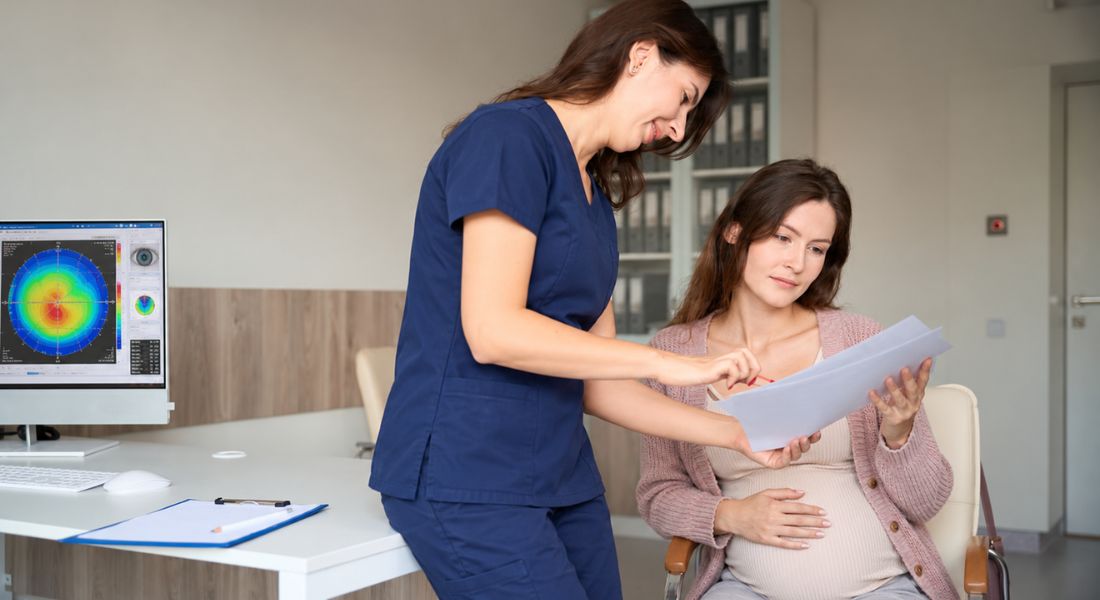
Your hormonal changes during pregnancy may affect corneal measurements, and limited research suggests keratoconus can progress during pregnancy or after delivery. However, pregnancy does not necessarily mean your condition will worsen.
Your ophthalmologist can compare your corneal scans over time to help distinguish temporary changes from genuine progression. Follow-up after pregnancy may also help guide your treatment decisions.
What Is Keratoconus?
Keratoconus is a condition in which your cornea gradually thins and becomes irregular, affecting how clearly you see. Your vision may become blurred or distorted as short-sightedness and astigmatism increase.
Your ophthalmologist monitors changes through corneal scans and vision tests. If your scans confirm progression, corneal cross-linking may help reduce the risk of further deterioration.
Why Could Pregnancy Affect Your Cornea?
Your hormonal and physiological changes during pregnancy may affect your cornea’s shape, thickness and biomechanical properties. Research suggests that some corneal changes during pregnancy may be temporary and improve after delivery.
Your keratoconus makes these changes particularly important because your cornea is already thin and irregular. Your ophthalmologist can monitor your corneal scans to help distinguish temporary changes from genuine progression.
Do Pregnancy Hormones Cause Keratoconus Progression?
Your hormonal changes during pregnancy may contribute to keratoconus progression, but research has not yet established a direct cause-and-effect relationship.
Your oestrogen, progesterone and other hormone levels change during pregnancy and may influence corneal biomechanical properties. However, the evidence remains limited, and more research is needed to understand how these changes affect your cornea.
What Does the Research Show About Pregnancy and Keratoconus?
Your keratoconus may progress during pregnancy, according to small studies reporting changes in corneal shape, thickness and biomechanical properties. However, the available research is limited and cannot predict how your cornea will respond.
Your pregnancy does not mean your keratoconus will inevitably worsen. Your ophthalmologist can monitor your corneal scans to identify any significant changes.
Evidence Note
Available research suggests that pregnancy can be associated with changes in corneal shape, thickness and biomechanics in some people with keratoconus. However, the evidence is based largely on small studies, so these findings cannot predict whether your own keratoconus will progress during pregnancy.
Can Pregnancy-Related Corneal Changes Be Temporary?
Your cornea may change shape during pregnancy, and you may find that some of these changes improve after delivery. However, your cornea may not return completely to its previous shape.
Your ophthalmologist can compare your corneal scans over time to see whether your keratoconus is genuinely progressing or your measurements are changing temporarily. This helps you understand your corneal health and whether you need further monitoring or treatment.
Research Insight
Research has suggested that some corneal changes seen during pregnancy may improve after delivery as hormonal and physiological changes settle. However, improvement is not guaranteed, and repeat corneal imaging is important when your measurements or vision change.
Why Can Your Prescription Change During Pregnancy?

Your prescription may change during pregnancy because hormonal and tear-film changes can affect how clearly you see. If you have keratoconus, increasing short-sightedness or astigmatism may also indicate possible progression.
Your prescription alone cannot confirm that your keratoconus has worsened. Your ophthalmologist can compare your corneal scans and previous results to determine whether your vision changes are temporary or reflect genuine progression.
What Visual Changes Could Suggest Keratoconus Progression?
Your keratoconus may be progressing if you notice increasing blur, ghost images, halos or glare around lights. Your glasses may no longer provide clear vision, and your astigmatism or contact-lens fit may change.
Your symptoms alone cannot confirm progression because pregnancy can also cause temporary visual changes. Your ophthalmologist can compare your corneal scans to determine whether your keratoconus is worsening and whether you need further monitoring.
Pregnancy-Related Changes vs Keratoconus Progression
| Change You May Notice | Possible Explanation | What Your Ophthalmologist Can Check |
| Increased blurred vision | Pregnancy-related tear-film changes or keratoconus progression | Vision and previous results |
| Increasing astigmatism | Temporary corneal changes or genuine progression | Corneal topography or tomography |
| More halos or glare | Changes in corneal shape or surface | Corneal shape and optical quality |
| Contact lenses fitting differently | Changes in corneal shape or tear film | Lens fit and corneal measurements |
| Vision remaining worse after delivery | Persistent corneal changes or progression | Repeat scans and clinical examination |
Can Contact Lenses Fit Differently During Pregnancy?
Your contact lenses may feel different during pregnancy because changes in your corneal shape and tear film can affect their fit and comfort. You may notice more irritation, fluctuating vision or reduced wearing time, particularly with rigid lenses.
If your lenses become painful, your eyes become significantly red or your vision worsens, stop wearing them and seek professional advice. Your contact-lens practitioner can check whether you need a different fit or further assessment of your cornea.
How Is Keratoconus Progression Checked During Pregnancy?
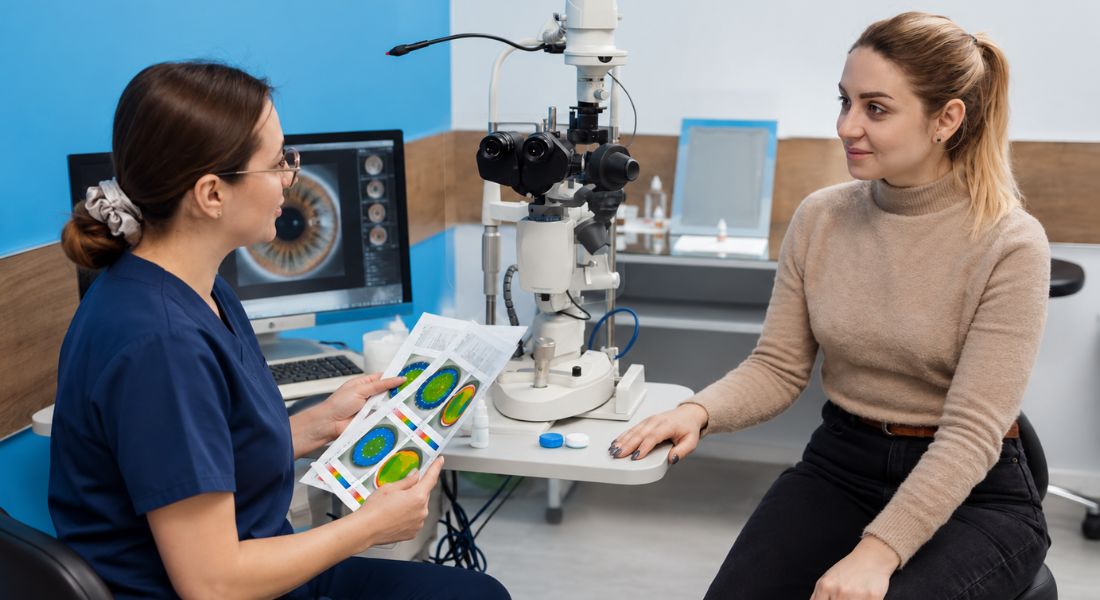
Your ophthalmologist can monitor your cornea during pregnancy using specialised scans and vision assessments. Comparing your results over time helps your doctor distinguish genuine keratoconus progression from temporary changes.
- Corneal topography: This scan maps the shape and curvature of your cornea, helping your ophthalmologist identify changes over time.
- Corneal tomography: Tomography provides detailed information about your corneal shape and thickness, which can help assess whether structural changes are occurring.
- Previous scans and prescription: Comparing your current results with earlier corneal scans, prescription changes and vision tests can help your doctor identify a pattern of progression.
- Monitoring schedule: Your follow-up schedule will depend on your symptoms, previous scan results and how your cornea changes during and after pregnancy.
Regular monitoring can help your ophthalmologist recognise meaningful changes in your keratoconus and decide whether further assessment is needed. Comparing results over time is particularly useful because not every change during pregnancy represents permanent progression.
Why Is a Pre-Pregnancy Corneal Scan Useful?

If you have keratoconus and are planning pregnancy, your pre-pregnancy corneal scan gives your ophthalmologist a useful baseline. Your scan records your corneal shape and thickness before pregnancy-related changes occur.
If your vision or prescription changes during pregnancy, your doctor can compare your new scans with your earlier results. This helps you understand whether your keratoconus is progressing or showing temporary changes.
Clinical Tip
If you are planning a pregnancy and already have keratoconus, keeping a recent corneal scan as a baseline can be useful. If your vision or prescription changes during pregnancy, your ophthalmologist can compare your new measurements with this earlier scan rather than relying on symptoms alone.
Who May Need Closer Monitoring During Pregnancy?
Your ophthalmologist may recommend closer monitoring during pregnancy if your keratoconus was already progressing, your scans were unstable or you are younger and at greater risk of progression.
Your eye health, history of eye rubbing, allergies and previous cross-linking treatment also matter. Even after cross-linking, you should have new visual changes assessed rather than assuming they are temporary.
Does Eye Rubbing Matter More During Pregnancy?
Your eye rubbing can contribute to keratoconus progression, particularly if you rub your eyes frequently or forcefully. Your allergies or irritation may make you rub without realising how often you do it.
If your eyes feel itchy during pregnancy, ask your ophthalmologist about suitable treatments. Avoiding rubbing helps reduce unnecessary stress on your cornea, even though you cannot control pregnancy-related hormonal changes.
Does Previous Corneal Cross-Linking Protect You During Pregnancy?
Previous corneal cross-linking (CXL) can reduce the risk of keratoconus progression, but it does not guarantee that your corneal measurements will remain unchanged during pregnancy.
If your vision changes during pregnancy, your ophthalmologist can compare your scans to determine whether the changes are temporary or indicate genuine progression. Do not assume that your treatment has failed or that the changes are harmless.
Should You Consider Cross-Linking Before Pregnancy?
If your keratoconus is progressing, your specialist can assess whether cross-linking is appropriate before pregnancy. Your decision depends on your corneal scans, thickness and risk of further progression.
Your pregnancy alone does not mean you need treatment if your keratoconus is stable. Your specialist can advise whether keratoconus treatment in London or continued monitoring is more suitable.
UK Guidance Note
If you have keratoconus and are planning a pregnancy, discuss your eye condition and any planned treatment with your ophthalmology team before becoming pregnant. Your specialist can review your latest corneal measurements and explain whether monitoring or treatment should be considered before pregnancy.
Can Corneal Cross-Linking Be Performed During Pregnancy?
Corneal cross-linking is generally not performed during pregnancy because its safety has not been adequately established. Your corneal measurements may also change temporarily during pregnancy, making progression harder to assess.
If your scans worsen, your corneal specialist can arrange closer monitoring and decide when to reassess your cornea after delivery.
What Happens to Keratoconus After Delivery?
Your corneal measurements may take time to stabilise after delivery. Limited evidence suggests that some changes can persist during the breastfeeding period, although the timing varies between individuals. Your cornea may return towards its previous shape, although this does not happen in every case.
Your ophthalmologist can compare repeat scans to check whether your keratoconus is stabilising or progressing. If progression continues, your specialist may discuss cross-linking when appropriate.
Does Breastfeeding Affect When Your Cornea Stabilises?
Your corneal measurements may take time to stabilise after delivery. Limited evidence suggests that some corneal changes can persist during breastfeeding, but it is not clear whether breastfeeding itself affects the stabilisation process.
Your ophthalmologist can monitor your corneal scans and consider your breastfeeding status when planning treatment. You should not stop breastfeeding solely because you have keratoconus.
Myth vs Fact
| Myth | Fact |
| Pregnancy always makes keratoconus worse. | Pregnancy may be associated with progression in some people, but worsening is not inevitable. |
| A change in glasses prescription proves keratoconus has progressed. | Prescription changes can occur for several reasons during pregnancy, so corneal scans are needed to assess genuine progression. |
| Previous cross-linking guarantees that your keratoconus cannot progress during pregnancy. | Cross-linking reduces the risk of progression but does not guarantee that your corneal measurements will remain unchanged. |
| Any corneal change during pregnancy is permanent. | Some pregnancy-related changes may improve after delivery, although this does not happen in every case. |
Key Takeaways
- Pregnancy can cause hormonal and physiological changes that affect your corneal shape, thickness and measurements.
- Pregnancy does not automatically mean that your keratoconus will progress.
- Changes in your vision or glasses prescription do not prove progression, so corneal topography or tomography can provide more useful evidence.
- A pre-pregnancy corneal scan can give your ophthalmologist a useful baseline for comparison.
- If your keratoconus is already progressing or your scans are unstable, your ophthalmologist may recommend closer monitoring.
- Previous corneal cross-linking can reduce the risk of progression but does not guarantee that your cornea will remain unchanged during pregnancy.
- Corneal cross-linking is generally not performed during pregnancy, so treatment decisions should be discussed with your corneal specialist before pregnancy where possible.
Frequently Asked Questions
- Can pregnancy make keratoconus worse?
Pregnancy may contribute to keratoconus progression in some people, although the research is limited and pregnancy does not mean your condition will inevitably worsen. Your ophthalmologist can compare corneal scans over time to identify significant changes. - Do pregnancy hormones cause keratoconus progression?
Hormonal changes during pregnancy may influence your corneal shape, thickness and biomechanical properties. However, research has not established a direct cause-and-effect relationship between pregnancy hormones and keratoconus progression. - Can keratoconus-related changes during pregnancy be temporary?
Yes. Some pregnancy-related corneal changes may improve after delivery, although your cornea may not return completely to its previous shape. Repeat scans can help your ophthalmologist distinguish temporary changes from genuine progression. - Why might your glasses prescription change during pregnancy?
Your prescription may change because hormonal and tear-film changes can affect your vision. If you have keratoconus, increasing short-sightedness or astigmatism may also suggest progression, but your prescription alone cannot confirm this. - How is keratoconus progression monitored during pregnancy?
Your ophthalmologist may use corneal topography or tomography to assess your corneal shape, curvature and thickness. Your previous scans and vision tests provide a baseline for identifying changes over time. - Who may need closer monitoring during pregnancy?
You may need closer monitoring if your keratoconus was already progressing, your scans were unstable or you have other risk factors for progression. Your history of eye rubbing, allergies and previous cross-linking treatment may also be relevant. - Can you wear contact lenses during pregnancy if you have keratoconus?
You may be able to continue wearing contact lenses, but changes in your corneal shape and tear film can affect their fit and comfort. If your lenses become painful, your eyes become significantly red or your vision worsens, stop wearing them and seek professional advice. - Does previous corneal cross-linking protect you during pregnancy?
Previous corneal cross-linking can reduce the risk of keratoconus progression, but it does not guarantee that your corneal measurements will remain unchanged. Your ophthalmologist can compare your scans if your vision changes during pregnancy. - Can you have corneal cross-linking during pregnancy?
Corneal cross-linking is generally not performed during pregnancy because its safety has not been adequately established. If your corneal scans worsen, your specialist can arrange closer monitoring and reassess your treatment after delivery. - Can keratoconus stabilise after delivery or during breastfeeding?
Your corneal measurements may take time to stabilise after delivery. Limited evidence suggests that some changes can persist during breastfeeding, but the timing varies and breastfeeding itself has not been clearly established as the cause.
Final Thoughts: Pregnancy and Keratoconus
Pregnancy-related hormonal changes may affect your corneal shape and measurements, and limited research suggests that keratoconus can progress during pregnancy or after delivery. However, progression is not inevitable, and changes in your vision or prescription do not automatically mean your condition has worsened. Regular corneal scans and follow-up after delivery can help your ophthalmologist assess changes and determine whether further treatment is needed.
If you’re considering Keratoconus treatment in London and want to explore suitable options based on your corneal condition and visual needs, you can contact the Eye Clinic London team to arrange a consultation.
References:
- Jani, D., McKelvie, J. and Misra, S.L. (2021) ‘Progressive corneal ectatic disease in pregnancy’, Clinical and Experimental Optometry, 104(8), pp. 815–825. Available at: https://pubmed.ncbi.nlm.nih.gov/34384340/
- Naderan, M. and Jahanrad, A. (2017) ‘Topographic, tomographic and biomechanical corneal changes during pregnancy in patients with keratoconus: a cohort study’, Acta Ophthalmologica, 95(4), pp. e291–e296. Available at: https://pubmed.ncbi.nlm.nih.gov/27781383/
- Naderan, M. (2018) ‘Ocular changes during pregnancy’, Journal of Current Ophthalmology, 30(3), pp. 202–210. Available at: https://pmc.ncbi.nlm.nih.gov/articles/PMC6127369/
- Naranjo, A. and Manche, E.E. (2024) ‘A comprehensive review on corneal crosslinking’, Taiwan Journal of Ophthalmology, 14(1), pp. 44–49. Available at: https://pmc.ncbi.nlm.nih.gov/articles/PMC11034691/
- Sharif, R., Bak-Nielsen, S., Hjortdal, J. and Karamichos, D. (2018) ‘Pathogenesis of Keratoconus: The intriguing therapeutic potential of Prolactin-inducible protein’, Progress in Retinal and Eye Research, 67, pp. 150–167. Available at: https://www.sciencedirect.com/science/article/pii/S1350946217301246