


What Eye Condition Does Stephen Curry Have?
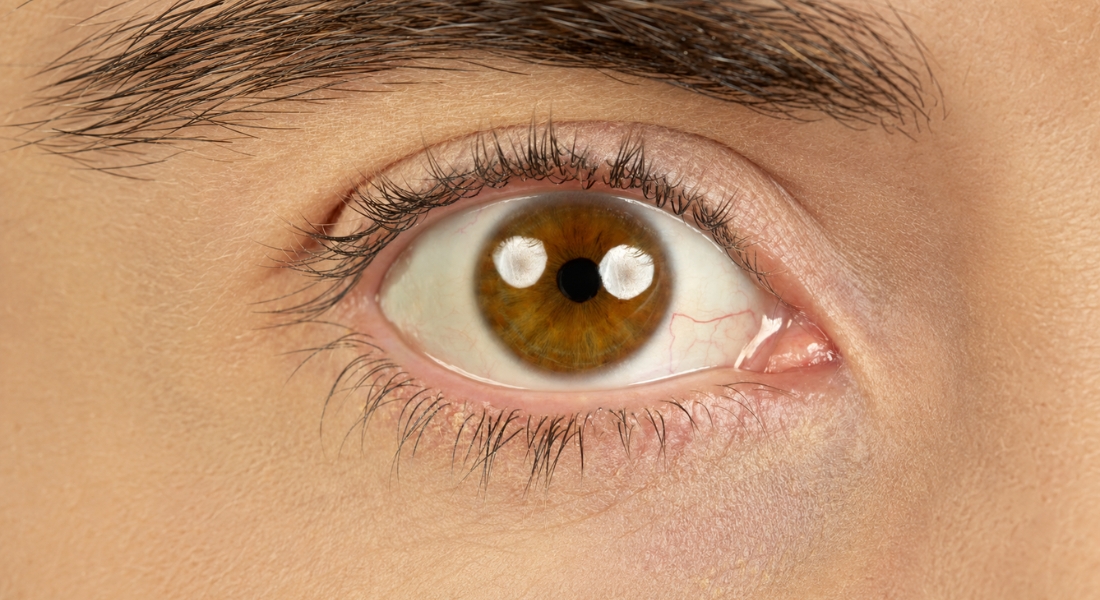
If you have heard that Stephen Curry was reported to have keratoconus, you may be wondering what the condition means and whether the diagnosis has been confirmed. Keratoconus can thin and distort the cornea, which may cause blurred or distorted vision.
Curry said that contact lenses made his vision clearer, but he later told reporters that he did not have an eye disease and described his issue as blurry vision. It is therefore more accurate to describe keratoconus as a condition reported in media coverage rather than as a diagnosis personally confirmed by Curry.
What Has Stephen Curry Publicly Said About His Eyes?
Stephen Curry revealed in 2019 that he had started wearing contact lenses and noticed a significant improvement in his vision. If you experience blurry vision, you may also find that corrective lenses make everyday details appear noticeably sharper.
Keratoconus was reported as his condition in 2019 media coverage, but Curry later told reporters that he did not have an eye disease and described the issue as blurry vision that improved with corrective lenses. If you are comparing his experience with your own, remember that his prescription, corneal measurements and specific diagnosis have not been publicly confirmed by him.
What Is Keratoconus?
Keratoconus affects your cornea, the clear front surface of your eye. If you have keratoconus, your cornea can become thinner and develop a more irregular shape, which may make your vision blurred or distorted.
You may also develop irregular astigmatism, making it harder for glasses to correct your vision fully. Keratoconus often begins in your teens or twenties, but its progression varies, and you do not automatically need major eye surgery.
How Does Keratoconus Change Your Vision?
Keratoconus changes the shape of your cornea, which can prevent light from focusing evenly inside your eye. As the cornea becomes more irregular, you may notice changes in both the sharpness and quality of your vision.
- Blurred Vision: You may find that objects become less clear even after your glasses prescription has been updated.
- Irregular Astigmatism: Changes in corneal shape can cause astigmatism that becomes more difficult to correct with ordinary glasses.
- Ghost Images: You may notice doubled outlines or shadow-like images around letters, objects or lights.
- Glare and Halos: Bright lights may appear more distracting, particularly when you are driving or seeing in low-light conditions.
These symptoms can vary depending on how much your corneal shape has changed and whether one eye is affected more than the other. If your vision becomes increasingly blurred or distorted, an eye examination and corneal scans can help determine whether keratoconus is responsible.
Why Can Keratoconus Cause Astigmatism?
If you have keratoconus, your cornea can become unevenly curved as it thins and bulges. You may then develop irregular astigmatism, which can make your vision blurred or distorted even with the correct glasses prescription.
You may find that glasses become less effective as the corneal shape changes. Specialist contact lenses can sometimes give you sharper vision by creating a smoother optical surface over the irregular cornea.
What Symptoms Should You Look Out For?
If you have keratoconus, you may notice blurred vision, distorted letters, glare or halos around lights. You may also experience ghost images or find that one eye sees more clearly than the other.
You should pay attention if your glasses prescription changes frequently, particularly if you develop increasing astigmatism. These symptoms do not confirm keratoconus, so you may need corneal topography or tomography to check your corneal shape.
Why Did Contact Lenses Make Such a Difference to Curry?

When Curry started wearing contact lenses, he described his vision as noticeably clearer and sharper. If you have blurred vision, the right contact lenses can also make everyday details appear much more defined.
If you have keratoconus, specialist lenses such as rigid gas-permeable or scleral lenses may create a smoother optical surface over your irregular cornea. You should not assume which type Curry used, as his specific lens prescription has not been publicly confirmed.
Can Contact Lenses Treat Keratoconus Itself?
If you have keratoconus, contact lenses can help you see more clearly but do not stop the condition from progressing. They improve the way light enters your eye while your underlying corneal shape remains unchanged.
You may therefore need regular eye checks to monitor whether your cornea is changing. If your lenses become uncomfortable or your vision changes noticeably, you should have the fit and your cornea reviewed by an eye specialist.
Clinical Tip
Good vision in contact lenses does not necessarily mean that your keratoconus is stable. Contact lenses correct the optical effect of an irregular cornea but do not stop progression, so you should still attend recommended corneal scans even when your lenses are working well.
How Is Keratoconus Diagnosed?
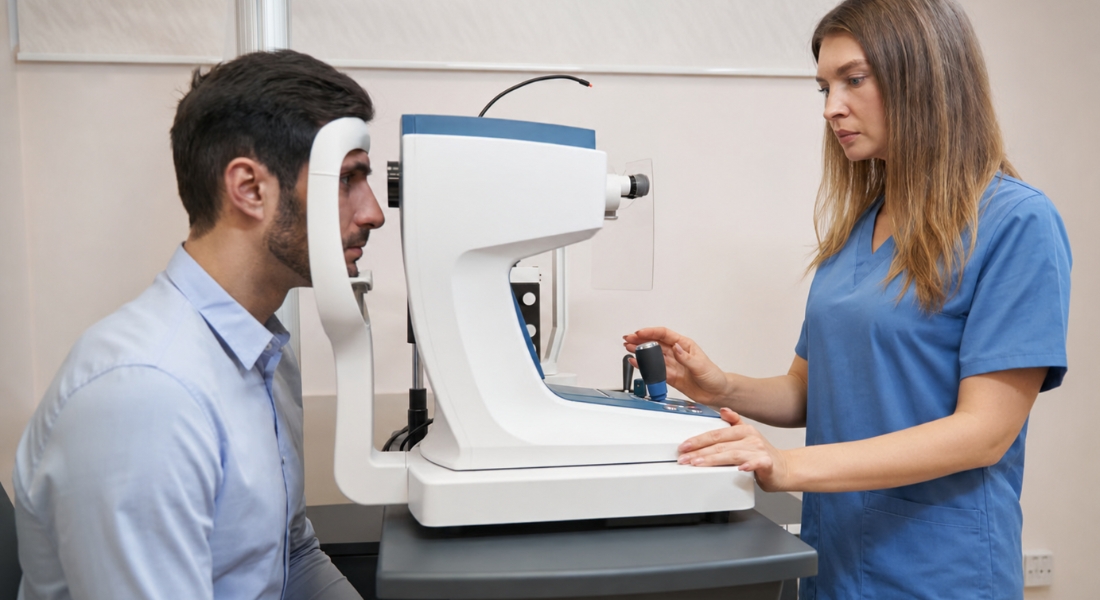
If you have symptoms of keratoconus, your eye specialist may check your vision, glasses prescription and cornea using a slit-lamp examination. You may also need corneal topography or tomography, which maps your cornea’s shape and thickness in detail.
You may have repeat scans so your specialist can compare your corneal measurements over time. If your keratoconus is progressing, you may be offered treatment such as corneal cross-linking to help stabilise the cornea.
Evidence Note
Corneal topography and tomography are important because early keratoconus may not always be obvious during a routine examination. These scans assess features such as corneal curvature, elevation and thickness and are also useful when your specialist needs to monitor change over time.
Does Keratoconus Always Get Worse?
No, your keratoconus does not always progress. You may have mild, stable keratoconus that remains manageable with glasses or contact lenses, while another person may experience changes over time.
You should still have regular eye checks, especially when you are younger. Repeat corneal scans can show whether your cornea is becoming thinner or more irregular and help your specialist decide if treatment is needed.
What Is Corneal Cross-Linking?
Corneal cross-linking, or CXL, is a treatment that can strengthen your cornea and help slow or stop progressive keratoconus. It uses riboflavin and controlled ultraviolet light to strengthen the collagen structure within your cornea.
You may still need glasses or contact lenses after CXL because it does not directly restore your vision. If your keratoconus is progressing, your specialist may consider CXL, but you should not assume that Curry has had this treatment because this has not been reliably confirmed.
What Does Research Show About Corneal Cross-Linking?
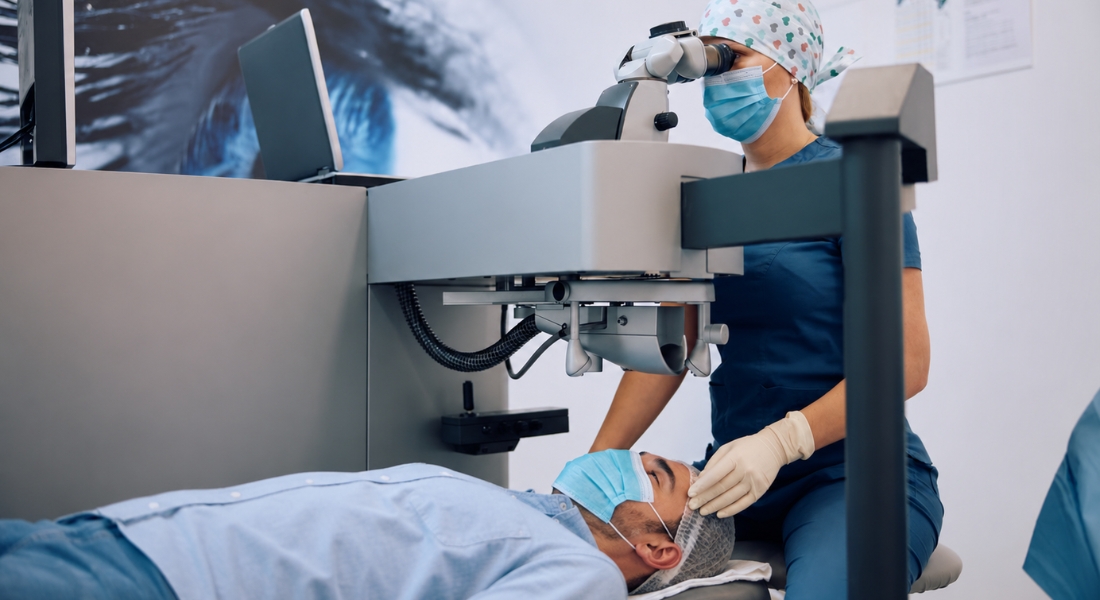
A systematic review and meta-analysis included 48 randomised controlled trials examining corneal cross-linking and different CXL protocols for progressive keratoconus. In studies that compared CXL with control groups, treatment was associated with improvements in maximum corneal steepness and some visual-acuity measures at selected follow-up points. However, protocols and follow-up periods varied, and CXL is primarily intended to stabilise progression rather than eliminate the need for glasses or contact lenses.
Who Might Need Corneal Cross-Linking?
You may be considered for corneal cross-linking if your keratoconus is showing signs of progression. Your specialist can use repeat scans, changes in your prescription and your age to assess whether your cornea is becoming thinner or more irregular.
You may not need CXL if your keratoconus is stable. Your cornea also needs to be suitable for treatment, so your specialist will assess its thickness and condition before recommending the procedure.
What Is Recovery Like After Cross-Linking?
If you have epithelium-off cross-linking, your corneal surface may take several days to heal. You may experience soreness, watering and hazy vision, while a bandage contact lens may be used to protect your eye during healing.
You can usually expect your vision to fluctuate for longer than the initial recovery period. You will need prescribed eye drops and follow-up appointments, and you should contact your specialist if you develop worsening pain, redness or vision changes.
UK Guidance Note
NICE considers the evidence for epithelium-off corneal cross-linking adequate for use with normal clinical governance, consent and audit arrangements. For epithelium-on and combined “CXL-plus” procedures, NICE considers the evidence inadequate in quantity and quality and recommends special arrangements for clinical governance, consent and audit or use in research.
What Causes Keratoconus and Who Is More Likely to Develop It?
The exact cause of keratoconus is not fully understood, but both genetic and environmental factors appear to contribute. You may have a higher likelihood of developing the condition if a close family member has keratoconus, although many people who develop it have no known family history.
Frequent or vigorous eye rubbing has also been associated with keratoconus, and allergies may contribute by making your eyes itchy and encouraging rubbing. Having one of these risk factors does not mean that you will develop keratoconus, but it may be useful to mention them during an eye assessment.
What Other Contact Lenses Can Be Used for Keratoconus?
If you have keratoconus, you may be offered different contact lens options depending on your corneal shape and vision needs. Rigid gas-permeable, hybrid and specialist soft lenses can help create clearer vision, while scleral lenses may suit more irregular corneas.
You may need to try different designs before finding the most comfortable and effective fit. Whatever lens you use, you should follow your practitioner’s cleaning and wearing instructions carefully to reduce the risk of eye infection.
How Do Keratoconus Treatments Differ?
| Option | Main purpose | Does it stop progression? |
| Glasses | Improve vision in milder disease | No |
| Specialist soft or rigid contact lenses | Improve vision by correcting the irregular optical surface | No |
| Scleral lenses | Improve vision in more irregular corneas and may improve lens comfort for some people | No |
| Corneal cross-linking | Strengthen and stabilise a progressing cornea | Its main aim is to slow or stop progression |
| Intracorneal ring segments | Alter corneal shape in selected patients | Not primarily a treatment to stop progression |
| Corneal transplant | Replace severely affected corneal tissue when other options no longer provide useful vision | Not applicable; it replaces affected corneal tissue in advanced disease |
When Might Keratoconus Require Surgery?
If you have keratoconus, you may not need surgery because glasses, contact lenses and cross-linking can manage many cases. A corneal transplant may be considered if your vision remains poor despite contact lenses or if significant corneal scarring develops.
You may also be offered other specialist procedures, such as intracorneal ring segments, depending on your corneal shape and condition. You should avoid assuming that standard laser eye surgery is suitable for keratoconus, as it can worsen an already weakened cornea.
Can You Have LASIK If You Have Keratoconus?
If you have established keratoconus, standard LASIK is generally not suitable because it removes corneal tissue from a cornea that may already be thin and structurally weak. You may need detailed corneal scans before any laser eye surgery is considered.
You should not assume that your short-sightedness or astigmatism makes you suitable for LASIK. Specialist procedures may be considered in selected cases, but your corneal measurements and stability need to be assessed first.
When Should You Have Your Corneas Assessed?
If you notice increasingly blurred or distorted vision, frequent prescription changes or a noticeable difference between your eyes, you should arrange an eye examination. You may also need specialist assessment if you develop increasing or irregular astigmatism, as corneal scans can detect changes that a routine sight test may miss.
If you already have keratoconus, you should attend your recommended monitoring appointments even when your contact lenses still work well. You should also avoid vigorous eye rubbing and seek prompt eye care if you develop sudden pain or a rapid change in vision.
Myth vs Fact
| Myth | Fact |
| Keratoconus always causes severe sight loss. | Some people have mild or stable disease that can be managed successfully with glasses or contact lenses. |
| Contact lenses cure keratoconus. | Contact lenses improve vision but do not change the underlying disease or stop progression. |
| Cross-linking is mainly designed to make your eyesight perfect. | Its main purpose is to stabilise progressive keratoconus; glasses or contact lenses may still be needed afterwards. |
| Everyone with keratoconus needs cross-linking. | CXL is generally considered when progression is occurring and the cornea is suitable for treatment. |
| Standard LASIK is safe if your keratoconus is mild. | Established keratoconus is a contraindication to standard LASIK because removing corneal tissue can increase ectasia risk. |
| Every person with keratoconus eventually needs a corneal transplant. | Transplantation is generally reserved for more advanced cases where other approaches do not provide adequate vision. |
| Keratoconus affects both eyes exactly the same way. | It commonly affects both eyes but can be considerably more advanced in one eye than the other. |
Key Takeaways
- Stephen Curry was reported in 2019 to have keratoconus and publicly described clearer vision after beginning contact lenses.
- Keratoconus causes thinning and irregular steepening of the cornea, which can produce blurred vision and irregular astigmatism.
- Corneal topography or tomography helps diagnose and monitor the condition.
- Specialist contact lenses can improve vision but do not stop keratoconus progression.
- Corneal cross-linking is primarily used to stabilise progressive keratoconus.
- Standard LASIK is generally unsuitable when keratoconus is present.
- Advanced keratoconus may occasionally require corneal surgery, but many people can be managed without transplantation.
Frequently Asked Questions
- What eye condition was Stephen Curry reported to have?
Stephen Curry was widely reported in 2019 as having keratoconus, a condition that affects the shape and strength of the cornea. However, Curry later described his issue as blurry vision that improved with corrective lenses, so not every detail of the reported diagnosis has been personally confirmed by him. - What is keratoconus?
Keratoconus is a condition in which your cornea becomes thinner and develops an increasingly irregular, cone-like shape. This can cause blurred, distorted or difficult-to-correct vision. - Can keratoconus affect both eyes?
Yes, keratoconus can affect both eyes, although it is common for one eye to be more severely affected than the other. The condition can also progress at different rates between your eyes. - Can contact lenses improve vision with keratoconus?
Yes, specialist contact lenses can significantly improve vision by creating a smoother optical surface over an irregular cornea. However, contact lenses correct your vision rather than stopping the underlying keratoconus from progressing. - Can keratoconus get worse over time?
Yes, keratoconus can progress, particularly during adolescence and early adulthood. Some people remain stable with mild disease, while others develop increasing corneal irregularity and need treatment to stabilise the condition. - What is corneal cross-linking for keratoconus?
Corneal cross-linking uses riboflavin and controlled ultraviolet light to strengthen the collagen structure of your cornea. Its main purpose is to slow or stop progression rather than immediately improve your vision. - Can you have LASIK if you have keratoconus?
Standard LASIK is generally unsuitable for people with keratoconus because it removes corneal tissue from a cornea that is already structurally weakened. Your corneal shape and thickness should be assessed carefully before considering any laser eye surgery. - How is keratoconus diagnosed?
Your ophthalmologist may assess your vision, eye health and glasses prescription before performing corneal topography or tomography. These scans provide detailed information about the shape and thickness of your cornea and can help identify progression. - When might surgery be needed for keratoconus?
Most people with keratoconus can be managed with glasses, contact lenses and, when appropriate, corneal cross-linking. A corneal transplant may be considered in advanced cases where significant scarring or irregularity prevents useful vision with other treatments. - When should you have your eyes checked for keratoconus?
You should consider an eye examination if your prescription changes frequently, your vision becomes increasingly distorted or one eye becomes noticeably blurrier than the other. Early assessment can help identify keratoconus and monitor whether the condition is progressing.
Final Thoughts: Understanding Stephen Curry’s Reported Keratoconus
Stephen Curry’s reported experience with blurred vision and contact lenses has helped draw attention to keratoconus, although his own public comments have not confirmed the reported diagnosis. His experience with clearer vision after using corrective lenses also shows how appropriate vision correction can make a meaningful difference when blurred vision is present.
If you’re considering keratoconus treatment in London and would like to understand which options may be appropriate for you, Eye Clinic London can assess your cornea and discuss suitable next steps based on your individual findings.
References:
- Kuo, A.N. et al. (2024) ‘Advanced corneal imaging in keratoconus: A report by the American Academy of Ophthalmology’, Ophthalmology, 131(1), pp. 107–121. Available at: https://www.sciencedirect.com/science/article/pii/S0161642023005626
- Sarma, P. et al. (2023) ‘Short- and long-term safety and efficacy of corneal collagen cross-linking in progressive keratoconus: A systematic review and meta-analysis of randomized controlled trials’, Taiwan Journal of Ophthalmology, 13(2), pp. 191–202. Available at: https://pmc.ncbi.nlm.nih.gov/articles/PMC10361434/
- Deshmukh, R., Ong, Z.Z., Rampat, R. et al. (2023) ‘Management of keratoconus: An updated review’, Frontiers in Medicine, 10, article 1212314. Available at: https://pmc.ncbi.nlm.nih.gov/articles/PMC10318194/
- Gomes, J.A.P. et al. (2026) ‘Global Consensus on Keratoconus and Ectatic Diseases—Edition 2’, Cornea, 45(7), pp. 888–908. Available at: https://pubmed.ncbi.nlm.nih.gov/42228627/
- Seth, I., Bulloch, G., Vine, M. et al. (2023) ‘The association between keratoconus and allergic eye diseases: A systematic review and meta-analysis’, Clinical & Experimental Ophthalmology, 51(4), pp. O1–O16. Available at: https://pubmed.ncbi.nlm.nih.gov/36882200/