


Shingles in the Eye (Herpes Zoster Ophthalmicus): Warning Signs
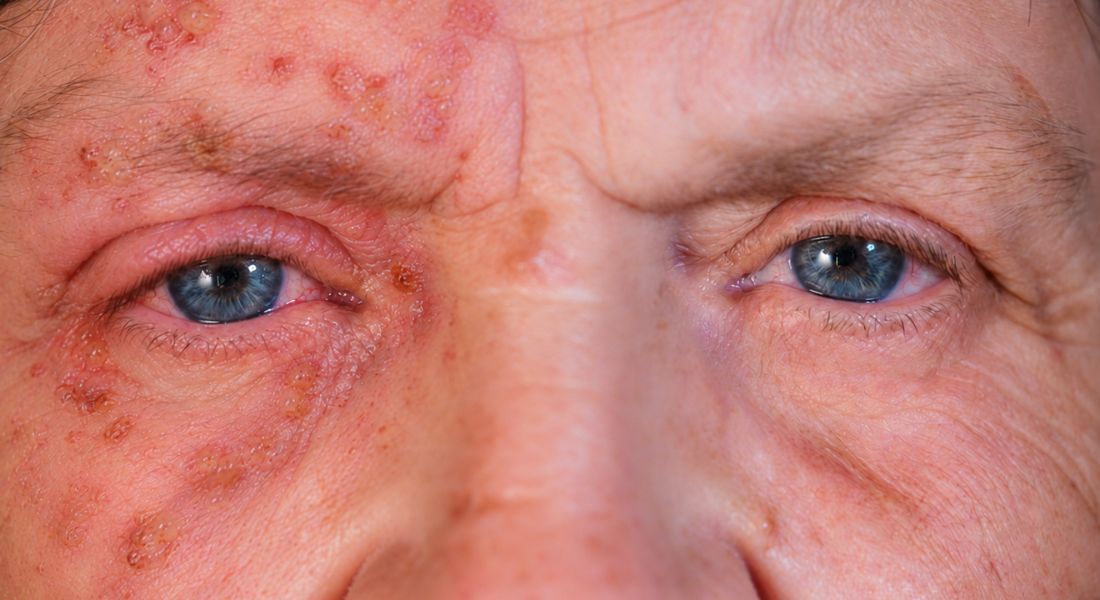
Shingles can affect your eye when it involves the ophthalmic branch of the trigeminal nerve. You may first notice pain, burning or tingling on one side of your forehead, followed by a rash.
Your eye can become red, painful or sensitive to light if the eye becomes involved. Prompt medical assessment and antiviral treatment can help reduce the risk of vision-related complications.
What Is Herpes Zoster Ophthalmicus?
Herpes zoster ophthalmicus (HZO) is shingles affecting the ophthalmic branch of the trigeminal nerve. It usually causes a painful rash on one side of your forehead, scalp or around your eye.
Your skin rash does not always mean that your eye is affected. However, HZO can cause eye complications, so prompt assessment is important when symptoms develop around your eye.
What Does Shingles Around the Eye Usually Look Like?
A shingles rash usually appears as painful clusters of blisters on one side of your face. You may first notice burning, tingling, itching or pain before the blisters develop and later crust over.
The HZO rash can affect your forehead, scalp, upper eyelid or nose on one side. If you have significant pain or symptoms around your eye, seek medical advice without waiting for the full rash to appear.
Can You Have Eye Symptoms Before the Rash?
HZO can sometimes cause pain, tingling or burning on one side of your forehead before the rash appears. You may also notice eye discomfort, watering or light sensitivity during this early stage.
Your rash may occasionally be very subtle or absent, making the condition harder to recognise. Unexplained eye symptoms with one-sided facial pain should therefore be assessed promptly.
Why Is the Rash on Your Nose Important?
Hutchinson’s sign is associated with a higher likelihood of eye involvement because this area is supplied by the nasociliary branch of the trigeminal nerve. However, the absence of Hutchinson’s sign does not rule out eye complications.
- Hutchinson’s sign: A rash on the nose can be a warning sign that the eye may also be affected.
- Nerve involvement: The affected area is supplied by the nasociliary branch of the trigeminal nerve, which also supplies parts of the eye.
- No nose rash does not rule out eye involvement: Your eye can still be affected even if the rash does not appear on your nose.
- Watch for eye symptoms: If you develop eye redness, pain, light sensitivity or blurred vision, seek prompt medical assessment.
A nose rash can therefore help your doctor recognise a higher risk of eye involvement, but its absence does not guarantee that your eye is unaffected. Any new eye symptoms with shingles around the forehead or eye should be assessed promptly.
What Are the Main Warning Signs of Eye Involvement?
HZO may affect your eye if you develop redness, pain, watering, swelling or sensitivity to light. You may also notice blurred or changed vision.
Your symptoms can become more serious if the cornea or deeper parts of your eye are inflamed. If you have shingles around your eye and notice these warning signs, seek prompt medical assessment.
Can Shingles Cause a Red or Painful Eye?
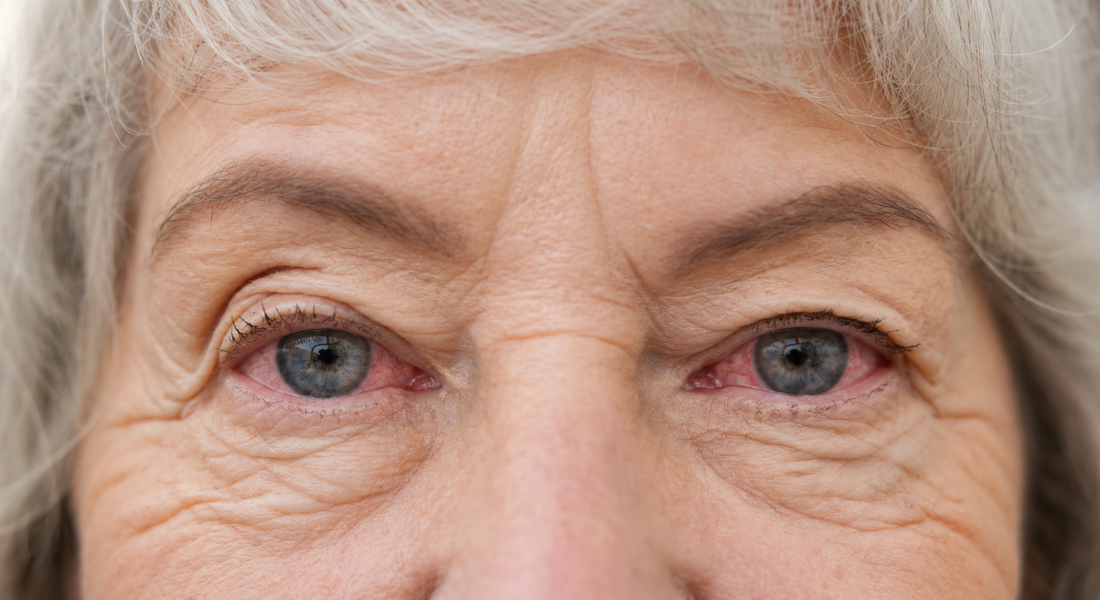
Shingles can cause a red, watery or painful eye when the virus affects tissues around or inside your eye. You may also develop light sensitivity or changes in your vision.
Your red eye should not automatically be assumed to be conjunctivitis, especially during facial shingles. If your eye is painful, your vision changes or light becomes uncomfortable, you should arrange an urgent eye assessment.
How Can Shingles Affect the Cornea?
HZO can cause inflammation of different layers of your cornea, leading to blurred vision, light sensitivity or discomfort. The virus can also reduce corneal sensation, so significant damage may sometimes cause fewer symptoms than expected.
Recurrent or severe corneal inflammation can lead to scarring and affect your vision. An eye examination is therefore important even when your skin symptoms are improving.
How Can HZO Affect the Eye?
| Eye structure | Possible effect of HZO | Symptoms you may notice |
| Conjunctiva | Inflammation of the surface of the eye | Redness, watering or irritation |
| Cornea | Keratitis or reduced corneal sensation | Pain, light sensitivity, foreign-body sensation or blurred vision |
| Uvea | Uveitis or iritis | Eye pain, redness, light sensitivity and blurred vision |
| Retina | Retinitis or other retinal inflammation | Floaters, flashes or reduced vision |
| Optic nerve | Optic nerve inflammation, rarely | Reduced or altered vision |
Can Shingles Cause Uveitis?
HZO can cause uveitis, which is inflammation inside your eye. You may notice eye pain, blurred vision, redness and significant sensitivity to light.
Your eye pressure may also increase, so your ophthalmologist may check it during an examination. Treatment can include antiviral medicine and carefully supervised steroid eye drops, which you should not start yourself.
Can Shingles Affect the Retina or Optic Nerve?
HZO can rarely affect deeper parts of your eye, including the retina, choroid or optic nerve. You may notice reduced vision, floaters, flashes or other changes in your sight.
Worsening vision after shingles should not be assumed to be part of normal recovery. Seek urgent ophthalmic assessment if you develop sudden or increasing visual symptoms.
Why Is Early Antiviral Treatment Important?
HZO is usually treated with antiviral medicine to reduce viral replication and lower the risk of complications. Treatment works best when started as soon as possible, ideally within 72 hours of the rash appearing.
Antiviral treatment may still be considered after 72 hours, particularly if you have new blisters, severe symptoms or eye involvement. Your clinician will decide which medicine and treatment duration are appropriate for you.
Evidence Note
Evidence from randomised trials supports prompt systemic antiviral treatment for herpes zoster, including HZO. Antiviral treatment can shorten the acute illness and reduce pain, while studies of HZO have also found benefits from early treatment in reducing the severity of ocular complications.
The important point is not to wait for eye symptoms to become severe before seeking advice. Prompt medical assessment is important when shingles affects the eye or nose or when you develop changes in vision, and antiviral treatment is most useful when started early. Treatment may still be considered after 72 hours in selected situations, particularly when there is ongoing disease or ocular involvement.
What Antiviral Treatments May Be Used?

HZO may be treated with oral antiviral medicines such as aciclovir, valaciclovir or famciclovir. Your doctor will choose the most suitable option based on your symptoms, health and other medicines.
Your eye may also need additional treatment if the cornea or deeper parts are inflamed. Steroid eye drops may sometimes be used for this, but only under ophthalmic supervision.
Does Everyone With Facial Shingles Develop Eye Problems?
Facial shingles does not always cause eye problems. You may have a rash around your forehead or eyelid without significant involvement of your eye.
Your eye symptoms can sometimes develop later, so new redness, pain, light sensitivity or changes in vision should be assessed. Early review can help identify complications such as keratitis or uveitis.
Can Eye Problems Develop After the Rash Has Gone?
HZO can cause eye problems even after your facial rash has disappeared. You may develop new redness, pain, light sensitivity or reduced vision later.
Your ophthalmologist may recommend ongoing monitoring because some complications can recur or develop over time. New eye symptoms after HZO should therefore be assessed promptly.
UK Guidance Note
If shingles affects your eye or nose, or you develop changes to your vision, you should seek urgent medical advice. Antiviral treatment works best when started within 3 days of the shingles rash appearing, so suspected shingles around the eye should not be left until a routine appointment.
If you suddenly lose vision, go to A&E or call 999. If you develop severe eye pain, a red or painful eye, marked light sensitivity or other significant changes in your eyesight, seek urgent medical assessment rather than waiting for the rash to improve. Local NHS eye services may have specific emergency referral pathways for HZO.
Can HZO Cause Long-Term Vision Problems?
HZO does not always cause permanent vision loss, particularly when eye complications are treated promptly. However, repeated inflammation can damage your cornea or other parts of your eye.
Your long-term vision depends on which structures are affected and how well the infection and inflammation are controlled. Corneal scarring, reduced corneal sensation, cataract or raised eye pressure can sometimes affect your vision.
Research Insight
A 2026 review in the British Journal of Ophthalmology from specialists at Moorfields Eye Hospital highlights that HZO can cause a range of eye complications and that prompt antiviral treatment can reduce the risk and severity of vision-threatening complications. The review also highlights that HZO can recur and may require longer-term monitoring for ocular inflammation and other complications, meaning that follow-up may remain important after the skin rash has improved.
The same review discusses newer evidence around prevention and longer-term antiviral treatment. This is relevant because management is not always limited to treating the initial rash: your ophthalmologist may need to monitor for recurrent keratitis, uveitis, raised eye pressure or other complications depending on how your eye has been affected.
What Is Post-Herpetic Neuralgia?
Post-herpetic neuralgia is nerve pain that continues after your shingles rash has healed. You may notice burning, shooting or aching pain, or increased sensitivity in the same area.
Your risk can increase with age, particularly when shingles affects your face. If your pain continues after the rash has healed, speak to your healthcare professional about treatments for nerve pain.
What Happens During an Eye Examination for HZO?
Your ophthalmologist will usually check your vision and examine your eyelids, conjunctiva and cornea with a slit lamp. They may also check your eye pressure, corneal sensation and use fluorescein dye to look for surface changes.
Your specialist may carry out further tests if there are concerns about deeper parts of your eye. HZO is often diagnosed from the characteristic rash, symptoms and eye examination, although additional tests may sometimes be needed.
Clinical Tip
If you are being assessed for possible HZO, tell your eye-care professional when the rash started, when your eye symptoms began and whether you have previously had shingles affecting your face or eye. Also mention any changes in vision, light sensitivity, floaters or previous episodes of eye inflammation.
It can also help to bring a list of your medicines and any relevant medical history to your appointment. If your symptoms are changing quickly, particularly if your vision is becoming worse or your eye is becoming more painful or light-sensitive, explain this clearly rather than assuming it is part of the normal shingles rash.
Should You Wear Contact Lenses During HZO?
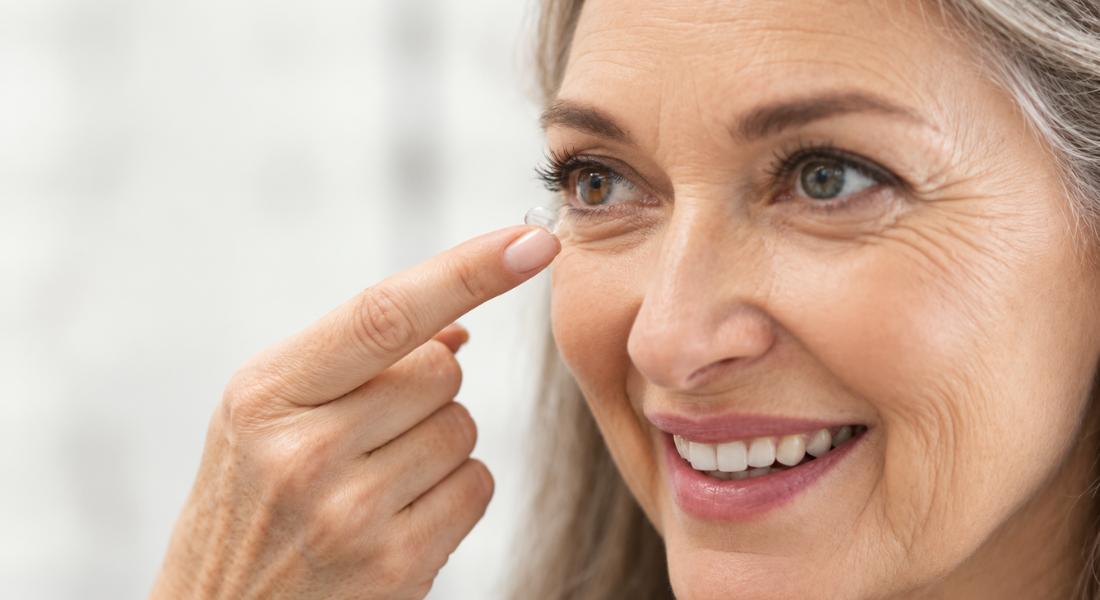
Your contact lenses can irritate your eye during active HZO, especially if your cornea is inflamed or damaged. You should stop wearing them unless your eye specialist specifically advises otherwise.
Your ophthalmologist can tell you when it is safe to use contact lenses again based on your corneal recovery. Do not use them to hide redness or discomfort while waiting for assessment.
Myth vs Fact
| Myth | Fact |
| Shingles around the eye only affects the skin. | HZO can affect the cornea, inside of the eye and, more rarely, deeper structures such as the retina or optic nerve. |
| If there is no rash on the nose, the eye cannot be affected. | Hutchinson’s sign increases the likelihood of eye involvement, but ocular disease can occur without a nose rash. |
| Once the skin rash disappears, eye complications cannot develop. | Eye inflammation can develop or recur after the skin rash has improved, so new eye symptoms still need assessment. |
| Antivirals are only useful if started within 72 hours. | Early treatment is preferred, but treatment may still be appropriate after 72 hours in selected cases, particularly when there is ongoing disease or eye involvement. |
| Steroid eye drops can be used without an eye examination. | Steroid eye drops may be needed for some forms of ocular inflammation but should be used under appropriate ophthalmic supervision. |
Key Takeaways
- Herpes zoster ophthalmicus occurs when shingles affects the ophthalmic division of the trigeminal nerve.
- Eye involvement can cause redness, pain, watering, light sensitivity, blurred vision or other visual changes.
- A rash on the nose can increase the likelihood of eye involvement, but its absence does not rule it out.
- Antiviral treatment should be started promptly when HZO is suspected.
- Eye complications can develop after the skin rash has improved, so new symptoms should still be assessed.
- Steroid eye drops should only be used when recommended and monitored by an appropriate eye-care professional.
- Contact lenses should be avoided while the eye is affected unless your eye specialist advises otherwise.
- Sudden loss of vision requires emergency medical assessment; other significant changes in vision should also be assessed urgently.
Frequently Asked Questions
- What is herpes zoster ophthalmicus (HZO)?
Herpes zoster ophthalmicus is shingles affecting the ophthalmic branch of the trigeminal nerve. It can cause a painful rash around your forehead, scalp, eyelid or eye and may lead to eye complications. - What are the warning signs that shingles is affecting your eye?
You may develop eye redness, pain, watering, swelling, light sensitivity or blurred vision. If you have shingles around your eye and develop any of these symptoms, you should seek prompt eye assessment. - Can you have eye symptoms before the shingles rash appears?
Yes. You may notice burning, tingling or pain on one side of your forehead before the rash develops. Eye discomfort, watering or light sensitivity can also occur during this early stage. - Why is a shingles rash on your nose important?
A rash on the tip, side or root of your nose is known as Hutchinson’s sign and can indicate a higher risk of eye involvement. However, your eye can still be affected even if you do not have a nose rash. - How can shingles affect your cornea?
HZO can cause inflammation of different layers of your cornea, leading to blurred vision, discomfort and light sensitivity. Recurrent or severe inflammation can sometimes cause corneal scarring and affect your vision. - Can shingles cause uveitis?
Yes. HZO can cause uveitis, which is inflammation inside your eye. You may experience eye pain, redness, blurred vision and significant sensitivity to light, and your eye pressure may also increase. - Why is early antiviral treatment important for HZO?
Antiviral treatment helps reduce viral replication and lower the risk of complications. It is generally most effective when started within 72 hours of the rash appearing, although treatment may still be considered later in some cases. - What antiviral treatments may be used for shingles affecting the eye?
Your doctor may prescribe oral antiviral medicines such as aciclovir, valaciclovir or famciclovir. Additional eye treatment may be needed if your cornea or deeper parts of your eye are inflamed. - Can eye problems develop after the shingles rash has gone?
Yes. Eye complications can appear or recur after your facial rash has disappeared. New redness, pain, light sensitivity or reduced vision should therefore be assessed promptly. - Can herpes zoster ophthalmicus cause long-term vision problems?
HZO does not always cause permanent vision loss, particularly when complications are treated promptly. However, repeated inflammation can sometimes lead to corneal scarring, reduced corneal sensation, cataracts or raised eye pressure that may affect your vision.
Final Thoughts: Shingles in the Eye
Herpes zoster ophthalmicus can affect different parts of your eye and may cause complications such as keratitis, uveitis or changes in vision. Early assessment and appropriate antiviral treatment can help reduce the risk of longer-term problems, while new or worsening eye symptoms should be assessed promptly.
If you have any concerns about your eyesight, you can contact the Eye Clinic London team for a comprehensive assessment.
References:
- Gu, W., Zou, Y., Yang, M., Zhang, J., Ye, Z., Deng, J., Zong, Y., Ohno-Matsui, K. and Kamoi, K. (2026) ‘Varicella-Zoster Virus and the Eye: Clinical Spectrum, Management, and Vaccination’, Pathogens, 15(2), 157. Available at: https://www.mdpi.com/2076-0817/15/2/157
- Lee, S.M., Han, J., Yang, C.M., Choi, C.Y., Khoramnia, R., Chung, T.-Y. and Lim, D.H. (2021) ‘Chronic and Recurrent Herpes Zoster Ophthalmicus’, Medicina, 57(10), 999. Available at: https://www.mdpi.com/1648-9144/57/10/999
- Milligan, A.L. and Larkin, F.L. (2026) ‘Update on treatment and prophylaxis of herpes zoster ophthalmicus’, British Journal of Ophthalmology, published online 10 June 2026. Available at: https://pubmed.ncbi.nlm.nih.gov/42270293/
- Fan, S., Stojanovic, D., Malvankar-Mehta, M.S. and Hutnik, C. (2018) ‘Treatment of herpes zoster ophthalmicus: a systematic review and Canadian cost-comparison’, Canadian Journal of Ophthalmology, 53(2), pp. 117–123. Available at: https://pubmed.ncbi.nlm.nih.gov/29631821/
- Litt, J., Cunningham, A.L., Arnalich-Montiel, F. and Parikh, R. (2024) ‘Herpes Zoster Ophthalmicus: Presentation, Complications, Treatment, and Prevention’, Infectious Diseases and Therapy, 13(7), pp. 1439–1459. Available at: https://pmc.ncbi.nlm.nih.gov/articles/PMC11219696/