


Is ICL Suitable If You Have Thin Corneas?

If you have thin corneas, you may still be able to consider ICL surgery because an ICL corrects your prescription without removing corneal tissue. This can make it an option when procedures such as LASIK are less suitable for you.
However, thin corneas alone do not guarantee that you are suitable for an ICL. Your surgeon will also assess your corneal shape, eye health, available space inside your eye and endothelial cell health before deciding whether the procedure is appropriate for you.
What Does It Mean to Have a Thin Cornea?
A thin cornea means your corneal thickness is below average, but this does not automatically mean your eye is unhealthy. Your surgeon can measure your cornea using pachymetry and detailed scans to assess its thickness, shape and structure.
You should know that one thickness measurement does not determine whether you can have refractive surgery. Your surgeon will also check for abnormal corneal patterns, including signs of keratoconus or ectasia, before deciding which treatment may be suitable for you.
Why Can Thin Corneas Be a Problem for Laser Eye Surgery?
Laser eye surgery reshapes your cornea, and stronger prescriptions usually require more tissue to be removed. If you have thin corneas, your surgeon may have less tissue available to safely correct your vision.
Your corneal shape also matters, not just its thickness. If your cornea is unusually thin or irregular, your surgeon may recommend against laser surgery because of the increased risk of weakening the cornea.
Why Can ICL Be Considered When the Cornea Is Thin?
If you have thin corneas, you may still be able to consider ICL because the procedure corrects your prescription without reshaping or removing corneal tissue. This can make it an option when laser eye surgery may be less suitable for your eyes.
- No corneal tissue removal: ICL is placed inside your eye rather than using a laser to remove tissue from your cornea.
- Useful for higher prescriptions: ICL can be considered for some people with high short-sightedness, particularly when preserving corneal tissue is important.
- Thin corneas are only one factor: Your surgeon will also assess your eye anatomy, corneal health, prescription and other measurements before recommending ICL.
- Your overall eye health matters: The space inside your eye, natural lens, endothelial cells and retinal health all need to be considered to check whether ICL is appropriate for you.
ICL can therefore provide an alternative way to correct your vision without further removing corneal tissue. However, having thin corneas does not automatically make you suitable, so a detailed assessment is essential.
Evidence Note
ICL surgery differs fundamentally from LASIK, SMILE and PRK because the refractive correction is provided by an implanted lens rather than by removing corneal tissue. This is why phakic intraocular lenses may be considered when avoiding further corneal tissue removal is important.
However, there is no rule that a thin cornea automatically makes someone an ICL candidate. Corneal shape and stability, anterior chamber anatomy, endothelial cell density, natural-lens health, prescription and retinal health all remain important parts of the suitability assessment.
Does Having Thin Corneas Automatically Make You Suitable for ICL?
No. Thin corneas may make ICL worth considering, but they do not automatically mean you are suitable. Your surgeon will check the space inside your eye, natural lens, eye pressure, corneal health and prescription.
Your overall eye health also matters, particularly if you have high short-sightedness or retinal concerns. Corneal thickness is therefore only one part of your ICL suitability assessment.
Is a Naturally Thin Cornea the Same as Keratoconus?

No. You can have naturally thin corneas that are still healthy, normally shaped and stable. Keratoconus is different because your cornea becomes abnormally thin, steep and irregular, which can affect the quality of your vision.
Your surgeon can use corneal tomography to distinguish between simple thinness and signs of keratoconus or other corneal problems. If your cornea is naturally thin, ICL may be considered because it avoids removing corneal tissue, but if you have keratoconus, your corneal health and stability need careful assessment first.
Thin Cornea and Keratoconus: Why the Difference Matters
| Finding | Naturally Thin but Healthy Cornea | Keratoconus / Corneal Ectasia |
| Corneal thickness | May be below average | Often reduced, although thickness alone does not diagnose keratoconus |
| Corneal shape | Normal and regular | Abnormally steep, asymmetric or irregular |
| Stability | Usually stable | May progress over time |
| Vision quality | Can often be corrected predictably with glasses or contact lenses | Irregular optics may reduce quality even when prescription is corrected |
| Laser refractive surgery | May or may not be suitable depending on full corneal assessment | Generally requires particular caution and may be unsuitable |
| ICL role | May be considered if anatomy and other eligibility criteria are suitable | May correct refractive error in carefully selected stable cases but does not treat the ectasia |
| Need for corneal treatment | Usually none solely because the cornea is thin | Progressive disease may require treatment aimed at stabilising the cornea |
Can You Have ICL Surgery If You Have Keratoconus?
ICL may be considered in carefully selected people with stable keratoconus, but it is not a routine treatment for the condition. If keratoconus is progressing, corneal stabilisation may need to come first.
An ICL can correct your prescription, but it cannot correct the irregular shape of a keratoconic cornea. Your surgeon will therefore consider your corneal stability, vision quality and overall eye health before deciding whether ICL is appropriate for you.
Research Insight
A 2025 systematic review of 16 observational studies involving 397 eyes found improvements in visual and refractive outcomes after ICL implantation in selected people with keratoconus. However, the evidence is limited by observational study designs and relatively short follow-up.
An ICL should therefore be viewed as a way of correcting refractive error in selected stable keratoconus rather than as a treatment for the corneal disease itself.
Why Does Anterior Chamber Depth Matter for ICL?
Anterior chamber depth matters because your ICL needs enough space to sit safely behind your iris and in front of your natural lens. If the front of your eye is too shallow, the implant may not have enough room to be positioned safely.
Your surgeon will use detailed eye measurements to assess the available space and help plan the correct ICL size. These measurements can help predict the expected vault. After surgery, your surgeon can measure the actual vault, which is the distance between the ICL and your natural lens, because both too little and too much spacing can cause problems.
Why Are Corneal Endothelial Cells Important?
Your corneal endothelial cells help keep your cornea clear by controlling its fluid balance. Because these cells have limited ability to replace themselves, your surgeon needs to make sure you have enough healthy cells before ICL surgery.
Your surgeon may check your endothelial cell density using tests such as specular microscopy. Even though ICL does not remove corneal tissue, your cornea still needs to be healthy enough for the procedure to be considered safe.
Do Your Prescription and Its Stability Still Matter?
Yes. Your surgeon needs to see that your prescription is reasonably stable because ICL is designed to correct your current vision. If your myopia is still changing, you may develop noticeable short-sightedness again after surgery.
Your prescription also affects which procedure may be suitable for you. ICL can be particularly useful when you have high myopia and thin corneas, but your surgeon will consider your prescription, corneal health, age and overall eye anatomy before recommending treatment.
Does Your Age Affect ICL Suitability?
Yes. Your age can affect which vision-correction option is appropriate because ICL keeps your natural lens in place. When you are younger, your natural lens still provides accommodation, but this ability gradually reduces as you develop presbyopia. Cataract changes can also become more relevant with age.
Your surgeon will therefore consider your age, prescription, lens health and overall eye anatomy when assessing you for ICL. A younger adult with high myopia and thin but healthy corneas may have different options from an older adult with the same corneal thickness but early cataract changes.
What If You Also Have Dry Eyes?
ICL may be worth considering if you have thin corneas and dry-eye concerns because it corrects your prescription without reshaping or removing corneal tissue. However, dry eye can still affect your comfort and vision, so your ocular surface should be assessed before surgery.
Your surgeon may recommend treating significant dry eye first, which can also help make your eye measurements more reliable. Having dry eyes does not automatically make you suitable for ICL, so your overall eye health and surgical suitability still need to be assessed.
Can a Toric ICL Correct Astigmatism if Your Cornea Is Thin?
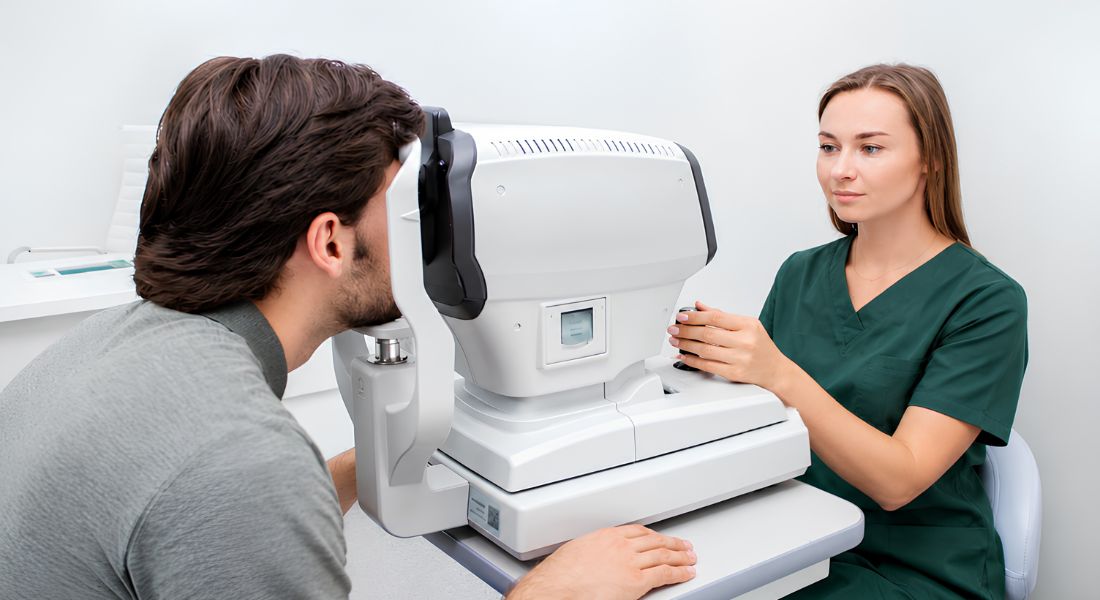
Potentially, yes. If you have a thin but otherwise healthy cornea and regular astigmatism, a toric ICL can correct both your short-sightedness and astigmatism. Your surgeon will use detailed measurements to check whether the astigmatism is regular enough for predictable correction.
If your thin cornea is affected by keratoconus or another irregular corneal condition, the situation is more complex. A toric ICL can correct your prescription but cannot correct the irregular shape of your cornea, so your surgeon will need to assess your corneal scans, stability and overall eye health carefully.
What Tests Are Needed Before ICL Surgery?
Before you have ICL surgery, your surgeon will check your prescription, corneal thickness and corneal shape using tests such as pachymetry, topography and tomography. These scans can help identify conditions such as keratoconus and show whether your cornea is suitable for the procedure.
Your surgeon will also measure the space inside your eye, including anterior chamber depth, and assess your corneal endothelial cells, eye pressure, natural lens and retina. These checks help determine whether the ICL can be positioned safely and whether it is an appropriate option for you.
Clinical Tip
Ask your surgeon whether your thin cornea is simply below average in thickness or whether your scans show an abnormal shape or signs of ectasia. These are very different situations and can change which treatment options are appropriate.
For ICL suitability, also ask whether your anterior chamber dimensions and endothelial cell count meet the requirements for the exact lens being considered. Device criteria vary, so suitability should be based on your individual measurements rather than a single general cut-off.
What Risks Should You Understand Before Choosing ICL?
ICL avoids removing corneal tissue, but it is still an intraocular procedure. Potential risks include changes in eye pressure, cataract formation, inflammation, infection, endothelial cell loss and retinal detachment, particularly in people with high myopia.
Modern ICL sizing and careful follow-up help reduce these risks, but they cannot be eliminated completely. Your surgeon can explain the potential benefits and risks for you and check whether ICL is appropriate for your eyes.
UK Guidance Note
NICE states that phakic intraocular lens implantation may be used with normal arrangements for clinical governance and audit, but with special arrangements for consent. Patients should understand the possibility of cataract, corneal damage and retinal detachment, and the lack of evidence relating to long-term outcomes.
The Royal College of Ophthalmologists describes phakic intraocular lens implantation as one of several approaches to vision correction surgery. Your consultation should consider the available treatment options, alternatives, risks and aftercare before you decide whether to proceed.
Could You Still Have LASIK, SMILE or PRK With Thin Corneas?
Possibly. If you have thin corneas, your surgeon will consider their thickness and shape, along with your prescription, before deciding whether LASIK, SMILE or PRK is suitable. These procedures still remove or reshape corneal tissue, so your cornea needs to remain structurally safe afterwards.
If your scans show keratoconus or another corneal abnormality, laser surgery may not be suitable for you. ICL can be considered when avoiding further corneal tissue removal is important, but your surgeon will assess your overall eye health before recommending an option.
How Will Your Surgeon Decide Whether ICL Is Right for You?
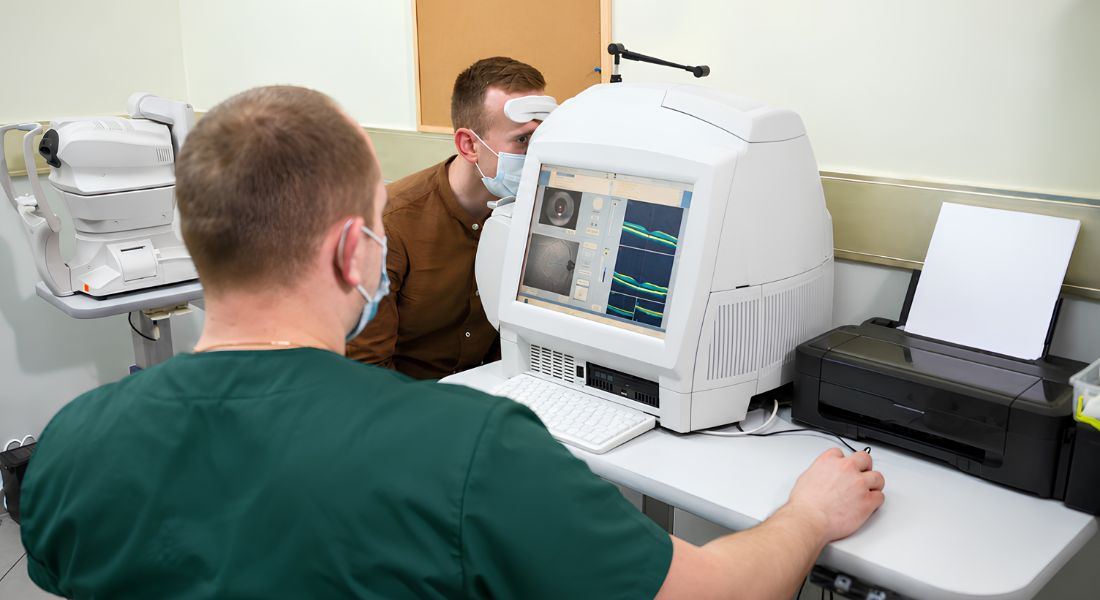
Your surgeon will check why your corneas are thin, including their thickness, shape and stability. You may still have healthy, naturally thin corneas, but keratoconus or another condition can affect your options.
Your prescription, eye anatomy and overall eye health will also be assessed. If you have high myopia and thin corneas, ICL may be considered because it avoids removing corneal tissue, but your surgeon will decide whether it is suitable for you.
Myth vs Fact
| Myth | Fact |
| If your corneas are thin, you automatically need ICL surgery. | No. Thin corneas are only one factor. Your eye anatomy, prescription, endothelial cells, natural lens and retinal health also matter. |
| A thin cornea always means keratoconus. | No. Some people naturally have thin but healthy, regularly shaped and stable corneas. |
| ICL makes a thin cornea stronger. | No. ICL avoids removing corneal tissue but does not strengthen or reshape the cornea. |
| ICL treats keratoconus. | No. It may correct refractive error in selected stable keratoconus, but it does not stop ectatic progression or correct all irregular corneal optics. |
| You cannot have any laser surgery if your corneas are thin. | Not necessarily. Suitability depends on thickness, shape, prescription, predicted tissue removal and other safety measurements. |
| Because ICL does not reshape the cornea, corneal health no longer matters. | Corneal health still matters, particularly endothelial-cell health and the absence of significant progressive corneal disease. |
| Anterior chamber depth has one universal safe cut-off. | No. Anatomical criteria depend on the specific phakic lens and regulatory instructions for use. |
Key Takeaways
- Thin corneas do not automatically rule out vision-correction surgery.
- ICL may be considered because it corrects refractive error without removing corneal tissue.
- Thin cornea alone does not make you an ICL candidate.
- Corneal thickness must be assessed together with corneal shape and stability.
- A naturally thin cornea is not the same as keratoconus.
- ICL can correct refractive error in selected stable keratoconus cases but does not treat or stabilise the keratoconus itself.
- Anterior chamber dimensions must be suitable for the specific phakic lens being considered.
- Corneal endothelial cell health is important even though ICL does not remove corneal tissue.
- Your prescription should be sufficiently stable before refractive surgery.
- High myopia may also require careful retinal assessment.
- Toric ICLs can correct regular refractive astigmatism but cannot remove irregular corneal optics.
- Suitability should be based on a complete refractive-surgery assessment rather than one corneal-thickness measurement.
Frequently Asked Questions
- Can you have ICL surgery if you have thin corneas?
Yes, you may still be suitable for ICL surgery because the procedure corrects your vision without removing corneal tissue. However, thin corneas alone do not guarantee that ICL is appropriate for you. - Does having thin corneas mean you cannot have laser eye surgery?
Not necessarily. Your surgeon will assess your corneal thickness, shape and structure, along with your prescription. If your corneas are unusually thin or irregular, LASIK, SMILE or PRK may be considered less suitable. - Is a naturally thin cornea the same as keratoconus?
No. You can have naturally thin but healthy corneas. Keratoconus involves abnormal thinning, steepening and irregularity of the cornea, which requires more careful assessment. - Can you have ICL surgery if you have keratoconus?
You may be able to have ICL surgery if your keratoconus is stable, but this requires careful assessment. ICL can correct your prescription but cannot correct the irregular shape of a keratoconic cornea or stop the condition from progressing. - Why does anterior chamber depth matter for ICL?
Your ICL needs enough space to sit safely behind your iris and in front of your natural lens. Your surgeon will measure the available space before surgery to help plan the implant, while the actual vault between the ICL and your natural lens can be checked after surgery. - Why are corneal endothelial cells important before ICL?
Your endothelial cells help keep your cornea clear and have limited ability to regenerate. Your surgeon may check your endothelial cell density to make sure your cornea has enough healthy cells before considering ICL surgery. - Does your prescription need to be stable before ICL surgery?
Yes. Your surgeon will want to see that your prescription is reasonably stable because ICL is designed to correct your current vision. Your prescription, particularly if you have high myopia, will also influence which treatment options are suitable. - Can a toric ICL correct astigmatism if you have thin corneas?
Potentially, yes. If your cornea is thin but otherwise healthy and you have regular astigmatism, a toric ICL may correct both your short-sightedness and astigmatism. Irregular corneal conditions such as keratoconus make correction more complex. - What tests are needed before ICL surgery?
Your surgeon may assess your prescription, corneal thickness and shape using tests such as pachymetry, topography and tomography. They will also check your anterior chamber depth, endothelial cells, eye pressure, natural lens and retina. - How will your surgeon decide if ICL is suitable for you?
Your surgeon will consider your corneal thickness, shape and stability, as well as your prescription, eye anatomy, natural lens and overall eye health. Having thin corneas and high myopia may make ICL worth considering, but your individual assessment determines whether it is appropriate for you.
Final Thoughts: ICL Surgery and Thin Corneas
Having thin corneas does not automatically rule out vision correction. ICL may be considered because it corrects your prescription without removing corneal tissue. Your surgeon will also assess corneal shape and stability, prescription, anterior chamber depth, endothelial cells, natural lens and overall eye health.
If you’re considering private ICL surgery in London and want to find out whether treatment may be suitable for your corneas and prescription, you can contact Eye Clinic London to arrange a consultation.
References:
- Serra, P., Sánchez Trancón, Á., Torrado Sierra, O., Baptista, A. and Cerpa Manito, S. (2021) ‘Posterior chamber phakic intraocular lenses for the correction of myopia: Factors influencing the postoperative refraction’, Optics, 2(4), pp. 292–305. doi: 10.3390/opt2040028. Available at: https://www.mdpi.com/2673-3269/2/4/28
- Wannapanich, T., Kasetsuwan, N. and Reinprayoon, U. (2023) ‘Intraocular implantable collamer lens with a central hole implantation: Safety, efficacy, and patient outcomes’, Clinical Ophthalmology, 17, pp. 969–980. doi: 10.2147/OPTH.S379856. Available at: https://pubmed.ncbi.nlm.nih.gov/36998514/
- Packer, M. (2018) ‘The Implantable Collamer Lens with a central port: Review of the literature’, Clinical Ophthalmology, 12, pp. 2427–2438. doi: 10.2147/OPTH.S188785. Available at: https://pmc.ncbi.nlm.nih.gov/articles/PMC6267497/
- Alkhabbaz, A.A., Karam, M.H., Pollmann, A.S., Nath, S., Lau, T.H.A., Al-Awadhi, H., Abbas, K. and Jabbour, S. (2025) ‘Safety and efficacy of posterior chamber phakic implantable collamer lenses in patients with keratoconus: A systematic review and meta-analysis’, American Journal of Ophthalmology, 271, pp. 222–232. doi: 10.1016/j.ajo.2024.11.013. Available at: https://www.sciencedirect.com/science/article/pii/S0002939424005397
- Laginaf, M. and Barsam, A. (2022) ‘Refractive surgery’, in Sundaram, V. et al. (eds.) Training in Ophthalmology. 3rd edn. Oxford: Oxford University Press, pp. 157–174. doi: 10.1093/med/9780198871590.003.0004. Available at: https://academic.oup.com/book/43958/chapter-abstract/369603134