


What Is an Enhanced Monofocal Lens for Cataract Surgery?
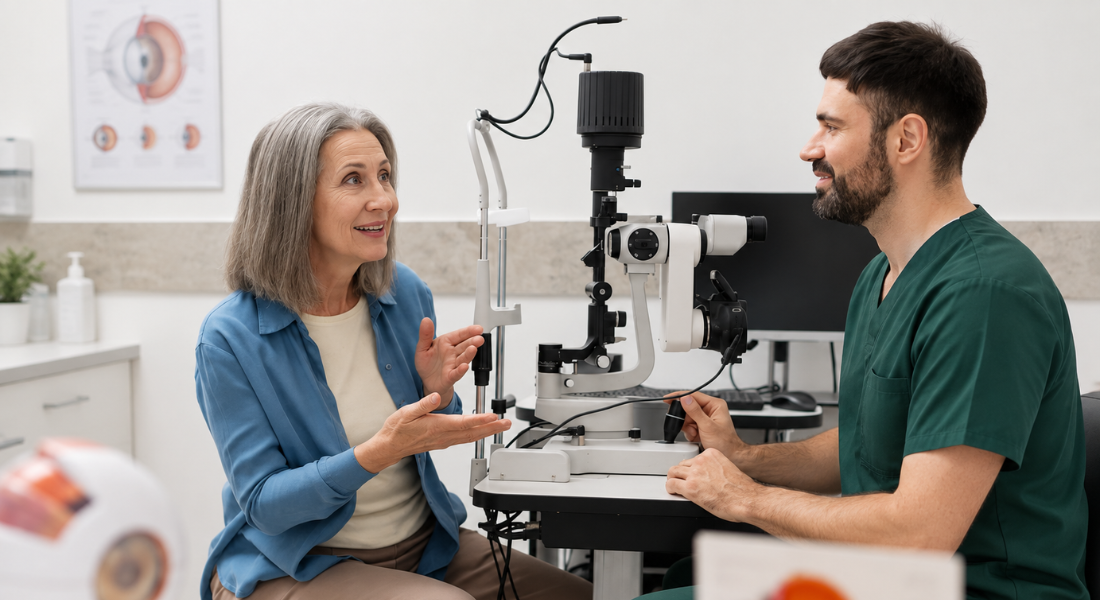
If you are having cataract surgery, an enhanced monofocal lens is designed to give you clear distance vision while providing a little more useful intermediate vision than a standard monofocal lens. You may find this helpful for activities such as using a computer, checking your car dashboard or preparing food.
You should know that an enhanced monofocal lens does not usually provide the same near vision as a trifocal lens, and its extension of focus is generally more modest than that of many EDOF designs. You may still need reading glasses, but you could benefit from a wider range of useful vision while retaining many of the visual characteristics of a conventional monofocal lens.
What Exactly Is an Enhanced Monofocal Lens?
An enhanced monofocal lens is an artificial lens placed in your eye during cataract surgery to replace your cloudy natural lens. Unlike a standard monofocal lens, its optical design aims to extend your useful depth of focus and give you better intermediate vision while maintaining clear distance vision.
You may also hear terms such as monofocal-plus or improved monofocal, although these names are not always used consistently. You should know that an enhanced monofocal lens is still designed to behave more like a monofocal lens than a multifocal implant, so you may still need reading glasses.
How Does an Enhanced Monofocal Lens Work?
Your natural lens could change shape to help you focus at different distances, but this ability reduces with age. An enhanced monofocal lens does not restore this accommodation; instead, its optical design aims to give you a slightly broader range of useful focus while maintaining clear distance vision.
You may therefore get better intermediate vision for activities such as computer work or viewing your dashboard. Unlike a trifocal lens, an enhanced monofocal lens does not create several separate focal points, so you may still need reading glasses for close work.
How Is It Different From a Standard Monofocal Lens?
An enhanced monofocal lens and a conventional monofocal lens can both provide clear distance vision. The main difference is that an enhanced monofocal lens is designed to give you more useful intermediate vision.
- Distance Clarity: Both lens types can provide good distance vision.
- Computer Use: An enhanced monofocal lens may make arm’s-length tasks easier without glasses.
- Close Reading: You will usually still need reading glasses for small print.
- Optical Design: Enhanced monofocal lenses extend focus while retaining more monofocal-like visual characteristics.
The main benefit is therefore improved intermediate vision rather than complete glasses independence. Your surgeon can explain what you may realistically expect from the specific lens.
Evidence Note
Research supports an intermediate-vision benefit from enhanced monofocal lenses compared with conventional monofocal lenses. A 2025 systematic review and meta-analysis found similar corrected distance vision but better intermediate and near visual acuity.
The same analysis found no significant overall difference in contrast sensitivity or photic phenomena such as halos and glare. The main practical advantage remains improved intermediate vision rather than reliable glasses-free near vision.
What Does Improved Intermediate Vision Actually Mean?

Intermediate vision helps you see things such as your computer screen, car dashboard or objects at arm’s length. An enhanced monofocal lens aims to give you clearer vision at these distances without glasses.
You may find this useful if you spend a lot of time using screens or doing close-to-intermediate tasks. However, you may still need reading glasses for small print.
Will an Enhanced Monofocal Lens Give You Good Distance Vision?
Yes. An enhanced monofocal lens is designed to maintain good distance vision while giving you some extra intermediate vision. You may therefore see distant objects clearly while also finding computer work and dashboard viewing easier.
You should know that a small prescription can still remain after surgery. You may occasionally need glasses for activities such as night driving, even if you manage most everyday tasks without them.
Will You Still Need Reading Glasses?
You may still need reading glasses with an enhanced monofocal lens, especially for small print, fine detail or prolonged reading. Near vision usually remains more limited than with a trifocal lens.
If glasses-free reading is important to you, discuss this with your surgeon. Another presbyopia-correcting lens may provide stronger near vision if it suits your eyes.
Does an Enhanced Monofocal Lens Cause Halos or Glare?
You may experience some halos or glare after cataract surgery. Studies comparing enhanced monofocal lenses with conventional monofocal lenses have generally found similar rates of photic phenomena, although visual effects can vary between individual lens designs.
You should know that halos and glare can still occur, particularly while your eyes are healing or if you have dry eye or a residual prescription. If you notice persistent or troublesome night-vision symptoms, your surgeon can check whether another eye problem is contributing.
What Happens to Contrast Sensitivity?
Contrast sensitivity helps you see objects that do not stand out strongly from their background, especially in dim lighting. Enhanced monofocal lenses generally show comparable contrast sensitivity to conventional monofocal lenses.
Results can still vary between lens designs and individual eyes. Your surgeon can explain the expected visual quality of the specific implant, particularly if night-time vision is important to you.
How Is an Enhanced Monofocal Different From an EDOF Lens?
Both enhanced monofocal and EDOF lenses can improve intermediate vision, but they are not identical. Enhanced monofocal lenses usually provide a modest extension of focus with more monofocal-like characteristics, while EDOF lenses generally aim for a broader distance-to-intermediate range.
The categories can overlap, so results depend on the specific implant rather than the label alone. Your surgeon should explain the expected visual range and possible optical effects.
Research Insight
A 2026 meta-analysis of 11 randomised controlled trials found that enhanced monofocal lenses provided better intermediate visual acuity than conventional monofocal lenses while maintaining comparable distance vision, contrast sensitivity and photic phenomena.
Near visual acuity was also statistically better, but the researchers concluded that the improvement was not sufficient to provide reliable near spectacle independence. This reinforces the importance of explaining that enhanced monofocal lenses primarily extend functional intermediate vision rather than replacing reading glasses.
How Does It Compare With a Trifocal Lens?

A trifocal lens provides useful distance, intermediate and near vision and may reduce your need for reading glasses. An enhanced monofocal lens mainly preserves distance vision while adding modest intermediate range.
An enhanced monofocal lens may suit you if computer work matters and you are comfortable using reading glasses. If broader spectacle independence is important, ask whether a trifocal lens is suitable.
Comparing Cataract Lens Options
| Feature | Conventional Monofocal | Enhanced Monofocal | EDOF | Trifocal |
| Main aim | Best unaided focus at one principal distance | Maintain distance vision while adding some intermediate range | Extend useful focus, usually from distance towards intermediate | Provide useful distance, intermediate and near vision |
| Distance vision | Usually good when targeted for distance | Designed to remain comparable with conventional monofocal vision | Designed to provide useful distance vision | Designed to provide useful distance vision |
| Intermediate vision | Usually more limited unless specifically targeted | Better than conventional monofocal lenses in comparative studies | Usually an important strength | Dedicated intermediate range |
| Near vision | Reading glasses usually needed | Some improvement may occur, but reading glasses usually remain useful | Varies between designs; near glasses are often still needed | Generally stronger unaided near vision |
| Reading glasses | Usually required | Usually still required for small print and prolonged reading | May still be required | Less frequently required, although spectacle independence is not guaranteed |
| Halos and glare | Generally low with conventional monofocal optics | Studies show a broadly monofocal-like profile | Can occur and varies by design | Generally more common than with conventional monofocal optics |
| Contrast sensitivity | Generally good | Meta-analyses have found broadly comparable performance | Varies between optical designs | May involve greater optical trade-offs |
| Typical priority | Simple single-focus vision | Distance plus modest improvement in intermediate tasks | Broader distance-to-intermediate range | Greater spectacle independence across several distances |
Can an Enhanced Monofocal Lens Correct Astigmatism?
Yes, some enhanced monofocal lenses are available in toric versions designed to help reduce suitable regular corneal astigmatism. If you have astigmatism, this may help you achieve clearer distance and intermediate vision with less reliance on glasses.
Your surgeon may use keratometry, corneal topography or tomography to measure your astigmatism and decide whether a toric lens is suitable for you. Accurate positioning is also important because the lens needs to align with the correct axis to provide its intended correction.
Who May Be a Good Candidate for an Enhanced Monofocal Lens?
You may be a good candidate if clear distance vision is your main priority but you would also like better intermediate vision for activities such as computer work. You should be comfortable with using reading glasses for close tasks.
Your surgeon will assess your cornea, retina, macula, optic nerve and ocular surface. Conditions such as dry eye, glaucoma or macular disease may require a more individual assessment before this lens is recommended.
Who Might Prefer a Different Lens?
A conventional monofocal lens may suit you if you are comfortable using glasses for intermediate and near tasks. If reducing reading-glasses use matters more, you may wish to discuss an EDOF or trifocal lens.
Your work, screen distances and night-driving needs also matter. Your surgeon can assess your eyes and help you choose a lens that matches those priorities.
UK Guidance Note
Enhanced monofocal lenses are an evolving area of cataract care in the UK. NICE’s 2026 technology-assessment scope specifically includes enhanced monofocal, or “monofocal-plus”, features when evaluating monofocal intraocular lenses and notes that availability of different lens features varies.
NICE’s 2025 surveillance of its cataract guideline also recorded advice from the Royal College of Ophthalmologists that use of enhanced monofocal lenses has been increasing within the NHS. Availability can therefore vary between NHS services, hospitals and procurement pathways, so patients should not assume that every enhanced monofocal lens is routinely available in every setting.
Why Are Pre-Operative Measurements So Important?
Before cataract surgery, your surgeon measures your eye to calculate the lens power most likely to achieve the agreed refractive target. Tell them if you have dry eye or previous LASIK, LASEK or PRK because these factors can affect measurement accuracy.
Careful measurements improve predictability. Your cornea may also need additional assessment if astigmatism correction is being considered.
Clinical Tip
Think about your actual working distances before discussing your lens choice. Measure approximately how far you sit from your computer screen, how far away your car dashboard is and how close you normally hold a book or phone.
Enhanced monofocal lenses are primarily intended to improve intermediate vision, so knowing which distances matter most to you can make the discussion with your surgeon more meaningful. You should still plan for the possibility of reading glasses for small print and sustained close work.
Will Your Vision Be Clear Immediately After Surgery?
You may notice clearer vision soon after cataract surgery, although your sight can be hazy or variable for the first few days. Temporary dryness, mild corneal swelling and medication effects can influence early vision.
As your eye settles, the intended distance and intermediate vision should become clearer. Contact your surgical team urgently if you develop sudden vision loss, severe pain or marked redness.
How Do You Decide Whether an Enhanced Monofocal Lens Is Right for You?

Think about which activities you most want to do without glasses. An enhanced monofocal lens may suit you if distance vision is your priority and you also want better arm’s-length vision.
Your surgeon will assess your eye health, astigmatism and measurements. Discuss your expectations for driving, computer work and reading so the lens choice matches your daily needs.
Myth vs Fact
| Myth | Fact |
| An enhanced monofocal lens is just another name for an EDOF lens. | The categories can overlap, but they are not necessarily equivalent. Enhanced monofocal lenses generally provide a more modest extension of focus, and individual lens designs differ. |
| An enhanced monofocal lens gives clear vision at every distance. | Its main benefit is improved intermediate vision while maintaining distance vision. Reading glasses commonly remain useful for close work. |
| You will no longer need reading glasses. | Near vision may improve slightly, but enhanced monofocal lenses are not designed to provide reliable glasses-free small-print reading. |
| Improved intermediate vision means distance vision must be worse. | Recent meta-analyses have found similar distance visual acuity between enhanced and conventional monofocal lenses. |
| Enhanced monofocal lenses cause the same halos as trifocal lenses. | Studies comparing enhanced and conventional monofocals have generally found similar rates of photic phenomena. Trifocal optics involve different visual trade-offs. |
| Every enhanced monofocal lens performs the same way. | Different manufacturers use different optical designs, so depth of focus, intermediate performance and visual effects can vary between implants. |
Key Takeaways
- Enhanced monofocal lenses are designed to maintain useful distance vision while providing better intermediate vision than conventional monofocal lenses.
- They are sometimes called monofocal-plus or improved monofocal lenses, but terminology and optical designs vary between manufacturers.
- Recent systematic reviews support improved intermediate vision without a significant overall reduction in distance vision.
- Studies have generally found contrast sensitivity and halos or glare to be comparable with conventional monofocal lenses.
- Enhanced monofocal lenses do not usually provide the same level of unaided near vision or spectacle independence as trifocal lenses.
- EDOF lenses may provide a broader range of focus, but direct comparisons are limited and performance varies between lens designs.
- Reading glasses are still likely to be useful for small print, detailed close work and prolonged reading.
- Toric versions of some enhanced monofocal lenses may also help reduce suitable regular corneal astigmatism.
- Your cornea, retina, macula, optic nerve, ocular surface and refractive measurements should be assessed before choosing a lens.
Frequently Asked Questions
- What is an enhanced monofocal lens for cataract surgery?
An enhanced monofocal lens is designed to give you clear distance vision while providing some additional intermediate vision compared with a conventional monofocal lens. - How is an enhanced monofocal lens different from a standard monofocal lens?
A standard monofocal lens mainly focuses your vision at one chosen distance, usually distance vision. An enhanced monofocal lens aims to extend your useful focus slightly to improve intermediate vision, such as for computer work or viewing your dashboard. - Will you still need reading glasses with an enhanced monofocal lens?
Yes, you may still need reading glasses, particularly for small print, prolonged reading and detailed close-up work. Near vision is generally more limited than with a trifocal lens. - Can an enhanced monofocal lens improve your computer vision?
Yes. One of the main aims of an enhanced monofocal lens is to provide better intermediate vision, which can make activities such as using a computer or viewing objects at arm’s length more comfortable. - Can an enhanced monofocal lens cause halos or glare?
You may experience some halos or glare after cataract surgery, but enhanced monofocal lenses generally have a more monofocal-like optical design than multifocal or trifocal lenses. Your symptoms can also be affected by healing, dry eye or a remaining prescription. - How does an enhanced monofocal lens compare with an EDOF lens?
Both can improve intermediate vision, but an EDOF lens generally aims to provide a broader range of focus. An enhanced monofocal lens usually provides a more modest extension of focus while retaining more monofocal-like visual characteristics. - How does an enhanced monofocal lens compare with a trifocal lens?
A trifocal lens is designed to provide useful distance, intermediate and near vision. An enhanced monofocal lens mainly prioritises distance vision with some additional intermediate range, so you are more likely to need reading glasses. - Can an enhanced monofocal lens correct astigmatism?
Yes. Some enhanced monofocal lenses are available as toric versions designed to help reduce suitable regular corneal astigmatism. Your surgeon will assess your measurements and determine whether this option is suitable for you. - Who may be a good candidate for an enhanced monofocal lens?
You may be suitable if clear distance vision is your main priority but you would like better intermediate vision for activities such as computer work. You should also be comfortable using reading glasses when needed. - How do you decide whether an enhanced monofocal lens is right for you?
Your surgeon will consider your eye health, corneal measurements, astigmatism, lifestyle and how much you want to reduce your reliance on glasses. You should also think about which activities you most want to do comfortably without glasses.
Final Thoughts: Choosing an Enhanced Monofocal Lens for Cataract Surgery
An enhanced monofocal lens can provide clear distance vision with intermediate vision for computer work, driving and everyday tasks. Reading glasses may still be needed for small print and detailed close work.
If you’re considering private cataract surgery in London and want to understand whether an enhanced monofocal lens may suit your visual needs, you can contact Eye Clinic London to arrange a consultation.
References:
- Mencucci, R., Romualdi, G., Carnicci, A., Panini, F., Buzzi, M. and Giansanti, F. (2025) ‘Long-term effectiveness of a monofocal intraocular lens (IOL) enhanced for intermediate vision: A 5-year follow-up study’, Journal of Clinical Medicine, 14(16), p. 5831. doi: 10.3390/jcm14165831. Available at: https://www.mdpi.com/2077-0383/14/16/5831
- Yu, J.-G., Ye, T. and Xiang, Y. (2026) ‘Comparison of visual outcomes of enhanced monofocal versus conventional monofocal intraocular lenses: A meta-analysis of randomized controlled trials’, International Ophthalmology, 46, article 318. doi: 10.1007/s10792-026-04192-7. Available at: https://pubmed.ncbi.nlm.nih.gov/42530675/
- Fernández, J., Ribeiro, F., Burguera, N., Rodríguez-Calvo-de-Mora, M. and Rodríguez-Vallejo, M. (2025) ‘Visual and patient-reported outcomes of an enhanced versus monofocal intraocular lenses in cataract surgery: A systematic review and meta-analysis’, Eye, 39(5), pp. 883–898. doi: 10.1038/s41433-025-03625-4. Available at: https://pmc.ncbi.nlm.nih.gov/articles/PMC11933469/
- Danzinger, V., Schartmüller, D., Lisy, M., Schranz, M., Schwarzenbacher, L., Abela-Formanek, C., Menapace, R. and Leydolt, C. (2024) ‘Intraindividual comparison of an enhanced monofocal and an aspheric monofocal intraocular lens of the same platform’, American Journal of Ophthalmology, 261, pp. 95–102. doi: 10.1016/j.ajo.2023.11.006. Available at: https://www.sciencedirect.com/science/article/pii/S0002939423004634
- Than, J. and Barsam, A. (2022) ‘Lens’, in Sundaram, V. et al. (eds.) Training in Ophthalmology. 3rd edn. Oxford: Oxford University Press, pp. 121–156. doi: 10.1093/med/9780198871590.003.0003. Available at: https://academic.oup.com/book/43958/chapter-abstract/369602472