

How Much Does ICL Surgery Cost in the UK?

If you are considering ICL surgery, cost is likely to be an important practical question. Prices vary between UK clinics and can depend on the lens type, your prescription, whether the price is per eye or for both eyes, and what consultations and aftercare are included.
You may see different prices advertised, so you should check exactly what is included before comparing them. Your final cost will usually be confirmed after your eyes have been assessed and a personalised treatment plan has been prepared.
What Is ICL Surgery?
ICL stands for implantable collamer lens, a thin lens placed inside your eye to correct your vision. Unlike LASIK, it does not reshape your cornea, and unlike cataract surgery, your natural lens normally remains in place.
You may consider ICL surgery if you have moderate or high short-sightedness, astigmatism or corneas that are less suitable for laser treatment. Because it involves a personalised lens implant and eye surgery, the cost differs from laser vision correction.
What Is the Typical Cost of ICL Surgery in the UK?
Private ICL surgery in the UK typically costs several thousand pounds per eye. As of September 2026, current published examples from major UK providers are commonly in the mid-£3,000s to mid-£4,000s per eye, although some clinics use bilateral package pricing. You should treat published figures as examples rather than guaranteed quotes because prices and package contents can change.
You may therefore see a broad range for treatment in both eyes. You should treat these figures as examples rather than a guaranteed quote, as your final cost will depend on your individual assessment and what is included.
Evidence Note
Current advertised prices from major private providers can vary by around £1,000 per eye, and clinics also differ in whether consultations, diagnostic tests, medication and postoperative aftercare are included.
This means that two headline prices may not represent equivalent treatment packages. When comparing costs, check whether the price is for one or both eyes and what clinical assessment, lens, surgery and follow-up care are included.
Why Do UK ICL Prices Vary Between Clinics?
ICL surgery prices can differ between UK clinics because treatment packages may include different services and levels of aftercare. The price you see advertised may therefore not represent the complete cost of your treatment.
- What is included: Some packages may cover consultations, eye measurements, the ICL, surgery, medication and routine follow-up, while others may charge separately for certain services.
- Your prescription: Your prescription and eye measurements can affect which ICL you need, particularly if you require a specialised lens such as a toric ICL for astigmatism.
- Additional tests: You may need scans or other assessments before surgery to confirm that ICL is suitable and to determine the correct lens size and power.
- Aftercare and follow-up: The number of postoperative appointments and the length of included aftercare can vary, so check whether additional visits or treatment would cost extra.
When comparing ICL prices, look at the complete treatment package rather than the headline price alone. Asking for a detailed written quotation can help you understand what you will actually pay and make different clinic prices easier to compare.
Is ICL Surgery Priced Per Eye or for Both Eyes?

UK clinics may advertise ICL surgery as a price per eye or as a package for both eyes. You may therefore see large differences between headline prices that become much closer once you compare them on the same basis.
You should check exactly how many eyes are included in your quote and whether bilateral package pricing applies. If you need both eyes treated, ask for the complete cost rather than simply doubling a single-eye starting price.
What Is Normally Included in the Price?
Your ICL package may include assessment, eye measurements, the lens, surgery and routine aftercare, but this varies between clinics. You should check whether consultations, medication, additional scans and follow-up appointments are included.
You should also confirm that the quoted price covers the specific lens you need for your prescription. An itemised quotation can help you understand the true cost before you proceed.
What Should You Compare Between ICL Quotes?
| Cost Item | What You Should Check |
| Headline price | Is it quoted per eye or for both eyes? |
| Initial consultation | Is the consultation free, charged separately or credited towards treatment? |
| Diagnostic assessment | Are scans, eye measurements, endothelial assessment and other suitability tests included? |
| ICL itself | Does the price include the exact lens required for your prescription? |
| Toric correction | Is there an additional charge if you require a toric ICL for astigmatism? |
| Surgeon fee | Is the consultant surgeon’s fee included? |
| Hospital or theatre costs | Are all facility charges included? |
| Medication | Are postoperative eye drops included? |
| Routine aftercare | How many appointments are included and for how long? |
| Long-term monitoring | Will later eye-health or endothelial checks be charged separately? |
| Additional treatment | What would happen financially if lens repositioning, removal or another procedure became necessary? |
| Finance | What is the APR, deposit and total amount repayable rather than only the monthly payment? |
Does Your Prescription Affect the Cost?
Your prescription can affect the cost of ICL surgery, although this varies between providers. You may need a specific lens based on your prescription and eye measurements, while some clinics use fixed pricing across a wider range of prescriptions.
You should therefore ask for a personalised quote rather than assuming you will pay the advertised starting price. Your prescription also affects whether ICL is suitable for you compared with other vision-correction options.
Does a Toric ICL Cost More?
If you have significant astigmatism, you may need a toric ICL to correct astigmatism alongside your underlying refractive prescription. Whether this costs more depends on the clinic, as some include the required lens within their package while others may charge an additional fee.
You should check that your quotation includes the specific toric lens you need. If a clinic advertises a price range, ask what determines where your treatment falls within that range.
Why Can ICL Surgery Cost More Than Some Laser Treatments?
ICL surgery uses a personalised lens that is inserted inside your eye, while laser vision correction reshapes your cornea. You are therefore paying for the implant, detailed eye measurements and specialist intraocular surgery as well as the treatment itself.
You may also have costs for the surgeon, operating theatre, diagnostic equipment and postoperative care. This is why ICL surgery can cost more than some laser procedures, although prices vary between clinics.
Do You Have to Pay for the Initial Consultation?
You may have to pay for your initial ICL consultation, although some clinics include it in the treatment price or offer it free. You should check whether the fee is separate, included or credited towards surgery if you proceed.
You should also ask what happens if your assessment shows that ICL is not suitable for you. Knowing these details beforehand can help you compare the overall cost more accurately.
What Tests Are Needed Before ICL Surgery?
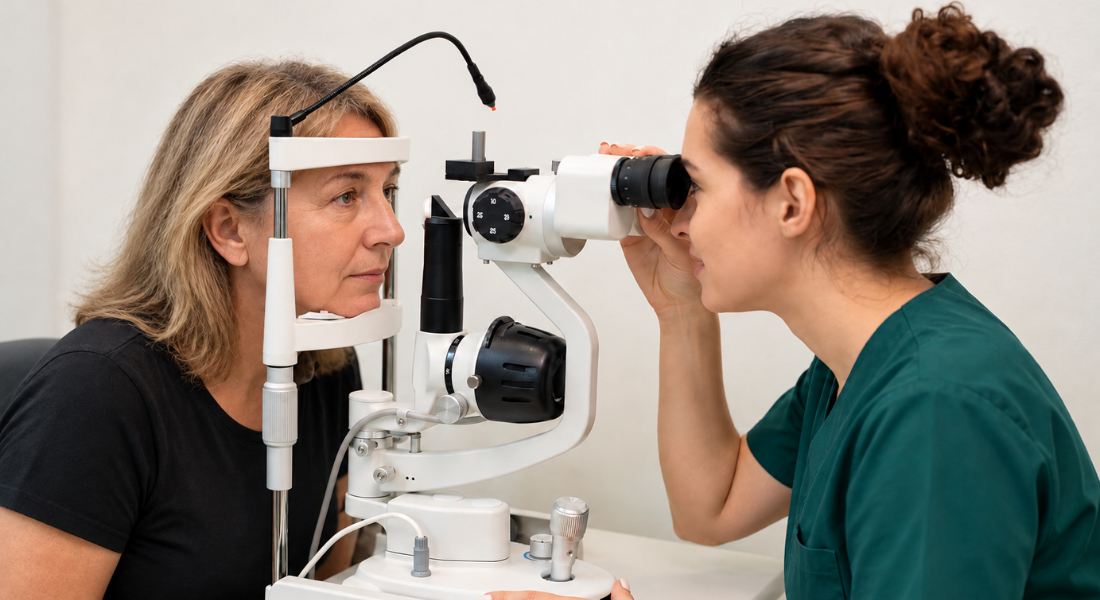
Before ICL surgery, you need more than a glasses prescription check. Your surgeon will assess your eye health, prescription, eye measurements, cornea, eye pressure and retinal health to make sure the implant is suitable and correctly sized for you.
You should also check which tests are included in your treatment package. If you need additional scans or investigations, these may sometimes cost extra.
Research Insight
ICL suitability depends on more than your glasses prescription. Before surgery, detailed measurements are needed to assess whether there is enough space inside the front of your eye for the implant and whether structures such as the cornea and natural lens are suitable.
NICE guidance also emphasises that phakic intraocular lens surgery has recognised potential complications and that patients should receive appropriate information before deciding on treatment. A thorough pre-operative assessment is therefore an important part of the treatment package rather than simply an additional cost.
Is Postoperative Aftercare Included?
Postoperative aftercare is often included in ICL packages, but the level of cover varies between clinics. Your package may include routine check-ups and medication, while additional appointments or treatment may cost extra.
You should ask how many follow-up visits are included and how long the aftercare period lasts. You should also find out who you can contact if you develop a problem after surgery.
Clinical Tip
Ask how long your quoted aftercare lasts rather than simply asking whether aftercare is “included”. Routine postoperative checks may be covered for a defined period, but longer-term eye monitoring may fall outside the original treatment package.
It is also worth asking what the clinic would charge if you later needed additional investigations, lens repositioning, lens removal or treatment for another eye problem. Having these details in writing can make the true long-term cost easier to understand.
Could You Face Additional Costs After Surgery?
You may face additional costs after ICL surgery if you need extra scans, tests or treatment that are not included in your package. You may also need glasses or further treatment if a significant prescription remains after surgery.
You should ask your clinic whether enhancement, lens repositioning or other unexpected treatment would cost extra. A clear written quotation can help you understand what you may need to pay beyond the initial price.
Is ICL Surgery Available Through the NHS?
Elective ICL surgery performed to reduce dependence on glasses or contact lenses is not an NHS-funded procedure. Some hospitals may provide self-pay refractive surgery through private services, but this is private treatment rather than NHS-funded care.
You should check the cost directly with your chosen provider and ask whether your treatment is NHS-funded or self-funded. If you have private medical insurance, you should also confirm whether any part of your assessment or treatment is covered before you proceed.
UK Guidance Note
The Royal College of Ophthalmologists states that refractive surgery performed to reduce dependence on glasses or contact lenses is not available as an NHS procedure and is generally not covered by private health insurance. ICL surgery for routine refractive correction should therefore normally be considered a privately funded treatment.
NICE states that phakic intraocular lens implantation may be used with normal arrangements for clinical governance and audit, but with special arrangements for consent. Patients should understand the risks of cataract, corneal damage and retinal detachment, and the lack of evidence about long-term outcomes.
Can You Pay for ICL Surgery With Finance?
Many private clinics offer finance options for ICL surgery, allowing you to spread the cost over several months rather than paying the full amount upfront. You may find interest-free options, although availability, repayment periods and eligibility vary between providers.
You should check the deposit, interest rate, repayment period and total amount you will repay. Before choosing finance, you should make sure the treatment is suitable for you and that the repayments fit comfortably within your budget.
How Should You Compare ICL Quotes Properly?
You should compare ICL quotes on a like-for-like basis, checking whether the price is for one or both eyes and whether it includes your consultation, scans, specific lens, medication and aftercare. You should also ask whether toric lenses or any additional tests would cost extra.
You should look beyond the headline price and consider your surgeon’s experience, assessment, surgical care and postoperative support. A detailed written quotation can help you understand the complete treatment cost and compare providers more fairly.
Is ICL Surgery Worth Paying For?

Whether ICL surgery is worth the cost depends on your prescription, lifestyle and alternatives. You may find it more valuable if you have a strong prescription, struggle with contact lenses or are not suitable for laser treatment, while glasses may remain a simple option if they already give you excellent vision.
You should also consider that ICL surgery leaves your natural lens in place and the implant can sometimes be removed if clinically necessary. However, removal is still another eye operation, so you should first confirm that ICL is suitable for you before deciding whether the potential benefits justify the cost.
Myth vs Fact
| Myth | Fact |
| Every UK clinic charges roughly the same for ICL surgery. | Current published prices vary substantially between providers, and the services included in each package can also differ. |
| The advertised price always covers both eyes. | No. Some clinics quote per eye while others advertise a bilateral package, so check the basis of every quotation. |
| A higher prescription automatically means a higher price. | Not necessarily. Some providers use fixed pricing regardless of prescription, while others may vary the cost according to the lens or treatment required. |
| The cheapest advertised price is always the cheapest treatment overall. | Not necessarily. Consultations, diagnostic tests, medication, aftercare and additional procedures may be included at one clinic but charged separately at another. |
| ICL surgery is normally funded by the NHS. | Routine refractive ICL surgery to reduce dependence on glasses or contact lenses is privately funded rather than an NHS procedure. |
| Private medical insurance normally pays for ICL surgery. | The Royal College advises that refractive phakic-IOL surgery is generally not covered by private health insurance schemes. |
| Because an ICL can be removed, the procedure is completely reversible. | The lens can be surgically removed if necessary, but removal is another intraocular operation and does not mean every effect or complication is automatically reversible. |
Key Takeaways
- ICL surgery typically costs several thousand pounds per eye in the UK.
- As of September 2026, Eye Clinic London publishes ICL package prices of £7,500 to £8,200 for both eyes.
- UK providers may quote treatment per eye or as a bilateral package, so make sure you compare prices on the same basis.
- Current advertised ICL prices vary considerably between clinics.
- Your quotation should explain whether consultations, diagnostic testing, the lens, surgery, medication and postoperative aftercare are included.
- Toric ICL pricing and policies for different prescriptions vary between providers.
- Ask how long routine aftercare is included and whether longer-term monitoring carries additional charges.
- Routine refractive ICL surgery is privately funded rather than an NHS procedure.
- Private health insurance does not generally cover elective refractive ICL surgery.
- If finance is offered, compare the total amount repayable as well as the monthly payment.
- Price should be considered alongside the quality of your assessment, surgeon, aftercare arrangements and management of potential complications.
Frequently Asked Questions
- What is ICL surgery?
ICL surgery involves placing a thin implantable collamer lens inside your eye to correct your vision. Unlike LASIK, it does not reshape your cornea, and your natural lens normally remains in place. - How much does ICL surgery cost in the UK?
Private ICL surgery can cost several thousand pounds per eye. Published prices vary between clinics, so you should treat advertised figures as examples rather than a guaranteed price. - Why does the cost of ICL surgery vary between clinics?
Prices can vary depending on what is included in the treatment package, such as consultations, eye measurements, the lens, surgery, medication and follow-up care. Your location, surgeon and prescription can also affect the final cost. - Is ICL surgery priced per eye or for both eyes?
Clinics may advertise ICL surgery as a price per eye or as a package for both eyes. You should check exactly how many eyes are included before comparing different quotes. - What is normally included in the cost of ICL surgery?
Your package may include your assessment, eye measurements, lens, surgery and routine aftercare. However, this varies between clinics, so you should check whether medication, scans and follow-up appointments are included. - Does your prescription affect the cost of ICL surgery?
Your prescription can affect the cost because you may need a specific lens based on your prescription and eye measurements. Some clinics have fixed pricing, while others may charge differently depending on your treatment requirements. - Does a toric ICL cost more?
If you have significant astigmatism, you may need a toric ICL. Whether this costs more depends on the clinic, so you should check whether your specific toric lens is included in the quoted price. - Is postoperative aftercare included in the ICL surgery price?
Aftercare is often included, but the level of cover varies between clinics. You should ask how many follow-up appointments are included, how long the aftercare lasts and whether additional treatment would cost extra. - Are there additional costs after ICL surgery?
You may have additional costs if you need extra scans, tests or treatment that are not included in your package. You may also need glasses or further treatment if a significant prescription remains after surgery. - How should you compare ICL surgery quotes?
You should compare quotes on a like-for-like basis, checking whether the price is for one or both eyes and whether it includes your consultation, scans, specific lens, medication and aftercare. A detailed written quotation can help you understand the complete treatment cost.
Final Thoughts: Understanding ICL Surgery Costs in the UK
The cost of ICL surgery in the UK can vary significantly between clinics depending on your prescription, the type of lens you need and what is included in your treatment package. When comparing prices, you should check whether the quote covers both eyes, your assessment and scans, the ICL, surgery, medication and postoperative aftercare, as additional costs may apply.
If you’re considering private ICL surgery in London and want to understand the likely costs and whether treatment may suit your eyes, you can contact Eye Clinic London to arrange a consultation.
References:
- Serra, P., Sánchez Trancón, Á., Torrado Sierra, O., Baptista, A. and Cerpa Manito, S. (2021) ‘Posterior chamber phakic intraocular lenses for the correction of myopia: Factors influencing the postoperative refraction’, Optics, 2(4), pp. 292–305. doi: 10.3390/opt2040028. Available at: https://www.mdpi.com/2673-3269/2/4/28
- Wannapanich, T., Kasetsuwan, N. and Reinprayoon, U. (2023) ‘Intraocular implantable collamer lens with a central hole implantation: Safety, efficacy, and patient outcomes’, Clinical Ophthalmology, 17, pp. 969–980. doi: 10.2147/OPTH.S379856. Available at: https://pubmed.ncbi.nlm.nih.gov/36998514/
- Packer, M. (2018) ‘The Implantable Collamer Lens with a central port: Review of the literature’, Clinical Ophthalmology, 12, pp. 2427–2438. doi: 10.2147/OPTH.S188785. Available at: https://pmc.ncbi.nlm.nih.gov/articles/PMC6267497/
- Lai, K.H.W., Wang, X.Y., Wan, K.H., Barsam, A., Barnes, S.D., Chiu, A.L.S., Cummings, A.B., Eldanasoury, A.M., Huang, G., Kamiya, K., Leyssens, B., Li, S.-M., Packer, M., Stevens, J., Yoo, T.K., Yeo, L., Zhan, X., Lam, D.S.C. and Zhou, X. (2025) ‘Controversies, consensuses and guidelines on posterior chamber phakic intraocular lens for the correction of myopia and myopic astigmatism in healthy phakic eyes by the Academy of Asia-Pacific Professors of Ophthalmology (AAPPO) and the Asia-Pacific Myopia Society (APMS)’, Asia-Pacific Journal of Ophthalmology, 14(4), article 100222. doi: 10.1016/j.apjo.2025.100222. Available at: https://www.sciencedirect.com/science/article/pii/S2162098925000891
- Laginaf, M. and Barsam, A. (2022) ‘Refractive surgery’, in Sundaram, V. et al. (eds.) Training in Ophthalmology. 3rd edn. Oxford: Oxford University Press, pp. 157–174. doi: 10.1093/med/9780198871590.003.0004. Available at: https://academic.oup.com/book/43958/chapter-abstract/369603134