


What Is a Small-Aperture Lens for Cataract Surgery?
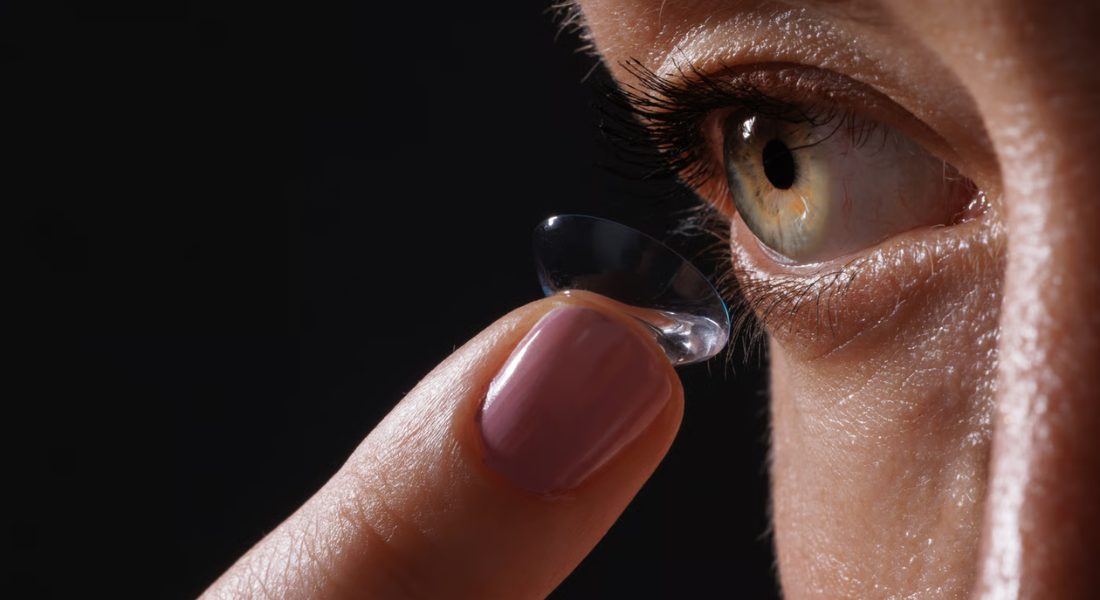
A small-aperture lens uses a tiny central opening to control how light enters your eye, rather than splitting light between several focal points. You may therefore get a wider range of useful vision and less effect from some corneal imperfections.
A small-aperture lens may be considered in selected people with irregular corneal optics or previous refractive surgery, although suitability depends on the cause of the irregularity and your overall eye health.
What Exactly Is a Small-Aperture Intraocular Lens?
A small-aperture intraocular lens has a tiny central opening surrounded by an opaque mask. You may benefit from clearer vision because the aperture blocks many poorly focused peripheral light rays, similar to the pinhole used during an eye examination.
The IC-8, marketed as the IC-8 Apthera in the United States, is one example of this technology and uses pinhole optics to extend depth of focus. Availability, indications and approved uses vary between countries, so your surgeon can explain which options are appropriate for you.
What Is the Pinhole Principle?
The pinhole principle uses a small opening to allow mainly central light rays into your eye. This reduces the blur caused by poorly focused peripheral rays and can increase your depth of focus.
You may therefore see a wider range of distances more clearly without the lens physically changing focus. The same principle can also reduce the effect of some corneal irregularities by filtering out problematic peripheral rays.
How Can a Small Aperture Increase Your Range of Vision?
A small aperture makes your eye more tolerant of defocus, giving you a wider range where objects can still appear clear. You may therefore get useful distance, intermediate and some near vision without constantly changing glasses.
You should know that this is not true accommodation, as the lens does not change shape or power. Instead, the small aperture reduces blur and extends your depth of focus.
Evidence Note
Clinical research shows that small-aperture IOLs can extend depth of focus while maintaining useful distance vision. In the pivotal IC-8 Apthera study, unilateral small-aperture implantation produced better binocular intermediate and near acuity than bilateral monofocal controls, with comparable binocular distance vision.
Monocular contrast sensitivity was lower in the small-aperture eye, while binocular contrast sensitivity was broadly comparable with controls. Results should therefore be considered in terms of how both eyes work together.
How Is a Small-Aperture Lens Different From a Monofocal Lens?
A standard monofocal lens gives you clear vision mainly at one chosen distance, usually distance, so you may need reading glasses. A small-aperture lens can extend your depth of focus, giving you more useful intermediate and near vision.
You should know that the small aperture also blocks some peripheral light, which can affect vision in certain lighting conditions. If you are happy using reading glasses, a conventional monofocal lens may still meet your visual needs.
How Is It Different From a Multifocal or Trifocal Lens?
A multifocal or trifocal lens creates several focal ranges for distance, intermediate and near vision. Multifocal and trifocal lenses can reduce dependence on glasses across several viewing distances, but they can also cause halos, glare or reduced contrast.
A small-aperture lens uses a central opening to extend your depth of focus rather than creating multiple focal points. You may benefit from this approach if you have certain corneal irregularities, although near vision may not match that of a strong trifocal lens.
How Does It Compare With an EDOF Lens?
Both small-aperture and EDOF lenses aim to give you a broader range of useful vision, but they achieve this differently. An EDOF lens uses its optical design to extend focus, while a small-aperture lens uses a central opening to reduce blur.
You may also benefit from the small aperture filtering some corneal irregularities. Your surgeon should therefore consider your corneal quality as well as your need for distance, intermediate and near vision when discussing these options.
Comparing Small-Aperture and Other Cataract Lenses
| Feature | Standard Monofocal | Small-Aperture Lens | EDOF Lens | Trifocal Lens |
| Main optical aim | Best unaided focus at one principal distance | Extend depth of focus using the pinhole principle | Extend the useful range of focus through optical design | Provide useful distance, intermediate and near focal ranges |
| Distance vision | Usually good when targeted for distance | Designed to maintain useful distance vision | Designed to provide useful distance vision | Designed to provide useful distance vision |
| Intermediate vision | Usually more limited unless specifically targeted | Extended compared with a conventional monofocal strategy | Usually an important strength | Designed to provide an intermediate range |
| Near vision | Reading glasses usually required | Some useful near vision may be possible | Varies by design; near glasses may remain necessary | Generally stronger unaided near performance |
| Optical principle | Single principal focus | Central aperture filters peripheral defocused or aberrated rays | Extended-focus optics | Multiple focal ranges |
| Irregular corneal optics | Does not specifically mask higher-order aberrations | May reduce the effect of selected corneal irregularities | Suitability varies and irregular optics may reduce performance | Significant irregularity can reduce visual quality |
| Halos/glare | Generally lower with conventional monofocal optics | Can occur; should not be assumed to be absent or consistently lower | Can occur and varies by design | Common recognised trade-off |
| Low-light performance | Generally straightforward | Monocular contrast may be reduced; binocular performance depends on the fellow eye and treatment strategy | Varies by lens design | Can involve contrast and dysphotopsia trade-offs |
| Need for glasses | Usually higher | May be reduced for some intermediate and near tasks | Often reduced for distance and intermediate tasks | Often reduced across the broadest range of distances |
Why May Small-Aperture Lenses Help With Irregular Corneas?
A small aperture can block some peripheral light rays that are more affected by corneal irregularities. You may therefore experience improved image quality if you have certain higher-order aberrations that glasses cannot fully correct.
You should know that this approach is not suitable for every irregular cornea. Your surgeon needs to assess the cause, severity and stability of your corneal condition before considering a small-aperture lens.
Clinical Tip
If you have an irregular cornea, ask which abnormality the pinhole effect is expected to reduce. Corneal topography or tomography can help distinguish regular astigmatism, irregular astigmatism and higher-order aberrations.
Small-aperture optics cannot correct every cause of poor vision. Retinal, optic-nerve, ocular-surface or significant corneal disease may still limit the result, so careful assessment remains essential.
Can You Have One After Previous Laser Eye Surgery?
You may be suitable for a small-aperture lens after LASIK, PRK or LASEK, but your eye needs careful assessment. The lens may help by extending your depth of focus and reducing the effect of some corneal irregularities.
You should know that previous laser surgery does not automatically mean you need a small-aperture lens. Your surgeon can compare this option with monofocal, toric and other lenses based on your corneal shape, eye health and visual needs.
Research Insight
Small-aperture optics are of particular interest when cataract-lens planning is less predictable, including some eyes after LASIK, radial keratotomy or with irregular corneal optics. The pinhole effect reduces the impact of some peripheral aberrated rays.
A systematic review reported useful distance, intermediate and near vision, including potential benefits in selected irregular corneas. However, much of the complex-cornea evidence comes from observational studies and case series, so results should not be generalised to every patient.
What Other Corneal Problems May Make the Technology Useful?
If you have selected corneal scars, irregular astigmatism or previous corneal surgery, pinhole optics may help by filtering some aberrated peripheral rays. This may improve how clearly you see.
However, not every irregular cornea benefits. Your surgeon may use corneal topography or tomography to decide whether a small-aperture lens, corneal treatment or specialist contact lens is more suitable for you.
Will a Small-Aperture Lens Make You Glasses-Free?
A small-aperture lens may reduce your need for glasses by extending your range of clear vision for distance, computer work and some reading.
Complete spectacle independence is not guaranteed. You may still need glasses for small print, prolonged reading or other demanding visual tasks.
Why Is the Lens Often Considered for the Non-Dominant Eye?

In some binocular treatment strategies, the dominant eye is targeted mainly for distance while the non-dominant eye is used to extend intermediate and near vision. A small-aperture lens may therefore be considered for the non-dominant eye.
You should know that this approach is not suitable for everyone. Your surgeon will consider your eye health, night vision, binocular vision and the approved use of the specific lens before recommending it for you.
Does the Small Aperture Make Vision Darker?
The small aperture reduces the amount of peripheral light reaching the retina, and contrast sensitivity can be lower when the small-aperture eye is tested on its own. This may be particularly relevant in challenging or low-light conditions.
However, binocular contrast sensitivity can remain broadly comparable when the small-aperture lens is used as part of an appropriate fellow-eye strategy. If you drive frequently at night or work in dim environments, discuss these visual demands with your surgeon before choosing the lens.
Do Small-Aperture Lenses Cause Halos and Glare?
Halos, glare or other visual symptoms can still occur with a small-aperture lens. Its pinhole design differs from the light-splitting optics of multifocal or trifocal lenses, but comparative rates of visual symptoms vary between lens designs and patient groups.
Your overall vision can also be affected by dry eye, residual prescription or corneal irregularity. Your surgeon should therefore assess your eye carefully and compare the likely visual effects with other lens options.
What Are the Main Limitations of Small-Aperture Lenses?
A small-aperture lens can offer useful visual benefits, but it also has limitations that you should understand before choosing this type of implant. These can be particularly relevant if you regularly drive at night or need ongoing monitoring of your retina.
- Low-Light Performance: Monocular contrast sensitivity can be lower in the small-aperture eye, particularly under challenging lighting conditions, although binocular performance may remain good with an appropriate fellow-eye strategy.
- Retinal Examination: Retinal examination, fundus photography and OCT are generally still possible, although some examinations may require additional time or effort depending on the lens and clinical situation.
- Possible Follow-Up Treatment: Posterior capsule opacification can occur after cataract surgery. With the IC-8 Apthera, Nd:YAG laser capsulotomy may be more technically challenging, so appropriate technique and product-specific guidance are important.
- Not Suitable for Everyone: Your corneal condition, retinal health, pupil characteristics, night-time visual needs and overall eye health can affect whether a small-aperture lens is appropriate for you.
Understanding these limitations can help you weigh the potential benefits against the compromises of a small-aperture lens. Your surgeon can assess your eyes and discuss whether another lens option may better match your visual needs.
Who May Be a Good Candidate for a Small-Aperture Lens?
You may be considered if you want a wider range of useful vision and could benefit from the pinhole principle, including selected eyes with corneal irregularities or previous refractive surgery.
Your surgeon should assess your cornea, retina, optic nerve, ocular surface and pupil behaviour, and discuss your night-time visual needs before recommending this option.
UK Guidance Note
The IC-8 small-aperture IOL is listed in Bausch + Lomb’s UK surgical portfolio, although availability varies. Suitability depends on the exact lens, your eye health, pupil characteristics and visual priorities.
NICE cataract guidance does not give a specific recommendation for small-aperture IOLs. Ask your surgeon about the UK indication for the implant being offered, why it suits your eyes and what alternatives are available.
What Should You Discuss With Your Surgeon Before Choosing One?
Ask why a small-aperture lens is being recommended for your eyes and what your corneal measurements show. Discuss the expected range of vision, night-time needs and whether retinal health affects suitability.
Also ask how it compares with monofocal, toric, EDOF and trifocal lenses. Your surgeon can use your ocular findings to judge whether small-aperture optics address your main visual problem.
Myth vs Fact
| Myth | Fact |
| A small-aperture lens physically changes focus like a young natural lens. | No. It extends depth of focus using the pinhole principle rather than restoring natural accommodation. |
| A small-aperture lens guarantees glasses-free vision at every distance. | It may reduce reliance on glasses, but small print, prolonged reading or other demanding tasks may still require spectacles. |
| Anyone with an irregular cornea will benefit from one. | Only selected irregular corneas may benefit. The cause, severity and stability of the corneal irregularity must be assessed. |
| Small-aperture lenses cannot cause halos or glare. | Halos, glare and starbursts can still occur. The visual side-effect profile varies between patients and lens strategies. |
| The opaque mask means doctors cannot examine your retina. | Retinal examination and imaging can generally still be performed, although some views may be slightly more technically challenging. |
| The lens is automatically the best choice after LASIK or PRK. | Previous refractive surgery may make cataract planning more difficult, but several lens strategies are available and the choice depends on your individual corneal optics and eye health. |
| Small-aperture lenses are just another type of multifocal lens. | No. They use a central aperture to extend depth of focus rather than creating several conventional focal points. |
Key Takeaways
- Small-aperture IOLs use the pinhole principle to extend depth of focus rather than restore accommodation.
- The IC-8 is a small-aperture EDOF lens with an opaque mask and central aperture.
- It can provide useful distance and intermediate vision, with some functional near vision.
- Selected eyes with previous refractive surgery or irregular corneal optics may benefit from filtering aberrated peripheral light.
- Not every irregular cornea is suitable, and evidence in complex corneas remains limited.
- Halos, glare and starbursts can still occur.
- Monocular contrast sensitivity may be lower, although binocular performance can remain good with an appropriate fellow-eye strategy.
- Retinal examination and OCT are generally still possible but may be more technically challenging.
- Check the exact lens indication, pupil and retinal-health criteria, and whether unilateral implantation is required.
- You may still need glasses for small print or demanding visual tasks.
Frequently Asked Questions
- What is a small-aperture lens for cataract surgery?
A small-aperture lens has a tiny central opening surrounded by an opaque mask. It uses the pinhole principle to reduce blur and extend your depth of focus. - How does a small-aperture lens increase your range of vision?
The small opening makes your eye more tolerant of defocus by allowing mainly central light rays to enter. You may therefore get useful distance, intermediate and some near vision without the lens changing its power. - Can a small-aperture lens help if you have an irregular cornea?
It may help with certain corneal irregularities by blocking peripheral light rays that are more affected by an uneven corneal surface. Your surgeon will need to assess the cause, severity and stability of your corneal condition. - Can you have a small-aperture lens after LASIK or other laser eye surgery?
You may be suitable after LASIK, PRK, LASEK or other previous corneal surgery. However, your surgeon will assess your corneal shape, eye health and visual needs before recommending this option. - How is a small-aperture lens different from a monofocal lens?
A monofocal lens mainly provides clear vision at one chosen distance. A small-aperture lens aims to extend your depth of focus, potentially giving you more useful intermediate and near vision. - How does a small-aperture lens differ from a multifocal or trifocal lens?
Multifocal and trifocal lenses create multiple focal points for different distances. A small-aperture lens instead uses a central opening to reduce blur, without splitting light between several focal points. - Can a small-aperture lens make you completely glasses-free?
Not necessarily. You may need fewer glasses for distance, computer work or some reading, but you may still need them for small print, prolonged reading or demanding visual tasks. - Does a small-aperture lens make your vision darker?
Contrast sensitivity can be lower when the small-aperture eye is tested on its own, particularly under challenging lighting conditions. However, binocular contrast sensitivity may remain broadly comparable when the lens is used with an appropriate fellow-eye strategy, so discuss night driving and other low-light activities with your surgeon. - Why might a small-aperture lens be placed in your non-dominant eye?
In some binocular treatment strategies, the dominant eye is targeted mainly for distance while the non-dominant eye is used to extend intermediate and near vision. A small-aperture lens may therefore be considered for the non-dominant eye alongside an appropriately selected fellow-eye lens. - Who may be a good candidate for a small-aperture lens?
You may be considered if you want a wider range of useful vision and have certain corneal irregularities, previous refractive surgery or higher-order aberrations. Your surgeon will also assess your retina, optic nerve, ocular surface, pupil behaviour and night-time visual needs.
Final Thoughts: Choosing a Small-Aperture Lens for Cataract Surgery
Small-aperture lenses can extend depth of focus and may help selected people with corneal irregularities or previous laser surgery. Reduced light transmission may affect dim-light vision, so discuss night-time needs and priorities with your surgeon.
If you’re considering private cataract surgery in London and want to understand whether a small-aperture lens may suit your visual needs, you can contact Eye Clinic London to arrange a consultation.
References:
- Sánchez-González, J.-M., Sánchez-González, M.C., De-Hita-Cantalejo, C. and Ballesteros-Sánchez, A. (2022) ‘Small Aperture IC-8 Extended-Depth-of-Focus Intraocular Lens in Cataract Surgery: A Systematic Review’, Journal of Clinical Medicine, 11(16), p. 4654. doi: 10.3390/jcm11164654. Available at: https://www.mdpi.com/2077-0383/11/16/4654
- Vukich, J., Modi, S., Fisher, B.L., Stonecipher, K., Lin, L. and Michna, M. (2024) ‘Clinical comparison of a small-aperture intraocular lens versus a monofocal control’, Journal of Refractive Surgery, 40(11), pp. e824–e835. doi: 10.3928/1081597X-20240731-02. Available at: https://pubmed.ncbi.nlm.nih.gov/39530983/
- Ang, R.E.T., Araneta, M.M.Q. and Cruz, E.M. (2022) ‘Review of surgical devices using small aperture optics’, Taiwan Journal of Ophthalmology, 12(3), pp. 282–294. doi: 10.4103/tjo.tjo_45_21. Available at: https://pmc.ncbi.nlm.nih.gov/articles/PMC9558464/
- Dick, H.B., Piovella, M., Vukich, J., Vilupuru, S. and Lin, L. (2017) ‘Prospective multicenter trial of a small-aperture intraocular lens in cataract surgery’, Journal of Cataract & Refractive Surgery, 43(7), pp. 956–968. doi: 10.1016/j.jcrs.2017.04.038. Available at: https://www.sciencedirect.com/science/article/abs/pii/S0886335017304479
- Laginaf, M. and Barsam, A. (2022) ‘Refractive surgery’, in Sundaram, V. et al. (eds.) Training in Ophthalmology. 3rd edn. Oxford: Oxford University Press, pp. 157–174. doi: 10.1093/med/9780198871590.003.0004. Available at: https://academic.oup.com/book/43958/chapter-abstract/369603134