


The History of Laser Eye Surgery

If you have laser eye surgery today, your treatment builds on decades of developments in corneal surgery, laser technology, imaging and treatment planning. Earlier techniques relied on incisions or mechanical reshaping before excimer and femtosecond lasers provided new ways to alter your corneal shape.
Your modern options may include PRK, LASIK or SMILE depending on your prescription, corneal measurements and eye health. Each procedure reshapes your cornea differently, and no technique is automatically the best option for you.
Before Laser Eye Surgery
Before you could have laser vision correction, refractive surgeons experimented with changing the shape of your cornea using incisions and surgical reshaping. These procedures established the principle that altering your corneal curvature could change the focusing power of your eye.
Their results were less predictable than your modern laser treatment, but the underlying optical ideas helped establish the foundations of refractive surgery.
The Development of Keratomileusis
Colombian-Spanish ophthalmologist José Ignacio Barraquer developed the concept of keratomileusis from 1948. His aim was to change your refractive error by removing and reshaping a layer of corneal tissue before replacing it.
His early techniques involved methods very different from your modern LASIK procedure, including freezing and mechanically reshaping corneal tissue. However, the central idea of sculpting your corneal stroma became one of the most important foundations of later laser refractive surgery.
Radial Keratotomy
Radial keratotomy, or RK, reduced your short-sightedness by making radial partial-thickness incisions in your cornea so that its central surface became flatter.
Earlier forms of corneal incision surgery had been explored before this, but Svyatoslav Fyodorov and colleagues developed and refined modern anterior RK during the 1970s. Your result could change considerably over time, and laser-based procedures eventually provided more predictable alternatives.
The Excimer Laser Breakthrough
Researchers discovered that short pulses of ultraviolet excimer-laser energy could remove tiny amounts of corneal tissue with very little heat affecting the surrounding tissue. This allowed surgeons to reshape the cornea more precisely and provided the technological basis for PRK and later LASIK.
Key Points About the Excimer Laser
| Aspect | What It Means | Why It Matters |
| Ultraviolet laser | Uses short pulses of ultraviolet energy | Allows precise removal of corneal tissue |
| Photoablation | Removes very small amounts of tissue using laser energy | Helps reshape the cornea accurately |
| Limited thermal damage | Produces minimal heat in surrounding tissue | Helps protect nearby corneal tissue |
| Corneal reshaping | Changes the shape of the cornea to alter how light is focused | Can correct certain refractive errors |
| PRK | Uses the excimer laser to reshape the exposed corneal surface | Became an important laser vision correction technique |
| LASIK | Later combined excimer laser reshaping with a corneal flap | Further advanced laser vision correction |
The Landmark 1983 Research
Stephen Trokel, Rangaswamy Srinivasan and Bodil Braren published their landmark study of excimer-laser corneal surgery in 1983. Their experiments demonstrated that 193-nm ultraviolet laser pulses could precisely remove corneal tissue.
For your modern refractive surgery, this was an important transition from mechanical corneal reshaping towards computer-controlled laser ablation.
The Birth of PRK
Human excimer-laser studies developed during the late 1980s, followed by clinical PRK studies in sighted eyes. These investigations provided important evidence about how the cornea responded to controlled laser photoablation.
How Does PRK Work?
During your PRK procedure, your surgeon removes the surface epithelial layer of your cornea before using an excimer laser to reshape the underlying stromal tissue.
Your epithelium then grows back over the treated area during the following days. Because this surface layer needs to heal, your early recovery is generally slower and more uncomfortable than after LASIK.
PRK Reaches Regulatory Approval
Excimer-laser systems began receiving regulatory approval for refractive treatment during the mid-1990s. Approvals developed progressively for individual laser platforms, refractive errors and treatment ranges rather than through one universal approval for PRK.
Other systems and refractive indications followed as clinical evidence expanded. Your regulatory approval should therefore be understood as a gradual process involving individual devices and treatment ranges rather than one universal approval for PRK.
Why Was PRK Important?
PRK demonstrated that your refractive error could be treated by accurately reshaping your cornea with laser energy rather than relying on radial incisions or mechanically reshaped tissue.
Your corneal surface needs to regenerate after PRK, so early discomfort and slower visual recovery encouraged further research into techniques that could preserve more of your surface epithelium.
The Development of LASIK
LASIK combined the stromal-reshaping principle of keratomileusis with excimer-laser ablation. Ioannis Pallikaris and colleagues published the LASIK concept in 1990, initially describing experimental work involving a corneal flap and excimer ablation.
Human clinical use developed during the early 1990s. Your modern LASIK procedure therefore emerged from several earlier advances rather than from one isolated invention.
How Does LASIK Work?
During your LASIK procedure, your surgeon creates a thin hinged flap in your cornea and moves it aside before using an excimer laser to reshape the underlying stromal tissue.
Your flap is then returned to its original position. Because most of your corneal epithelium remains intact, your early visual recovery is usually faster than after surface procedures such as PRK.
Why Did LASIK Become Popular?
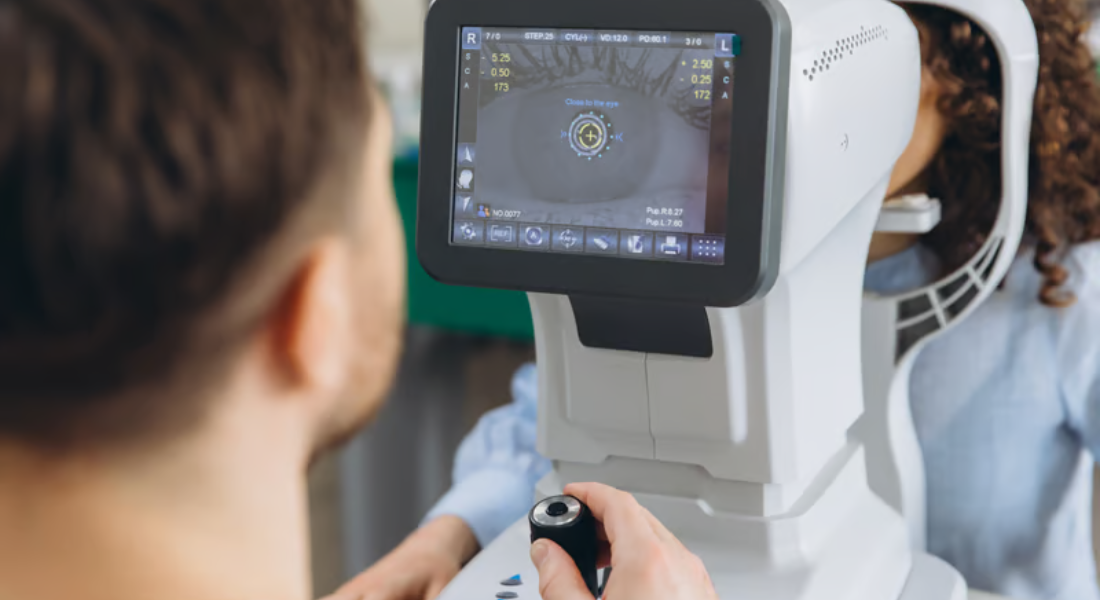
LASIK generally provides you with relatively rapid early visual recovery and less surface discomfort than PRK because your central corneal epithelium is largely preserved.
Its adoption also reflected improvements in microkeratomes, excimer lasers, treatment algorithms and patient selection. Your suitability still depends on factors such as your prescription, corneal shape, corneal thickness and eye health.
LASIK Regulatory Approval
Regulatory approvals for excimer-laser LASIK followed during the late 1990s as clinical evidence and laser technology developed. These approvals applied to particular laser systems and specified treatment ranges rather than to LASIK as one universally approved procedure.
- FDA approval: Excimer-laser systems began receiving specific FDA approval for LASIK during the late 1990s
- Device-specific: FDA approval applies to a particular laser system rather than LASIK as one universal procedure
- Treatment range: Different systems have been approved for specific ranges of short-sightedness, long-sightedness and astigmatism
- Clinical indication: The approved range and indication depend on the individual laser system and its regulatory authorisation
Understanding FDA approval in this way helps put the history of LASIK into context. The procedure itself is not covered by one single approval date, because individual laser systems have received approval for specific uses and vision prescriptions over time.
Wavefront-Guided Laser Treatment
Wavefront-guided laser treatments began entering clinical practice during the early 2000s, allowing treatment planning to incorporate optical measurements beyond ordinary sphere and cylinder.
Wavefront-guided laser systems subsequently received regulatory approvals during the early 2000s, with other customised treatment platforms following. These technologies allowed your laser treatment pattern to incorporate additional optical measurements, although customised treatment does not guarantee that you will achieve better vision than with every conventional treatment.
Femtosecond Lasers Change LASIK
Femtosecond lasers provided your surgeon with an alternative to a mechanical microkeratome for creating the corneal flap used in LASIK. Very short laser pulses can create a planned layer of microscopic photodisruption within your cornea.
This allows your surgeon to specify characteristics such as flap depth and diameter without using a mechanical blade for flap creation.
The Move Towards Femtosecond LASIK
When your surgeon uses a femtosecond laser to create your flap and an excimer laser to reshape your cornea, the procedure is commonly called femtosecond LASIK or sometimes bladeless LASIK.
The term bladeless refers specifically to your flap creation. Your operation still requires your surgeon to lift and reposition the flap and remains a surgical procedure with recognised risks.
The Development of SMILE
Small incision lenticule extraction, or SMILE, developed from earlier femtosecond-laser lenticule procedures. The first clinical SMILE procedures were performed in 2008, with subsequent studies establishing the technique for treating myopia.
Unlike your LASIK procedure, SMILE does not require an excimer laser or the creation of a large corneal flap.
How Does SMILE Work?
During your SMILE procedure, a femtosecond laser creates a lens-shaped piece of stromal tissue called a lenticule within your cornea.
Your surgeon then separates and removes the lenticule through a small peripheral incision. Removing this precisely shaped piece of tissue changes your corneal curvature and therefore your focusing power.
SMILE Becomes an Established Option
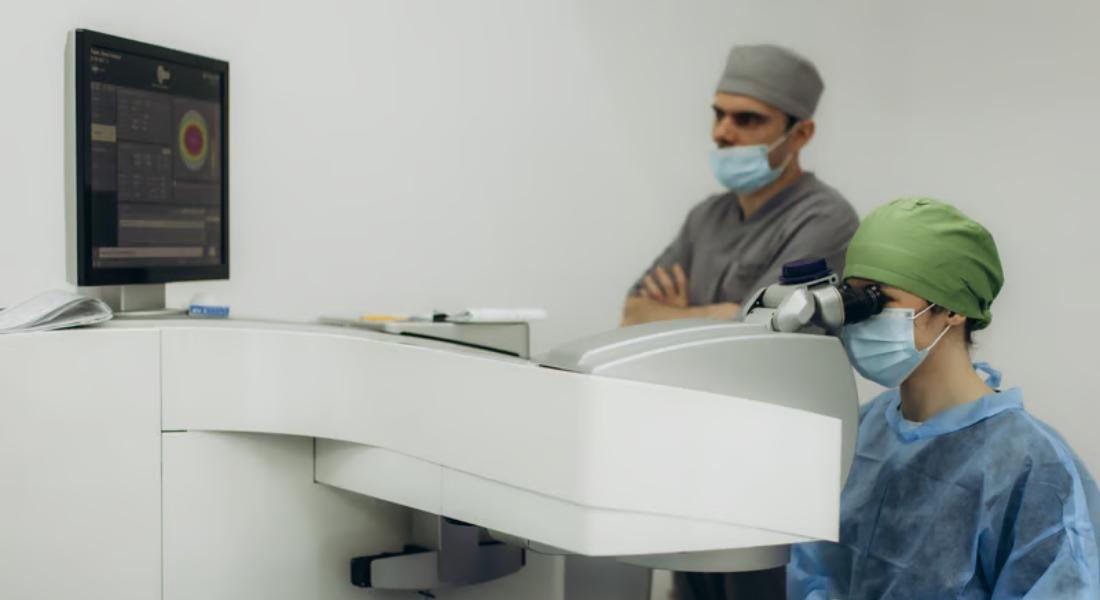
SMILE subsequently gained regulatory approval in several markets, including US approval for selected myopia in 2016 and an expanded indication including myopic astigmatism in 2018.
Long-term research has also followed patients for ten years after SMILE and reported stable refractive results in the studied cohort. Your individual long-term result can still be influenced by natural changes in your eyes and prescription over time.
Key Takeaways
- Your modern laser eye surgery developed from earlier attempts to reshape your cornea mechanically.
- Your keratomileusis history is closely associated with José Ignacio Barraquer’s work beginning in 1948.
- Your radial keratotomy used corneal incisions rather than a laser and was refined by Fyodorov during the 1970s.
- Your modern excimer-laser history was transformed by the landmark Trokel, Srinivasan and Braren research published in 1983.
- Your PRK procedure became the first widely established excimer-laser approach to refractive correction.
- Human PRK studies developed during the late 1980s, with clinical treatment in sighted eyes following soon afterwards.
- Your LASIK procedure developed around 1990 by combining corneal-flap surgery with excimer-laser stromal reshaping.
- Your wavefront-guided treatments emerged during the early 2000s as surgeons began using more detailed optical measurements.
- Your femtosecond LASIK uses a laser rather than a mechanical microkeratome to create your corneal flap.
- Your SMILE procedure uses a femtosecond laser to create a lenticule that your surgeon removes through a small incision.
Myth vs Fact
| Myth | What You Should Know |
| Your laser eye surgery was invented as one single procedure. | Your modern treatment developed through decades of advances in corneal surgery, lasers, imaging and treatment planning. |
| Keratomileusis was an early form of LASIK using a laser. | Barraquer’s original technique reshaped your corneal tissue mechanically rather than with an excimer laser. |
| Radial keratotomy was an early laser treatment. | Your RK procedure used surgical corneal incisions and no laser. |
| The excimer laser burns away your corneal tissue with heat. | Your excimer laser primarily removes microscopic tissue through ultraviolet photoablation with very limited thermal damage. |
| PRK and LASIK reshape completely different parts of your eye. | Both reshape your corneal stroma, but they reach it using different approaches. |
| LASIK was fully established in patients in 1990. | The 1990 Pallikaris publication included experimental work, with human clinical development following in the early 1990s. |
| Wavefront-guided LASIK guarantees better vision than conventional LASIK. | Your additional optical measurements can personalise treatment, but they cannot guarantee superior results for you. |
| Bladeless LASIK means your entire operation is performed without surgical manipulation. | Your femtosecond laser creates the flap without a mechanical blade, but your surgeon still lifts and replaces it. |
| SMILE is simply another form of LASIK. | Your SMILE procedure removes a laser-created stromal lenticule through a small incision without creating a LASIK-style flap. |
| Ten-year SMILE studies guarantee your prescription will never change. | Long-term studies show stability in studied groups, but your eyes can still change naturally over time. |
Frequently Asked Questions
- When did PRK begin to be used in human eyes?
Human excimer-laser refractive studies developed during the late 1980s, with clinical PRK in sighted eyes becoming established through subsequent studies. - Who developed keratomileusis?
José Ignacio Barraquer developed keratomileusis from 1948. His work introduced the concept of reshaping your corneal stroma to alter the focusing power of your eye. - Was radial keratotomy a laser procedure?
No. Your RK treatment used radial incisions in your cornea to flatten its central shape. Fyodorov and colleagues refined the technique during the 1970s. - Why was the 1983 excimer-laser study important?
The work of Trokel, Srinivasan and Braren showed that excimer-laser ultraviolet pulses could precisely remove your corneal tissue with very limited thermal damage, helping establish the basis for PRK. - How did PRK become established as a laser eye treatment?
PRK developed through human excimer-laser studies during the late 1980s and subsequent clinical studies in sighted eyes. These studies helped establish controlled corneal photoablation as a practical method of refractive correction. - When was LASIK developed?
LASIK developed around 1990 by combining corneal-flap techniques with excimer-laser stromal ablation. Human clinical use expanded during the early 1990s. - What did wavefront technology add to your laser treatment?
Your wavefront scan can measure optical imperfections beyond your ordinary spectacle prescription. These measurements can be used to guide a customised excimer-laser treatment pattern. - What changed when femtosecond lasers were introduced?
Your surgeon could create your LASIK flap using precisely focused laser pulses instead of a mechanical microkeratome. The excimer laser still performs the optical corneal reshaping in femtosecond LASIK. - How is SMILE different from LASIK?
Your SMILE procedure creates a small lenticule within your corneal stroma and removes it through a small incision. It does not require a LASIK-style flap or excimer-laser ablation. - When did SMILE become an established treatment?
Clinical SMILE procedures began in 2008. The technique subsequently became established internationally, with US FDA approval for selected myopia in 2016 and expanded approval for myopia with astigmatism in 2018.
Final Thoughts: The History of Laser Eye Surgery
Your modern laser eye treatment developed through advances ranging from Barraquer’s stromal reshaping concepts to excimer-laser PRK, LASIK and femtosecond-laser SMILE. These procedures now give your surgeon different ways to alter your corneal focusing power according to your prescription and eye measurements.
If you are considering laser eye surgery in London and would like to understand which treatment may be suitable for you, feel free to contact us at Eye Clinic London to arrange a consultation and receive personalised advice.
References
- Blum, M., Lauer, A.S., Kunert, K.S. and Sekundo, W. (2019) ‘10-year results of small incision lenticule extraction’, Journal of Refractive Surgery, 35(10), pp. 618–623. Available at: https://pubmed.ncbi.nlm.nih.gov/31610002/
- Gartry, D.S., Kerr Muir, M.G. and Marshall, J. (1991) ‘Photorefractive keratectomy with an argon fluoride excimer laser: a clinical study’, Refractive and Corneal Surgery, 7(6), pp. 420–435. Available at: https://pubmed.ncbi.nlm.nih.gov/1782155/
- Reinstein, D.Z., Archer, T.J. and Gobbe, M. (2014) ‘Small incision lenticule extraction (SMILE) history, fundamentals of a new refractive surgery technique and clinical outcomes’, Eye and Vision, 1, article 3. Available at: https://pmc.ncbi.nlm.nih.gov/articles/PMC4604118/
- Trokel, S.L., Srinivasan, R. and Braren, B. (1983) ‘Excimer laser surgery of the cornea’, American Journal of Ophthalmology, 96(6), pp. 710–715. Available at: https://pubmed.ncbi.nlm.nih.gov/6660257/
- Waring, G.O. III et al. (1991) ‘Results of the Prospective Evaluation of Radial Keratotomy (PERK) Study five years after surgery’, Ophthalmology, 98(8), pp. 1164–1176. Available at: https://pubmed.ncbi.nlm.nih.gov/1923352/