


Corneal Treatment Advances Expected in 2027

The cornea is the clear, dome-shaped structure at the front of your eye that helps focus light and maintain clear vision. Because it provides much of the eye’s focusing power, conditions affecting the cornea can have a significant impact on your sight. Understanding corneal health is therefore an important part of protecting your long-term vision.
Over the years, advances in corneal medicine have improved the way clinicians diagnose and treat a wide range of conditions. Enhanced imaging technologies, refined surgical techniques, and emerging therapies have all contributed to better patient outcomes. As a result, you may benefit from more accurate diagnosis and more effective treatment options.
Looking ahead to 2027, researchers continue to explore innovative approaches that could further improve corneal care. Developments in transplantation, tissue engineering, artificial intelligence, and regenerative medicine are expected to shape the future of the field. These advances may help support safer, more personalised and more effective treatment options in suitable cases.
Advances in Corneal Imaging
Modern corneal imaging technologies provide detailed information about the structure and health of your cornea. These advanced tools can detect subtle abnormalities that may not be visible during a routine eye examination. As a result, you may benefit from earlier and more accurate diagnosis of corneal conditions.
In 2027, corneal imaging systems are expected to become even more sophisticated. Improved image resolution and faster scanning capabilities may help clinicians assess your cornea with greater precision. This can support more personalised treatment planning and ongoing monitoring.
Advanced imaging continues to play a central role in modern corneal care. By providing detailed insights into your eye health, these technologies help clinicians make more informed decisions about your treatment. Ultimately, you may benefit from earlier intervention and improved visual outcomes.
Key Corneal Treatment Advances Expected in 2027
| Treatment / Technology | Purpose | Potential Patient Benefit | Notes / Considerations |
| Enhanced Corneal Imaging | Detect subtle corneal abnormalities | Earlier and more accurate diagnosis | Higher resolution and faster scanning improve personalised care |
| Artificial Intelligence (AI) Assessment | Analyse corneal scans, detect disease patterns | Faster and more consistent evaluation of conditions like keratoconus | Supports but does not replace ophthalmologist assessment |
| Corneal Cross-Linking | Strengthen corneal tissue | Slows progression of keratoconus and corneal ectasia | Used when disease is progressing; does not restore normal cornea |
| Partial-Thickness Corneal Grafts | Replace only damaged corneal layers | Faster recovery, preserves healthy tissue | Technique depends on the layer affected and patient condition |
| Advanced Corneal Transplantation (DMEK, DSAEK) | Replace diseased tissue | Safer surgery, faster visual recovery, improved outcomes | Long-term graft survival varies; surgeon expertise matters |
| Tissue Engineering & Artificial Corneas | Lab-grown or artificial corneas | Addresses donor shortages, expands treatment options | Mostly research or specialist centres currently |
| Stem Cell Therapy | Repair and regenerate corneal tissue | Potential to support repair or functional improvement in selected conditions | Experimental; clinical trials ongoing |
| Regenerative Corneal Medicine | Encourage natural tissue repair | Potential longer-term functional improvement | Includes growth factors, cellular therapies, bioengineered tissues |
| Advanced Dry Eye Management | Support ocular surface health | Reduces irritation, improves comfort and visual function | Combines medications, devices, and regenerative approaches |
| Remote Monitoring & Digital Health | Track corneal changes remotely | Timely intervention and easier access to specialist care | Complements in-person follow-up; adoption increasing |
Artificial Intelligence in Corneal Assessment
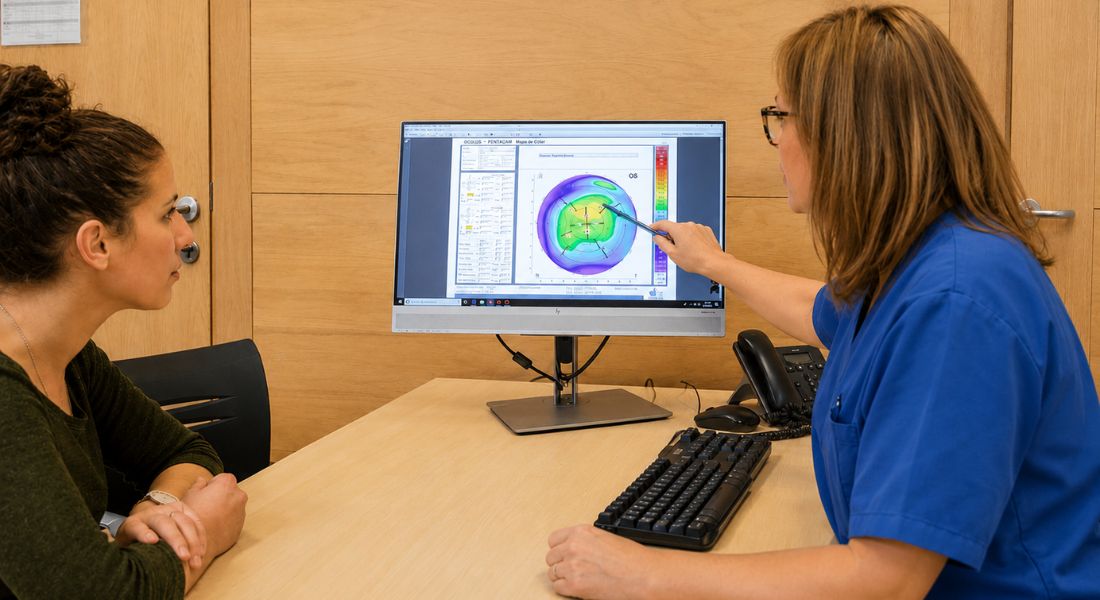
Artificial intelligence is becoming an increasingly important part of modern ophthalmology. In corneal medicine, AI systems are being studied and developed to analyse scans and identify patterns that may indicate disease. This may help you receive a faster and more accurate assessment of your corneal health.
These technologies have the potential to support earlier diagnosis and improve consistency in clinical decision-making. By analysing large amounts of data, AI tools can help clinicians detect subtle changes that might otherwise be difficult to identify. As a result, you may benefit from more precise diagnosis and treatment planning.
AI may also play a valuable role in monitoring disease progression over time. This can help your clinician track changes in your condition and adjust treatment when necessary. As research continues to expand, you may see AI becoming an increasingly useful tool in corneal care.
Evidence Note:
Recent reviews suggest that artificial intelligence may help detect keratoconus and other corneal ectatic diseases by analysing corneal imaging patterns that can be difficult to identify manually. However, these tools still need careful validation before they can be used as a standalone clinical decision-maker. For you as a patient, this means AI may support earlier detection and more consistent monitoring, but it should complement, not replace, assessment by an experienced ophthalmologist.
Earlier Detection of Corneal Disease
Early diagnosis can make a significant difference in the management of many corneal conditions. Researchers are developing advanced technologies that may identify disease before noticeable symptoms develop. This could help you receive treatment at an earlier stage of the condition.
As diagnostic tools continue to improve, clinicians may be able to detect subtle changes in your cornea more accurately. Earlier detection can allow intervention when treatment is often most effective. As a result, you may have a better chance of preserving your vision and avoiding complications.
Preventive care remains a major focus of innovation in corneal medicine. By identifying potential problems sooner, clinicians can take steps to protect your long-term eye health. This means you may benefit from more proactive and personalised care in the future.
Progress in Keratoconus Management
Keratoconus is a condition that causes your cornea to become progressively thinner and more irregular in shape. This can affect the way light enters your eye and lead to blurred or distorted vision. Significant advances in recent years have already improved the options available to help manage this condition.
Researchers continue to refine diagnostic technologies and treatment strategies for keratoconus. Improved screening methods may help clinicians identify the condition earlier and monitor changes more accurately. As a result, you may be able to access treatment before significant vision changes occur.
Further developments are expected during 2027 as research continues to advance. Earlier intervention may help slow disease progression and preserve your vision more effectively. This means you could benefit from more personalised and proactive keratoconus care in the future.
Advances in Corneal Cross-Linking
Corneal cross-linking has become an important treatment for stabilising keratoconus and slowing its progression. The procedure works by strengthening your corneal tissue, helping to reduce the risk of further deterioration. As a result, you may be able to preserve your vision more effectively over time.
Researchers are continuing to investigate ways to improve both treatment efficiency and patient comfort. Modified cross-linking protocols may shorten treatment times while maintaining the effectiveness of the procedure. This could make the treatment experience more convenient for you.
Corneal cross-linking continues to evolve as new clinical evidence becomes available. Ongoing research is helping clinicians refine treatment techniques and optimise outcomes. In the future, you may benefit from even more effective and personalised approaches to keratoconus management.
UK Guidance Note:
In the UK, corneal cross-linking is a recognised treatment option for progressive keratoconus and corneal ectasia when it is clinically appropriate. NICE guidance supports the use of riboflavin and ultraviolet A cross-linking in suitable patients, but the decision depends on factors such as disease progression, corneal thickness, age, visual needs and overall eye health. This means cross-linking is not simply offered because keratoconus is present; it is usually considered when there is evidence that the condition is progressing or likely to progress.
Improved Corneal Transplantation Techniques
Corneal transplantation remains an important treatment option for advanced corneal disease. Over recent years, surgical techniques have become increasingly precise, helping to improve both safety and outcomes. If you require a corneal transplant, you may benefit from these ongoing advances.
Modern procedures often focus on replacing only the damaged layers of your cornea rather than the entire structure. This targeted approach can help preserve healthy tissue and support a faster recovery. As a result, you may experience improved visual outcomes and a smoother healing process.
Researchers and surgeons continue to refine transplantation techniques as new evidence emerges. These developments aim to make procedures more effective and reduce potential complications. In the future, you may benefit from even more advanced and personalised transplant options.
Research Insight:
A 2025 study comparing 10-year outcomes after DMEK, DSAEK and penetrating keratoplasty in Fuchs endothelial corneal dystrophy found that DMEK and DSAEK offered faster visual recovery than penetrating keratoplasty, but long-term graft survival differed between procedures. The study reported 10-year graft survival of 75% for DMEK, 73% for DSAEK and 92% for penetrating keratoplasty, while DMEK had the lowest 10-year rejection rate. For patients, this highlights why the “best” transplant technique depends on the condition being treated, recovery goals, surgeon expertise and long-term risk profile.
Partial Thickness Corneal Grafts
Selective corneal transplantation techniques have transformed the way many corneal conditions are treated. Rather than replacing the entire cornea, these procedures focus only on the damaged layers while preserving healthy tissue. This approach may help you achieve a faster recovery and reduce the risk of certain complications.
Researchers continue to refine graft preparation techniques and surgical methods to improve treatment outcomes. These advances aim to make procedures more precise and enhance the long-term success of corneal grafts. As a result, you may benefit from better visual outcomes and improved graft survival.
Partial thickness corneal grafts are becoming increasingly common in modern ophthalmology. By tailoring surgery to the specific area of damage, clinicians can provide more targeted treatment for you. This trend is expected to continue as surgical techniques and technology advance.
Enhanced Donor Tissue Preservation
The availability and quality of donor corneal tissue play a vital role in the success of corneal transplantation. Researchers are developing improved preservation techniques to help maintain tissue health for longer periods. This may increase the chances of successful outcomes if you require a corneal transplant.
Better storage and transportation methods could improve access to high-quality donor tissue for patients around the world. By extending tissue viability, clinicians may have greater flexibility when planning procedures. This could help you receive treatment more efficiently and with improved surgical outcomes.
Enhanced donor tissue preservation remains an important area of ongoing research. Scientists continue to explore new ways to optimise tissue quality and maximise transplant success. In the future, improved preservation may support better access to donor tissue and more reliable transplantation results.
Tissue Engineering and Artificial Corneas
Researchers are exploring ways to create laboratory-grown corneal tissue as an alternative to traditional donor transplants. Tissue engineering aims to address donor shortages and expand the range of treatment options available to you. These developments could help improve access to care for patients with complex corneal conditions.
Artificial corneal substitutes are also being investigated for patients who may not be suitable candidates for conventional transplantation. If a standard corneal transplant is not appropriate for you, these technologies may offer potential alternatives in the future. Researchers are continuing to refine their safety, effectiveness, and long-term performance.
Although challenges remain, progress in this field continues steadily. Scientists are working to develop solutions that can restore vision while reducing reliance on donor tissue. As research advances, you may benefit from innovative treatment options that are not currently available.
Clinical Insight: Emerging Does Not Always Mean Available
Many corneal innovations, including artificial corneas, bioengineered tissues and regenerative therapies, are promising but may not yet be widely available in routine clinical practice. Some are still being tested in laboratory studies, early clinical trials or specialist centres. If you are considering advanced corneal treatment, it is important to ask whether the treatment is established, approved, investigational or available only through research pathways.
Stem Cell Therapy Research
Stem cell therapies are generating considerable interest within corneal medicine. Researchers are investigating whether specialised cells can help repair damaged corneal tissue and restore its normal function. This research may eventually provide you with new treatment options for a range of corneal conditions.
Potential applications include treating corneal injuries, degenerative diseases, and disorders affecting the surface of the eye. By supporting tissue repair and regeneration, stem cell therapies may help improve outcomes in selected conditions that are difficult to treat using current methods, as evidence continues to develop. This means you may benefit from more advanced treatment approaches in the future.
While much of this research remains experimental, the results so far have been encouraging. Scientists continue to refine these therapies and evaluate their long-term safety and effectiveness. As the field advances, you may see stem cell treatments becoming an increasingly important part of corneal care.
Regenerative Corneal Medicine

Regenerative medicine focuses on supporting the body’s natural healing and repair processes. In corneal care, this includes growth factors, cellular therapies, and bioengineered tissues aimed at restoring damaged corneal tissue. These approaches may offer new ways to improve vision and overall corneal health.
- Repair Rather Than Symptom Management: Unlike traditional treatments, regenerative medicine seeks to restore function and address underlying tissue damage.
- Cellular and Tissue Therapies: Advanced therapies use cells or engineered tissues to support corneal regeneration and improve long-term outcomes.
- Potential for Lasting Benefits: Encouraging natural tissue regeneration may lead to more durable and effective treatment results.
- Ongoing Research: Scientists continue to develop innovative therapies, expanding future options for managing corneal diseases.
Overall, regenerative corneal medicine represents a promising shift toward repairing and restoring vision rather than just managing symptoms. These advances could transform treatment possibilities and improve outcomes for patients with corneal conditions.
New Treatments for Corneal Scarring
Corneal scarring can have a significant impact on your vision, particularly when it affects the central part of the cornea. The severity of vision changes often depends on the size and location of the scar. Because of this, researchers are exploring new ways to reduce or prevent scar formation.
Scientists are gaining a better understanding of how the cornea heals following injury, infection, or surgery. This knowledge may help clinicians develop more targeted therapies that address the underlying healing process. As a result, you may benefit from treatments that are more effective at preserving corneal clarity.
The ultimate goal is to maintain corneal transparency and protect your visual function. Ongoing research continues to investigate therapies that could minimise scarring and improve long-term outcomes for you. This remains an important and promising area of corneal medicine.
Innovations in Dry Eye Management
Dry eye disease is a common condition that can affect the health and comfort of your corneal surface. Symptoms such as irritation, burning, and fluctuating vision can have a significant impact on your daily life. Because of this, researchers continue to explore new ways to improve dry eye management.
A range of new medications, treatment devices, and regenerative therapies are currently being evaluated. These approaches aim to improve the quality of your tear film, support ocular surface health, and address the underlying causes of dry eye. As a result, you may benefit from more effective and personalised treatment options.
Dry eye management continues to evolve as research advances. New innovations may help provide better symptom control and longer-lasting relief for you. Ultimately, these developments aim to improve both your comfort and long-term eye health.
Improved Surgical Precision
Technological advancements are helping surgeons perform corneal procedures with greater accuracy than ever before. Modern imaging systems and surgical guidance technologies provide detailed information about your eye, allowing for more precise planning. This can help ensure that treatment is tailored more closely to your individual needs.
Enhanced surgical precision may reduce the risk of complications and improve overall visual outcomes. By making procedures more accurate, clinicians can preserve healthy tissue and optimise treatment effectiveness. As a result, you may benefit from a smoother recovery and better long-term vision.
Surgical innovation continues to be a major driver of progress in corneal care. New technologies are regularly being introduced to improve both safety and efficiency. In the future, you may have access to even more advanced procedures designed to deliver better outcomes and a more personalised treatment experience.
Personalised Corneal Care
Personalised medicine is becoming increasingly important across ophthalmology, including corneal care. Rather than using the same approach for every patient, clinicians are increasingly tailoring treatments to individual needs. This means you may receive care that is better suited to your specific condition and circumstances.
Factors such as the severity of your condition, the shape and structure of your cornea, and your response to previous treatments can all influence management decisions. By taking these factors into account, clinicians can develop treatment plans that are more precise and effective for you. This personalised approach aims to improve both safety and outcomes.
The trend towards personalised corneal care is expected to continue growing throughout 2027. Advances in diagnostic technology and data analysis are helping clinicians understand each patient’s needs in greater detail. As a result, you may benefit from more targeted treatments and improved long-term visual outcomes.
Better Monitoring of Disease Progression
Accurate monitoring is essential for managing chronic corneal conditions and protecting your long-term vision. New imaging technologies allow clinicians to detect and track subtle changes in your cornea that may not be visible during routine examinations. This can help ensure that any progression is identified as early as possible.
Advanced monitoring tools provide detailed information about how your condition changes over time. By analysing this data, clinicians can make more informed decisions about your treatment and determine whether adjustments are needed. As a result, you may receive more timely and personalised care.
Monitoring capabilities continue to improve as technology advances. Better data allows clinicians to understand your condition more accurately and respond more effectively to changes. Ultimately, you may benefit from earlier intervention, improved treatment planning, and better long-term outcomes.
Advances in Infection Management
Corneal infections can pose a serious threat to your vision if they are not diagnosed and treated promptly. These infections may progress quickly, making early intervention particularly important. As a result, researchers are focusing on ways to improve both diagnosis and treatment.
Scientists are developing advanced diagnostic methods that may identify infectious organisms more rapidly and accurately. Faster detection can help your clinician select the most appropriate treatment sooner, potentially improving outcomes for you. This may also reduce the risk of unnecessary delays in care.
New targeted therapies are also being investigated to improve treatment effectiveness and minimise complications. By addressing infections more precisely, these approaches may help protect your cornea and preserve your vision. Ultimately, the primary goal is to provide you with faster, safer, and more effective care.
Remote Monitoring and Digital Health
Digital health technologies are becoming increasingly relevant in modern ophthalmology. These innovations are helping clinicians manage certain aspects of corneal care more efficiently and conveniently. As a result, you may find it easier to access specialist support and ongoing monitoring.
Remote monitoring systems can allow some assessments to take place without the need for frequent clinic visits. By using digital tools and imaging technologies, your clinician may be able to track your condition and identify changes more effectively. This can help ensure that you receive timely care when it is needed.
The adoption of digital health solutions is expected to continue growing over time. These technologies have the potential to improve access to specialist services and support long-term follow-up for you. Ultimately, they are helping to reshape patient care pathways and create a more connected healthcare experience.
Future Clinical Research
Clinical trials continue to play a vital role in advancing corneal medicine. Researchers are evaluating new medications, innovative devices, refined surgical techniques, and regenerative therapies to improve patient care. Through this research, you may benefit from more effective treatment options in the future.
The findings from ongoing studies have the potential to influence clinical practice throughout 2027 and beyond. As new evidence becomes available, clinicians can make better-informed decisions about how to diagnose and treat corneal conditions. This means you may gain access to safer, more precise, and more personalised care.
Continued innovation remains essential for improving outcomes in corneal health. Researchers are constantly exploring new ways to protect vision, restore corneal function, and enhance quality of life for patients like you. As a result, the future of corneal care looks increasingly promising.
Seeking Expert Corneal Care

Corneal conditions can affect your vision, eye comfort, and overall quality of life. Whether you are experiencing symptoms or have been diagnosed with a corneal condition, early assessment is often important. Seeking specialist advice can help you understand your options and access appropriate care.
Early diagnosis allows many corneal conditions to be identified and managed before they progress further. With timely intervention, you may be able to protect your vision and reduce the risk of long-term complications. This can make a significant difference to your overall treatment outcome.
Access to expert corneal care ensures that you receive a personalised approach based on your individual needs. Your clinician can recommend the most suitable treatments and provide ongoing monitoring when required. Ultimately, early and appropriate care can help you maintain better eye health and visual function.
When to Seek Urgent Eye Care
You should seek urgent eye care if you develop sudden vision loss, severe eye pain, increasing redness, light sensitivity, a white spot on the cornea, discharge, injury to the eye, or symptoms after contact lens wear that are rapidly worsening. Corneal infections and injuries can progress quickly, so it is safer to be assessed promptly rather than waiting to see if symptoms settle on their own.
Myth vs Fact:
| Myth | Fact |
| All new corneal treatments will be available to patients in 2027. | Many advances are still being studied and may not be available outside specialist centres or clinical trials. |
| AI can replace an ophthalmologist. | AI may support diagnosis and monitoring, but clinical judgement remains essential. |
| Corneal cross-linking reverses keratoconus. | Cross-linking is mainly used to slow or stop progression; it does not usually restore the cornea to normal. |
| Partial-thickness grafts are always better than full-thickness grafts. | The best transplant method depends on which layer of the cornea is affected and the patient’s condition. |
| Stem cell therapy can treat all corneal diseases. | Stem cell therapy has specific established uses, while many wider applications are still under research. |
Key Takeaways:
- Corneal treatment is advancing through better imaging, AI-supported assessment, improved transplantation, tissue engineering and regenerative medicine.
- Some treatments, such as corneal cross-linking and partial-thickness grafts, are already established in appropriate patients.
- Other options, including artificial corneas, bioengineered tissues and wider stem cell therapies, remain under active research.
- AI may help support earlier diagnosis and monitoring, but it should not replace specialist clinical assessment.
- UK guidance supports corneal cross-linking in suitable cases of keratoconus or corneal ectasia, but treatment decisions must be individualised.
- New technologies are promising, but patients should always ask whether a treatment is established, investigational or part of a clinical trial.
- Early assessment remains important because many corneal conditions are easier to manage before they progress.
FAQs:
- What are the most promising corneal treatment advances expected in 2027?
Several innovations are attracting attention in 2027, including improved corneal imaging, artificial intelligence-assisted diagnosis, regenerative medicine, and advanced transplantation techniques. Researchers are also exploring stem cell therapies and bioengineered corneal tissue. These developments aim to improve both treatment outcomes and patient experience. - How is artificial intelligence being used in corneal care?
AI is being developed to analyse corneal scans, detect disease patterns, and support clinical decision-making. It may help identify conditions such as keratoconus earlier and improve monitoring over time. However, AI is intended to support ophthalmologists rather than replace specialist assessment. - What is corneal cross-linking, and are there any new developments?
Corneal cross-linking is a procedure used to strengthen the cornea and slow the progression of keratoconus. Researchers are investigating faster treatment protocols and methods to improve patient comfort. These refinements may make the procedure more efficient while maintaining effectiveness. - Are artificial corneas expected to become more widely available?
Artificial corneas remain an active area of research and development. Scientists are working to improve their safety, durability, and compatibility with the eye. While they are not suitable for every patient, future advances may expand their role in treating severe corneal disease. - How could stem cell therapy benefit patients with corneal conditions?
Stem cell therapies are being studied for their potential to repair damaged corneal tissue and support regeneration. Researchers hope these treatments may help patients with injuries, scarring, or certain degenerative conditions. Although promising, many applications are still being evaluated through clinical research. - What improvements are being made in corneal transplantation?
Modern corneal transplantation techniques increasingly focus on replacing only the affected layers of the cornea. This can preserve healthy tissue, reduce complications, and speed up recovery. Ongoing refinements are expected to further improve graft survival and visual outcomes. - Will new treatments help patients with corneal scarring?
Researchers are investigating therapies that target the healing process to reduce scar formation and preserve corneal clarity. These approaches may include regenerative treatments and advanced surgical techniques. The goal is to improve vision while minimising long-term tissue damage. - How are advances in imaging improving corneal care?
New imaging technologies provide highly detailed views of corneal structure and health. Improved resolution may allow clinicians to detect subtle abnormalities earlier than before. Earlier diagnosis often leads to more timely treatment and better long-term outcomes. - Can digital health and remote monitoring support corneal treatment?
Digital technologies may allow certain aspects of corneal care to be monitored remotely. This can help clinicians track disease progression and follow-up more efficiently. Remote monitoring may also improve access to specialist care for some patients. - Why is early diagnosis important for corneal diseases?
Many corneal conditions respond better when detected and treated at an early stage. Early intervention can help preserve vision, reduce complications, and potentially avoid more invasive procedures. Regular eye examinations remain an important part of maintaining corneal health.
Final Thoughts: The Future of Corneal Care in 2027
Corneal medicine continues to advance at an impressive pace, with 2027 expected to bring further improvements in diagnosis, treatment, and long-term patient outcomes. Innovations in imaging, artificial intelligence, corneal transplantation, regenerative medicine, and tissue engineering are helping clinicians move towards more precise and personalised care. These developments have the potential to improve visual outcomes, enhance patient comfort, and expand treatment options for a wide range of corneal conditions.
Although many emerging therapies are still undergoing research and clinical evaluation, the future of corneal care looks increasingly promising. Earlier diagnosis, better monitoring, and more targeted treatment strategies may help preserve vision and improve quality of life for many patients. If you have any concerns about your eyesight, you can contact our team at Eye Clinic London for a comprehensive assessment and personalised advice.
References:
- Magklaras, E. et al. (2025) ‘Early Detection of Keratoconus: Diagnostic Advances and Clinical Implications’, Medicina. Available at: https://www.mdpi.com/1648-9144/62/1/42
- Anitua, E. et al. (2025) ‘Advances in Corneal Tissue Engineering: Comparative Analysis of Artificial Cornea Strategies’, Medicina. Available at: https://www.mdpi.com/1648-9144/62/1/80
- Afifah, A. et al. (2024) ‘Artificial intelligence as diagnostic modality for keratoconus: A systematic review’, Clinical Ophthalmology. Available at: https://pmc.ncbi.nlm.nih.gov/articles/PMC10821587/
- Wilhelm, T.I. et al. (2025) ‘Ten-year outcomes after DMEK, DSAEK, and PK’, American Journal of Ophthalmology. Available at: https://pubmed.ncbi.nlm.nih.gov/39774993/
- Hashemi, H. et al. (2024) ‘Comparison of different corneal imaging modalities using artificial intelligence for diagnosis of keratoconus’, Graefe’s Archive for Clinical and Experimental Ophthalmology. Available at: https://pubmed.ncbi.nlm.nih.gov/37418053/