


Myth or Fact? Sitting Too Close to the Television Damages Children’s Eyes

Many parents have told their children to move further away from the television because they believe sitting too close will permanently damage their eyesight. You may have heard this advice growing up, and it remains one of the most common myths about children’s eye health. However, scientific research does not support the idea that sitting close to the television harms healthy eyes.
While sitting very close to the television may sometimes be a sign that your child has an underlying vision problem, the act of sitting near the screen itself does not damage their eyesight. Some children simply find it more comfortable to sit closer, while others enjoy being more immersed in what they are watching. If your child consistently prefers to sit very close, it may be worth having their vision checked, but sitting close alone is not considered harmful.
Modern televisions also emit much lower levels of radiation than older models, removing concerns that once contributed to this long-standing belief. Today, the main issues linked to prolonged screen viewing are temporary eye strain, reduced blinking and excessive screen time rather than permanent eye damage. By understanding why your child sits close to the television, you can better recognise when the behaviour is completely normal and when you should consider arranging a professional eye examination.
Why This Myth Became Popular
For many years, people believed that televisions emitted harmful radiation that could damage your child’s eyes. This concern was more common when older television technology was widely used, leading many parents to encourage their children to sit further away from the screen.
Although early televisions raised questions about radiation exposure, there was no evidence that normal viewing caused permanent eye damage. As television technology improved, modern screens were designed to emit extremely low levels of radiation, making these concerns outdated.
Even so, the myth continued to be passed from one generation to the next. Today, research shows that sitting close to the television does not weaken your child’s eyesight or damage healthy eyes, although it may sometimes indicate that your child would benefit from a professional eye examination if the behaviour is persistent.
Do Modern Televisions Harm the Eyes?
Modern LED, LCD and OLED televisions are considered safe for normal viewing and do not damage your child’s eyes. Advances in screen technology mean that today’s televisions no longer raise the same concerns that were once associated with older display systems.
There is no scientific evidence that sitting close to a modern television permanently damages your child’s eyesight. While your child may experience temporary eye strain after watching a screen for a long time, the viewing distance itself does not harm healthy eyes or affect how their vision develops.
The distance between your child and the television does not change the structure of their eyes. If your child consistently prefers to sit unusually close to the screen, it may be worth arranging an eye examination to check for an uncorrected vision problem rather than assuming that sitting close is causing damage.
Evidence Note: What Does Sitting Close to the Television Actually Mean?
Sitting close to a television does not permanently damage an otherwise healthy child’s eyes. The viewing position may occasionally cause temporary discomfort, particularly if your child watches for a long time without a break, but it does not weaken the eye or change its structure.
The behaviour can still provide useful information. A child with short-sightedness may naturally move closer because distant images look blurred and the television becomes clearer at a shorter distance.
Sitting close should therefore be viewed as a possible sign rather than a cause of poor eyesight. It becomes more meaningful when it occurs alongside squinting, difficulty seeing the classroom board, frequent headaches, holding books very close or a sudden change in visual behaviour.
A professional eye examination can determine whether your child has myopia, another refractive error or a different visual problem that needs attention.
Why Some Children Sit Close to the TV
Many children simply enjoy sitting close to the television because it makes the programme feel more engaging and immersive. Your child may naturally move closer to the screen without experiencing any problems with their eyesight, particularly when they are young and curious about what they are watching.
Younger children often change their viewing position frequently and may prefer sitting near the television simply because it feels comfortable. In many cases, this behaviour is completely normal and does not mean that your child’s eyes are being damaged.
However, if your child consistently sits very close to the television while struggling to see objects at a distance, it could occasionally suggest an underlying vision problem. In this situation, arranging a professional eye examination can help determine whether your child needs vision correction or whether their eyesight is developing normally.
Could It Be a Sign of Short-Sightedness?
One possible reason your child may consistently sit close to the television is short-sightedness, also known as myopia. If your child has myopia, they may find it difficult to see distant objects clearly while nearby objects remain sharp and easy to focus on.
Because sitting closer to the screen makes the picture appear clearer, your child may naturally choose this position without realising they have a vision problem. You might also notice that your child squints, struggles to read the classroom board or holds books and digital devices unusually close.
A comprehensive eye examination can determine whether your child has myopia or another refractive error that requires vision correction. Detecting these changes early allows your child to receive the most appropriate treatment and helps support healthy visual development.
Temporary Eye Strain
Watching television for long periods can lead to temporary eye strain, especially if your child spends many hours looking at a screen without taking breaks. Although this can make your child’s eyes feel uncomfortable, it does not cause permanent damage to healthy eyes.
Your child may experience symptoms such as tired eyes, mild discomfort, blurred vision or occasional headaches after prolonged screen use. These symptoms are usually related to extended focusing and reduced blinking rather than the distance between your child and the television.
Encouraging your child to take regular breaks, blink normally and balance screen time with other activities can help relieve eye strain. These simple habits support your child’s visual comfort and reduce the likelihood of temporary symptoms developing during or after screen use.
Reduced Blinking During Screen Time
When your child concentrates on a television programme, they often blink less frequently than normal without even realising it. Blinking plays an important role in spreading tears across the surface of your child’s eyes, helping to keep them moist and comfortable.
When your child blinks less, their eyes can become dry, irritated or uncomfortable, particularly during long periods of screen viewing. These symptoms are usually temporary and are linked to reduced blinking rather than sitting too close to the television.
Encouraging your child to take regular breaks from the screen can help maintain good eye comfort. Reminding your child to blink naturally and balancing television time with outdoor activities and other non-screen tasks can also support healthy visual habits.
Blue Light and Television Screens
Many parents are concerned about the blue light emitted by electronic screens and whether it could damage their child’s eyesight. While blue light has received considerable attention, the amount produced by modern televisions during normal viewing is considered too low to cause permanent eye damage.
Current research suggests that the blue light from television screens does not harm your child’s eyes when viewed under normal conditions. However, spending long periods in front of any screen may contribute to temporary eye strain, particularly if your child takes few breaks or watches for extended periods.
Rather than worrying about blue light alone, it is more important to encourage healthy screen habits. Limiting prolonged screen time, ensuring your child takes regular breaks and balancing television viewing with outdoor play and other activities can help support your child’s overall eye comfort and visual health.
Screen Time and Overall Health
Although sitting close to the television does not damage your child’s eyesight, spending excessive time in front of a screen can affect your child’s overall health and wellbeing. Long periods of screen use may reduce the time your child spends being physically active, playing outdoors or engaging in other important daily activities.
Too much screen time may also affect your child’s sleep, concentration and daily routine, particularly if television is watched for long periods or close to bedtime. While these effects are not caused by sitting near the screen, they highlight the importance of maintaining healthy viewing habits.
Encouraging your child to balance television viewing with outdoor play, regular physical activity and other non-screen activities is recommended. By helping your child develop healthy screen habits from an early age, you can support both their visual comfort and their overall wellbeing.
The Importance of Outdoor Time

Research suggests that spending more time outdoors may help reduce your child’s risk of developing myopia, also known as short-sightedness. Although outdoor time cannot guarantee that your child will not become short-sighted, studies indicate that regular exposure to natural daylight may support healthy visual development.
Natural daylight and outdoor activities encourage your child to focus on objects at different distances, which may play a role in supporting normal eye development. If your child spends most of their time indoors or using screens, increasing outdoor play can become an important part of maintaining healthy visual habits.
Outdoor play also offers many benefits beyond eye health. It helps your child stay physically active, supports social development and contributes to their overall wellbeing. Encouraging your child to spend time outdoors each day is a simple way to promote both healthy vision and a healthy lifestyle.
Choosing a Comfortable Viewing Distance
There is no single correct distance from the television that every child should follow. The most comfortable viewing position for your child depends on factors such as the size of the screen, the layout of the room and your child’s individual vision.
Some children naturally prefer to sit closer, while others are happy to watch from further away. As long as your child can see comfortably without squinting or straining, sitting slightly closer to the television is not considered harmful to their eyesight.
If your child suddenly begins sitting much closer than usual or struggles to see the screen from a normal distance, it may be worth arranging an eye examination. This can help identify whether your child has an uncorrected vision problem rather than assuming that sitting close is damaging their eyes.
Clinical Tip: Support Comfortable and Balanced Screen Use
Allow your child to sit at a distance where the picture is clear and comfortable without insisting on one universal measurement for every television or room.
Encourage breaks during prolonged viewing and ask your child to look at objects farther away. Phones and tablets deserve particular attention because they are used at much closer distances than televisions.
Use some ambient room lighting rather than making the screen the only bright object in a dark room. Adjust excessive brightness or glare if your child finds the screen uncomfortable.
Balance recreational screen use with physical activity and outdoor time. Regular outdoor activity is associated with a lower risk of developing childhood myopia and also supports wider physical and emotional wellbeing.
Arrange an eye examination if your child repeatedly sits extremely close, squints, complains of blur or headaches, or has difficulty seeing distant objects.
Signs That Your Child May Need an Eye Test
Although sitting close to the television is not necessarily a problem, certain behaviours may suggest that your child would benefit from a comprehensive eye examination. Paying attention to these signs can help you recognise when your child’s vision may need professional assessment.
If your child frequently squints, complains of headaches, holds books or digital devices very close, struggles to see the classroom board or often sits unusually close to the television, these behaviours could indicate an underlying vision problem such as short-sightedness or another refractive error.
A professional eye examination can identify the cause of your child’s symptoms and determine whether vision correction or any other treatment is needed. Early assessment helps support your child’s visual development and can make learning, reading and everyday activities more comfortable.
When Sitting Close to the Television May Need Checking
| Behaviour or symptom | What it may mean | Recommended action |
| Occasionally sitting close while watching a favourite programme | Your child may simply prefer a more immersive or comfortable viewing position. | Observe their vision during other activities. An eye test is not required solely because they occasionally sit close. |
| Consistently sitting very close to the television | This may be a habit, but it can also be a sign that distant objects appear blurred. | Arrange a routine eye examination, particularly if the behaviour continues. |
| Squinting to see the television or classroom board | Squinting may temporarily make blurred distance vision appear clearer and can be associated with short-sightedness. | Book an eye examination with an optometrist. |
| Holding books, phones or tablets unusually close | Your child may be struggling to see clearly at a normal distance or may have an uncorrected refractive error. | Mention this behaviour during an eye examination. |
| Complaining of headaches or eye strain | These symptoms may be related to prolonged screen use, an inaccurate prescription or another visual difficulty. | Encourage breaks and arrange an assessment if the symptoms are frequent or persistent. |
| Regularly rubbing the eyes | This can occur with tiredness, irritation, allergy or visual discomfort. | Seek advice if eye rubbing is frequent or accompanied by redness, pain or changes in vision. |
| Closing or covering one eye, tilting the head or turning the face to watch | Your child may be trying to compensate for a difference in vision or eye alignment. | Arrange a prompt eye assessment rather than waiting for the next routine check. |
| Eyes that do not appear to point in the same direction | This may indicate a squint or another problem with eye alignment. | Speak to an optometrist or GP so your child can be assessed. |
| A sudden change in viewing behaviour or noticeable loss of vision | A new change deserves assessment, particularly if it affects only one eye or interferes with daily activities. | Seek prompt professional advice. |
The Role of Regular Eye Examinations
Routine eye examinations are an important part of protecting your child’s vision throughout childhood. Even if your child does not complain about their eyesight, regular assessments can help monitor how their eyes are developing and ensure that any changes are detected at an early stage.
Many children do not realise they are having difficulty seeing because vision changes often occur gradually. Regular eye examinations allow specialists to identify problems such as short-sightedness, long-sightedness, astigmatism or other eye conditions before they begin to affect your child’s learning or daily activities.
Early diagnosis often allows treatment to begin promptly and helps support your child’s visual development. By arranging regular eye examinations, you can help ensure your child has the clear, comfortable vision they need both at school and during everyday life.
UK Guidance: Eye Tests and Vision Screening for Children
In the UK, routine vision screening is recommended for children aged four to five years. This helps identify reduced vision at an age when treatment can support visual development.
School vision screening does not mean that you must wait until school age or until your child reports a problem. Children can have an eye examination at a community optician, and NHS sight tests are free for children under 16 and for young people under 19 who are in full-time education. No GP referral is normally required.
Eligible patients can generally have an NHS sight test every two years, or more frequently when an optometrist recommends a shorter interval. Arrange an earlier examination whenever your child develops symptoms or noticeable changes in visual behaviour.
Glasses Do Not Weaken Children’s Eyes
Some parents worry that if their child starts wearing glasses, their eyesight will become weaker or they will become dependent on them. This is a common myth, but there is no scientific evidence that wearing glasses damages your child’s eyes.
Glasses simply correct blurred vision by helping light focus properly on the retina, allowing your child to see more clearly. If your child has a refractive error such as short-sightedness, long-sightedness or astigmatism, wearing the correct prescription helps them see comfortably without affecting the natural health of their eyes.
Your child’s need for glasses is determined by how their eyes develop, not by wearing spectacles. Providing the correct vision correction supports learning, reading and everyday activities, while regular eye examinations ensure your child’s prescription remains appropriate as they grow.
Healthy Screen Habits
Healthy screen habits can support your child’s visual comfort and overall wellbeing. Although television and digital devices do not permanently damage healthy eyes, sensible use can help reduce temporary eye strain and discomfort.
- Take Regular Breaks: Encourage your child to look away from the screen regularly and avoid long, uninterrupted viewing sessions.
- Maintain Good Posture: Sitting comfortably with the screen at an appropriate height can reduce strain on the eyes, neck, and shoulders.
- Use Comfortable Lighting: A well-lit room can help prevent glare and make screen viewing more comfortable.
- Balance Screen Time: Reminding your child to blink normally and combine screen use with outdoor and physical activities supports healthier habits.
Overall, healthy screen habits can make digital device use more comfortable for children of all ages. Regular breaks, good posture, suitable lighting, and balanced activities can reduce temporary discomfort. These simple steps also help your child develop a healthier and more positive relationship with screens.
Watching Television in a Dark Room
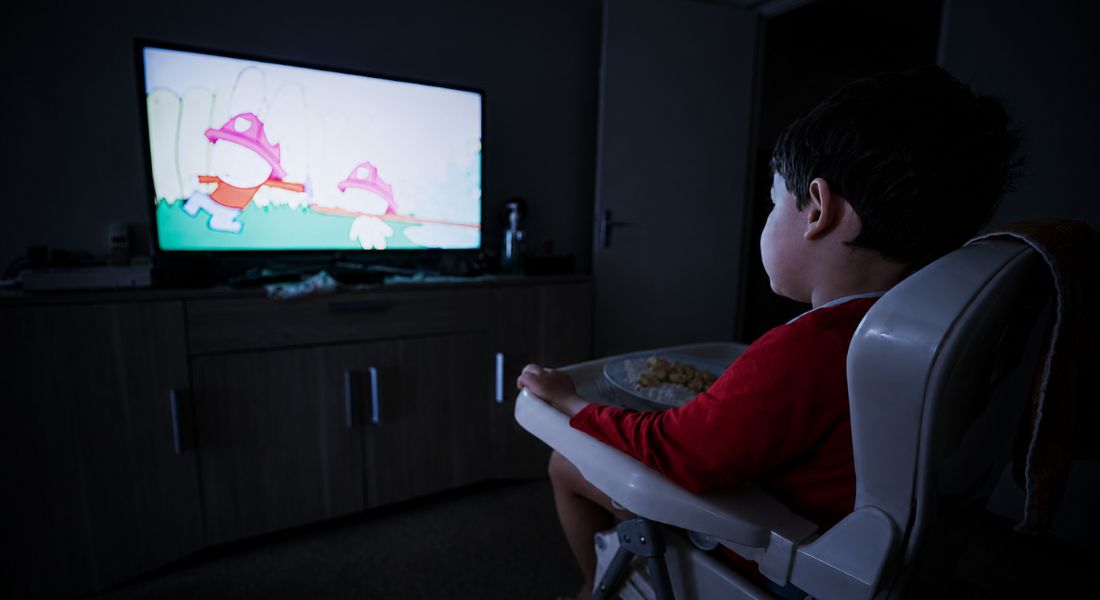
Some people believe that watching television in a dark room permanently damages your child’s eyes, but there is no scientific evidence to support this claim. While the viewing environment can affect your child’s comfort, it does not harm the structure of healthy eyes.
When your child watches television in a dark room, their eyes must continually adapt between the bright screen and the surrounding darkness. This extra effort may cause your child to experience temporary eye strain, tired eyes or mild discomfort, particularly during longer viewing sessions.
These symptoms are temporary and usually improve once your child takes a break or watches television in a more comfortably lit room. Using soft ambient lighting and encouraging regular breaks can help improve your child’s viewing comfort without affecting their long-term eye health.
Digital Devices Beyond Television
Children now spend time using tablets, smartphones and computers as well as watching television. Because these devices are usually held much closer to your child’s eyes, they often require more sustained focusing, which may increase the likelihood of temporary eye fatigue during prolonged use.
Using digital devices continuously can cause symptoms such as tired eyes, dryness, blurred vision or headaches, particularly if your child takes few breaks or blinks less frequently. These effects are usually temporary and are related to prolonged screen use rather than permanent damage to your child’s eyesight.
Balanced screen use is important across all devices. Encouraging your child to take regular breaks, spend time outdoors and limit extended screen sessions can help support their visual comfort while promoting healthy habits that benefit both their eye health and overall wellbeing.
Protecting Long-Term Eye Health
Maintaining your child’s healthy vision involves much more than where they sit while watching television. While viewing distance does not damage healthy eyes, everyday habits play a far greater role in supporting your child’s long-term eye health and visual development.
Encouraging your child to eat a nutritious diet, spend time outdoors, attend regular eye examinations and wear the correct vision correction if needed can all help protect their eyesight. These healthy habits support normal eye development and allow any vision problems to be identified and managed at an early stage.
These measures have a much greater impact on your child’s lifelong eye health than how close they sit to the television. By focusing on healthy lifestyle choices and routine eye care, you can help your child maintain comfortable, clear vision as they grow.
Common Myths About Children’s Eyesight
The belief that sitting close to the television damages your child’s eyesight is just one of many myths that have been passed down over the years. Although these ideas are often well intentioned, many are not supported by scientific evidence and can cause unnecessary concern for parents.
Other common misconceptions include the belief that reading in dim light permanently damages your child’s eyes or that wearing glasses makes their eyesight weaker. In reality, these activities may cause temporary discomfort in some situations, but they do not harm healthy eyes or cause refractive errors to worsen.
Understanding the scientific evidence helps you make informed decisions about your child’s eye health. By relying on professional advice and arranging regular eye examinations, you can focus on the factors that genuinely support healthy vision and identify any problems at an early stage.
Myth vs Fact: Children, Television and Eye Health
| Myth | Fact |
| Sitting close to the television permanently damages children’s eyes. | Close viewing does not permanently damage otherwise healthy eyes. It may cause temporary discomfort, and persistent close viewing may indicate an existing vision problem. |
| A child who sits close has damaged their eyes by watching television. | The child may already have blurred distance vision and move closer to see more clearly. Sitting close is a possible symptom, not proof of a cause. |
| Every child should sit a fixed number of metres from the television. | There is no single medically required distance for every child and screen. The child should be able to see comfortably without squinting or consistently moving unusually close. |
| Modern television screens emit dangerous radiation that weakens eyesight. | Normal use of modern televisions is not considered a cause of eye damage. Viewing habits, temporary discomfort and unrecognised vision problems are more relevant concerns. |
| Blue light from television screens permanently damages a child’s retina. | Current evidence does not show that ordinary television blue-light exposure causes permanent retinal damage. Special blue-light glasses are not routinely required for eye protection. |
| Screen time can never affect long-term vision because screens do not physically burn the eyes. | Screen use does not normally injure the eye directly, but high overall digital-screen exposure has been associated with childhood myopia. Near work and reduced outdoor time may contribute to this relationship. |
| Children should not wear glasses because their eyes will become dependent. | Correctly prescribed glasses support clear vision and normal visual development. They do not weaken the eyes. |
| Outdoor play reverses existing myopia. | Outdoor time may reduce or delay the onset of myopia, but it does not reverse existing short-sightedness. Children with myopia still require professional care. |
| If a child passes school vision screening, no further eye tests are needed. | Screening is useful but does not replace assessment when a child develops symptoms, visual-behaviour changes or learning difficulties. |
When to Seek Professional Advice
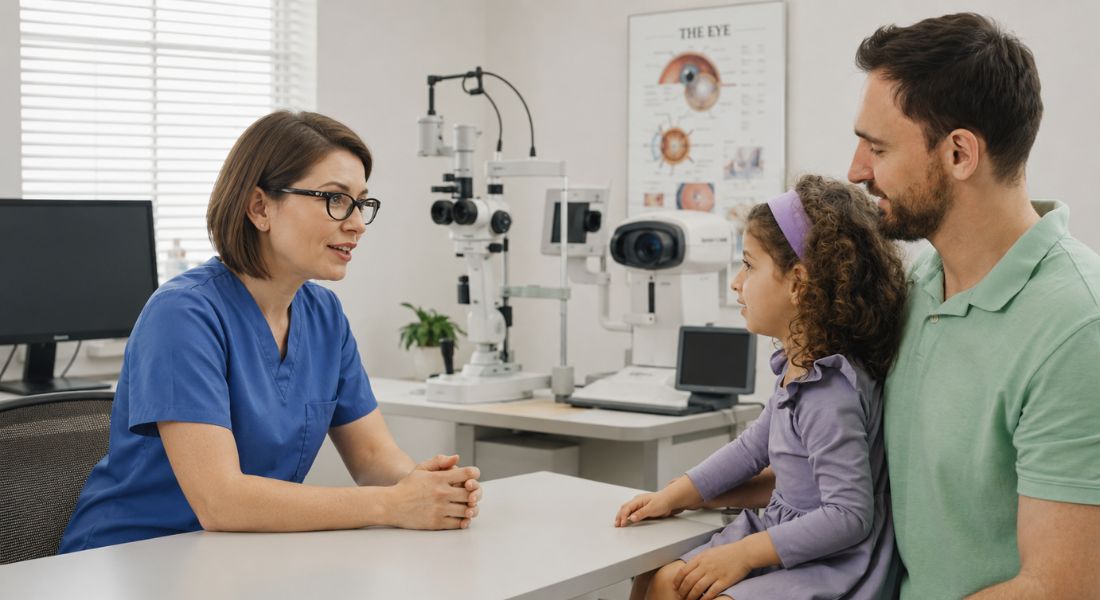
If your child consistently sits extremely close to the television or regularly complains of blurred vision, headaches or difficulty seeing distant objects, it is sensible to arrange a comprehensive eye examination. While sitting close to the screen does not damage healthy eyes, persistent behaviour of this kind may indicate an underlying vision problem that should be assessed.
Early assessment can identify refractive errors such as short-sightedness, long-sightedness or astigmatism, as well as other conditions that may affect your child’s vision. Detecting these problems promptly can help prevent them from interfering with your child’s learning, confidence and everyday activities.
Professional advice provides reassurance and ensures your child receives the most appropriate treatment if it is needed. By seeking help early, you can support your child’s visual development and help them enjoy clear, comfortable vision both at school and at home.
Supporting Healthy Vision Throughout Childhood
Sitting close to the television does not permanently damage your child’s eyes, and modern research does not support this long-standing myth. While some children simply prefer to sit nearer the screen, others may do so because it helps them see more clearly.
If your child consistently sits unusually close to the television or shows other signs of difficulty seeing, arranging a comprehensive eye examination is the best way to determine whether a vision problem is present. Early assessment allows any refractive errors or other eye conditions to be identified and managed before they affect your child’s learning or everyday activities.
Supporting your child’s healthy vision involves regular eye examinations, balanced screen habits, outdoor play and appropriate vision correction when needed. By focusing on these evidence-based measures, you can help your child maintain clear, comfortable vision throughout childhood and beyond.
Key Takeaways
- Sitting close to the television does not permanently damage otherwise healthy children’s eyes.
- Persistent close viewing may be a sign of short-sightedness or another vision problem.
- Myopic children often see nearby objects more clearly than distant ones, which may explain why they move closer.
- Long television sessions may cause temporary tiredness, dryness, blur or headaches.
- Phones and tablets involve closer near work than televisions and should not be treated as identical viewing tasks.
- Higher digital-screen exposure has been associated with childhood myopia, although screen use interacts with near work, outdoor time and other factors.
- Regular outdoor time may help reduce or delay the onset of myopia.
- Blue-light-blocking spectacles are not routinely needed to protect healthy eyes from television screens.
- UK vision screening is recommended at four to five years, and free NHS sight tests are available to children under 16.
- Children commonly need eye examinations more frequently than adults; follow the interval recommended by your child’s optometrist rather than assuming a two-year schedule.
- A child should be assessed if close viewing is persistent or accompanied by squinting, headaches, eye turning or difficulty seeing distant objects.
FAQs:
- Does sitting too close to the television damage a child’s eyesight?
No, sitting close to the television does not permanently damage a child’s eyesight. Scientific evidence shows that the viewing distance itself does not harm healthy eyes. However, if a child regularly sits very close to the screen, it may be worth arranging an eye examination to check for an underlying vision problem. - Why do some children prefer sitting close to the TV?
Some children may simply prefer a closer or more immersive viewing position. Persistent close viewing becomes more clinically relevant when it occurs with squinting, headaches, books held very close or difficulty seeing distant objects. - Can sitting close to the TV be a sign of short-sightedness?
Yes, consistently sitting very close to the television can sometimes indicate short-sightedness, also known as myopia. Children with myopia often see nearby objects clearly but have difficulty seeing things at a distance. A comprehensive eye examination can determine whether vision correction is needed. - Do modern televisions emit harmful radiation?
No, modern LED, LCD, and OLED televisions are considered safe for normal everyday use. They do not emit harmful levels of radiation that can damage the eyes. Concerns about radiation largely stem from outdated television technology and are no longer supported by current evidence. - Can watching television for a long time cause eye strain?
Yes, prolonged television viewing may lead to temporary eye strain, particularly if children watch for extended periods without taking breaks. They may experience tired eyes, headaches, or mild discomfort after long viewing sessions. These symptoms usually improve after resting their eyes. - Does blue light from televisions damage children’s eyes?
Current research suggests that the amount of blue light emitted by television screens is not strong enough to cause permanent eye damage during normal viewing. Healthy screen habits remain more important than worrying about blue light alone. Encouraging regular breaks and balanced screen use can help improve visual comfort. - How can parents encourage healthy screen habits?
Parents can encourage children to take regular breaks, use screens in a well-lit room, and avoid very long viewing sessions without rest. Balancing screen time with outdoor play and physical activity also supports overall health and wellbeing. These habits help reduce temporary eye strain and promote healthy vision. - What signs suggest my child may need an eye examination?
You should consider arranging an eye test if your child frequently squints, complains of headaches, struggles to see distant objects, or regularly holds books very close. Consistently sitting extremely close to the television may also be a reason to have their vision checked. Early assessment can identify vision problems before they affect learning or daily activities. - Do glasses make children’s eyesight worse?
No, glasses do not weaken children’s eyes or make them dependent on vision correction. They simply help focus light correctly so that children can see clearly. Wearing the correct prescription supports healthy visual development and everyday activities. - What is the best way to protect my child’s long-term eye health?
Supporting long-term eye health involves regular eye examinations, spending time outdoors, eating a balanced diet, and encouraging sensible screen habits. Early detection of vision problems allows appropriate treatment when needed. These measures have a far greater impact on eye health than where a child sits while watching television.
Final Thoughts: Understanding the Truth About Children Sitting Close to the TV
The belief that sitting too close to the television damages a child’s eyesight is one of the most common myths about eye health. While watching television from a short distance does not permanently harm healthy eyes, it can sometimes indicate an underlying vision problem, such as short-sightedness, that deserves professional assessment.
Encouraging healthy screen habits, regular outdoor activity, and routine eye examinations can do far more to support your child’s long-term vision than worrying about how close they sit to the screen. Paying attention to changes in their visual behaviour can also help identify potential problems at an early stage. If you have any concerns about your eyesight, you can contact our team at Eye Clinic London can provide a comprehensive assessment.
References:
- Bozzola, E., Irrera, M., Hellmann, R., Crugliano, S. and Fortunato, M. (2024) ‘Media device use and vision disorders in the pediatric age: The state of the art’, Children, 11(11), 1408. Available at: https://www.mdpi.com/2227-9067/11/11/1408
- Champagne-Hamel, M., Monfort, C., Chevrier, C. and Saint-Amour, D. (2023) ‘Screen time at 6 years old and visual function in early adolescence’, Vision, 7(4), 63.Available at: https://www.mdpi.com/2411-5150/7/4/63
- Ha, A., Lee, Y.J., Lee, M., Shim, S.R. and Kim, Y.K. (2025) ‘Digital screen time and myopia: A systematic review and dose-response meta-analysis’, JAMA Network Open, 8(2), e2460026. Available at: https://pubmed.ncbi.nlm.nih.gov/39982728/
- Lanca, C. and Saw, S-M. (2020) ‘The association between digital screen time and myopia: A systematic review’, Ophthalmic and Physiological Optics, 40(2), pp. 216–229. doi: 10.1111/opo.12657. Available at: https://pubmed.ncbi.nlm.nih.gov/31943280/
- Foreman, J., Salim, A.T., Praveen, A., Fonseka, D., Ting, D.S.W., He, M.G., Bourne, R.R.A., Crowston, J., Wong, T.Y. and Dirani, M. (2021) ‘Association between digital smart device use and myopia: A systematic review and meta-analysis’, The Lancet Digital Health, 3(12), pp. e806–e818. Available at: https://www.sciencedirect.com/science/article/pii/S2589750021001357