


Myth or Fact? Reading in Dim Light Damages Your Eyes

Many people grew up hearing that reading in dim light would permanently damage their eyesight. You may even remember being told to switch on a brighter light before reading because poor lighting would “ruin your eyes”. Although this advice was well intentioned, modern research shows that this is a common myth rather than a medical fact.
Reading in dim light can make your eyes feel tired and uncomfortable, particularly if you read for a long time. You may notice symptoms such as eye strain, headaches or difficulty maintaining focus, but these effects are usually temporary and improve once you rest your eyes or move to a brighter environment.
Your eyes are remarkably adaptable and can function in a wide range of lighting conditions. While brighter lighting often makes reading easier and more comfortable for you, dim lighting does not permanently damage the structure of your eyes or cause lasting vision loss.
In this article, you will discover why reading in dim light does not permanently harm your eyesight, what actually causes temporary eye strain, and how you can make reading more comfortable while supporting your long-term eye health.
Why This Myth Became So Popular
The belief that reading in dim light damages your eyesight has been passed down for generations. If you have ever been told to switch on a brighter light before reading, you are not alone. The myth became popular because many people naturally experience discomfort when trying to read in poor lighting.
In dim light, your pupils enlarge to allow more light to enter your eyes, while reduced contrast may make text and fine detail harder to distinguish. This can make prolonged reading less comfortable and may contribute to temporary tiredness, mild blur or headaches. These symptoms reflect visual discomfort rather than permanent eye damage.
Over time, this practical advice gradually came to be viewed as a medical fact. However, scientific evidence indicates that while dim lighting may make reading less comfortable, it does not permanently damage otherwise healthy eyes or cause lasting vision loss.
How Your Eyes Adapt to Low Light
Your eyes have an impressive ability to adapt to different lighting conditions. If you move from a bright room into a dimly lit one, your pupils naturally become larger to allow more light to enter your eyes, helping you see as clearly as possible in the available light.
Although this adjustment improves your vision, you may still find that fine detail is more difficult to see in dim conditions. As a result, you might need to concentrate harder when reading, which can make your eyes feel tired more quickly, especially during longer reading sessions.
This natural adjustment is a normal part of how your eyes work and does not cause any damage. Your eyes are designed to cope with changes in lighting, so while brighter light may make reading more comfortable for you, using dim light does not permanently harm your eyesight.
Why Reading Becomes More Difficult
When you read in dim light, your eyes have to work harder to distinguish letters and maintain clear focus. Because there is less light available, you may find that reading feels slower or requires more concentration than it would in a well-lit environment.
You might notice yourself holding the book closer, squinting or concentrating more intensely to make the words easier to see. These are natural responses as your visual system tries to make the best use of the available light, but they can make reading feel more tiring over time.
Although these extra efforts may leave your eyes feeling fatigued, they do not mean your eyes are being damaged. Once you move to better lighting or give your eyes a chance to rest, the temporary discomfort usually improves, and your eyes remain healthy.
Does Dim Light Cause Permanent Vision Loss?
Scientific research has found no evidence that reading in dim light permanently damages healthy eyes. If you occasionally read in poor lighting, you do not need to worry that you are weakening your eyesight or causing lasting harm to your vision.
Although dim lighting may make reading uncomfortable, ordinary dim-light reading is not known to damage the structure of otherwise healthy eyes or cause permanent vision loss. For children, broader visual habits such as prolonged close work, very short reading distances and limited outdoor time may be more relevant when considering myopia risk.
Once you stop reading, rest your eyes or move to a brighter environment, the symptoms generally improve on their own. By understanding the difference between temporary discomfort and permanent eye damage, you can enjoy reading with greater confidence while making simple adjustments to improve your comfort.
Evidence Note: What Does Dim Light Actually Do?
Reading in dim light does not permanently weaken or damage otherwise healthy eyes. It can, however, make the visual task more demanding and less comfortable.
When less light is available, your pupils enlarge to allow more light into your eyes. When your pupils enlarge in lower light, small amounts of blur, an outdated glasses prescription or minor focusing difficulties may become more noticeable. Reduced contrast can also make small print harder to distinguish, particularly during prolonged reading.
Low contrast can also make letters harder to distinguish, particularly if the print is small or you have been reading continuously. You may temporarily experience tired eyes, mild blur, dryness or a headache, but these symptoms should generally improve after rest or a change in lighting.
Persistent symptoms should not automatically be blamed on dim light. Regular difficulty reading may indicate an uncorrected refractive error, dry eye, a focusing problem or another condition that requires an eye examination.
Can Children Safely Read in Dim Light?
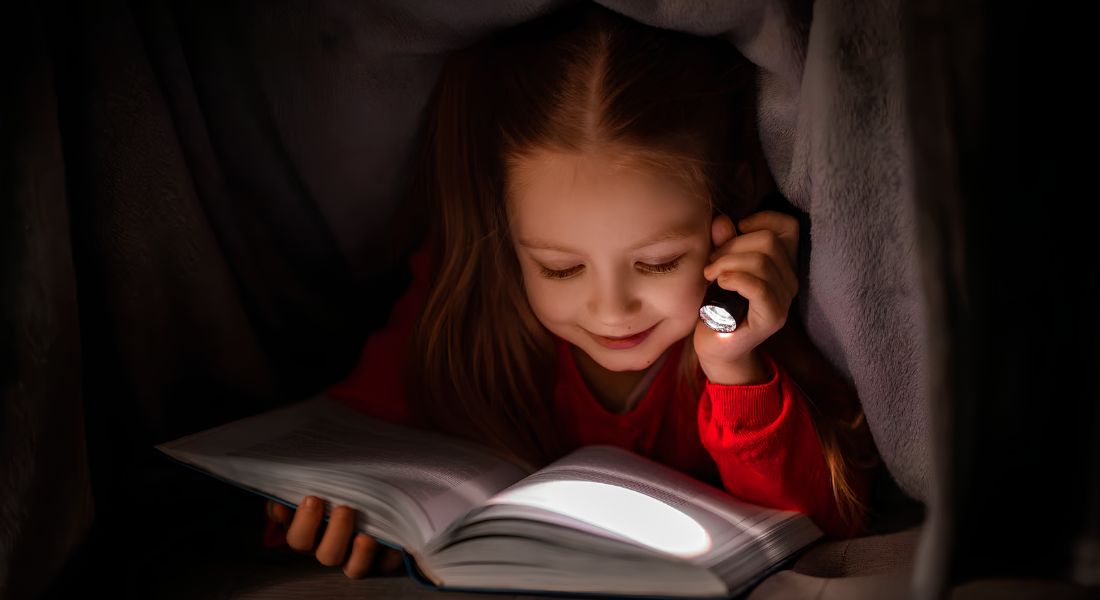
Many children enjoy reading under blankets or in dimly lit rooms, and it is understandable if you worry that this could damage their eyesight. Fortunately, there is no evidence that occasional reading in dim light causes permanent harm to healthy children’s eyes.
Although dim lighting does not damage your child’s vision, brighter lighting can make reading much more comfortable. With good lighting, your child is less likely to experience temporary eye strain, tired eyes or headaches, making it easier to concentrate and enjoy reading for longer periods.
Dim light itself should not be presented as a direct cause of permanent eye damage. However, children should still be encouraged to use comfortable lighting, avoid holding reading material extremely close and spend regular time outdoors. Research into childhood myopia focuses more on prolonged near work, viewing distance and outdoor-light exposure than on occasional reading in a dim room.
Eye Fatigue and Concentration
Poor lighting can make reading less efficient because your eyes have to concentrate harder to distinguish each word clearly. If you spend a long time reading in dim light, you may find that your eyes become tired more quickly and that it takes you longer to stay focused on the text.
As your visual system works harder, you may also begin to feel mentally tired as well as visually fatigued. You might notice that your concentration starts to drift, your reading speed slows down or you need to reread sections more often, particularly during lengthy reading sessions.
Taking regular breaks can help reduce these effects and make reading more comfortable. By giving your eyes a chance to rest and using lighting that suits your environment, you can improve both your visual comfort and your ability to concentrate for longer periods.
Headaches and Poor Lighting
Some people develop headaches after reading in dim light for extended periods. If you spend a long time trying to focus in poor lighting, you may notice that your eyes feel tired and your head begins to ache, particularly after prolonged close-up work.
These headaches are usually linked to temporary eye strain and the extra effort your eyes make to maintain clear focus, rather than to any damage to the eyes themselves. While the discomfort can be unpleasant, it does not mean that reading in dim light is harming your eyesight.
You can often relieve these symptoms by improving your lighting, taking regular breaks and allowing your eyes to rest. By making reading more comfortable and avoiding long periods of uninterrupted close work, you can reduce eye fatigue and enjoy reading with less discomfort.
The Importance of Good Reading Light
Although reading in dim light does not permanently damage your eyes, good lighting can make a noticeable difference to your comfort. If you have enough light to see the text clearly, your eyes do not have to work as hard to maintain focus, making reading feel much easier.
Adequate illumination reduces the effort required to distinguish letters and follow lines of text. As a result, you are less likely to experience temporary eye strain, tired eyes or headaches, especially if you enjoy reading for longer periods.
Choosing a well-lit reading space can help you read more comfortably and stay focused for longer. By using lighting that suits your environment and taking regular breaks when needed, you can improve your reading experience while supporting your overall visual comfort.
Clinical Tip: Set Up Comfortable Reading Light
Use enough light to see the text clearly without glare. A lamp positioned beside or slightly behind you is often more comfortable than a bright light shining directly into your eyes or reflecting from the page.
Increase the light level if the print appears faint, you repeatedly lose your place or you find yourself holding the material unusually close. Older adults often find stronger, well-positioned task lighting more comfortable because age-related changes can make vision in lower light more difficult.
For longer reading sessions, look away periodically and focus on something farther away. When using a phone, tablet or computer, adjust the display so that it is not dramatically brighter than the surrounding room and remember to blink regularly.
Good lighting improves comfort, but it does not need to be excessively bright. The best level is one that allows you to read easily without glare, squinting or visual fatigue.
Digital Screens and Eye Strain
Many people now spend more time looking at digital screens than printed books. If you regularly use a computer, tablet or smartphone, you may notice that your eyes feel tired after long periods of screen use, particularly if the room is poorly lit or you rarely take breaks.
Prolonged screen use can contribute to temporary eye strain because you tend to blink less often and focus at the same distance for extended periods. You may experience dry eyes, blurred vision, headaches or difficulty maintaining focus, but these symptoms are usually temporary and improve once you give your eyes a chance to rest.
You can improve your visual comfort by following healthy screen habits. Taking regular breaks, adjusting your screen brightness to match the surrounding light, keeping your screen at a comfortable viewing distance and remembering to blink more often can help reduce eye strain and make using digital devices more comfortable.
Printed Reading Versus Digital Screen Reading
| Reading factor | Printed books and documents | Phones, tablets and computers |
| Light source | Printed material depends on light from the surrounding room or a reading lamp. | Digital screens produce their own light, so screen brightness should be adjusted to suit the surrounding environment. |
| Contrast | Faded print, glossy pages or insufficient lighting can make words harder to distinguish. | Low contrast, reflections, glare or an unsuitable display setting may reduce reading comfort. |
| Blinking | Concentrated reading may reduce how often you blink. | People may blink less frequently during prolonged screen use, which can contribute to dry or irritated eyes. |
| Text size | Small print may require greater concentration or cause you to hold the page closer. | Text size and magnification can usually be adjusted to make reading more comfortable. |
| Viewing distance | Books should be held at a comfortable reading distance with good posture. | Handheld devices are often used closer to the eyes, while computer screens should be positioned at a comfortable distance. |
| Length of use | Long periods of uninterrupted close reading may cause temporary visual fatigue. | Extended screen use may cause temporary eye strain, dryness, headache or difficulty refocusing. |
| Practical adjustment | Improve task lighting, increase contrast and take regular breaks. | Adjust brightness, enlarge text, reduce reflections, blink regularly and take breaks from continuous near focus. |
| Permanent eye damage | Reading printed material in dim light is not known to permanently damage otherwise healthy eyes. | Normal screen use is not generally considered a cause of permanent retinal damage, although it can cause temporary discomfort. |
The Role of Blinking
When you concentrate on a close visual task, particularly a digital screen, you may blink less frequently or less completely. This can destabilise the tear film and contribute to dryness, irritation or a When you concentrate on a close visual task, particularly a digital screen, you may blink less frequently or less completely. This can destabilise the tear film and contribute to dryness, irritation or a gritty sensation.
Blinking spreads tears across the surface of your eyes and helps maintain a comfortable tear film. Remembering to blink, taking regular breaks and managing glare can therefore make prolonged reading or screen use more comfortable.
Making a conscious effort to blink regularly can help keep your eyes comfortable during long reading or screen sessions. By remembering to blink, taking regular breaks and giving your eyes time to rest, you can reduce dryness and improve your overall visual comfort.
Temporary Eye Strain
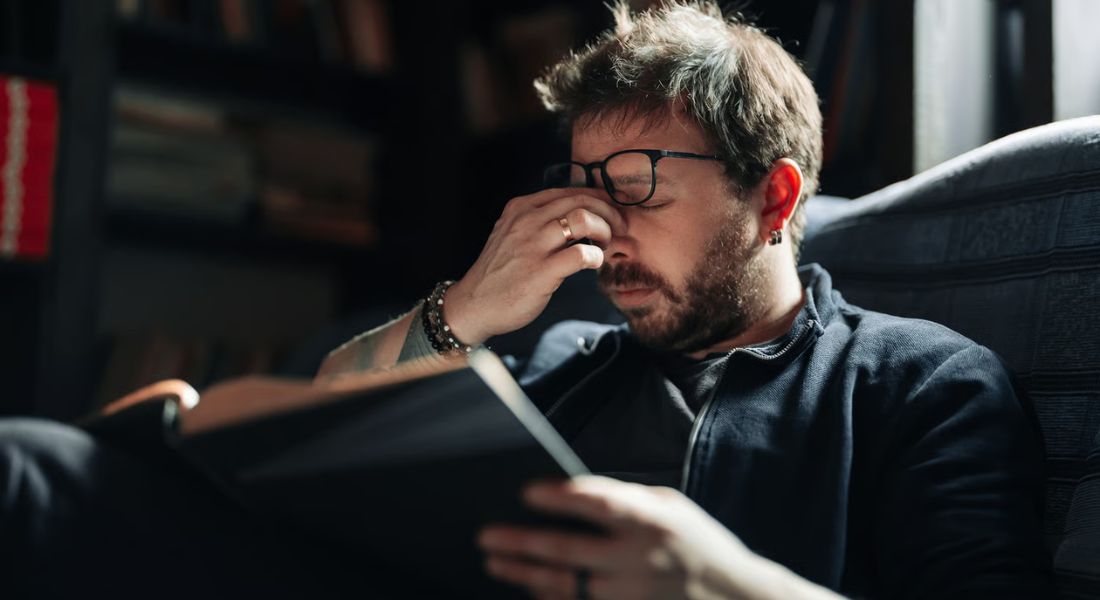
Eye strain is one of the most common effects of reading in dim light, especially if you spend a long time reading or doing other close-up tasks. If you continue reading without taking breaks, your eyes may begin to feel tired or less comfortable as they work harder to maintain focus.
You might notice symptoms such as tired eyes, mild discomfort, blurred vision or headaches after reading in poor lighting. Although these symptoms can be frustrating, they are usually temporary and do not indicate that your eyes have been permanently damaged.
In most cases, the discomfort improves once you rest your eyes or move to a brighter environment. Taking regular breaks, using comfortable lighting and giving your eyes time to relax can help you read more comfortably while supporting your overall visual comfort.
Taking Regular Breaks
One of the simplest ways to reduce eye strain is by taking regular breaks while you are reading. If you spend long periods focusing on a book or screen without pausing, your eyes can become tired more quickly, even if you are reading in good lighting.
Looking away from your book every so often gives your focusing muscles a chance to relax. You can look across the room or out of a window for a short time before returning to your reading, helping your eyes recover from continuous close-up work.
Taking these short breaks can improve your comfort without interrupting your reading progress. By combining regular breaks with good lighting and healthy reading habits, you can make reading more enjoyable while reducing temporary eye strain.
Correct Vision Matters
If you already wear glasses, reading in dim light may feel especially challenging if your prescription is no longer up to date. When your vision is not fully corrected, your eyes have to work harder to focus, which can make reading less comfortable and increase temporary eye strain.
An accurate prescription allows your eyes to focus more efficiently, helping you see text more clearly in a range of lighting conditions. Although good lighting is still important, wearing the correct glasses can make reading easier and reduce the extra effort your eyes need to make.
Regular eye examinations help ensure your prescription continues to meet your visual needs. By keeping your glasses up to date and following your eye care professional’s advice, you can enjoy clearer, more comfortable vision while supporting your long-term eye health.
Does Squinting Damage Your Eyes?
You may find yourself squinting when reading in dim light because it can temporarily make words appear sharper. You may squint when reading in dim light because narrowing your eyelids creates a temporary pinhole effect that can make blurred text appear slightly sharper. However, this does not correct the underlying cause of blur and is not a substitute for suitable lighting or an accurate glasses prescription.
Although squinting does not permanently damage your eyes, doing it for long periods may lead to facial muscle fatigue, eye discomfort or even headaches. If you often need to squint to read clearly, it may also be a sign that your lighting is inadequate or that your glasses prescription needs to be checked.
Improving your reading light is usually a much more comfortable option than relying on squinting. By using brighter, well-positioned lighting and ensuring your vision is properly corrected, you can reduce unnecessary strain and enjoy a more comfortable reading experience.
Healthy Reading Habits
Creating a comfortable reading environment can make a big difference to how your eyes feel, whether you are a child or an adult. By developing healthy reading habits, you can reduce temporary eye strain and make reading more enjoyable, even during longer sessions.
Using appropriate lighting, holding your book at a comfortable distance and maintaining good posture all help your eyes work more efficiently. You should also take regular breaks and avoid reading for long periods without giving your eyes a chance to relax.
These simple habits support comfortable, enjoyable reading without placing unnecessary stress on your eyes. By looking after your visual comfort and ensuring your vision is properly corrected if you need glasses, you can read with greater ease while supporting your long-term eye health.
When Eye Strain May Indicate Another Problem
Occasional eye strain is common after long periods of reading or digital device use. However, persistent discomfort may point to an outdated glasses prescription or another vision problem that needs assessment.
- Frequent Headaches: Regular headaches during reading or screen use may be linked to focusing problems or an unsuitable prescription.
- Blurred Vision: Ongoing blurred vision can suggest that your eyesight has changed or that another eye condition is present.
- Difficulty Focusing: Trouble maintaining clear focus may be caused by eye strain, prescription changes, or problems with eye coordination.
- Persistent Eye Discomfort: Discomfort that continues despite rest and regular breaks should be checked by an eye care professional.
Overall, persistent eye strain should not be dismissed as simple tiredness. A professional eye examination can identify the cause and guide the right treatment or prescription update. Seeking advice early can improve comfort and support your long-term eye health.
UK Eye-Test Guidance
In the UK, the NHS generally advises having an eye test at least every two years, although your optometrist may recommend more frequent examinations based on your age, prescription, symptoms or risk of eye disease.
Do not wait for your next routine test if reading has suddenly become difficult, your vision has changed noticeably or your symptoms continue despite comfortable lighting and regular breaks.
Protecting Your Overall Eye Health
Looking after your eyes involves much more than choosing the right reading light. If you want to maintain healthy vision throughout your life, it is important to focus on the everyday habits that genuinely support your eye health rather than worrying about common myths.
You can help protect your eyesight by eating a balanced diet, wearing sunglasses that protect against ultraviolet (UV) light, managing long-term health conditions such as diabetes or high blood pressure, and attending regular eye examinations. These steps can help keep your eyes healthy and allow potential problems to be detected at an early stage.
These measures have a much greater impact on your long-term eye health than reading in dim light. By following healthy habits and seeking professional eye care when needed, you can support clear, comfortable vision and reduce your risk of developing preventable eye problems in the future.
Common Myths About Eyesight
Reading in dim light is just one of many myths that have surrounded eye health for generations. You may also have heard claims that wearing glasses makes your eyes weaker or that sitting too close to a television permanently damages your vision. Although these ideas are widely repeated, they are not supported by scientific evidence.
Many of these myths began because certain activities can cause temporary eye strain or discomfort, leading people to believe that permanent damage is occurring. In reality, most healthy eyes are remarkably resilient, and many everyday visual activities do not cause lasting harm.
By understanding what scientific research actually shows, you can separate fact from fiction and make informed decisions about your eye health. Rather than worrying about common myths, you should focus on proven ways to protect your vision, such as having regular eye examinations, wearing the correct prescription if you need one and maintaining healthy lifestyle habits.
Myth vs Fact: Reading in Dim Light
| Myth | Fact |
| Reading in dim light permanently damages your eyes. | Ordinary dim-light reading does not permanently damage otherwise healthy eyes. It may cause temporary discomfort or make blur more noticeable. |
| Eye strain means that damage is happening. | Eye strain describes symptoms such as tiredness, dryness, mild blur or headache. These symptoms are usually temporary and do not automatically mean the eye has been injured. |
| Children will ruin their eyesight if they read under a blanket. | Occasional dim-light reading is not known to cause permanent eye damage. Children should still use comfortable lighting, maintain a sensible reading distance, take breaks and spend time outdoors. |
| Brighter light always means healthier eyes. | Adequate lighting improves visual comfort, but excessive brightness and glare can also be uncomfortable. Lighting should be clear, even and suitable for the task. |
| Digital screens in a dark room permanently damage the retina. | Screen use in a dark room may increase discomfort because of brightness contrast, prolonged focusing and reduced blinking, but it is not normally considered a cause of permanent eye damage. |
| Blue-light glasses are essential for preventing screen-related eye damage. | Evidence does not show that blue-light-filtering spectacles clearly prevent digital eye strain or permanent eye damage. Breaks, blinking, appropriate screen distance and glare control are more practical measures. |
| If reading is always uncomfortable, you simply need a brighter lamp. | Persistent difficulty may be caused by an outdated prescription, dry eye, focusing difficulties or an eye condition. An eye examination may be needed. |
Knowing When to Seek Professional Advice

If you find that reading is consistently difficult even when you have good lighting, it may be time to arrange a comprehensive eye examination. If you regularly struggle to focus, notice blurred vision or experience ongoing eye discomfort, these symptoms could indicate that your prescription has changed or that another eye condition needs attention.
Several factors can affect your reading comfort, including changes in your glasses prescription, dry eyes or certain eye conditions. Rather than assuming that poor lighting is the cause, you should have your eyes assessed by an eye care professional who can identify the underlying reason for your symptoms.
Seeking professional advice early can help ensure you receive the most appropriate treatment if it is needed. By having regular eye examinations and addressing any changes in your vision promptly, you can enjoy clearer, more comfortable reading while helping to protect your long-term eye health.
Urgent Eye-Care Advice
Get urgent help from an optometrist or NHS 111 if you suddenly develop new flashes or floaters, a rapid increase in them, blurred vision or a dark curtain or shadow across your vision. A red and painful eye or sudden worsening of vision also requires urgent assessment. These symptoms should not be assumed to be simple eye strain or poor lighting.
Looking After Your Vision
Reading in dim light may cause temporary eye strain, but it does not permanently damage healthy eyes. If you occasionally read in poor lighting, you may notice that your eyes feel tired or your concentration begins to fade, but these effects are usually short-lived and improve once you rest your eyes or move to a brighter environment.
Choosing good lighting simply makes reading easier, more comfortable and less tiring. By using adequate illumination, taking regular breaks and ensuring your glasses prescription is up to date if you need one, you can reduce unnecessary eye strain and enjoy a more comfortable reading experience.
Looking after your vision involves much more than avoiding dim light. By attending regular eye examinations, maintaining healthy lifestyle habits and seeking professional advice if you notice persistent changes in your eyesight, you can help protect your long-term eye health and continue to enjoy clear, comfortable vision.
Key Takeaways
- Reading in dim light does not permanently damage otherwise healthy eyes.
- Low light enlarges your pupils and reduces depth of focus, which can make blur and fine details more difficult to manage.
- Temporary symptoms can include tired eyes, dryness, mild blur, reduced concentration or headaches.
- Comfortable task lighting can make reading easier, but extremely bright light and glare are not necessary.
- Digital screens may contribute to temporary eye strain through prolonged focusing and reduced blinking rather than permanent retinal damage.
- Occasional dim-light reading is not known to damage children’s eyes, but sensible near-work habits and regular outdoor time remain advisable.
- Persistent reading difficulty may indicate an outdated prescription, dry eye or another visual problem.
- Most adults should have an eye examination around every two years, or more often if advised.
- Sudden vision loss, a painful red eye, new flashes or floaters, or a curtain-like shadow requires urgent assessment.
FAQs:
- Does reading in dim light permanently damage your eyes?
No, scientific evidence shows that reading in dim light does not permanently damage healthy eyes. While it can make your eyes feel tired or uncomfortable, these effects are temporary. Once you rest your eyes or move to better lighting, the symptoms usually improve. - Why do my eyes feel tired when I read in poor lighting?
In dim light, your eyes have to work harder to focus on words and distinguish fine details. This extra effort can lead to eye strain, blurred vision, or mild discomfort after prolonged reading. These symptoms are temporary and do not indicate permanent eye damage. - Can children safely read in dim light?
Yes, occasional reading in dim light is not known to harm a child’s eyesight. However, brighter lighting makes reading easier and more comfortable, helping children stay focused for longer. Encouraging good reading habits can also reduce unnecessary eye strain. - Can reading in dim light cause headaches?
Yes, prolonged reading in poor lighting may contribute to headaches because your eyes need to focus more intensely. These headaches are usually linked to temporary eye strain rather than damage to the eyes themselves. Taking breaks and improving the lighting often helps relieve the symptoms. - Does squinting while reading damage your eyes?
No, squinting does not permanently harm your eyes. People often squint because it can temporarily improve focus when lighting is poor or vision is blurred. However, frequent squinting may cause facial muscle fatigue and make reading less comfortable. - Is good lighting still important if dim light doesn’t damage your eyes?
Yes, good lighting makes reading more comfortable and reduces the effort your eyes need to focus. It can help minimise eye strain, headaches, and visual fatigue during longer reading sessions. A well-lit environment also makes reading more enjoyable. - Can using digital screens in low light make eye strain worse?
Yes, using phones, tablets, or computers in dim lighting may increase eye strain for some people. Reduced blinking and prolonged screen use can also contribute to dry, tired eyes. Taking regular breaks and adjusting your screen brightness can improve visual comfort. - How can I reduce eye strain while reading?
Simple habits such as using adequate lighting, taking regular breaks, and keeping your reading material at a comfortable distance can help reduce eye strain. Remembering to blink regularly is also important, especially when reading on digital devices. These measures help keep your eyes comfortable during longer reading sessions. - When should I have my eyes tested if reading feels difficult?
If you regularly experience blurred vision, headaches or difficulty focusing despite using good lighting, it is worth arranging an eye examination. These symptoms may indicate an outdated prescription or another eye condition. Early assessment can help identify the cause and ensure you receive appropriate treatment. - What has the biggest impact on long-term eye health?
Long-term eye health depends on factors such as regular eye examinations, a balanced diet, protection from ultraviolet light, and managing general health conditions like diabetes. Reading in dim light is not considered a cause of permanent vision loss. Maintaining healthy habits and seeking professional eye care when needed are the best ways to protect your eyesight.
Final Thoughts:
Reading in dim light may make your eyes feel tired or temporarily uncomfortable, but ordinary dim-light reading is not known to permanently damage otherwise healthy eyes. Lower illumination and reduced contrast can make fine detail harder to distinguish and may make existing blur, dryness or focusing difficulties more noticeable.
Comfortable, well-positioned lighting, regular breaks, an appropriate reading distance and an accurate glasses prescription can make reading easier. For children, sensible near-work habits and regular outdoor time are also advisable.Persistent reading difficulty, recurring headaches or changes in vision should not automatically be blamed on poor lighting. If you have any concerns about your eyesight, you can contact our team at Eye Clinic London can provide a comprehensive assessment.
References:
- Sengsoon, P. and Intaruk, R. (2025) ‘Immediate effects of light mode and dark mode features on visual fatigue in tablet users’, International Journal of Environmental Research and Public Health, 22(4), 609. Available at: https://www.mdpi.com/1660-4601/22/4/609
- Landis, E.G., Yang, V., Brown, D.M., Pardue, M.T. and Read, S.A. (2018) ‘Dim light exposure and myopia in children’, Investigative Ophthalmology & Visual Science, 59(12), pp. 4804–4811. Available at: https://pubmed.ncbi.nlm.nih.gov/30347074/
- Huang, H-M., Chang, D.S-T. and Wu, P-C. (2015) ‘The association between near work activities and myopia in children: A systematic review and meta-analysis’, PLOS ONE, 10(10), e0140419. Available at: https://pubmed.ncbi.nlm.nih.gov/26485393/
- Benedetto, S., Carbone, A., Drai-Zerbib, V., Pedrotti, M. and Baccino, T. (2014) ‘Effects of luminance and illuminance on visual fatigue and arousal during digital reading’, Computers in Human Behavior, 41, pp. 112–119. Available at: https://www.sciencedirect.com/science/article/abs/pii/S0747563214004750
- Artime-Ríos, E., Seguí-Crespo, M., Doménech-Amigot, B., Sánchez-Brau, M., Suárez-Sánchez, A. and Ramada-Rodilla, J.M. (2026) ‘Occupational exposure to video display terminals: A systematic review of ocular and visual health effects and associated risk factors’, Journal of Occupational Health, 68(1), uiaf073.Available at: https://academic.oup.com/joh/article/68/1/uiaf073/8385317?