


ICL Advances Presented at the European Society of Ophthalmology (SOE) Congress

The European Society of Ophthalmology Congress, often known as SOE, brings together ophthalmologists, researchers, surgeons, trainees, and clinical teams from across Europe and beyond. It covers many areas of eye care, including cataract surgery, refractive surgery, corneal disease, glaucoma, retinal care, and ophthalmic innovation.
The 2025 SOE Congress took place in Lisbon, Portugal, from 7–9 June 2025. The programme included in-person sessions, debates, symposia, workshops, live surgery, mystery cases, young ophthalmologist sessions, and updates across ophthalmic subspecialties, including cataract and refractive surgery.
For you, this kind of meeting matters because ICL surgery continues to develop through better imaging, safer patient selection, improved sizing, vault prediction, surgical technique, and long-term follow-up research. These discussions help specialists understand how implantable lens procedures can become more precise and safer.
ICL advances presented or discussed around major ophthalmology meetings usually focus on improving outcomes, reducing avoidable risks, and selecting the right patients. If you are considering ICL surgery, this progress can support more personalised planning and clearer decision-making.
Why ICL Is Relevant at SOE Congress
ICL surgery is relevant at SOE because it sits within the wider field of refractive surgery. It gives surgeons another option for selected patients who want vision correction but may not be ideal candidates for corneal laser procedures.
Unlike LASIK, PRK, or SMILE, ICL surgery does not reshape your cornea. Instead, a phakic lens is placed inside your eye while your natural lens remains in place. This makes it a different approach to reducing dependence on glasses or contact lenses.
For you, ICL may be discussed if you have high myopia, thinner corneas, dry eye concerns, or measurements that make laser vision correction less suitable. SOE discussions help specialists compare these options more carefully and choose treatment based on your eye anatomy, prescription, and long-term safety.
Cataract and Refractive Surgery Sessions
SOE 2025 included cataract and refractive surgery as part of its scientific programme topics. The programme highlighted innovations in surgical techniques and technologies aimed at improving outcomes in cataract and refractive procedures. This matters because ICL sits within the wider refractive surgery field.
ICL belongs to refractive surgery, but it also shares planning principles with intraocular lens procedures. Surgeons need to understand both optical correction and intraocular safety. This includes lens positioning, eye pressure, anatomy, imaging, and long-term monitoring.
For you, this means ICL discussions are not isolated. They are part of a broader conversation about choosing the safest and most suitable vision correction method. A good consultation should compare ICL with other options and explain why it may or may not fit your eyes.
ICL as a Phakic IOL Option
ICL is a type of phakic intraocular lens. The term “phakic” means your natural lens remains in place while an additional corrective lens is implanted inside the eye. This allows vision to be corrected without removing the eye’s own lens.
This is different from refractive lens exchange or cataract surgery, where the natural lens is removed and replaced with an artificial one. In ICL surgery, the goal is to improve vision while preserving your natural focusing lens and the eye’s normal structure as much as possible.
That distinction is particularly important for younger patients who still have natural focusing ability. If you are not yet at the stage where lens replacement would be appropriate, ICL may offer a way to correct vision while maintaining the focusing function of your natural lens. This is one reason phakic IOLs continue to be an important topic at major refractive surgery meetings such as SOE.
ICL for High Myopia
High myopia remains one of the most important reasons ICL is discussed at refractive surgery meetings. If you have a strong prescription, you may not always be an ideal candidate for laser eye surgery. This is because too much corneal tissue may need to be reshaped to correct the prescription safely.
A modern posterior chamber phakic IOL such as EVO/EVO+ Visian ICL can treat a wide range of myopia and myopic astigmatism. ESCRS has reported long-term safety, effectiveness, and high patient satisfaction in suitable patients. This supports the role of ICL as an important option within modern refractive surgery.
For you, ICL may offer a way to correct higher prescriptions without removing corneal tissue. However, suitability still depends on detailed eye measurements, lens sizing, vault prediction, eye pressure, and overall eye health. A specialist consultation should explain whether ICL is genuinely safe and appropriate for your eyes.
ICL for Myopic Astigmatism
Many patients have myopia and astigmatism together. This means your vision may be blurred not only because the eye is too long or too powerful, but also because the focusing shape is uneven. Both parts need to be considered when planning treatment.
Toric ICL designs can correct myopic astigmatism in suitable patients. Conference discussions often focus on lens alignment, rotational stability, accuracy, and long-term visual quality. These details matter because the lens needs to sit in the right position to correct astigmatism properly.
For you, this means astigmatism correction needs precision. A small difference in lens alignment can affect the final visual result. Your consultation should include detailed measurements and clear planning to decide whether a toric ICL is suitable for your eyes.
Patient Selection for ICL

Patient selection is one of the most important parts of successful ICL surgery because not every eye is suitable for the procedure. Unlike some refractive treatments that mainly focus on the cornea, ICL surgery requires careful assessment of the internal anatomy of your eye. Specialists evaluate multiple measurements to determine whether there is enough space for the implant and whether your eye can safely support the lens long term.
- Anterior Chamber Depth and Internal Eye Space: One of the key measurements in ICL planning is the anterior chamber depth, which refers to the space inside the front part of your eye. Adequate depth is important because the implantable lens needs enough room to sit safely without affecting nearby structures. If the space is too limited, the risk of complications may increase.
- Endothelial Cell Count and Corneal Health: Surgeons also assess endothelial cell count because these cells help keep your cornea clear and healthy. Since endothelial cells do not regenerate effectively, maintaining a safe distance between the lens and the cornea is essential. Corneal shape and overall corneal health are also evaluated during the consultation process.
- Eye Pressure and Lens Anatomy: Eye pressure measurements and your natural lens anatomy are important parts of ICL assessment. Specialists need to ensure that the implant will not interfere with fluid drainage inside the eye or increase the risk of pressure-related complications. Detailed imaging helps surgeons understand how the lens is likely to fit after implantation.
- Prescription Stability and Retinal Health: Stable vision prescription is another important factor because changing prescriptions may affect long-term results. Retinal health is also carefully examined, especially in highly myopic patients who may have a greater risk of retinal problems. A thorough retinal evaluation helps identify conditions that may require treatment or monitoring before surgery.
A good ICL consultation often feels detailed because the procedure depends heavily on accurate measurements and careful clinical judgement. Specialists use advanced imaging and multiple tests to assess whether the treatment is both safe and appropriate for you as an individual patient.
ICL Sizing and Vault
ICL sizing is one of the most important technical aspects of the procedure because the lens must sit correctly inside your eye. Choosing the right lens size helps support both visual outcomes and long-term safety. Even a well-designed lens needs accurate sizing to perform as intended.
The space between the ICL and your natural lens is called the vault. If the vault is too low, there may be concern about the lens sitting too close to the natural lens. If the vault is too high, there may be concern about the drainage angle or pressure inside the eye.
This is why ICL research and conference discussions often focus on improving sizing formulas and vault prediction. Better imaging, more accurate measurements, and improved calculation methods may help surgeons predict post-operative vault more reliably. For you, this means the goal is not only clear vision, but also ensuring the lens sits safely inside the eye for many years after surgery.
Imaging for ICL Planning
Imaging is central to safe ICL planning because your surgeon needs to understand the front part of your eye in detail. Tests may include anterior segment OCT, ultrasound biomicroscopy, biometry, endothelial cell analysis, and other measurements. These scans help build a clear picture before any treatment is recommended.
They help assess the space inside your eye and guide lens sizing. Imaging can also show whether your eye anatomy may make ICL less suitable or require extra caution. This is important because ICL is not planned from your prescription alone.
For you, imaging is not just a routine part of the process. It is one of the main safety steps before ICL surgery is recommended. A good consultation should explain what your scans show and how they affect your suitability.
Vault Prediction Tools
Vault prediction tools are becoming more important because they help surgeons estimate how the ICL will sit inside your eye after surgery. Better prediction can reduce uncertainty and support safer lens selection. This is especially useful when your eye anatomy is more complex or borderline.
These tools may use measurements such as anterior chamber depth, white-to-white distance, sulcus anatomy, crystalline lens rise, and other anatomical data. Some systems are also exploring more advanced modelling to improve accuracy. The aim is to choose a lens that creates a safe and stable vault.
For you, this means ICL planning is becoming more personalised and less dependent on simple measurements alone. Your surgeon can use detailed data to plan treatment more carefully. This may help improve safety, predictability, and long-term outcomes.
Long-Term Safety Monitoring
ICL surgery needs long-term monitoring because the lens stays inside your eye. Follow-up may include checking vault, eye pressure, endothelial cell health, lens position, cataract risk, and visual stability. These checks help make sure the lens remains safe over time.
This is different from thinking of ICL as a one-off vision correction procedure. Even when your vision feels clear, your eye still needs periodic review. Good follow-up can help detect small changes before they become more serious.
At congresses like SOE, this long-term safety mindset is important because implantable lens surgery must protect both vision quality and eye health. For you, this means successful ICL care should include careful planning before surgery and regular monitoring afterwards.
Endothelial Cell Health
The corneal endothelium is the inner layer of cells that helps keep your cornea clear. These cells do not regenerate easily, so surgeons pay close attention to them before and after intraocular procedures. This is especially important when a lens is placed inside the eye.
In ICL planning, your endothelial cell count is often checked before surgery. It may also be monitored over time after surgery to make sure the cornea remains healthy. These checks help your specialist assess both suitability and long-term safety.
For you, this is one reason ICL suitability depends on more than prescription strength. Your whole eye needs to be healthy enough for the procedure. A detailed assessment helps your surgeon decide whether ICL is a safe option for your eyes.
Eye Pressure and Angle Assessment
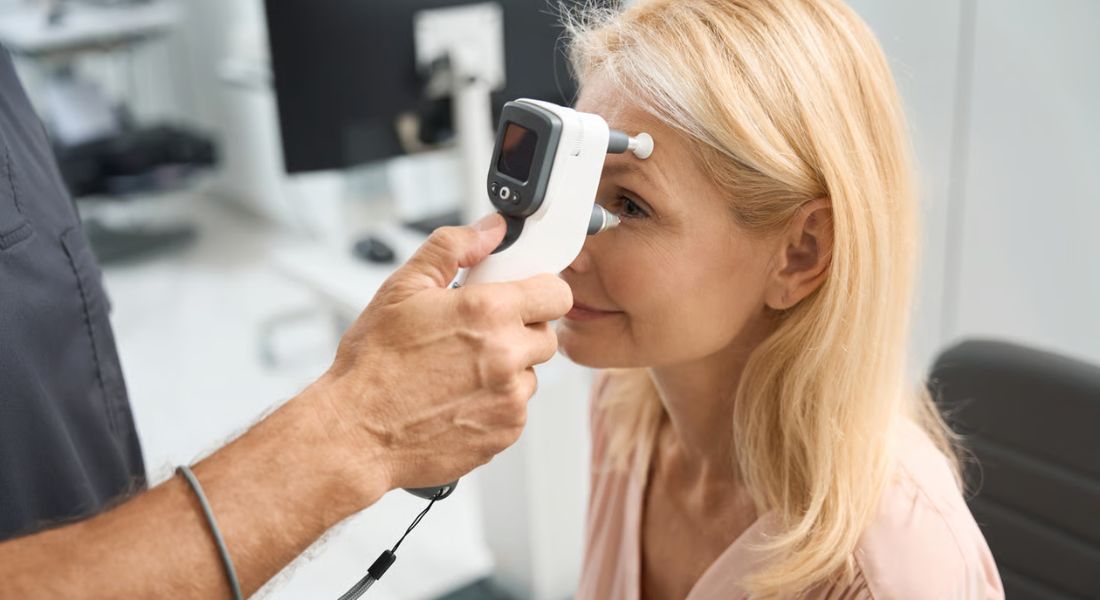
Eye pressure and drainage angle assessment are important before ICL surgery. Because the lens is placed inside your eye, your surgeon needs to make sure it will not interfere with natural fluid flow or increase pressure-related risk.
Modern ICL designs and careful sizing aim to reduce pressure-related problems, but pre-operative screening remains essential. If you have glaucoma, narrow angles, or ocular hypertension, your surgeon may need to be especially cautious before recommending ICL.
This is why ICL assessment should always include a full eye health review. For you, suitability is not based only on prescription strength. Your eye pressure, drainage angle, anatomy, and long-term safety all need to be checked carefully.
Central Port Lens Design
Modern ICL designs often include a central port, which helps fluid move naturally through your eye. This design has changed how surgeons think about some aspects of ICL safety and planning. It can also reduce the need for certain older preparation steps in selected cases.
Conference discussions may review how central port designs affect vault, eye pressure, visual symptoms, and long-term outcomes. These details may sound technical, but they influence how the lens behaves inside the eye after surgery. This is why lens design is part of careful treatment planning.
For you, this shows that ICL technology continues to be refined for both vision correction and safety. A good consultation should explain how the lens design fits your eye anatomy, measurements, pressure profile, and long-term needs.
Surgical Technique and Training
SOE Congress programmes include workshops, live surgery, debates, and educational sessions across different eye specialties. This makes the congress valuable for practical surgical learning, not only research updates.
ICL surgery requires careful lens loading, insertion, unfolding, positioning, and post-operative review. Even experienced surgeons can benefit from seeing updated techniques and discussing difficult cases with other specialists.
For you, ongoing surgeon training supports safer surgery and better decision-making. It also helps specialists refine their technique, manage challenges more confidently, and provide more careful care before and after ICL surgery.
ICL Compared With LASIK and SMILE
ICL is often compared with LASIK, SMILE, and PRK because all of these treatments aim to reduce your dependence on glasses or contact lenses. However, they work in different ways, so they are not suitable for the same eyes.
Laser procedures reshape your cornea to correct vision. ICL surgery places a lens inside your eye without removing corneal tissue. This can make ICL worth discussing if your cornea is thin, your prescription is high, or dry eye is a concern.
This comparison matters because the best choice depends on your corneal thickness, prescription, dry eye risk, age, lifestyle, and eye anatomy. A good consultation should explain which option fits your eyes most safely, rather than presenting one treatment as best for everyone.
ICL for Thin Corneas
Patients with thin corneas may not always be suitable candidates for LASIK. Because ICL does not involve removing corneal tissue, it may sometimes be discussed as an alternative option in selected cases. This can be helpful for people who have been told that laser eye surgery may not be the best choice for their eyes.
However, having thin corneas alone does not automatically mean you are suitable for ICL. Surgeons also need to check whether there is enough space inside your eye and whether the overall eye health assessment appears reassuring. Other factors, including eye pressure, lens measurements, and retinal health, are also important parts of the evaluation.
That is why a full consultation is such an important part of the decision-making process. Careful testing helps specialists decide whether ICL is both safe and suitable for you as an individual patient. The aim is always to choose the option that offers the best balance between vision correction and long-term eye safety.
ICL and Dry Eye Concerns

Some patients look into ICL because they already struggle with dry eye symptoms or find contact lenses uncomfortable to wear. Since ICL does not involve creating a corneal flap or reshaping your cornea, it may sometimes be discussed when dry eye makes laser procedures feel less suitable. This can make ICL an option worth considering for certain patients.
However, dry eye is still an important part of the overall assessment. The condition of your eye surface can affect both comfort and the quality of vision, regardless of which refractive procedure is being considered. Even with ICL, healthy eyes and stable tear function remain important for a good visual experience.
A good surgeon should carefully assess your dry eye symptoms before recommending treatment. They should also explain whether ICL, laser eye surgery, or another option may be the most suitable choice for your eyes. The aim is to find a treatment plan that balances vision correction, comfort, and long-term eye health.
Managing ICL Complications
ICL surgery is often discussed as a useful vision correction option for selected patients, but it is still a form of intraocular surgery. Like any procedure performed inside your eye, there are potential risks and complications that surgeons need to consider carefully. These may include raised eye pressure, vault-related concerns, inflammation, lens rotation in toric ICL cases, cataract risk, and changes to endothelial cell count over time.
Conference discussions and specialist training help surgeons improve the way these complications are prevented, identified, and managed. This includes more accurate lens sizing, detailed eye imaging, careful surgical technique, and regular follow-up after treatment. The aim is to improve both safety and long-term visual outcomes for you as a patient.
For you, this highlights that safety is not only about the operation itself. It also depends on proper assessment before surgery, careful monitoring afterwards, and choosing a surgeon who follows a structured treatment process. Good long-term care is an important part of successful ICL treatment.
What SOE ICL Advances Mean for Patients
The discussions presented at the SOE Congress highlight how implantable lens surgery continues to evolve with a stronger emphasis on precision, safety, and personalised treatment planning. Modern ICL surgery is no longer focused only on reducing your dependence on glasses, but also on protecting long-term eye health and improving your overall patient experience.
- More Personalised Treatment Planning: Modern ICL consultations involve detailed measurements of your eye rather than relying on a one-size-fits-all approach. Surgeons assess factors such as anterior chamber depth, corneal health, pupil size, and lens anatomy before recommending treatment. This personalised planning helps improve safety and achieve more predictable visual outcomes.
- Greater Focus on Long-Term Eye Health: Current ICL discussions place significant attention on maintaining healthy eye structures over many years. Specialists monitor areas such as endothelial cell health, eye pressure, and lens positioning to reduce the risk of long-term complications. This reflects a broader shift towards balancing visual correction with long-term ocular safety.
- More Honest Comparison with Other Procedures: Reputable clinics increasingly compare ICL with alternatives such as LASIK, PRK, or refractive lens exchange during consultations. This allows you to understand the advantages, limitations, and suitability of each option based on your own eye measurements. A transparent discussion helps patients make more informed decisions rather than feeling guided toward a single procedure.
- Importance of Detailed Consultations: A thorough ICL consultation is often a positive sign because the treatment depends heavily on precision and careful clinical judgement. Detailed imaging and multiple diagnostic tests help surgeons determine whether the procedure is genuinely appropriate for you. Careful assessment also helps identify individuals who may achieve better results with a different type of vision correction.
For patients considering ICL surgery in London or elsewhere, these advances highlight the importance of choosing a clinic that prioritises careful assessment, honest communication, and personalised care. Modern ICL treatment is becoming increasingly refined because specialists continue to improve how they evaluate safety, lens sizing, and long-term outcomes.
The Future of ICL After SOE
The future of ICL is likely to focus on improving safety, accuracy, and long-term patient outcomes. Specialists continue to work on better imaging systems, more reliable vault prediction, improved lens sizing formulas, stronger toric lens alignment, and long-term endothelial cell safety. There is also ongoing discussion about how ICL compares with laser vision correction for different types of patients.
The discussions presented at the SOE Congress support this wider direction in refractive surgery. Much of the focus is on combining better technology with improved surgeon training and more careful patient selection. The goal is to make treatment planning more precise and personalised rather than simply increasing procedure numbers.
For patients, this means the future of ICL is not only about better vision correction. It is also about creating safer and more predictable outcomes for the people who are genuinely suitable for the procedure. As research and technology continue to improve, treatment decisions are expected to become even more tailored to individual eye health and visual needs.
FAQs:
- What is the SOE Congress?
The European Society of Ophthalmology Congress is a major international ophthalmology meeting where eye specialists discuss the latest developments in eye surgery, refractive treatments, imaging, and ophthalmic technology. - What is ICL surgery?
ICL surgery involves placing an implantable collamer lens inside your eye to correct vision. Unlike LASIK or SMILE, it does not reshape the cornea. The natural lens remains in place during the procedure. - Who may benefit from ICL surgery?
ICL may be suitable for selected patients with moderate to high myopia, myopic astigmatism, thinner corneas, dry eye concerns, or eye measurements that make laser eye surgery less suitable. - Why is vault important in ICL surgery?
Vault refers to the space between the implanted ICL and your natural lens. Maintaining an appropriate vault is important because very low or very high vault measurements may increase the risk of complications. - Can ICL correct astigmatism?
Yes. Toric ICL lenses are designed to correct myopic astigmatism in suitable patients. Accurate lens alignment and rotational stability are important for achieving good visual outcomes. - Why are imaging scans needed before ICL surgery?
Imaging tests such as anterior segment OCT and endothelial cell analysis help surgeons assess the internal structure of your eye. These scans support lens sizing, vault prediction, and overall safety planning. - Is ICL suitable for patients with thin corneas?
ICL may be discussed for some patients with thin corneas because the procedure does not remove corneal tissue. However, suitability still depends on detailed measurements and overall eye health. - What are endothelial cells and why are they monitored?
Endothelial cells help keep the cornea clear. Since these cells do not regenerate effectively, surgeons monitor them before and after ICL surgery to help protect long-term corneal health. - How is ICL different from LASIK or SMILE?
LASIK and SMILE reshape the cornea to correct vision, while ICL surgery places a lens inside the eye without removing corneal tissue. The best option depends on your prescription, corneal thickness, eye anatomy, and long-term safety considerations. - What do SOE ICL advances mean for patients?
ICL advances discussed at SOE reflect improvements in imaging, lens sizing, vault prediction, surgical technique, and long-term safety monitoring. For patients, this supports more personalised and carefully planned refractive surgery care.
Final thought: The Future of ICL Surgery After SOE Congress
The ICL advances discussed at the SOE Congress highlight how implantable lens surgery continues to become more refined, personalised, and safety-focused. Developments in imaging, vault prediction, lens sizing, surgical technique, and long-term monitoring are helping surgeons improve both visual outcomes and long-term eye health for carefully selected patients.
For you, this means modern ICL care is no longer based only on prescription strength. Surgeons now rely on detailed anatomical measurements, advanced imaging technology, and careful patient selection to decide whether ICL is the safest and most appropriate option for your eyes. This is especially important if you have high myopia, astigmatism, thinner corneas, or dry eye concerns that may make laser eye surgery less suitable.
The discussions presented at SOE also reinforce that successful ICL treatment depends on more than the procedure itself. Careful planning, surgeon experience, structured follow-up, and long-term safety monitoring all contribute to better stability and safer outcomes over time. If you’re considering ICL surgery in London and want to know if it’s the right option, you’re welcome to reach out to us at Eye Clinic London to book a consultation.
References:
- Sanders, D.R., Doney, K. and Poco, M., 2004. United States Food and Drug Administration clinical trial of the implantable contact lens (ICL) for moderate to high myopia. Ophthalmology, 111(9), pp.1683-1692. Available at: https://pubmed.ncbi.nlm.nih.gov/15350323/
- Packer, M. (2016) The Implantable Collamer Lens with a Central Port: Review of the Literature. Clinical Ophthalmology, 10, pp. 2427-2438. Available at:https://pmc.ncbi.nlm.nih.gov/articles/PMC5079042/
- Zhang, Y., Li, X., Chen, H., Wang, Q. and Liu, Y. (2025) Recent advances in implantable collamer lens technology and clinical outcomes. Available at: https://www.sciencedirect.com/science/article/pii/S2451993625001987
- Li, B., Cheng, M., Lei, Y., Lin, I-C., Chen, X. and Wang, X. (2025) Haptics and axis stability of customized vertical implantable collamer lens implantation, Journal of Cataract & Refractive Surgery, 51(11), pp. 1004-1010. Available at: https://pmc.ncbi.nlm.nih.gov/articles/PMC12582595/
- Chaudhari, P.B. and Banga, A. (2023) Writing strategies for improving the access of medical literature, World Journal of Experimental Medicine, 13(3), pp. 50-58. Available at: https://pmc.ncbi.nlm.nih.gov/articles/PMC11005927/