


What New ICL Research Was Presented at the APAO Congress?

The Asia-Pacific Academy of Ophthalmology Congress, often known as APAO, is one of the leading ophthalmology meetings in the region. It brings together eye specialists, researchers, and surgeons to discuss new findings across eye care, including refractive surgery and implantable lens procedures.
The 40th APAO Congress was held in New Delhi, India, from 3–6 April 2025 alongside the 83rd Annual Conference of the All India Ophthalmological Society. For you, this matters because major congresses like APAO help specialists stay updated on newer research and clinical experience.
For ICL surgery, these discussions often focus on patient selection, lens sizing, vault behaviour, surgical technique, visual quality, safety outcomes, and long-term follow-up. These topics help surgeons understand how to make ICL treatment more accurate and predictable.
The overall message is that ICL technology continues to evolve. If you are considering ICL surgery, this ongoing research can support safer planning, better outcomes, and more personalised treatment decisions.
Why APAO Matters for ICL Research
APAO matters because the Asia-Pacific region has a strong focus on myopia correction. Many countries in this region see large numbers of patients with myopia, including moderate and high myopia. This makes research into safe and effective vision correction especially important.
ICL surgery is relevant because it may suit selected patients who are not ideal candidates for LASIK, PRK, or SMILE. This may include you if you have a higher prescription, thinner corneas, or corneal measurements that make laser treatment less suitable.
At APAO, ICL research helps surgeons understand how implantable lenses perform across different patient groups and eye types. For you, this means congress discussions can support more personalised planning, better safety decisions, and improved long-term outcomes.
Phakic IOLs as a Refractive Surgery Option
ICL surgery belongs to a wider group of treatments known as phakic intraocular lenses. These lenses are implanted inside your eye while your natural lens remains in place. This makes them different from lens replacement surgery, where the natural lens is removed.
ICL is also different from laser eye surgery because it does not reshape your cornea. Instead, it corrects vision by adding a lens inside the eye. This can make it useful for selected patients whose eyes may not be ideal for LASIK, PRK, or SMILE.
A 2025 review on posterior chamber phakic intraocular lenses notes that phakic IOLs have long been studied for high myopia and myopic astigmatism correction. For you, this means ICL is part of a well-established area of refractive surgery research, not just a newer alternative.
Eye Pressure Considerations
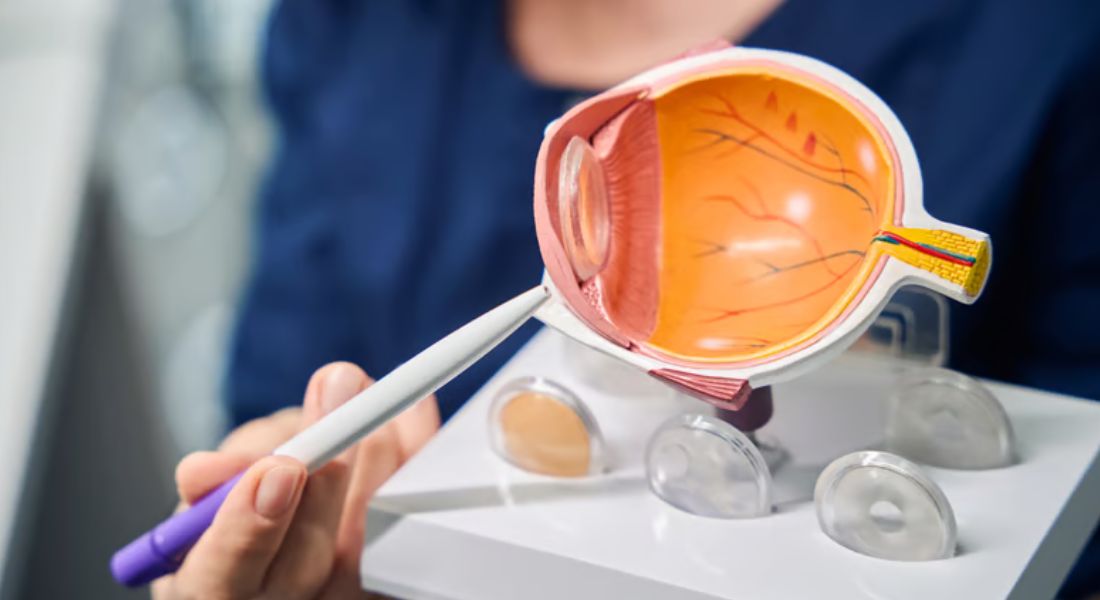
Eye pressure is another important area of ICL research. Because the lens is placed inside your eye, specialists need to make sure that fluid can continue to move normally through the eye after implantation. Maintaining healthy fluid flow helps protect important structures such as the optic nerve.
Modern ICL designs and careful lens sizing are intended to reduce pressure-related concerns. Research presented at major meetings often looks at how different lens designs, vault measurements, and anatomical factors may influence eye pressure over time. These studies help surgeons refine patient selection and follow-up protocols.
If you are considering ICL surgery, your eye pressure should be checked before and after the procedure. If you already have glaucoma, ocular hypertension, or narrow drainage angles, your surgeon may need to be especially cautious. This is why a detailed eye examination is an important part of deciding whether ICL is suitable for you.
ICL for Patients Unsuitable for LASIK
One of the most important ICL research themes is its role for patients who may not be suitable for LASIK. If your cornea is too thin, dry, irregular, or unsuitable for laser reshaping, an implantable lens may be considered instead.
This is important because you may still want freedom from glasses or contact lenses, even if corneal laser surgery is not safe for your eyes. ICL may offer another option, depending on your eye anatomy, prescription, and overall suitability.
If you are considering ICL surgery in London, your consultation should explain why ICL is suitable for your specific eyes. It should not simply be presented as an alternative to LASIK. The decision should be based on detailed measurements, safety, and long-term eye health.
ICL for High Myopia
High myopia is one of the main areas where ICL research continues to be important. Stronger prescriptions can sometimes be more challenging for corneal laser surgery because more corneal tissue may need to be removed during treatment. In some patients, this can limit suitability for laser-based procedures.
ICL surgery does not involve removing corneal tissue, which may make it a suitable option for selected patients with high prescriptions. The lens is placed inside the eye to help correct vision while keeping the cornea largely unchanged. However, this does not mean every patient with high myopia is automatically suitable for ICL surgery.
Before treatment, surgeons still need to assess several important factors. These can include anterior chamber depth, endothelial cell health, eye pressure, retinal health, and other long-term risk factors linked with high myopia. Careful screening helps determine whether ICL surgery is a safe and appropriate option for you.
ICL and Myopic Astigmatism
Many people have both myopia and astigmatism at the same time. This means your vision may be affected by both short-sightedness and irregular focusing, which can cause blurred or distorted vision. In these cases, treatment needs to correct both problems accurately.
Toric ICL lenses are designed to help correct myopic astigmatism in suitable patients. Research in this area often focuses on lens alignment, rotational stability, treatment accuracy, and overall visual outcomes. These factors are important because the position of the lens can directly affect vision quality.
For patients, precision is a key part of astigmatism correction. Even a small amount of lens rotation or misalignment can reduce the sharpness and clarity of your vision. This is why careful planning and accurate positioning are important during ICL surgery.
ICL Sizing Research
ICL sizing is one of the most important technical aspects of implantable lens surgery. The lens needs to be measured and selected carefully so it can sit safely and comfortably inside the eye. Accurate sizing plays an important role in both safety and long-term visual outcomes.
If the ICL is too small, the space between the implanted lens and your natural lens may be too low. If the lens is too large, the vault may become too high and could affect the eye’s drainage angle or increase eye pressure. Both situations may increase the risk of complications and may require further assessment or treatment.
Because of this, research into ICL sizing continues to be an important part of lens development. Specialists regularly study sizing formulas, imaging methods, and anatomical eye measurements to improve accuracy and patient safety. These advances aim to help surgeons choose the most suitable lens size for each individual patient.
Surgical Technique and Training

ICL surgery requires careful surgical technique. The lens must be inserted, positioned, and checked correctly inside your eye. Even small details in handling and placement can affect safety and outcomes.
At APAO 2025, industry-linked educational activities included phakic IOL hands-on training sessions using an artificial lab setting. These sessions focused on loading and implantation technique. This gives surgeons a chance to practise important steps in a controlled environment.
For you, this type of training matters because better technique can support safer surgery and smoother lens handling. It can also help surgeons feel more confident in managing unexpected situations during the procedure. Good outcomes depend not only on technology, but also on skill, planning, and experience.
Vault Measurement After ICL
Vault refers to the space between the back of the ICL and the front of your natural lens. It is one of the main measurements specialists monitor after surgery. This space needs to remain within a safe range for long-term eye health.
A four-year follow-up study highlighted changes in central vaulting, endothelial cell density, and crystalline lens thickness after phakic collamer lens implantation. It noted that changes were more prominent during the first year and then became relatively stable. This kind of research helps surgeons understand how the eye may change after ICL surgery.
For you, this shows why follow-up after ICL is important even when your vision feels clear. Regular checks can help monitor vault, eye pressure, lens position, and overall eye health. Good vision is important, but long-term safety also depends on careful monitoring.
Long-Term Anterior Segment Changes
ICL research often looks at the front part of your eye, known as the anterior segment. This includes the cornea, anterior chamber, iris, drainage angle, natural lens, and the position of the implanted lens. These structures all play an important role in the long-term performance of an ICL.
Long-term research helps surgeons understand how the eye may change after ICL implantation. This can include studying vault stability, endothelial cell health, natural lens thickness, and eye pressure behaviour over time. These findings help specialists identify what normal long-term changes look like and when further assessment may be needed.
For you, this research is important because ICL surgery is not only about achieving clear vision in the first few weeks. It is also about maintaining long-term safety and eye health. Regular follow-up appointments allow your specialist to monitor these changes and ensure your eyes continue to remain healthy years after surgery.
Endothelial Cell Monitoring
The corneal endothelium is a delicate inner layer of cells that helps maintain corneal clarity by controlling fluid balance within your eye. These cells are particularly important in ICL surgery because the implantable lens is positioned inside the eye, close to important internal structures. Unlike some other eye tissues, endothelial cells do not regenerate effectively once they are lost.
- Why Endothelial Cells Matter: Endothelial cells help keep your cornea clear and transparent, which is essential for maintaining good vision. If too many of these cells are damaged or lost, the cornea may become swollen or cloudy over time. This is why surgeons carefully assess endothelial health before recommending ICL surgery.
- Pre-Operative Endothelial Cell Assessment: Before ICL surgery, your surgeon will usually measure the endothelial cell count using specialised imaging equipment. This helps determine whether your eye has a healthy enough cell density for safe lens implantation. The results are considered alongside other anatomical measurements during surgical planning.
- Long-Term Monitoring After Surgery: After the procedure, your endothelial cell counts may be monitored periodically to ensure the cornea remains healthy. Regular follow-up appointments allow the surgeon to identify any unusual cell loss early. This ongoing observation is one reason ICL surgery requires structured long-term care.
- Difference from Corneal Laser Surgery: ICL surgery differs from laser vision correction because the implant remains inside your eye permanently unless removed or exchanged. Since the lens sits near internal eye structures, long-term monitoring becomes more important. Corneal laser procedures generally do not require the same type of endothelial cell surveillance.
Monitoring endothelial cell health is an important part of safe and responsible ICL care. Careful assessment before surgery and regular follow-up afterwards help protect the long-term clarity and health of your cornea. These evaluations allow surgeons to track how your eye responds over time and identify potential concerns early.
Central Port Lens Design
Modern ICL designs often include a central port, which is intended to support natural fluid flow inside your eye. This has changed how surgeons think about certain pre-operative and post-operative safety checks. It is one of the design features considered during ICL planning.
Conference discussions may review how lens design affects safety, vault behaviour, eye pressure, and patient outcomes. These details are technical, but they can matter for long-term results. They help surgeons understand how the lens may behave inside different eyes.
For you, it is enough to understand that lens design is part of safety planning, not just vision correction. Your surgeon should choose and plan the lens based on your eye anatomy, measurements, and long-term safety needs.
Phakic Lens Experience Labs
Hands-on experience labs are useful because they allow surgeons to practise lens loading, insertion, positioning, and handling outside the operating theatre. This can be especially valuable for newer surgeons or those adopting phakic IOL technology. It gives them a structured way to build confidence before working in real surgical settings.
The EYECRYL PHAKIC experience lab at APAO 2025 included short theoretical introductions followed by practical implantation in an artificial lab setting. This kind of training helps surgeons understand both the theory and the technical steps of phakic lens surgery. It can also support safer and more controlled adoption of newer lens technologies.
For you, this shows that implantable lens surgery is not only about device innovation. It is also about surgeon education, careful technique, and controlled training. Better training can support safer planning and more confident surgical care.
Comparing ICL With Laser Eye Surgery
ICL is often compared with LASIK, SMILE, and PRK because all of these procedures aim to reduce your dependence on glasses or contact lenses. However, they work in different ways, so the right choice depends on your eyes.
Laser eye surgery reshapes your cornea to correct vision. ICL surgery places a lens inside your eye and leaves the corneal shape mostly unchanged. This may make ICL more suitable if your cornea is thin, dry, irregular, or not ideal for laser treatment.
A good refractive consultation should compare these options honestly. Your surgeon should explain which treatment fits your eye measurements, prescription, lifestyle, and long-term safety best.
ICL for Thin Corneas
Patients with thinner corneas may not always be ideal candidates for LASIK. This is because laser treatment removes corneal tissue to change focus. If your cornea is already thin, removing more tissue may not be the safest option.
ICL may be discussed in these cases because it does not require corneal tissue removal. Instead, a lens is placed inside your eye while the cornea is left mostly unchanged. However, this does not mean ICL is automatically suitable for every patient with thin corneas.
The rest of your eye anatomy still needs to be suitable. This is why ICL planning must include detailed scans and measurements, not only a prescription check. Your surgeon should assess eye space, lens position, pressure, and long-term safety before recommending treatment.
ICL and Dry Eye Concerns

Some patients consider ICL because they already have dry eye symptoms or contact lens intolerance. Since ICL does not create a corneal flap or reshape corneal tissue, it may be discussed when dry eye makes LASIK less suitable.
However, dry eye should still be assessed and treated if needed. Comfortable vision depends on a healthy ocular surface, even after implantable lens surgery. If your eyes are dry or irritated before treatment, your surgeon should consider this carefully.
For you, the decision should be based on the full eye assessment, not one symptom alone. ICL may be a useful option in selected cases, but your eye measurements, ocular surface health, prescription, and long-term safety all need to be reviewed.
ICL Safety Research
ICL safety research remains an important part of modern refractive surgery because the procedure involves placing a lens inside your eye. Specialists continue to study how the implant interacts with internal eye structures over time and how different anatomical factors may affect outcomes. Research focuses not only on visual results but also on maintaining long-term eye health and reducing the risk of complications.
- Vault and Lens Positioning: Vault refers to the space between the ICL and your natural lens inside the eye. If the vault is too low or too high, it may increase the risk of complications such as cataract formation or pressure-related problems. Research into sizing formulas and imaging techniques helps surgeons achieve safer and more predictable lens positioning.
- Endothelial Cell Health: The corneal endothelium is closely monitored because these cells help maintain corneal clarity and do not regenerate effectively. Safety studies examine whether endothelial cell counts remain stable over the long term after ICL implantation. Regular monitoring allows surgeons to identify changes early and protect long-term corneal health.
- Eye Pressure and Inflammation: Researchers also study how ICL surgery may affect intraocular pressure and inflammatory responses inside your eye. Elevated pressure or inflammation can sometimes occur after surgery and may require treatment or closer observation. Advances in lens design and surgical technique aim to reduce these risks further.
- Lens Rotation and Long-Term Stability: Lens stability is another major area of research, particularly for toric ICLs used to correct astigmatism. If the lens rotates from its intended position, visual quality may be affected. Long-term studies help specialists understand how stable these implants remain over many years and which factors influence rotational stability.
ICL surgery has a different risk profile compared with procedures such as LASIK or PRK because it is an intraocular procedure. However, careful planning, modern imaging, improved lens technology, and structured follow-up have all contributed to safer outcomes over time. Safety research continues to play an essential role in identifying potential complications earlier and improving patient care.
ICL and Cataract Risk
One safety question in ICL surgery is the relationship between the vault and your natural lens. Vault means the space between the ICL and the front of your natural lens. If the ICL sits too close to the natural lens, cataract-related concerns may increase over time.
This is why sizing and vault prediction are so important. Surgeons want enough space for safety, but not so much that the lens sits too high. The aim is to place the ICL in a position that supports both clear vision and long-term eye health.
Research into vault changes over time helps doctors understand how to monitor patients after surgery. For you, this means follow-up is important even if your vision feels excellent. Regular checks can help your specialist monitor vault, eye pressure, and cataract-related changes early.
The Role of Imaging in ICL Planning
Imaging is central to ICL planning because your surgeon needs to understand the space inside your eye in detail. Tests may include anterior segment OCT, ultrasound biomicroscopy, biometry, endothelial cell analysis, and other measurements. These scans help build a clear picture of your eye anatomy before surgery.
These tests help assess whether your eye has enough space for an implantable lens. They also guide lens selection, lens sizing, and safety planning. Better imaging may also help your surgeon predict the post-operative vault more accurately.
For you, this means ICL suitability cannot be judged properly from your prescription alone. Even if your glasses or contact lens prescription looks suitable, your internal eye measurements still need to support the procedure. A detailed scan-based assessment is essential to decide whether ICL is safe and appropriate for your eyes.
What APAO ICL Research Means for Patients
For you, APAO ICL research shows that implantable lens surgery is becoming more refined and carefully studied. The focus is not only on correcting your vision, but also on long-term safety, lens sizing, vault behaviour, surgical technique, and patient selection.
This is especially important if you have high myopia, astigmatism, thinner corneas, or dry eye concerns. ICL may be a suitable option in selected cases, but only after a full specialist assessment. Your surgeon needs to check your eye measurements, anatomy, pressure, and long-term safety before recommending treatment.
The best ICL care should feel personalised, measured, and clearly explained. You should understand why ICL is being considered, how it compares with other options, and what follow-up will involve. This helps you make a more confident and informed decision.
The Future of ICL After APAO
The future of ICL research is likely to focus on better sizing formulas, stronger vault prediction, improved imaging, long-term endothelial safety, toric alignment, and clearer comparison with laser eye surgery. These areas matter because ICL success depends on both vision correction and long-term eye health.
APAO is important because it brings together eye specialists from regions where myopia and refractive surgery demand are high. For you, this means the research discussed there can help improve how surgeons assess patients, choose lenses, and monitor outcomes over time.
The goal is not simply to offer ICL to more patients. It is to identify who benefits most and how the procedure can be made safer and more predictable. This supports more personalised decisions for people considering ICL surgery.
FAQs:
- What is the APAO Congress?
The Asia-Pacific Academy of Ophthalmology Congress is a major international ophthalmology meeting where eye surgeons and researchers discuss the latest developments in eye care, including refractive surgery and implantable lens procedures such as ICL surgery. - What is ICL surgery?
ICL surgery involves placing an implantable collamer lens inside your eye to correct vision. Unlike LASIK or PRK, the procedure does not reshape the cornea. Instead, the lens works alongside your natural lens to improve focus. - Who may be suitable for ICL surgery?
ICL may be considered for selected patients with moderate or high myopia, thin corneas, dry eye concerns, or prescriptions that are less suitable for laser eye surgery. Suitability depends on detailed eye measurements and overall eye health. - Why is ICL sizing important?
Correct ICL sizing is essential for safety and long-term stability. If the lens is too small or too large, it may affect vault, eye pressure, or lens positioning. Accurate imaging and measurements help surgeons choose the most appropriate lens size. - What does vault mean in ICL surgery?
Vault refers to the space between the implanted ICL and your natural lens. Maintaining a safe vault is important because very low or very high vault measurements may increase the risk of complications. - Can ICL surgery treat astigmatism?
Yes. Toric ICL lenses are designed to correct myopic astigmatism in suitable patients. Proper lens alignment and rotational stability are important for achieving clear and stable vision. - Is ICL surgery safer now than before?
Modern ICL technology has continued to evolve through improved lens design, better imaging, refined surgical techniques, and ongoing safety research. Long-term studies presented at conferences such as APAO help surgeons improve patient selection and follow-up care. - Does ICL surgery increase cataract risk?
Research shows that vault and lens position may influence cataract-related risk over time. This is why careful sizing, detailed planning, and long-term monitoring are important parts of safe ICL care. - Why are endothelial cells monitored after ICL surgery?
Endothelial cells help keep your cornea clear. Because these cells do not regenerate effectively, surgeons monitor them before and after ICL surgery to help protect long-term corneal health. - What does APAO ICL research mean for patients?
Research presented at APAO helps surgeons improve lens sizing, safety planning, imaging, surgical technique, and long-term follow-up. For patients, this supports more personalised treatment decisions and safer refractive surgery care.
Final Thoughts: The Future of ICL Surgery and Patient Care
Ongoing ICL research presented at the APAO Congress highlights how implantable lens surgery continues to become more refined, personalised, and safety-focused. Discussions around vault prediction, lens sizing, endothelial cell monitoring, imaging technology, surgical technique, and long-term follow-up all aim to improve both visual outcomes and long-term eye health for patients considering refractive surgery.
For you, this means modern ICL care is no longer based only on prescription strength. Surgeons now rely on detailed anatomical measurements, advanced imaging, careful patient selection, and structured follow-up to decide whether ICL is the safest and most appropriate option for your eyes. This is especially important if you have high myopia, thin corneas, dry eye concerns, or prescriptions that may not be ideal for laser eye surgery.
The research presented at APAO also reinforces that successful ICL treatment depends on more than the procedure itself. Careful planning, surgeon experience, lens design, and long-term monitoring all play an important role in maintaining both clear vision and healthy eyes over time. If you’d like to find out whether ICL surgery in London may be suitable for you, feel free to contact us at Eye Clinic London to arrange a consultation.
References:
- Rocha-de-Lossada, C., Burguera, N., Rodríguez Calvo-de-Mora, M. and Fernández, J. (2025) Implantable collamer lens as an alternative supplementary intraocular lens to correct pseudophakic refractive error: A scoping review. Available at: https://pubmed.ncbi.nlm.nih.gov/41212960/
- Wannapanich, T., Kasetsuwan, N. and Reinprayoon, U. (2023) Intraocular implantable collamer lens with a central hole: Safety, efficacy, and patient outcomes. Available at: https://pubmed.ncbi.nlm.nih.gov/36998514/
- Zhang, X. et al. (2023) Intraocular implantable collamer lens with a central hole implantation: Safety, efficacy, and patient outcomes, 17, pp. 1-15. Available at: https://pmc.ncbi.nlm.nih.gov/articles/PMC10046236/
- Liu, Y. et al. (2024) Evolution and research trends in implantable collamer lens surgery: A bibliometric analysis, Frontiers in medicine. Available at: https://pmc.ncbi.nlm.nih.gov/articles/PMC11366652/
- Gimbel, H.V., LeClair, B.M., Jabo, B. and Marzouk, H., 2018. Incidence of implantable Collamer lens induced cataract. Canadian Journal of Ophthalmology, 53(5), pp.518-522. Available at: https://www.sciencedirect.com/science/article/abs/pii/S0008418217305768