


What Happens During Tear Biomarker Testing?
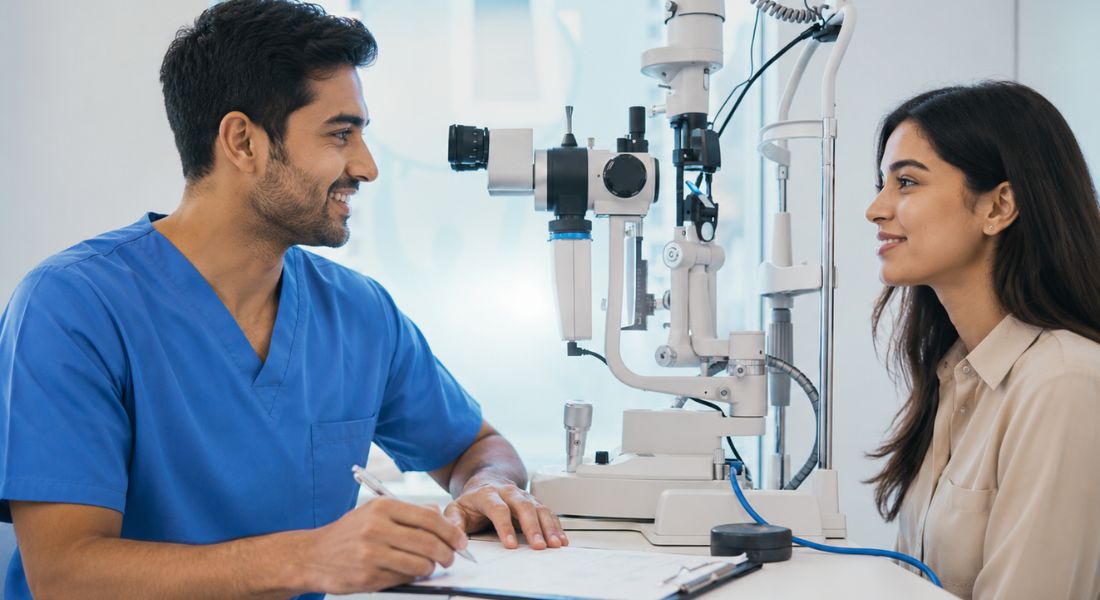
If you have persistent dryness, irritation, watering or fluctuating vision, an eye examination may identify dry eye disease or another ocular-surface condition. However, symptoms alone do not always reveal whether inflammation, allergy, tear-film instability, eyelid problems or another factor is contributing.
At Eye Clinic London, point-of-care tear biomarker testing may be used to measure selected markers such as MMP-9, total tear IgE and lymphotoxin-alpha. A tiny tear sample is analysed during the consultation, but the result is interpreted alongside your symptoms, eye examination and other tests rather than being used as a stand-alone diagnosis or treatment instruction.
What Is Tear Biomarker Testing?
A biomarker is a measurable biological sign that helps your clinician understand what may be happening in your body. In eye care, tear biomarker testing examines substances in your tears, such as proteins, antibodies, enzymes or inflammatory molecules, to look for signs of inflammation, allergy or ocular surface changes.
Tears contain many important components that help protect the surface of your eyes, and changes in these components may provide useful clinical information. Unlike tests that only measure tear quantity, biomarker testing looks at the biological contents of your tear film. However, no single marker can explain every symptom, so your result must be considered alongside your full eye assessment.
When Should You Seek Urgent Eye Care Instead?
Tear biomarker testing is a planned ocular-surface assessment and is not intended to investigate an eye emergency. Request urgent same-day advice from an optometrist, urgent eye-care service, GP or NHS 111 if you develop severe eye pain, a very red eye, sensitivity to light or a new change in your vision.
Go straight to A&E or call 999 if you suddenly cannot see from one or both eyes, suddenly develop severe eye pain, or have a red eye together with a change in sight or pain when looking at light. Emergency assessment is also needed for a penetrating or high-speed eye injury or severe pain or loss of vision following recent eye surgery or treatment.
If a strong chemical enters your eye, immediately rinse it continuously with plenty of clean water for at least 20 minutes and go to A&E or call 999. Continue rinsing while waiting for medical help. Do not wait for a routine dry eye or biomarker-testing appointment when any of these warning signs are present.
Do You Need to Prepare for Tear Biomarker Testing?
Tear biomarker testing generally requires little preparation, but the clinic may provide instructions based on the biomarker and collection system being used. Tell the clinical team about prescription and non-prescription eye drops, contact lenses, recent eye surgery or treatment, infections, allergy symptoms and any changes in your usual eye condition.
Do not stop prescribed eye drops or alter your treatment unless the clinician specifically advises you to do so. Contact lenses, cosmetics, recent eye drops and rubbing or watering of the eyes may influence the tear film, so follow the clinic’s instructions about what to avoid and for how long before the appointment.
Clinical Tip: Bring Your Eye-Drop List
Bring a list or photographs of every prescription and over-the-counter eye drop you use, including how often you apply them and when you last used them. Also tell the clinician about contact lenses, recent eye procedures and allergy medicines, but do not stop any prescribed treatment unless you receive specific instructions.
Why Your Consultant May Recommend the Test
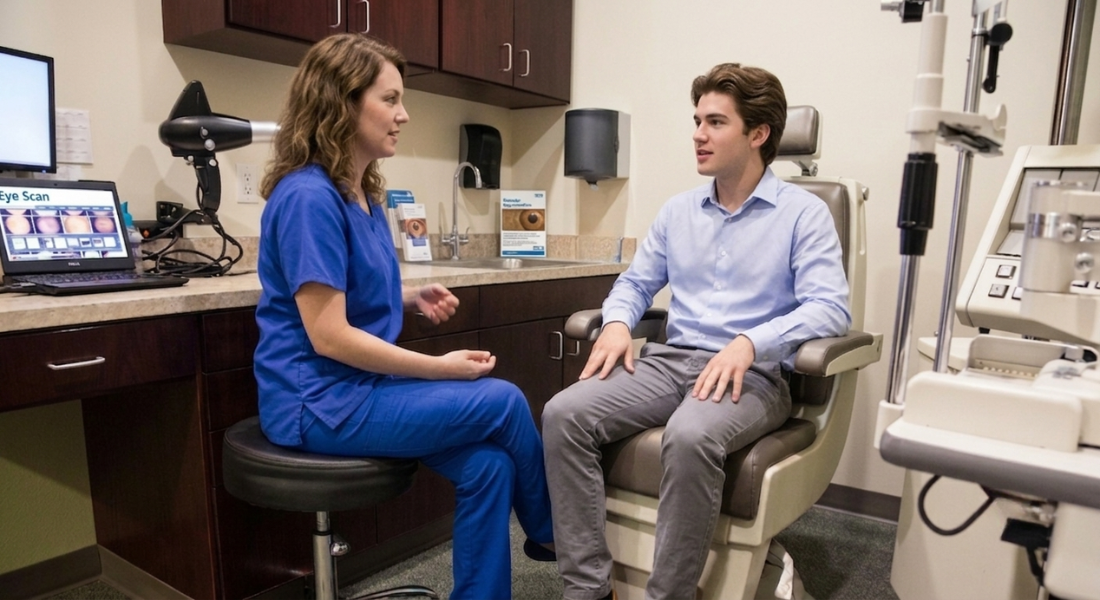
Your consultant may recommend tear biomarker testing when your symptoms and eye examination do not provide a complete explanation. It can be helpful when different conditions, such as dry eye disease and ocular allergy, cause similar symptoms like watering, redness, burning or irritation.
The test may also be considered when previous treatment has not provided enough improvement or when the ocular surface needs to be assessed before cataract, laser or another eye procedure. It should be selected to answer a specific clinical question, such as whether inflammation or allergy may be contributing, rather than being performed routinely for every person with eye discomfort.
What Happens at the Beginning of Your Appointment?
Your appointment will usually start with a discussion about your symptoms, including when they began, how they feel and whether they change throughout the day. Your consultant may ask about burning, grittiness, itching, watering, redness, light sensitivity or blurred vision, as these details can help them understand what may be affecting your eyes.
You may also be asked about screen use, contact lenses, previous eye surgery, your working environment and your general health. This information helps your clinician decide whether tear biomarker testing is suitable and which test may be most useful. The order of examinations can be important, so the tear sample may be collected before certain eye drops or procedures that could affect the tear film.
How Is the Tear Sample Collected?
Tear samples can be collected using several methods, including absorbent strips and fine capillary collectors. At Eye Clinic London, the current SEINDA i-IMMUNODX® platform uses a single-use collection system to obtain a very small sample of natural tears from the lower tear meniscus.
You will usually be asked to keep your head still and look in a particular direction while the collector is positioned at the lower tear meniscus. The clinician will aim to collect the sample without unnecessary contact with the eyelid, conjunctiva or surface of the eye because contact may stimulate reflex tearing or affect the sample.
Will Tear Collection Hurt?
Tear biomarker collection does not involve a needle or injection, and most people find the procedure comfortable and manageable. You may notice a light touching, tickling or slight foreign-body sensation near your lower eyelid, and your eye may water briefly during the process.
The sensation varies according to the collection method and the sensitivity of your eyes. Mild tickling, watering or brief irritation may occur, but tell the clinician immediately if you experience sharp pain or significant discomfort so that the collection can be paused or adjusted. Seek advice if pain, marked redness or a change in vision continues after the appointment.
Are Tears Collected From One Eye or Both?
Testing may be performed on one eye or both eyes according to your symptoms, examination findings and the instructions for the particular assay. The clinician may test both sides when symptoms differ between the eyes or when a direct comparison would provide useful information.
Each sample must be labelled and interpreted according to the eye from which it was collected. A result from one eye should not automatically be assumed to represent the other eye unless the clinician explains that this is appropriate for the clinical question.
What Happens to the Sample After Collection?
The collected tear sample is transferred to the assay for the selected biomarker and processed using the point-of-care analyser. For the current SEINDA MMP-9, total IgE and LTA assays, the analyser produces a quantitative result using the reporting range and measurement units assigned to that specific test.
The result is displayed for the clinician to review during the consultation. Because MMP-9, IgE and LTA measure different biological processes and use different reporting ranges, their numerical results should not be compared directly with one another.
UK Guidance Note:
Tear biomarker assays that examine samples outside the body are in vitro diagnostic medical devices. Before an in vitro diagnostic device is placed on the market in Great Britain, it must meet the applicable UK medical-device requirements and be registered with the MHRA. If the manufacturer is based outside the UK, a UK Responsible Person is responsible for the relevant registration duties.
MHRA registration does not represent accreditation, certification, clinical approval or endorsement of a device. Registration alone also does not demonstrate that every diagnostic, monitoring or treatment-selection claim has been independently assessed or approved by the MHRA.
Why Reflex Tearing Can Affect the Sample
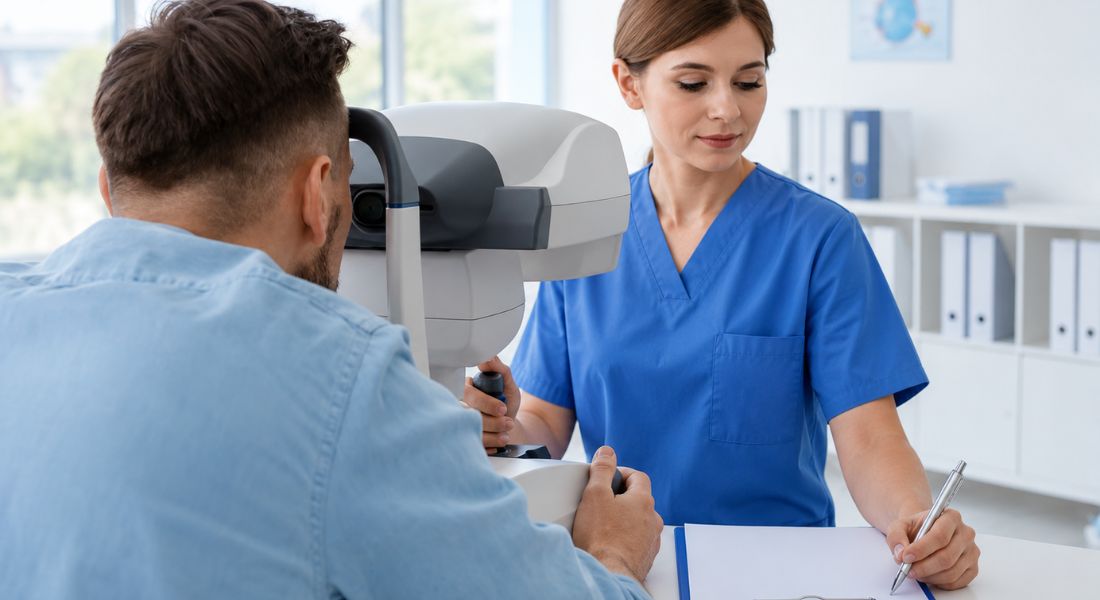
Reflex tears are produced when the eye is irritated. They can dilute or otherwise change the tear sample, which may affect the concentration of the biomarker being measured.
The clinician will therefore collect the tears carefully and minimise contact with the eyelid or ocular surface. Following a standardised collection technique is important because the sampling method and degree of reflex tearing can influence the result.What Does an LTA Result Mean?
Lymphotoxin-alpha, or LTA, is an immune-signalling protein being investigated as a biomarker in dry eye disease. A 2025 clinical study found that lower tear LTA levels were associated with conjunctival epitheliopathy and other ocular-surface changes, suggesting that the marker may provide additional information about the conjunctival environment.
However, an LTA result does not directly measure the amount of mucin on your eye, prove that a goblet-cell deficiency is present or confirm a particular type of T-cell activity. It should currently be treated as an adjunctive marker and interpreted alongside your symptoms, tear-film findings, ocular-surface examination and the limitations of the available evidence.
How Long Does Tear Biomarker Testing Take?
The collection itself is usually brief, although it may take longer when only a small amount of tear fluid is available. The complete appointment takes longer because your clinician also needs to discuss your symptoms, examine your eyes and perform any other relevant ocular-surface tests.
For point-of-care testing, the sample may be analysed during your appointment, allowing your consultant to discuss the result alongside your other findings. If a different sample is sent to an external laboratory, the clinic should explain when the result is expected.
What Does an MMP-9 Result Mean?
Matrix metalloproteinase-9, or MMP-9, is associated with inflammation and epithelial-barrier changes on the ocular surface. A raised result may support the presence of inflammatory activity, but MMP-9 is not specific to one type or cause of dry eye disease and may also be affected by other ocular-surface conditions.
The result must be interpreted using the reporting range for the particular assay and alongside symptoms, staining, tear-film stability, eyelid findings and other tests. A raised result does not automatically mean that one particular anti-inflammatory treatment is required, while a result within range does not exclude every form of dry eye or ocular-surface inflammation.
What Does a Tear IgE Result Mean?
Total tear immunoglobulin E, or IgE, is associated with allergic activity on the ocular surface. A raised result may support allergy as one contributor to itching, redness, watering or irritation, particularly when it agrees with the history and examination.
The test does not identify the particular allergen and cannot by itself distinguish every form of allergic or non-allergic eye inflammation. Evidence for point-of-care tear IgE is developing, so the result should support rather than replace clinical assessment or, where appropriate, formal allergy investigation.
Research Insight:
Recent LTA findings are promising, but the evidence remains less extensive and less widely replicated than that supporting established dry eye diagnostic methods. One 2025 study associated lower tear LTA levels with greater conjunctival epitheliopathy and reported different one-month responses to diquafosol according to LTA level. Larger independent and prospective studies are needed before LTA can routinely define a dry eye subtype or determine treatment selection.
Myth vs Fact
| Myth | Fact |
| One tear biomarker result can diagnose dry eye disease. | A biomarker provides additional information and must be interpreted with symptoms, examination findings and established ocular-surface tests. |
| A raised MMP-9 result identifies the exact cause of the inflammation. | MMP-9 supports the presence of inflammatory activity but does not identify one specific cause or treatment. |
| A raised tear IgE result tells you which allergen is responsible. | Total tear IgE may support allergic involvement but does not identify the individual trigger. |
| A low LTA result proves that your eye has a mucin or goblet-cell deficiency. | Lower LTA has been associated with ocular-surface changes, but it does not directly measure mucin or confirm one biological mechanism. |
| A normal biomarker result rules out dry eye. | Dry eye can involve several biological pathways, and no single biomarker excludes every form of the condition. |
| You should stop eye drops before testing. | Do not stop prescribed eye drops or other medicines unless the clinic specifically instructs you to do so. |
How Will Your Consultant Interpret the Results?
The clinician will interpret each result according to the biomarker measured, the assay’s reporting range and the reason the test was requested. MMP-9, IgE and LTA represent different biological processes and should not be treated as interchangeable measurements.
Your symptoms and full ocular-surface assessment remain essential. Tear-film stability, staining, eyelid and meibomian-gland findings, contact-lens history and other health conditions may explain why a biomarker result does or does not match how your eyes feel.
Evidence Note:
Dry eye is a multifactorial, symptomatic disease, and its diagnosis should not depend on one test result. TFOS DEWS III recommends combining compatible symptoms with objective evidence of disturbed tear-film or ocular-surface homeostasis, followed by further assessment to identify the factors most likely to be contributing.
Tear biomarkers may add molecular information to this process, but they should not replace symptom assessment, tear-film testing, ocular-surface examination or appropriate investigation of alternative diagnoses.
How Could the Result Affect Your Treatment?
A clinically relevant result may help the consultant decide which part of the ocular-surface assessment needs greater attention. For example, evidence of inflammation or allergy may support consideration of appropriate anti-inflammatory, allergy, eyelid or tear-film management after the full examination has been reviewed.
There is not yet one universally validated treatment algorithm based solely on MMP-9, IgE or LTA. Do not start, stop or change prescription eye drops, contact-lens wear or another treatment based only on the printed biomarker result.
What Happens After the Test?
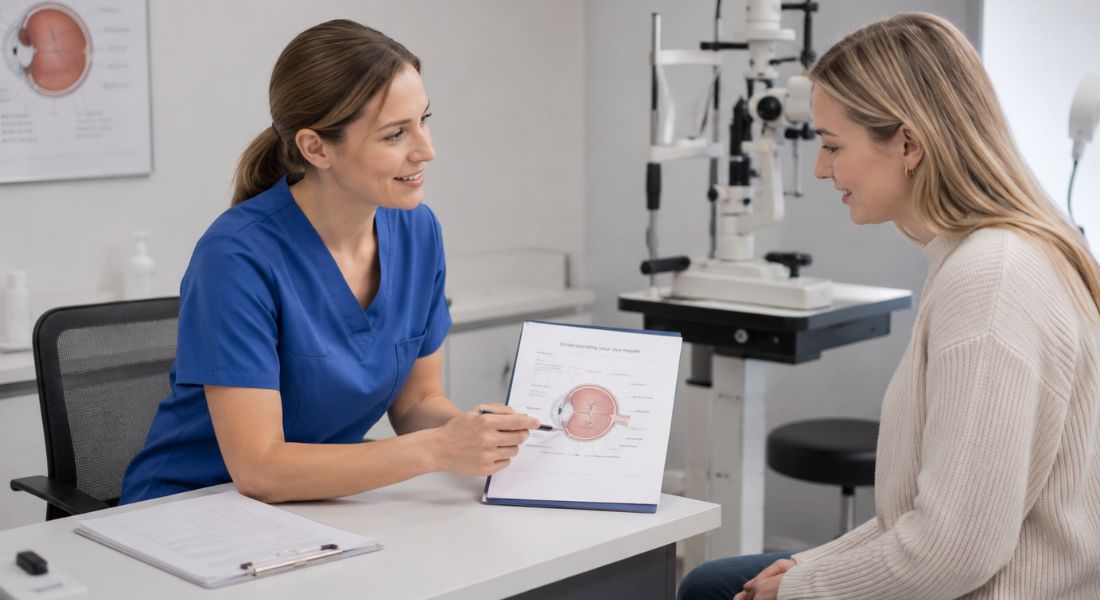
Your consultant should explain which biomarker was measured, how the result is reported and what its limitations are. They should also clarify whether it supports the suspected diagnosis, changes the treatment plan or simply provides additional information that should be monitored with other clinical findings.
Follow-up may include treatment, repeat ocular-surface examination or, in selected cases, repeat biomarker testing. Repeating a test is most useful when the same assay and collection method are used and when the result is likely to influence a genuine clinical decision.
Key Takeaways
- Tear biomarker testing uses a tiny tear sample and does not require an injection or blood test.
- Eye Clinic London currently tests selected markers including MMP-9, total tear IgE and LTA.
- MMP-9 may support the presence of ocular-surface inflammation but does not identify one exact cause.
- Tear IgE may support allergic involvement but does not reveal the specific allergen.
- LTA is an emerging adjunctive biomarker and should not be interpreted as direct proof of mucin deficiency or a particular immune pathway.
- No single biomarker can diagnose dry eye disease or determine treatment by itself.
- Do not stop prescribed drops or alter contact-lens use unless the clinic provides specific instructions.
- Go to A&E or call 999 for sudden sight loss, sudden severe eye pain, a penetrating or high-speed eye injury, or a red eye with changes in sight or pain when looking at light.
FAQs:
- Is tear biomarker testing suitable for everyone with dry eye symptoms?
Not always. Tear biomarker testing is most helpful when additional information is needed to understand the cause of persistent eye symptoms or when standard examinations do not fully explain the condition. An eye specialist will decide whether the test is appropriate based on symptoms, examination findings and medical history. - Can tear biomarker testing diagnose dry eye disease on its own?
No. Tear biomarker testing is designed to support the diagnostic process rather than replace it. Results are interpreted alongside symptoms, clinical examination, tear-film assessment and other investigations to build a complete picture of ocular surface health. - Are there any risks or side effects after tear biomarker testing?
Tear collection is generally well tolerated, although brief watering, tickling or mild irritation may occur. Tell the clinician immediately if the collection causes sharp pain. Contact the clinic or seek appropriate eye-care advice if significant pain, marked redness or a change in vision continues after the appointment. - Can contact lenses affect tear biomarker test results?
Contact lenses can temporarily influence the tear film and ocular surface. The required period without lenses depends on the test and the type of lens you wear, so follow the clinic’s specific instructions rather than choosing a removal period yourself. - Will eye drops interfere with tear biomarker testing?
Some eye drops may influence the tear film or the substances being measured. Tell your clinician about every prescription and non-prescription eye drop you use, including when you last applied it, and follow the preparation instructions provided for the specific assay. - How often should tear biomarker testing be repeated?
There is no universal schedule for repeating tear biomarker tests. Your clinician may recommend another test when it is likely to provide useful information about a treatment response or change in your condition. Symptoms and examination findings should remain part of the follow-up assessment. - Can tear biomarker testing detect eye infections?
Tear biomarker testing is not primarily designed to diagnose eye infections. While some biomarkers may increase during inflammation, additional examination and, where necessary, other laboratory tests are required to identify infectious causes accurately. - Can low tear volume or excessive watering affect the result?
Yes. A very small tear volume may make collection take longer, while reflex watering can dilute or alter the sample. The clinician will use a standard collection technique and decide whether the sample is suitable for the particular assay. - Can tear biomarker testing help monitor treatment effectiveness?
Repeat testing may provide supporting information in selected cases, particularly when the same biomarker, device and collection method are used. However, the clinical significance of a change is not equally established for every biomarker, so the result must be considered with symptoms, vision and examination findings. - Will health insurance cover tear biomarker testing?
Coverage varies between insurers and policies. Ask the clinic whether the biomarker test is charged separately from the consultation and contact your insurer before the appointment to confirm whether testing requires authorisation or is included within your outpatient cover.
Final Thoughts: Understanding the Bigger Picture Behind Your Tear Biomarker Results
Tear biomarker testing can add useful molecular information to a dry-eye and ocular-surface assessment, but the meaning of the result depends on which marker is measured and the strength of the supporting evidence. MMP-9, tear IgE and LTA provide different types of information, and none should replace your symptoms, eye examination or established diagnostic tests.
If your symptoms remain unexplained or have not improved sufficiently with previous treatment, you can arrange a consultation involving tear biomarkers in London. Your consultant can determine whether testing is likely to answer a specific clinical question and explain how much weight should be given to the result.
References:
- Gijs, M. et al. (2025) A comprehensive scoping review of methodological approaches and clinical applications of tear fluid biomarkers. Progress in Retinal and Eye Research, 106, article 101338. https://www.sciencedirect.com/science/article/pii/S1350946225000114
- Frenia, K. et al. (2025) Precision in tear fluid biomarker discovery: quantitative proteomic profiling of small-volume, individual samples using capillary tube collection. Biomedicines, 13(2), article 386. https://www.mdpi.com/2227-9059/13/2/386
- Lanza, N.L., Valenzuela, F., Perez, V.L. and Galor, A. (2016) The matrix metalloproteinase 9 point-of-care test in dry eye. The Ocular Surface, 14(2), pp. 189–195. https://pmc.ncbi.nlm.nih.gov/articles/PMC5580996/
- Shang, X. et al. (2025) Tear IgE point-of-care testing for differentiating type I and type IV allergic conjunctivitis. Frontiers in Medicine, 12, article 1577656. https://pubmed.ncbi.nlm.nih.gov/40491761/
- de la Fuente, M. et al. (2022) Elevation of tear MMP-9 concentration as a biomarker of inflammation in ocular pathology by antibody microarray immunodetection assays. International Journal of Molecular Sciences, 23(10), article 5639. https://www.mdpi.com/1422-0067/23/10/5639