

Can Laser Eye Surgery Fix Reading Glasses? (Presbyopia Explained)

If you have recently started reaching for reading glasses, you may be wondering whether laser eye surgery can eliminate that need. Many patients hope a single procedure will restore both distance and near clarity permanently. However, presbyopia behaves differently from short-sightedness or long-sightedness.
Laser eye surgery reshapes the cornea to correct refractive error. Presbyopia, on the other hand, is caused by ageing changes inside the natural lens. This distinction is crucial when considering your options.
In this guide, we explain what presbyopia is, what laser surgery can realistically correct, and when alternative procedures may be more suitable. Clear expectations protect you from disappointment. Understanding the science helps you make an informed decision.
What Is Presbyopia?
Presbyopia is a natural, age-related change that affects your near vision. It usually begins in your early forties, although you might notice subtle changes slightly earlier. You may find that reading small print or looking at your phone becomes more difficult than it used to be.
This happens because your natural lens gradually loses its flexibility. Over time, it can’t change shape as easily to focus on close objects, which reduces your ability to accommodate. This process is completely normal and part of ageing.
Presbyopia isn’t caused by the shape of your cornea. That’s why it can’t be fully corrected by standard laser eye surgery, which reshapes the cornea rather than the lens. Understanding this difference is essential when considering your treatment options.
How Laser Eye Surgery Works
Laser eye surgery works by reshaping your cornea to correct refractive errors such as short-sightedness, long-sightedness, or astigmatism. By adjusting the curvature of the cornea, it improves how light focuses on your retina. This enhances the clarity of your distance vision.
However, the laser does not change your natural lens inside the eye. It can’t restore the flexibility that gradually declines with age. Because of this, presbyopia continues even after successful corneal correction.
This is why you may still need reading glasses for close-up tasks. Laser treatment improves the surface optics of your eye, but it doesn’t stop internal ageing changes. Managing your expectations beforehand is essential for long-term satisfaction.
Why You Suddenly Need Reading Glasses
In your twenties and thirties, your natural lens adjusts focus almost effortlessly. You can switch between distance and near tasks without even thinking about it. Around the age of 40, this flexibility begins to decline, making close-up work more challenging.
You might start noticing that reading menus, messages, or small labels feels harder than it used to. Holding your phone further away to see clearly becomes surprisingly common. These are classic early signs of presbyopia.
The change usually happens gradually, but it’s a normal and inevitable part of ageing. Nearly everyone experiences it at some point. Laser eye surgery cannot stop this internal ageing process, which is why reading glasses often become necessary.
Can Standard Laser Surgery Remove Reading Glasses?
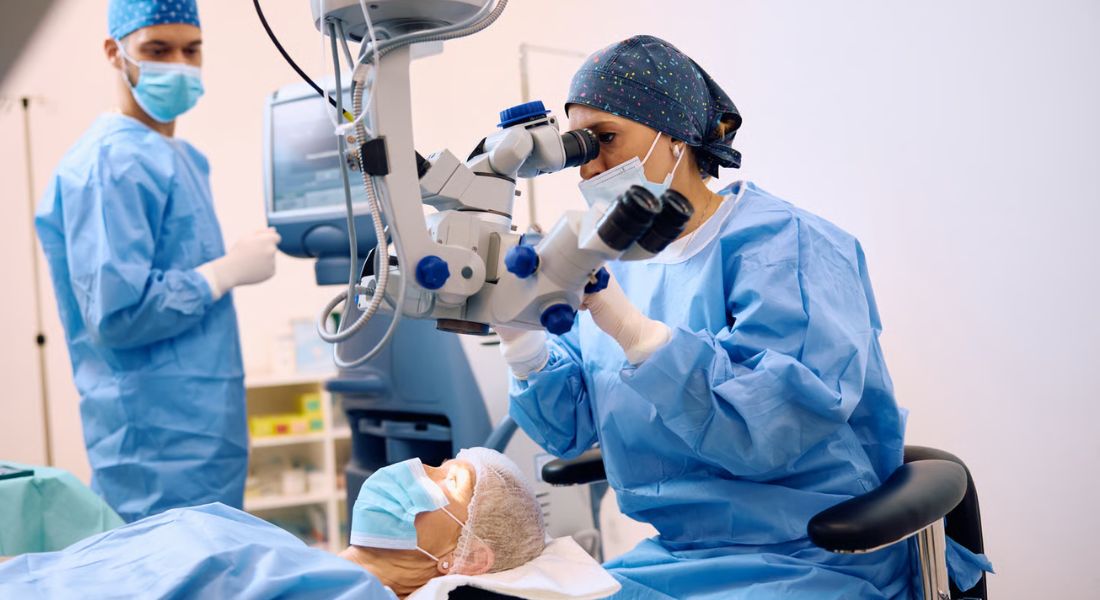
You might be hoping that standard laser eye surgery will remove your need for both distance and reading glasses. While these procedures are excellent at correcting distance refractive errors, they don’t directly treat presbyopia. Understanding this difference helps you set realistic expectations before moving forward.
- Distance vision can improve significantly: If you’re short-sighted, laser surgery can often eliminate your need for distance glasses. Everyday activities like driving or watching television may become much clearer without correction.
- Reading glasses may still be needed: Correcting your distance vision can sometimes make presbyopia more noticeable. Some patients are surprised to find that once distance blur is removed, near tasks require reading support.
- Presbyopia continues naturally: Laser surgery reshapes your cornea but does not restore the youthful flexibility of your natural lens. Age-related focusing decline will continue regardless of treatment.
Standard laser surgery can dramatically improve your distance clarity, but it doesn’t stop the ageing process inside your eye. Being aware of this prevents confusion or disappointment later. Clear counselling before surgery ensures you understand what the procedure can and cannot achieve. With realistic expectations, you can appreciate the benefits while planning sensibly for future near vision needs.
What Is Monovision?
Monovision is one approach that can help reduce your dependence on reading glasses. With this technique, one of your eyes is corrected for distance vision while the other is adjusted for near tasks. Your brain then learns to adapt to the difference between the two.
Not everyone finds monovision comfortable straight away. You may notice that your depth perception feels slightly different at first, especially when driving or judging distances. That’s why trial contact lenses are often used before surgery to see how well you adapt.
Adjustment varies from person to person. Some people adapt quickly and enjoy the flexibility it provides, while others prefer having both eyes focused equally for distance. A personalised assessment helps you decide whether this option suits your lifestyle and visual needs.
Advantages of Monovision
Monovision can help reduce your reliance on reading glasses, particularly if your presbyopia is mild. For some people, this brings noticeable daily convenience and greater flexibility. Simple tasks like checking your phone or reading a receipt may feel easier without constantly reaching for glasses.
With this approach, one eye remains strong for distance vision while the other supports near tasks. This balance can provide a sense of functional independence in everyday life. Many patients appreciate being less dependent on spectacles for routine activities.
However, monovision does involve a degree of compromise. Your vision won’t be equally sharp in both eyes at the same distance, which can feel different at first. Having a thorough discussion with your surgeon ensures you understand the trade-offs before making a decision.
Limitations of Monovision
You may notice that night driving feels slightly different with monovision. Judging fine distances or depth can take some adjustment, particularly in low-light conditions. If your profession relies heavily on precise depth perception, this could influence whether monovision is right for you.
Not everyone adapts easily to having each eye set for a different focus. Some people experience headaches, mild visual imbalance, or a sense that something doesn’t feel quite right. Although reversal is possible, it isn’t ideal, which is why careful consideration is important beforehand.
Thorough testing before surgery is essential. Trial contact lenses can simulate the monovision effect, giving you a realistic idea of how it will feel in daily life. Making an informed choice significantly improves your chances of long-term satisfaction.
Blended Vision Techniques
Some advanced laser platforms offer customised blended vision as an alternative to traditional monovision. This approach softens the difference between your two eyes rather than creating a strong split between distance and near focus. The goal is to improve comfort while still reducing your reliance on reading glasses.
Blended vision aims to preserve better binocular vision by making more subtle adjustments. Because the contrast between your eyes is less dramatic, adaptation can feel easier for many people. However, results still vary depending on how your brain responds to the change.
It’s important to remember that these techniques don’t restore the flexibility of your natural lens. They manage presbyopia in a functional way rather than curing it. Understanding these limitations helps you make a confident and realistic decision.
What Happens as Presbyopia Progresses?
As you move through your forties and into your fifties, presbyopia will continue to progress. Even if you choose monovision or blended vision, you may eventually need additional reading support. Understanding this natural ageing process helps you plan with confidence rather than frustration.
- Near vision gradually declines: Over time, close-up tasks like reading small print or using your phone may become more challenging. This progression is normal and affects everyone to some degree.
- Laser surgery cannot stop ageing: While surgery can correct your current refractive error, it cannot prevent ongoing changes in your natural lens. Planning your treatment must take this long-term shift into account.
- Realistic expectations protect satisfaction: Accepting that your vision will continue to evolve helps you avoid disappointment later. Surgery addresses your present needs, not the biological ageing process.
By recognising that presbyopia is progressive, you can make decisions with a long-term perspective. Gradual changes are part of natural ageing, not a failure of surgery. Clear counselling ensures you understand what to expect over time. With realistic expectations, you can appreciate the benefits of treatment while preparing for future visual adjustments.
Refractive Lens Exchange as an Alternative
If you’re over 45 and frustrated by both distance blur and reading glasses, you may be offered refractive lens exchange (RLE) as an alternative to laser surgery. This procedure replaces your natural lens with an artificial one, directly addressing presbyopia as well as refractive error. Understanding how it differs from laser treatment helps you decide whether it suits your long-term goals.
- Designed to address presbyopia directly: Multifocal or extended depth-of-focus lenses can reduce your dependence on reading glasses. Because the natural lens is replaced, the age-related focusing problem is treated at its source.
- More invasive than laser surgery: RLE is an internal eye procedure, so the risk profile differs from corneal laser treatments. Careful discussion about benefits, recovery, and potential risks is essential before proceeding.
- Suitability depends on your eyes and age: Lens clarity, prescription, and overall ocular health all influence whether this approach is appropriate. For some patients over 45, it may provide better long-term value, particularly if early lens changes are present.
Refractive lens exchange can offer a comprehensive solution for the right candidate. However, it requires thoughtful consideration and personalised assessment. Strategic timing plays a crucial role in achieving lasting satisfaction. An individual consultation helps you weigh your options and choose the safest, most suitable path for your vision.
Early Cataracts and Presbyopia
If early cataract changes are already present, lens-based surgery may be a better option for you. Having laser eye surgery first might not be ideal if your natural lens is beginning to lose clarity. Thinking long term helps you avoid needing multiple procedures within a short period.
Cataract surgery can correct both lens opacity and presbyopia at the same time. By replacing the ageing lens, it can provide a more durable and comprehensive solution. The timing of intervention plays a big role in deciding which treatment makes the most sense for you.
Assessing the clarity of your lens is therefore essential during your consultation. A thorough eye examination allows your surgeon to recommend the most suitable approach. Your age and lens health are closely linked, so both need to be considered carefully.
If You Are Short-Sighted
If you’re short-sighted, you may already take off your glasses to read comfortably up close. After laser correction for distance vision, that natural near advantage usually disappears. As a result, you’ll most likely need reading glasses for close tasks.
This can come as a surprise if it hasn’t been clearly explained beforehand. Understanding this trade-off is essential to avoid disappointment. When you know what to expect, you’re far more likely to feel satisfied with your results.
Balancing convenience is key when making your decision. For many people, freedom from distance glasses outweighs the need for reading glasses. Your personal priorities should guide the choice that feels right for you.
If You Are Long-Sighted
If you’re long-sighted, you may notice the effects of presbyopia earlier than others. Near tasks such as reading or using your phone can become difficult sooner. Laser correction can improve your distance clarity and reduce reliance on glasses for far vision.
However, you may still need reading support for close-up work. Presbyopia affects the natural lens inside your eye, so it progresses independently of corneal correction. Clear counselling before surgery helps prevent unrealistic expectations.
Your suitability for treatment depends on your individual eye health and visual goals. A comprehensive assessment will determine the most appropriate option for you. Age alone doesn’t make the decision your overall eye condition does.
Emotional Expectations
It’s completely understandable if you hope surgery will restore the clear, effortless vision you had in your twenties. However, ageing is a natural process, and no technology can fully reverse time. Recognising this early helps you approach treatment with clarity rather than unrealistic hope.
- Understand the limits of treatment: Laser or lens surgery can significantly improve your vision, but it cannot stop natural ageing changes such as presbyopia. Knowing this reduces the risk of disappointment later.
- Set realistic, personal goals: Instead of expecting perfect vision at every distance, focus on what matters most in your daily life. Clear distance vision or reduced reliance on glasses can still be a meaningful improvement.
- Honest consultation builds trust: Open conversations with your surgeon allow you to understand what’s achievable and what isn’t. Transparency ensures you feel confident in your decision.
Visual freedom can still enhance your quality of life in many ways. Accepting that some reading support may remain is often a reasonable compromise. A balanced perspective protects your long-term satisfaction. When your expectations align with reality, you’re far more likely to feel pleased with your results.
Is It Worth Having Surgery If I’ll Still Need Reading Glasses?

For many people, the answer is yes. Being free from distance glasses can make everyday life feel easier and more convenient, especially for driving, socialising, or exercising. Reading glasses are usually only needed for specific close-up tasks rather than all day.
Deciding whether it’s worthwhile comes down to balancing the benefits against the compromises. Thinking about your lifestyle and daily routines helps you understand what matters most. An open discussion with your surgeon can clarify whether the advantages outweigh the limitations for you.
Surgery should always match your expectations and long-term goals. When you clearly understand what the procedure can and cannot achieve, you’re far more likely to feel satisfied. Making an informed choice is the key to feeling confident in your decision.
Age and Timing
As you approach 40, your eyes naturally begin to lose some of their near focusing ability. Presbyopia typically starts around this age, which means laser surgery performed before or during this transition may not remove your need for reading glasses long term. Understanding how timing affects outcomes helps you plan more strategically.
- Timing influences long-term results: If you have surgery in your late thirties or early forties, you may still develop presbyopia shortly afterwards. This doesn’t mean the surgery failed it reflects natural ageing.
- Different options suit different ages: In your early forties, approaches like monovision may offer partial independence from reading glasses. As you move further into your forties and beyond, lens-based procedures may sometimes provide a more comprehensive solution.
- Age changes the conversation, not eligibility: Being over 40 does not disqualify you from surgery. It simply means your surgeon will consider future visual needs more carefully when planning treatment.
Strategic timing plays a key role in long-term satisfaction. By understanding how age affects vision, you can make choices that align with both your current and future needs. Open discussion ensures your expectations remain realistic. When timing and planning are handled thoughtfully, your results are far more likely to meet your goals.
Can Future Procedures Be Performed?

Yes, you can still have lens surgery in the future even if you’ve already had laser eye treatment. However, previous corneal reshaping can influence the measurements needed for lens calculations. This means planning becomes slightly more complex, but not impossible.
Experienced surgeons are well used to managing these situations. Advanced diagnostic tools and modern calculation methods help ensure accuracy. Being open about your surgical history allows for clear and precise planning.
You still retain long-term flexibility with your vision options. Choosing laser surgery now doesn’t close the door on future treatments if they’re needed. Honest discussions with your surgeon help you feel confident about both your present and future choices.
Risk Considerations
If you’re considering treatment options for presbyopia, it’s important to understand the associated risks. In most cases, the risk profile mirrors standard laser eye surgery, meaning complications are uncommon when proper screening is carried out. Knowing the differences between approaches helps you make a confident, informed decision.
- Laser-related risks remain low: Dryness, glare, halos, or mild regression can occur, just as with standard laser procedures. However, when you are carefully assessed beforehand, complication rates remain low.
- Monovision requires adaptation: Adjusting to one eye focused for distance and the other for near tasks can take time. Some patients adapt easily, while others may find the compromise less comfortable.
- Lens-based surgery has a different profile: Internal lens replacement carries surgical risks that differ from corneal laser treatment. Your age, lens clarity, and overall eye health determine whether this option is safe and appropriate.
Choosing the right procedure for your individual eyes significantly reduces the likelihood of complications. A comprehensive consultation ensures your suitability is assessed thoroughly. Responsible planning protects both your vision and your long-term satisfaction. With personalised advice, you can move forward feeling informed and reassured.
The Importance of Consultation
A detailed consultation gives you the opportunity to properly explore your options. If you’re considering monovision, trial contact lenses can simulate the effect before you make a permanent decision. This helps predict how comfortable and practical it will feel in your daily life.
There isn’t a single solution that suits everyone. Your lifestyle, career, hobbies, and visual demands all play an important role in choosing the right approach. Collaborative planning between you and your surgeon leads to better, more personalised outcomes.
Experienced specialists provide balanced, honest guidance based on your individual eye health. Transparent communication reduces confusion and unrealistic expectations. When you fully understand your options, you can make a confident and informed decision about your vision.
FAQs:
- Can laser eye surgery completely remove the need for reading glasses?
Laser eye surgery cannot fully eliminate the need for reading glasses because presbyopia is caused by ageing changes in your natural lens. While distance vision can often be corrected successfully, your near focusing ability will continue to decline over time. - Why do I suddenly need reading glasses in my forties?
As you reach your early forties, your natural lens gradually loses flexibility. This makes it harder for you to focus on close objects such as text messages or menus. This change is normal and affects almost everyone. - If I have laser surgery for distance vision, will my near vision get worse?
After distance correction, presbyopia can feel more noticeable, especially if you were previously short-sighted and used to removing your glasses to read. The surgery does not worsen presbyopia, but it can make you more aware of it. - What is monovision and how does it help with reading?
Monovision involves correcting one of your eyes for distance and the other for near tasks. Your brain adapts to using each eye for different purposes. This approach can reduce your dependence on reading glasses, although adaptation varies from person to person. - Is monovision suitable for everyone?
Monovision does not suit everyone because it can slightly affect depth perception and night vision. A contact lens trial before surgery helps you understand how it may feel and whether you are comfortable with the visual balance. - Will presbyopia continue to progress after laser surgery?
Yes, presbyopia will continue to progress because it is a natural ageing process. Laser surgery does not stop or slow this progression, so you may find that near tasks gradually require more support over time. - Can refractive lens exchange remove the need for reading glasses?
Refractive lens exchange replaces your natural lens with an artificial one that may provide both distance and near focus. This option can reduce reading glasses dependence more effectively than corneal laser procedures, but it is a different type of surgery with its own considerations. - If I am short-sighted, should I avoid laser surgery to keep my near vision?
Some short-sighted patients prefer to keep their natural ability to read without glasses. However, if distance clarity is important to you, laser surgery may still be worthwhile. The decision depends on your lifestyle priorities and long-term goals. - Is it too late to have laser eye surgery once I need reading glasses?
It is not too late. Many patients in their forties and fifties have laser surgery successfully. The key is understanding that reading glasses may still be required and choosing a strategy that fits your expectations. - How do I know which option is right for me?
The right option depends on your age, prescription, lens clarity, and visual priorities. A detailed consultation allows simulation of monovision, assessment of lens health, and discussion of long-term planning so you can make a confident, informed decision.
Final Thoughts: Can Laser Surgery Really Replace Reading Glasses?
Deciding whether laser eye surgery can fix your need for reading glasses comes down to understanding what the procedure can and cannot do. While laser treatment can significantly improve your distance vision, presbyopia is a natural ageing process within your lens that continues over time. For some patients, strategies such as monovision provide greater convenience. For others, lens-based procedures may offer a more comprehensive solution.
The key is aligning treatment with your expectations and long-term visual goals. Clear counselling, realistic planning, and personalised assessment protect you from disappointment and help you choose the option that genuinely suits your lifestyle.
If you’d like to find out whether laser surgery in London is suitable for you, feel free to contact us at Eye Clinic London to arrange a consultation. A detailed evaluation will help you understand your options and decide on the best approach for both your current needs and future vision.
References:
- Wierzbowska, J., Pniakowska, Z. & Roszkowska, A.M., 2025. Contrast sensitivity and stereopsis outcomes following LASIK presbyopia correction based on the corneal aberration modulation or corneal multifocality induction methods: a systematic review. Journal of Clinical Medicine, 14(3), 871. https://www.mdpi.com/2077-0383/14/3/871
- Pajic, B., Pajic-Eggspuehler, B., Mueller, J., Cvejic, Z. & Studer, H., 2017. A novel laser refractive surgical treatment for presbyopia: optics-based customization for improved clinical outcome. Sensors, 17(6), 1367. https://www.mdpi.com/1424-8220/17/6/1367
- Fernández, J., Molina-Martín, A., Rocha-de-Lossada, C., Rodríguez-Vallejo, M. & Piñero, D.P., 2023. Clinical outcomes of presbyopia correction with the latest techniques of presbyLASIK: a systematic review. Eye, 37(4), pp.587–596. https://pubmed.ncbi.nlm.nih.gov/35864161/
- Glasser, A. & Campbell, M.C.W., 1998. Presbyopia and the optical changes in the human crystalline lens with age. Vision Research, 38(2), pp.209–229. https://www.sciencedirect.com/science/article/pii/S0042698997001028
- Jain, S., Ou, R. & Azar, D.T., 2001. Monovision outcomes in presbyopic individuals after refractive surgery. Ophthalmology, 108(8), pp.1430–1433. https://pubmed.ncbi.nlm.nih.gov/11470695/