


What Should You Do If Your Child Has a Sudden Eye Problem?
When your child suddenly complains about their eye, it can be difficult to know how worried you should be. One child may say their eye “feels funny” when it is only mild irritation, while another may say very little even when something more serious is happening. Children do not always have the words to explain pain, blurred vision, light sensitivity, or the feeling that something is stuck in the eye.
As a parent, this can leave you guessing. You may notice your child rubbing one eye, blinking more than usual, avoiding light, crying, refusing to open the eye, or saying they cannot see properly. You may also see redness, swelling, discharge, watering, or a visible injury.
Some sudden eye problems in children are mild and settle with simple care. Others need same-day assessment, especially if there is pain, injury, vision change, chemical exposure, severe swelling, or light sensitivity. The NHS advises urgent help for red eye when there are changes in sight, pain with light, injury, a chemical cause, very dark redness, or unequal pupils.
The challenge is that children may not explain symptoms clearly. A young child may not say, “My vision is blurred.” They may say, “I can’t see,” “It’s too bright,” “My eye hurts,” or simply keep one eye closed. Some children may become unusually quiet, clingy, upset, or resistant when you try to look at the eye.
This article will help you understand what to do if your child develops a sudden eye problem, which warning signs need urgent paediatric eye assessment, and when you should avoid waiting to see if things improve.
Why Children’s Eye Symptoms Can Be Hard to Judge
Children are not always reliable reporters of eye symptoms, and that is not their fault. They may not know what normal vision should feel like, especially if only one eye is affected. They may also be frightened, tired, or unable to describe the difference between itching, burning, pressure, sharp pain, or blurred sight.
A child with a serious eye problem may simply rub the eye repeatedly. Another child may refuse to open it. A baby or toddler may cry, turn away from light, become unsettled, or keep their eyelids tightly closed.
Older children may be able to explain more, but even then, they may underplay symptoms because they want to avoid going to the doctor, missing school, or stopping an activity. Some may say, “It’s fine,” even when the eye is clearly red or swollen.
This is why you should look at behaviour as well as words. If your child is acting differently, avoiding light, struggling to see, protecting one eye, or becoming distressed when the eye is touched, you should take that seriously.
Sudden Vision Changes Should Always Be Taken Seriously

A sudden change in your child’s vision is one of the clearest reasons to seek urgent eye care. Your child may say that things look blurry, cloudy, doubled, dark, wavy, or missing. They may cover one eye and say they can see better with the other. They may bump into things, struggle to read, hold objects very close, or complain that the board at school suddenly looks unclear.
You can gently ask your child to cover one eye at a time and tell you whether one side seems different. Do not force this if they are in pain or very upset, but it can sometimes help you understand whether the problem is affecting vision. Vision changes after an eye injury are especially important. The NHS advises urgent care if there are any changes to sight after an eye injury.
Do not wait overnight if your child suddenly cannot see clearly, especially if there is pain, redness, swelling, trauma, or light sensitivity. Children’s eyes need careful assessment because some serious conditions are much easier to treat when they are seen early.
Eye Injuries Need Careful Attention
Children can injure their eyes in many ordinary ways. A toy may hit the eye. A fingernail may scratch the surface. A ball may strike the face. Sand, grit, wood, glass, metal, or plastic may get into the eye. A child may fall and hit the eye area on furniture or the floor. Sometimes the injury looks obvious. Other times, the outside of the eye looks almost normal, but the child is in pain, watering, blinking, or refusing to open the eye.
You should seek urgent help if something sharp may have touched or pierced the eye, if something hit the eye at speed, if there is blood in or around the eye, if the eye shape looks abnormal, or if your child’s vision has changed. Do not press on the eye. Do not try to remove an embedded object. Do not allow your child to rub the eye, as this can make a scratch or foreign body injury worse.
If you suspect a serious injury, keep your child calm and seek urgent medical care. The Royal Children’s Hospital clinical guideline advises urgent ophthalmology referral when a penetrating eye injury is identified or suspected.
Chemical Splashes Are Always Urgent
A chemical splash in the eye should always be treated as an emergency. This may involve cleaning products, bleach, oven cleaner, laundry capsules, hand sanitiser, perfume, garden chemicals, paint, glue, school science materials, or other household substances. Even if the product seems mild, you should take it seriously.
The first step is to rinse the eye immediately with clean running water. Do not wait to see whether it settles. Do not spend time searching online first. Irrigation should begin straight away. The NHS advises going to A&E or calling 999 if a strong chemical such as oven cleaner or bleach is in the eye, and says to keep rinsing the eye with water while waiting for medical help.
Try to keep the eyelids open while rinsing if possible, but do not fight with your child to the point where more harm is caused. Keep them as calm as you can. If you have the container, take it with you, because knowing the chemical can help clinicians choose the right treatment. Chemical eye injuries can damage the surface and front part of the eye, and NHS patient information describes chemical eye injuries as emergencies needing immediate intervention.
A Painful Red Eye Is Not Always Simple Conjunctivitis
Many parents naturally think of conjunctivitis when a child has a red eye. Conjunctivitis is common, and it can cause redness, stickiness, watering, itching, and discharge. However, not every red eye is conjunctivitis.
A red eye with severe pain, light sensitivity, vision change, injury, contact lens use, or swelling around the eye needs more urgent assessment. The NHS red eye guidance lists red eye with sight changes, light pain, injury, chemical exposure, very dark redness, or unequal pupils as situations needing immediate action. These matters because children may not clearly describe the difference between itching and pain.
They may simply say, “My eye hurts,” or “I don’t like the light.” If the eye is red and your child is distressed, keeping it closed, or struggling to see, it should not be treated casually as a minor infection. Conjunctivitis can still need medical advice in children, especially in babies, if symptoms are severe, or if there is swelling, pain, or visual concern. But the bigger point is this: redness alone does not tell you the diagnosis.
Light Sensitivity Can Be a Warning Sign
If your child suddenly finds light painful, you should pay attention. Mild discomfort in bright sunlight can happen for many reasons. But if your child is hiding from light, covering the eye, closing curtains, refusing to look up, or crying when exposed to normal indoor light, that is more concerning.
Light sensitivity can suggest that the front part of the eye is inflamed or that the cornea is irritated or damaged. It may happen with scratches, infections, inflammation, or other urgent eye problems.
The NHS includes pain when looking at light as a warning sign in red eye. If light sensitivity appears suddenly, especially with redness, pain, watering, injury, or blurred vision, seek urgent eye assessment.
Swelling Around the Eye Can Be More Than a Surface Problem
Children sometimes wake with a puffy eyelid from allergies, rubbing, insect bites, or mild irritation. But sudden swelling around the eye needs careful judgement. You should seek urgent assessment if the swelling is severe, if the eye is so swollen that it cannot be opened, if your child has fever, headache, vomiting, vision change, pain with eye movement, or if the eye appears pushed forward.
Healthier Together NHS guidance for child eye injury highlights urgent concerns including an eye so swollen it cannot be opened, changes in vision, headache, vomiting, and sensitivity to light.
Swelling around the eye can sometimes be linked with infection in the tissues around or behind the eye. This needs prompt medical assessment because it can become serious. If your child has swelling plus looks unwell, has a fever, or complains of pain when moving the eye, do not wait.
Eye Pain With Headache or Vomiting Needs Urgent Help
A child with eye pain, headache, and vomiting should be assessed urgently. This combination can happen for different reasons, and not all are eye-related. However, when it occurs with red eye, unequal pupils, light sensitivity, vision change, or severe discomfort, it needs prompt attention.
The NHS red eye guidance includes severe headache and feeling sick as an immediate action warning sign when associated with red eye. As a parent, you do not need to work out whether the cause is the eye, migraine, infection, or something else. If the symptoms are severe or unusual for your child, seek urgent medical advice.
Something Stuck in the Eye
Children often get small particles in their eyes, especially after playing outdoors, at the beach, in dusty spaces, or during craft activities. If the object is loose, gentle rinsing with clean water may help. Encourage your child not to rub the eye. Rubbing can drag the particle across the cornea and cause a scratch.
If the sensation does not settle, if your child keeps blinking or crying, if there is pain, redness, watering, or light sensitivity, the eye should be checked. A tiny foreign body can be difficult to see without proper equipment.
If you can see something embedded in the eye, do not try to remove it yourself. Seek urgent care. MedlinePlus notes that debris can become embedded in the cornea and that persistent pain, light sensitivity, and redness are signs that treatment is needed.
Contact Lens Wearers Need Extra Caution
If your child or teenager wears contact lenses, a painful red eye should be taken seriously. Contact lenses can increase the risk of corneal infection, especially if they are worn for too long, slept in, cleaned poorly, exposed to water, or used when the eyes are already irritated.
A contact lens-related infection can progress quickly and may threaten vision if not treated promptly. If your child has pain, redness, light sensitivity, discharge, or blurred vision while wearing contact lenses, they should remove the lenses and seek urgent eye advice.
Do not let them put the lenses back in to “test” whether it feels better. Do not simply change the lens solution and wait several days. If possible, keep the lenses and case, as the eye care team may ask about them.
Babies and Very Young Children Need a Lower Threshold
Eye symptoms in babies and toddlers can be harder to judge because they cannot explain what they feel. You may notice redness, watering, discharge, swelling, cloudiness, a white-looking pupil, unusual eye movements, constant rubbing, sensitivity to light, or the child not tracking objects as usual.
Babies with red, sticky, swollen, or watery eyes should be assessed appropriately, especially if symptoms are severe, persistent, or associated with fever or poor feeding. A baby who seems unusually sensitive to light, has a cloudy cornea, has one enlarged-looking eye, or is not using one eye normally should be seen promptly. With very young children, it is better to ask for advice early rather than wait for a clear explanation from the child.
When a Child Refuses to Open One Eye
If your child refuses to open one eye, do not dismiss it as being dramatic. Children may clamp the eyelids shut when they have a scratch, foreign body, corneal irritation, infection, or painful inflammation. They may also do it after trauma because opening the eye causes discomfort.
You can gently ask them to blink or look towards you, but do not force the eyelids open aggressively. If they are in real pain, forcing the eye open may increase distress and make it harder for clinicians to examine them later. If your child cannot or will not open the eye because of pain, light sensitivity, injury, or swelling, seek urgent assessment.
Squinting, Tilting the Head, or Covering One Eye
Not every eye emergency appears obvious or dramatic at first. Sometimes the earliest signs are subtle changes in how a child uses their eyes during everyday activities. Parents may notice their child squinting, tilting their head, or covering one eye while reading, watching television, or focusing on distant objects. These behaviours can sometimes indicate a vision problem or difficulty with eye alignment that needs prompt assessment.
- Closing or Covering One Eye: A child may close or cover one eye to reduce double vision or make focusing easier. This behaviour should be taken seriously, especially if it appears suddenly or becomes frequent during visual tasks.
- Head Tilting or Unusual Posture: Tilting the head may be a way for the child to compensate for eye muscle imbalance or visual discomfort. Persistent head turning or tilting can sometimes suggest problems with how the eyes are working together.
- Sudden Double Vision or Eye Misalignment: New double vision or a sudden change in eye position should always be assessed promptly. These symptoms may indicate an underlying neurological or eye muscle problem that requires urgent medical attention.
- Associated Symptoms That Increase Concern: Urgent assessment is particularly important if symptoms occur alongside headache, vomiting, dizziness, weakness, recent injury, or general illness. These additional signs may suggest a more serious underlying condition rather than a simple vision issue.
Changes in how a child uses their eyes should never be ignored, even if the symptoms seem mild at first. Squinting, covering one eye, or sudden head tilting can sometimes be early warning signs of a more significant problem. If these changes appear suddenly or continue over time, prompt assessment is important rather than waiting weeks for a routine appointment. Early evaluation can help identify the cause quickly and support better treatment outcomes for your child’s vision and overall health.
Redness With Discharge: When to Worry
Sticky discharge from the eye can happen with conjunctivitis, which is especially common in children. The eye may appear pink or red, and the eyelashes may stick together, particularly after sleeping. In many mild cases, symptoms improve with basic care and are not considered an emergency. However, it is still important to monitor the eye carefully and watch for any signs that symptoms are becoming worse.
Discharge becomes more concerning when it is thick, heavy, persistent, or associated with other symptoms such as pain, swelling, fever, light sensitivity, or reduced vision. These symptoms may suggest a more serious infection or inflammation affecting the eye. If the eye becomes increasingly red, painful, or difficult to open, medical assessment should not be delayed. Changes in vision or severe discomfort should always be taken seriously.
A child with only mild stickiness and no pain may not require urgent care, but professional advice is still important if symptoms are severe, the child is very young, or the condition is worsening rather than improving. You should seek urgent medical attention if the eyelids become very swollen, the eye cannot open properly, or the child seems generally unwell. Early assessment can help identify whether treatment is needed and reduce the risk of complications.
Eye Symptoms After a Fall or Head Injury
Eye symptoms after a fall, sports injury, or blow to the head should always be taken seriously. While some injuries may cause only mild bruising or temporary discomfort, others can involve deeper damage to the eye or surrounding structures. It is important to look beyond simple redness and pay attention to changes in vision, pain, or behaviour. Prompt assessment can help identify serious injuries early and reduce the risk of complications.
- Vision Changes or Double Vision: Blurred vision, difficulty focusing, or seeing double after an injury should never be ignored. These symptoms may suggest damage to the eye, eye muscles, or surrounding nerves that requires urgent medical evaluation.
- Severe Pain, Swelling, or Bleeding: Pain inside the eye, significant swelling, or visible bleeding can indicate more than a simple bruise. Even if the outside injury looks minor, deeper structures of the eye may still be affected.
- Abnormal Eye Movement: If the eyes do not move together normally or your child struggles to look in certain directions, urgent assessment is needed. Abnormal eye movement can sometimes point to muscle injury, nerve problems, or fractures around the eye socket.
- Head Injury Warning Signs: Vomiting, severe headache, drowsiness, confusion, or unusual sleepiness after an eye injury are important warning signs. These symptoms may indicate concussion or more serious head trauma and should be assessed immediately.
A “black eye” is not always a harmless injury, especially when vision or eye movement is affected. Children may not always explain their symptoms clearly, so careful observation is important after any fall or head injury. If there is pain, vision change, unusual tiredness, or persistent swelling, urgent medical advice should be sought promptly. Early assessment helps rule out serious complications and supports safer recovery for both the eye and the head injury itself.
Sports-Related Eye Injuries
Sports and physical activities can sometimes cause sudden eye injuries, especially from balls, fingers, elbows, rackets, sticks, or protective equipment that moves during play. Children may injure their eyes during football, cricket, tennis, basketball, martial arts, cycling, or even ordinary playground games. Some injuries may appear minor at first, with only mild redness or watering. However, even a small impact can occasionally cause more serious internal damage to the eye.
You should seek urgent medical assessment if your child develops symptoms such as blurred vision, double vision, flashes, floaters, severe pain, light sensitivity, or visible blood inside the eye after a sports injury. It is also important to look for unusual pupil shape, swelling, difficulty opening the eye, or complaints that vision “does not feel right.” These symptoms may suggest deeper injury that requires prompt examination by an eye specialist. Delaying assessment could increase the risk of complications affecting vision.
Even when the injury seems mild, it is usually safer to stop sports activity until the eye has been properly checked. Children may sometimes try to continue playing despite pain or blurred vision, especially during matches or training sessions. However, protecting long-term eye health is far more important than finishing a game. Missing one sports session is always preferable to risking a serious eye injury being overlooked.
What You Can Do Safely at Home While Arranging Help

If your child has a mild eye irritation with no red flags, you may be able to provide simple care while monitoring symptoms. Encourage them not to rub the eye. Wash your hands before touching around the eye. You can gently clean discharge from the eyelids with cooled boiled water and clean cotton wool, using a fresh piece each time.
For a loose particle, gentle rinsing with clean water may help. For chemical exposure, rinse immediately and seek urgent care. If your child wears contact lenses, remove them if there is pain, redness, or irritation.
You can keep your child away from bright light if it is uncomfortable, but do not use an eye patch unless a clinician advises it. In some cases, patching can be unhelpful or unsafe, especially if infection is possible. Do not use old antibiotic drops, steroid drops, or another person’s medication.
How to Ask Your Child About Their Symptoms
If your child is old enough to answer, ask simple questions. Instead of asking, “Is your vision disturbed?”, ask, “Can you see my face clearly?” or “Does one eye see better than the other?”
Instead of asking, “Are you photophobic?”, ask, “Does the light hurt your eye?” Instead of asking, “Is there a foreign body sensation?”, ask, “Does it feel like sand or something stuck in your eye?”
You can also ask when it started, whether anything hit the eye, whether they were playing with chemicals, craft materials, toys, or sports equipment, and whether they rubbed the eye. Stay calm while asking. If your child sees panic on your face, they may become more distressed and less able to cooperate.
What an Urgent Paediatric Eye Assessment May Involve
During an urgent eye assessment, the clinician will usually ask what happened, when symptoms started, whether there was injury or chemical exposure, and whether vision has changed. They may check your child’s vision in an age-appropriate way. For younger children, this may involve pictures, matching, fixation, or observing how they respond to objects.
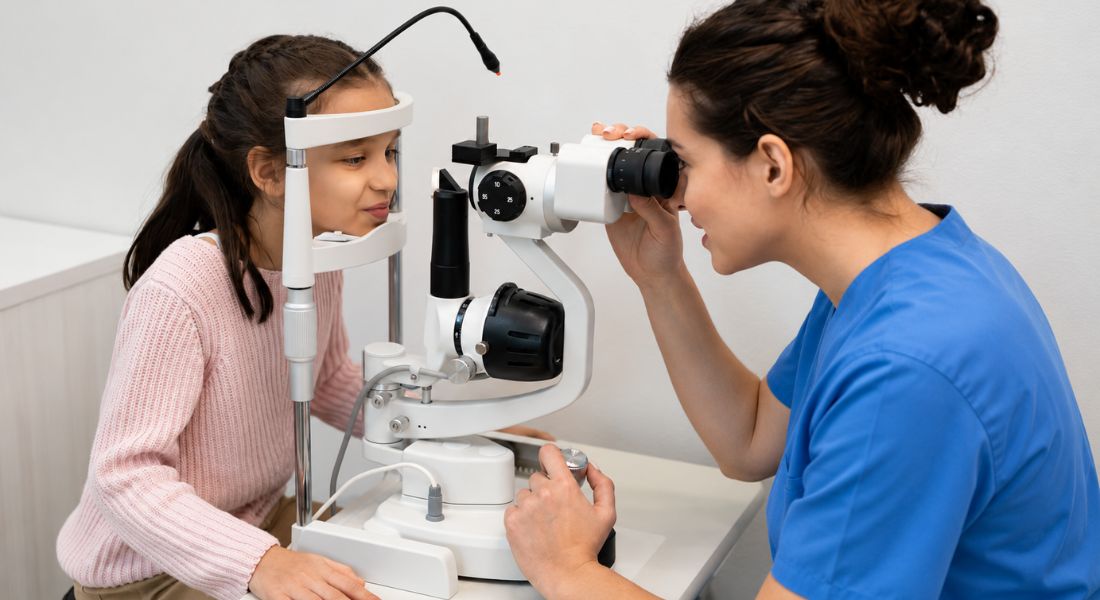
The eye may be examined with a light and microscope. A special dye may be used to check for scratches or damage on the cornea. Eye movements, pupils, eyelids, and the area around the eye may also be checked. If infection, trauma, inflammation, or a deeper problem is suspected, further treatment or referral may be needed. The assessment may feel worrying, but it is designed to find out whether the eye surface and vision are safe.
Why Early Assessment Matters

Children’s eyes are still developing. Good vision during childhood matters for learning, confidence, coordination, reading, play, and long-term visual development. Some eye problems are simple when treated early but more difficult if ignored. A corneal scratch, for example, may heal well with the right care, but if an infection develops or the child keeps rubbing the eye, the situation can become more serious.
Early assessment also gives you peace of mind. If the problem is mild, you can go home knowing what to do. If it is more serious, treatment can start sooner. Parents often worry about “overreacting”. But with children’s eyes, it is usually better to ask for advice than to miss something important.
Common Causes of Sudden Eye Problems in Children
A sudden eye problem in a child can happen for many different reasons. Common causes include conjunctivitis, allergies, dry eye, scratches to the eye surface, foreign bodies, trauma, eyelid infections, chemical irritation, contact lens problems, or inflammation around the eye. Some conditions are mild and improve quickly, while others may require urgent medical attention. Because of this, it is important to pay attention to symptoms rather than assuming the problem is harmless.
Sometimes the cause of the eye problem is obvious, such as a toy, finger, or ball hitting the eye during play. In other situations, there may be no clear explanation for why the eye suddenly becomes red, painful, watery, or swollen. Children may also struggle to explain exactly what they are feeling, especially when they are very young. This is why observing warning signs carefully is often more important than trying to guess the diagnosis yourself.
For example, a mildly itchy eye after pollen exposure may simply be caused by allergy and may not require urgent care. However, a painful red eye associated with light sensitivity, swelling, discharge, or vision changes should be assessed promptly. Symptoms such as severe pain, difficulty opening the eye, or reduced vision should never be ignored. If you are unsure whether the problem is serious, it is always safest to seek professional advice.
Helping Your Child Stay Calm
Eye problems can feel frightening for your child because the eyes are very sensitive and symptoms may feel painful or uncomfortable. Your child may also become anxious if they do not understand what is happening or if they notice adults around them looking worried. Staying calm and reassuring can help reduce fear and make the situation easier for both of you to manage. A calm approach can also help doctors examine your child’s eye more safely and comfortably if medical assessment is needed.
- Use a Calm and Reassuring Voice: Try to speak to your child in a gentle and simple way, explaining that you are there to help them. Reassure them that they do not need to hide their pain or pretend everything feels normal. When you remain calm, your child is more likely to feel safer and less distressed.
- Avoid Forcing the Eye Open Repeatedly: Repeatedly asking your child to open their eye can increase discomfort and anxiety, especially if the eye is painful or sensitive to light. Instead, focus on keeping them comfortable while waiting for professional advice or assessment. Allowing the eye to rest can sometimes help reduce irritation.
- Reduce Light and Prevent Rubbing: Bright lights can make eye discomfort feel worse, particularly if your child has an injury or eye sensitivity. You can help by dimming the lights, sitting your child upright, and gently stopping them from rubbing their eye. Rubbing may increase irritation or worsen an existing injury.
- Bring Helpful Items to Urgent Care: If your child needs urgent medical assessment, it can help to bring their glasses, contact lens details, favourite comfort item, or the chemical container if accidental exposure has occurred. These details may help healthcare professionals assess the problem more quickly and accurately, making the visit less stressful for you and your child.
Helping your child stay calm during an eye problem can make a significant difference to their comfort and overall care experience. Children often respond to the emotions of the adults around them, so a calm and supportive approach is very important. Simple steps such as reducing bright light, offering reassurance, and avoiding unnecessary touching of the eye can help lower distress while you seek advice. Most importantly, getting timely medical care when symptoms are concerning can help protect your child’s eye health and wellbeing.
When It May Be Less Urgent
Not every eye symptom requires emergency care. Mild itching in both eyes during hay fever season, slight redness without pain, minor watering, or brief irritation after tiredness may be less urgent if your child is otherwise well and vision appears normal. These symptoms are often linked with mild allergy, tiredness, or temporary irritation rather than serious eye disease. In many cases, symptoms improve with rest, avoiding irritants, or simple supportive care.
Even when symptoms seem mild, it is still important to monitor the eye carefully over time. You should arrange an assessment if symptoms worsen, become painful, start affecting vision, or fail to improve as expected. Redness that spreads, increasing swelling, discharge, or new light sensitivity may suggest that the problem is becoming more serious. Paying attention to changes can help ensure that urgent conditions are not missed.
You should also be more cautious with very young children or children who already have known eye conditions. Extra care is important for children who wear contact lenses or who have previously had eye surgery, as they may have a higher risk of complications. Young children may also struggle to explain changes in vision or discomfort clearly. When in doubt, seeking professional advice is often the safest option.
FAQs:
- When should I take my child to urgent eye care?
You should seek urgent eye assessment if your child has sudden vision changes, severe eye pain, light sensitivity, significant swelling, chemical exposure, eye injury, abnormal eye movement, or a painful red eye. Symptoms such as vomiting, headache, or drowsiness alongside eye problems also need urgent medical attention. - Is every red eye in a child just conjunctivitis?
No. While conjunctivitis is common in children, not every red eye is a simple infection. A red eye combined with pain, blurred vision, light sensitivity, swelling, or injury may suggest a more serious problem requiring urgent assessment. - What should I do if something gets stuck in my child’s eye?
Encourage your child not to rub the eye. You can try gently rinsing the eye with clean water if the object seems loose. If the discomfort continues, the eye remains red or painful, or you can see something embedded in the eye, seek urgent medical care and do not try to remove it yourself. - Are chemical splashes in the eye always an emergency?
Yes. Any chemical splash in the eye should be treated as an emergency. Start rinsing the eye immediately with clean running water and continue while arranging urgent medical help, especially if the substance involves bleach, oven cleaner, or other strong chemicals. - Why is light sensitivity in children concerning?
Severe or sudden light sensitivity can suggest irritation or inflammation affecting the front surface of the eye. If your child avoids light, keeps the eye closed, or complains that normal lighting hurts, urgent assessment is recommended. - What eye symptoms after a fall or sports injury are serious?
Blurred vision, double vision, severe pain, swelling, bleeding, abnormal eye movement, vomiting, headache, or difficulty opening the eye after an injury should always be assessed urgently. Even a “black eye” can sometimes hide deeper injury. - Should I worry if my child refuses to open one eye?
Yes. Children may keep one eye closed because of pain, a scratch, irritation, infection, or injury. If your child refuses to open the eye due to discomfort, swelling, or light sensitivity, professional assessment is important. - Why are contact lens-related eye problems more urgent?
Contact lenses can increase the risk of serious corneal infection. If your child wears contact lenses and develops redness, pain, discharge, blurred vision, or light sensitivity, they should remove the lenses immediately and seek urgent eye advice. - What should I avoid doing if my child has an eye problem?
Do not let your child rub the eye, do not force the eyelids open, and do not use old prescription drops or someone else’s medication. Avoid patching the eye unless specifically advised by a clinician. - When may a child’s eye problem be less urgent?
Mild itching, slight redness without pain, minor watering, or irritation linked to allergies or tiredness may be less urgent if your child is otherwise well and vision appears normal. However, symptoms should still be monitored closely, especially if they worsen or fail to improve.
Final Thoughts: Knowing When Your Child’s Eye Problem Needs Urgent Attention
A sudden eye problem in a child can feel alarming, especially because children do not always explain their symptoms clearly. While some eye conditions are mild and improve with simple care, others require urgent medical assessment to protect your child’s vision and eye health. Symptoms such as severe pain, sudden vision changes, light sensitivity, swelling, injury, chemical exposure, or a child refusing to open one eye should never be ignored.
Early assessment is often the safest approach because some serious eye conditions can worsen quickly if treatment is delayed. Paying attention to changes in your child’s behaviour, vision, comfort, and eye appearance can help you recognise when something may be more serious than simple irritation or conjunctivitis. Seeking prompt advice can provide reassurance, reduce the risk of complications, and help your child recover more comfortably. If you’re considering an emergency eye doctor in London and want to know if it’s the right option, you’re welcome to reach out to us at Eye Clinic London to book a consultation.
References:
- Gelston, C. D. and Deitz, G. A. (2020) Eye Emergencies, American Family Physician, 102(9), pp. 539–545. Available at: https://pubmed.ncbi.nlm.nih.gov/33118787/
- Yorston, D. (2018) Emergency management: retinal detachment, Community Eye Health, 31(103), p. 63. Available at: https://pmc.ncbi.nlm.nih.gov/articles/PMC6253314/
- Channa, R., Zafar, S. N., Canner, J. K., Haring, R. S., Schneider, E. B. and Friedman, D. S. (2016) Epidemiology of eye-related emergency department visits, JAMA Ophthalmology, 134(3), pp. 312–319. Available at: https://pubmed.ncbi.nlm.nih.gov/30487683/
- Kang, E. Y. C., Chen, T. H., Garg, S. J., Sun, C. C., Kang, J. H., Wu, W. C. and Lai, C. C. (2021) Association of ocular emergency department visits with retinal diseases and symptoms, International Journal of Environmental Research and Public Health, 18(18), p. 9687. Available at: https://www.mdpi.com/1648-9144/61/7/1163
- Shinar, Z., Chan, L. and Orlinsky, M. (2011) Use of Ocular Ultrasound for the Evaluation of Retinal Detachment, The Journal of Emergency Medicine, 40(1), pp. 53–57. Available at: https://www.sciencedirect.com/science/article/abs/pii/S0736467909004132