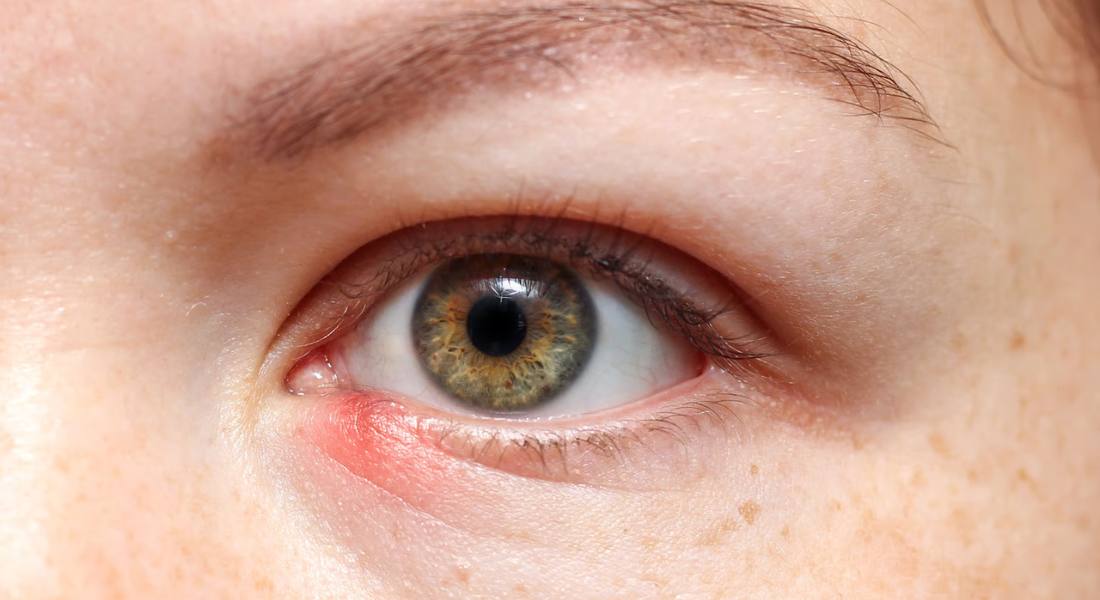
Why Dry Eye Symptoms Can Fluctuate From Day to Day (Explained)

2026-01-29T10:34:11+00:00

Dry eye is often described as a chronic condition, yet many people notice that their symptoms change from one day to the next. You may feel relatively comfortable one day and significantly irritated the next, even without changing your routine. This unpredictability can be confusing and frustrating.  Dry eye symptoms are not static because the tear film is highly sensitive to internal and external influences. Small changes in environment, behaviour, or inflammation can shift tear stability quickly. Understanding this helps explain why symptoms fluctuate rather than

Why Dry Eye Symptoms Can Fluctuate From Day to Day (Explained)2026-01-29T10:34:11+00:00

Evaporative vs Aqueous Deficient Dry Eye (Guide)

2026-01-29T10:40:17+00:00

Dry eye is often spoken about as a single condition, but this oversimplification creates confusion. You may be told you have dry eye without any explanation of what type is involved. We see that this lack of clarity frequently leads to ineffective treatment and persistent symptoms. We now understand that dry eye exists in distinct subtypes, each with a different underlying cause. You are affected in different ways depending on which part of the tear film is disrupted. Identifying the

Evaporative vs Aqueous Deficient Dry Eye (Guide)2026-01-29T10:40:17+00:00

LASIK and Contrast Sensitivity: What the Evidence Says

2026-01-29T10:39:04+00:00

When people think about LASIK, they usually focus on visual sharpness measured on an eye chart. Seeing 20/20 is often considered the ultimate goal. However, visual quality involves more than just reading letters clearly.  Contrast sensitivity describes how well you can distinguish objects from their background, especially in low-light or low-contrast situations. This includes driving at night, seeing faces in dim lighting, or navigating foggy or rainy conditions. For many patients, this aspect of vision matters just as much as clarity. 

LASIK and Contrast Sensitivity: What the Evidence Says2026-01-29T10:39:04+00:00

The Biomechanics of the Cornea in LASIK: What Patients Should Know

2026-01-28T09:26:55+00:00

LASIK reshapes the cornea to correct vision, but the success of the procedure depends on more than laser accuracy alone. If you are considering LASIK, understanding corneal biomechanics helps you see why strength, stability, and healing matter just as much as achieving clear vision. These factors influence both safety and long-term results.  The cornea is not simply a transparent surface. It is a load-bearing structure designed to maintain shape while constantly resisting pressure from inside the eye. LASIK works within these natural limits,

The Biomechanics of the Cornea in LASIK: What Patients Should Know2026-01-28T09:26:55+00:00

LASIK Enhancement: Why and When Touch-Ups Are Needed

2026-01-28T10:03:15+00:00

Some patients are often surprised when a LASIK enhancement is suggested years after their initial surgery. You might feel puzzled if your vision was excellent at first but has slowly changed over time. Understanding why enhancements exist can help ease any unnecessary worry.  It’s important to know that a LASIK enhancement doesn’t mean your original surgery failed. Eyes heal, age, and respond to treatment in different ways, so changes over time are completely natural. Even though modern laser vision correction is highly precise, your biology still

LASIK Enhancement: Why and When Touch-Ups Are Needed2026-01-28T10:03:15+00:00

Understanding Higher-Order Aberrations After LASIK (Clinical Guide)

2026-01-28T09:39:23+00:00

LASIK surgery is designed to correct refractive errors such as short-sightedness, long-sightedness, and astigmatism, helping you see clearly without relying on glasses or contact lenses. Most people achieve excellent results after treatment. However, good vision is not just about reading letters on an eye chart.  After LASIK, you may notice subtle changes in how your vision feels, particularly in low-light conditions. This can include glare, halos, or starbursts around lights, as well as reduced contrast at night. These effects are

Understanding Higher-Order Aberrations After LASIK (Clinical Guide)2026-01-28T09:39:23+00:00

How Often Should Glaucoma Be Monitored? Tests, Scans, and Check-Ups Explained

2026-01-27T16:46:11+00:00

Glaucoma is a long-term condition that often changes slowly and without clear symptoms. You may feel that once treatment has begun, the condition is fully under control. We understand why this assumption feels reassuring. In reality, ongoing observation is needed to keep vision protected. We rely on monitoring because glaucoma progression is not always predictable. Damage can continue quietly even when eye pressure appears stable. Regular review allows subtle changes to be identified early. This prevents unseen loss from accumulating

How Often Should Glaucoma Be Monitored? Tests, Scans, and Check-Ups Explained2026-01-27T16:46:11+00:00

Why Glaucoma Often Has No Symptoms Until It’s Advanced

2026-01-27T17:06:11+00:00

Glaucoma is often called the “silent thief of sight,” and this description is accurate. Many people with glaucoma feel their vision is normal for years. By the time symptoms appear, damage may already be significant. This lack of early symptoms causes understandable confusion. You may wonder how a serious eye condition can progress unnoticed. The answer lies in how glaucoma affects the eye and brain. In this article, we explain why glaucoma rarely causes early warning signs. We also explore

Why Glaucoma Often Has No Symptoms Until It’s Advanced2026-01-27T17:06:11+00:00

What Happens If Glaucoma Is Diagnosed Late?

2026-01-27T10:30:55+00:00

Glaucoma is often described as a silent condition because it can progress without obvious symptoms in its early stages. You may feel that your vision is normal and assume there is no reason for concern. We know this sense of reassurance is common. This silent behaviour explains why glaucoma is frequently diagnosed later than ideal. When diagnosis is delayed, optic nerve damage may already be significant. We recognise that any vision loss that has occurred cannot be reversed. Timing therefore

What Happens If Glaucoma Is Diagnosed Late?2026-01-27T10:30:55+00:00

Can You Still Drive With Glaucoma in the UK? DVLA Rules Explained

2026-01-26T09:45:56+00:00

If you have glaucoma, it is very common to worry about whether you can still drive legally. Driving represents independence, work, and daily freedom, so uncertainty can feel stressful. Understanding the DVLA rules clearly can ease that anxiety.  Glaucoma affects peripheral vision, which is essential for safe driving. However, having glaucoma does not automatically mean you must stop driving. Eligibility depends on specific vision standards rather than diagnosis alone.  In this article, we explain DVLA requirements, when glaucoma must be reported, how visual field

Can You Still Drive With Glaucoma in the UK? DVLA Rules Explained2026-01-26T09:45:56+00:00