


How Artificial Intelligence Is Shaping the Future of RLE Surgery

Artificial intelligence (AI) is rapidly transforming modern healthcare, and ophthalmology is no exception. You would have heard at international conferences that AI is now one of the most frequently discussed topics in refractive surgery and lens-based procedures, as it continues to influence how your treatment may be planned in the future.
Refractive Lens Exchange (RLE) is particularly well suited to AI-driven innovation because it depends heavily on precise measurements, predictive modelling, and personalised decision-making. You may find it interesting that these are exactly the areas where machine learning and advanced data analysis can support surgeons in making more informed and accurate choices for your eyes.
At recent ophthalmology meetings, experts have highlighted how AI may help improve accuracy, reduce variability between outcomes, and support more consistent results overall. You are likely to see these technologies increasingly used to assist clinical decision-making, even though they are still evolving and remain a support tool rather than a replacement for surgical expertise.
If you are considering lens-based vision correction, understanding how AI is shaping RLE planning can help you appreciate how future treatments may become even more precise and personalised for you, with a stronger focus on predictable and optimised visual outcomes.
The Growing Role of AI in Ophthalmology
Artificial intelligence is becoming an increasingly important tool in many areas of eye care. You would have heard at recent conferences that more sessions are now dedicated to machine learning, predictive analytics, and digital diagnostics, reflecting how quickly this field is evolving.
AI systems are trained using large datasets, which allows them to identify patterns that may not always be immediately obvious in routine clinical assessment. You may find this particularly useful in understanding how complex surgical planning can be supported with more data-driven insights, helping to guide decisions more effectively.
In RLE, AI is being explored as a way to improve decision-making and reduce uncertainty in outcomes. You are likely to see it increasingly used to support surgeons in selecting lenses and planning procedures with greater accuracy and personalisation for your individual eyes.
AI and Preoperative Diagnostics
Preoperative assessment is one of the most important stages in RLE surgery. You would have heard at conferences that AI is increasingly being studied as a tool to enhance diagnostic accuracy during this phase, helping to support more informed surgical planning for you.
Machine learning systems can analyse your corneal shape, lens status, and other key ocular measurements with a high level of precision. You may find it helpful to know that this allows surgeons to build a more detailed and structured understanding of your eye before surgery, rather than relying on individual measurements alone.
These advancements may lead to more refined patient selection and treatment planning. You are likely to benefit from this as AI continues to support more personalised decisions, helping ensure that your suitability for RLE and your surgical plan are assessed with greater accuracy and consistency.
Improving Biometric Accuracy with AI
At the BSRS Annual Meeting, you will often hear that accurate eye measurements are one of the most important factors in achieving successful refractive lens exchange (RLE) outcomes. You will notice that even very small measurement errors can influence your final visual result, which is why biometric precision is such a key focus in modern refractive surgery.
- Accurate measurements are essential for good outcomes: You will hear experts explain that precise biometric data is critical when planning RLE. Small variations in measurements such as eye length or corneal shape can have a noticeable impact on your postoperative vision quality.
- AI is helping improve measurement precision: Artificial intelligence tools are increasingly being used to refine biometric calculations. These systems can analyse multiple data points at the same time, helping to improve the accuracy of pre-operative assessments for you.
- Better data analysis supports more consistent results: You will often hear that AI can process complex combinations of eye measurements more efficiently than traditional methods. This can help reduce inconsistencies and support more reliable surgical planning.
- Improved lens selection decisions: By enhancing biometric accuracy, AI may help surgeons choose the most appropriate intraocular lens for your eyes. This can reduce variability in outcomes and improve how well your final vision matches your expectations.
- Greater refractive predictability: Conference discussions highlight that improved accuracy leads to more predictable results. When your measurements are more precise, surgeons can better anticipate your visual outcome after surgery.
Overall, the discussions at BSRS show that AI is playing an increasingly important role in improving biometric accuracy. By refining measurements and supporting lens selection, these tools are helping to make RLE outcomes more consistent, predictable, and tailored to you.
AI in Intraocular Lens Selection

Lens selection is a critical part of RLE planning. You would have heard experts explaining that different intraocular lenses can produce different visual outcomes, which is why the decision needs to be carefully tailored to you as an individual.
AI may assist surgeons by helping predict which lens type is most suitable for your eyes and lifestyle. These predictions are based on detailed anatomical data, as well as factors such as your visual requirements and daily activities. You may find this useful because it can help structure the decision-making process in a more objective and data-informed way.
This approach supports more personalised treatment planning. You are likely to see AI being used more often as a supportive tool, helping your surgeon match the most appropriate lens to your specific needs, while still relying on clinical expertise to make the final decision.
Predicting Surgical Outcomes More Accurately
One of the most exciting applications of AI in RLE is its ability to predict surgical outcomes. You would have heard at conferences that machine learning models can analyse your preoperative data and estimate likely postoperative visual results with increasing accuracy.
These predictions help surgeons refine your surgical plan and set more realistic expectations from the outset. You may find this particularly helpful because it gives you a clearer understanding of what your likely vision outcome could be before you proceed, making consultations more structured and informative.
They also support improved patient counselling, helping you feel more prepared for the recovery and adaptation process. As datasets continue to grow and improve in quality, you are likely to see predictive accuracy become even more refined, leading to increasingly personalised and reliable surgical planning.
Enhancing Patient Selection for RLE
Not all patients are ideal candidates for RLE surgery. You would have heard at conferences that AI systems are being developed to help identify whether you are a suitable candidate based on a more detailed and structured analysis.
These tools can evaluate multiple factors, including your age, refractive error, corneal health, and overall ocular history. You may find it helpful that this kind of comprehensive assessment allows surgeons to build a clearer picture of your eye health, supporting more consistent and evidence-based decision-making.
Improved patient selection can lead to safer and more effective outcomes. You are likely to benefit from this as AI continues to support clinicians in choosing the most appropriate treatment for you, ensuring RLE is only recommended when it is genuinely suitable for your individual circumstances.
Reducing Surgical Variability
Even experienced surgeons can see some variation in outcomes between patients. You would have heard at conferences that AI is being explored as a way to reduce this variability by supporting more standardised and data-driven decision-making.
By analysing large datasets from thousands of procedures, AI can identify patterns that suggest the most effective approaches for different eye types and clinical scenarios. You may find it interesting that these insights can then be used to support more consistent surgical planning for you, rather than relying on experience alone.
This may help improve overall reliability in refractive surgery. You are likely to see AI playing a growing role in helping surgeons achieve more predictable outcomes, with less variation between patients who have similar eye measurements and treatment goals.
AI and Personalised Treatment Planning

Personalisation is becoming a key trend in modern ophthalmology. You would have heard at conferences that AI is increasingly being used to tailor RLE procedures more closely to you as an individual, rather than applying a standard approach.
Machine learning systems can bring together multiple factors, including your eye anatomy, lifestyle, and visual priorities. You may find this helpful because it allows surgeons to build a more complete picture of your needs, supporting a treatment plan that is better matched to your day-to-day vision requirements.
This helps create more customised surgical strategies. You are likely to see personalised planning become even more advanced in the future, with AI continuing to support surgeons in refining decisions so your treatment is as individualised and accurate as possible.
Supporting Surgeons with Decision-Making Tools
At the BSRS Annual Meeting, you will often hear that artificial intelligence is not intended to replace surgeons, but to support them throughout the decision-making process in refractive lens exchange (RLE). You will notice that AI is increasingly being used as a clinical aid, helping to strengthen planning, interpretation, and surgical decision-making.
- AI works alongside surgical expertise: You will hear experts emphasise that AI is designed to complement, not replace, a surgeon’s judgement. Your surgeon’s experience remains central, while AI provides additional information to support their decisions.
- Decision-support tools provide extra insights: These systems can analyse large amounts of clinical and biometric data to offer useful insights during planning. This helps your surgeon consider a wider range of factors when preparing your treatment.
- Helping evaluate different surgical options: You will often hear that AI tools can compare potential outcomes from different approaches. This allows your surgeon to better understand which option may be most suitable for your eyes and visual needs.
- Improving planning and consistency: By supporting pre-operative planning, these tools can help reduce variability and improve consistency in decision-making. This contributes to more structured and informed surgical planning for you.
- Human expertise remains essential: Conference discussions consistently highlight that technology alone is not enough. Your surgeon’s clinical experience, judgement, and understanding of your individual needs remain essential to achieving the best outcome.
Overall, the discussions at BSRS show that AI decision-support tools are becoming an important part of modern ophthalmology. By working alongside your surgeon, these systems help improve planning, support better decisions, and contribute to safer, more predictable outcomes for you.
AI in Surgical Training and Simulation
Training is another area where AI is making an important impact. You would have heard at conferences that simulation tools powered by AI are increasingly being used to help surgeons practise procedures in a controlled and risk-free environment.
These systems can replicate real surgical scenarios and provide detailed feedback on performance, highlighting areas such as precision, timing, and technique. You may find it reassuring that this type of training helps surgeons refine their skills and build confidence before performing procedures on you.
Such tools may become standard in surgical education. You are likely to see AI-driven simulation playing a bigger role in training future surgeons, helping ensure they are better prepared and more consistent when carrying out procedures like RLE in real clinical practice.
Improving Safety Through Predictive Modelling
Safety is a key focus in RLE surgery. You would have heard at conferences that AI is being explored as a way to help identify potential risks before your surgery even takes place, supporting a more proactive approach to planning.
Predictive models can analyse your clinical data and highlight factors that may place you at a higher risk of complications. You may find this useful because it allows your surgeon to adjust your treatment plan in advance, choosing a safer and more appropriate approach for your individual situation.
Early risk detection contributes to safer surgical outcomes. You are likely to benefit from this as AI continues to support surgeons in making more informed decisions, helping ensure your procedure is planned with the highest possible level of safety and precision.
AI and Postoperative Outcome Tracking
AI is also being increasingly used to monitor outcomes after RLE surgery. You would have heard at conferences that digital systems can track your recovery and visual performance over time, helping to build a clearer picture of how you are healing.
This ongoing monitoring helps identify trends and any potential issues early in the recovery process. You may find it reassuring that this allows your surgeon to respond quickly if anything needs attention, while also supporting a more structured understanding of how your vision is stabilising.
It also supports long-term outcome analysis. You are likely to benefit from this continuous tracking, as it helps improve overall patient care and contributes to refining future treatment approaches based on real-world recovery data.
Data-Driven Improvements in Lens Technology
At the BSRS Annual Meeting, you will often hear that artificial intelligence is increasingly influencing the development of next-generation intraocular lenses. You will notice that researchers are now using large datasets to better understand how different lens designs perform in real patients, helping to guide more refined and effective innovations in refractive lens exchange (RLE).
- AI is helping shape lens design improvements: You will hear experts explain that AI can analyse vast amounts of clinical data from previous surgeries. This helps identify patterns that may not be visible through traditional research methods alone, guiding improvements in lens design.
- Better understanding of real-world performance: These data-driven insights allow researchers to evaluate how lenses perform in everyday situations, not just in controlled clinical settings. This helps ensure that future lens designs are more closely aligned with your real visual needs.
- Reducing side effects through smarter design: You will often hear that one of the key goals is to minimise unwanted visual effects such as glare, halos, or reduced contrast sensitivity. By analysing outcomes, AI can help highlight design changes that may reduce these issues for you.
- Continuous innovation in lens technology: Conference discussions frequently emphasise that lens development is closely linked to ongoing data analysis. As more information becomes available, it feeds directly into the refinement of future lens models.
- A major step forward in refractive surgery: You will hear experts describe this as a significant advancement in the field. By combining clinical experience with data-driven insights, lens technology is becoming more precise, predictable, and patient-focused.
Overall, the discussions at BSRS highlight that AI-driven data analysis is playing an increasingly important role in improving intraocular lens design. As this technology continues to evolve, you can expect better visual quality, fewer side effects, and more personalised outcomes after RLE.
Reducing Human Error in Clinical Decisions
Human error is an unavoidable part of any medical field. You would have heard at conferences that AI is being developed to help reduce these errors by supporting more consistent and structured decision-making in RLE planning and other ophthalmic procedures.
By processing large amounts of clinical data, AI can highlight patterns, trends, and potential inconsistencies that might otherwise be missed. You may find this helpful because it adds an extra layer of analysis, supporting your surgeon in making more accurate and well-informed decisions about your treatment.
However, final decisions always remain with the surgeon. You are likely to benefit most from this combination of AI support and human expertise, where technology enhances judgement rather than replacing it.
Ethical Considerations in AI Use
The integration of AI into healthcare raises important ethical questions. You would have heard at conferences that topics such as data privacy, transparency, and accountability are being widely discussed as AI becomes more involved in RLE planning and ophthalmic care.
Experts consistently emphasise the importance of using AI responsibly in clinical settings. You may find it reassuring that patient safety and trust remain the top priorities, with clear boundaries being set around how data is used and how decisions are supported.
Clear guidelines are now being developed to ensure ethical implementation. You are likely to see continued focus on making sure AI is used as a supportive clinical tool, with strong safeguards in place to protect your information and maintain high standards of care.
Limitations of Artificial Intelligence
Despite its growing potential, AI does have important limitations. You would have heard at conferences that its performance depends heavily on the quality and amount of data it is trained on, so it is not always perfectly accurate or universally applicable to every situation.
In some cases, AI models may struggle with rare or more complex eye conditions. You may find this important to understand because your individual clinical situation doesn’t always fit neatly into patterns learned from large datasets, which means careful interpretation is still needed in practice.
This is why human oversight remains essential in clinical decision-making. You are likely to benefit most when AI is used to support your surgeon’s judgement rather than replace it, combining advanced data analysis with clinical experience to guide your care safely and effectively.
Integration into Clinical Practice
AI is gradually being integrated into ophthalmology clinics. You would have heard at conferences that while its role is expanding, widespread adoption still takes time due to regulatory approvals, practical considerations, and the need for thorough validation.
At present, clinicians are mainly using AI as an additional tool alongside traditional methods rather than replacing them. You may find this reassuring because this “hybrid approach” allows surgeons to benefit from advanced data insights while still relying on established clinical expertise to guide your care safely.
Gradual integration also allows outcomes to be carefully evaluated over time. You are likely to see this measured approach continue, ensuring that any new AI tools introduced into RLE planning and treatment are both safe and genuinely beneficial for patients like you.
The Role of Big Data in RLE Advancements
At the BSRS Annual Meeting, you will often hear that big data is becoming a key driver of progress in refractive lens exchange (RLE). You will notice that large-scale datasets are now being used to train AI systems and improve how accurately outcomes can be predicted for you.
- Large datasets improve AI accuracy: You will hear experts explain that the more patient data AI systems are trained on, the more accurate and reliable their predictions become. This includes information gathered from thousands of previous RLE cases.
- Wide range of clinical data is used: These datasets often include your biometric measurements, surgical details, and long-term visual outcomes. By analysing this information together, researchers can identify patterns that support better clinical decision-making.
- Better predictions for surgical outcomes: You will often hear that big data helps improve the ability to forecast how your vision may respond after surgery. This can support more informed planning and more realistic expectations for your results.
- Continuous learning from real-world results: As more patients undergo RLE, new data is constantly added. This means AI systems continue to learn and improve over time, refining their accuracy and usefulness in clinical practice.
- A shift towards data-driven surgery: Conference discussions highlight that refractive surgery is becoming increasingly data-driven. This approach helps combine clinical experience with large-scale evidence to improve outcomes for you.
Overall, the discussions at BSRS show that big data is playing a major role in advancing RLE. By analysing large volumes of real-world information, it is helping improve prediction accuracy, surgical planning, and overall visual outcomes for you.
Future Innovations in AI and Eye Surgery
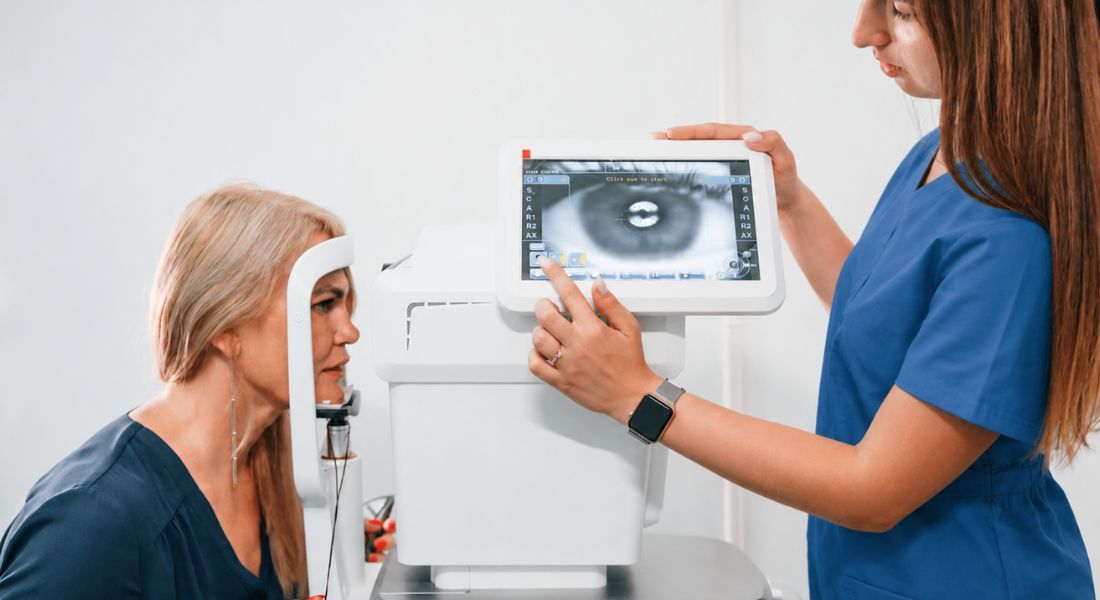
Future developments in AI may include even more advanced predictive systems. You would have heard at conferences that these tools could eventually provide real-time guidance during RLE and other eye surgeries, helping your surgeon make even more precise decisions while the procedure is taking place.
Researchers are also exploring adaptive systems that continuously learn from new clinical data. You may find it interesting that this could further improve accuracy, personalisation, and consistency in your results as the technology becomes more advanced and widely used in practice.
AI is expected to remain a key area of innovation in ophthalmology. You are likely to see ongoing progress in this field, with future systems playing a bigger role in helping plan your surgery, refine techniques, and support long-term visual outcomes.
The Future of AI in RLE Surgery
Artificial intelligence is set to play an increasingly important role in RLE surgery. You would have heard at conferences that its influence is expanding across every stage of care, from diagnosis and planning to predicting outcomes and supporting follow-up after your procedure.
While AI will not replace clinical expertise, it is designed to enhance the way your surgeon plans and performs treatment. You may find it reassuring that the aim is to support better decision-making, not take it away from experienced clinicians, ensuring your care remains firmly guided by human judgement.
This combination of clinical skill and intelligent technology is shaping the next generation of refractive surgery. You are likely to see RLE continue evolving towards a more precise, personalised, and data-supported approach, ultimately helping improve your visual outcomes and overall experience.
FAQs:
- What is the role of artificial intelligence in RLE surgery?
AI is being used to support different stages of RLE surgery, including diagnosis, planning, and outcome prediction. It analyses large amounts of patient data to help surgeons make more informed decisions. This can improve accuracy and consistency in surgical outcomes. However, it always works alongside, not instead of, clinical expertise. - How does AI improve preoperative assessment?
AI helps analyse detailed eye measurements such as corneal shape, lens condition, and axial length. It can detect subtle patterns that may not be obvious during a standard assessment. This allows for more precise planning before surgery. As a result, patient selection and preparation may become more accurate. - Can AI make RLE surgery more accurate?
Yes, AI can improve accuracy by refining calculations used for intraocular lens selection. It processes multiple data points at once, reducing the risk of human error. This can lead to more predictable visual outcomes after surgery. However, it still relies on high-quality clinical data. - Will AI replace surgeons in RLE procedures?
No, AI will not replace surgeons. It is designed to support clinical decision-making rather than take over surgical roles. Surgeons still make the final decisions based on their experience and patient needs. AI acts more like an advanced planning and analysis tool. - How does AI help with lens selection in RLE?
AI can analyse your eye measurements, lifestyle, and visual requirements to suggest the most suitable intraocular lens. This helps personalise treatment more effectively. It may also reduce trial-and-error in choosing lenses. The final choice, however, remains with your surgeon. - Can AI predict the outcome of RLE surgery?
AI is increasingly being used to predict likely visual outcomes after surgery. It compares your preoperative data with large datasets from previous patients. This helps set realistic expectations before the procedure. While highly advanced, predictions are not 100% guaranteed. - Does AI improve patient safety in RLE?
Yes, AI can help identify potential risks before surgery by analysing patient data patterns. This allows surgeons to adjust treatment plans where needed. It may reduce complications and improve overall safety. However, clinical judgement remains essential for final decisions. - How is AI used after RLE surgery?
AI can be used to monitor recovery and track visual outcomes after surgery. It helps identify early signs of complications or healing issues. This allows for timely follow-up care if needed. It also contributes to long-term outcome analysis. - What are the limitations of AI in RLE surgery?
AI depends on the quality of data it is trained on, so inaccurate or limited data can affect results. It may also struggle with rare or unusual eye conditions. It cannot fully replace human experience or judgement. This is why it is used as a supportive tool only. - What is the future of AI in RLE surgery?
The future of AI in RLE surgery includes more advanced prediction tools and real-time surgical support systems. It is expected to improve personalisation, precision, and overall patient outcomes. Researchers are also developing systems that continuously learn from new data. This will further refine refractive surgery techniques over time.
Final Thoughts: The Future of AI-Driven RLE Surgery
Artificial intelligence is steadily changing how RLE surgery is planned, performed, and followed up. While it won’t replace your surgeon, it can support more precise measurements, smarter lens selection, and more personalised treatment planning. For you, this means RLE outcomes are becoming increasingly predictable and tailored to individual visual needs.
As these technologies continue to develop, the focus is shifting towards safer procedures, better visual quality, and more consistent long-term results. The combination of clinical expertise and AI-driven insights is likely to define the next generation of refractive surgery. If you’d like to find out whether RLE surgery in London is suitable for you, feel free to contact us at Eye Clinic London to arrange a consultation.
References:
- Tychsen, L. (2024) ‘Clear lens extraction and refractive lens exchange for the treatment of amblyopia’, Ophthalmology. https://pmc.ncbi.nlm.nih.gov/articles/PMC11503977/
- Trivedi, R.H. and Wilson, M.E. (2010) ‘Refractive lens exchange with intraocular lens implantation in hyperopic eyes of a patient with Angelman syndrome’, Journal of Cataract & Refractive Surgery, 36(8), pp. 1432-1434. https://pmc.ncbi.nlm.nih.gov/articles/PMC2911455/
- Lindstrom, R.L., Gimbel, H.V., Hardten, D.R. and Holland, E.J. (2023) ‘Outcomes of refractive lens exchange in presbyopic and hyperopic patients: a systematic review’, Journal of Cataract & Refractive Surgery, 49(6), pp. 612-620. https://pubmed.ncbi.nlm.nih.gov/37162394/
- Kaweri, L., Wavikar, C., James, E., Pandit, P. and Bhuta, N. (2020) ‘Review of current status of refractive lens exchange and role of dysfunctional lens index as its new indication’, Indian Journal of Ophthalmology, 68(12), pp. 2797-2803. https://pubmed.ncbi.nlm.nih.gov/33229654/
- Erbasaran Aydin, S., Aran, T. and Güven, S. (2025) ‘Comparison of laparoscopic and laparotomic total hysterectomy in terms of patient satisfaction and cosmetic outcomes’, Journal of Clinical Medicine, 14(8), 2795. https://www.mdpi.com/2077-0383/14/8/2795