How Did Sammy Davis Jr. Lose His Eye?

2026-09-02T10:50:52+00:00

Sammy Davis Jr. lost his left eye after a serious car accident near San Bernardino, California, on 19 November 1954. The impact threw his face against the steering wheel, causing severe damage to the eye that doctors could not save. Historical accounts report that Davis's damaged left eye was surgically removed after the accident, and he later wore an artificial eye. If you experienced a similar injury today, you would receive urgent specialist treatment, although severe trauma can still result
How Did Sammy Davis Jr. Lose His Eye?2026-09-02T10:50:52+00:00

How Did Louis Braille Become Blind?

2026-09-02T11:01:21+00:00

Louis Braille lost his sight after a serious eye injury when he was three years old. You may have heard that he accidentally pierced his right eye with an awl while playing in his father's leather workshop in France. The injured eye became badly damaged, and his other eye was later affected, leaving him completely blind by around the age of five. Historical accounts have suggested that infection was involved, while ophthalmic authors have proposed sympathetic ophthalmia as a plausible

How Did Louis Braille Become Blind?2026-09-02T11:01:21+00:00

Is the RayOne Galaxy Lens Right for Me? Mr Samer Hamada Answers the Most Important Questions

2026-09-01T16:12:57+00:00

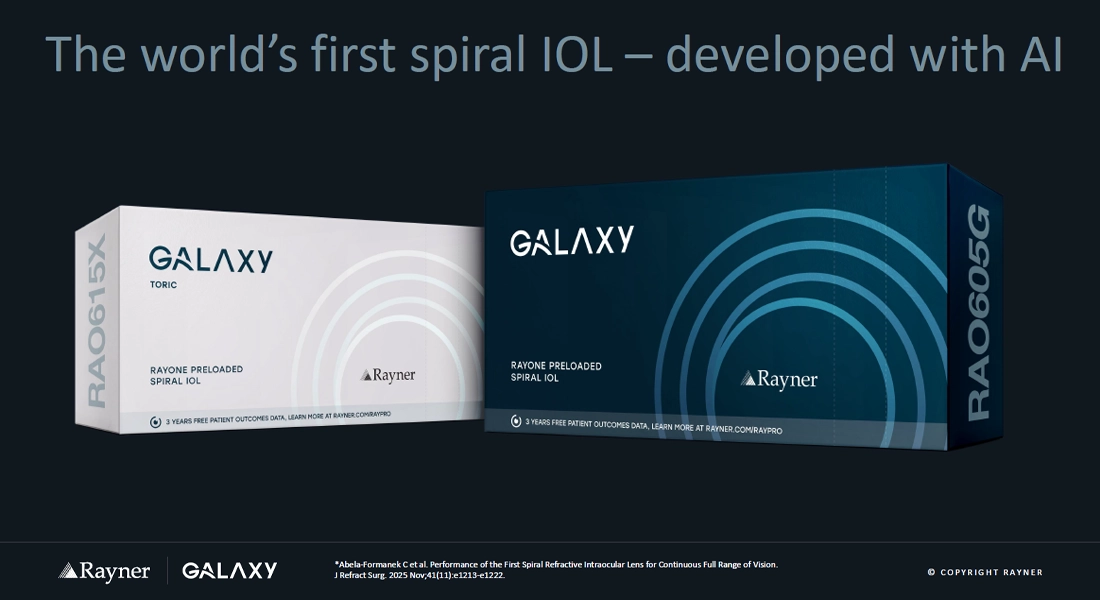
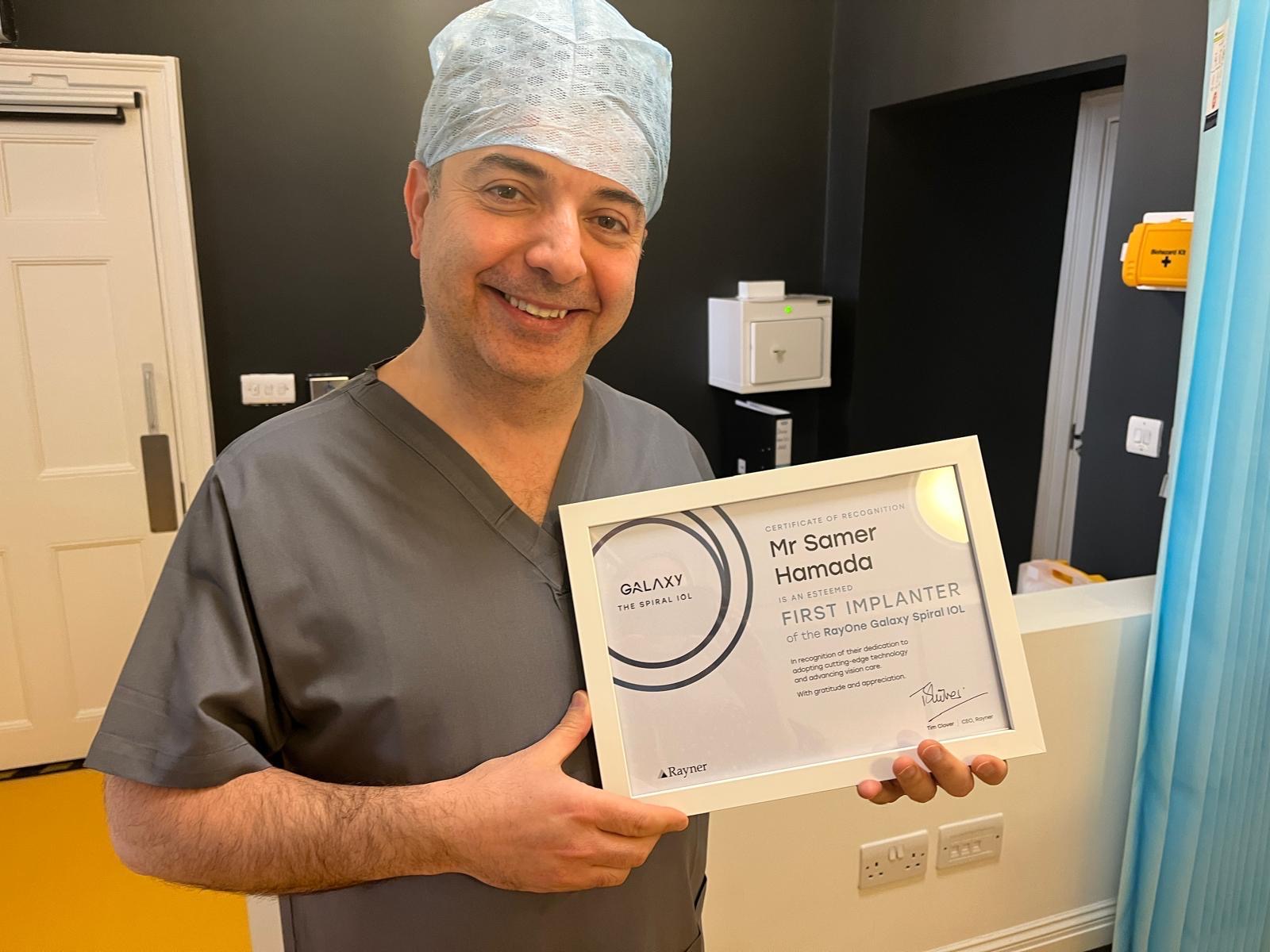
The RayOne Galaxy spiral intraocular lens has generated considerable interest among patients considering cataract surgery or refractive lens exchange.But choosing a premium lens should never begin with the question:“Which is the newest lens?”It should begin with: “What does my eye need, and how do I want to use my vision?” Mr Samer Hamada, Consultant Ophthalmic Surgeon and founder of Eye Clinic London, was among the early surgeons to implant RayOne Galaxy and was recognised by Rayner as an early Galaxy

Is the RayOne Galaxy Lens Right for Me? Mr Samer Hamada Answers the Most Important Questions2026-09-01T16:12:57+00:00

Galaxy Lens vs Multifocal, Trifocal and EDOF Lenses: Which Is Right for You?

2026-09-01T15:47:35+00:00

One of the biggest changes in modern cataract surgery is that patients are no longer simply choosing to have a cataract removed.Increasingly, they are choosing how they would like to see afterwards.A patient researching premium cataract surgery today may encounter terms including monofocal, enhanced monofocal, EDOF, trifocal, multifocal, toric — and now the RayOne Galaxy spiral lens.So where does Galaxy fit, and could it offer an advantage over a traditional multifocal, trifocal or EDOF lens?Mr Samer Hamada, Consultant Ophthalmic Surgeon

Galaxy Lens vs Multifocal, Trifocal and EDOF Lenses: Which Is Right for You?2026-09-01T15:47:35+00:00

RayOne Galaxy Lens: What Is It and What Makes the New Spiral IOL Different?

2026-09-02T18:36:11+00:00

If you have been researching cataract surgery or refractive lens exchange recently, you may already have come across the RayOne Galaxy lens. It is one of the newest generations of premium intraocular lenses and has attracted considerable attention because it uses a very different optical concept from conventional multifocal and trifocal lenses. But what exactly is a Galaxy lens? How does a spiral optic work? And, perhaps more importantly, what might it mean for your vision? Mr Samer Hamada, Consultant

RayOne Galaxy Lens: What Is It and What Makes the New Spiral IOL Different?2026-09-02T18:36:11+00:00

What Caused Helen Keller to Become Blind?

2026-09-01T11:01:39+00:00

Helen Keller was born with sight and hearing but lost both after a severe illness at 19 months old. You may have heard that meningitis or scarlet fever caused her blindness, but no definite diagnosis was ever established. In her autobiography, Keller recalled that her family was told she had “acute congestion of the stomach and brain”. A 2018 medical review suggested that bacterial meningitis was the most likely explanation, although this remains a retrospective theory. If you look at

What Caused Helen Keller to Become Blind?2026-09-01T11:01:39+00:00

How Did Edgar Degas’ Eye Condition Affect His Art?

2026-09-01T10:58:44+00:00

Edgar Degas developed increasingly poor eyesight as he grew older, particularly affecting his central vision. The exact condition is uncertain, but researchers believe it was more likely a retinal or macular disorder than cataracts. As his vision declined, his later work increasingly featured heavier outlines, broader marks and larger forms. He also continued working with pastel and sculpture, although these were already established parts of his artistic practice. When Did Edgar Degas First Notice Problems With His Eyesight? Degas’s visual

How Did Edgar Degas’ Eye Condition Affect His Art?2026-09-01T10:58:44+00:00

How Did Cataracts Affect Claude Monet’s Eyesight and Paintings?

2026-08-31T11:27:29+00:00

Claude Monet developed cataracts in both eyes later in life, causing blurred vision and changing how he saw colours. You may notice that some of his later paintings look darker, with stronger reds, oranges and browns. If you compare his earlier and later work, you can see why changes in his vision became an important part of his artistic story. As his cataracts worsened, you may find it easier to understand why painting became increasingly difficult for him. Monet eventually

How Did Cataracts Affect Claude Monet’s Eyesight and Paintings?2026-08-31T11:27:29+00:00

What Eye Condition Did Ray Charles Have?

2026-08-31T11:19:23+00:00

Ray Charles gradually lost his eyesight during early childhood and was blind by around the age of seven. Glaucoma is widely documented as the cause of his vision loss, although the exact type of childhood glaucoma he had is not publicly known. If you are learning about his story, it is important to remember that childhood glaucoma can be different from the glaucoma seen in adults. When you think about glaucoma, you may picture an adult condition, but it can

What Eye Condition Did Ray Charles Have?2026-08-31T11:19:23+00:00

What Eye Condition Does Stevie Wonder Have?

2026-08-28T03:46:06+00:00

Stevie Wonder is widely reported to have lost his sight in infancy after developing retinopathy of prematurity (ROP) following premature birth. He was born around six weeks prematurely in 1950, and because the blood vessels in a premature baby’s retina may not have fully developed, severe ROP can lead to scarring, retinal detachment and permanent sight loss. You may have heard that too much oxygen in an incubator caused his blindness. While oxygen exposure was an important factor in ROP

What Eye Condition Does Stevie Wonder Have?2026-08-28T03:46:06+00:00