


Can Thyroid Disease Affect Your Eyes?
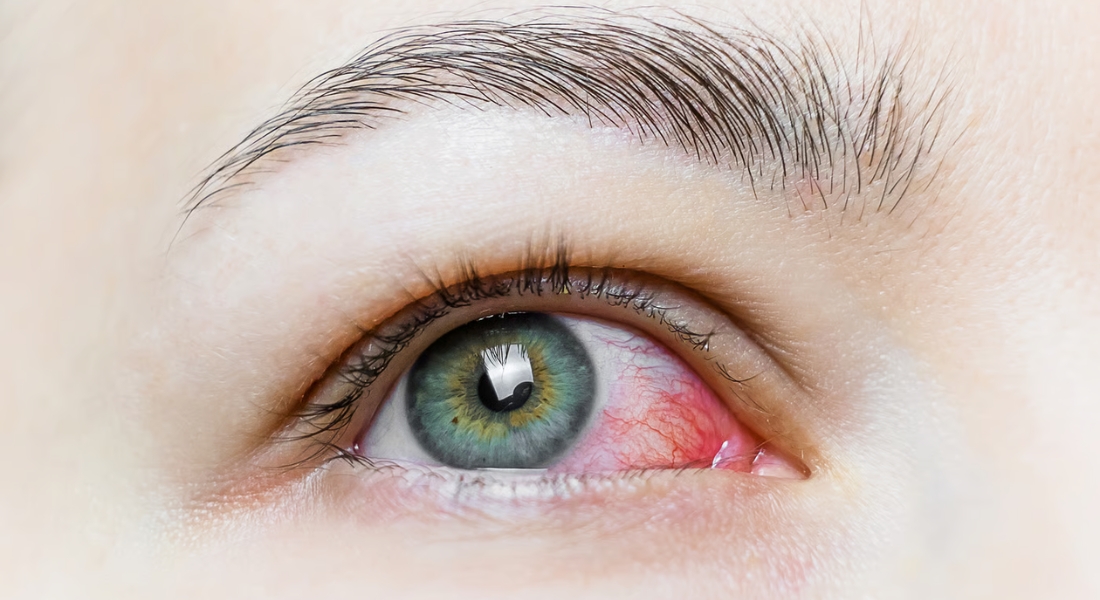
If you have a thyroid condition, you may not immediately realise that it can affect your eyes. Thyroid eye disease (TED), particularly associated with Graves’ disease, can cause dryness, redness, swelling, discomfort, double vision and changes in the appearance of your eyes. However, having thyroid disease does not automatically mean you will develop eye problems.
TED is an autoimmune condition in which the immune system mistakenly targets tissues around your eyes, including the eye muscles and connective tissue, causing inflammation and swelling. You may notice gritty or dry eyes, sensitivity to light, redness or a change in how your eyes look. Recognising these symptoms early is important because, although most cases can be managed, severe thyroid eye disease can occasionally affect your vision.
How Are Thyroid Disease and Your Eyes Connected?
Your thyroid produces hormones that help regulate how your body uses energy. Thyroid eye disease (TED) is the thyroid condition most closely linked to eye problems and affects the tissues around your eyes.
This can cause dryness, redness, bulging eyes or double vision. Eye symptoms may continue even after your thyroid levels improve, so separate eye assessment may still be needed.
What Is Thyroid Eye Disease?
Thyroid eye disease (TED) happens when an autoimmune reaction causes inflammation and swelling in the tissues around your eyes. You may notice puffiness, redness, watering, discomfort, pressure or upper eyelids that sit higher than usual, making your eyes appear wider.
In some cases, swelling behind your eyes can push your eyeballs forwards, known as proptosis or exophthalmos. TED can affect both eyes differently, and while most cases are not sight-threatening, severe disease can occasionally affect your cornea or optic nerve, so worsening symptoms should be assessed.
Can You Develop Thyroid Eye Disease With an Overactive or Underactive Thyroid?
Thyroid eye disease (TED) is most commonly linked to Graves’ disease and an overactive thyroid, but you can develop it even when your thyroid levels are normal or low. It can also occur after treatment for Graves’ disease, so normal thyroid blood tests do not always rule out TED.
If you have an underactive thyroid caused by an autoimmune condition, TED is less common but still possible. Your doctor may consider your symptoms, thyroid history and antibody levels together rather than relying on thyroid hormone results alone.
What Are the Early Symptoms of Thyroid Eye Disease?
Thyroid eye disease can begin gradually, and you may mistake the early symptoms for ordinary eye irritation. If these symptoms persist, worsen or affect your vision, it is important to discuss them with your healthcare team or arrange an eye assessment.
- Dry or gritty eyes: Your eyes may feel irritated, sandy or unusually dry.
- Redness and watering: You may notice increased redness, watering or sensitivity to light.
- Eyelid swelling: Puffiness around your eyes may become more noticeable.
- Changes in appearance: Your eyelids may sit higher than usual, making your eyes look wider.
These symptoms can have other causes, so an eye assessment can help determine whether they may be related to TED.
Why Can Thyroid Disease Make Your Eyes Feel Dry and Gritty?
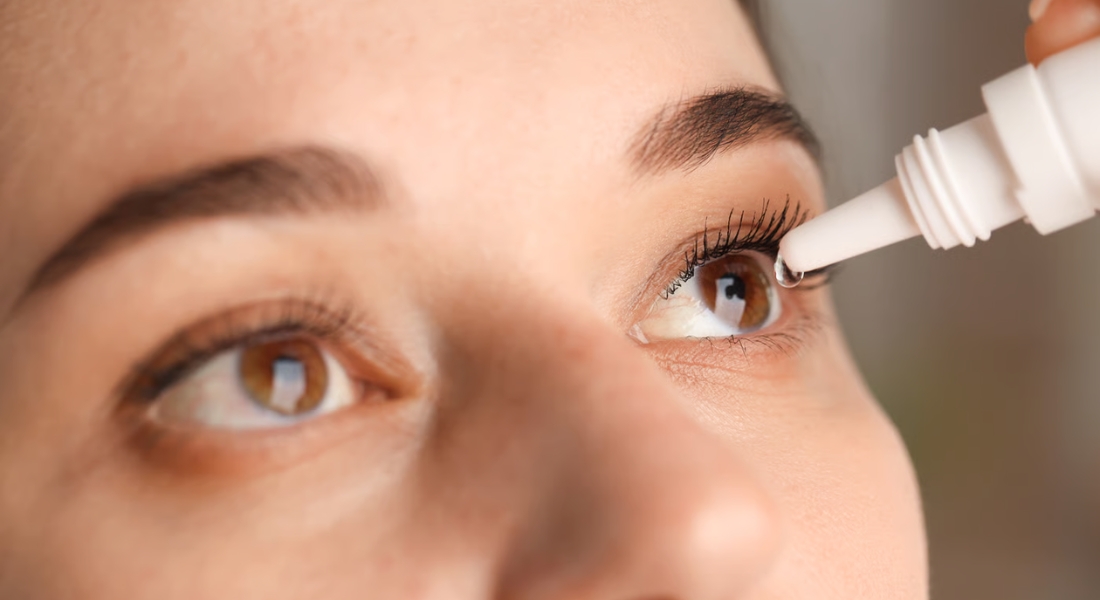
Thyroid eye disease can make your eyes feel dry and gritty because changes in your eyelids or eye position may expose more of the eye’s surface to air. If your eyelids do not close fully, your tears can evaporate more quickly, causing burning, stinging or a sandy sensation.
You may also experience excessive watering, as irritation can trigger extra tear production. Lubricating eye drops, gels or ointments may help relieve dryness and protect the eye surface. Your eye specialist or pharmacist can advise which type may be appropriate for your symptoms.
Why Do Your Eyelids and the Area Around Your Eyes Become Swollen?
Thyroid eye disease can cause inflammation and fluid build-up in the tissues around your eyes, leading to puffy upper or lower eyelids. The swelling may be more noticeable in the morning and can sometimes make your eyelids feel heavy or uncomfortable.
You may also notice redness or a feeling of pressure behind your eyes. If swelling occurs with increasing pain, redness, double vision or changes in your sight, you should seek medical advice as these may indicate more active or severe TED.
Why Can Thyroid Eye Disease Make Your Eyes Bulge?
When the muscles and tissues behind your eyes become swollen, they can take up more space within your eye sockets and push your eyes forwards. This is known as proptosis or exophthalmos and can give your eyes a more prominent or wide-eyed appearance.
If your eyes move forwards, your eyelids may not close fully when you blink or sleep. This can expose your cornea and increase dryness or irritation, so proptosis needs to be assessed for both its appearance and its effect on your eye health.
Can Thyroid Disease Cause Double Vision?
Yes, thyroid eye disease can cause double vision when inflammation and swelling affect the muscles that control your eye movements. If these muscles become enlarged or stiff, your eyes may no longer move together properly, causing you to see two images instead of one.
You may initially notice double vision only when looking in certain directions, but it can become more noticeable over time. If you develop new or worsening double vision, you should seek prompt medical or ophthalmic assessment rather than assuming it is simply part of your thyroid condition.
Can Thyroid Eye Disease Cause Eye Pain or Pressure?
Thyroid eye disease can make your eyes feel sore, achy or uncomfortable, especially when inflammation affects the muscles and tissues around your eyes. You may feel pressure or fullness behind your eyes, particularly when moving them.
Dryness may cause burning, stinging or a gritty feeling. Increasing pain, significant redness or changes in your vision should be assessed promptly.
Can Thyroid Eye Disease Damage Your Sight?
Most people with thyroid eye disease do not lose their sight, but severe cases can occasionally become sight-threatening. Swelling around your eyes may prevent your eyelids from closing properly, exposing your cornea and potentially damaging its surface.
In more serious cases, swollen tissues can compress the optic nerve, a complication known as dysthyroid optic neuropathy. Seek urgent ophthalmic assessment if your vision becomes noticeably blurred or dimmer, colours appear less vivid, part of your visual field seems missing or your sight deteriorates rapidly.
Who Is More Likely to Develop Thyroid Eye Disease?
TED is most commonly associated with Graves’ disease, although not everyone with Graves’ develops significant eye problems. Smoking is an important modifiable risk factor and is associated with developing or worsening TED and poorer treatment outcomes. If you smoke, your healthcare team can support you with stopping.
Keeping your thyroid levels well controlled is also important. If you have TED or eye symptoms and radioactive iodine is being considered for Graves’ hyperthyroidism, tell your healthcare team. Radioactive iodine can worsen TED in some people, so your thyroid and eye status should be considered when treatment is planned.
Evidence Note
Research strongly supports smoking cessation as an important part of reducing modifiable risk in TED. Smoking is associated with an increased likelihood of TED, disease progression and poorer responses to treatment.
Selenium has been studied in mild active TED, with some research reporting improvements in quality of life and eye outcomes. However, benefits may vary between patients and populations, so supplementation should be considered individually rather than routinely recommended to everyone. Discuss selenium with your healthcare professional before taking supplements.
How Is Thyroid Eye Disease Diagnosed?
Your specialist will ask about your thyroid condition and eye symptoms before examining your eyes for redness, swelling, eyelid changes and any forward movement. They may also check your eye movements, vision, colour perception and the surface of your eyes, particularly if you have double vision or other concerns.
Blood tests may be used to assess your thyroid function and, when clinically appropriate, thyroid antibodies associated with autoimmune thyroid disease. Depending on your symptoms, your specialist may also recommend a CT or MRI scan to examine the muscles and tissues around your eyes in more detail.
Active vs Inactive Thyroid Eye Disease
| Feature | Active Thyroid Eye Disease | Inactive Thyroid Eye Disease |
| What is happening | Inflammation around the eyes is ongoing and symptoms may continue to change | Inflammation has largely settled and eye changes are generally more stable |
| Redness and swelling | More likely to be noticeable or fluctuate | Usually reduced once active inflammation settles |
| Eye discomfort | Grittiness, aching, pressure or irritation may be more noticeable | Active inflammatory discomfort is usually less prominent |
| Eye prominence | Bulging or prominence may develop or worsen | Prominence may remain even though inflammation is no longer active |
| Double vision | May develop or change as eye muscles become inflamed and swollen | May persist if the eye muscles have been left stiff or restricted |
| Main treatment focus | Controlling inflammation, protecting vision and managing symptoms | Managing persistent structural or functional problems after the disease has stabilised |
| Surgery | May be required urgently in selected sight-threatening cases; rehabilitative surgery is generally considered after the disease has stabilised | May be considered for persistent bulging, eyelid changes or double vision once the condition is stable |
How Are Mild Thyroid Eye Symptoms Treated?
If your thyroid eye disease is mild, treatment usually focuses on keeping your eyes comfortable and protecting their surface while inflammation settles. Lubricating eye drops, gels or ointments can help with dryness and irritation, while sunglasses may make light sensitivity more manageable.
Keeping your thyroid levels well controlled is important, and stopping smoking can reduce modifiable risk. Selenium may be considered for selected people with mild active TED but should be discussed with your healthcare professional first.
How Is Moderate or Severe Thyroid Eye Disease Treated?
If you have active moderate-to-severe TED, specialist treatment may be needed to control inflammation and reduce the risk of complications. Depending on the activity and severity of your disease, treatment may include intravenous corticosteroids or other specialist medical therapies. Prisms may sometimes help with double vision, depending on the pattern and stability of your eye alignment.
Sight-threatening TED, such as optic-nerve compression or severe corneal damage, requires urgent specialist management. Treatment may include high-dose intravenous corticosteroids and, in selected cases, orbital decompression or measures to protect vision. Once TED becomes inactive, surgery may be considered for persistent bulging, double vision or eyelid changes.
UK Guidance Note
Management of TED should take account of both disease activity and severity, with moderate-to-severe active or sight-threatening disease requiring specialist ophthalmology and endocrinology input. EUGOGO publishes specialist European guidance on the assessment and management of Graves’ orbitopathy, while NICE guidance on Graves’ hyperthyroidism also takes thyroid eye disease into account when treatment options are considered.
Teprotumumab (Tepezza) received UK marketing authorisation from the MHRA in May 2025 for adults with moderate-to-severe TED. However, NICE has not yet published final technology appraisal guidance. As of August 2026, its appraisal remains in progress, with final guidance currently expected in October 2026. UK marketing authorisation therefore should not be interpreted as confirmation of routine NHS availability.
When Should You Have Your Eyes Assessed?
If you have thyroid disease and develop persistent redness, swelling, grittiness or changes in how your eyes look, arrange an eye assessment. This can help determine whether TED or another eye condition may be responsible and whether treatment is needed.
Seek prompt medical or ophthalmic advice if you develop new or worsening double vision, persistent blurred vision or a noticeable change in colour vision. Seek urgent ophthalmic assessment if your sight deteriorates rapidly, colours become noticeably dimmer, part of your visual field appears missing, you develop severe corneal pain or you are unable to close your eyelids adequately.
Myth vs Fact
| Myth | Fact |
| Only people with an overactive thyroid can develop TED. | TED is most commonly associated with Graves’ hyperthyroidism, but it can occur when thyroid hormone levels are normal or low and can also appear after treatment for Graves’ disease. |
| If your thyroid blood tests become normal, your eye symptoms will immediately disappear. | Thyroid function and eye disease do not always improve at the same rate. TED may remain active or leave persistent eye changes even after thyroid hormone levels are controlled. |
| Bulging eyes are the only symptom of TED. | TED can also cause dryness, watering, redness, eyelid swelling, pain, light sensitivity, restricted eye movement and double vision. |
| Smoking only affects your thyroid, not your TED. | Smoking increases the risk and severity of TED and can reduce treatment effectiveness. |
| Everyone with TED needs surgery. | Most TED is not sight-threatening. Mild disease may need lubrication and risk-factor management, while specialist medicines or surgery are reserved for particular clinical situations. |
Key Takeaways
- Thyroid eye disease is an autoimmune condition most commonly associated with Graves’ disease, but it can occur when thyroid hormone levels are high, normal or low.
- Common symptoms include dryness, grittiness, redness, eyelid swelling, eye prominence, discomfort and double vision.
- Most TED is not sight-threatening, but severe corneal exposure or pressure on the optic nerve can occasionally threaten vision.
- Smoking is associated with a greater risk of TED, disease progression and poorer treatment outcomes, so stopping smoking is an important part of reducing modifiable risk.
- Maintaining stable thyroid hormone levels and receiving coordinated ophthalmology and endocrinology care are important parts of management.
- Persistent blurred vision, reduced colour brightness, worsening double vision or rapidly deteriorating sight should be assessed promptly.
Frequently Asked Questions
- Can thyroid disease affect your eyes?
Yes, thyroid disease can affect your eyes, particularly if you have Graves’ disease. Thyroid eye disease (TED) may cause dryness, redness, swelling, discomfort, bulging eyes or double vision. However, having a thyroid condition does not automatically mean you will develop eye problems. - What is thyroid eye disease?
Thyroid eye disease is an autoimmune condition in which your immune system affects the tissues and muscles around your eyes. This can cause inflammation, swelling and changes in the position or appearance of your eyes. In more severe cases, it can also affect your vision. - Can you develop thyroid eye disease with an underactive thyroid?
Yes, although thyroid eye disease is more commonly associated with Graves’ disease and an overactive thyroid. You can develop TED even when your thyroid levels are normal or low. This means normal thyroid blood tests do not always rule out thyroid-related eye problems. - What are the early symptoms of thyroid eye disease?
Early symptoms can include dry, gritty or watery eyes, redness, puffiness around your eyelids and sensitivity to light. You may also feel pressure behind your eyes or notice changes in how your eyes look. If these symptoms persist, particularly if you have a thyroid condition, you should discuss them with your healthcare team. - Why can thyroid disease make your eyes feel dry and gritty?
Thyroid eye disease can change the position of your eyes or eyelids, exposing more of your eye’s surface to air. This can cause your tears to evaporate more quickly, leading to burning, stinging or a sandy sensation. Lubricating eye drops, gels or ointments may help relieve these symptoms. - Can thyroid eye disease cause your eyes to bulge?
Yes, swelling of the tissues and muscles behind your eyes can push your eyeballs forwards. This is known as proptosis or exophthalmos and can make your eyes appear more prominent. It may also prevent your eyelids from closing fully, increasing dryness and irritation. - Can thyroid disease cause double vision?
Yes, thyroid eye disease can cause double vision when inflammation affects the muscles responsible for controlling your eye movements. Swollen or stiff eye muscles may prevent your eyes from moving together properly. You may initially notice double vision only when looking in certain directions, but it can become more noticeable over time. - Can thyroid eye disease damage your sight?
Most people with thyroid eye disease do not experience sight loss, but severe cases can occasionally threaten your vision. Swelling can damage the surface of your eye if your eyelids cannot close properly, while pressure on the optic nerve can also affect your sight. Blurred or dimmer vision or colours appearing less bright in one eye should be assessed urgently. - How is thyroid eye disease treated?
Mild symptoms may be managed with lubricating eye drops, gels or ointments and appropriate risk-factor management. Active moderate-to-severe disease may require specialist medical treatment, which can include intravenous corticosteroids or other therapies depending on the activity and severity of TED. Prisms or surgery may also be considered for problems such as double vision or persistent changes once the disease becomes stable. - When should you have your eyes assessed if you have thyroid disease?
You should arrange an eye assessment if you develop persistent redness, swelling, grittiness or changes in the appearance of your eyes. You should seek prompt medical advice if you develop worsening double vision or blurred vision, particularly if your symptoms are changing. Severe eye pain, rapidly worsening vision or difficulty closing your eyes properly requires urgent assessment.
Final Thoughts: Protecting Your Eyes When You Have Thyroid Disease
Thyroid disease can affect more than your energy levels or metabolism, and your eyes may sometimes show signs of thyroid-related changes. If you have persistent dryness, swelling, redness, bulging eyes, double vision or changes in your sight, you should not ignore them, particularly if you have Graves’ disease or another thyroid condition. Early assessment can help you understand what is causing your symptoms and whether you need treatment to protect your eye health.
If you have a thyroid condition and are concerned about changes in your eyes or vision, our team at Eye Clinic London would be happy to talk through what you have noticed and how an eye assessment may help. If it feels helpful, we can also arrange an appointment.
References:
- Kulbay, M. et al. (2024) ‘A Comprehensive Review of Thyroid Eye Disease Pathogenesis: From Immune Dysregulations to Novel Diagnostic and Therapeutic Approaches’, International Journal of Molecular Sciences, 25(21), 11628. Available at: https://www.mdpi.com/1422-0067/25/21/11628
- Kostadinov, N. et al. (2026) ‘Efficacy of Selenium Supplementation in Graves’ Orbitopathy: A Systematic Review and Meta-Analysis of Randomized Controlled Trials’, Journal of Clinical Medicine, 15(12), 4710. Available at: https://www.mdpi.com/2077-0383/15/12/4710
- Burch, H.B. et al. (2022) ‘Management of Thyroid Eye Disease: A Consensus Statement by the American Thyroid Association and the European Thyroid Association’, Thyroid, 32(12), pp. 1439–1470. Available at: https://pmc.ncbi.nlm.nih.gov/articles/PMC9727317/
- Wiersinga, W.M., Eckstein, A.K. and Žarković, M. (2025) ‘Thyroid eye disease (Graves’ orbitopathy): clinical presentation, epidemiology, pathogenesis, and management’, The Lancet Diabetes & Endocrinology, 13(7), pp. 600–614. Available at: https://www.sciencedirect.com/science/article/abs/pii/S221385872500066X
- Bartalena, L. et al. (2021) ‘The 2021 European Group on Graves’ Orbitopathy (EUGOGO) clinical practice guidelines for the medical management of Graves’ orbitopathy’, European Journal of Endocrinology, 185(4), pp. G43–G67. Available at: https://pubmed.ncbi.nlm.nih.gov/34297684/