


The Science Behind LASIK Surgery: How Laser Vision Correction Works

LASIK surgery is often described as a quick procedure, but the science behind it is highly complex. If you are considering laser vision correction, understanding how the laser interacts with your eye can be reassuring. Clear explanations help replace uncertainty with confidence.
At its core, LASIK works by reshaping the cornea so that light focuses correctly on the retina. This process relies on precise laser–tissue interaction at a microscopic level. Modern technology allows this reshaping to be extremely accurate and predictable.
In this article, we explain the science behind LASIK surgery in clear terms. We explore how excimer lasers work, how corneal reshaping corrects vision, and why modern systems improve safety and outcomes. The goal is to help you understand what actually happens during treatment.
How Vision Becomes Blurred in Refractive Errors
Clear vision depends on light being focused precisely onto your retina at the back of the eye. When this focus is slightly off, images appear blurred rather than sharp. This is known as a refractive error, and it is a very common reason why you might struggle to see clearly. The issue lies in how your eye bends, or refracts, incoming light.
If you are short-sighted, light focuses in front of your retina instead of directly on it. This means distant objects look blurred, while near vision is usually clear. If you are long-sighted, light focuses behind the retina, which can make close work more difficult and sometimes affects distance vision too. The way light lands in your eye determines what looks clear and what does not.
Astigmatism works slightly differently. Instead of focusing to a single point, light is spread unevenly because the cornea is not perfectly round. This can cause distortion or blurring at all distances. You might notice shadows, ghosting, or difficulty seeing fine detail, especially at night.
Glasses and contact lenses correct these problems by adjusting how light enters your eye from the outside. LASIK works differently, by reshaping your cornea so light focuses correctly inside your eye. This internal correction is what allows many people to see clearly without visual aids. Understanding this difference helps you see how refractive surgery addresses the root cause of blurred vision.
The Role of the Cornea in Focusing Vision
Your cornea is the clear, curved surface at the front of your eye, and it provides most of your eye’s focusing power. Even very small changes in its shape can make a noticeable difference to how clearly you see. When the cornea is not shaped perfectly, light does not focus where it should.
When your cornea has a smooth, regular shape, it bends light accurately onto your retina, giving you clear vision. If the shape is uneven, light can scatter or focus incorrectly, leading to blurred or distorted vision. This is a key reason refractive errors develop.
LASIK targets the cornea because reshaping it improves how your eye focuses light from the start. By correcting the cornea’s shape, the procedure addresses the underlying cause of blurred vision. Precision matters, as the changes made are extremely small but highly impactful.
What an Excimer Laser Is
An excimer laser is the type of laser used during LASIK to reshape your cornea. It emits ultraviolet light at a very specific wavelength, allowing it to remove tissue with exceptional accuracy. This level of control is essential for precise vision correction.
Unlike lasers that rely on heat, an excimer laser does not burn tissue. Instead, it breaks molecular bonds in a process called photoablation, which removes tissue without causing thermal damage. This helps protect the surrounding cornea and supports smooth healing.
Each pulse of the laser removes an extremely small amount of corneal tissue. The entire process is computer-controlled and highly predictable, based on your individual prescription. This precision is what makes LASIK such an accurate and reliable procedure for correcting vision.
How Excimer Lasers Reshape the Cornea
During LASIK, an excimer laser reshapes the cornea with extreme precision based on your individual prescription. By altering the cornea’s curvature, the laser changes how light enters the eye. This is what allows vision to be corrected.
- Precise tissue removal based on your prescription: The excimer laser removes microscopic amounts of corneal tissue, taking more from certain areas than others. This selective reshaping is computer-controlled to ensure accuracy and consistency.
- Different corrections require different reshaping patterns: For short-sightedness, the central cornea is flattened to reduce its focusing power. For long-sightedness, the peripheral cornea is reshaped to steepen the centre, while astigmatism is corrected by smoothing uneven or irregular areas.
- Improved light focus on the retina: These shape changes redirect incoming light so it focuses accurately on the retina rather than in front of or behind it. This improved focus is what leads to clearer, sharper vision.
With modern excimer laser technology, corneal reshaping is highly precise and predictable. By correcting how light is focused, LASIK improves visual clarity in a controlled and reliable way.
The Importance of Laser Precision
LASIK depends on an exceptionally high level of precision. Corneal reshaping takes place on a microscopic scale, measured in microns, which is far beyond what human hands could achieve alone. This accuracy is essential for safe and effective vision correction.
- Micron-level accuracy: Modern excimer lasers remove extremely small amounts of tissue with each pulse. This allows the cornea to be reshaped gradually and precisely, exactly according to the prescription.
- Computer-controlled delivery: Thousands of laser pulses are delivered within seconds, each one carefully calibrated. Advanced algorithms control the depth, position, and pattern of treatment to ensure consistent results.
- Improved safety and predictability: Precise targeting minimises unnecessary tissue removal and reduces variability. This level of accuracy is key to achieving reliable outcomes and high patient satisfaction.
Accurate laser precision underpins the success of LASIK. By controlling every aspect of corneal reshaping, modern technology helps deliver predictable, high-quality visual results.
Eye Tracking and Movement Compensation
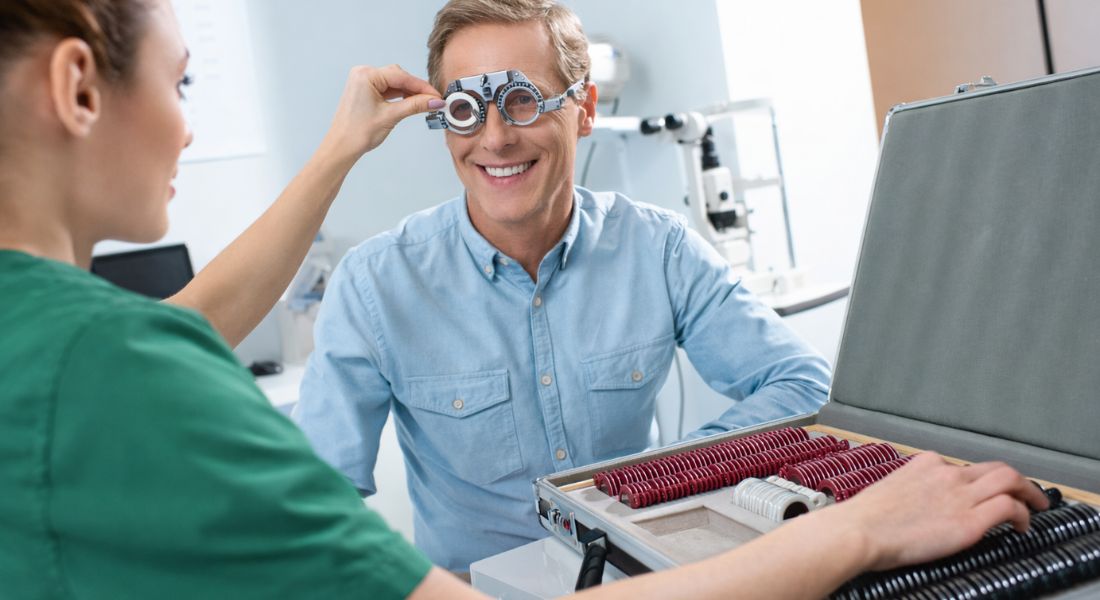
Your eyes naturally make tiny movements, even when you are trying to keep them still. During LASIK, this is expected, and modern systems are designed to account for it using advanced eye-tracking technology. This means you do not have to worry about holding your eye perfectly steady.
Eye trackers monitor your eye position hundreds or even thousands of times every second. If your eye moves, the laser adjusts instantly to stay aligned with the planned treatment area. In some systems, the laser will pause automatically if movement goes outside safe limits.
This technology plays a key role in both safety and accuracy. It helps ensure laser energy is delivered exactly where it is intended. As a result, modern LASIK systems produce more consistent and reliable outcomes.
Creating the Corneal Flap
LASIK involves creating a very thin flap in the cornea. This flap allows the surgeon to access the deeper corneal layers where the vision correction is performed. Once the reshaping is complete, the flap is carefully placed back into its original position.
In modern LASIK, this flap is usually created using a femtosecond laser. This technology gives precise control over the flap’s thickness, size, and shape, which improves accuracy and consistency compared to older techniques. For you, this means a more predictable and controlled procedure.
The corneal flap heals naturally without the need for stitches. Its precise creation is important for both safety and visual outcomes. Advances in laser technology have made this step highly refined and reliable.
Why Corneal Thickness Matters
Your corneal thickness is a key factor in deciding whether LASIK is safe for you. During LASIK, a small amount of corneal tissue is reshaped, and enough tissue must remain afterwards to keep your cornea strong and stable. If the cornea is too thin, the risk of long-term problems increases.
Before surgery, advanced imaging is used to measure your cornea across its entire surface, not just at one point. This allows your surgeon to calculate exactly how much tissue can be safely treated and whether LASIK is suitable for your eyes. For some people, alternative procedures may be recommended instead.
Thorough screening is designed to protect your long-term eye health. Safety margins are built into every treatment plan, based on solid clinical evidence. This careful, scientific approach is one of the main reasons modern LASIK has such a strong safety record.
Wavefront and Topography-Guided Treatments
Modern LASIK can be customised using detailed measurements from wavefront analysis or corneal topography. These technologies map how light travels through your eye or how the corneal surface is shaped, allowing treatment to be tailored to your individual visual profile.
- Wavefront-guided LASIK targets optical imperfections: This approach identifies subtle distortions in how light is focused, including higher-order aberrations that standard prescriptions cannot measure. Treating these imperfections can improve overall visual quality, especially in low-light conditions.
- Topography-guided LASIK focuses on corneal shape: Corneal topography creates a precise map of the corneal surface, highlighting irregularities or asymmetry. Treatment is then customised to smooth these areas and create a more regular optical surface.
- Greater precision with fewer visual side effects: By personalising treatment, both methods enhance accuracy and consistency. This customisation helps reduce issues such as glare, halos, and night vision disturbances.
Customised laser treatments represent a major advancement in LASIK technology. By tailoring correction to the individual eye, surgeons can achieve clearer, more comfortable vision with improved predictability.
Why LASIK Is So Accurate Today
LASIK has become far more accurate over the years due to major advances in technology and clinical understanding. Improvements in diagnostic tools, software, and laser systems have made treatment more precise and outcomes more predictable than ever before.
- Advanced diagnostics guide treatment: Modern LASIK systems collect detailed information about corneal shape, thickness, and how light travels through the eye. These measurements allow surgeons to plan treatment with a high level of accuracy.
- Integrated and individualised treatment planning: Multiple data points are combined to create a personalised treatment plan for each eye. This ensures that corneal reshaping is tailored to the individual rather than based on averages.
- Greater predictability and fewer enhancements: Improved precision reduces the likelihood of under- or over-correction. As a result, the need for follow-up enhancement procedures is lower, and patient satisfaction is higher.
Scientific research and technological innovation continue to refine LASIK accuracy. This ongoing progress allows surgeons to deliver consistently reliable results with confidence.
Safety Mechanisms Built Into LASIK Systems
Modern LASIK systems are designed with multiple built-in safety mechanisms to protect you throughout the procedure. The laser continuously monitors eye position, laser energy, and environmental conditions while treatment is underway. If anything changes unexpectedly, the system pauses automatically. This helps ensure the laser only works when conditions are exactly right.
Before your treatment even begins, the system goes through strict calibration and safety checks. These checks confirm the laser is delivering energy accurately and consistently. Redundant systems are built in, so there is more than one safeguard monitoring the process. This reduces the risk of technical error.
Safety in LASIK is not left to chance. Advanced technology supports your surgeon at every step, enhancing precision and reliability. When combined with clinical expertise, these systems help deliver predictable outcomes while keeping your eyes protected throughout the procedure.
Healing and Corneal Stability After LASIK
After LASIK, the cornea undergoes a healing and stabilisation process that supports long-term visual outcomes. The tissue reshaped during the procedure remains permanently altered, allowing vision correction to be maintained over time.
- Permanent corneal reshaping: Once the cornea has been reshaped, the structural changes remain stable. This permanence is what allows LASIK results to last for many years.
- Predictable healing timelines: While healing responses vary slightly between individuals, most of the healing occurs within the first few weeks. Modern surgical techniques are designed to minimise disruption to the cornea during this period.
- Well-documented long-term stability Long-term studies show that corneal stability after LASIK is generally excellent when patients are properly selected. Careful pre-operative screening reduces the risk of late complications.
With appropriate assessment and modern techniques, LASIK offers reliable long-term results. Scientific evidence continues to guide safe practice and ongoing improvements in patient outcomes.
Why LASIK Results Are Long-Lasting
LASIK results are long-lasting because the procedure permanently reshapes your cornea. Once your eye has healed, the cornea keeps its new curvature, allowing light to focus correctly on the retina. This is why your distance vision correction is designed to be stable over time.
It is important to understand that LASIK does not stop natural ageing of the eyes. As you get older, changes such as presbyopia can still develop, which may affect your near vision. This is a normal process and is not a sign that your LASIK result has worn off.
The correction created by LASIK itself remains in place. Long-term studies show that most people maintain good vision many years after treatment. This durability reflects both the biology of corneal healing and the precision of modern laser technology.
Comparing LASIK to Other Laser Procedures
LASIK is one of several laser vision correction options available to you. Other procedures, such as PRK and SMILE, use different techniques to achieve similar goals. While the science behind them is comparable, the way each procedure interacts with your eye is not the same.
The right choice depends on your corneal structure, eye health, and lifestyle needs. LASIK offers rapid visual recovery for many people, which is why it is often preferred. However, PRK or SMILE may be better suited to you in certain situations, such as if your cornea is thinner or you have specific risk factors.
A detailed clinical assessment helps determine which procedure is safest and most effective for you. No single option is universally best for everyone. Personalising the approach is key to achieving the best possible outcome for your vision.
How Science Supports Patient Confidence
LASIK is one of several laser vision correction options available to you. Other procedures, such as PRK and SMILE, use different techniques to achieve similar goals. While the science behind them is comparable, the way each procedure interacts with your eye is not the same.
The right choice depends on your corneal structure, eye health, and lifestyle needs. LASIK offers rapid visual recovery for many people, which is why it is often preferred. However, PRK or SMILE may be better suited to you in certain situations, such as if your cornea is thinner or you have specific risk factors.
A detailed clinical assessment helps determine which procedure is safest and most effective for you. No single option is universally best for everyone. Personalising the approach is key to achieving the best possible outcome for your vision.
Making an Informed Choice About LASIK
Choosing LASIK means understanding both what it can do for you and its limitations. Scientific evidence shows why results are generally accurate and predictable, and it also helps determine whether your eyes are suitable for the procedure. Knowing this gives you a realistic picture of what to expect.
A thorough consultation takes all the data and applies it to your specific eyes. Your measurements, eye health, and lifestyle are considered alongside statistics from large studies. This personalised approach helps you make a safe and informed decision about treatment.
Making an informed choice often leads to greater satisfaction with your results. When you understand the process and what is realistic, it reduces uncertainty and builds confidence. Science provides the foundation, but knowing how it applies to you makes all the difference.
FAQs:
- What exactly happens during LASIK surgery?
During LASIK, a very thin flap is created on the surface of your cornea, giving the surgeon access to reshape the deeper layers. The excimer laser then removes microscopic amounts of tissue according to your prescription, altering the curvature of your cornea so light focuses properly on your retina. Once the reshaping is complete, the flap is carefully repositioned, and it heals naturally without stitches. The whole process is fast, precise, and tailored to your eyes. - How does LASIK actually correct my vision?
LASIK works by changing the shape of your cornea so that light entering your eye focuses directly on your retina. If you are short-sighted, the central cornea is flattened, and if you are long-sighted, the peripheral cornea is steepened. Astigmatism is addressed by smoothing irregular areas. This internal correction allows your eye to focus light correctly, giving you clearer vision without relying on glasses or contacts. - Is LASIK painful?
Most people feel very little discomfort during LASIK. Numbing eye drops are applied before the procedure, so you won’t feel the laser itself. You might notice some pressure or slight discomfort when the flap is created, but the process is quick. After surgery, you may experience mild irritation or dryness for a few days, but this usually settles rapidly as your eyes heal. - How long does it take to see clearly after LASIK?
Many people notice improved vision within hours of surgery, though it can take a few days for your eyes to fully stabilise. Your vision may fluctuate slightly at first, but most patients reach their expected visual outcome within a week or two. The speed of recovery depends on your prescription and individual healing response. - Can anyone have LASIK surgery?
Not everyone is a suitable candidate for LASIK. Your corneal thickness, eye health, and prescription all play a role in determining whether the procedure is safe for you. Advanced imaging and assessments help your surgeon decide if LASIK is appropriate, or if an alternative like PRK or SMILE might be better suited to your eyes. - Will LASIK give me perfect vision?
LASIK can dramatically reduce your need for glasses or contacts, and many people achieve vision close to 20/20. However, results can vary slightly depending on your prescription and individual healing. Some people may still need occasional reading glasses as they get older, and very high prescriptions may not reach perfect correction. The goal is to improve vision reliably, rather than guarantee perfection. - What makes LASIK so precise?
The precision of LASIK comes from the excimer laser, which removes microscopic layers of corneal tissue without heat. Modern systems use computer-controlled algorithms and eye-tracking technology to ensure every laser pulse hits exactly where it should, even if your eye moves slightly. This combination of technology and planning makes the procedure extremely accurate. - How long do LASIK results last?
Once your cornea has been reshaped, the correction is permanent, allowing light to focus properly on your retina for many years. Your vision may still change naturally with age, such as the onset of presbyopia, but the changes created by LASIK itself remain stable over time. Long-term studies show that most people continue to enjoy excellent vision many years after surgery. - Are there risks or side effects I should be aware of?
Like any procedure, LASIK carries some risks. Temporary dryness, mild glare, or halos around lights are common in the early weeks. More serious complications are rare, especially when patients are carefully screened and treated with modern technology. Your surgeon will discuss these risks and ensure the procedure is tailored to minimise any potential problems. - How do I decide if LASIK is right for me?
Choosing LASIK means understanding what it can do and recognising its limitations. A thorough consultation takes measurements of your eyes, checks your overall eye health, and considers your lifestyle needs. Your surgeon combines this information with evidence from studies to give you a realistic picture of expected outcomes. Being fully informed helps you feel confident in your decision and satisfied with your results.
Final Thought: Final Thoughts on LASIK Surgery
Understanding the science behind LASIK can make the idea of laser vision correction much less daunting. Knowing how your cornea is reshaped, how excimer lasers work, and why modern systems are so precise helps you approach the procedure with confidence. LASIK is designed to offer accurate, long-lasting results, but the key to success is personalised assessment and careful planning.
If you’d like to find out whether lasik surgery in London could be right for your eyes, feel free to get in touch with us at Eye Clinic London to arrange a consultation. Our team can provide tailored advice and guide you through every step of the process, ensuring you make an informed decision with confidence.
References:
- Lee, C.-Y., Jeng, Y.-T., Yang, S.-F., Huang, C.-T., Chao, C.-C., Lian, I.-B., Huang, J.-Y. and Chang, C.-K. (2024) Topographic and Surgical Risk Factors for Early Myopic Regression between Small Incision Lenticule Extraction and Laser In Situ Keratomileusis. Diagnostics, 14(12), 1275. https://www.mdpi.com/2075-4418/14/12/1275
- Yahalomi, T. (2023) Dry Eye Disease following LASIK, PRK, and LASEK. Journal of Clinical Medicine, 12(11), 3761. https://www.mdpi.com/2077-0383/12/11/3761
- Moshirfar, M., Huynh, R., Bundogji, N., Tukan, A.N., Sant, T.M., McCabe, S.E., West, W.B. Jr., Drennan, K., Ronquillo, Y.C. and Hoopes, P.C. (2021) Comparison of 6.0 mm versus 6.5 mm Optical Zone on Visual Outcomes after LASIK. Journal of Clinical Medicine, 10(17), 3776. https://www.mdpi.com/2077-0383/10/17/3776
- Chan, C.K., Manche, E.E., Holland, E.J., et al. (2008) Seven‑year follow‑up of LASIK for moderate to severe myopia. Journal of Cataract and Refractive Surgery, 34(4), pp. 598–604. https://pubmed.ncbi.nlm.nih.gov/19044235/
- O’Brart, D.P., Waugh, S., Klein, P., et al. (2010) Long‑term refractive outcomes and stability after excimer laser surgery for myopia (PRK and LASIK): up to 13‑year follow‑up. Journal of Refractive Surgery, 26(10), pp. 769–776. https://pubmed.ncbi.nlm.nih.gov/20870117/