


Can Tamoxifen Affect Your Eyesight?

If you’re taking tamoxifen as part of breast cancer treatment or to reduce your risk of breast cancer, you may wonder whether it could affect your eyesight. Most people do not develop serious eye problems, but tamoxifen can cause changes in the retina, lens or cornea, while problems affecting the optic nerve are much rarer.
Some retinal changes can affect the macula, which is responsible for your detailed central vision, and may cause blurred or distorted sight. Your risk may increase with longer treatment and greater cumulative exposure. If you notice persistent blurred vision, distortion or another unexplained change in your sight, arrange an eye assessment and do not stop tamoxifen without speaking to your medical team.
What Is Tamoxifen?
Tamoxifen is a selective oestrogen receptor modulator (SERM) used mainly to treat or reduce the risk of hormone receptor-positive breast cancer. You may take it for several years, commonly at 20 mg daily, depending on your treatment plan.
Most people taking tamoxifen do not develop significant eye problems. You should still be aware of possible retinal or other eye changes, so persistent vision changes can be assessed early without stopping an important cancer treatment yourself.
How Can Tamoxifen Affect Your Eyes?
Tamoxifen can affect different parts of your eyes, particularly the retina. You may develop crystalline deposits or structural changes in the macula, while some people can also develop cataracts or corneal changes.
Many tamoxifen-related eye findings are mild, but some can affect your sight, so you should report persistent visual symptoms. Your eye specialist can use an examination and OCT scan to identify retinal changes and decide whether further monitoring is needed.
How Tamoxifen-Related Eye Changes and Similar Conditions Can Differ
| Eye effect | Area affected | Possible symptoms | Main consideration |
| Tamoxifen retinopathy | Retina and macula | Central blur, distortion, reading difficulty or sometimes no symptoms | OCT may detect crystals, cavitation or photoreceptor changes |
| Cataract | Natural lens | Gradual blur, glare, haloes or faded colours | Risk can also be influenced strongly by age and other factors |
| Corneal changes | Clear front surface of the eye | Often few symptoms; sometimes blur or glare | Rarely reported with tamoxifen treatment |
| Optic neuropathy/optic neuritis | Optic nerve | Reduced vision, colour changes, blind or dark areas | Rare but needs prompt ophthalmic investigation |
| MacTel type 2 or another macular condition | Macula | Blur or distortion | May resemble tamoxifen retinal changes and require differential diagnosis |
What Is Tamoxifen Retinopathy?
Tamoxifen retinopathy is a change affecting your retina, particularly the macula responsible for detailed central vision. You may develop tiny crystalline deposits, although modern OCT scans can also detect subtle retinal changes that are not visible during a routine eye examination.
You may have no noticeable symptoms in the early stages, so retinal monitoring may be considered during long-term treatment. However, there is no single national UK OCT-screening schedule that applies to everyone taking tamoxifen. Reported rates vary between studies because your risk depends on factors such as treatment duration, cumulative dose and how retinopathy is diagnosed.
What Changes Can Tamoxifen Cause in the Macula?
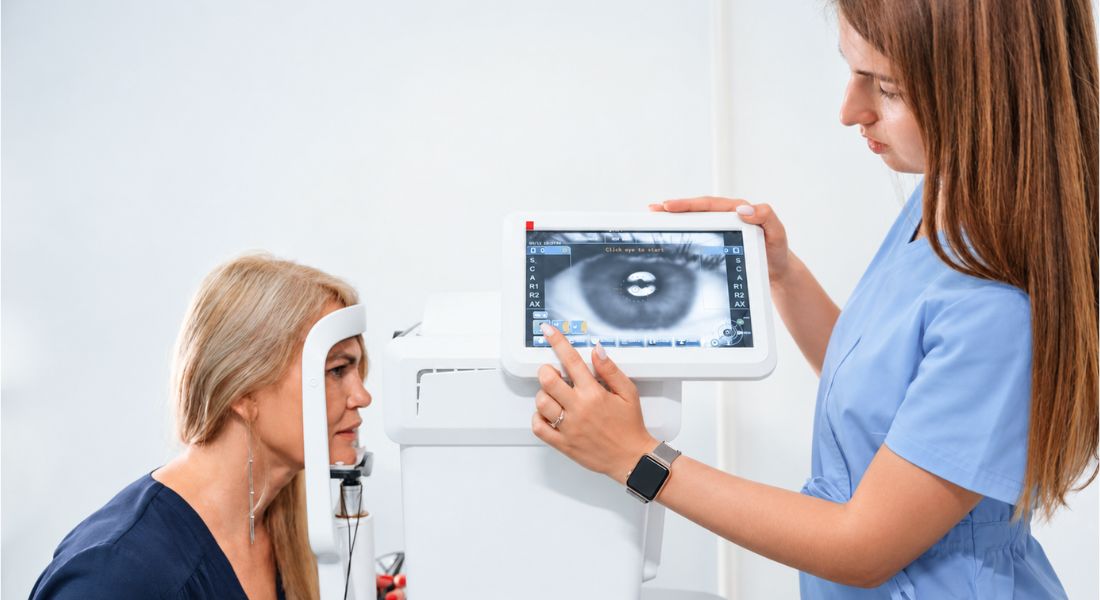
Tamoxifen can cause several changes in your macula, the part of your retina responsible for detailed central vision. You may develop tiny crystalline deposits or small cavities within the retina, which can sometimes affect the photoreceptor layer.
Some people may also develop true macular oedema. Your eye specialist will consider your symptoms, OCT findings and tamoxifen history together, as these changes can look different from typical fluid-related macular problems.
What Symptoms Can Tamoxifen Retinopathy Cause?
Tamoxifen retinopathy may cause no symptoms at first, so you may not realise your retina has changed. If symptoms develop, you may notice blurred central vision, difficulty reading, distorted lines or reduced sharpness when seeing fine detail.
You may also notice changes in colour perception, but these symptoms can have many causes. You should arrange an eye examination if visual changes persist, as an OCT scan can help your specialist identify retinal changes or another eye condition.
Why Is OCT Useful for People Taking Tamoxifen?
OCT provides detailed images of your retinal layers and can detect subtle changes that may not be visible during a routine eye examination. You may have small retinal cavities, deposits or photoreceptor changes that an OCT scan can identify clearly.
The scan is quick, painless and does not require an injection. You should know that an abnormal OCT does not always mean tamoxifen is the cause, so your specialist will consider your symptoms, scan results and other possible eye conditions.
Research Insight
A 2024 comprehensive review concluded that retinal changes have been reported in up to around 12% of people taking tamoxifen 20 mg daily for more than two years, based on the published studies and case reports available. However, reported rates vary considerably because studies use different populations, imaging methods and definitions of retinal toxicity.
Another review found reported retinal or choroidal toxicity rates ranging from approximately 0.9% to 12%. These figures should therefore be interpreted as study estimates rather than predicting your individual risk.
What Are the Crystalline Deposits Linked With Tamoxifen?
Tamoxifen retinopathy can cause tiny yellow-white crystalline deposits around your macula. You may have these deposits without any noticeable change in your vision, and OCT can make them easier to detect.
However, you can develop retinal changes even without visible crystals. Your eye specialist will therefore consider your OCT results, symptoms, tamoxifen exposure and other possible retinal conditions rather than relying on crystals alone.
Can Tamoxifen Cause Macular Oedema or Retinal Cavitation?
Yes, although these changes are uncommon. Tamoxifen can cause macular oedema, which may make your vision blurred or distorted. OCT can also show small foveal cavities without the fluid leakage usually seen with typical macular oedema.
These cavities can resemble changes caused by macular telangiectasia type 2. You should tell your specialist that you take tamoxifen, as your medication history and retinal imaging can help identify the correct cause and guide appropriate management.
Multimodal retinal imaging may be useful when the diagnosis is uncertain because tamoxifen retinopathy and MacTel type 2 can share features such as foveal cavitation, photoreceptor disruption and crystalline deposits. Their imaging patterns are not identical, so additional retinal imaging may help your ophthalmologist distinguish between them.
Does Dose or Treatment Duration Affect the Risk?

Your risk of tamoxifen-related retinal changes may increase with higher cumulative exposure. Although serious toxicity was historically linked to very high doses, retinal changes have also been reported with standard doses used for longer periods.
You should be aware that age and total treatment exposure may influence risk. There is no dose or treatment duration that completely rules out retinal toxicity, so you should report any persistent changes in your vision during long-term treatment.
Can Tamoxifen Increase the Risk of Cataracts?
Tamoxifen is associated with cataracts, although other factors can also contribute to their development.
- Blurred vision: Cataracts can gradually make your sight less clear.
- Glare and haloes: Bright lights may become more uncomfortable, especially at night.
- Other risk factors: Age, diabetes, steroid use, smoking and previous eye injury can also increase cataract risk.
- Treatment: Cataract surgery may be considered if your vision begins to affect everyday activities.
An eye examination can help determine whether a cataract or another eye condition is responsible for changes in your vision.
Can Tamoxifen Affect the Cornea?
Tamoxifen can rarely cause changes in your cornea, the clear front surface of your eye. You may develop tiny deposits that can create a whorl-like pattern, although significant vision problems are uncommon.
These changes may be found during an eye examination even if you have few symptoms. If you notice blurred vision or glare, you should have your whole eye checked, as corneal changes do not necessarily mean your retina is affected.
Can Tamoxifen Affect the Optic Nerve?
Rarely, tamoxifen can affect your optic nerve, causing optic neuropathy or optic neuritis. You may notice reduced vision, faded colours, blurred or dark areas in your central vision, or a difference between your eyes.
These symptoms can have several other causes, so you should arrange prompt ophthalmic assessment if they occur. Your specialist can investigate the cause and determine whether tamoxifen or another condition is responsible.
Do You Need an Eye Examination Before Starting Tamoxifen?
There is no single baseline eye-screening approach that applies to everyone starting tamoxifen. Your oncology team may recommend an eye examination when treatment begins, particularly if you already have an eye condition such as macular disease or diabetic retinopathy, as a baseline assessment can help your specialist monitor future changes.
You should follow the monitoring plan recommended for you and report any persistent vision changes promptly. If your sight changes while taking tamoxifen, have an eye assessment rather than assuming the medicine is responsible.
UK Guidance Note
Cataracts and retinopathy are recognised eye-related effects of tamoxifen, while corneal changes, optic neuropathy and optic neuritis have also been reported less commonly. If you develop persistent retinal or cataract-related visual changes while taking tamoxifen, you should arrange an ophthalmological assessment.
There is currently no single national UK OCT-monitoring schedule that applies to every person taking standard-dose tamoxifen. Your monitoring plan should therefore take account of your treatment, existing eye health, symptoms and advice from your oncology and eye-care teams.
Should You Have Regular OCT Screening While Taking Tamoxifen?
There is no universally agreed UK schedule for regular OCT screening while taking tamoxifen. Whether you are offered OCT monitoring should be decided according to your treatment history, eye health, symptoms and local clinical practice.
One 2024 review recommended OCT screening every six months after two years of tamoxifen treatment. However, this is an expert review recommendation rather than a universal national UK screening standard. You should discuss monitoring with your oncology team and eye specialist, who can decide how often testing is appropriate for you, especially if you develop vision changes.
Clinical Tip
Tell your optometrist or ophthalmologist that you take tamoxifen, including your approximate dose and how long you have been taking it. Cumulative treatment exposure can help your eye specialist interpret subtle OCT or retinal findings.
Do not wait for your next routine appointment if you develop persistent distortion, central blur or difficulty reading. New visual symptoms should be assessed even if you have previously had normal eye examinations.
What Happens If Retinal Changes Are Found?
If retinal changes are found, your ophthalmologist will first check whether they are actually linked to tamoxifen or another eye condition. You may have further OCT scans or retinal imaging to compare changes over time.
If tamoxifen toxicity is suspected, you should discuss the findings with your cancer specialist before making any changes. You should not stop tamoxifen yourself, as the benefits of treatment must be balanced against your eye health. Early recognition allows your ophthalmologist and cancer specialist to review continued tamoxifen exposure promptly, although established retinal or visual changes may not fully improve after treatment is stopped.
When Should Changes in Vision Be Investigated?
You should arrange an eye examination if you develop persistent blurred vision, distortion, reading difficulties or changes in colour perception while taking tamoxifen. You should not assume these symptoms are caused by the medicine, as cataracts, macular degeneration and other eye conditions can cause similar problems.
Sudden or significant vision loss needs urgent assessment. Your ophthalmologist may use a dilated eye examination and OCT to identify the cause. You should provide your medicine details and continue taking tamoxifen unless your medical team advises you to stop.
Myth vs Fact
| Myth | Fact |
| Everyone taking tamoxifen will develop retinal damage. | No. Retinal toxicity is recognised but does not occur in everyone, and reported rates vary considerably between studies. |
| Tamoxifen retinopathy always causes obvious symptoms. | No. Early retinal changes can sometimes be detected on OCT before you notice a significant change in your sight. |
| Retinal crystals must be present before tamoxifen retinopathy can be diagnosed. | No. OCT can show retinal cavitation or photoreceptor changes even when visible crystalline deposits are absent. |
| Any abnormal OCT in someone taking tamoxifen must be caused by the medicine. | No. Other retinal conditions, including macular telangiectasia type 2, can produce similar findings. |
| Everyone taking tamoxifen needs six-monthly OCT scans. | No. Some experts have suggested this after prolonged treatment, but there is no universal national UK OCT-screening schedule. |
| You should stop tamoxifen as soon as an eye problem is found. | No. Eye findings should be discussed with your ophthalmologist and cancer specialist so the benefits of treatment can be balanced against the potential eye risk. |
Key Takeaways
- Tamoxifen can affect the retina, lens, cornea and, more rarely, the optic nerve.
- Tamoxifen retinopathy can sometimes develop without noticeable symptoms and may be detected using OCT imaging.
- Greater cumulative tamoxifen exposure may increase the risk of retinal toxicity, although retinal changes have also been reported at the standard 20 mg daily dose.
- Tamoxifen-related retinal changes can include crystalline deposits, foveal cavitation, photoreceptor damage and, less commonly, macular oedema.
- Tamoxifen is also associated with an increased risk of cataracts, although age and other health factors can contribute.
- There is currently no single national UK OCT-screening schedule for everyone taking tamoxifen.
- Persistent blurred central vision, distorted lines, reading difficulty or colour changes should be assessed by an eye-care professional.
- Do not stop tamoxifen yourself if an eye problem is suspected; treatment decisions should be made with your ophthalmologist and cancer specialist.
Frequently Asked Questions
- Can tamoxifen affect your eyesight?
Yes, tamoxifen can affect your eyes, although serious problems are uncommon. You may develop retinal changes, cataracts or corneal changes, while optic nerve problems are rare. - What is tamoxifen retinopathy?
Tamoxifen retinopathy refers to changes in the retina, particularly around the macula responsible for detailed central vision. You may develop tiny crystalline deposits or subtle retinal changes that can be detected with OCT. - What symptoms can tamoxifen retinopathy cause?
Early retinal changes may cause no noticeable symptoms. If symptoms develop, you may experience blurred central vision, difficulty reading, distorted lines or reduced sharpness when viewing fine details. - Can tamoxifen cause macular oedema?
Tamoxifen can rarely cause macular oedema or small cavities within the retina. OCT imaging can help your eye specialist identify these changes and distinguish them from other macular conditions. - Does the duration of tamoxifen treatment affect your eye risk?
Your risk of retinal changes may increase with longer treatment and greater cumulative exposure. However, retinal toxicity can occur even with standard doses, so persistent visual changes should be investigated. - Can tamoxifen cause cataracts?
Tamoxifen is associated with cataracts, which may cause gradually blurred vision, glare, haloes or faded colours. Your eye specialist can determine whether a cataract or another eye condition is affecting your sight. - Can tamoxifen affect the optic nerve?
Rarely, tamoxifen can be associated with optic nerve problems such as optic neuropathy or optic neuritis. You may notice reduced vision, faded colours or dark areas in your central vision, which should be assessed promptly. - Do you need an eye test before starting tamoxifen?
Baseline eye-examination practice can vary. Your oncology team may recommend an examination when treatment starts, particularly if you already have an eye condition or other clinical reasons for closer monitoring. - Should you have regular OCT scans while taking tamoxifen?
There is no universally agreed UK schedule for regular OCT screening during tamoxifen treatment. Your oncology and eye teams can decide whether monitoring is appropriate based on your treatment duration, existing eye conditions, risk factors and any visual symptoms. - When should you have your eyes checked while taking tamoxifen?
You should arrange an eye assessment if you develop persistent blurred vision, distortion, reading difficulties or changes in colour perception. Sudden or significant vision loss needs urgent assessment, and you should not stop tamoxifen unless your medical team advises you to do so.
Final Thoughts: Protecting Your Eyes While Taking Tamoxifen
Tamoxifen is an important treatment for many people, but long-term use can sometimes be associated with retinal changes, cataracts or corneal effects. Most people do not develop serious eye problems, but persistent blurred vision, distorted lines, reading difficulties or changes in colour perception should be assessed rather than assumed to be a medication side effect.
If you have any concerns about your eyesight, you can contact our team at Eye Clinic London for a comprehensive assessment.
References:
- Tenney, S., Oboh-Weilke, A., Wagner, D. and Chen, M.Y. (2024) ‘Tamoxifen retinopathy: a comprehensive review’, Survey of Ophthalmology, 69(1), pp. 42–50. Available at: https://pubmed.ncbi.nlm.nih.gov/37482306/
- Bazvand, F. et al. (2023) ‘Tamoxifen retinopathy’, Survey of Ophthalmology, 68(4), pp. 628–640. Available at: https://pubmed.ncbi.nlm.nih.gov/36781026/
- Kwon, H.Y., Kim, J. and Ahn, S.J. (2024) ‘Drug exposure and risk factors of maculopathy in tamoxifen users’, Scientific Reports, 14, 16792. Available at: https://pmc.ncbi.nlm.nih.gov/articles/PMC11263388/
- Hess, K. et al. (2023) ‘Tamoxifen retinopathy and macular telangiectasia type 2: similarities and differences on multimodal retinal imaging’, Ophthalmology Retina, 7(2), pp. 101–110. Available at: https://www.sciencedirect.com/science/article/pii/S2468653022003773
- Ahn, S.J., Kim, J. and Kwon, H.Y. (2024) ‘Nationwide screening practices for tamoxifen retinal toxicity in South Korea: a population-based cohort study’, Journal of Clinical Medicine, 13(8), 2167. Available at: https://www.mdpi.com/2077-0383/13/8/2167