


Sudden Increase in Eye Floaters: When Should You Worry? (Guide)

Noticing a sudden increase in eye floaters can feel unsettling. You might see dark spots, threads, or cobweb-like shapes drifting across your vision. These changes often appear without warning and can be distracting. It’s natural to feel concerned when your vision suddenly looks different.
In many cases, floaters are harmless and linked to normal ageing changes inside your eye. As the vitreous gel changes over time, small clumps can form and cast shadows on the retina. However, a sudden increase in floaters isn’t always something to ignore. In some situations, it can point to a more serious eye condition.
In this guide, you’ll learn what causes a sudden rise in floaters and how doctors assess them. We’ll also explain the warning signs that mean you should seek urgent eye care. Knowing when to worry helps you stay calm while taking the right action. Understanding these differences can make a real difference in protecting your sight.
What Eye Floaters Actually Are
Eye floaters are tiny particles that sit inside the vitreous gel of your eye. The vitreous is a clear, jelly-like substance that fills the space between the lens and the retina. As you get older, this gel naturally begins to change. These changes are a normal part of ageing.
Over time, the vitreous becomes more liquid and less firm. Small fibres within it can clump together and form tiny shadows. When these shadows fall on the retina, you notice them as floaters. They can look like dots, threads, or cobweb-like shapes.
Floaters usually move when your eyes move. You may notice them drifting away when you try to look directly at them. This movement is typical and helps doctors distinguish floaters from problems outside the eye. In most cases, this behaviour is completely normal.
Why Floaters Can Appear Suddenly
Floaters do not always develop slowly over time. Sometimes, a larger clump forms or shifts position inside the vitreous, making floaters seem to appear all at once. This sudden change can be alarming, especially if your vision was previously clear.
As the vitreous changes, it can pull away from the retina quite quickly. When this happens, many new floaters may appear at the same time. This process is called posterior vitreous detachment and becomes more common as you get older.
Although this is often a normal age-related change, a sudden onset should never be ignored. New floaters can occasionally be linked to retinal tears or detachment. An eye examination helps rule out serious causes and keeps your vision safe.
Posterior Vitreous Detachment Explained
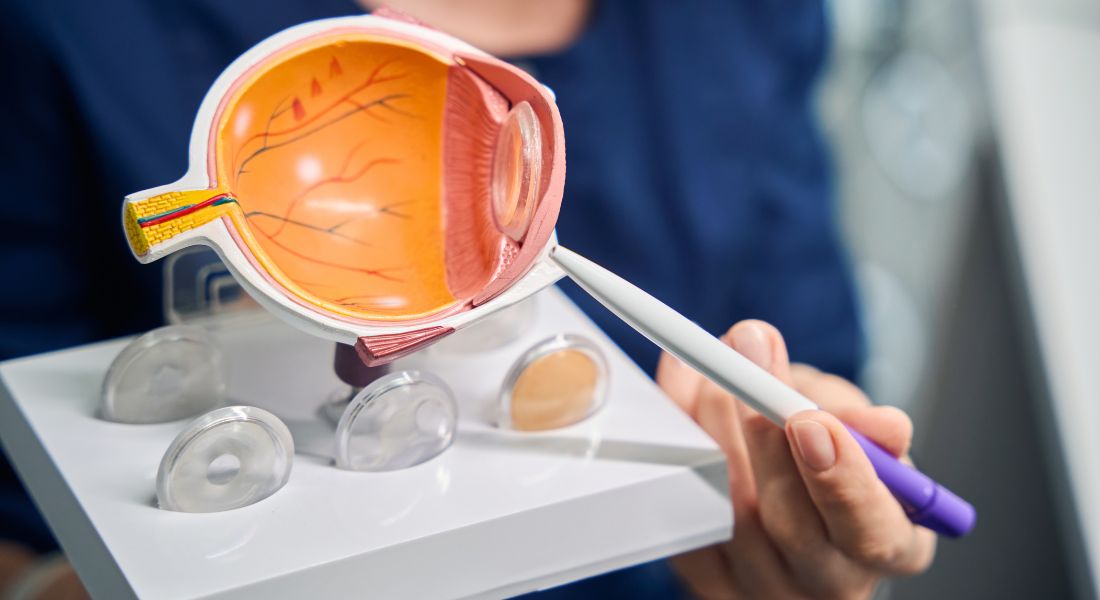
Posterior vitreous detachment, often called PVD, happens when the gel inside your eye (the vitreous) pulls away from the retina. This is a normal, age-related change and becomes more common as you get older, particularly after mid-life.
- Floaters and flashes can appear suddenly: When a PVD occurs, you may notice new floaters appearing all at once or flashes of light, especially in dim lighting. These symptoms can feel worrying, even though they are often part of a natural process.
- Most PVDs are harmless: In the majority of cases, a PVD does not cause lasting problems and settles over time as your brain adapts to the changes.
- A small risk to the retina remains: Occasionally, the vitreous can tug strongly enough on the retina to cause a tear or detachment. This is why a prompt eye examination is important whenever new floaters or flashes appear.
Having your eyes checked quickly helps rule out more serious issues and gives you peace of mind. Early assessment ensures any retinal problems are detected and treated promptly.
Why Age Increases Floater Risk
Age is the biggest risk factor for developing eye floaters. As you get older, the vitreous naturally changes its consistency. It becomes less firm and more liquid, which is a normal part of ageing.
When this happens, tiny fibres inside the vitreous are more likely to clump together. These clumps cast shadows on the retina, which you notice as floaters. The process is gradual, but the visual effect can feel sudden.
Floaters also tend to stand out more as you age. Bright backgrounds, such as white pages or the sky, make them easier to see. You may notice them more when reading or working on a screen.
Most age-related floaters are harmless and do not threaten your sight. However, a sudden increase, flashes of light, or changes in vision should still be checked. Age increases likelihood, but it does not remove risk.
How Myopia Affects Floaters
If you are short-sighted, you are more likely to notice eye floaters. In myopia, the eye is longer in shape, which places extra mechanical stress on both the vitreous and the retina. This makes the vitreous more prone to movement and change.
Because of this, floaters often appear at a younger age in myopic eyes. They may also seem to arrive suddenly rather than gradually. The risk of vitreous separation and retinal tears is higher compared to people without myopia.
This is why you need to be especially cautious if you are short-sighted. Any new floaters, flashes, or changes in vision should be checked promptly. Early assessment helps rule out retinal problems and protects your sight.
When Floaters Are Likely Harmless
Most floaters are not dangerous, even though they can be distracting or annoying. If you’ve had the same floaters for a long time and they haven’t changed, they are usually benign and tend to become less noticeable as your brain adapts.
- Long-standing floaters that stay stable: If your floaters have been present for months or years without increasing in number or size, this is generally reassuring.
- Slow onset without flashes: When floaters appear gradually and you don’t notice flashes of light, the level of concern is lower. This pattern usually suggests normal vitreous changes rather than a retinal problem.
- No loss of vision: If your vision remains clear, with no shadow, curtain, or missing areas, this is another reassuring sign.
Even harmless floaters can still be irritating and unsettling. Having your eyes examined provides reassurance and confirms that nothing serious is going on. That peace of mind really does matter.
Warning Signs That Require Urgent Assessment
Some symptoms mean you should seek urgent eye assessment rather than waiting. These include flashes of light, a sudden shower of new floaters, or a dark shadow appearing in your vision. Any of these can signal a problem affecting the retina.
Flashes often suggest the vitreous is pulling on the retina. A curtain- or shadow-like effect moving across your vision may indicate retinal detachment. Both situations are considered eye emergencies.
Getting checked quickly can protect your sight. Delaying assessment increases the risk of permanent vision loss. When these warning signs appear, urgency really does matter.
Flashes of Light Explained
Flashes of light happen when the vitreous gel inside your eye pulls or tugs on the retina. The retina responds to this mechanical stimulation by sending a signal to the brain that is perceived as light. This is why flashes can appear even when there is no external light source.
You usually notice flashes at the edge of your vision rather than in the centre. They may look like brief sparks, lightning streaks, or flickers. Many people notice them more clearly in dim lighting or when moving their eyes quickly.
Flashes can occur during a posterior vitreous detachment (PVD), which is common as you age. Occasional, short-lived flashes may settle on their own. However, flashes that continue, increase, or become more frequent are more concerning and should not be ignored.
If flashes appear alongside a sudden increase in floaters, the risk is higher. This combination can indicate traction on the retina or an early retinal tear. In this situation, you should arrange an urgent eye examination to protect your vision.
The Meaning of a Curtain or Shadow
If you notice a dark curtain or shadow moving across your vision, this is a serious warning sign. It can indicate a retinal detachment, which is a sight-threatening emergency. Vision loss can progress quickly if it is not treated.
- It often starts at the edge of your vision: You may first notice the shadow in your peripheral vision. Over hours or days, it can move towards the centre and block more of what you see.
- Pain is usually absent: A retinal detachment rarely causes pain, which can make it easier to ignore. The absence of discomfort does not mean the problem is minor.
- Urgent treatment is essential: Retinal detachment needs immediate assessment and treatment. Early repair greatly improves the chance of preserving your sight.
If you ever experience a curtain or shadow in your vision, seek urgent eye care straight away. Acting quickly can make a critical difference to your outcome.
How Doctors Assess Sudden Floaters

When you notice sudden floaters, assessment starts with a thorough eye examination. Your pupil is dilated so the doctor can clearly see the retina and vitreous. This is the best way to check for retinal tears or early detachment.
You may find the lights bright and your vision blurry for a few hours afterwards. Although this can be inconvenient, dilation is essential for safety. Without it, small but serious problems can be missed.
If the view inside the eye is unclear, imaging may be needed. Ultrasound scans can assess the vitreous and retina when floaters or bleeding block direct examination. This is especially useful in more complex cases.
The main goal is to rule out dangerous causes. Most people are reassured after assessment and need no urgent treatment. Having clarity about what is happening often brings peace of mind and clear next steps.
Why Symptoms Can Differ Between Eyes
Floaters often appear in one eye before the other. This difference is very common and does not usually mean something unusual is happening. Your brain naturally blends vision from both eyes, which can mask changes in the affected eye.
Because of this, you may not notice symptoms straight away. If you cover one eye at a time, you might become aware of floaters or shadows you had been ignoring. This simple check can improve your awareness of subtle changes.
During an eye examination, each eye is assessed separately. This allows your doctor to spot differences that you cannot feel or see yourself. Careful comparison helps ensure nothing important is missed.
Why Floaters May Seem Worse in Bright Light
You might notice your floaters more in bright light, even if nothing has changed. They tend to stand out against pale backgrounds like white walls or a blue sky, which can make them feel suddenly worse.
- Bright backgrounds increase contrast: Floaters are easier to see when there’s lots of light and very little visual texture. High contrast makes them more noticeable, even though they haven’t actually increased.
- Lighting affects awareness, not severity: Changes in lighting can make you more aware of floaters at certain times of day. This doesn’t mean they’re getting worse or becoming more dangerous.
- Visibility fluctuates with environment: You may notice floaters more outdoors or in well-lit rooms and less in dim or busy visual settings. This variation is normal.
Understanding this can help reduce anxiety. Seeing floaters more clearly doesn’t mean something is wrong it often just reflects lighting and contrast. Context matters.
Can Eye Strain Cause Floaters?
Eye strain does not cause floaters to form. Floaters come from changes inside the vitreous gel of the eye, not from tired eye muscles. However, strain can make you more aware of floaters that are already there.
When you spend long periods on screens or reading, your eyes become fatigued. This can heighten visual awareness, making floaters seem more obvious, especially against bright backgrounds. Taking breaks may reduce how noticeable they feel, but it does not change the floaters themselves.
It is important not to assume new floaters are due to eye strain. Any sudden change still needs proper assessment. Relying on assumptions can delay diagnosis and increase risk.
Why Floaters Are Not the Same as Blurry Vision
Floaters and blurry vision can feel similar at first, but they behave very differently. Understanding this difference helps you recognise what you’re experiencing and explain it more clearly if you need an eye check.
- Floaters move independently of focus: Floaters drift, shift, and move when you move your eyes. You may notice them darting away when you try to look directly at them.
- Blur affects the whole image: Blurry vision makes everything look out of focus, like looking through a fogged window. Floaters, by contrast, appear as moving shapes or shadows within otherwise clear vision.
- The difference matters: Confusing floaters with blur can delay the right care. Being able to describe whether you’re seeing moving shapes or general haze helps your eye care professional reach an accurate diagnosis more quickly.
Recognising how floaters behave allows you to respond appropriately. Clear descriptions lead to better assessment and peace of mind.
How Long It Takes for Floaters to Settle
After a posterior vitreous detachment, floaters often feel very noticeable at first. Over time, your brain adapts and starts to filter them out automatically. For many people, this settling process takes a few weeks to a few months.
Some floaters never disappear completely. Even then, their impact usually reduces as they move away from the centre of vision or become less distracting. You may still see them occasionally, but they interfere far less with daily activities.
If floaters remain stable without new symptoms, this is generally reassuring. What matters most is change rather than presence. Ongoing monitoring helps ensure everything stays safe.
Can Floaters Be Treated?
In most cases, floaters do not need treatment. They are harmless and tend to become less noticeable over time as your brain adapts. Reassurance and observation are usually all that is required.
In a small number of people, floaters can be very dense or disruptive. If they significantly interfere with daily life, treatment options may be discussed. These are considered cautiously, as all interventions carry risk.
Procedures such as laser treatment or vitrectomy are not routine. They are reserved for selected cases and only after careful assessment. Not all floaters are suitable for treatment.
It is important to understand the limits of treatment. The priority is protecting eye health, not cosmetic perfection. For most people, conservative care remains the safest and best approach.
How Retinal Tears Develop
Retinal tears develop when the vitreous pulls firmly on the retina. If you have areas of retinal weakness, this traction can cause a small tear. Once a tear forms, fluid can slip underneath the retina.
If fluid continues to collect, a retinal detachment can develop. This is a serious condition, but early detection makes a big difference. Laser treatment can seal the tear and stop it from progressing.
Symptoms are not always dramatic at first. You may only notice a sudden increase in floaters or brief flashes of light. This is why you should never ignore sudden changes. Early assessment protects your vision.
Who Is at Higher Risk of Serious Causes
Some people need to be especially cautious when new floaters or flashes appear. Your individual risk depends on factors that affect the vitreous and the strength of the retina. If you fall into a higher-risk group, changes inside the eye are more likely to have serious causes. This is why you should take new symptoms seriously and seek assessment promptly rather than waiting to see if they settle.
| Risk Factor | Why It Matters |
| Increasing age | Higher PVD risk |
| High myopia | Retinal vulnerability |
| Eye trauma | Vitreous disturbance |
| Previous eye surgery | Structural changes |
| Family history | Genetic susceptibility |
When Monitoring Is Appropriate
When no retinal tear or detachment is detected, careful monitoring is often the safest approach. Many floaters are linked to normal vitreous changes and do not require immediate treatment. In these cases, observation avoids unnecessary intervention while keeping your vision protected. This balanced approach is commonly recommended.
Follow-up appointments are used to confirm that the eye remains stable. Your specialist will check for any new traction or retinal changes that may develop over time. These reviews are an important safety net, especially in the weeks following sudden symptoms.
You are also guided on what to watch for at home. A sudden increase in floaters, new flashes of light, or a shadow in your vision should prompt urgent reassessment. Knowing these warning signs helps you act quickly if the situation changes.
Monitoring is not about ignoring symptoms. It is about combining professional checks with your own awareness. When done properly, this approach offers reassurance while ensuring that any developing problem is caught early.
Why Ignoring Symptoms Can Be Risky
Ignoring sudden changes in your vision can be risky. New floaters may seem harmless, but they can be an early sign of a retinal tear. If a tear is left untreated, it can progress to retinal detachment, where vision loss may become permanent.
The problem is that early warning signs are often subtle. You may not feel pain, and your vision might still seem mostly clear. Waiting for severe blur or discomfort is unsafe, as many serious eye conditions develop quietly.
Conditions affecting the retina or optic nerve rarely cause pain. By the time vision is noticeably affected, damage may already be advanced. This is why relying on symptoms alone can be misleading.
Getting checked promptly protects your sight. Even if the outcome is reassuring, knowing your eye is safe brings peace of mind. When it comes to vision, caution is always the better choice.
Summary: When to Worry About Floaters

Not all floaters carry the same level of risk, and understanding the pattern of your symptoms is key. Some floaters are part of normal ageing and remain harmless for years, while others signal changes that need prompt attention. The difference lies in how suddenly they appear and whether they are accompanied by other visual symptoms.
This summary helps you judge when reassurance is appropriate and when urgent assessment is essential. Recognising these warning signs allows you to act quickly, protecting your vision and avoiding unnecessary delay.
| Symptom | Level of Concern |
| Long-standing stable floaters | Low |
| Sudden increase in floaters | Moderate |
| Floaters with flashes | High |
| Curtain or shadow | Emergency |
| Vision loss | Emergency |
FAQs:
- What causes a sudden increase in eye floaters?
A sudden increase in floaters is usually caused by changes in the vitreous gel inside the eye, such as clumping offibers or a posterior vitreous detachment. While these changes are often age-related and harmless, they can sometimes indicate a retinal tear or detachment, so prompt assessment is important. - Are all eye floaters dangerous?
Not all floaters are dangerous. Many people have floaters that appear gradually and remain stable over time, which are usually benign. However, a rapid increase in floaters, especially when accompanied by flashes or shadows, can signal a moreserious problem requiring urgent examination. - What is posterior vitreous detachment (PVD) and how is it related to floaters?
Posterior vitreous detachment occurs when the vitreous gel pulls away from the retina. This is a normal process that becomes more common with age. When PVD happens, floaters can appear suddenly, sometimes along with flashes of light, and a thorough eye examination is recommended to rule out complications. - Why do flashes of light occur with new floaters?
Flashes of light happen when the vitreous tugs on the retina, causing the retina to interpret this traction as light. Occasional flashes can be harmless, but if they are persistent or appear alongside new floaters, they mayindicate retinal issues and require immediate attention. - What does a curtain or shadow in vision mean?
A dark curtain or shadow moving across your visual field is a warning sign of possible retinal detachment. This condition can lead to permanent vision loss if not treated promptly, so anyone experiencing this symptom should seek emergency eye careimmediately. - Can eye strain cause new floaters?
Eye strain does not create floaters, although it can make existing floaters more noticeable. Activities like prolonged screen use or reading may increase awareness of floaters, but any sudden appearance of new floaters should be assessed by an eye specialist rather than attributed to fatigue alone. - Do floaters affect both eyes the same way?
Floaters often appear in one eye before the other. This asymmetry is normal, and doctors examine each eye individually to ensure that subtle changes are not missed. Differences between the eyes can also help inidentifying potential retinal issues early. - How long do floaters last after a PVD?
After a posterior vitreous detachment, floaters may gradually become less noticeable as the brain adapts to the changes. This process can take several weeks to months. In some cases, floaters persist indefinitely but usually become less intrusive over time. - When is monitoring floaters appropriate instead of immediate treatment?
Monitoring is suitable when no retinal tears or detachment are detected during a thorough examination. Patients are often advised to follow up regularly and watch for new symptoms, while being educated about warning signs that require urgent evaluation. - Why is prompt assessment of sudden floaters so important?
Prompt assessment is essential because a sudden increase in floaters canindicate retinal tears or detachment, which may lead to permanent vision loss if untreated. Early detection allows preventive measures, such as laser treatment, and ensures that vision is protected whenever possible.
Final Thoughts: Protecting Your Vision from Sudden Floaters
A sudden increase in floaters can be alarming, but understanding what is normal and what requires urgent attention helps you respond appropriately. Most floaters are harmless, yet any rapid change—especially when accompanied by flashes or a shadow—should never be ignored. Early assessment is the best way to prevent serious complications such as retinal tears or detachment.
If you’re considering floaters treatment in London and want to know whether it’s the right option for your eyes, you’re welcome to reach out to us at Eye Clinic London to arrange a consultation. Prompt action and professional guidance ensure your vision remains protected and give you peace of mind.
References:
- GarciaAguirre, G., HenaineBerra, A. and SalcedoVillanueva, G., 2022. Visualization and Grading of Vitreous Floaters Using Dynamic UltraWidefield Infrared Confocal Scanning Laser Ophthalmoscopy: A Pilot Study. https://www.mdpi.com/2077-0383/11/19/5502
- Milston, R., Madigan, M.C. and Sebag, J., 2016. Vitreous floaters: Etiology, diagnostics, and management. Survey of Ophthalmology, 61(3), pp.211–227. https://pubmed.ncbi.nlm.nih.gov/26679984/
- Boldrey, E.E., 1983. Risk of retinal tears in patients with vitreous floaters. British Journal of Ophthalmology. https://pubmed.ncbi.nlm.nih.gov/6660267/
- Albrecht, M., 2025. Vision degrading myodesopsia from vitreous floaters in the young: An important aspect of myopia. Ophthalmology and Vision Science. https://www.sciencedirect.com/science/article/pii/S0039625724001280
- Foos, R.Y. and Willerson, D.H. (1983) Vitreous floaters: clinical observations in acute onset cases, Archives of Ophthalmology, 101(7), pp.1055–1060. https://pubmed.ncbi.nlm.nih.gov/6664665/