


Can Stress or Anxiety Make Eye Floaters Worse? (Explained)

You may notice that eye floaters feel far more intrusive during periods of stress or anxiety. You may see them as darker, more frequent, or harder to ignore, even though nothing obvious has changed in your vision. We recognise that this can quickly create worry that the eye itself is deteriorating.
We understand that this experience can be unsettling. You are not alone in noticing that floaters seem closely linked to emotional state rather than physical change. We see many people report the same pattern during busy, anxious, or emotionally intense periods.
This does not mean the experience is imagined or exaggerated. You are experiencing real symptoms, but the cause is often perceptual rather than structural. We recognise that understanding this distinction helps reduce unnecessary fear and self-doubt.
This explanation focuses on why stress and anxiety can amplify awareness of floaters. You benefit when clarity replaces worry and perception is understood in context. Knowledge supports reassurance and calmer engagement with symptoms.
What Eye Floaters Actually Represent
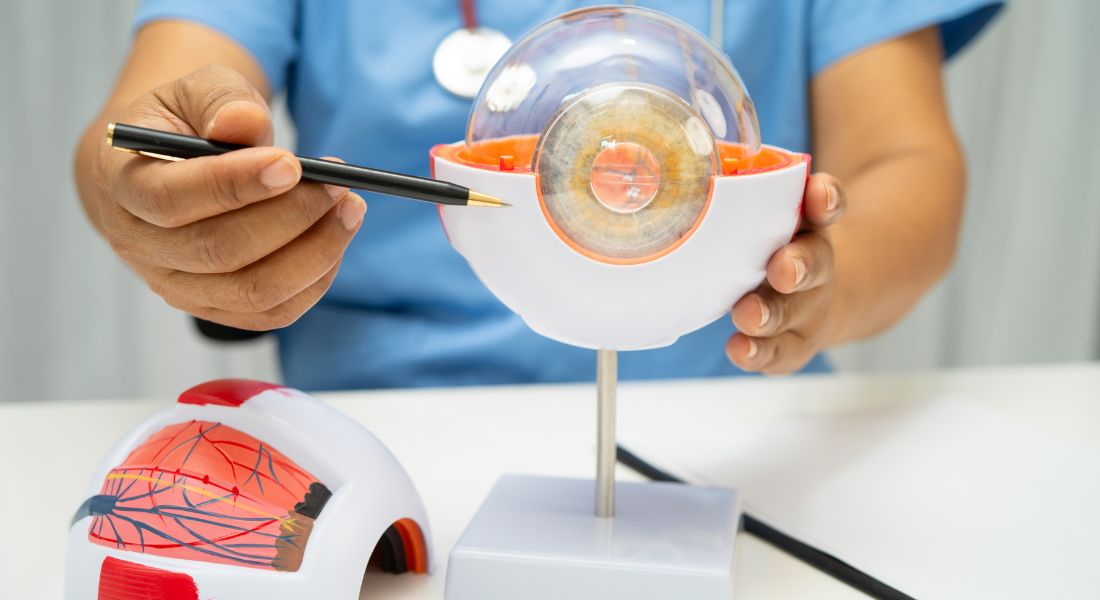
Eye floaters are small opacities within the vitreous gel of the eye. They cast shadows on the retina as light passes through. These shadows are what you perceive as dots, threads, or cobweb-like shapes.
You may already know that floaters are common and often benign. They typically develop due to age-related vitreous changes. Once present, they often remain stable over time. We emphasise that floaters themselves usually do not fluctuate rapidly.
Their physical structure tends to change slowly, not day to day. This is an important foundation for understanding symptom variation. When symptoms change quickly, perception is often the key factor. Awareness matters.
Why Stress Changes Visual Awareness
Stress alters how the brain processes sensory input. During stress, attention becomes heightened and scanning increases. This applies to visual input as much as emotional or physical sensations.
You may find yourself more alert to potential threats when anxious. The brain becomes more vigilant. This heightened vigilance makes subtle visual phenomena more noticeable.
We recognise that floaters are normally filtered out by the brain. Stress weakens this filtering process. Shadows that were previously ignored suddenly demand attention. Stress does not create new floaters. It changes how strongly they are perceived.
The Role of Attention and Hypervigilance
Attention has a strong influence on how eye floaters are experienced. When focus turns inward, visual awareness often increases, making small imperfections feel more noticeable. We recognise this process as hypervigilance rather than physical change within the eye. Understanding this mechanism helps explain why floaters can feel worse during periods of anxiety.
- Heightened attention amplifies floater awareness: When attention is focused inward, the brain becomes more sensitive to visual input. Floaters can feel more prominent even though nothing has changed structurally.
- Repeated checking reinforces perception: Actively scanning your vision teaches the brain to prioritise floaters. The more attention given, the more noticeable and intrusive they can feel.
- Anxiety often creates a self-reinforcing cycle: Concern leads to monitoring, and monitoring increases awareness. You benefit when this loop is interrupted, as reduced attention lowers symptom intensity.
Understanding the role of attention can be reassuring and empowering. By recognising that awareness, not damage, drives symptom intensity, it becomes easier to step out of the cycle. Reducing focus allows the brain to resume normal filtering, helping floaters fade back into the background.
Why Anxiety Amplifies Normal Sensations

Anxiety heightens sensitivity across the nervous system, making neutral sensations feel uncomfortable or threatening. You may notice that vision is affected in the same way as other senses. We recognise that this heightened state changes how visual input is processed.
You may find that floaters suddenly feel intolerable rather than mildly annoying. We understand that this shift does not mean the floaters have changed physically. Anxiety amplifies their impact by increasing attention and emotional response.
We see anxiety increase the emotional weighting given to sensory input. You are affected because the brain assigns greater importance to perceived abnormalities. This explains why floaters feel worse during anxious periods, as emotional processing strongly shapes perception.
How the Brain Normally Filters Floaters
Under calm conditions, the brain automatically suppresses constant visual noise. You benefit from this filtering because floaters are treated as low-priority information, allowing attention to stay on what matters. We see this process protect visual comfort without conscious effort.
You are usually unaware of floaters unless you actively search for them. This filtering happens subconsciously and prevents minor visual disturbances from dominating awareness. We recognise that this mechanism works continuously in the background.
We see stress disrupt this suppression by shifting the brain into scanning mode rather than filtering mode. You may find that minor stimuli move into the foreground and become harder to ignore. When calm returns, filtering strengthens again and floaters fade back into the background.
Why Floaters Feel Louder During Quiet Moments
Floaters are often more noticeable during quiet or unstructured moments. You may find that stressful thinking surfaces when the mind turns inward and external demands reduce. We recognise that this inward focus increases awareness of visual sensations.
You may notice floaters while resting, working alone, or lying in bed. We understand that reduced distraction sharpens internal focus, making visual awareness feel stronger. Without competing stimuli, small imperfections stand out more clearly.
We recognise that mental quiet does not always bring perceptual quiet. You are more likely to notice floaters during periods of recovery or reflection because context changes how attention is directed. Perception is influenced by surroundings as much as by the eye itself.
The Connection Between Stress Hormones and Perception
Stress triggers the release of hormones such as cortisol and adrenaline, which heighten alertness and sensory sensitivity. You may notice that vision feels more sharply tuned during stressful periods. We see this heightened state increase awareness of visual detail.
You may feel more visually alert, but this increased sharpness also makes minor imperfections stand out. We recognise that floaters can appear clearer or more prominent under these conditions. This change reflects amplified perception rather than any new development in the eye.
We do not see evidence that stress hormones alter vitreous structure directly. You are affected neurologically rather than physically, as hormones influence attention and processing. Perception changes, but the eye itself remains stable.
Why Stress Does Not Physically Worsen Floaters
It is natural to worry that stress might be causing damage inside the eye. Many people fear that emotional strain is triggering new floaters or accelerating eye changes. We recognise that this concern is common, especially when symptoms feel more noticeable during anxious periods. Understanding what stress can and cannot do helps reduce unnecessary fear.
- Stress does not cause new floaters to form: Vitreous changes occur through ageing and structural processes, not emotional state. We recognise that stress may coincide with symptoms but does not create floaters.
- Emotional strain does not rapidly alter eye structure: You may worry that anxiety is accelerating physical change within the eye. Structural vitreous changes follow biological timelines rather than moments of stress.
- Stress affects perception, not physical presence: Heightened awareness makes existing floaters feel more noticeable. You benefit from knowing the eye itself is usually unchanged.
Stress can strongly influence how floaters are experienced, but it does not damage the eye or generate new ones. By separating perception from structure, fear of irreversible harm often eases. This understanding supports reassurance, calm response, and a return to normal visual adaptation.
Anxiety, Catastrophic Thinking, and Floaters
Anxiety often fuels catastrophic thinking, where small changes are interpreted as serious threats. You may find that floaters become a focal point for this process because they are visible and unpredictable. We recognise that heightened anxiety magnifies their significance.
You may worry that floaters signal retinal damage or impending vision loss. We understand that this fear increases attention, which in turn intensifies anxiety and awareness. A self-reinforcing cycle can develop where concern amplifies perception.
We see that reassurance and clear explanation significantly reduce this distress. You benefit when risk is understood realistically rather than imagined catastrophically. Education breaks the loop by calming perception and restoring balance.
Why Floaters Feel Different During Emotional Exhaustion
Emotional exhaustion can reduce your ability to cope with minor physical sensations. You may notice that floaters feel more intrusive during periods of burnout or prolonged stress. We see tolerance drop when emotional reserves are depleted.
You may feel overwhelmed by visual sensations that you previously ignored. We recognise that this does not indicate worsening eye health, but rather reduced resilience. When capacity is low, even familiar stimuli can feel harder to manage.
We understand that emotional load directly influences symptom tolerance. As balance and energy return, you usually find that tolerance improves and floaters feel less dominant again. Recovery restores perspective, and symptoms often recede into the background.
The Difference Between Perception and Progression
It is important to distinguish between symptom perception and true disease progression. You may experience increased awareness without any underlying structural change. We recognise that noticing more does not automatically mean that something has worsened.
You may feel that floaters are multiplying or becoming darker. In many cases, perception has simply become sharper due to attention, lighting, or anxiety. We often find that objective examination shows stability despite heightened concern.
We rely on clinical assessment to separate benign perceptual changes from real progression. You are reassured when monitoring confirms stability over time. Understanding this distinction helps prevent unnecessary alarm and supports calmer, more confident management.
When Stress and Floaters Coincide With Visual Checking
Visual checking behaviours are common when anxiety is present. You may repeatedly look at bright backgrounds or scan your vision to see whether floaters are still there. We recognise that this behaviour reinforces awareness and keeps attention locked onto visual disturbances.
You may find yourself testing vision against white walls, screens, or the sky. We understand that this habit strengthens the brain’s focus on floaters, making awareness feel constant. Repeated checking teaches the brain that the sensation is important, even when it is harmless.
We encourage reducing checking behaviours and allowing vision to move naturally. You benefit when attention is not repeatedly pulled back to the same stimulus. Breaking checking habits weakens the perception cycle, as behaviour directly influences awareness.
Why Floaters Can Trigger Health Anxiety

Eye floaters can feel unsettling because they move unpredictably and cannot be controlled. This lack of control often triggers anxiety, as the brain prefers clear explanations and certainty. We recognise that visual symptoms can feel especially threatening because vision is central to everyday life. Understanding this reaction helps explain why worry often accompanies floaters.
- Unpredictability can trigger health-related anxiety: Floaters move without warning and cannot be focused away. You may find this unpredictability unsettling, even when the floaters are harmless.
- Uncertainty amplifies concern more than the symptom itself: Unexplained visual changes can feel threatening because vision is so essential. We understand that lack of control often fuels worry rather than the floater itself.
- Education restores a sense of control: Understanding what floaters are and why they behave as they do reduces fear. You benefit when knowledge replaces uncertainty and helps the brain settle.
Anxiety around floaters is often driven by unpredictability rather than danger. By explaining what is happening and why, education helps restore confidence and calm. Even when floaters remain visible, understanding reduces their emotional impact and allows reassurance to take hold.
How Reassurance Helps Reset Perception
Reassurance reduces vigilance by easing fear and allowing attention to relax. You may find that once anxiety settles, the brain resumes its normal filtering of visual information. We see this shift help floaters lose their prominence.
You may notice floaters fading into the background gradually rather than disappearing all at once. We recognise that this slow change is typical as awareness softens over time. Reduced anxiety allows perception to recalibrate naturally.
We see this pattern frequently after clear explanation and reassurance. You benefit when understanding changes how symptoms are experienced rather than ignored. Reassurance does not dismiss what you notice, but reframes it accurately and calmly.
When Stress Management Improves Floater Awareness
Reducing stress often leads to reduced awareness of floaters. You may notice that better sleep, steady routines, and improved emotional regulation all contribute to calmer visual experience. We see this pattern frequently as the nervous system settles.
You may find that floaters become less intrusive during calmer periods of life. We recognise that this improvement reinforces a perceptual explanation rather than a structural change in the eye. When stress lowers, vigilance decreases.
We encourage holistic stress management rather than eye-focused intervention alone. You benefit when the nervous system is supported as part of overall wellbeing. Balance helps perception, and visual comfort often follows indirectly.
Why Mindfulness Can Reduce Floater Distress
Mindfulness helps reduce reactive attention by encouraging non-judgemental awareness rather than fixation. You may still notice floaters, but they tend to feel less emotionally charged. We see that the brain is less likely to amplify what is observed calmly.
You may find that floaters remain present without dominating attention. We recognise that when emotional response softens, perception often becomes less intrusive. Calm observation changes how the visual system responds.
We see mindfulness support distress reduction without trying to eliminate floaters. You benefit when acceptance alters experience rather than resistance. Reducing struggle reduces suffering, and calm attention softens perception.
Why Avoidance Often Backfires
Trying to force floaters out of awareness often has the opposite effect. You may find that active suppression increases focus, making floaters feel more prominent. We see attention strengthen what the brain is trying to ignore.
You may become frustrated when floaters persist despite effort. We recognise that this frustration raises stress levels, which further heightens awareness. A cycle can develop where effort unintentionally maintains the problem.
We advise gentle redirection rather than forceful avoidance. You benefit when the brain is allowed to adapt naturally without pressure. Acceptance reduces intensity, and control works best when it is indirect.
When Increased Floater Awareness Is Usually Reassuring
Long-standing floaters that become more noticeable during periods of stress are usually benign. You benefit from recognising that stability over time is a reassuring sign. We see unchanged floaters behaving differently from new or rapidly evolving symptoms.
You may notice that awareness fluctuates with mood, fatigue, or anxiety rather than appearing suddenly. We recognise that this pattern points toward perceptual influence rather than structural change. Variation linked to stress is common and expected.
We emphasise monitoring patterns over time rather than reacting to moment-to-moment intensity. You are reassured when consistency is present and no new warning signs appear. Sudden structural change follows a different course, which is why stability remains key.
When Stress Should Not Be Blamed Alone
Not all visual changes should be attributed to stress. You should take new floaters, flashes of light, or any loss of vision seriously, regardless of anxiety levels. We recognise that these symptoms require assessment to rule out underlying eye problems.
You should seek urgent review if symptoms change suddenly or progress quickly. We understand that stress can exist alongside genuine ocular issues, and both deserve attention. Assuming everything is stress-related can delay necessary care.
We never dismiss new symptoms as psychological alone. You are protected when safety comes first and assessment clarifies the cause. Knowing when to act helps safeguard vision, and caution is appropriate.
How Clinicians Differentiate Perception From Pathology
Clinical examination assesses vitreous status and retinal health through direct assessment and imaging. You benefit from these tests because they show whether any structural change has occurred. We rely on objective findings to understand what is happening inside the eye.
You may feel that symptoms are severe even when examinations remain stable. We recognise that this often points toward a perceptual rather than structural cause. Objective data provides reassurance when findings do not match symptom intensity.
We use clinical tools to distinguish harmless perception changes from true pathology. You are supported when management is guided by evidence rather than fear. Assessment replaces uncertainty with clarity, and evidence helps calm anxiety.
Why Education Is Often the Best Treatment
Understanding the relationship between the mind and the eye helps reduce fear. You may notice that fear amplifies symptoms, making them feel more intrusive than they are. We see education as a way to break this cycle by reducing uncertainty.
You may feel relief simply by knowing that stress can alter perception. We recognise that this awareness alone can change how symptoms are experienced. Understanding often reduces vigilance, which allows the visual system to settle.
We believe education is a powerful form of care. You regain confidence when knowledge replaces fear and speculation. Understanding is often more effective than intervention, and reassurance supports healing.
When Treatment Is Rarely Needed
Most stress-related distress linked to floaters does not require medical intervention. You often find that observation and reassurance are enough as awareness settles over time. We recognise that this approach is appropriate in the majority of cases.
You may worry that doing nothing means neglecting the problem. We understand that, in reality, monitoring is an active and sensible choice when symptoms are stable. Over-treatment can heighten anxiety rather than improve comfort.
We reserve intervention for rare situations where floaters severely impair quality of life. You benefit when decisions are careful and individualised. Most floaters do not need treatment, and calm management is usually sufficient.
When Specialist Advice May Help
If distress remains high despite reassurance, specialist advice can be helpful. You may find that a focused discussion restores confidence by separating perception from risk. We see understanding as the first step toward feeling more settled.
We emphasise careful assessment before considering any form of intervention. You benefit when safety and potential benefit are weighed together rather than acting out of urgency. Caution protects outcomes.
We believe expert guidance brings clarity to uncertain situations. You feel less fearful when options are explained clearly and realistically. Clarity reduces anxiety and supports calmer decision-making.
Why Anxiety About Floaters Often Improves Over Time
The brain adapts remarkably well to visual changes. You may find that as anxiety settles, visual filtering improves and floaters begin to fade into the background. We see this adaptation happen naturally over time.
You may notice gradual improvement rather than a sudden disappearance. We recognise that this slow shift is normal and reflects the brain learning to ignore low-priority visual input. Change often feels subtle but meaningful.
We encourage patience with this process of adaptation. You benefit as the nervous system recalibrates without intervention. Time and understanding work together, and improvement often follows calm.
FAQs:
- Can stress really make your eye floaters feel worse?
Stress can heighten how strongly you notice existing floaters. You may feel they are darker or more intrusive during anxious periods. This change usually reflects altered perception rather than eye damage. Awareness increases when stress is high. - Why do your floaters seem more obvious when you feel anxious?
Anxiety increases vigilance and scanning behaviour. You become more alert to visual sensations that are normally ignored. This heightened attention makes floaters stand out. The eye itself often remains unchanged. - Does stress cause new floaters to form in your eyes?
Stress does not create new floaters inside the eye. Floaters develop through slow structural changes rather than emotional state. Stress affects how clearly you notice them. Perception changes faster than eye anatomy. - Why do floaters feel more intrusive during quiet or stressful moments?
When distractions reduce, attention often turns inward. You may become more aware of visual sensations during rest or worry. Without competing stimuli, floaters feel more prominent. Context strongly shapes perception. - How does anxiety affect the way your brain processes floaters?
Anxiety weakens the brain’s normal filtering of visual noise. Floaters that were previously ignored move into awareness. The brain treats them as more important than they are. Emotional state alters processing, not structure. - Why does checking your vision make floaters feel constant?
Repeatedly scanning your vision trains the brain to prioritise floaters. Each check reinforces awareness and sensitivity. Over time, this can make floaters feel persistent. Reducing checking helps perception settle. - Can emotional exhaustion make your floaters harder to tolerate?
When emotional reserves are low, tolerance for minor sensations decreases. You may find floaters feeling overwhelmed during burnout or fatigue. This reflects reduced coping capacity rather than worsening eye health. Recovery often improves tolerance. - How can reassurance change how you experience floaters?
Reassurance reduces fear and lowers vigilance. As anxiety settles, the brain resumes filtering background visual input. Floaters may still exist but feel less intrusive. Understanding helps perception recalibrate naturally. - When should you not blame stress alone for floater changes?
You should not attribute sudden new floaters or flashes to stress. Any rapid change or vision loss needs assessment. Stress can coexist with real eye problems. Safety requires timely review. - Why do floaters often become less bothersome over time?
The brain adapts to stable visual input. As anxiety reduces, floaters gradually fade into the background. This process is usually slow and natural. Time, understanding, and calm allow adaptation to occur.
Final Thoughts on Stress and Eye Floaters Perception:
Stress and anxiety can make eye floaters feel significantly worse by increasing visual attention, reducing perceptual filtering, and amplifying emotional response, even when the eye itself has not changed. This experience is common, real, and usually reversible as stress settles. Understanding the neurological and perceptual mechanisms involved helps reduce fear and regain confidence in visual stability.
If you experience sudden changes, flashes, or vision loss, prompt review is essential. For expert reassurance and personalised advice on floaters treatment in London, you can contact us at Eye Clinic London.
References:
- Woudstra-de Jong, J.E., Manning-Charalampidou, S. & Pesudovs, K., 2023. Patient-reported outcomes in patients with vitreous floaters: A systematic literature review. Survey of Ophthalmology. Available at: https://www.sciencedirect.com/science/article/pii/S0039625723000899
- Garcia-Aguirre, G., Henaine-Berra, A. & Salcedo-Villanueva, G., 2025. Visualization and grading of vitreous floaters using dynamic ultra-widefield infrared confocal scanning laser ophthalmoscopy: a pilot study. Journal of Clinical Medicine, 11(19), 5502. Available at: https://www.mdpi.com/2077-0383/11/19/5502
- Rodriguez-Vidal, C., Alday, N.M., Blanco Teijeiro, M.J. and Bande, M. (2025) ‘Ultrasound-based assessment of posterior vitreous detachment in healthy eyes: Clinical and biometric factors associated with more advanced PVD’, Journal of Clinical Medicine, 14(23), p. 8587. Available at: https://www.mdpi.com/2077-0383/11/19/5502
- Hollands, H., Johnson, D., Brox, A.C., Almeida, D., Simel, D.L. and Sharma, S. (2009) ‘Acute-onset floaters and flashes: is this patient at risk for retinal detachment?’, JAMA, 302(20), pp. 2243–2249. Available at: https://pubmed.ncbi.nlm.nih.gov/30632695/
- Lynch, A. and Xu, L. (1999) ‘Predictive value of floaters in the diagnosis of posterior vitreous detachment’, British Journal of Ophthalmology, 83(8), pp. 933–935. Available at: https://pubmed.ncbi.nlm.nih.gov/9437329/