


Is PRK Surgery Good for High Prescriptions?
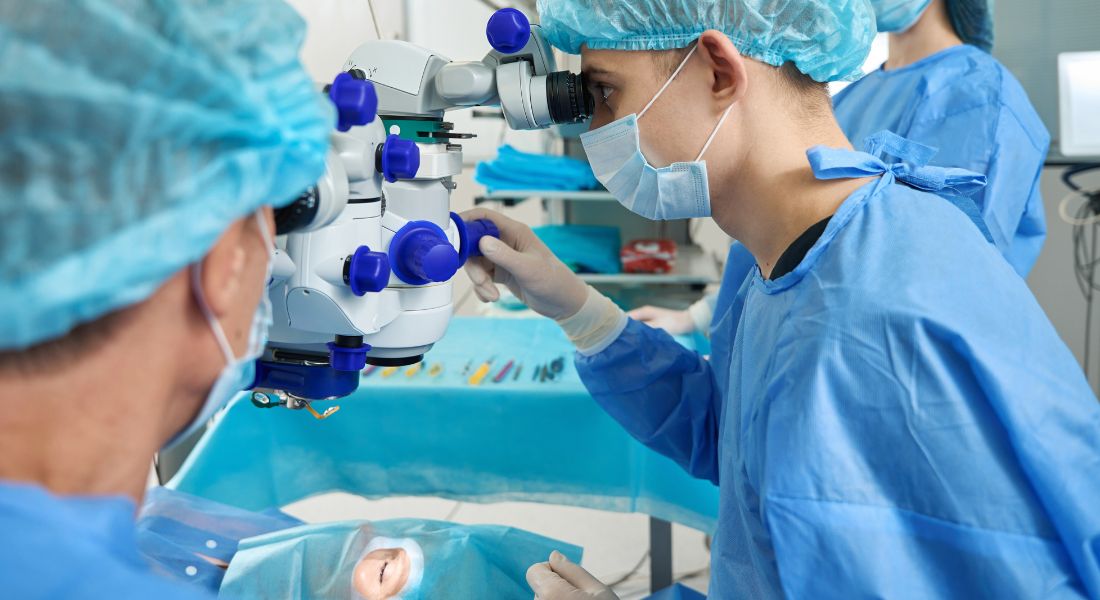
If you’ve been told you have a high prescription and you’re exploring vision correction, you might be wondering whether PRK surgery is a safe and effective option for you. Many people with strong glasses or contact lens prescriptions worry that they may not qualify for laser eye surgery at all, especially if they’ve been discouraged from having LASIK due to corneal thickness or shape. It can feel frustrating when you want freedom from glasses, yet your prescription feels “too high” for the treatments you’ve heard about.
I’ve spoken to so many patients who come in thinking they’re no longer suitable for laser vision correction simply because of their prescription strength. The truth is, PRK can be an excellent option for many people with high prescriptions sometimes even better than LASIK for long-term eye health. PRK has been used safely for decades, and because it doesn’t involve creating a corneal flap, it preserves more tissue and works well for prescriptions that fall outside the LASIK range.
In this article, I’ll walk you through why PRK works so well for high prescriptions, what the suitability criteria are, what results you can realistically expect and when alternative treatments like SMILE or ICLs might be more appropriate. By the end, you’ll have a clear understanding of whether PRK is a good fit for your eyes and your visual goals.
What Counts as a “High” Prescription?
Before determining whether PRK is the right choice for you, it’s important to understand what qualifies as a high prescription. High prescriptions generally require more careful evaluation because they involve a greater degree of corneal reshaping, which can influence both the safety and predictability of the outcome. While PRK is highly effective for many patients, understanding the limits of the procedure helps set realistic expectations and guides your surgeon in planning the safest approach.
Typically, high prescriptions are defined as follows: short-sightedness (myopia) of –6.00 dioptres or higher, long-sightedness (hyperopia) of +4.00 dioptres or higher, and astigmatism of 3.00 dioptres or higher. These ranges are widely used across clinics to assess suitability, although some surgeons may adjust the thresholds slightly depending on the technology available, the patient’s corneal health, and their own clinical experience.
Having a high prescription does not automatically exclude you from PRK. Many patients with higher prescriptions achieve excellent results when the procedure is carefully customised to their eyes. Key considerations include corneal thickness, corneal shape, overall eye health, and the stability of your prescription over time. A comprehensive pre-operative assessment ensures that the treatment is both safe and effective, allowing patients with higher prescriptions to enjoy the long-term benefits of PRK.
Why PRK Is Often Recommended for High Prescriptions

For patients with high prescriptions, choosing the safest and most effective vision correction procedure is crucial. PRK offers unique advantages over LASIK in these cases, particularly because it preserves corneal tissue, avoids flap-related risks, and provides excellent long-term visual outcomes. Understanding why PRK is often recommended helps patients make informed decisions about their eye health and surgical options.
PRK preserves more corneal tissue: For patients with high prescriptions, the laser needs to remove more corneal tissue to reshape vision. PRK is advantageous because it does not require a flap, allowing surgeons to preserve more corneal tissue. This keeps the cornea stronger, reduces the risk of weakening, and makes high corrections safer. Many patients who were previously told they were “not suitable” for laser eye surgery often become excellent PRK candidates.
It’s safer for thin corneas: High prescriptions combined with thin corneas can make LASIK risky, leaving insufficient tissue for safe correction. PRK overcomes this limitation by removing less corneal tissue overall, making it a safer option while still providing excellent visual outcomes.
No risk of flap complications: Unlike LASIK, PRK has no corneal flap, eliminating the risk of flap-related complications. This is particularly important for patients with high prescriptions, as there is no flap to dislodge, less dryness after healing, and stronger corneal biomechanics. For athletes, military personnel, and others exposed to eye trauma, this flap-free approach offers added safety.
PRK results can be as good as LASIK for high prescriptions: Modern PRK, using wavefront technology and advanced lasers, delivers results that rival LASIK even for high prescriptions. Most patients experience excellent long-term clarity, stable vision, and a significant reduction or complete elimination of glasses dependency. The main difference is that PRK recovery takes longer, but the final visual outcome is just as strong and reliable.
Is PRK Suitable for All Types of High Prescriptions?
While PRK is a highly effective option for correcting high prescriptions, suitability isn’t universal. Factors such as corneal thickness, prescription stability, and eye health play a critical role in determining whether PRK is the safest and most effective choice. Understanding how PRK performs across myopia, hyperopia, and astigmatism helps patients make informed decisions about their vision correction options.
High Myopia (–6.00 to –10.00+): PRK can safely treat moderate to high short-sightedness, but suitability depends on several factors. These include corneal thickness, corneal curvature, pre-existing dryness, prescription stability, age, and the presence of any early keratoconus. While many patients achieve excellent results, some with extremely high prescriptions may be better suited to implantable collamer lenses (ICLs) for optimal outcomes.
High Hyperopia (+4.00 to +6.00+): Treating high long-sightedness requires more aggressive corneal reshaping, and while PRK can manage some cases, LASIK often provides more predictable results in this range. PRK may still be suitable for patients with thin corneas, pre-existing dryness, or a desire to avoid flap risks. Your surgeon will assess which approach offers the safest and most reliable correction for your eyes.
High Astigmatism (3.00D–6.00D): PRK is highly effective for correcting high astigmatism using wavefront-guided or topography-guided laser treatments. Suitability depends on factors such as the pattern of astigmatism, corneal regularity, thickness, and the stability of your prescription. Even patients with astigmatism up to 6.00D often achieve excellent outcomes with modern PRK techniques.
How PRK Surgery Works for High Prescriptions

PRK follows the same basic steps regardless of prescription strength, but treating high prescriptions requires more detailed planning and precision. Advanced laser techniques and careful pre-operative assessment ensure that even strong prescriptions can be corrected safely and effectively.
Step 1 (Surface layer removal): PRK begins with the gentle removal of the cornea’s outermost layer, the epithelium. This exposes the corneal surface so the laser can reshape it accurately. The process is painless due to numbing drops and is a key difference from LASIK, which creates a flap instead.
Step 2 (Laser reshaping): Once the epithelium is removed, an excimer laser precisely reshapes the cornea to correct your prescription. For high corrections or irregular prescriptions, surgeons often use wavefront-guided or topography-guided techniques to maximise accuracy and visual clarity.
Step 3 (Bandage contact lens placement): After the laser treatment, a protective bandage contact lens is placed on the eye. This helps the epithelium heal over the next few days and reduces discomfort during the initial recovery period.
Step 4 (Recovery and stabilisation): Because PRK does not involve a corneal flap, healing takes longer than LASIK, but the long-term visual results are equally sharp. Vision gradually improves over weeks to months as the epithelium regenerates and stabilises.
What Results Can You Expect With a High Prescription?
If you have a higher prescription, it’s natural to wonder whether PRK can deliver 20/20 vision. For many patients, the answer is yes, but the outcome depends on several individual factors. These include corneal thickness, the total amount of correction needed, your age, overall eye health, and how well your eyes heal after surgery.
In general, studies and clinical experience show that 70–95% of patients with high myopia achieve 20/20 vision or very close to it. Hyperopia results tend to be more variable due to the nature of long-sighted corrections, while astigmatism outcomes are excellent when using modern laser technology. Vision typically stabilises over 1–3 months as the corneal surface regenerates and settles into its new shape.
Overall, long-term clarity after PRK for high prescriptions is comparable to LASIK, offering sharp, stable vision for years. The main difference lies in the recovery period: patients with higher prescriptions may experience slightly longer healing and fluctuating vision in the early weeks, but the end results are highly rewarding.
PRK Recovery for High Prescriptions
Recovery after PRK for high prescriptions tends to be slightly longer than for lower prescriptions, but it remains safe, predictable, and effective. Understanding the typical healing timeline helps patients set realistic expectations and plan for a smooth post-operative experience.
Typical recovery timeline:
Day 1–3: During the first few days after PRK, it’s normal to experience discomfort, tearing, and blurry vision. Your eyes are healing, and the protective bandage contact lens helps reduce irritation. Most patients prefer to rest and limit visual tasks during this period.
Day 3–7: Around day 3 to 7, the bandage contact lens is typically removed, marking the first stage of clearer vision. While your eyesight is still improving, basic functional vision returns, allowing you to resume light daily activities.
Week 2–4: By the second to fourth week, most patients achieve functional vision suitable for everyday tasks, including reading, computer work, and driving in good light. Vision may still fluctuate slightly, which is normal as the corneal surface continues to heal.
Week 4–8: During weeks 4 to 8, visual clarity improves further. Most patients notice sharper vision and reduced light sensitivity, and day-to-day life becomes more comfortable.
Month 3: Around the three-month mark, vision stabilises for most patients. Distance vision becomes sharp, and fluctuations are minimal. Any mild dryness usually improves significantly.
Month 6: By six months, the final visual outcome is typically achieved. Vision is fully refined, stable, and sharp, representing the long-term results of the PRK procedure.
Advantages of PRK for High Prescriptions
Choosing the right vision correction procedure becomes even more important when you have a high prescription. PRK offers several unique advantages in these cases not just for safety, but also for long-term visual stability. Here are the key benefits that make PRK such a reliable option for people with stronger prescriptions.
Strong long-term corneal stability – This reduces future risks.
Lower risk of dry eye than LASIK – A strong benefit if you already suffer from dryness.
No flap complications – Especially beneficial for people with active lifestyles.
Compatible with thin or borderline corneas – This is often the deciding factor for high prescriptions.
Excellent visual outcomes – Modern PRK results rival LASIK for most patients.
Limitations of PRK for High Prescriptions
Although PRK is an excellent option for many people with higher prescriptions, it’s not without its limitations. Understanding these downsides is important, especially if you’re comparing PRK with LASIK, SMILE, or implantable lens options. Here are the key considerations to keep in mind if you’re exploring PRK for stronger prescriptions.
Longer recovery compared to LASIK: PRK has a slower recovery phase because the surface layer of the cornea needs time to regrow. Unlike LASIK, where most people experience sharp vision within 24 hours, PRK patients usually take several days to regain comfortable functional vision and several weeks for clarity to fully stabilise. If someone is looking for near-instant visual improvement, PRK may feel less convenient, simply because the healing timeline is naturally longer.
More discomfort during healing: The healing process after PRK involves a few uncomfortable days as the epithelium regenerates. This temporary discomfort can include sensitivity to light, watering, burning, and blurred vision. These sensations are normal, and clinics provide medicated drops and a protective bandage lens to help manage them. People with higher prescriptions sometimes feel slightly more discomfort during the first 72 hours because a larger treatment area is involved, but it improves steadily as the surface heals.
Less suitable for extremely high prescriptions: While PRK is excellent for many low, moderate, and some high prescriptions, it’s not always the best option for extremely high levels of short-sightedness, long-sightedness, or astigmatism. Extremely high corrections may require too much corneal tissue removal, or the precision may be reduced. In those cases, other treatments like ICLs (Implantable Collamer Lenses), Refractive Lens Exchange (RLE), LASIK with sufficient corneal thickness, or SMILE may provide more predictable results. Your surgeon will assess your corneal shape, thickness, stability of prescription, and overall eye health before recommending the safest and most effective alternative.
When Is PRK Not Recommended for High Prescriptions?
PRK is a reliable option for many people with higher prescriptions, but there are situations where it may not be the safest choice. If your corneas are very thin, below the clinic’s minimum safety threshold, PRK may remove too much tissue, increasing long-term risk. Similarly, conditions like early keratoconus or irregular corneal shape make PRK unsuitable because the cornea is already unstable and could weaken further after laser reshaping. An unstable or recently changing prescription also rules out PRK, as surgery on shifting eyesight won’t give predictable or long-lasting results.
Another limitation involves structural issues such as significant corneal scarring. Scars can interfere with laser accuracy, affecting both safety and visual outcomes. Extremely high levels of myopia often around –10.00D or more may require too much corneal tissue removal, making PRK unsafe. The same applies to very high hyperopia, where outcomes become less predictable with surface-based laser treatments.
Medical conditions that slow or impair healing, such as autoimmune disorders or certain systemic diseases, may also make PRK unsuitable. In these cases, your surgeon will typically recommend safer alternatives, such as phakic ICL implants, SMILE, or refractive lens exchange, depending on your age and prescription.
Alternatives to PRK for High Prescriptions
If PRK isn’t the safest or most effective option for your level of prescription, there are several excellent alternatives that may be better suited to your eyes. Each treatment comes with its own advantages depending on your corneal thickness, age, lifestyle, and how high your prescription is. Here are the most common alternatives your surgeon may recommend.
ICL Surgery (Implantable Collamer Lens): It one of the best solutions for people with very high prescriptions, especially when PRK or LASIK are not safe options. This procedure does not remove any corneal tissue; instead, a soft, flexible lens is placed inside the eye, behind the iris and in front of your natural lens. Because it leaves the cornea untouched, it can safely treat extremely high levels of short-sightedness often up to –20.00D with excellent clarity and contrast. It is also fully reversible, meaning the lens can be removed or replaced later if needed. For anyone whose prescription exceeds the safe treatment limits of PRK, ICL is usually the most reliable and tissue-preserving choice.
SMILE Laser Surgery: SMILE is a minimally invasive laser procedure ideal for people with high myopia, good corneal thickness, and those wanting a faster, more comfortable recovery. Instead of creating a flap like LASIK or removing the surface layer like PRK, SMILE works through a tiny keyhole incision, making the cornea stronger and reducing the risk of dry eye. Because it preserves more tissue and avoids flap complications entirely, SMILE is popular among active individuals and anyone who wants quicker visual recovery with excellent long-term stability.
LASIK: LASIK remains a top choice for people with adequate corneal thickness who want fast vision improvement and a smoother early recovery. It provides rapid clarity often within hours and works extremely well for a wide range of prescriptions. Although PRK is usually preferred for thin corneas, LASIK is often more predictable for high levels of hyperopia and may offer slightly better early sharpness. For patients with stable prescriptions, healthy corneas, and a desire for minimal downtime, LASIK continues to be a strong and reliable option.
Refractive Lens Exchange (RLE): RLE is typically recommended for individuals over 45, especially those with high long-sightedness, early age-related lens changes, or significant presbyopia. In this procedure, the natural lens is replaced with a customised artificial lens similar to modern cataract surgery. Because the artificial lens does not age, RLE offers permanent correction and removes the risk of future cataracts completely. It’s often the safest and most effective long-term solution for older patients whose prescriptions fall outside the ideal range for laser procedures.
How to Know If PRK Is the Best Option for You
The only way to know with certainty is through a comprehensive assessment with a refractive surgeon. During this evaluation, your surgeon will examine the overall health and structure of your eyes to determine whether PRK offers the safest and most effective correction for your vision needs. They will measure your corneal thickness to ensure enough tissue is available for reshaping and assess your corneal shape to rule out conditions like keratoconus or irregular curvature that could affect outcomes.
Prescription stability is another crucial factor. If your vision has remained unchanged for at least 12–18 months, you’re more likely to be a suitable candidate for long-term correction. Your tear film and dry eye status are also evaluated because healthy tear production is important for smooth healing and clear post-operative vision. Pupil size matters too, especially for night vision, glare and halo concerns.
Your lifestyle and visual goals play a major role in the decision-making process. Surgeons look at how active you are, whether you play contact sports, the nature of your work, and how important rapid recovery is to you. They’ll also discuss long-term expectations such as whether you want lifelong distance clarity, reduced dependence on glasses or presbyopia-friendly solutions later on. With all this information, your surgeon will be able to recommend whether PRK, LASIK, SMILE, ICL implantation or lens-based surgery is the most suitable option for you.
FAQs:
- Is PRK safe for people with high prescriptions?
Yes, PRK is considered very safe for people with high prescriptions because it does not involve creating a corneal flap. This helps preserve more corneal tissue, which is especially important when a large correction is needed. Many patients who are not suitable for LASIK due to thin corneas or high numbers often find PRK to be a safe and reliable alternative that protects long-term corneal strength. - Can PRK give me 20/20 vision if my prescription is very high?
In many cases, yes. Most people with high myopia or high astigmatism achieve 20/20 or very close to it after PRK. Your exact result depends on factors like corneal thickness, overall eye health, and how well your eyes heal after the procedure. While hyperopia results can vary more, modern laser technology has greatly improved clarity for all types of high prescriptions. - Is PRK painful if I have a high prescription?
PRK itself is not painful because it is performed under anaesthetic eye drops that numb the surface. However, people with higher prescriptions may feel more discomfort during the first few days of healing. This usually includes watering, burning, and light sensitivity. These symptoms gradually reduce as the epithelium heals, and most people are comfortable within a week. - Why does PRK recovery take longer for high prescriptions?
Recovery takes longer because higher prescriptions require more corneal reshaping, and the surface layer of the eye needs additional time to regenerate. While LASIK gives quicker clarity, PRK builds sharpness gradually over weeks to months. The good news is that even though recovery is slower, the long-term clarity is just as good as LASIK for most people. - Is PRK better than LASIK if I have thin corneas?
Yes, PRK is often recommended when your corneas are thinner than what LASIK safely requires. Since PRK avoids making a flap, it preserves more tissue and keeps the cornea structurally stronger. Many people who are rejected for LASIK due to corneal thickness discover they are still excellent candidates for PRK. - Can PRK treat very high astigmatism?
Modern PRK can treat high levels of astigmatism extremely well. Technologies like wavefront-guided or topography-guided lasers allow precise reshaping of irregular curves. Success depends on whether your astigmatism is regular, stable, and coming from a healthy cornea. Many patients with astigmatism up to 6.00D see excellent improvements. - How long does PRK healing take for high prescriptions?
You can expect the first few days to be the most uncomfortable. By the end of the first week, you should regain basic clarity. Over the next few weeks, your vision becomes sharper and more stable, and most people feel satisfied with everyday clarity by one to two months. Final refinement can take up to six months, especially for higher prescriptions, but the improvement is gradual and steady. - Is PRK a good choice if I have dry eyes?
Yes, PRK is usually a better option than LASIK if you suffer from dryness. Because PRK does not create a flap or disturb as many corneal nerves, it reduces the risk of worsening dryness after surgery. Many people with pre-existing dry eye symptoms find PRK more comfortable during recovery and more suitable for long-term comfort. - When is PRK not recommended for high prescriptions?
PRK may not be suitable if your corneas are extremely thin, if you have unstable vision, early signs of keratoconus, significant corneal scarring, or a prescription that is beyond safe laser limits. In such situations, your surgeon may recommend safer alternatives such as ICL implantation, SMILE, or refractive lens exchange depending on your age and visual needs. - What are the best alternatives if PRK cannot correct my high prescription?
If PRK isn’t suitable, the next best option for very high numbers is usually ICL surgery, which works exceptionally well for high myopia without removing any corneal tissue. SMILE is also a great option for high myopia if your cornea is thick enough, offering quicker recovery. For people over 45 or those with high hyperopia, refractive lens exchange may be more effective because it treats both prescription errors and age-related focusing issues at the same time.
Final Thoughts: Is PRK the Right Choice for Your High Prescription?
Choosing the best vision correction treatment can feel challenging when you have a high prescription, especially if you’ve previously been told you’re not suitable for LASIK. PRK offers a strong, reliable alternative one that preserves more corneal tissue, avoids flap-related risks and provides excellent long-term clarity once healing is complete. For many people with stronger prescriptions, it remains one of the safest and most effective solutions available.
The most important step is getting a detailed assessment so your surgeon can determine which approach will give you the safest, most predictable results. Whether PRK, SMILE, ICLs or another option is ultimately recommended, the goal is to ensure your long-term vision is protected. If you’d like to find out whether PRK surgery in London is right for you, you can get in touch with us at Eye Clinic London to arrange a consultation and talk through your options.
References:
- Roszkowska, A. M., Tumminello, G., Licitra, C., Severo, A. A., Inferrera, L., Camellin, U., Schiano-Lomoriello, D. & Aragona, P. (2023) ‘One-Year results of photorefractive keratectomy for myopia and compound myopic astigmatism with 210 nm wavelength all-solid-state laser for refractive surgery’, Journal of Clinical Medicine, 12(13), p. 4311. Available at: https://www.mdpi.com/2077-0383/12/13/4311
- Curcă, P.F. (2024) ‘Advances in transepithelial photorefractive keratectomy (Trans-PRK): a comparative study of Trans-PRK vs FS-LASIK’, Diagnostics, 14(5), p. 481. Available at: https://www.mdpi.com/2075-4418/14/5/481
- Mifflin, M. et al. (2018) ‘High myopic photorefractive keratectomy outcomes with Alcon Wavelight EX500 excimer laser’, Clinical Ophthalmology, 12, pp. 1525-1531. Available at: PMC5995275. https://www.ncbi.nlm.nih.gov/pmc/articles/PMC5995275/
- Diakonis, V.F., et al. (2014) ‘Long-term follow-up of photorefractive keratectomy with intraoperative application of mitomycin C’, Journal of Cataract & Refractive Surgery, 40(10), pp. 1735-1741. Available at: PMC4020169. https://www.ncbi.nlm.nih.gov/pmc/articles/PMC4020169/
- Vestergaard, A.H., Ivarsen, A., Møller, H.T. & Hjortdal, J. (2013) ‘Long-term outcomes of photorefractive keratectomy for low to high myopia: 13 to 19 years of follow-up’, Journal of Refractive Surgery, 29(5), pp. 312-319. Available at: https://pubmed.ncbi.nlm.nih.gov/23659229/