


Optical Zone Size in LASIK Surgery: Why It Matters for Visual Quality

If you are considering LASIK surgery, you may hear your surgeon mention something called the optical zone. While attention is often placed on laser precision or recovery time, optical zone size plays a major role in how your vision feels after treatment. We understand that it influences comfort, night vision, and overall visual quality, not just sharpness. Gaining clarity on this topic can help you feel more confident in your decision.
The optical zone refers to the central area of the cornea that is reshaped during LASIK. This area determines how light is focused as it enters your eye and reaches the retina. When the zone is not sized appropriately, visual disturbances may occur, particularly in low-light environments. We place strong emphasis on this detail during modern treatment planning.
Optical zone size affects more than just night vision. It also influences contrast, visual stability, and how smooth vision feels throughout the day. When planning is personalised, light is distributed more evenly across the cornea. We aim to support vision that feels natural rather than visually demanding.
In this article, we explain what optical zone size means, why it matters for long-term visual comfort, and how modern laser technology allows tailored planning. You will learn how treatment design is adapted to individual eye characteristics. We focus on helping you understand the reasoning behind these decisions. Thoughtful planning supports lasting comfort, not just good test results.
What Is the Optical Zone in LASIK Surgery?

The optical zone is the central part of the cornea that the laser reshapes to correct your vision. This is the area through which light is optimally focused onto the retina. Outside this zone lies the transition zone, which blends the treated area into the untreated cornea. Together, these zones determine how smoothly light enters the eye.
A well-designed optical zone ensures that light rays are focused evenly, especially when your pupil enlarges in dim conditions. If the optical zone is too small relative to pupil size, light may pass through untreated areas. This can lead to visual symptoms such as glare or halos.
Modern LASIK aims to create an optical zone that matches both your visual needs and your eye’s anatomy. This balance is essential for achieving high-quality vision that feels natural in everyday situations.
Why Optical Zone Size Matters for Visual Quality
Visual quality is about more than the letters you can read on an eye chart. It includes how clear, comfortable, and stable your vision feels throughout the day. One important factor that influences this experience is optical zone size. When planned carefully, it supports smoother and more reliable vision in everyday settings.
- Optical zone size affects overall visual comfort
A well-planned optical zone helps vision feel steady and consistent. We consider how clarity, contrast, and comfort work together rather than focusing on sharpness alone. - Proper sizing supports even light processing
When light enters the eye uniformly, image quality improves. You may notice vision feels cleaner and more natural in daily environments. - Zones that are too small can reduce visual quality
Visual discomfort can occur even when standard acuity tests appear good. We prioritise careful planning to balance correction with long-term comfort.
By focusing on optical zone design, we aim to deliver vision that feels natural rather than strained. Careful planning and experience allow us to support both clarity and comfort. This approach helps ensure your vision remains dependable in real-world conditions.
The Relationship Between Optical Zone and Night Vision
Night vision places higher demands on the optical zone because pupils naturally dilate in low light. As the pupil enlarges, more peripheral light enters the eye. If this light passes through untreated corneal areas, it may not focus properly.
This mismatch can lead to glare, halos, starbursts, or reduced contrast at night. These symptoms are among the most common concerns raised by patients after LASIK when optical zone planning is inadequate. Understanding this relationship is key to preventing such issues.
By choosing an optical zone that accommodates night-time pupil size, surgeons can significantly reduce the risk of night vision disturbances. This consideration is especially important for people who drive at night or work in low-light environments.
How Pupil Size Influences Optical Zone Planning
Pupil size varies from person to person and changes depending on lighting conditions. Some people have naturally larger pupils, particularly in dim light. This makes optical zone planning even more critical for them.
Modern pre-operative assessments measure pupil size in low-light conditions. This information helps surgeons decide on an appropriate optical zone diameter. Matching the optical zone to pupil behaviour improves visual comfort and reduces unwanted side effects.
Ignoring pupil size can compromise outcomes, even when the laser correction itself is accurate. Personalised planning ensures the optical zone supports how your eyes actually function in daily life.
Optical Zone Size and Higher-Order Aberrations
Higher-order aberrations are subtle optical imperfections that can influence how comfortably you see. When the transition between treated and untreated cornea is abrupt, these effects can become more noticeable. We recognise that optical zone size is central to managing this risk. Careful design helps maintain smooth light transmission.
Larger or well-blended optical zones allow light to be distributed more evenly across the cornea. When transitions are gradual, the likelihood of induced visual disturbances is reduced. We use modern laser profiles that prioritise smooth blending. This approach supports clearer, more comfortable vision.
By optimising both the size and shape of the optical zone, visual quality can be improved beyond basic sharpness. When stability and comfort are addressed together, vision tends to feel more natural. We focus on outcomes that remain consistent in everyday conditions. This planning contributes to lasting satisfaction.
How Older LASIK Techniques Approached Optical Zones
In earlier generations of LASIK, optical zones were often smaller because of technological limitations. Laser systems offered less flexibility, and treatment planning followed more standardised patterns. While many people still achieved good visual acuity, night vision disturbances were more commonly reported. We now recognise how these limitations influenced comfort.
At that time, tools for measuring pupil size and customising treatment were less precise. Optical zone selection was often conservative to preserve corneal tissue. When safety was prioritised in this way, visual comfort sometimes had to be compromised. We understand how these trade-offs affected patient experience.
Advances in technology have since transformed optical zone planning. Modern LASIK allows larger and more individualised zones without compromising safety. We can now balance tissue preservation with visual quality more effectively. This evolution has played a major role in improving long-term satisfaction.
How Modern Lasers Allow More Personalised Optical Zones
Modern laser technology has significantly changed how refractive treatment is planned and delivered. Today’s excimer lasers allow far greater precision, particularly when it comes to shaping and sizing the optical zone. This level of control means treatment can be adapted to how your eyes are built and how you use your vision every day. As a result, planning is now more personalised and outcomes more consistent.
- Advanced excimer lasers allow precise optical zone control
Modern systems enable accurate adjustment of optical zone size and shape. We tailor treatment based on corneal thickness, pupil size, and individual visual demands. - Guided technologies refine treatment accuracy
Wavefront-guided and topography-guided approaches account for unique optical imperfections. When treatment reflects corneal shape precisely, transitions are smoother and vision feels more natural. - Personalised planning improves comfort and predictability
Custom optical zone design is a key reason modern results are more reliable. We focus on how vision performs in daily life, not just on technical measurements.
Advances in laser technology have made personalised treatment the standard rather than the exception. By combining precise tools with careful planning, we aim to deliver vision that feels comfortable, stable, and dependable over time. This approach ensures results are aligned with real-world visual needs, not just clinical targets.
Balancing Optical Zone Size and Corneal Safety
While larger optical zones can enhance visual quality, they must always be balanced against corneal safety. Creating a wider zone requires additional tissue removal, which makes careful assessment essential. We evaluate corneal thickness and biomechanical strength before any decisions are made. Protecting structural stability remains a priority.
Surgeons calculate how much corneal tissue can be removed safely without compromising long-term integrity. Optical zone size is then selected within these safety limits. We place safety ahead of any visual gains. Optimal outcomes depend on respecting these boundaries.
This balance underlines the importance of personalised assessment. There is no single optical zone size that suits everyone. We tailor decisions to your eye’s individual structure and needs. This careful approach supports both visual quality and long-term corneal health.
Why Not Everyone Receives the Same Optical Zone Size
It is a common misconception that LASIK follows a one-size-fits-all approach. In reality, treatment planning varies significantly from one person to another. We view optical zone size as one of the most individualised elements of the procedure. Each plan is shaped around how your eyes function.
Several factors influence these decisions, including refractive error, pupil size, corneal thickness, and daily visual demands. When you spend time driving at night, planning may differ from someone with fewer low-light demands. We consider lifestyle as carefully as measurements. This ensures treatment supports real-world vision.
This level of personalisation reflects the standards of high-quality LASIK care. When planning aligns with how you use your vision, outcomes feel more natural and reliable. We aim to match correction with comfort. Tailored decisions help deliver lasting satisfaction.
How Optical Zone Size Affects Long-Term Satisfaction
Long-term satisfaction after LASIK is closely tied to visual comfort. When you experience stable clarity with minimal night vision disturbances, confidence in the outcome tends to remain high. We recognise that optical zone planning plays a significant role in achieving this balance. Thoughtful design supports lasting comfort rather than short-term results.
Even mild visual disturbances can feel frustrating in daily life. When their likelihood is reduced, overall satisfaction improves. We often find that the influence of optical zone design is underestimated. Its impact extends beyond test results into everyday visual experience.
Modern LASIK focuses on visual quality as well as refractive correction. When outcomes feel natural over time, satisfaction is more likely to endure. We aim to deliver vision that works comfortably in real-world conditions. Experience matters as much as measurement.
Discussing Optical Zone Size During Your Consultation

During a LASIK consultation, optical zone size may not always be discussed unless you raise the question. Even so, it remains an important and valid part of treatment planning. When you understand how decisions are made, involvement in your care feels more meaningful. We believe informed patients are better prepared and more confident.
A skilled surgeon explains how pupil size and corneal measurements influence optical zone choices. When these factors are discussed openly, reassurance follows naturally. We view transparency as an essential part of safe and ethical care. Clear explanation helps build trust throughout the treatment journey.
Common Myths About Optical Zone Size
Optical zone planning is often misunderstood, with several myths shaping expectations around visual outcomes. While zone size does play an important role, it is not a one-size-fits-all decision. Understanding how optical zones truly affect vision helps explain why personalised planning is essential. Careful balance, rather than assumptions, leads to safer and more reliable results.
- Larger optical zones are not always better
A wider zone can improve comfort in some eyes, but it is not suitable for everyone. We prioritise corneal safety and structure over size alone when planning treatment. - Optical zone size affects more than night vision
Its influence extends to contrast sensitivity, overall clarity, and visual stability. We assess how zone size performs across different lighting and everyday conditions. - Personalised planning avoids common misconceptions
Relying on general rules can overlook important individual differences. We approach optical zone selection as a careful balance tailored to how your eyes function.
By moving beyond common myths, optical zone planning becomes clearer and more reassuring. When decisions are based on structure, function, and long-term comfort, outcomes are more dependable. This thoughtful approach helps ensure vision feels natural, stable, and comfortable over time.
Why Experience and Technology Both Matter
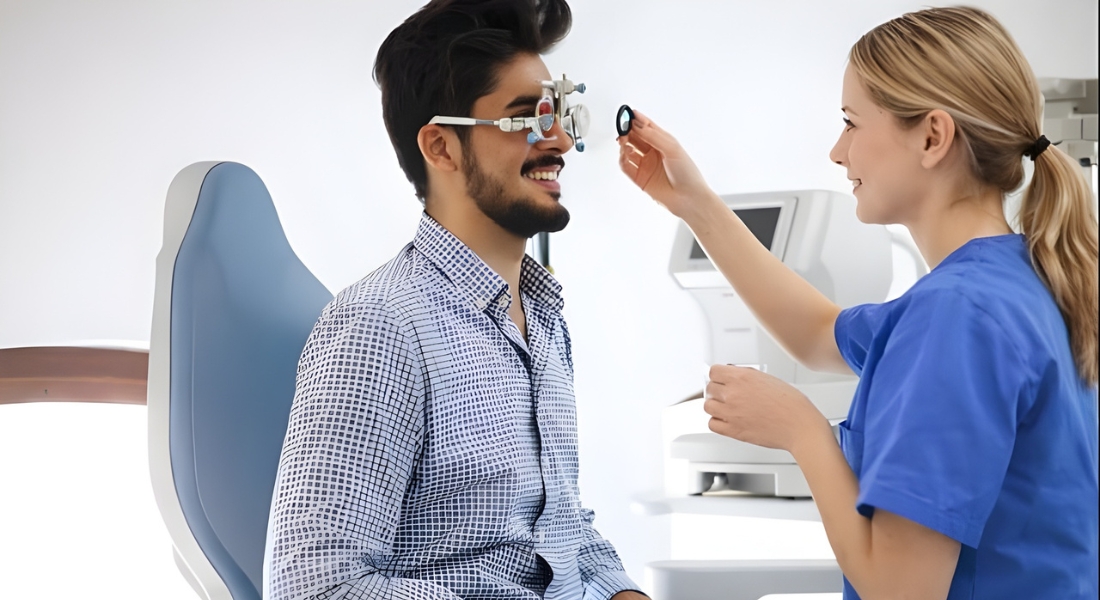
Optical zone planning depends on a combination of advanced technology and careful clinical judgement. While laser systems provide precision tools, decisions are guided by surgical experience. We balance visual quality with safety to suit how your eyes respond individually. This judgement plays a central role in achieving stable results.
Centres that carry out high volumes of LASIK refine their techniques over time. When you are treated in such settings, subtle adjustments are informed by long-term outcome data. We understand how small changes can influence vision quality and comfort. This accumulated experience directly benefits patient care.
Choosing a clinic that combines modern technology with experienced surgeons can improve overall confidence in treatment. When both elements work together, outcomes tend to be more predictable. We believe quality is built through this balance rather than technology alone. Your experience is shaped by expertise as much as equipment.
FAQs:
- Why should you care about optical zone size when considering LASIK surgery?
Optical zone size affects how comfortable your vision feels after surgery and how evenly light enters your eye in daily conditions. We focus on supporting natural visual flow rather than just sharpness on a chart. Careful planning helps vision feel relaxed and dependable. - Can optical zone size affect how your vision feels at night?
Yes, night-time vision places greater demands on the optical zone because your pupils widen in low-light environments. We consider this behaviour carefully during planning. Correct sizing helps reduce glare, halos, and visual disturbance. - Does a larger optical zone always mean better vision for you?
A larger optical zone does not automatically mean better results for every eye. We balance visual comfort with corneal safety to avoid unnecessary tissue removal. Personalised assessment determines what truly suits your eyes. - How does your pupil size influence optical zone planning?
Your pupil size changes depending on lighting conditions, particularly in dim environments. We measure this behaviour before treatment to guide planning. Matching the optical zone to pupil response improves visual comfort. - Can an incorrectly planned optical zone cause visual discomfort?
Yes, discomfort can occur even when standard vision tests appear normal. We often see symptoms such as glare or reduced contrast in specific situations. Careful optical zone planning helps prevent these issues. - Does optical zone size affect vision during the daytime as well?
Optical zone size influences vision quality throughout the day, not just at night. We see effects on clarity, contrast, and visual stability. Balanced light processing supports comfortable vision in everyday settings. - How do modern lasers improve optical zone accuracy for you?
Modern lasers allow precise control over optical zone size and shape. We tailor treatment based on your eye structure and visual needs. This precision supports smoother, more predictable outcomes. - Why does corneal thickness matter when choosing optical zone size?
Creating a wider optical zone requires removing more corneal tissue. We assess corneal strength carefully before planning treatment. Safety always takes priority over visual enhancement. - Will everyone receive the same optical zone size in LASIK surgery?
LASIK is not a one-size-fits-all procedure, and optical zone size varies between individuals. We tailor decisions to your eye measurements and lifestyle. Personalised planning improves long-term comfort. - How does optical zone planning affect long-term satisfaction after LASIK?
Long-term satisfaction is closely linked to how comfortable vision feels over time. We know even mild disturbances can become frustrating in daily life. Thoughtful optical zone planning supports stable, reliable vision.
Final Thoughts on Optical Zone Size and Visual Quality
Optical zone size is one of the most important yet least discussed aspects of LASIK surgery. It plays a central role in determining visual quality, night vision comfort, and long-term satisfaction. Modern LASIK has evolved to allow highly personalised optical zone planning, which significantly improves outcomes. By understanding why optical zone size matters and how it is chosen, you can approach LASIK with greater confidence.
If you’d like to find out whether lasik surgery in London is suitable for you, feel free to contact us at Eye Clinic London to arrange a consultation. With advanced technology, careful assessment, and experienced surgical planning, LASIK can deliver not just clear vision, but comfortable, high-quality vision that fits your life.
References:
- Bühren, J., et al., (2005). Influence of pupil and optical zone diameter on higher-order aberrations after wavefront-guided myopic LASIK. Journal of Cataract & Refractive Surgery. Available at: https://pubmed.ncbi.nlm.nih.gov/16473217/
- Schallhorn, S.C., et al., (2003). Pupil size and quality of vision after LASIK. ScienceDirect. Available at: https://www.sciencedirect.com/science/article/abs/pii/S0161642003004949
- Miret, J.J., et al., (2022). Understanding the effect of increased aberrations after femto-LASIK on visual quality. MDPI. Available at: https://www.mdpi.com/2673-3269/3/4/33
- Moshirfar, M., et al., (2021). Comparison of 6.0 mm versus 6.5 mm optical zone on visual outcomes after LASIK. Journal of Clinical Medicine, 10(17):3776. MDPI. Available at: https://www.mdpi.com/2077-0383/10/17/3776/
- Helgesen, A., et al., (2004). Pupil size and night vision disturbances after LASIK for myopia. PubMed. Available at: https://pubmed.ncbi.nlm.nih.gov/15291941/