


LASIK for Astigmatism: How Effective Is It and What Are the Limits? (Guide)

Astigmatism is one of the most common vision problems, yet it often causes confusion when you start considering LASIK. You may wonder whether your eyes are too complex for laser treatment or if the results will be unpredictable. These concerns are very common and completely understandable. Knowing how LASIK works can make the decision feel less daunting.
Astigmatism happens when your cornea is not perfectly round. Instead of a smooth, even curve, it has a more oval shape that bends light unevenly. This causes blurred or distorted vision, both near and far. Glasses and contact lenses correct this, but LASIK aims to reshape the cornea itself.
In this guide, you will learn how LASIK corrects astigmatism and how reliable the results usually are. We will also explain the limitations, so expectations stay realistic. Some eyes need alternative treatments, and we will cover when those may be more suitable. Clear information helps you decide with confidence rather than uncertainty.
What Is Astigmatism?
Astigmatism happens when your cornea or lens is not evenly curved. Instead of light focusing at one clear point, it scatters across multiple points. This leads to blurred or shadowed vision. The effect can be subtle or quite noticeable.
You might notice ghosting, double outlines, or difficulty seeing fine detail. Astigmatism can exist on its own or alongside short-sightedness or long-sightedness. Many people are surprised to learn they have it. The experience varies from person to person.
Mild astigmatism is extremely common and often well tolerated. Higher levels can interfere with reading, driving, or screen use. The degree of astigmatism matters when considering LASIK. It helps determine how predictable correction will be for you.
How LASIK Corrects Astigmatism
LASIK corrects astigmatism by reshaping the cornea with an excimer laser. In astigmatism, the laser removes tissue in a precise pattern to make the cornea more even. This allows light to focus properly on the retina. Vision becomes clearer and less distorted.
The treatment is fully customised to your eyes. Detailed scans map the shape of your cornea before surgery. These measurements guide the laser with a high level of accuracy. This personalisation is essential for good results.
Modern LASIK technology is very effective for correcting astigmatism. Outcomes are generally predictable when suitability is carefully assessed. However, results still depend on individual eye factors. Precision at every step makes the difference.
How Effective Is LASIK for Astigmatism?
For mild to moderate astigmatism, LASIK is very effective. Most people achieve clear vision without the need for glasses or contact lenses. In well-selected patients, results are highly predictable and stable.
Higher levels of astigmatism are more complex to treat. Vision usually improves significantly, but perfect correction cannot always be guaranteed. A small residual prescription may sometimes remain.
How accurate your outcome will be depends on your corneal shape and how stable your prescription is. This is why pre-operative testing is so important. Careful screening helps set realistic expectations and improves success.
Factors That Influence Effectiveness
| Factor | Why It Matters | Impact on Results |
| Degree of astigmatism | Higher values are harder to fully correct | May affect predictability |
| Corneal thickness | Limits how much reshaping is safe | Influences suitability |
| Corneal regularity | Irregular shapes reduce accuracy | May require alternatives |
| Eye stability | Fluctuating prescriptions affect outcomes | Stability improves results |
These factors are assessed during consultation. Advanced scans evaluate curvature and strength. This ensures safety and accuracy. Suitability is determined individually. Not every eye behaves the same. Personalised planning matters.
Mild vs High Astigmatism
If you have astigmatism, the amount of correction you need plays a big role in how laser eye surgery is planned. LASIK can be very effective, but outcomes vary depending on whether your astigmatism is mild, moderate, or high. Understanding these differences helps you set realistic expectations from the start.
- Mild astigmatism usually responds extremely well to LASIK: When the level of astigmatism is low, the amount of reshaping required is relatively small. This often results in excellent visual clarity and highly predictable outcomes.
- Moderate astigmatism remains highly treatable: With modern diagnostic imaging and precise laser mapping, moderate astigmatism can be corrected very accurately. Most patients in this group achieve strong vision and are pleased with their results.
- High astigmatism can be more complex to correct: Higher levels often require deeper or more extensive corneal reshaping. Suitability depends on factors such as corneal thickness, stability, and overall eye health, and in some cases alternative treatments may be discussed.
Mild and moderate astigmatism generally offer the most predictable results. Higher levels can still be treated, but careful assessment becomes even more important. Your surgeon will look closely at your corneal measurements before recommending LASIK. This ensures the approach chosen is both safe and realistic for you.
The Role of Corneal Shape Regularity
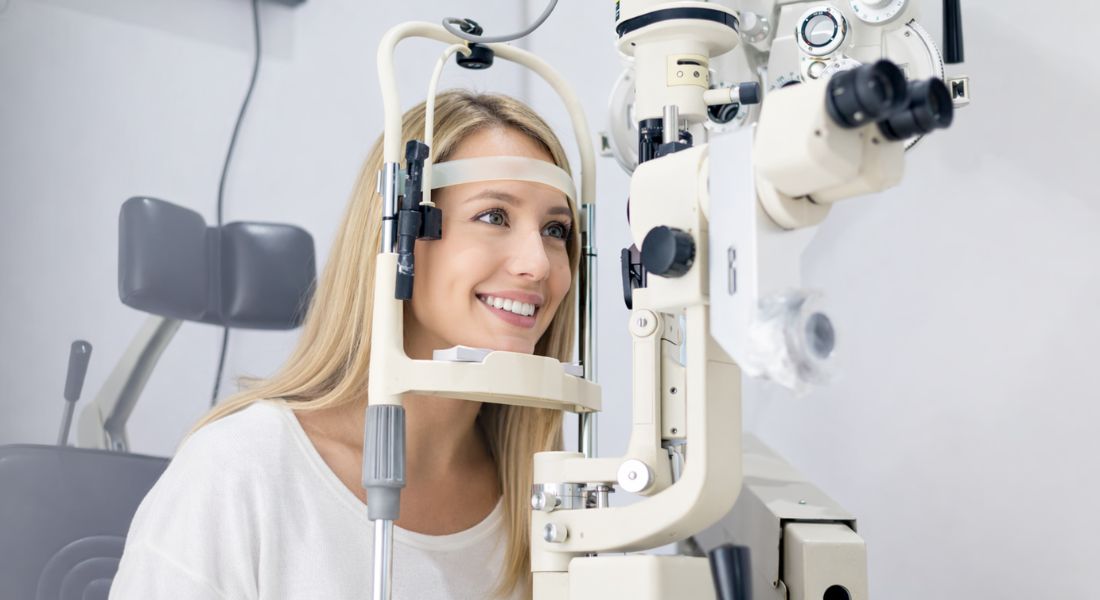
Regular astigmatism means your cornea has a smooth and symmetrical curve. This is the type that responds best to LASIK. The laser can reshape the cornea very precisely. As a result, outcomes are usually predictable and stable for you.
Irregular astigmatism is different and more complex. It can develop after previous eye surgery, corneal scarring, or early corneal conditions. Because the surface is uneven, laser correction becomes less predictable. Results may not be as accurate or consistent.
If irregular astigmatism is detected, LASIK may not be the safest choice for you. Alternative treatments can offer better control and long-term stability. Detailed corneal scans are used to identify these patterns early. Your safety and visual quality always come first.
How Modern Technology Improves Accuracy
Modern LASIK technology has transformed how precisely astigmatism can be corrected. Today’s systems are designed to measure your eyes in far greater detail than ever before. This allows treatment to be tailored closely to your individual visual needs.
- Advanced mapping creates highly personalised treatment: Wavefront-guided and topography-guided LASIK map subtle irregularities across your cornea. This detailed information allows the laser treatment to be customised, helping improve overall visual quality and clarity.
- Eye-tracking systems protect alignment during surgery: During the procedure, sophisticated eye-tracking technology monitors tiny involuntary eye movements. The laser adjusts in real time, maintaining accurate alignment, which is especially important for astigmatic correction.
- Precision reduces the risk of residual blur: Even very small misalignments can affect how effectively astigmatism is corrected. Modern technology minimises this risk, supporting more consistent and predictable outcomes.
Technology has significantly improved LASIK results over the past decade. Precision now plays a central role in achieving reliable astigmatic correction. As diagnostic tools and laser systems continue to advance, outcomes are becoming even more refined. This ongoing progress helps you benefit from safer procedures and better visual quality.
What Are the Limits of LASIK for Astigmatism?
LASIK does have clear biomechanical limits that your surgeon must respect. Removing too much corneal tissue can weaken the eye and increase long-term risk. For this reason, strict safety thresholds are always followed. Your corneal strength and thickness guide how much correction is possible.
Very high levels of astigmatism can push beyond what LASIK can safely treat. In these cases, alternative procedures may offer better stability. The goal is never to chase perfection at the expense of safety. Long-term eye health always comes first for you.
It is also important to understand that not every eye achieves a zero prescription. A small amount of residual astigmatism may remain after treatment. In selected cases, an enhancement can be considered once the eye has fully stabilised.
Can Astigmatism Return After LASIK?
Astigmatism corrected with LASIK does not usually “grow back.” Once the cornea is reshaped, it generally remains stable over time. However, natural ageing changes in the eye can introduce subtle shifts that slightly affect vision. These changes are not a reversal of the original treatment.
In rare cases, biomechanical instability can cause the cornea to change shape. This risk is greatly reduced through careful pre-operative screening and modern safety protocols. With current technology, such complications are uncommon. Stability is always a key focus before offering LASIK to you.
If a small amount of residual or returning astigmatism does occur, it is usually minor. In suitable eyes, an enhancement procedure may be considered once healing is complete. Decisions are always guided by individual assessment and long-term corneal safety.
LASIK vs Alternative Treatments for Astigmatism
| Treatment | Suitable For | Key Consideration |
| LASIK | Mild to moderate regular astigmatism | Excellent predictability |
| Surface laser (PRK) | Thinner corneas | Slower recovery |
| Toric lens implants | High astigmatism | Internal correction |
| Glasses/contacts | Any level | Non-surgical |
Each option has advantages. Choice depends on anatomy and prescription. Personalised evaluation is essential. LASIK is not always the only answer. Alternatives may provide safer or more effective correction in some cases.
LASIK and Combined Refractive Errors
Astigmatism often exists alongside short-sightedness or long-sightedness, and LASIK is designed to treat these together. The laser reshaping pattern corrects each component in a single procedure. This means your overall prescription is addressed at the same time, rather than in stages.
When refractive errors are combined, the planning becomes slightly more complex. Detailed scans and advanced software are used to balance the correction accurately. Modern laser systems handle this very effectively when your eyes are suitable.
Visual outcomes are usually excellent in well-selected patients. That said, it is important to keep expectations realistic. Final precision depends on factors such as corneal shape, healing response, and prescription strength.
Recovery After LASIK for Astigmatism

Recovery after LASIK for astigmatism is usually quick and straightforward. You’ll often notice a clear improvement in vision within the first 24 to 48 hours. Some mild fluctuation is normal early on as your eyes adjust. This usually settles as healing progresses.
Astigmatic correction continues to stabilise over the following weeks. Most people notice steady, gradual improvement rather than sudden changes. Your follow-up appointments are important, as they allow your surgeon to monitor healing and visual clarity. These checks help ensure everything is settling as expected.
Good aftercare plays a big role in your final result. You should avoid rubbing your eyes, especially in the early days. Using prescribed drops and protecting your eyes helps the cornea heal smoothly. These simple steps support long-term stability and comfort.
How Predictable Are Results?
Results are very predictable when LASIK is used to treat mild astigmatism. Large studies show high accuracy, with most patients achieving clear, driving-standard vision without glasses or contact lenses. In suitable eyes, outcomes tend to fall well within small and expected margins.
As the level of astigmatism increases, predictability can reduce slightly. This does not mean results are poor, but small variations become more likely. Being aware of this beforehand helps prevent unrealistic expectations and disappointment.
Your surgeon will talk you through what outcome is most likely for your eyes. This estimate is based on detailed scans and measurements. Clear, honest discussion is a key part of good care and helps you feel confident in your decision.
Who Is Not Suitable for LASIK Astigmatism Correction?
While LASIK is an excellent option for many people, it is not suitable for everyone. Your long-term eye health and safety always come first. Careful screening helps identify when LASIK may not be the best choice for you.
- Very thin corneas or irregular corneal conditions: If your corneas are too thin, there may not be enough tissue to reshape safely. Conditions that cause irregular corneal structure can also rule out LASIK, as they increase the risk of poor or unstable results.
- Unstable vision prescriptions: If your prescription has been changing, surgery is usually delayed until it stabilises. Stability over time improves accuracy and reduces the risk of needing further correction later on.
- Situations where lens-based surgery may be more suitable: In some cases, especially where correction limits are higher or other eye factors are involved, lens-based procedures may offer better long-term outcomes. This decision depends entirely on your individual measurements and visual needs.
Not being suitable for LASIK does not mean you are out of options. It simply means a different approach may give you safer and more predictable results. Your surgeon’s role is to guide you towards what will work best for your eyes, not what can be done quickly. Taking the time to choose the right treatment protects your vision for the long term.
The Importance of Detailed Assessment
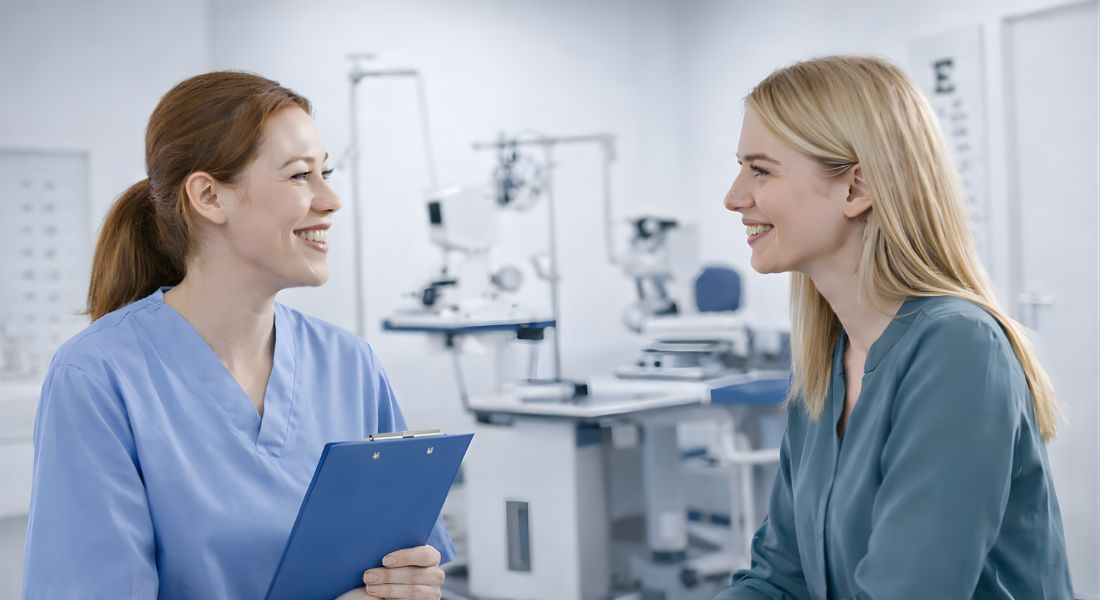
A detailed pre-operative assessment is essential before any LASIK treatment. Comprehensive corneal mapping looks at thickness, curvature, and biomechanical stability. These measurements allow your surgeon to plan treatment safely and accurately. Skipping this step would increase risk.
Thorough assessment also improves how predictable your results are. It helps identify potential risk factors early, before any laser treatment is performed. This careful planning is designed to protect your vision long term. Safety always comes before convenience.
You should feel comfortable asking questions about these tests and what they show. Understanding your own results helps you feel informed and involved in the decision. Knowledge builds trust and supports confident choices about your eye care.
Frequently Asked Questions:
- Can LASIK fully correct astigmatism?
LASIK can correct astigmatism very effectively, particularly when it is mild to moderate and the cornea has a regular shape. Many people achieve excellent vision without glasses. However, a perfectly zero prescription cannot be guaranteed for every eye. - Is LASIK suitable for high astigmatism?
LASIK may still be an option for higher astigmatism, but it depends on your corneal thickness and overall eye health. Higher corrections require more tissue removal, which can limit suitability. In some cases, alternative treatments may be safer. - How accurate is LASIK for astigmatism correction?
For suitable candidates, LASIK is highly accurate and predictable. Outcomes are strongest when astigmatism is stable and the cornea is regular. Precision planning and modern laser technology greatly improve reliability. - Can astigmatism come back after LASIK?
Astigmatism does not usually return once corrected with LASIK. The corneal reshaping is permanent. Small changes can still occur due to natural ageing, but this is not the same as the original astigmatism returning. - Will you still need glasses after LASIK for astigmatism?
Many people no longer need glasses for everyday distance vision after LASIK. Some may still need glasses for specific tasks, such as reading later in life or occasional night driving. Your likely outcome depends on your prescription and eye structure. - Does LASIK work if you have astigmatism and short-sightedness or long-sightedness?
Yes, LASIK can correct astigmatism alongside short-sightedness or long-sightedness in the same procedure. The laser treatment is customised to address all components of your prescription at once. - Is LASIK for astigmatism painful?
The procedure itself is not painful because numbing drops are used. You may feel mild pressure during treatment and some irritation afterwards. Discomfort is usually short-lived and settles within a day or two. - How long does recovery take after LASIK for astigmatism?
Vision often improves within the first 24 to 48 hours. Some fluctuation is normal during early healing. Most people return to normal activities within a few days, with vision continuing to stabilise over several weeks. - Who is not suitable for LASIK astigmatism correction?
You may not be suitable if you have very thin corneas, irregular corneal disease, or an unstableprescription. Certain medical or eye conditions can also affect eligibility. A thorough assessment is essential to determine safety. - Are there alternatives if LASIK is not suitable for your astigmatism?
Yes, alternatives such as surface laser treatment,toric lens implants, or continued use of glasses or contact lenses may be recommended. The best option depends on your eye anatomy and visual needs. Personalised advice ensures the safest outcome.
Final Thought: Clear Vision Starts With the Right Assessment
LASIK can be a highly effective and predictable option for correcting astigmatism when your eyes are suitable and your prescription is stable. The key is understanding that results depend on factors such as corneal thickness, regularity, and the degree of astigmatism present. A thorough assessment allows realistic expectations and helps identify when alternative treatments may offer safer or more reliable outcomes. If you’d like to find out whether lasik surgery in London is suitable for you and your vision needs, feel free to contact us at Eye Clinic London to arrange a consultation.
References:
- Almutairi, M.N., Alshehri, A.M., Alhoumaily, A.Y., Alnahdi, O. and Taha, M.A. (2025) Meta-analysis of clinical outcomes of LASIK versus PRK for refractive error correction. BMC Ophthalmology, 25, Article 140. Available at: https://pubmed.ncbi.nlm.nih.gov/40102791/
- Reitblat, O., Gershoni, A., Mimouni, M., Vainer, I., Livny, E. and Segev, F. (2021) Refractive outcomes of high-magnitude astigmatism correction using femtosecond LASIK versus transepithelial PRK. European Journal of Ophthalmology, 31(6), pp. 2923–2931. Available at: https://pubmed.ncbi.nlm.nih.gov/33295217/
- Postoperative Astigmatism after Keratoplasty Research Group (2023) Postoperative astigmatism outcomes after laser refractive and keratoplasty procedures. Journal of Clinical Medicine, 13(11), pp. 3306. Available at: https://www.mdpi.com/2077-0383/13/11/3306
- Santhiago, M.R., Randleman, J.B. and Kymionis, G.D. (2020) Corneal biomechanics and safety limits in laser refractive surgery procedures. Journal of Clinical Medicine, 9(6), pp. 1784. Available at: https://www.mdpi.com/2077-0383/9/6/1784
- Rosman, M. (2013) Comparison of efficacy and safety of laser in situ keratomileusis using different platforms. Journal of Refractive Surgery, 29(8), pp. 546–555. Available at: https://www.sciencedirect.com/science/article/abs/pii/S0886335013002630