


Can You Have Laser Vision Correction with Irregular Corneas?

If you’ve been told you have an irregular cornea, you might have felt discouraged about laser vision correction. Many people assume that LASIK or similar treatments only work if the cornea is perfectly shaped. The good news is that modern laser eye surgery has evolved, and an irregular cornea no longer automatically rules you out.
Irregular corneas can have uneven curvature, scarring, or surface distortions that make glasses and contact lenses less effective. These issues can impact daily life, from reading to driving at night. Luckily, new mapping technologies and customised laser treatments now allow surgeons to safely reshape many irregular corneas.
This means you can still improve your vision, reduce reliance on corrective lenses, and enjoy more stable eyesight even if your cornea isn’t naturally uniform. Advanced techniques make it possible to treat cases that would have been considered too risky in the past.
In this guide, I’ll explain what an irregular cornea is, why traditional laser surgery was once considered unsafe, and how modern technology is changing the options available. You’ll also learn which treatments might suit your situation, what surgeons look for, and why detailed diagnostic scans are now more important than ever.
What Are Irregular Corneas?
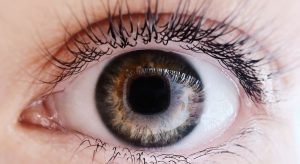
A healthy cornea is smooth and evenly curved, allowing light to focus correctly on the retina. When the cornea is irregular, this curvature is uneven, which can significantly affect vision quality.
Common causes include:
Mild or early keratoconus: Slight corneal thinning or bulging that may affect vision.
Post-infection scarring: Corneal surface scars left after an eye infection.
Previous eye injuries: Trauma that has altered the cornea’s shape.
Contact-lens-induced warpage: Temporary or permanent corneal shape changes from long-term lens use.
Post-LASIK irregularities: Uneven corneal surfaces resulting from prior laser surgery.
Pellucid marginal degeneration: Thinning of the lower cornea causing irregular curvature.
Surface issues like epithelial structural changes: Alterations in the cornea’s outer layer affecting vision clarity.
Why Irregular Corneas Were Once Considered Unsuitable for Laser Surgery
For many years, patients with irregular corneas were considered unsuitable for laser eye surgery. Older techniques lacked the precision and customisation needed to safely correct these complex corneal shapes.
The main reasons were:
1. Risk of weakening the cornea: If your cornea was already thin or structurally unstable, reshaping it with a laser could increase the risk of further distortion.
2. Limited diagnostic technology: Earlier diagnostic machines couldn’t detect micro-irregularities or subtle pattern changes, making it difficult to plan customised treatment.
3. Laser algorithms weren’t personalised: LASIK was once a “one-size-fits-all” procedure. That model didn’t work for unique irregularities.
4. Concern about progression: In conditions like keratoconus, the cornea can continue to thin. Treating it with laser surgery could accelerate instability if precautions weren’t taken.
How Modern Technology Has Changed Eligibility
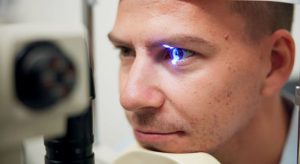
Modern technology has revolutionised the way surgeons evaluate and treat irregular corneas. Advanced diagnostic tools now allow precise mapping and assessment, making customised laser treatments safer and more effective.
This lets them determine whether your irregular shape is:
Stable: The corneal shape is consistent and not worsening over time.
Progressive: The irregularity is changing or worsening, requiring careful monitoring.
Treatable: The condition can be safely corrected with modern laser or customised procedures.
Suitable for a customised plan: Your cornea can be reshaped using a tailored surgical approach.
Some of the most important technologies include:
1. Corneal Topography: Corneal topography creates a colour-coded map of your corneal curvature, providing a detailed view of the eye’s surface. It highlights steep areas, flat areas, asymmetric patterns, and surface irregularities.
This is typically the first test your surgeon will review, as it plays a crucial role in planning customised treatments for irregular corneas.
2. Corneal Tomography: Tomography goes beyond topography by providing a deeper assessment of the cornea. It evaluates the front and back surface curvature, thickness distribution across the cornea, and elevation maps.
This advanced imaging can detect early or hidden irregularities that were previously impossible to identify, helping surgeons plan safer and more precise customised treatments.
3. Wavefront Aberrometry: This technology identifies how light passes through your eye and detects higher-order aberrations (HOAs). These irregularities create issues like glare and halos.
Wavefront-guided treatments aim to correct these aberrations directly, which is extremely helpful for irregular cornea patients.
4. Corneal Biomechanics Testing: Understanding your cornea’s strength is an important part of planning surgery. Tools like the Corvis ST or ORA measure stiffness, elasticity, and overall structural stability.
These measurements help your surgeon determine whether your cornea is strong enough to safely undergo reshaping, reducing the risk of complications.
Who Can Have Laser Vision Correction with Irregular Corneas?
Eligibility for laser vision correction with irregular corneas depends on multiple factors, including the cause, severity, stability, thickness, biomechanical strength, and prescription. Modern assessments allow surgeons to determine which patients can safely benefit from customised treatments.
Your surgeon will consider: Several factors guide how surgeons approach irregular cornea treatment. These include the cause of the irregularity, its severity, whether the condition is stable, your corneal thickness, and your corneal biomechanical strength.
Other important considerations are the type of treatment required and your prescription. Together, these factors help the surgeon design a customised plan that is safe, effective, and tailored to your individual eyes
1. Mild or Early Keratoconus
Keratoconus is a condition where your cornea thins and bulges into a cone-like shape. In the past, keratoconus was an automatic “no” for laser surgery. But today, the assessment is more nuanced.
If your keratoconus is stable and mild: You may be suitable for topography-guided PRK, a laser treatment customised to the unique shape of your cornea, allowing for precise vision correction.
Another option is combined PRK with corneal cross-linking (CXL), a two-step procedure that not only reshapes the cornea but also strengthens it to prevent further progression of the irregularity.
If your keratoconus is progressing: In many cases, corneal cross-linking is performed first to stabilise the cornea. Once stability and sufficient thickness are confirmed, laser reshaping may be possible as the next step to improve vision.
If your keratoconus is advanced: In some cases, laser surgery may not be a viable option. However, alternative treatments such as implantable collamer lenses (ICLs) or corneal ring segments might be suitable to improve vision safely.
2. Pellucid Marginal Degeneration (PMD)
Pellucid Marginal Degeneration (PMD) is a condition where the lower part of the cornea thins, creating a distinctive pattern that leads to irregular astigmatism. Understanding treatment options is key to determining whether laser correction is suitable.
Treatments may include: Treatment options for irregular corneas can include topography-guided laser surface surgery, which reshapes the cornea based on its unique contours, and corneal cross-linking, which strengthens and stabilises the cornea.
3. Post-Infection or Trauma Irregularities
Post-infection or trauma can leave the cornea with surface scarring or distortions, affecting vision quality. Understanding the severity and stability of these irregularities is crucial for determining treatment options.
Laser vision correction may be possible if: You may be a good candidate for laser surface treatment if certain conditions are met. These include shallow scarring, a stable cornea, adequate thickness, and the presence of surface irregularities as the main issue affecting vision.
4. Post-LASIK Irregularities
Post-LASIK irregularities can occur when an earlier procedure results in an uneven flap or induces irregular astigmatism. These changes can affect vision quality, making targeted treatment necessary.
Modern treatments include: Modern treatment options for post-LASIK irregularities include custom wavefront-guided PRK, which targets specific visual distortions, topography-guided enhancements that reshape the cornea based on its unique map, and corneal cross-linking when additional biomechanical support is needed to stabilise the cornea.
5. Contact Lens Warpage
Long-term use of rigid or poorly fitted contact lenses can temporarily distort the cornea, a condition known as contact lens warpage. Proper assessment is essential to determine whether these changes are reversible or permanent.
Treatment approach: Addressing contact lens induced corneal warpage begins with removing the lenses for several weeks to allow the cornea to recover. Next, the surgeon will reassess the corneal shape to evaluate changes. Finally, it’s determined whether the irregularity is permanent or reversible, guiding the appropriate treatment plan.
Laser Techniques Suitable for Irregular Corneas
Choosing the right laser technique for irregular corneas depends on the specific shape, thickness, and biomechanical stability of the cornea. Modern technology allows surgeons to select a customised approach that maximises safety and visual improvement.
Topography-Guided PRK: PRK is one of the most important advancements for treating irregular corneas. Unlike LASIK, PRK is often safer for these cases because it preserves more corneal tissue and avoids the risks associated with creating a corneal flap.
PRK offers several advantages for treating irregular corneas. It treats specific irregular map patterns, targeting unique corneal shape irregularities for precise correction, and smooths the corneal surface to create a more even surface for better vision.
The procedure improves overall quality of vision, not just clarity or sharpness, and reduces higher-order aberrations (HOAs) that can cause glare, halos, and distortions. Performed without creating a flap, PRK preserves corneal structural integrity and is suitable for thin or weak corneas, making it a safe and effective option for patients with reduced corneal thickness or biomechanical strength.
Wavefront-Guided LASIK or PRK: Wavefront-guided treatment corrects the way light travels through your entire visual system, improving vision quality. This approach is particularly helpful when higher-order aberrations (HOAs) affect night vision or overall clarity.
However, LASIK may not be suitable if your cornea is thin or biomechanically unstable. In these situations, PRK remains the safer option, offering effective correction while preserving corneal integrity.
SMILE (Small Incision Lenticule Extraction): While SMILE is excellent for many patients, it is generally not ideal for irregular corneas because it cannot be customised as precisely for surface distortions. It may be an option only if your irregularities are minimal.
Combined PRK and Corneal Cross-Linking: Corneal cross-linking strengthens the cornea and, when combined with PRK, provides several benefits. It helps improve corneal shape, stabilise the underlying condition, reduce long-term risks, and achieve clearer, more stable vision.
This combination has become one of the most effective approaches for treating mild keratoconus and certain other irregular corneal patterns, offering safer and more predictable outcomes.
Implantable Collamer Lenses (ICLs): If laser reshaping is unsafe due to a thin or highly irregular cornea, ICLs can be an excellent alternative. These lenses correct high prescriptions, preserve corneal tissue, avoid weakening the cornea, are reversible, and do not require any corneal reshaping, making them a safe and effective option for many patients.
What Surgeons Look for During Assessment
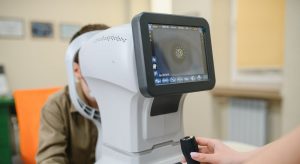
Surgeons evaluate more than just corneal shape when determining suitability for laser vision correction. A comprehensive assessment ensures both safety and optimal visual outcomes.
Here’s what they assess carefully:
Corneal Thickness: Your cornea must be thick enough to safely remove tissue without compromising structure.
Corneal Stability: If your cornea is changing over time (such as in progressing keratoconus), stability must be restored first through cross-linking.
Shape Pattern: Some irregular patterns are safe to correct, while others require combined treatment or alternative approaches.
Higher-Order Aberrations: These often determine whether you’re suitable for customised treatments.
Quality of Vision: Symptoms like glare, halos or ghosting help guide treatment planning.
Why Personalised Treatment Matters
Every irregular cornea is unique, meaning a one-size-fits-all approach to laser correction isn’t effective. Personalised treatment ensures that each patient receives care tailored to their specific corneal structure and visual needs.
Surgeons combine: When evaluating an irregular cornea, surgeons consider several critical factors. These include corneal topography, tomography, biomechanics, and aberrometry, as well as your prescription history, age, and the long-term stability of your vision.
Assessing all of these elements helps ensure that any treatment plan is safe, precise, and tailored to your individual needs, maximising the chances of a successful outcome.
The Role of Corneal Cross-Linking
Corneal cross-linking (CXL) has become a crucial advancement for patients with irregular corneas. It strengthens the cornea and helps stabilise its shape, improving safety and outcomes for laser procedures.
CXL works by:
Increasing corneal stiffness: Strengthening the cornea to better withstand pressure and reduce deformation.
Preventing progression: Slowing or stopping worsening of corneal irregularities.
Improving laser eligibility: Making more patients suitable candidates for laser vision correction.
Enhancing surgical outcomes: Optimising results by creating a healthier, more stable cornea.
Boosting long-term stability: Maintaining vision improvements and reducing the risk of future regression.
When Laser Correction Isn’t Recommended
Despite modern advances in laser technology, not every patient with an irregular cornea is a suitable candidate for correction. Certain conditions still make surgery unsafe or less effective.
You may not be eligible if:
Advanced keratoconus: The corneal thinning and bulging are too severe for safe laser correction.
Extremely thin cornea: Insufficient corneal thickness makes surgery high-risk.
Severe irregularity: The corneal shape is too distorted for effective reshaping.
Weak biomechanics: The structural integrity of the cornea cannot safely support surgery.
Active inflammation: Ongoing eye inflammation prevents safe surgical intervention.
Unstable topographic patterns: Fluctuating corneal measurements indicate the eye isn’t ready for treatment.
The Importance of Choosing the Right Clinic
Treating an irregular cornea requires advanced diagnostics, experienced surgeons, and access to modern technology. Not every clinic offers topography-guided, wavefront-guided, or combined treatments like cross-linking with laser correction.
If you want the most comprehensive options, seeking out experienced providers of laser surgery in London can give you access to the latest imaging systems and customised care. A clinic with strong diagnostic capabilities is crucial, as your success depends heavily on the accuracy of the pre-surgical assessment.
FAQs:
- Can people with irregular corneas really have laser eye surgery?
Yes, many people with irregular corneas can safely undergo laser vision correction today thanks to major advances in diagnostic imaging and customised laser platforms. In the past, irregularities were considered too risky because older technology couldn’t map or treat the cornea accurately. Now, with topography-guided and wavefront-guided procedures, surgeons can tailor treatment to the exact pattern of irregularity. This means that even patients who were previously told they were “not eligible” may now have suitable options after a thorough assessment. - How do I know whether my irregular cornea is stable enough for treatment?
Your surgeon will determine stability by reviewing serial topography or tomography scans taken over time. These scans help identify whether the shape of your cornea is changing, which often happens in conditions like keratoconus or pellucid marginal degeneration. If the scans show consistent patterns without progression, your cornea may be stable enough for treatment. If progression is present, stabilising the cornea with cross-linking is usually required before any reshaping procedure is considered safe. - Is LASIK suitable for irregular corneas?
LASIK is generally approached with caution in patients with irregular corneas because it involves creating a corneal flap, which may weaken the cornea further. In select mild and stable cases, wavefront-guided LASIK may still be an option, especially when thickness and biomechanical strength are adequate. However, most irregular cornea patients are better suited to surface-based treatments like PRK or topography-guided PRK, which avoid flap creation and preserve more corneal tissue. - What is topography-guided PRK, and why is it preferred for irregular corneas?
Topography-guided PRK is a laser technique that uses a highly detailed map of your corneal surface to create a personalised treatment plan. Instead of treating your prescription alone, it focuses on smoothing and regularising the distorted areas of the cornea. This leads to sharper, clearer and more comfortable vision, especially for people affected by glare, halos or ghosting. Because it doesn’t involve a flap, it is safer for thin or biomechanically weaker corneas, making it one of the most commonly recommended options for irregular cornea patients. - How does cross-linking help people with irregular corneas?
Corneal cross-linking strengthens the cornea by creating additional collagen bonds within its structure. For people with keratoconus, PMD or other progressive irregularities, cross-linking prevents further weakening and helps stabilise the corneal shape. Once your cornea is stabilised, a laser procedure may become possible when it previously wasn’t safe. In some cases, surgeons combine cross-linking and PRK in the same session to both reinforce and reshape the cornea, improving long-term outcomes. - If my irregularity is caused by scarring or trauma, can laser surgery still work?
It depends on the depth, location and impact of the scar. If the scarring affects only the superficial layers of the cornea and the deeper structure is healthy, a laser procedure such as topography-guided PRK can often smooth the surface and improve visual quality. However, if the scar is deep or significantly disrupts corneal biomechanics, laser correction may not provide the desired result. In such cases, alternatives like customised contact lenses, ICLs or corneal transplant techniques may be more suitable. - Are implantable collamer lenses (ICLs) better than laser surgery for irregular corneas?
ICLs are often recommended when the cornea is too thin, too weak or too irregular for laser reshaping. Unlike laser surgery, an ICL does not remove any corneal tissue. Instead, the surgeon places a corrective lens inside the eye, behind the iris, which can correct even high prescriptions. This approach avoids further weakening the cornea and is reversible, making it a strong option for patients who cannot safely undergo laser procedures. However, if your irregularity can be improved with a customised laser treatment, your surgeon may recommend PRK or topography-guided correction instead. - What if my cornea is irregular because of long-term contact lens wear?
Contact lens-induced warpage can mimic true irregular corneal patterns, but it is often temporary. If your cornea has been distorted by lenses especially rigid or poorly fitted ones you may simply need to stop wearing them for several weeks. During this time, the cornea gradually returns to its natural shape. Once it stabilises, your surgeon can reassess whether the irregularity is real or only temporary. Many people in this situation discover they are good candidates for laser surgery after the cornea recovers. - What kind of results can I expect after customised laser treatment?
Most patients experience sharper, more comfortable and more stable vision compared to what they had before treatment. Customised techniques help reduce higher-order aberrations such as halos, glare and ghosting, which are common with irregular corneas. However, the exact outcome depends on the degree of irregularity and the health of your cornea. While many patients achieve excellent vision, some may still need glasses for certain tasks or may not reach the same level of clarity as people with naturally regular corneas. Your surgeon will provide a personalised expectation based on your scans. - How do I choose the right clinic for irregular cornea treatment?
Treating irregular corneas requires more than standard laser equipment. You need a clinic that offers advanced topography, tomography, wavefront analysis and biomechanical testing, along with surgeons experienced in complex corneal conditions. A clinic that regularly treats keratoconus, PMD and post-surgical irregularities will be better equipped to create a precise and safe plan for your eyes. The accuracy of your assessment is crucial because your suitability depends heavily on the quality of your diagnostic images and the expertise of the surgeon interpreting them.
Final Thoughts: Smarter Options for Irregular Corneas
When you have an irregular cornea, it’s easy to assume that laser vision correction isn’t an option. But with today’s advanced mapping technologies, customised treatments and improved stability techniques like corneal cross-linking, many people who were once told they were unsuitable can achieve clearer, more comfortable vision. The key is choosing a clinic that understands the nuances of irregular cornea treatment and has the diagnostic tools to assess your eyes with precision.
If you’re researching your options, exploring a trusted provider of laser surgery in London can help you understand what’s genuinely possible for your eyes and whether a personalised approach like topography-guided PRK, combined treatment or another technique would offer the safest outcome.
Experienced centres now treat complex corneal shapes with far more accuracy than ever before, giving patients realistic pathways to improved vision. If you’re considering Laser surgery in London, you can reach out to us at Eye Clinic London to discuss whether this treatment is the right choice for your vision goals and to learn what to expect from the procedure.
References:
- Knorz, M.C. & Jendritza, B. (2000) ‘Topographically‑guided laser in situ keratomileusis to treat corneal irregularities’, Ophthalmology, 107(6), pp. 1138‑43. Available at: https://pubmed.ncbi.nlm.nih.gov/10857834/
- Ghoreishi, M., Naderi Beni, A. & Naderi Beni, Z. (2014) ‘Visual outcomes of topography‑guided excimer laser surgery for treatment of patients with irregular astigmatism’, Lasers in Medical Science, 29(1), pp. 105‑11. Available at: https://pubmed.ncbi.nlm.nih.gov/23435799/
- Ramamurthy, S. et al. (2020) ‘Topography‑guided treatment in regular and irregular corneas: a review’, Eye and Vision, 7:11. Available at: https://www.ncbi.nlm.nih.gov/pmc/articles/PMC7857005/
- Jain, R. et al. (2023) ‘Outcomes of topography‑guided PRK/CXL in keratoconus’, [journal], available at: https://www.ncbi.nlm.nih.gov/pmc/articles/PMC10565915/
- Wu, P‑L., Lee, C‑Y., Cheng, H‑C. et al. (2020) ‘Correction of Myopic Astigmatism with Topography‑Guided Laser In Situ Keratomileusis (TOPOLINK)’, Healthcare, 8(4):477. Available at: https://www.mdpi.com/2227-9032/8/4/477