


Laser Eye Surgery for People With Large Pupils: What You Should Know
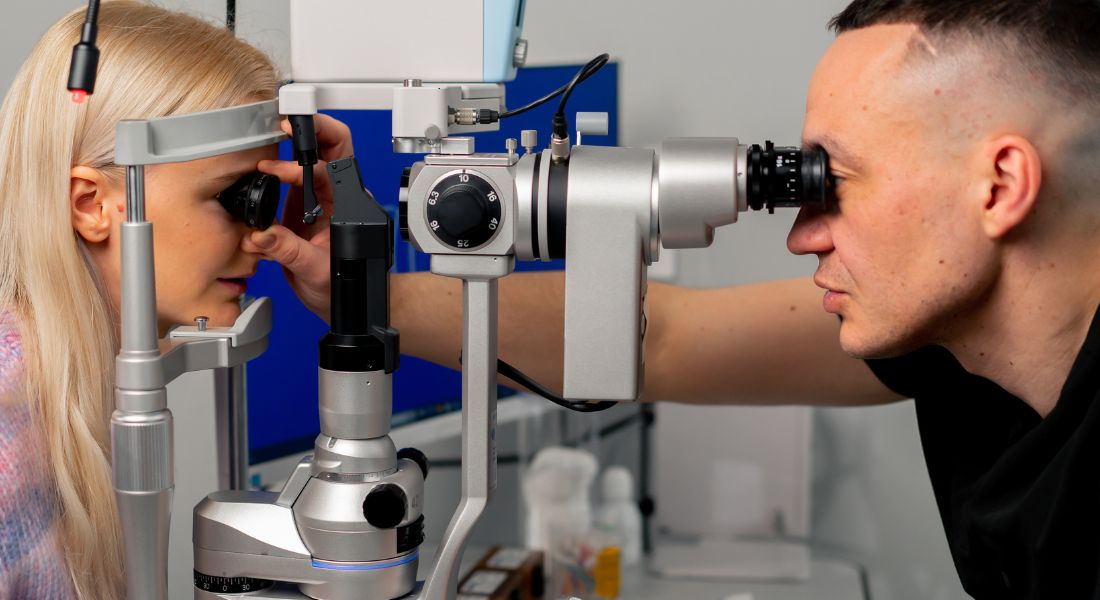
If you’ve ever been told that your pupils are “large” and you’re considering laser eye surgery, it’s natural to feel uncertain about whether you’re a suitable candidate. You may have heard that people with large pupils are more prone to glare, halos or night-time starbursts after treatment. You might even worry that laser eye surgery simply isn’t safe for you. The good news is that modern technology has changed things dramatically. Today, many people with naturally large pupils can still enjoy excellent outcomes with the right combination of diagnostics and laser technique.
In this guide, I’ll walk you through exactly how pupil size influences your suitability for surgery, what symptoms are more likely to appear, and which technologies help reduce these risks. My goal is to help you feel informed, reassured and confident as you move forward in your laser vision journey.
What Does It Mean to Have “Large Pupils”?
Your pupils expand and contract depending on lighting. In bright light, they shrink. In dim light, they widen. For most people, the pupil size under dim lighting ranges between 5 and 7 mm. If your pupils naturally dilate to 7 mm or more in low-light conditions, surgeons may describe them as “large.”
Having large pupils isn’t a problem in itself. It doesn’t affect your general vision, and it doesn’t mean you have an underlying condition. The concern comes from how your eyes behave at night or in dim environments, particularly after laser eye surgery.
Why Pupil Size Matters for Laser Eye Surgery
Laser eye surgery reshapes your cornea to correct short-sightedness, long-sightedness or astigmatism. The laser creates a treatment zone a precisely reshaped area on the cornea with a fixed diameter. In normal lighting, your pupils are smaller, so this treatment zone fully covers the part of the cornea that light passes through to help you see clearly.
However, when your pupils naturally enlarge in low light, they can become wider than the treated area. When this happens, some of the light enters through the untreated outer cornea, which is not optically corrected. This mismatch can lead to symptoms such as:
- Glare: Bright lights may appear to scatter, especially from car headlights or street lamps.
- Halos: Rings or circles of light can appear around bright sources due to light bending differently at the edge of the treated zone.
- Starbursts around lights: Lights may look spiky or radiate lines, particularly in darkness.
- Reduced contrast sensitivity: Objects can seem less sharply defined, making it harder to distinguish details in dim or hazy environments.
- Difficulties with night driving: A combination of glare, halos and lower contrast can make night roads harder to navigate.
These symptoms don’t happen to everyone, but they are more likely if the treatment zone is not large enough for your natural pupil size in the dark. That’s why your surgeon measures your pupils in low-light conditions before planning your treatment ensuring the optical zone is wide enough to minimise night-vision side effects.
How Surgeons Measure Your Pupils

Your pupil size is measured using advanced aberrometers and infrared imaging, which allow the device to capture your pupil diameter accurately without being affected by bright exam lights. These measurements are taken under several lighting conditions to understand how your pupils behave throughout the day:
Normal light: This shows your everyday functional pupil size how large your pupils typically are in daylight or indoor room lighting. It helps establish a baseline for typical vision tasks.
Dim light: This measurement reflects conditions such as early evening or softly lit rooms. It shows how much your pupils begin to open when lighting drops, which is important for predicting mild night-vision changes.
Near-darkness: This is the most crucial measurement, capturing your maximum pupil size the size your pupils reach when you’re in very low light, such as during night driving. It helps the surgeon determine whether the laser’s optical zone will be wide enough to avoid issues like glare or halos.
The low-light measurement is especially important because it mirrors how your pupils behave at night. Using this information, your surgeon can choose the safest treatment method and plan an optical zone that minimises night-vision side effects and maximises quality of vision.
Do Large Pupils Automatically Disqualify You From Laser Eye Surgery?
Not at all. Years ago, when older-generation lasers were used, people with large pupils had higher risks of glare and halos. Today, modern lasers have larger optical zones, smoother profiles and wavefront-guided planning, meaning that pupil size is no longer the barrier it once was. In most cases, surgeons can customise your treatment zone to minimise unwanted night-time effects. What matters most is matching the technology to your personal pupil characteristics.
Why People With Large Pupils Notice More Glare at Night
If your pupils are large, you naturally expose more of your peripheral cornea to incoming light. After surgery, if that peripheral cornea is not fully treated, the mismatch between treated and untreated areas can scatter light, especially in the dark.
This can create:
Halos – Circular rings around lights, particularly LED headlights.
Glare – Light that appears to “spill” outward more than usual.
Starbursts – Lights appearing to have streaks or rays.
Ghost images – A slightly doubled or hazy outline around objects.
These symptoms usually reduce over time as your brain adapts, but proper planning significantly helps prevent them in the first place.
The Role of Optical Zones in Large Pupil Cases
The critical factor for patients with naturally large pupils isn’t just the pupil diameter it’s whether the optical zone created by the laser is wide enough to match how your pupil behaves, especially in low light. A mismatch can cause light to enter through untreated corneal areas, leading to night-vision disturbances.
Optical Zone: The area the laser treats to correct your vision. This zone needs to be wide enough so that all light entering your eye at night passes through the corrected cornea. If it’s too small, you may notice glare, halos or softer contrast in the dark. Modern laser platforms allow the optical zone to be customised based on your individual pupil measurements.
Transition Zone: A well-designed transition zone reduces abrupt curvature changes that can scatter light. This blending helps maintain smooth optics across the corneal surface so you experience fewer visual distortions at night. The transition zone also supports more stable and comfortable vision during the healing phase.
If your pupil measures 7 mm in dim light, your optical zone needs to be planned so you do not “see beyond” the treated area once your pupils widen at night. Modern lasers can safely expand the effective optical zone, reducing light scatter and dramatically improving night-time visual quality a major advantage for people with large pupils or night-driving concerns.
Modern Laser Technologies That Help People With Large Pupils
Not all lasers are equal when it comes to treating large pupils. The latest technology dramatically improves night-time outcomes.
Here are the most important innovations:
- Wavefront-Optimised Lasers – These lasers smooth the cornea during treatment to minimise spherical aberrations, which are strongly associated with glare. They help create a natural corneal shape that enhances night-time visual performance. They are often the first choice for patients with large pupils.
- Wavefront-Guided Treatments – These are even more personalised. Wavefront-guided surgery measures how light travels through your entire visual system, creating a “map” of distortions unique to your eyes. This can correct high-order aberrations and reduce the symptoms that large-pupil patients are more sensitive to.
- Contoura/Topo-Guided LASIK: This approach uses corneal topography to treat microscopic imperfections on the corneal surface. It smooths irregularities that might otherwise contribute to glare, halos or night-time blur. Patients with larger pupils tend to benefit from this precision.
- SMILE (Small Incision Lenticule Extraction): SMILE creates a lenticule inside the cornea and removes it through a tiny incision instead of creating a corneal flap. Its design naturally reduces induced aberrations. For some patients with large pupils, SMILE can reduce the likelihood of night vision issues compared to older LASIK technologies.
How Surgeon Experience Influences Outcomes
Even the most advanced laser system relies on the expertise guiding it. When treating patients with larger pupils or anyone at risk of night-vision symptoms an experienced surgeon plays a critical role in achieving safe, high-quality results. A surgeon skilled in large-pupil cases will:
Take detailed pupil measurements – They measure your pupils in bright, dim and near-dark conditions to understand your true night-time pupil size. Accurate measurement ensures your optical zone is planned correctly.
Customise optical and transition zones – Rather than using a standard size for all patients, they adjust the optical zone to match your individual pupil behaviour. This reduces glare, halos and light scatter.
Choose the safest laser system – Different platforms excel in different situations. Experienced surgeons know which laser offers the widest effective optical zone and the smoothest corneal surface for your particular eyes.
Avoid overcorrecting the periphery – Over-flattening the outer cornea can increase aberrations. A skilled surgeon ensures the correction remains centred and balanced to protect your night vision.
Use smoothing algorithms – Modern lasers can fine-tune the corneal surface to reduce microscopic roughness. This improves clarity, comfort and contrast sensitivity especially in low-light conditions.
Reduce high-order aberrations – Experienced surgeons plan treatments that minimise distortions such as coma and spherical aberration, which are responsible for many night-vision problems.
Balance flap thickness and corneal stability – Whether performing LASIK, SMILE or PRK, they choose a technique that maintains the structural integrity of your cornea. This lowers the risk of long-term complications and supports crisp, stable vision.
Your surgeon’s planning and judgment matter just as much as the technology itself especially for patients with larger pupils or those concerned about night-time visual quality.
Night Driving After Laser Eye Surgery With Large Pupils
Night driving can feel different after laser eye surgery, especially if you naturally have large pupils. Driving in the dark relies heavily on contrast sensitivity and minimal glare, and larger pupils allow more peripheral light to enter the eye. In the early healing phase, this can lead to visual symptoms such as rings around headlights, increased sensitivity to LED road signs, mild blurring in very low-light conditions, or reduced contrast on dark roads. These effects are common and usually reflect both temporary healing changes and the time your brain needs to adjust to your new vision.
The good news is that these symptoms steadily improve as healing continues. Mild disturbances often settle within two to four weeks, while more complete neuroadaptation generally develops over three to six months. For some people, full night-time clarity continues to refine over six to twelve months. Using lubricating eye drops, managing dryness and avoiding unnecessary night driving in the earliest weeks can all help improve comfort and support the recovery process.
How Neuroadaptation Helps Reduce Glare and Halos
Neuroadaptation is your brain’s ability to learn how to interpret visual information differently over time. Even if you initially notice night-time disturbances, your brain gradually filters out unwanted visual “noise” as you adapt to your new optical system. This process is similar to adjusting to new glasses, but slower and deeper. Most patients with large pupils experience significant improvement over the first three months.
Does Pupil Size Affect LASIK, LASEK and SMILE Differently?
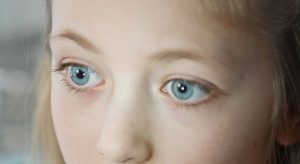
Your pupil size can influence the choice of procedure.
LASIK – Modern LASIK with wavefront-optimised or guided technology is suitable for many patients with large pupils, as long as the optical zone is large enough and high-order aberrations are controlled.
LASEK/PRK – These surface treatments can sometimes be preferable if your corneas are thin or if your surgeon wants to precisely control the transition zone. They may produce slightly fewer spherical aberrations in certain cases.
SMILE – SMILE is popular for its ability to induce fewer high-order aberrations overall. Many large-pupil patients achieve smoother night vision with SMILE compared to older LASIK systems.
Your surgeon will help you understand which option offers the best outcome for your eye shape, thickness and pupil characteristics.
Who Is More Likely to Experience Night-Time Side Effects?
People with naturally large pupils may notice early night-vision symptoms more easily, but pupil size is only one part of the picture. Several other factors can influence how your vision behaves in low light:
Pre-existing high-order aberrations – If your cornea already has optical irregularities, the untreated distortions can become more obvious at night. Customised treatments help minimise these effects.
Older laser technology used in other clinics – Earlier-generation lasers created smaller optical zones and less smooth surfaces. Patients treated years ago often report more halos compared with modern systems.
Dry eyes – An unstable tear film scatters light, making halos and glare more noticeable. Dryness is also common after laser surgery, so managing it properly is essential.
Thin corneas – When the cornea is thin, the optical zone may need to be smaller for safety. This increases the chance of light entering the untreated periphery in dim conditions.
High prescriptions – Higher corrections require deeper reshaping, which may limit how wide the optical zone can safely be. This can affect night-time clarity.
Low contrast sensitivity – Some people naturally struggle to distinguish subtle details in dim lighting, making night-time symptoms feel more pronounced.
Genetic sensitivity to glare – A small subset of people are simply more prone to noticing visual scatter due to individual variations in corneal structure and retinal processing.
Good candidates are selected by assessing all of these factors together, not just pupil size. A comprehensive evaluation ensures your treatment is tailored to your unique visual profile, reducing the chances of night-time side effects.
Long-Term Results for People With Large Pupils
Most people with naturally large pupils go on to enjoy excellent long-term vision after laser eye surgery. Modern technology has transformed outcomes, and many patients who were once told they weren’t suitable now achieve superb clarity both day and night. Today’s lasers allow surgeons to customise treatment for larger pupils, meaning that early visual disturbances almost always settle as healing progresses. With time, most people find their night vision becomes stable, comfortable and highly functional.
Your long-term results depend on a few key factors: having a sufficiently large optical zone treated, using modern laser platforms, managing dryness, the experience of your surgeon, and your individual healing pattern. When these elements align, night-time side effects such as glare or halos tend to be minimal, mild or barely noticeable. In the vast majority of cases, people with large pupils achieve long-lasting, reliable vision and a high level of night-time confidence.
When Large Pupils Do Limit Someone’s Suitability
There are still a few rare situations where naturally large pupils can limit someone’s suitability for laser eye surgery. This typically happens when the pupil consistently dilates beyond 8 mm, making it difficult to create a safe optical zone that fully covers the visual area used at night. Suitability may also be restricted when high prescriptions require deeper laser ablation, when corneal thickness cannot support a wide enough treatment zone, or when significant higher-order aberrations or irregular corneal shapes are already present. In these cases, the risk of night-time visual symptoms can be too high to proceed safely.
Fortunately, such scenarios have become far less common. Modern scanners, wavefront-guided treatments, advanced laser platforms and highly customised planning allow surgeons to work safely with a much wider range of pupil sizes than in the past. Thanks to these technological improvements, only a small percentage of patients with large pupils are now considered unsuitable for surgery.
Practical Tips for Large-Pupil Patients Considering Laser Surgery
Here are simple steps that make a big difference:
- Ask your surgeon about your low-light pupil size – It’s the most relevant measurement for night vision.
- Choose a clinic that uses wavefront-guided or topo-guided technology – This is essential for personalised treatment.
- Don’t rush the night driving – Give yourself a few weeks before long night journeys.
- Treat dryness aggressively – Hydration improves clarity.
- Keep your car windscreen clean – Smudges amplify glare.
- Avoid bright dashboard lights – Bright interiors worsen contrast.
- Be patient with neuroadaptation – Your brain continues improving your vision for months.
FAQs:
- Does having large pupils mean I can’t get laser eye surgery?
Having large pupils does not automatically disqualify you from surgery. In the past, older laser systems created smaller treatment zones, so people with pupils larger than 7 mm were more likely to experience glare or halos. Modern technology has changed this completely. Today’s wavefront-optimised, wavefront-guided and topo-guided lasers can create wider, smoother optical zones that match your natural pupil size much more accurately. As long as your surgeon uses the right diagnostic measurements and selects a suitable treatment plan, most people with large pupils can safely undergo LASIK, LASEK or SMILE with excellent outcomes. - Why do people with large pupils sometimes experience more glare at night?
At night, your pupils widen to let more light in. When the pupil becomes larger than the optical zone treated by the laser, light can enter through parts of the cornea that were not reshaped. This creates a mismatch between treated and untreated corneal zones, which can scatter light and create halos, starbursts or glare. This effect is more noticeable with larger pupils because a greater proportion of peripheral light reaches the retina in dim conditions. The good news is that modern customised lasers minimise these issues significantly, and the brain naturally adapts over time through neuroadaptation. - Can large pupils affect LASIK, PRK/LASEK and SMILE differently?
Yes, pupil size can influence which procedure may be most suitable for you. LASIK with modern wavefront-optimised or guided technology works extremely well for many people with large pupils because it allows the surgeon to create a sufficiently large optical zone. PRK or LASEK can sometimes be recommended when corneal thickness limits the ability to create a wide LASIK zone, as surface treatments preserve corneal structure. SMILE is often favoured for its ability to induce fewer high-order aberrations, which makes night vision smoother for some large-pupil patients. Your surgeon will evaluate your corneal thickness, shape, prescription and pupil behaviour to determine which procedure is safest. - How do surgeons ensure the optical zone is large enough for my pupils?
Surgeons measure your pupils under bright light, dim light and near-darkness using infrared imaging and aberrometry. The low-light measurement is the most important because it mirrors your real-world night vision. Using this measurement, the surgeon plans the optical zone so that it stays within the safe limits of your cornea while still covering the full diameter needed. Modern lasers also include advanced transition zones that blend the treated cornea into the untreated periphery more smoothly, reducing the risk of light scatter. The entire process is highly customised, particularly in clinics that specialise in treating large-pupil cases. - Will night driving always be difficult for people with large pupils after surgery?
Night driving can feel different in the early weeks after surgery, regardless of pupil size. People with larger pupils may notice halos around headlights, slight haze or reduced contrast more strongly at first because their eyes naturally take in more peripheral light. These symptoms almost always improve steadily as the cornea heals and the brain adapts. Many patients find that their night vision becomes significantly clearer within the first one to three months, with ongoing refinement up to a year. When the optical zone is matched properly to your pupil size, long-term night vision is excellent for the vast majority of patients. - What technologies are best for people with large pupils?
Wavefront-optimised lasers reduce spherical aberrations, which are strongly linked to glare. Wavefront-guided treatments analyse the entire optical pathway of your eye and create a uniquely personalised correction that reduces distortions. Topo-guided platforms like Contoura treat tiny surface irregularities that can contribute to light scatter. SMILE is known for creating fewer high-order aberrations compared with older LASIK systems. A well-equipped clinic usually offers several of these technologies and selects the one that produces the smoothest corneal optics for your specific pupil behaviour, corneal shape and prescription. - Do glare and halos last forever if I have large pupils?
For most people, glare and halos decrease significantly over time and often become barely noticeable. During the early healing phase, the corneal surface is still settling and the brain is learning to adapt to your new optical system. Neuroadaptation plays a major role in this improvement. Over the first few months, your visual system gradually ignores the irregular light scatter that initially felt distracting. By the end of six to twelve months, most large-pupil patients report that night-time effects have either disappeared, become extremely mild, or only occur in very specific situations, such as driving in heavy rain at night. - Are people with thin corneas or high prescriptions at higher risk if they also have large pupils?
Yes, these factors can influence risk, but they do not automatically rule you out. Thin corneas sometimes limit how wide the optical zone can safely be, which means surgeons must be more cautious when planning treatment. High prescriptions require deeper reshaping of the cornea, and this may also restrict how large the optical zone can be. When either of these factors is combined with very large pupils, surgeons must carefully evaluate whether there is enough corneal tissue to create a stable, wide optical zone. In many cases, modern techniques such as PRK, SMILE or customised LASIK can still offer safe solutions. - What long-term results can people with large pupils expect?
Most people with naturally large pupils experience excellent long-term vision when treated with modern technology. The key is proper planning, accurate low-light pupil measurements and selecting a laser platform that creates a sufficiently wide optical zone. Once healing and neuroadaptation are complete, many patients report crisp night vision with minimal scatter. Long-term satisfaction is typically very high, and most people are able to drive at night confidently without the disruptive glare that older systems used to cause. When modern planning is combined with a skilled surgeon, large pupils rarely affect long-term visual quality. - Are there situations where large pupils still make someone unsuitable for laser eye surgery?
There are rare cases where suitability may be limited. This usually happens when pupils dilate consistently beyond 8 mm in very low light, making it difficult to create a treatment zone wide enough to cover the visual area used at night. Suitability can also be affected if the cornea is too thin to support a large optical zone, if the prescription is extremely high, or if the cornea has pre-existing irregularities or high-order aberrations. In such cases, the risk of glare or reduced night vision may outweigh the potential benefits. Fortunately, these situations are uncommon, and modern diagnostic techniques allow surgeons to identify them accurately during your consultation.
Final Thought: Laser Eye Surgery Suitability
Having naturally large pupils doesn’t mean you can’t enjoy clear, comfortable vision after laser eye surgery. With today’s advanced diagnostic tools, wider optical zones and highly customised laser treatments, most people with larger pupils achieve excellent outcomes including strong night vision. The key is choosing a clinic that understands how to plan your treatment precisely around your pupil behaviour, corneal shape and visual needs. If you’d like to find out whether laser eye surgery in London is suitable for you, feel free to contact us at Eye Clinic London to arrange a consultation.
References:
- Kanellopoulos, A.J., 2012. Comparison of sequential vs same-day simultaneous CXL and topography-guided PRK in keratoconus. Journal of Ophthalmology, 2012, pp.1–6. https://www.mdpi.com/2077-0383/1/1/3
- Wang, D., Li, T., Liu, M. and Zhou, X., 2020. Visual quality after SMILE and FS-LASIK: A systematic review. Journal of Clinical Medicine, 9(3), p.722. https://www.mdpi.com/2077-0383/9/3/722
- Holladay, J.T., 2002. Optical zone, pupil size, and centration in laser refractive surgery. Journal of Cataract and Refractive Surgery, 28(9), pp.1437–1445. https://pubmed.ncbi.nlm.nih.gov/12231306/
- Schallhorn, S.C., Tanzer, D., Sanders, D.R. and Sanders, M., 2009. Night-vision symptoms and pupil size after LASIK. Ophthalmology, 116(3), pp.465–472. https://pubmed.ncbi.nlm.nih.gov/19195643/
- Vestergaard, A.H., Grauslund, J., Ivarsen, A. and Hjortdal, J., 2014. SMILE vs LASIK for myopia: 1-year results. Acta Ophthalmologica, 92(5), pp.481–486. https://www.ncbi.nlm.nih.gov/pmc/articles/PMC4280731/