


How Accurate Is Tear Biomarker Testing?
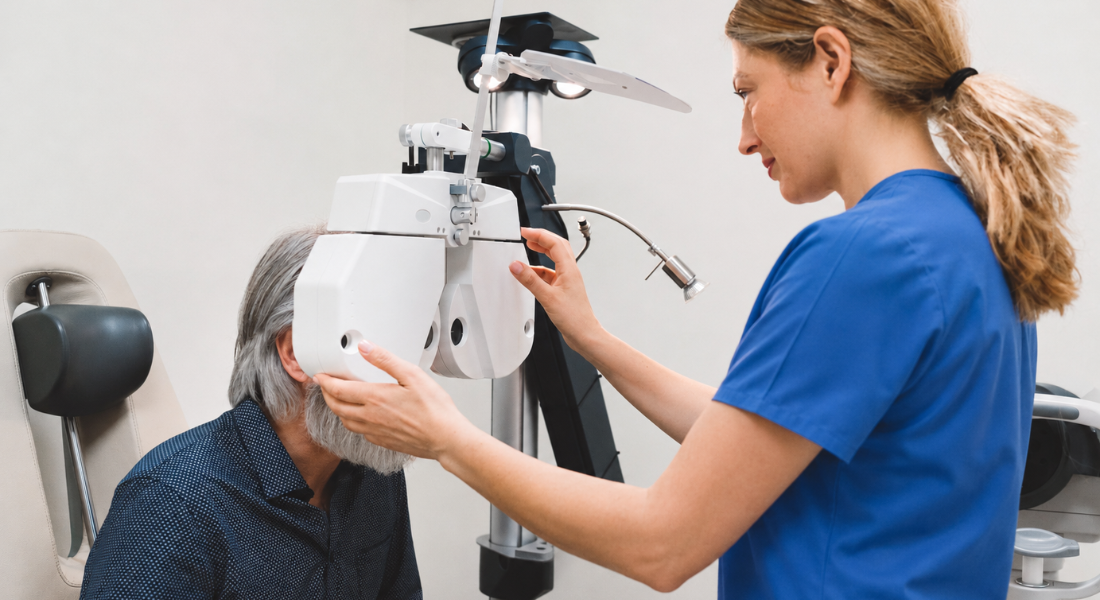
Tear biomarker testing can help identify certain biological changes in your eyes, such as inflammation or changes in tear composition. However, the accuracy of the result depends on the specific biomarker being measured, the condition being assessed and how the tear sample is collected and analysed.
A tear biomarker result should not usually be considered a diagnosis on its own. Your clinician will interpret the findings alongside your symptoms, medical history and eye examination to understand what the results mean for your eye health.
Is There One Accuracy Percentage?
There is no single accuracy percentage that applies to all tear biomarker tests. Each test has its own sensitivity, specificity, reference range and purpose, depending on the biomarker being measured and the condition being investigated.
The reliability of a tear biomarker result also depends on factors such as sample collection, testing methods and how the findings are interpreted. Your clinician will consider the result alongside your symptoms and other eye assessments rather than using one number alone.
What Does the Test Measure?
Tear biomarker tests may measure proteins, inflammatory enzymes, antibodies, lipids, electrolytes and, mainly in research settings, genetic material such as RNA. These measurements may reveal biological changes in the tear film or ocular surface, but they do not always identify the condition responsible for those changes.
What Do Sensitivity and Specificity Mean?
Sensitivity shows how often a test correctly identifies when you have the condition being assessed. A highly sensitive test is less likely to miss a possible problem, which can help your clinician detect changes that may need further investigation.
Specificity shows how often a test correctly identifies when you do not have the condition. A highly specific test is less likely to produce false-positive results, helping your clinician understand your tear biomarker results more accurately.
Why Do Predictive Values Change?
Positive predictive value describes how likely it is that someone with a positive result has the condition being assessed. Negative predictive value describes how likely it is that someone with a negative result does not have the condition.
Unlike sensitivity and specificity, predictive values are strongly affected by how common the condition is in the population being tested. A result obtained in a specialist dry eye clinic may therefore have a different meaning from the same result in a general eye-care population.
How Accurate Is MMP-9 Testing?
Point-of-care MMP-9 testing detects levels of an inflammatory enzyme above the threshold used by the device. In one selected multicentre study, the test had 85% sensitivity, 94% specificity, a positive predictive value of 97% and a negative predictive value of 73% when compared with the study’s clinical definition of dry eye disease.
These figures should not be treated as universal accuracy rates. The participants were selected using several dry eye symptoms and signs, and later research has shown that performance changes when broader diagnostic criteria and more varied clinical populations are used.
Key Points About MMP-9 Testing Accuracy
| Aspect | What the Evidence Shows | Important Limitation |
| What the test detects | Raised tear MMP-9 associated with ocular surface inflammation | It does not identify the underlying condition |
| Selected clinical study | 85% sensitivity and 94% specificity | Results came from a defined study population |
| Positive predictive value | 97% in the selected study | Predictive value changes with disease prevalence |
| Negative predictive value | 73% in the selected study | A negative result cannot rule out dry eye |
| Clinical role | May add information about inflammatory activity | Must be combined with symptoms and examination findings |
| Real-world performance | Test positivity and sensitivity vary according to the diagnostic criteria and clinical population used. | Performance may be lower when broader dry-eye criteria are applied, so a negative result cannot exclude dry eye disease. |
What Does a Positive MMP-9 Result Mean?

A positive result means that MMP-9 has been detected above the threshold used by the test. This suggests increased inflammatory activity on the ocular surface but does not confirm dry eye disease or identify the exact cause.
MMP-9 may be raised in dry eye disease and other inflammatory ocular surface conditions. Your clinician will interpret the result alongside tear stability, ocular surface staining, eyelid findings, symptoms and other relevant tests.
Can MMP-9 Testing Miss Dry Eye?
Yes. A negative MMP-9 result does not exclude dry eye disease. The result may be negative when inflammation is mild, when raised MMP-9 is not a prominent feature of the condition or when an insufficient tear volume is collected.
Earlier smaller studies found positive results in only around 39% to 40% of some dry-eye populations. Other studies have also shown that test performance varies according to the diagnostic criteria and clinical population used. The result must therefore be interpreted alongside your symptoms and complete clinical assessment.
How Accurate Is Tear Osmolarity Testing?
Tear osmolarity measures the concentration of dissolved particles in your tears and may provide information about tear-film imbalance. An older study using a threshold of 316 mOsm/L reported 59% sensitivity and 94% specificity, but different studies have used different thresholds, devices and definitions of dry eye disease.
Studies have reported variable diagnostic performance, with results differing according to the threshold, device, study population and definition of dry eye disease. Tear osmolarity may support dry-eye assessment, but no single threshold reliably identifies every person with the condition, particularly when symptoms or clinical signs are mild.
Why Can Results Vary?
Your tear film changes continuously with blinking and can be affected by factors such as temperature, humidity and airflow. This means your tear biomarker results may differ depending on when and how the sample is collected.
Recent eye-drop use, contact lenses, eye rubbing and reflex watering can also influence measurements. Your clinician will consider these factors when interpreting your results to provide a more accurate assessment.
Does the Collection Method Matter?
The collection method can affect the measured concentration of proteins, lipids and other tear components. Capillary tubes collect free-flowing tears, while Schirmer strips absorb tears and may stimulate additional tear production.
The method, collection duration and sample volume should be recorded and applied consistently. Results obtained using different collection techniques cannot always be compared directly.
What Is Reflex Tearing?
Reflex tearing happens when your eye produces extra tears in response to irritation from a collection device or another stimulus. These additional tears can dilute certain biomarkers and may change the composition compared with your normal resting tears.
This can make results more difficult to interpret, which is why careful collection methods are important. Your clinician will consider the collection technique and other test findings when assessing your tear biomarker results.
Can Eye Drops Affect Accuracy?
Yes, eye drops can affect tear biomarker results by temporarily changing tear volume or composition. Lubricating drops, anti-inflammatory treatments, allergy drops and glaucoma medications may influence the measurements.
Your clinician may collect a tear sample before using diagnostic dyes, anaesthetic drops or other eye treatments. This helps reduce the chance of external factors affecting the accuracy of the result.
Does Sample Handling Affect Results?
Yes, the way your tear sample is handled can influence the accuracy of biomarker measurements. Protein levels may change depending on how the sample is removed, processed, frozen and stored.
Some proteins may remain trapped in the collection material or be reduced during extraction. Careful laboratory handling is therefore important to ensure your results are as reliable as possible.
Are Tear Tests Repeatable?
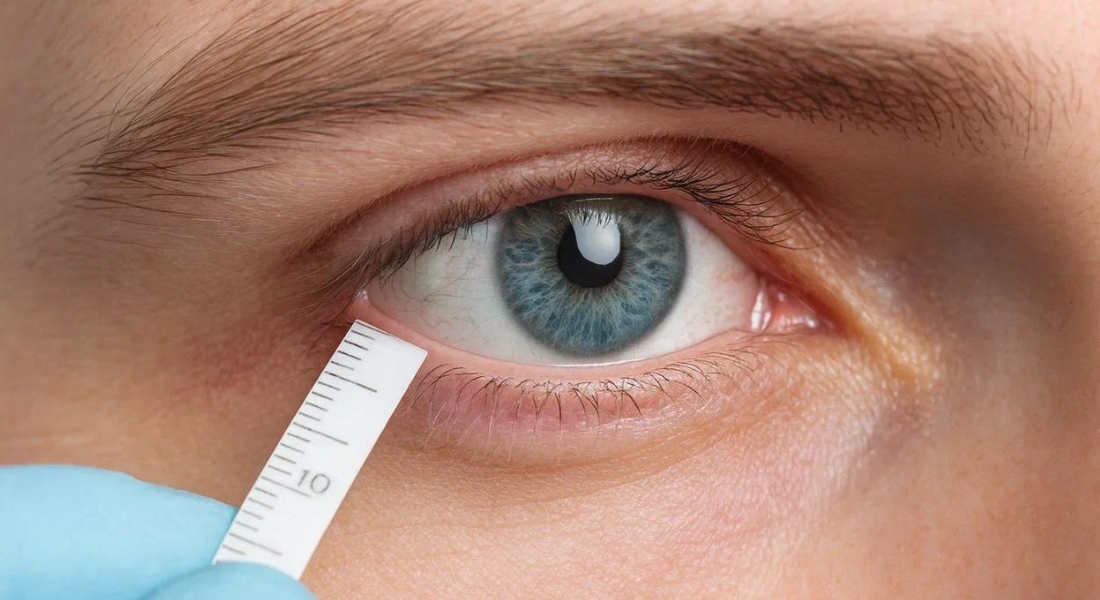
Repeatability can vary depending on the biomarker being measured and the testing method used. Your results may differ when a test is repeated because your tear film naturally changes or because the first collection may stimulate additional tear production.
For this reason, clinicians interpret tear biomarker results alongside your symptoms, examination findings and other tests. A single measurement may provide useful information, but it is not always a complete picture of your eye health.
Why Are Standardised Methods Needed?
Tear biomarker results can be difficult to compare when different clinics and researchers use different methods for collecting, storing and analysing samples. A 2025 international survey highlighted variation in tear research approaches and the need for more consistent testing protocols.
- Consistent testing: Standardised methods can help ensure tear samples are collected and analysed in a similar way across different settings
- Reliable results: Uniform procedures may improve the accuracy and consistency of biomarker measurements
- Better comparisons: Common approaches allow researchers and clinicians to compare findings more effectively
- Clinical understanding: Standardised protocols can help your clinician interpret tear biomarker results more confidently
- Future development: Improved testing methods may support wider use of tear biomarkers in routine eye care
More consistent collection, storage and analysis methods may improve the reproducibility of tear biomarker research and make findings easier to compare between studies. However, standardisation alone will not establish clinical usefulness, and individual biomarkers will still require appropriate validation before they can be introduced into routine care.
How Should Tear Osmolarity Be Used in Practice?
Evidence for tear osmolarity testing varies between studies. Reported accuracy depends on factors such as the device, threshold, study population and definition of dry eye disease used by the researchers.
Tear osmolarity may provide additional information during dry-eye assessment, but it should not be used as an independent diagnostic test. Your symptoms, medical history, slit-lamp examination and established assessments of tear stability, ocular-surface staining, tear production and eyelid health remain important.
Can Biomarker Testing Replace an Eye Examination?
No, you should view tear biomarker testing as a tool that supports your eye examination rather than replacing it. Your clinician will still assess your symptoms, tear-film break-up time, corneal staining, tear production, eyelids and meibomian glands.
You should understand that dry eye assessment works best when your symptoms are considered alongside objective clinical findings. Combining different tests helps your clinician identify the underlying cause and choose the most suitable treatment.
What Are the Main Strengths of Tear Biomarker Testing?
Tear collection is usually minimally invasive and may provide objective information about inflammation or tear-film composition. Point-of-care tests can also produce results during the same clinical visit.
Testing may help separate some biological features of dry eye disease, particularly when symptoms and visible signs do not fully match. Its usefulness depends on selecting the appropriate test and interpreting it within the wider examination.
What Are the Main Limitations of Tear Biomarker Testing?

Tear biomarker results can be influenced by natural tear variation, small sample volumes, environmental conditions, collection technique, eye drops and contact lens wear. Several eye conditions may also produce similar inflammatory changes.
Most emerging biomarkers do not yet have universally accepted reference ranges, collection standards or sufficient independent validation for routine clinical diagnosis. A biomarker result may support an assessment, but it cannot explain every cause of discomfort, redness or fluctuating vision.
Myth vs Fact
| Myth | Fact |
| Every tear biomarker test has the same accuracy. | Accuracy depends on the biomarker, device, threshold, collection method and patient group. |
| An MMP-9 test diagnoses dry eye disease. | It identifies raised inflammatory activity but does not diagnose the underlying condition alone. |
| A negative MMP-9 result rules out dry eye. | Dry eye can be present without MMP-9 being detected above the test threshold. |
| A positive result always means treatment is needed. | The result must be interpreted alongside symptoms and examination findings. |
| Tear osmolarity has one universally accepted threshold. | Different studies and devices have used different thresholds and reported varying performance. |
| Repeating a tear test will always give the same result. | Tear composition changes naturally, and collection conditions may affect repeatability. |
| Tear testing can replace a full eye examination. | It is an additional investigation and cannot replace clinical assessment. |
Key Takeaways
- There is no single accuracy rate for every tear biomarker test.
- Sensitivity and specificity depend on the test, threshold and patient group.
- MMP-9 testing may identify raised ocular surface inflammation but cannot show its exact cause.
- A negative MMP-9 result does not rule out dry eye disease.
- Tear osmolarity may support dry eye assessment, but results vary between studies.
- Eye drops, contact lenses, reflex tearing and collection technique can affect results.
- Most newer tear biomarkers remain research tools.
- Tear testing cannot replace a complete eye examination.
Frequently Asked Questions
- How accurate is tear biomarker testing?
The accuracy of tear biomarker testing depends on the specific biomarker, the condition being assessed and how the sample is collected and analysed. Results are interpreted alongside your symptoms, medical history and eye examination rather than being used as a standalone diagnosis. - Is there one accuracy percentage for all tear biomarker tests?
No, there is no single accuracy percentage that applies to all tear biomarker tests. Each test has different levels of sensitivity, specificity and reliability depending on what it measures and how it is used. - What can tear biomarker testing measure?
Tear biomarker tests can measure substances such as proteins, inflammatory molecules, enzymes, lipids and other biological markers in your tears. These changes may provide information about your eye surface health but do not always identify a specific condition on their own. - How accurate is MMP-9 tear biomarker testing?
MMP-9 testing showed 85% sensitivity and 94% specificity in one selected multicentre study. These figures do not apply to every patient population, and other studies have reported lower positivity or sensitivity in some clinically diagnosed dry-eye groups. - Can a negative tear biomarker result rule out dry eye disease?
No. A negative result may occur when inflammation is mild, when another mechanism is causing dry eye or when the biomarker is below the test threshold. Dry eye should be assessed using symptoms and several clinical findings. - Can eye drops affect tear biomarker test results?
Yes, eye drops can temporarily change the composition and volume of your tears, which may influence test results. Your clinician will consider any recent treatments or medications when interpreting your findings. - Why can tear biomarker results vary between tests?
Tear results may vary because the tear film changes with blinking, environment, eye-drop use, contact lenses and reflex tearing. Differences in collection, storage and analysis can also affect the measurement. - Does the way tears are collected affect accuracy?
Yes, the collection method can affect the concentration and composition of biomarkers in your sample. Careful and consistent collection techniques are important to improve the reliability of tear biomarker testing. - Can tear biomarker testing replace a full eye examination?
No, tear biomarker testing should be used alongside a complete eye examination rather than replacing it. Your clinician will consider your symptoms, clinical findings and other tests to understand your eye health properly. - What are the main limitations of tear biomarker testing?
Tear biomarker testing can be affected by biological variation, small sample volumes and inconsistent collection methods. Many emerging biomarkers also need clearer reference ranges and stronger independent validation before routine clinical use.
Final Thoughts: Understanding the Accuracy and Role of Tear Biomarker Testing
Tear biomarker testing is a developing area of eye care that may provide valuable information about inflammation, tear composition and changes occurring on the surface of your eyes. However, the accuracy of these tests depends on the specific biomarker, the testing method and how the results are interpreted alongside your symptoms and clinical findings.
While tear biomarkers can support a more detailed understanding of your eye health, they are not designed to replace a complete eye examination. Your eye specialist will consider your medical history, symptoms and other assessments to build a clearer picture of your condition and recommend the most appropriate care.
If you have ongoing eye discomfort or would like to learn more about tear biomarkers in London, you can contact Eye Clinic London to arrange a comprehensive assessment.
References
- Lanza, N.L., Valenzuela, F., Perez, V.L. and Galor, A. (2016) ‘The matrix metalloproteinase 9 point-of-care test in dry eye’, The Ocular Surface, 14(2), pp. 189–195. Available at: https://pubmed.ncbi.nlm.nih.gov/26850527/
- Tomlinson, A., Khanal, S., Ramaesh, K., Diaper, C. and McFadyen, A. (2006) ‘Tear film osmolarity: Determination of a referent for dry eye diagnosis’, Investigative Ophthalmology & Visual Science, 47(10), pp. 4309–4315. Available at: https://pubmed.ncbi.nlm.nih.gov/17003420/
- Bachhuber, F., Huss, A., Senel, M. and Tumani, H. (2021) ‘Diagnostic biomarkers in tear fluid: From sampling to preanalytical processing’, Scientific Reports, 11, article 10064. Available at: https://pmc.ncbi.nlm.nih.gov/articles/PMC8114924/
- Potvin, R., Makari, S. and Rapuano, C.J. (2015) ‘Tear film osmolarity and dry eye disease: A review of the literature’, Clinical Ophthalmology, 9, pp. 2039–2047. Available at: https://pmc.ncbi.nlm.nih.gov/articles/PMC4636089/
- Boychev, N., Sethu, S., Op de Laak, R., Tear Research Network Survey Taskforce and Gijs, M. (2025) ‘Global practices of tear fluid collection, storage, and molecular analysis: A questionnaire by the Tear Research Network’, Contact Lens and Anterior Eye, 48(4), article 102388. Available at: https://www.sciencedirect.com/science/article/pii/S1367048425000220