


Headaches in Children: Could an Undiagnosed Eye Problem Be the Cause?

If your child frequently complains of headaches, it can be concerning and stressful for both you and your child. While common factors like stress, dehydration, excessive screen time, or temporary growth phases may contribute, recurrent headaches are sometimes caused by undiagnosed vision or eye-alignment problems. These underlying issues are often overlooked because children may not recognise that their vision is different from normal or may not know how to describe what they’re experiencing.
Children can struggle to explain their symptoms, and subtle vision problems may go unnoticed for months or even years. Eye-related headaches can affect concentration, school performance, and overall wellbeing, making early detection crucial. Understanding the link between headaches and eye health allows parents to seek timely assessments, prevent unnecessary discomfort, and support their child’s long-term vision and health.
Why Headaches in Children Are Often Misunderstood

Headaches are a common occurrence in childhood and can be triggered by factors such as illness, fatigue, emotional stress, or the environment. They often affect concentration, mood, and daily activities.
Because of this, vision problems are often overlooked. Many children pass standard vision screenings even when functional issues with their eyes are present. Eye strain doesn’t always indicate poor eyesight. It can stem from how the eyes work together, focus, or how the brain processes visual information, sometimes causing subtle but persistent discomfort.
Recurring headaches in children deserve careful attention, especially when no clear cause is identified. Early investigation can help uncover underlying issues before they worsen and improve a child’s overall wellbeing.
How Vision Problems Can Cause Headaches
The eyes are not passive organs; they are constantly adjusting, focusing, and coordinating with the brain to help us see clearly. Every movement and focus adjustment requires tiny muscles and neural signals working together seamlessly.
When any part of this system isn’t working efficiently, the extra effort can trigger headaches. Children are particularly susceptible because their visual systems are still developing, making them less able to compensate for strain.
Headaches related to vision often occur when the eyes are under continuous strain. This strain can come from tasks like reading, screen use, or even subtle alignment issues, and it can gradually worsen over time.
The longer the visual system is stressed, the more frequent or persistent the headaches may become. Over time, this can impact school performance, concentration, and overall comfort, highlighting the importance of early detection and assessment.
Common Eye Problems Linked to Headaches in Children
Several eye conditions can contribute to headaches in children even without obvious vision loss. These issues are sometimes missed during routine eye checks, making it important to consider them if your child complains of frequent headaches.
Uncorrected Refractive Errors
Refractive errors affect how light is focused on the retina, and even mild issues can lead to eye strain, fatigue, and headaches. Common types include:
Long-sightedness (hyperopia): Children may see clearly at a distance but struggle with near tasks such as reading or schoolwork. Constant focusing effort can cause eye strain and headaches.
Short-sightedness (myopia): Distant objects appear blurry, which may lead to squinting or tilting the head. Prolonged effort to see clearly at a distance can trigger headaches.
Astigmatism: Irregular curvature of the cornea or lens causes distorted or blurred vision at any distance. The brain and eyes work harder to focus, which can lead to fatigue and headache.
Even mild refractive errors can accumulate over time, particularly with prolonged close work or screen use, making them an important factor to assess when a child experiences frequent headaches.
Eye Alignment Problems (Strabismus)
Eye alignment problems, also known as strabismus, occur when the eyes do not point in the same direction. Even minor misalignments can create visual stress and make it harder for the brain to process images comfortably.
Children may not always show an obvious eye turn. Often, the misalignment is subtle, and the eyes appear straight at first glance, making it easy to overlook. To compensate, the brain works harder to merge the images from both eyes into a single, coherent picture. This extra effort can lead to headaches, eye fatigue, and difficulty concentrating.
In some cases, children may suppress vision from one eye to cope with the misalignment. While this adaptation can hide the problem, the underlying strain and associated symptoms, such as recurring headaches, often persist.
Convergence Insufficiency

Convergence insufficiency is a condition in which the eyes struggle to work together properly when focusing on close-up tasks. It often becomes noticeable during reading, homework, or screen use.
Children with convergence insufficiency may experience:
- Headaches after school: Prolonged near work strains the eye muscles, leading to fatigue and recurring headaches, particularly later in the day.
- Difficulty concentrating: Eye strain can make it harder for children to focus on tasks, affecting learning and attention span.
- Blurred or double vision: The eyes may fail to align correctly, causing temporary blurred or double images when reading or using digital devices.
- Avoidance of reading: Children may resist or complain about reading or close work because it causes discomfort.
Because distance vision often appears normal, convergence insufficiency is frequently overlooked during routine eye checks, making it important to assess if a child has unexplained headaches or reading difficulties.
Accommodation Problems
Accommodation refers to the eye’s ability to change focus between near and far objects. This process allows children to read, write, and switch attention from the board to their books without strain.
If the accommodation system is weak or inefficient, the eyes must work harder to maintain clear focus. This extra effort can put significant strain on the visual system. Over time, this constant exertion may trigger headaches, eye pain, blurred vision, and fatigue. Children may also show signs of squinting, rubbing their eyes, or losing concentration during tasks.
Symptoms often become more noticeable later in the day as the eyes tire. Without proper assessment, these recurring issues can affect school performance and overall comfort.
Where Do Eye-Related Headaches Usually Occur?
The location of a headache can sometimes provide valuable clues about its underlying cause. Headaches related to vision problems or eye strain often appear in specific areas around the head, face, and eyes, and recognising these patterns can help parents and clinicians pinpoint the issue.
Common locations include:
The forehead: Eye strain from focusing on near or distant objects can create a persistent tension or pressure across the brow. Children may describe this as a “tight” or “aching” feeling that worsens with reading, writing, or homework.
Around or behind the eyes: Fatigue in the eye muscles often leads to discomfort directly around or behind the eyes. This pressure can sometimes feel like the eyes are “tired” or “heavy,” particularly after prolonged screen use or close work.
The temples: Continuous eye strain can radiate to the sides of the head, causing aching or throbbing in the temple region. Some children may also notice this discomfort when squinting or attempting to focus on small print.
Behavioural Signs That May Point to an Eye Problem
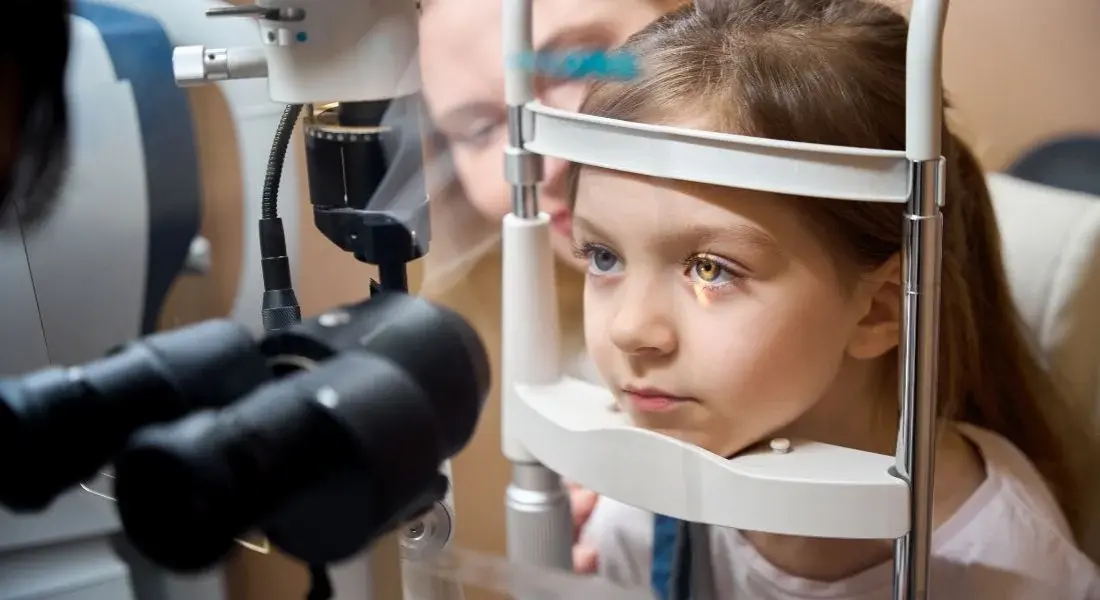
Children do not always express discomfort or complain directly about headaches. Many manage their symptoms silently, making it harder for parents or teachers to identify the underlying issue.
Instead, vision problems often show up through behavioural changes. A child may avoid reading, struggle with homework, or lose their place while reading. Other signs include a short attention span during visually demanding tasks, frequent rubbing of the eyes, tilting the head, or covering one eye. These subtle behaviours are often overlooked or misinterpreted.
What may appear as disinterest, frustration, or behavioural issues is often the child’s way of coping with visual discomfort. Recognising these signs early can help address underlying eye problems before they impact learning and daily life.
School Performance and Headaches: The Overlooked Link
Visual strain can significantly affect a child’s ability to learn. Spending much of the school day focusing on near tasks like reading, writing, and using digital devices can be exhausting if the visual system isn’t working efficiently.
When the eyes are under constant strain, concentration becomes more difficult, and headaches may develop as the day goes on. These headaches can be subtle at first but often increase in frequency and intensity over time.
Teachers and parents may notice warning signs such as declining academic performance, increased frustration during lessons, frequent complaints of tiredness, or difficulty copying from the board. These signs often go unlinked to vision problems. By identifying and addressing the underlying visual issue, children can experience not only relief from headaches but also improved focus, learning, and overall school performance.
Why Children Rarely Say “I Can’t See Properly”
Children often assume their vision is normal, simply because it’s all they have ever experienced. They may not realise that other people see differently, so they rarely report blurred or unclear vision directly.
Instead of saying, “I can’t see properly,” a child might describe their discomfort in other ways, such as:
“My head hurts”: Frequent headaches can be a sign of eye strain or uncorrected vision problems.
“My eyes feel tired”: Fatigue, rubbing the eyes, or squinting are common indicators that the eyes are working too hard.
“I don’t like reading”: Avoidance of near work, homework, or screen time can be a subtle clue that visual tasks are uncomfortable.
Because children may not communicate vision difficulties clearly, careful observation is essential. Paying attention to behaviour, posture, and complaints after visually demanding activities can provide the most useful clues for identifying underlying eye problems.
When Should You Consider an Eye Assessment?
You should consider an eye assessment if your child experiences recurrent or persistent headaches. Even occasional headaches can signal that the visual system is under strain, especially if they happen regularly during the day.
Headaches that worsen after school, homework, or extended screen time are another warning sign. These activities demand sustained near focus, which can reveal underlying eye alignment or focusing issues.
Pay attention if headaches are accompanied by visual discomfort, such as blurred vision, eye strain, or squinting. Headaches that don’t seem linked to illness, stress, or fatigue may also indicate a vision problem.
Early assessment not only helps rule out vision-related causes but can also prevent long-term strain on the visual system. If headaches persist even after glasses or basic eye tests, a more comprehensive evaluation may be necessary to ensure your child’s visual comfort and overall wellbeing.
The Difference Between a Routine Eye Test and a Specialist Assessment
A routine eye test mainly checks visual acuity, such as how clearly a child can see letters on an eye chart. While this is important, it doesn’t always reveal subtler issues that can affect comfort and performance.
Many children can pass standard vision tests yet still experience problems with how their eyes work together. These functional issues often go unnoticed without a more detailed evaluation.
A specialist assessment examines eye coordination, focusing ability, eye movement control, and visual processing. This comprehensive approach helps identify problems that routine tests might miss, including those that can contribute to headaches, fatigue, or learning difficulties.
Seeing a paediatric ophthalmologist in London ensures that your child receives a thorough evaluation. Specialist care provides peace of mind and targeted solutions, addressing any hidden vision issues before they impact daily life or school performance.
How Eye Problems Are Diagnosed in Children
Diagnosing eye problems in children involves much more than simply reading letters on a chart. Children are assessed using methods tailored to their age and developmental stage to ensure accurate results.
Common tests may include:
- Visual acuity checks: These measure how clearly a child can see at different distances. Even mild vision problems can be detected with age-appropriate charts or symbols.
- Alignment assessments: The examiner checks whether the eyes are working together correctly. Misalignment can cause double vision, eye strain, or headaches.
- Focusing tests: These evaluate how well the eyes can shift focus between near and far objects. Difficulties can indicate refractive errors or focusing problems.
- Eye movement evaluations: Eye tracking, saccades, and smooth pursuit movements are assessed to ensure the eyes move accurately and comfortably during reading and other tasks.
The goal of these assessments is to understand how the eyes work together and how they respond to visual tasks not just how clearly the child sees. This comprehensive approach helps identify underlying issues that may be causing headaches, fatigue, or learning difficulties.
What Happens If Eye Problems Are Left Untreated?
Ignoring visual strain can result in ongoing discomfort for children. Headaches may become more frequent, intense, or persistent over time, affecting daily life.
Untreated eye problems can also impact school performance. Children may avoid reading or homework, struggle to concentrate, and become frustrated with learning tasks. Other consequences include reduced confidence, visual fatigue, and long-term inefficiencies in how the eyes and brain work together. These issues can persist even if basic vision seems normal.
Early intervention is crucial. Addressing underlying eye problems not only relieves discomfort but also supports healthy visual development and helps children perform better both academically and socially.
Can Screen Time Make Eye-Related Headaches Worse?
Screens themselves rarely cause the underlying eye problem. However, they can make existing issues more noticeable, especially in children who already struggle with eye coordination or focusing.
Using screens requires sustained visual attention, which puts extra demand on the eyes. This can increase eye strain and make headaches appear more frequently or feel more intense. Another factor is reduced blinking while using screens. Less blinking can lead to dryness, discomfort, and additional visual fatigue, compounding the problem for children with subtle vision issues.
While limiting screen time can help reduce symptoms temporarily, it won’t address the root cause. The most effective solution is a thorough eye assessment and treatment to correct the underlying visual problem.
Headaches vs Migraines: How to Tell the Difference
Not every headache in children is related to the eyes. Migraines and other neurological headaches can also occur, making it important to distinguish the cause before assuming it’s vision-related.
Eye-related headaches usually develop during or after visual tasks, such as reading, homework, or screen use. They often improve with rest or a break from close-up activities and tend to follow a predictable pattern.
Migraines, on the other hand, often involve additional symptoms like nausea, light or sound sensitivity, and more intense or throbbing pain. These headaches may not be linked to visual effort and can appear suddenly.
If a child’s headaches are severe, unusual, or accompanied by concerning symptoms, it’s essential to seek further medical assessment. Proper evaluation ensures the correct treatment and prevents potential complications.
Why Early Assessment Makes a Difference
Children’s visual systems are highly adaptable, which means early detection of any issues makes treatment more effective and simpler. Identifying problems sooner allows interventions to work with the developing visual system rather than against years of strain.
Early assessment helps reduce discomfort and eye-related headaches, making daily activities like reading, homework, and screen use more comfortable. It also supports concentration and learning, as children can focus without the distraction of visual fatigue.
Addressing issues promptly can prevent long-term strain on the eyes and avoid the development of compensatory habits, such as head tilting or eye covering. Waiting too long often prolongs symptoms unnecessarily and can make correction more challenging later.
FAQs:
- How can an eye problem cause headaches in children?
Eye-related headaches occur when the eyes must work harder than normal to focus, align, or process visual information. This extra effort strains the eye muscles and visual system, which can trigger tension or pain around the eyes, forehead, and temples. In children, whose visual systems are still developing, this strain is often more noticeable and can lead to persistent discomfort during reading, homework, or screen use. - What types of vision problems are most commonly linked to headaches in children?
Refractive errors such as long-sightedness, short-sightedness, and astigmatism are common culprits, as they make the eyes work harder to focus. Eye alignment issues, known as strabismus, and conditions like convergence insufficiency or accommodation problems can also lead to headaches. These problems often do not cause obvious vision loss, so children may not report blurry vision even when an underlying issue exists. - Can mild vision problems really cause frequent headaches?
Yes, even subtle issues can produce recurring headaches over time. The visual system must continually compensate for the problem, which gradually leads to muscle fatigue, tension, and discomfort. Children might experience worsening symptoms after school or prolonged near work, even if their eyesight seems normal during routine vision screenings. - How do I know if my child’s headaches are due to an eye problem or something else?
Eye-related headaches often appear during or after tasks that require visual effort, such as reading, using a computer, or homework. They tend to improve with rest or breaks from visual activity. In contrast, migraines and other neurological headaches may appear suddenly, involve nausea or light sensitivity, and are not linked to specific visual tasks. A professional eye assessment can help identify whether vision issues are contributing to the headaches. - Are children always able to explain what they are feeling?
Not necessarily. Many children assume their vision is normal and may not know how to describe discomfort or visual strain. They might instead express frustration with reading, avoid near work, rub their eyes frequently, or complain of a “tired” or “achy” head. Observing these behaviours can provide important clues that warrant further investigation by an eye specialist. - How does a specialist assessment differ from a routine eye test?
While routine tests primarily measure visual acuity, specialist assessments evaluate how the eyes work together, move, and focus. A detailed examination can detect issues with eye coordination, tracking, and visual processing, which often cause headaches but may be missed in standard screenings. This thorough approach ensures any underlying visual problems are identified and addressed effectively. - Can screen time make eye-related headaches worse?
Excessive screen use does not directly cause underlying vision problems but can exacerbate symptoms. Continuous near-focus, reduced blinking, and prolonged visual attention place extra demand on the eyes, which increases strain and discomfort. While limiting screen time may temporarily relieve headaches, correcting the root visual issue is the most effective long-term solution. - Is there a particular location where eye-related headaches occur?
Eye strain often produces headaches around the forehead, behind or around the eyes, and at the temples. These areas experience tension because the eye muscles work harder to maintain clear vision and proper alignment. The pattern and location of discomfort can sometimes provide clues about the underlying visual issue. - What happens if eye problems causing headaches are left untreated?
Untreated visual strain can lead to more frequent and intense headaches, affecting a child’s comfort, concentration, and school performance. Persistent eye problems may cause fatigue, reduced confidence, and compensatory behaviours like head tilting or squinting. Early intervention is essential to prevent long-term strain and to support healthy visual development. - At what age should children be assessed for eye-related headaches?
Children of any age who experience recurrent or persistent headaches during visual tasks should be considered for assessment. Early detection is particularly important because the developing visual system is more adaptable, making treatment easier and more effective. A timely evaluation ensures that any underlying eye problems are addressed before they negatively impact learning or daily activities.
Final Thought: Why Early Eye Assessment Matters for Children
Recurrent headaches in children should not be overlooked, particularly when they happen during reading, homework, or screen use. While stress, fatigue, or growth phases may contribute, underlying vision or eye alignment problems are often the cause. Early assessment can relieve discomfort, improve concentration, and support healthy visual development. If you’d like to find out whether paediatric ophthalmologist in London is suitable for you, feel free to contact us at Eye Clinic London to arrange a consultation.
References:
- Ceple, I., Svede, A., Serpa, E., Kassaliete, E., Volberga, L., Mikelsone, R., Berzina, A., Ganebnaya, A., Krauze, L. & Krumina, G. (2025) The Prevalence of Accommodative and Binocular Dysfunctions in Children with Reading Difficulties, Life, 15(1), 7. https://www.mdpi.com/2075-1729/15/1/7
- Khoo, N.T.H. et al. (2024) ‘Headache Attributed to Refractive Error: Improvement after …’, Journal of Clinical Medicine, 13(3), 690. https://www.mdpi.com/2077-0383/13/3/690
- Nguyen, E. (2021) Ocular Causes for Headache, Seminars in Pediatric Neurology, 40, 100925. https://www.sciencedirect.com/science/article/abs/pii/S107190912100053X
- Degrassi, F., Tonetto, M., Michieletto, M., Dalena, A., Barbi, E. and Pensiero, S., 2025. Headache in the paediatric population: the role of the ophthalmologist. Headache, 65(5), pp.1002–1010. https://pubmed.ncbi.nlm.nih.gov/40574949/
- Anonymous, 2021. Headache and musculoskeletal pain in school children are associated with uncorrected vision problems and need for glasses: a case–control study. Scientific Reports. https://pmc.ncbi.nlm.nih.gov/articles/PMC7822909/