


How Long After Laser Eye Surgery Can You Fly?
Laser eye surgery is a highly effective procedure that helps you achieve clearer vision without relying on glasses or contact lenses. After treatment, you may have questions about when it’s safe to return to everyday activities. One of the most common concerns many patients have is whether flying soon after surgery is safe.
Air travel shortly after surgery can raise questions about cabin pressure, dry cabin air, and how these factors might affect your recovery. Although healing after laser eye surgery is usually quick, your eyes still need time to stabilise properly. Understanding the recommended timeline helps you travel with confidence while protecting your healing eyes.
In this article, you’ll learn when flying is generally considered safe after laser eye surgery. We’ll also explain the precautions you can take to protect your eyes during travel. Knowing what to expect can help you plan your trip while supporting a smooth recovery.
Understanding Recovery After Laser Eye Surgery
Laser eye surgery works by reshaping your cornea so that light focuses correctly on the retina. After the procedure, the corneal tissue begins a natural healing process. While your vision may start improving quite quickly, your eyes still need several days to stabilise fully.
During the early recovery period, your eyes may feel slightly dry, watery, or sensitive to light. Your surgeon will usually recommend lubricating eye drops to keep your eyes comfortable and properly hydrated. Following the aftercare instructions carefully helps support safe healing and reduces the risk of irritation.
Most patients can return to many normal daily activities within a short time after surgery. However, certain precautions are advised during the first few days to protect your eyes. Taking care during this stage helps safeguard the delicate corneal surface while it continues to heal.
Is Flying Safe After Laser Eye Surgery?
In most cases, flying is considered safe soon after laser eye surgery. The procedure does not significantly affect your eye pressure in a way that would make air travel unsafe. Because of this, many patients are able to fly relatively soon after their treatment.
However, your individual recovery timeline may vary slightly. Some surgeons recommend waiting a few days before travelling by air to allow the early healing process to begin. This short waiting period also provides time for an initial follow-up assessment.
The most important factor is making sure your eyes feel comfortable and stable before you travel. A post-operative check-up allows your surgeon to confirm that everything is healing as expected. Once your doctor is satisfied with your recovery, flying can usually be resumed without concern.
Why Some Doctors Recommend Waiting

Although flying is usually considered safe after laser eye surgery, many doctors recommend waiting for a short period before travelling by air. The first 24 to 48 hours after the procedure are particularly important for the early stages of healing. During this time, the cornea begins adjusting to its new shape and the eyes may still be sensitive. Allowing this initial recovery period to pass can help reduce the risk of complications and provide greater comfort.
- The first 24–48 hours are crucial for healing: In the early phase after surgery, the cornea is still stabilising and the surface of the eye may feel dry or sensitive. Resting during this time allows the healing process to begin properly.
- Early follow-up appointments are important: Most patients attend a follow-up visit within the first one or two days after surgery. This appointment allows the surgeon to check the eyes and confirm that healing is progressing as expected.
- Travelling too soon may complicate follow-up care: If you travel immediately after surgery, it may be difficult to attend scheduled post-operative appointments. These check-ups are important for monitoring recovery and addressing any early concerns.
- Waiting allows potential issues to be identified early: Staying near your clinic for the first few days ensures that any unexpected symptoms can be assessed promptly by your surgeon.
Taking a short break before flying can provide reassurance that your eyes are healing properly. This precaution helps ensure that early recovery progresses smoothly and safely. By following your doctor’s advice, you can protect the long-term results of your laser eye surgery.
Cabin Air and Eye Dryness
Air travel can sometimes affect eye comfort, particularly after laser eye surgery. One of the main reasons is the very low humidity inside aircraft cabins. This dry environment can reduce moisture on the surface of the eyes and may worsen dryness symptoms during recovery. Being aware of this effect allows you to take simple steps to protect your eyes while flying.
- Low humidity inside aircraft cabins: Aircraft cabins are designed with controlled air systems that typically have very low humidity levels. This dry air can reduce the natural moisture on the eye surface and may increase the feeling of dryness.
- Dry eye symptoms are common after surgery: During the early recovery period, many patients already experience temporary dryness. The cabin environment may make these symptoms feel slightly more noticeable.
- Using lubricating eye drops during the flight: Artificial tears or prescribed lubricating drops can help keep the eyes comfortable. Using them periodically during the flight may relieve dryness and reduce irritation.
- Keeping your eyes well hydrated: Carrying your prescribed eye drops while travelling is strongly recommended. Applying them regularly helps maintain moisture on the ocular surface and supports comfort during the journey.
Taking simple precautions can make flying more comfortable after laser eye surgery. Keeping the eyes hydrated and protecting them from dryness helps reduce irritation during travel. By following your doctor’s advice and using lubricating drops as needed, you can support a smoother recovery while flying.
Protecting the Eyes During a Flight
Taking a few simple precautions can help protect your eyes when you travel by air after laser eye surgery. Wearing sunglasses during your journey can reduce sensitivity to bright light, which some patients experience during recovery. This small step can make your flight more comfortable.
You should also avoid touching or rubbing your eyes while travelling. Your cornea is still delicate during the early healing phase, and unnecessary pressure can cause irritation. Being gentle with your eyes helps protect the surgical area while it continues to recover.
Keeping your hands clean is another important precaution. Airports and aeroplanes involve contact with many shared surfaces, so washing or sanitising your hands regularly can reduce the risk of infection. These simple habits help support a safe and comfortable recovery while you travel.
The Importance of Follow-Up Appointments
Follow-up appointments are an important part of your recovery after laser eye surgery. During these visits, your surgeon checks how well your cornea is healing and whether your vision is stabilising. Your eye comfort and overall recovery progress are also carefully assessed.
Most surgeons schedule the first follow-up appointment within one or two days after the procedure. This early check allows your doctor to confirm that healing is progressing as expected. If you are planning to travel soon after surgery, it’s helpful to keep this timeline in mind.
Attending your initial follow-up appointment before flying is often recommended. This visit allows your surgeon to confirm that your eyes are stable and recovering normally. Receiving professional reassurance before travelling can give you added confidence and peace of mind.
Flying After Different Types of Laser Surgery
The timing of air travel after laser eye surgery can vary depending on the specific procedure performed. Different techniques involve slightly different healing processes, which may influence how quickly you feel comfortable travelling. Procedures such as LASIK, PRK, and SMILE each have their own recovery patterns. Understanding these differences can help you plan your travel more confidently after treatment.
- LASIK recovery is usually rapid: Many patients who undergo LASIK notice clearer vision within a short time after surgery. Because recovery is often quick, some patients may feel comfortable travelling within a few days, depending on their surgeon’s advice.
- PRK may require a longer healing period: PRK involves surface healing of the cornea, which can take slightly longer than LASIK or SMILE. Patients may need a few extra days before feeling fully comfortable with activities such as flying.
- SMILE offers a minimally invasive approach: SMILE surgery typically involves a small incision and a relatively smooth recovery process. Many patients experience stable vision quickly, although individual healing times can vary.
- Individual recovery always matters: Even when procedures have typical recovery timelines, every patient heals differently. Your surgeon will assess your progress and recommend the safest time for travel.
While most patients can fly within a few days of laser eye surgery, it is always best to follow personalised medical advice. Your surgeon understands the details of your procedure and recovery. Waiting until your eyes are stable and comfortable helps ensure a smooth travel experience and protects your surgical results.
Managing Light Sensitivity During Travel
Light sensitivity is quite common during the early recovery period after laser eye surgery. Bright lighting in airports or aircraft cabins may feel uncomfortable while your eyes are still healing. Wearing sunglasses during your journey can help reduce glare and make the environment more comfortable for your eyes.
You may also benefit from adjusting the brightness on your phone, tablet, or laptop. Lowering screen brightness and avoiding prolonged exposure to bright displays can reduce eye strain. Taking regular breaks from screens helps your eyes stay relaxed during travel.
These small adjustments can make your journey much easier while you recover. Protecting your eyes from excessive light helps reduce discomfort and prevents unnecessary strain. By managing light exposure carefully, you support a smoother recovery while travelling.
Avoiding Eye Rubbing
After laser eye surgery, avoiding eye rubbing is one of the most important precautions during recovery. The cornea is still healing and adjusting to its new shape, and applying pressure to the eye can interfere with this process. Even gentle rubbing may irritate the surface of the eye or disturb the healing tissue. Being conscious of this habit helps protect the results of the procedure.
- Pressure can affect the healing cornea: Rubbing the eyes places direct pressure on the cornea, which may disrupt the delicate healing process. Avoiding contact with the eyes during the first few weeks helps ensure that recovery progresses safely.
- Dryness and tiredness can trigger rubbing: During travel or long days, your eyes may feel tired or slightly dry. These sensations can make rubbing feel tempting, but it is important to resist the urge.
- Use safer alternatives for comfort: Instead of rubbing your eyes, try blinking gently or using lubricating eye drops. These methods help relieve dryness and irritation without placing pressure on the eye.
- Protective shields during sleep: Many surgeons recommend wearing protective eye shields at night during the early recovery period. These shields help prevent accidental rubbing while you sleep.
Avoiding eye rubbing may seem like a small precaution, but it plays a significant role in protecting your healing eyes. Simple habits such as using eye drops and keeping your hands away from your eyes can support a smooth recovery. Following your surgeon’s advice carefully helps maintain the long-term success of your laser eye surgery.
Staying Hydrated While Flying

Hydration plays an important role in keeping your eyes comfortable during air travel. Drinking enough water helps support tear production, which keeps the surface of your eyes properly moisturised. This can be particularly helpful while your eyes are still recovering from laser eye surgery.
The air inside an aircraft cabin is usually quite dry, which can cause tears to evaporate more quickly. Staying well hydrated can help reduce dryness and irritation during your flight. Carrying lubricating eye drops with you can also provide extra relief if your eyes begin to feel dry.
It may also help to avoid excessive caffeine or alcohol while travelling. Both can contribute to dehydration, which may worsen dryness in your eyes. Choosing water or other hydrating drinks supports overall comfort and helps maintain healthy eye moisture during your journey.
Avoiding Eye Makeup During Early Travel
You are usually advised to avoid eye makeup during the early recovery period after laser eye surgery. Small particles from products such as mascara, eyeliner, or eyeshadow could irritate the healing surface of your eye. This precaution remains especially important if you are travelling soon after the procedure.
Airports and aircraft cabins can expose your eyes to dust, dry air, and other particles. Adding cosmetic products during this stage may increase the risk of irritation. Keeping your eyelids clean and free from makeup helps support the healing process.
As your recovery progresses, you can gradually return to your usual cosmetic routine. However, it’s important to follow your surgeon’s guidance on when it is safe to start using eye makeup again. Waiting until your eyes are fully comfortable helps protect your surgical results.
Recognising Signs of Irritation
While travelling after laser eye surgery, it is important to remain aware of how your eyes feel. Changes in environment, such as dry cabin air or long periods of screen use, may occasionally lead to mild irritation. Monitoring your eyes helps you respond quickly if discomfort develops. Most symptoms are temporary and improve with simple care.
- Common signs of mild irritation: You may notice symptoms such as redness, slight discomfort, or a feeling of dryness. These reactions are relatively common during the early recovery period and are usually not a cause for concern.
- Using lubricating eye drops: Artificial tears or prescribed lubricating drops can help restore moisture to the eye surface. Using them regularly during travel may relieve dryness and improve comfort.
- Resting your eyes when needed: Taking short breaks from screens, blinking gently, and closing your eyes for a few moments can help reduce strain. These small actions allow the eye surface to remain hydrated.
- Monitoring symptoms carefully: Paying attention to how your eyes feel during the journey can help you recognise when additional care is needed.
Most mild irritation improves quickly with rest and proper eye care. However, if you experience severe pain, sudden vision changes, or persistent discomfort, it is important to seek medical advice promptly. Early attention helps ensure that your eyes remain healthy and prevents potential complications.
Using Prescribed Eye Drops
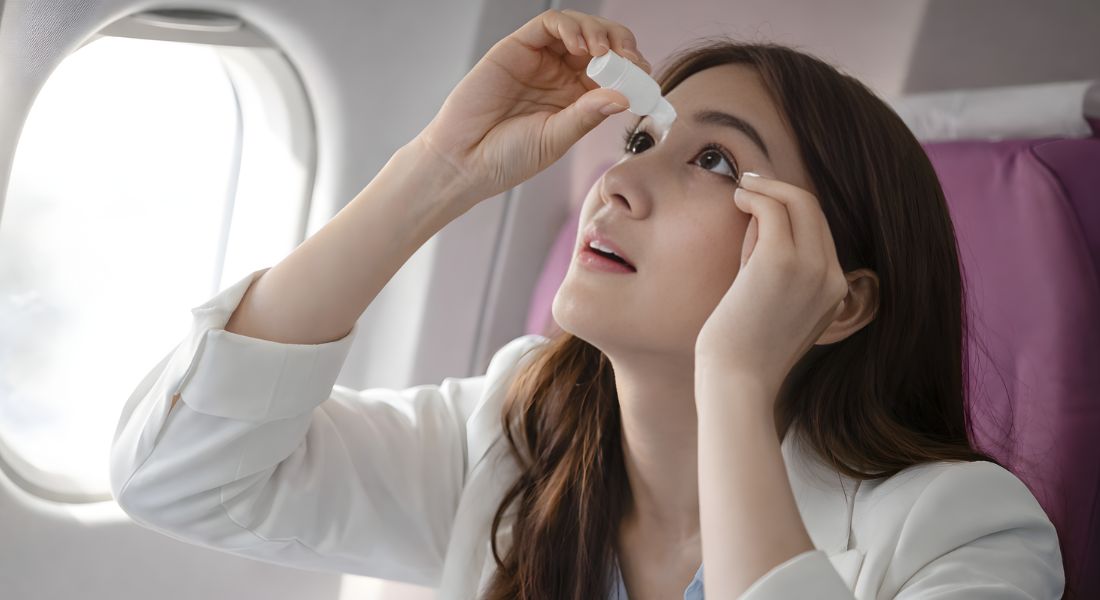
Eye drops are often prescribed after laser eye surgery to support the healing process. These may include lubricating drops as well as medicated drops that help prevent infection and reduce inflammation. Using them consistently, exactly as recommended by your surgeon, is an important part of recovery.
If you plan to travel shortly after surgery, you should bring your eye drops with you on the flight. Keeping them in your hand luggage ensures they are easy to access whenever you need them. This helps you follow your prescribed schedule without missing any doses.
Eye drops can also provide relief from dryness caused by cabin air during a flight. The air inside aircraft cabins is often very dry, which may make your eyes feel uncomfortable. Using your drops regularly helps keep the ocular surface moisturised and supports a smoother recovery.
Travelling Long Distances After Surgery
Long-distance flights may require a few extra precautions after laser eye surgery. Spending many hours in dry cabin air can increase the likelihood of dryness or mild discomfort. Using artificial tears regularly during the flight can help keep your eyes hydrated and comfortable.
It’s also helpful to take regular breaks from reading, using your phone, or watching screens. Looking away from screens allows your eyes to relax and reduces strain. Giving your eyes time to rest can make long journeys more comfortable while you recover.
You may also consider using a moisturising eye mask during the flight. These masks can help maintain moisture around your eyes and reduce dryness caused by cabin air. Small measures like this can make long-distance travel much easier during the healing period.
Returning to Normal Activities While Travelling
Many patients feel well enough to return to light daily activities shortly after laser eye surgery. Gentle movement and normal routines can often resume within a short time, provided the eyes are comfortable. However, it is still important to be cautious during the early recovery period. Balancing activity with proper eye care helps protect the healing process while travelling.
- Light activities are usually acceptable: Activities such as walking, sightseeing, or relaxed daily tasks are generally safe once your surgeon confirms that recovery is progressing well. These activities place minimal strain on the eyes and allow you to remain active without interfering with healing.
- Avoid strenuous physical exertion: High-intensity exercise, heavy lifting, or activities that increase pressure around the eyes should be postponed initially. Allowing the eyes time to stabilise helps ensure safe recovery.
- Postpone swimming and water exposure: Swimming pools, hot tubs, and natural bodies of water may contain bacteria or irritants. Contact with contaminated water can increase the risk of infection while the eyes are still healing.
- Protect the eyes while outdoors: Wearing sunglasses can help shield the eyes from bright sunlight, wind, and dust during travel. This simple precaution improves comfort and reduces irritation.
Returning gradually to normal activities allows you to enjoy your trip while still protecting your eyes. Gentle movement and sensible precautions support a smooth recovery. By following your surgeon’s guidance, you can maintain healing progress and minimise the risk of complications.
Protecting the Eyes from Environmental Irritants
Airports and travel environments can expose your eyes to dust, pollutants, and other airborne particles. These irritants may cause temporary discomfort, especially while your eyes are still healing after laser eye surgery. Wearing protective glasses or sunglasses can help shield your eyes and reduce irritation during your journey.
Wind and dry air can also make your eyes feel more sensitive. Direct airflow from aircraft vents or fans may increase dryness and discomfort. Adjusting the direction of the air vent or changing your seating position can help minimise this exposure.
Protecting your eyes from environmental irritants supports a smoother recovery. Simple precautions like shielding your eyes and avoiding strong airflow can make travelling much more comfortable. Taking these small steps helps keep your eyes calm and protected while they continue to heal.
Monitoring Vision Stability
After laser eye surgery, vision often improves quickly, but minor fluctuations are common during the early healing period. These small changes in clarity or focus are usually temporary as your cornea continues to stabilise.
You should not be alarmed if your vision varies slightly from day to day. The healing process can take several weeks, and it is normal for your eyes to adjust gradually. Follow-up appointments with your surgeon help monitor this progression and ensure everything is healing as expected.
If you notice significant changes in your vision or sudden discomfort, it’s important to seek medical advice promptly. Early evaluation allows your surgeon to address any issues quickly and supports a safe, successful recovery.
Preparing for Travel After Surgery
If you plan to travel shortly after laser eye surgery, careful preparation is essential for a comfortable and safe journey. Bringing along lubricating eye drops, sunglasses, and protective eyewear helps manage dryness, light sensitivity, and environmental irritants. Being well-prepared allows you to focus on your trip without compromising the healing process.
- Pack essential eye care items: Carry prescribed or recommended lubricating drops to keep your eyes hydrated during travel. Sunglasses can protect against bright sunlight, dust, and wind, while protective eyewear may be helpful in crowded or dusty environments.
- Plan surgery well ahead of travel dates: Scheduling your procedure with enough time before travel ensures that the eyes have partially recovered and that follow-up appointments can be attended without conflict. This also reduces stress and allows a smoother recovery period.
- Follow personalised advice from your surgeon: Your surgeon can provide specific recommendations based on your procedure, healing progress, and travel plans. Individual guidance helps ensure safe travel and optimal recovery.
- Prepare for comfort during the journey: Consider extra rest, minimal screen time, and breaks during long trips to avoid eye strain. Simple measures help maintain comfort and reduce irritation while travelling.
Careful planning and following professional guidance make travel after surgery more manageable and safer. By preparing in advance and keeping essential eye care items on hand, you can protect your eyes and enjoy your trip with greater confidence.
The Importance of Listening to Your Body
Every patient heals at a slightly different pace after laser eye surgery. While some people may feel ready to travel or resume normal activities quickly, others may need a little more time. Paying attention to how your eyes feel is an important part of a safe recovery.
If your eyes feel dry, irritated, or uncomfortable, giving them a rest can help. Taking breaks from reading, screens, or other visually demanding tasks reduces strain and supports healing. Gentle care during this period helps protect the cornea and maintain comfort.
It’s always important to prioritise your own comfort and safety. Allowing adequate recovery time ensures that your eyes heal properly and helps maintain the best long-term results from your surgery.
Why Proper Aftercare Supports Safe Travel
Following your surgeon’s aftercare instructions is the most effective way to ensure a safe and smooth recovery after laser eye surgery. Careful attention to eye drops, hygiene practices, and scheduled follow-up appointments helps protect the healing cornea and minimise the risk of irritation or infection. Proper aftercare is essential, especially when planning to travel, as it supports both comfort and safety during your journey.
- Consistent use of eye drops: Lubricating or medicated drops prescribed by your surgeon keep the eyes hydrated and reduce the risk of dryness or infection. Using them as directed is particularly important during travel when cabin air can exacerbate dryness.
- Maintaining hygiene practices: Clean hands, brushes, and cotton pads help prevent bacteria from reaching the eyes. Avoiding rubbing or touching your eyes ensures that the cornea heals without unnecessary stress.
- Attending follow-up appointments: Early post-operative check-ups allow your surgeon to monitor healing and address any issues promptly. Completing these appointments before travel ensures your eyes are stable and reduces the chance of complications while away from home.
- Planning activities according to recovery: Being aware of your healing progress helps you choose safe activities during travel. Limiting strenuous exercise, swimming, or prolonged screen use in the early recovery period protects your eyes.
Patients who follow aftercare guidance typically experience faster, more comfortable recovery and can resume normal activities with confidence. Proper preparation and adherence to post-operative instructions make travelling after surgery safer and more enjoyable. Awareness, planning, and good habits help ensure that your eyes remain healthy throughout the journey.
FAQs:
- How soon can you fly after laser eye surgery?
Many patients can fly within a few days after laser eye surgery, depending on how their eyes are healing. Most surgeons recommend waiting until after the first follow-up appointment, which usually takes place within 24 to 48 hours. This check-up confirms that the eyes are healing properly and that it is safe to travel. - Is it dangerous to fly after laser eye surgery?
Flying is generally not dangerous after laser eye surgery because the procedure does not significantly affect eye pressure. Aircraft cabin pressure changes do not usually interfere with the healing cornea. However, it is still important to follow your surgeon’s advice before travelling. - Can cabin air affect your eyes after surgery?
Cabin air is typically very dry, which can increase dryness and irritation after laser eye surgery. Since dry eye symptoms are common during early recovery, this environment may temporarily worsen discomfort. Using lubricating eye drops during the flight can help keep your eyes comfortable. - Should you wait for your follow-up appointment before flying?
Many surgeons recommend attending your first post-operative appointment before flying. This visit allows the surgeon to check that the cornea is healing correctly and that there are no early complications. Once your doctor confirms that recovery is progressing normally, travelling is usually considered safe. - Can you take eye drops on a flight after surgery?
Yes, you should bring your prescribed eye drops with you when travelling by air after laser eye surgery. These drops help maintain moisture, reduce irritation, and support healing. Keeping them easily accessible during the flight ensures you can use them whenever needed. - Can flying increase eye pressure after laser eye surgery?
Commercial aircraft cabins are pressurised, which means changes in altitude do not significantly affect eye pressure. For this reason, flying does not normally cause problems for patients who have recently undergone laser eye surgery. Your surgeon will still confirm when it is safe for you to travel. - How can you reduce eye dryness during a flight?
You can reduce dryness by using lubricating eye drops regularly during the flight and drinking enough water to stay hydrated. Avoiding direct airflow from the overhead air vent can also help prevent irritation. Taking occasional breaks from screens may further reduce eye strain. - Can you wear sunglasses during a flight after laser eye surgery?
Wearing sunglasses during a flight can help reduce light sensitivity, which is common during the early recovery period. Bright airport lighting or sunlight through aircraft windows may feel uncomfortable after surgery. Sunglasses can make travel more comfortable for your eyes. - Are long flights safe after laser eye surgery?
Long flights are generally safe after laser eye surgery once your surgeon confirms that recovery is progressing normally. However, extended exposure to dry cabin air may increase dryness or irritation. Using artificial tears and resting your eyes periodically can help maintain comfort during long journeys. - What precautions should you take when travelling after laser eye surgery?
You should follow your surgeon’s aftercare instructions carefully when travelling. Bringing your prescribed eye drops, wearing sunglasses, and avoiding rubbing your eyes are important precautions. Maintaining good hygiene and protecting your eyes from dryness will help support a smooth recovery while travelling.
Final Thoughts: Travelling Safely After Laser Eye Surgery
Flying after laser eye surgery is usually safe once the initial healing period has passed and your surgeon confirms that recovery is progressing well. Although many patients can travel within a few days, allowing time for early follow-up appointments and following proper aftercare advice helps ensure that the cornea heals without complications.
Simple precautions such as using lubricating eye drops, staying hydrated, avoiding eye rubbing, and protecting your eyes from dry cabin air can make air travel much more comfortable. Being prepared before your journey allows you to focus on enjoying your trip while supporting the healing process. If you’re exploring whether laser surgery in London could benefit you, get in touch with us at Eye Clinic London to schedule your consultation.
Reference:
- Yahalomi, T., 2023. Dry Eye Disease following LASIK, PRK, and LASEK. Journal of Clinical Medicine, 12(11). https://www.mdpi.com/2077-0383/12/11/3761
- Ying, J. and colleagues, 2024. Complications in patients who have undergone laser refractive surgery. British Journal of Ophthalmology. https://pmc.ncbi.nlm.nih.gov/articles/PMC11921254/
- Chan, C. and Hodgkinson, T., 2018. Visual outcomes and management after corneal refractive surgery: a review. Progress in Retinal and Eye Research, 65, pp.1–22. https://www.sciencedirect.com/science/article/pii/S1888429617300705
- Avunduk, A.M., Senft, C.J., Emerah, S., Varnell, E.D. and Kaufman, H.E., 2004. Corneal healing after uncomplicated LASIK and its relationship to refractive changes: a six‑month prospective confocal study. https://pubmed.ncbi.nlm.nih.gov/15111586/
- Wilson, S.E., 2001. The wound healing response after laser in situ keratomileusis and photorefractive keratectomy. https://jamanetwork.com/journals/jamaophthalmology/fullarticle/266845