


EVO ICL vs Earlier ICL Designs: What’s Changed?
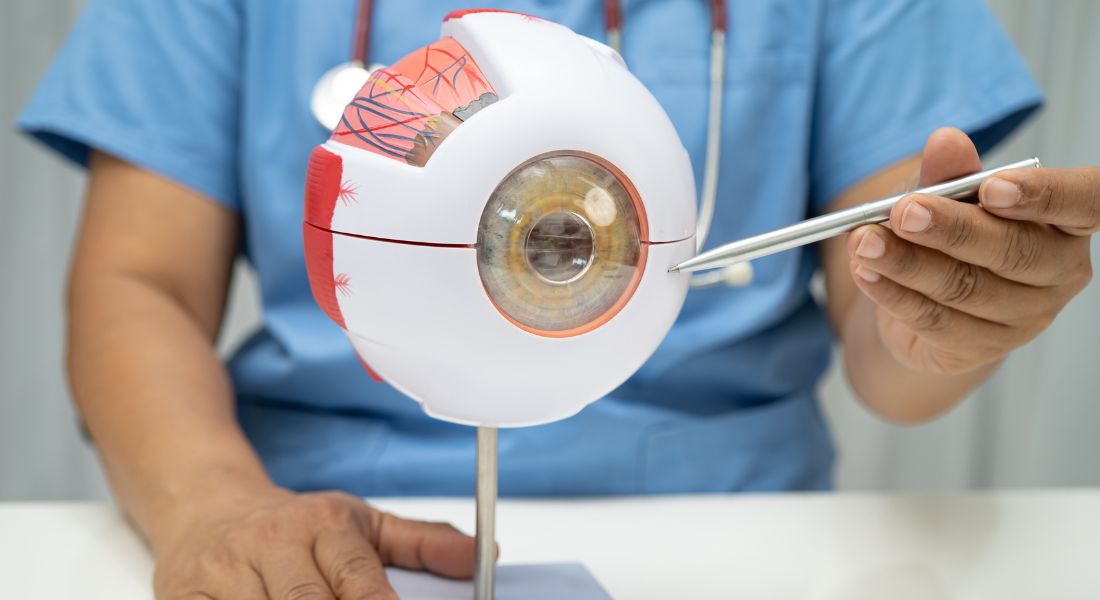
Implantable Contact Lens (ICL) surgery has advanced significantly over the past two decades. Earlier versions of the lens were already effective at correcting vision, but ongoing research and innovation have led to important improvements. Today, the EVO ICL represents a more refined and modern approach to vision correction. These advancements focus on making the procedure safer, more predictable, and more comfortable for you.
The EVO ICL is designed to correct refractive errors such as myopia and astigmatism while preserving the natural structure of your eye. Like earlier models, the lens is placed behind your iris and in front of your natural crystalline lens. However, newer design features improve how the lens interacts with your eye’s natural systems. These enhancements support better fluid circulation, more stable positioning, and improved visual quality.
Understanding the differences between earlier ICL designs and the EVO ICL helps you see how far the technology has progressed. Modern improvements are not just technical—they directly impact your safety, comfort, and visual outcomes. When you know what’s changed, you can feel more confident about choosing this procedure. It also helps you have more informed discussions with your eye specialist about your options.
What Is an Implantable Contact Lens?
An implantable contact lens (ICL) is a small, flexible lens that is placed inside your eye to correct refractive errors. It works alongside your natural lens to help focus light more accurately onto your retina. This allows you to achieve clearer vision without relying on glasses or external contact lenses. The result is often sharp and stable visual clarity.
Unlike laser eye surgery, ICL procedures do not involve reshaping your cornea. Instead, the lens is inserted into your eye to provide the correction needed. This approach can be especially beneficial if you have a high prescription or if your cornea is not suitable for laser treatment. It offers an alternative way to improve vision while preserving your eye’s natural structure.
ICL lenses are made from biocompatible materials designed to remain safely inside your eye for many years. Once implanted, the lens is not visible and does not affect your eye’s natural appearance. If needed, the lens can be removed or replaced, making the procedure reversible. This flexibility adds an extra level of reassurance when considering treatment.
Early Generations of ICL Lenses
Earlier ICL models marked an important step forward in vision correction. These lenses made it possible to treat higher levels of myopia effectively, often delivering very good visual results. Many patients experienced a noticeable improvement in clarity and reduced dependence on glasses or contact lenses. At the time, this was a significant advancement in refractive surgery.
However, these early designs required a few additional steps before the lens could be implanted. Surgeons often needed to create tiny openings in your iris to help fluid circulate properly within the eye. These openings, known as peripheral iridotomies, were necessary to maintain normal eye pressure. While safe and effective, they added an extra stage to the treatment process.
Because of this, researchers continued working to improve the design of ICL lenses. The aim was to make the procedure simpler, more efficient, and more comfortable for you. Over time, these efforts led to important innovations in newer lens models. These advancements have helped streamline the procedure and improve overall patient experience.
Introduction of the EVO ICL Lens
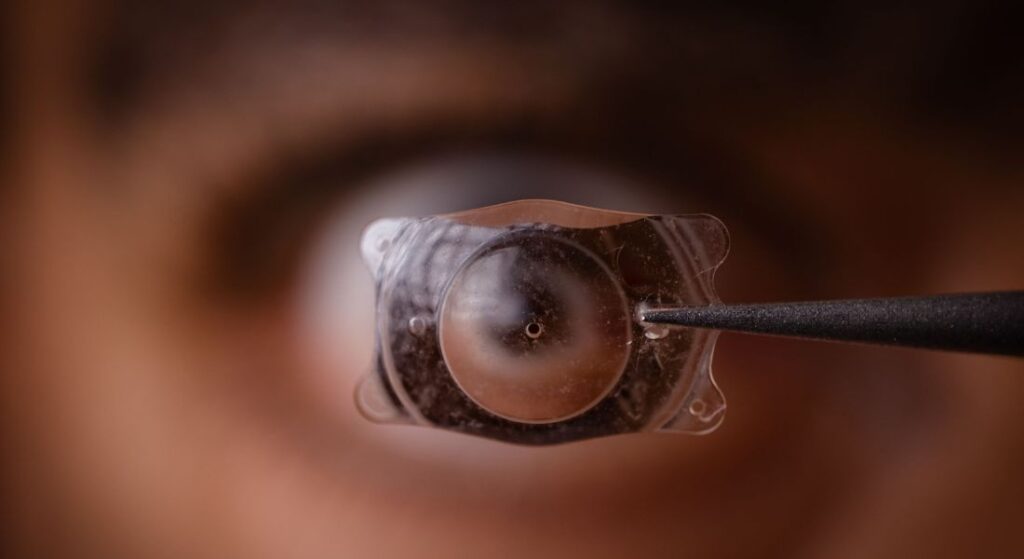
The EVO ICL lens represents a modern advancement in implantable contact lens technology. It has been designed to make the procedure simpler while also improving overall safety. One of the most important features of this lens is its built-in central port, which plays a key role in how the eye functions after surgery. This updated design has changed the way ICL procedures are performed and managed.
- Central port for natural fluid circulation: The EVO ICL includes a small opening in the centre of the lens. This allows fluid inside your eye to circulate naturally, helping maintain healthy eye pressure and normal eye function.
- No need for additional procedures: In the past, some patients required a separate step called a peripheral iridotomy to help fluid flow properly. With the EVO design, this is usually no longer needed. This makes the overall procedure more straightforward and convenient for you.
- Improved interaction with eye structures: The lens is designed to work more naturally with the internal structures of your eye. This helps the implant sit comfortably in place and supports stable vault and long-term performance.
- Better safety and long-term outcomes: Thanks to these design improvements, the EVO ICL offers a strong safety profile. Many surgeons now prefer this lens because it provides more predictable results and supports long-term eye health.
Overall, the EVO ICL has made vision correction more efficient and reliable. With fewer steps and improved design features, you can benefit from a smoother procedure and better long-term visual outcomes.
The Importance of Aqueous Fluid Circulation
Your eye contains a clear fluid called aqueous humour, which plays an important role in maintaining healthy eye pressure. This fluid constantly circulates through the front part of your eye, delivering nutrients and removing waste. Proper circulation is essential for keeping your eye functioning normally. When this balance is maintained, your eye stays healthy and stable.
In earlier ICL designs, maintaining this fluid flow required an extra step. Surgeons needed to create small openings in your iris, known as peripheral iridotomies, to allow the fluid to move freely. Without these openings, there was a risk that circulation could be affected. While effective, this made the procedure slightly more complex.
The EVO ICL has improved this process with a built-in central port. This small opening in the lens allows fluid to pass naturally through your eye without the need for additional procedures. As a result, circulation remains more natural and consistent. This design enhancement contributes to safer outcomes and a more streamlined surgical experience for you.
How the Central Port Improves Safety
The central port is one of the most important advancements in the EVO ICL design. This tiny opening in the centre of the lens allows aqueous humour to flow naturally through your eye. By supporting this continuous movement, it helps maintain a balanced internal environment. This more natural circulation plays a key role in improving overall safety.
When fluid moves freely, it helps regulate your intraocular pressure more effectively. Stable pressure reduces the risk of complications that could otherwise occur after surgery. It also supports the health of surrounding eye structures, including your natural lens. In this way, the central port contributes to both safety and long-term eye health.
Because of this innovation, surgeons often no longer need to perform pre-surgical iridotomies. This means fewer steps before your procedure and a more streamlined experience overall. You benefit from a simpler treatment process with less preparation involved. The central port is a major reason why modern EVO ICL surgery is considered safer and more efficient.
Improvements in Surgical Convenience
In the past, ICL procedures often involved extra preparation before the actual surgery. Patients were usually required to undergo a step called a peripheral iridotomy days or even weeks in advance. These additional steps could make the overall treatment process feel more complex and time-consuming. With modern EVO ICL lenses, the procedure has become much simpler and more convenient for you.
- No need for pre-surgical iridotomy in most cases: Earlier, small openings had to be created in the iris to allow fluid to flow properly inside the eye. With the EVO ICL’s built-in central port, this step is usually no longer required. This removes the need for an extra procedure before surgery.
- Fewer appointments before treatment: Because the additional preparatory step is often avoided, you typically need fewer visits before your surgery. This makes the process more straightforward and easier to manage, especially if you have a busy schedule.
- Simpler overall treatment experience: Reducing the number of steps involved helps streamline the entire procedure. From preparation to surgery day, the process feels more efficient and less complicated.
- Improved comfort and convenience: Many patients appreciate not having to undergo multiple procedures. Fewer interventions mean less stress and a smoother overall experience, both physically and mentally.
These improvements in lens design have made ICL surgery more practical without compromising safety. By simplifying the process, modern EVO ICL technology allows you to benefit from a more convenient and patient-friendly treatment journey.
Enhanced Visual Performance
EVO ICL lenses are designed to give you excellent visual quality after surgery. The advanced lens material and optical design help deliver sharp, high-contrast vision across different lighting conditions. Many patients notice a significant improvement in clarity, often achieving crisp and stable eyesight. This makes everyday activities feel more comfortable and effortless.
The central port is carefully engineered so that it supports fluid circulation without affecting how you see. Even though it allows aqueous humour to pass through the lens, it does not interfere with visual clarity. In most cases, you won’t notice the presence of this opening at all. The design ensures that safety improvements do not come at the cost of visual performance.
These advancements contribute to more stable, long-term vision outcomes. As your eyes adapt, you’re likely to experience consistent clarity with minimal visual disturbances. Many patients find they no longer need glasses or contact lenses for daily tasks. This combination of precision and comfort makes EVO ICL lenses a highly effective option for vision correction.
Lens Material and Biocompatibility
Both earlier and modern ICL lenses are made from a specialised biocompatible material known as collamer. This material is soft, flexible, and designed to remain stable inside your eye for many years. Its high level of compatibility helps reduce the risk of irritation or rejection. As a result, your eye can tolerate the lens comfortably after implantation.
Collamer also contains natural collagen components, which help the lens sit more naturally within your eye’s internal structures. This allows it to integrate smoothly with surrounding tissues without causing discomfort. Most patients do not feel the lens at all once it has been placed. This contributes to a comfortable and stable long-term experience.
Modern manufacturing techniques have further refined this material to improve both durability and optical performance. These enhancements help ensure consistent clarity and long-lasting results. The improved design also supports better overall safety. Because of this, EVO ICL lenses continue to meet very high standards in vision correction technology.
Vault and Lens Positioning
One of the most important factors in the safety of ICL surgery is the vault, which refers to the space between the implanted lens and your natural crystalline lens. This spacing is essential because it prevents the two lenses from touching. When the vault is within the ideal range, it helps protect your eye and supports long-term visual health. Modern EVO ICL lenses are designed to achieve consistent and predictable vault outcomes.
- Understanding the importance of vault: The vault ensures there is enough space between the implanted lens and your natural lens. This allows fluid to circulate properly and reduces the risk of complications, such as cataract formation. Maintaining this spacing is a key goal of the procedure.
- Careful lens sizing before surgery: Your surgeon will take detailed measurements of your eye to select the most suitable lens size. These measurements help ensure the lens fits correctly and creates the right amount of space inside your eye.
- Stable positioning of the implanted lens: Once placed behind the iris, the EVO ICL is designed to sit securely in position. Proper placement helps maintain a stable vault and ensures the lens functions as intended over time.
- Monitoring during follow-up visits: After surgery, your doctor will measure the vault during routine check-ups. These assessments confirm that the lens remains correctly positioned and that the spacing stays within a healthy range.
By combining accurate measurements, careful planning, and modern lens design, surgeons can achieve reliable vault outcomes. This stability plays a key role in ensuring the long-term safety and success of your ICL surgery.
Advances in Eye Imaging Technology
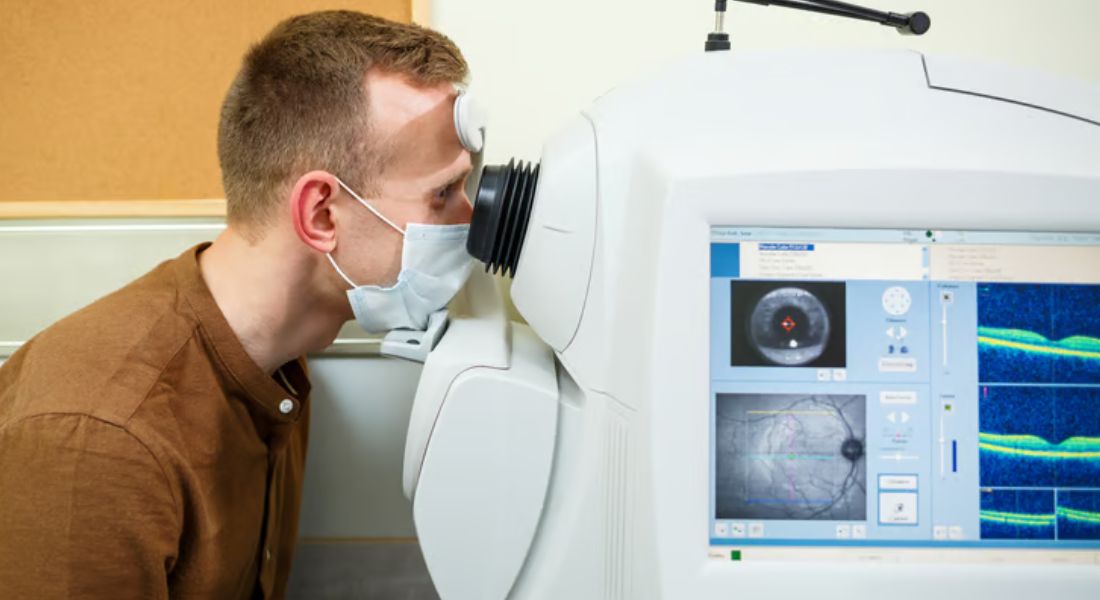
Advances in eye imaging technology have significantly improved how your ICL procedure is planned. Modern diagnostic tools allow your surgeon to examine your eye in fine detail before surgery. These precise measurements help guide the selection of the correct lens size and type. Better planning from the start leads to safer and more predictable results.
One of the most important tools used is anterior segment optical coherence tomography (OCT). This technology allows your doctor to clearly visualise the internal structures of your eye, including the space where the lens will sit. With this level of detail, surgeons can predict the vault more accurately. This helps ensure the implanted lens fits properly and functions as intended.
Improved imaging doesn’t stop after surgery. These technologies are also used during follow-up visits to check that the lens remains correctly positioned. Your doctor can monitor healing and confirm that your eye is adapting well. This ongoing assessment helps maintain safety and supports long-term visual outcomes.
Recovery After EVO ICL Surgery
Recovery after EVO ICL surgery is usually quick and straightforward. You may notice clearer vision within a day or two, although your eyes will still need time to fully stabilise. During the early healing phase, it’s normal to experience mild sensitivity, dryness, or slight visual fluctuations. These symptoms are typically temporary and improve as your eyes adjust.
Your follow-up appointments play an important role in recovery. During these visits, your surgeon will check your vision, measure the vault, and confirm that the lens is positioned correctly. Most patients are able to return to normal daily activities quite soon after the procedure. As long as everything is healing well, recovery tends to progress smoothly.
Because the procedure does not alter your cornea, many patients find the recovery process comfortable. Your eye maintains its natural structure, which can support a more stable healing experience. You’ll likely appreciate how quickly your vision improves in the early days. With modern techniques and proper aftercare, EVO ICL surgery offers an efficient and reassuring recovery process.
Comparing EVO ICL with Laser Vision Correction
Laser vision correction procedures improve your eyesight by reshaping the cornea so that light focuses more accurately on the retina. In contrast, EVO ICL surgery works by adding a lens inside your eye without altering the corneal structure. Both approaches aim to correct refractive errors, but they do so in very different ways. Because of this, your experience and suitability can vary depending on the method used.
EVO ICL surgery may be a better option for you if you have a higher prescription or thinner corneas that are not ideal for laser treatment. Since the procedure preserves your corneal tissue, it offers an alternative for patients who may not qualify for laser surgery. The implanted lens provides precise optical correction while maintaining your eye’s natural shape. Your surgeon will carefully assess your eye health before recommending the most suitable option.
Both EVO ICL and laser vision correction are designed to improve vision safely and effectively. The right choice depends on your individual eye anatomy, lifestyle, and visual needs. A detailed consultation with your eye specialist will help determine which treatment is best for you. With the right approach, you can achieve clear, comfortable, and long-lasting vision.
Long-Term Safety of EVO ICL Lenses
Modern EVO ICL lenses have shown strong safety results in long-term studies. Most patients enjoy clear and stable vision for many years after the procedure. Once implanted, the lens is designed to remain securely positioned inside your eye, supporting consistent visual performance over time. Ongoing care plays an important role in maintaining these results.
- Stable vision over the long term: Many patients experience lasting improvements in their vision without significant changes over time. The lens is designed to work in harmony with your eye, helping maintain consistent clarity for daily activities.
- Secure positioning of the lens: After implantation, the EVO ICL typically remains stable behind the iris. Proper sizing and placement during surgery help ensure that the lens stays in the correct position and maintains an appropriate vault.
- Regular monitoring for eye health: Routine eye examinations allow your doctor to check important factors such as eye pressure, lens position, and overall eye health. These visits help detect any changes early and ensure the implant continues to function as expected.
- Reversible procedure if needed: One of the advantages of ICL surgery is that it is reversible. If necessary, the lens can be removed or replaced. This flexibility provides an additional layer of safety and reassurance.
Because the cornea is not permanently reshaped, the natural structure of your eye is preserved. With proper follow-up care and modern lens design, EVO ICL surgery offers a safe, reliable, and long-term solution for vision correction.
Patient Suitability for EVO ICL
EVO ICL surgery is not suitable for everyone, which is why a detailed assessment is essential before moving forward. Your surgeon will carefully evaluate your eye health, prescription, and overall suitability to determine whether this procedure is right for you. This personalised approach helps ensure both safety and the best possible visual outcome. During your consultation, several important factors are considered.
- Overall eye health and structure: Your surgeon will examine the health of your eyes, including the cornea, retina, and natural lens. Measurements of your eye structure help determine whether there is enough space for the implant and whether the procedure can be performed safely.
- Level of your prescription: If you have a high degree of myopia (nearsightedness), EVO ICL may be a particularly effective option for you. It can correct higher prescriptions that may not be suitable for laser vision correction.
- Suitability compared with laser procedures: If you have thin corneas or other factors that make laser surgery less suitable, EVO ICL can be a good alternative. Because it does not reshape the cornea, it preserves the natural structure of your eye.
- Understanding expectations and outcomes: During your consultation, your doctor will explain what results you can realistically expect. You will also have the opportunity to ask questions and discuss any concerns, helping you feel confident about your decision.
Choosing the right treatment starts with understanding your individual needs. By undergoing a thorough assessment and having an open discussion with your surgeon, you can make an informed decision that supports both your vision and long-term eye health.
Potential Side Effects and Visual Adaptation
As with any vision correction procedure, you may notice some temporary visual effects during the early stages of recovery. These can include halos around lights or mild glare, especially at night. Such changes are quite common and are usually part of the normal healing process. In most cases, these effects gradually improve as your eyes adjust to the implanted lens.
Your brain also plays an important role in this adjustment. This process, known as neuroadaptation, involves your visual system learning how to interpret light through the new lens. As this happens, visual disturbances tend to become less noticeable. Over time, your brain becomes more efficient at filtering out these effects.
Most patients go on to experience comfortable and stable vision once this adaptation period is complete. Your surgeon will monitor your progress during follow-up visits to ensure everything is healing as expected. These regular checks help confirm that the lens is positioned correctly and that your vision is improving. With proper care and patience, you can expect very positive long-term results.
The Role of Surgeon Expertise
Your surgeon’s experience plays a key role in achieving the best possible outcome from EVO ICL surgery. Precise measurements, careful planning, and a refined surgical technique all help ensure the lens is positioned correctly inside your eye. This accuracy is essential for both visual clarity and long-term safety. When the procedure is performed by an experienced specialist, the results are more predictable and reliable.
An experienced surgeon will also guide you through every stage of recovery. You’ll receive clear advice on how to care for your eyes and what to expect as your vision stabilises. Regular follow-up appointments allow your surgeon to monitor healing and address any concerns early. This ongoing support helps you feel more confident throughout the process.
Choosing a specialist with expertise in implantable lens procedures can make a real difference to your overall experience. Skilled surgeons know how to maximise the benefits of EVO ICL technology while minimising potential risks. Their knowledge and attention to detail support safe, effective, and long-lasting results.
Patient Experience and Satisfaction

Many patients report high levels of satisfaction after EVO ICL surgery. Being able to see clearly without relying on glasses or contact lenses can make a noticeable difference to your daily life. Simple activities like exercising, travelling, or working long hours on screens often feel more convenient. This freedom is one of the main reasons people choose this procedure.
You’ll also likely appreciate how quickly your vision begins to improve after surgery. The implanted lens provides precise optical correction, which helps deliver sharp and stable eyesight. As your eyes continue to adapt, visual quality often becomes even more consistent. This combination of fast recovery and clear results contributes to a positive overall experience.
These benefits have led to a growing number of people choosing EVO ICL surgery. Many patients achieve long-lasting improvements in vision and comfort. High satisfaction rates reflect how effective and reliable the technology has become. With the right care and guidance, you can expect a smooth journey and strong visual outcomes.
Ongoing Research and Innovation
ICL technology continues to evolve as researchers work to improve both safety and visual outcomes. Engineers and ophthalmologists collaborate closely to refine lens materials, optimise designs, and enhance how implants interact with the eye. These ongoing efforts aim to make the procedure even more precise, comfortable, and reliable for you. Future developments are likely to focus on making treatment even more personalised.
- Advancements in lens materials and design: Researchers are exploring new materials that work more naturally with the eye. These improvements could enhance comfort, reduce irritation, and support even better long-term stability.
- More accurate sizing techniques: New methods are being developed to measure the eye with greater precision. Improved sizing techniques may help surgeons achieve even more consistent vault outcomes and reduce the risk of complications.
- Enhanced imaging technology: Advanced imaging tools are expected to provide clearer and more detailed views of the eye’s internal structures. This allows for better surgical planning and more tailored treatment for your individual anatomy.
- Greater personalisation of treatment: Future innovations may allow lenses to be customised more precisely to your eye. This level of personalisation could improve both visual quality and overall satisfaction with the procedure.
As technology continues to advance, you can expect even better results from ICL surgery. Modern EVO ICL lenses already offer a high level of safety and effectiveness, and ongoing research will continue to refine the procedure, making it even more beneficial for patients in the years ahead.
Why Modern Lens Design Matters
The evolution from earlier ICL models to the EVO design reflects years of careful research and innovation. Each improvement is aimed at making the procedure safer, more efficient, and more comfortable for you. Even small changes in lens design can have a meaningful impact on surgical outcomes. This ongoing progress has helped refine the overall patient experience.
One of the most important advancements is the addition of the central port. This feature allows natural fluid circulation within your eye, removing the need for extra steps such as pre-surgical iridotomies. By simplifying the procedure, it reduces complexity while improving safety. You benefit from a smoother treatment process with fewer interventions.
Modern lens design plays a crucial role in delivering consistent and predictable results. Improved technology helps ensure that the lens fits well, functions properly, and supports long-term eye health. These advancements make the procedure more reliable than ever before. As a result, you can feel more confident in both the safety and effectiveness of EVO ICL surgery.
Understanding the Evolution of ICL Technology
Understanding how ICL technology has evolved can help you feel more confident about choosing this procedure. Earlier lens designs laid the groundwork for modern innovations, showing that effective vision correction could be achieved without altering the cornea. Over time, researchers have refined the technology to improve both safety and performance. Each development has focused on making the experience smoother and more reliable for you.
The EVO ICL represents the latest stage in this progression. With features such as the central port and improved lens design, the procedure has become simpler and more efficient. These advancements reduce the need for additional steps and support more natural eye function. As a result, you benefit from a safer procedure and a more comfortable recovery.
When you understand these developments, it becomes easier to appreciate how far vision correction has come. Modern ICL surgery is backed by years of research and continuous improvement. This progress has led to better outcomes, greater predictability, and higher patient satisfaction. The evolution of ICL technology highlights how ongoing innovation continues to enhance both your vision and overall experience.
FAQs:
- What is the main difference between EVO ICL and older ICL lenses?
The main difference is the central port in EVO ICL lenses. This small opening allows natural fluid circulation inside your eye, which means you usually won’t need additional procedures like peripheral iridotomies that were required with older designs. - Why did earlier ICL lenses require extra procedures?
Earlier lenses didn’t have a central opening, so your surgeon needed to create small holes in the iris to allow fluid to flow properly. This added an extra step before surgery, which EVO ICL has now eliminated in most cases. - Is EVO ICL surgery safer than older ICL procedures?
Yes, the EVO ICL design is considered safer because it supports natural fluid circulation and helps maintain stable eye pressure. These improvements reduce the risk of certain complications seen with earlier lens models. - Will I notice the central port in the EVO ICL lens?
No, you won’t be able to see or feel the central port. It’s extremely small and designed not to affect your vision or comfort in any noticeable way. - Does EVO ICL provide better vision than older lenses?
Both older and modern ICL lenses provide excellent vision correction, but EVO ICL lenses are designed to offer more consistent and stable visual outcomes, along with improved overall safety. - Is the recovery process different with EVO ICL?
Recovery is often simpler and more convenient with EVO ICL because there are fewer pre-surgery steps. Most patients notice quick visual improvement and return to normal activities within a short time. - Can EVO ICL be removed if needed?
Yes, like earlier ICL lenses, EVO ICL is removable. This makes the procedure reversible, which gives you added flexibility if your vision needs change in the future. - Who is a suitable candidate for EVO ICL surgery?
You may be a good candidate if you have moderate to high myopia, thin corneas, or if laser eye surgery isn’t suitable for you. A detailed eye examination is needed to confirm this. - Are side effects different with EVO ICL compared to older lenses?
The types of side effects are similar, such as temporary halos or glare, but modern EVO ICL lenses are designed to reduce these effects and improve overall visual comfort over time. - Why has EVO ICL become more popular than older designs?
EVO ICL has become more popular because it simplifies the procedure, improves safety, and offers excellent visual outcomes. These benefits make it a preferred choice for both surgeons and patients.
Final Thoughts: The Evolution of Safer Vision Correction
The development of EVO ICL lenses represents a significant step forward in vision correction technology. By introducing a central port and refining lens design, modern ICLs have made the procedure safer, more convenient, and more predictable for patients. These advancements mean you can benefit from effective vision correction with fewer pre-surgical steps and a smoother overall experience.
Understanding how far this technology has come can help you feel more confident in your decision. While earlier ICL designs laid the groundwork, today’s EVO lenses build on that progress to offer improved safety and long-term visual stability. With ongoing innovation in eye care, outcomes continue to improve for patients seeking alternatives to glasses or contact lenses.
If you’re considering modern vision correction options, learning more about the latest advancements is an important first step. If you’d like to find out whether ICL surgery in London is suitable for you, feel free to contact us at Eye Clinic London to arrange a consultation.
References:
- Kamiya, K., Shimizu, K., Takahashi, M., Ando, W., Hayakawa, H. and Shoji, N. (2021) ‘Eight-year outcomes of implantation of posterior chamber phakic intraocular lens with a central port for moderate to high ametropia’, Frontiers in Medicine, available at: https://pmc.ncbi.nlm.nih.gov/articles/PMC8716586/
- Packer, M. (2018) ‘The implantable collamer lens with a central port: review of the literature’, Clinical Ophthalmology, available at: https://pmc.ncbi.nlm.nih.gov/articles/PMC6267497/
- Kamiya, K., Shimizu, K., Takahashi, M., Ando, W., Hayakawa, H. and Shoji, N. (2021) ‘Eight-year clinical outcomes of EVO-ICL implantation’, Frontiers in Medicine, available at: https://pubmed.ncbi.nlm.nih.gov/34977099/
- Packer, M. (2018) ‘The implantable collamer lens with a central port: review of the literature’, Clinical Ophthalmology, available at: https://pubmed.ncbi.nlm.nih.gov/30568421/
- Cano-Ortiz, A., Sánchez-Ventosa, Á., González-Cruces, T., Villalva-González, M., Prados-Carmona, J.J., Castillo-Eslava, R., Sánchez-Tena, M.A., Alvarez-Peregrina, C. and Villarrubia-Cuadrado, A. (2025) ‘Objective rotational analysis of EVO toric ICLs’, Journal of Clinical Medicine, available at: https://www.mdpi.com/2077-0383/14/9/2895