


Corneal Biomechanics After LASIK Surgery: What the Research Shows
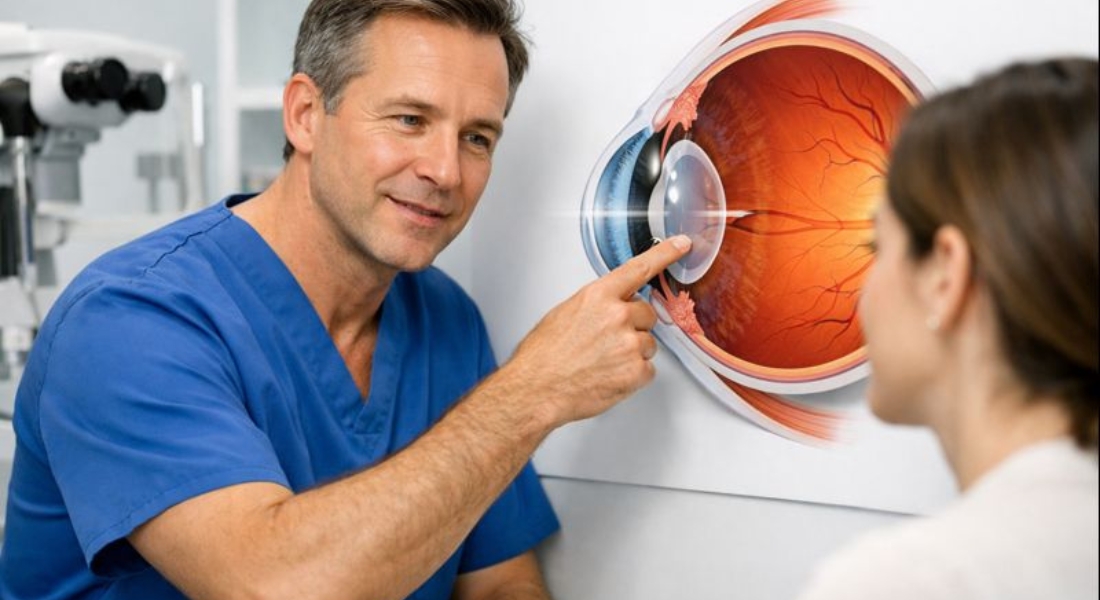
If you are considering LASIK surgery, it is completely normal to wonder how reshaping the cornea might affect the long-term strength of your eye. Many people focus on how well LASIK corrects vision, but fewer understand what happens to the cornea itself after treatment. Corneal biomechanics refers to how strong, flexible, and stable the cornea remains after surgery. We believe understanding this topic helps you make a more confident and informed decision.
LASIK has been performed safely for decades, and outcomes continue to improve with advancing technology. However, because the procedure permanently alters corneal tissue, long-term biomechanical stability has always been a key safety consideration. Modern research has focused heavily on understanding how LASIK affects corneal strength and how risks are minimised through careful screening. This article explains what the science shows in clear, practical terms.
We walk you through how the cornea works, what changes during LASIK, and what modern studies reveal about long-term stability. Most importantly, we explain how current screening protocols are designed to protect your eyes well beyond the initial recovery period. Our goal is to help you understand not just what LASIK does, but why it remains safe when performed responsibly.
Understanding Corneal Biomechanics in Simple Terms
The cornea is the clear, dome-shaped structure at the front of the eye that helps focus light accurately. It needs to be both strong and flexible to maintain its shape while withstanding forces such as blinking and internal eye pressure. Corneal biomechanics describes how the cornea responds to these stresses and is essential for maintaining stable, clear vision.
A healthy cornea distributes mechanical stress evenly across its layers, allowing it to remain stable over time. When this balance is disrupted, the cornea may gradually change shape, leading to visual distortion and instability. Understanding corneal biomechanics is therefore central to assessing the safety of any procedure that alters corneal structure.
Understanding Corneal Biomechanics
- The cornea must balance strength and flexibility to remain stable
- Even stress distribution helps the cornea maintain its natural shape
- Structural weakness can lead to progressive corneal distortion
- Internal eye pressure plays a key role in biomechanical stability
- Biomechanical assessment supports safer surgical decision-making
LASIK reshapes the cornea to correct vision, which naturally raises questions about long-term strength and stability. Research shows that while the procedure alters corneal structure, modern techniques are designed to preserve biomechanical integrity. Maintaining this balance between visual correction and structural safety is central to contemporary refractive surgery.
How LASIK Changes the Corneal Structure
LASIK works by reshaping the cornea so light focuses more accurately on the retina. To do this, a thin flap is created on the corneal surface, and laser energy is applied to the underlying tissue. The flap is then repositioned, allowing the cornea to heal naturally. This process permanently alters corneal thickness and shape.
Because tissue is removed during LASIK, the cornea becomes thinner than before surgery. Thinner corneas can theoretically be less resistant to deformation. This is why early LASIK research focused heavily on understanding how much tissue could be safely removed. Preserving sufficient corneal strength became a critical safety principle.
Modern LASIK techniques are designed to minimise biomechanical impact. Surgeons carefully calculate how much tissue can be safely reshaped based on individual corneal properties. By respecting these limits, the cornea remains stable while still achieving excellent visual outcomes.
Why Corneal Strength Matters After LASIK
Corneal strength plays a vital role in long-term eye health. A stable cornea maintains its shape despite natural pressure inside the eye. If biomechanical stability is compromised, the cornea may gradually bulge or distort over time. This can affect vision and, in rare cases, lead to conditions such as corneal ectasia.
Ectasia is a progressive thinning and weakening of the cornea. While rare, it has historically been one of the most serious concerns associated with refractive surgery. Understanding how LASIK influences corneal biomechanics helps explain why strict screening is essential. Risk is not random; it is linked to pre-existing corneal characteristics.
Current research shows that when patients are carefully selected, the risk of biomechanical instability after LASIK is extremely low. Advances in imaging and screening have dramatically improved safety. These improvements have reshaped how surgeons assess corneal strength before surgery.
What Early LASIK Research Revealed
In the early years of LASIK, knowledge of corneal biomechanics was more limited than it is today. Screening focused mainly on corneal thickness and basic shape measurements. Although outcomes were excellent for most patients, a small number experienced biomechanical complications over time, prompting deeper investigation.
Researchers began exploring how different layers of the cornea contribute to overall strength. Studies showed that the front layers provide most biomechanical stability, and that flap creation and tissue reshaping affect these layers differently depending on technique.
This understanding became a turning point in improving surgical safety.
How Biomechanical Research Improved LASIK Safety
- Early complications highlighted the need for deeper biomechanical understanding
- The front corneal layers were identified as key to structural strength
- Surgical techniques were refined to protect these critical layers
- Tissue removal strategies became more conservative and precise
- Modern safety standards are built on these biomechanical insights
As research advanced, surgical methods were refined to preserve as much corneal strength as possible while still correcting vision effectively. These developments shaped current LASIK protocols and significantly improved long-term stability. Modern LASIK safety standards are a direct result of this evidence-led evolution.
Modern Research on Corneal Biomechanics After LASIK

Recent studies have used advanced imaging and measurement tools to assess corneal behaviour after LASIK. These tools allow researchers to observe how the cornea responds to stress in real time. Findings consistently show that well-selected eyes maintain long-term biomechanical stability.
Research demonstrates that most biomechanical changes occur immediately after surgery. Once healing stabilises, the cornea reaches a new equilibrium. In healthy eyes, this equilibrium remains stable for years. Long-term follow-up studies support this observation.
Importantly, modern research emphasises that LASIK does not cause progressive weakening in suitable candidates. Stability depends far more on pre-existing corneal properties than on the surgery itself. This reinforces the importance of advanced screening rather than blanket avoidance.
The Role of Corneal Thickness in Biomechanical Stability
Corneal thickness remains an important factor in LASIK safety, but it is not the only one. Thicker corneas generally tolerate tissue removal better than thinner ones. However, thickness alone does not fully predict biomechanical strength. Two corneas of the same thickness can behave very differently.
Modern assessment looks at how thickness is distributed across the cornea. Uneven thinning or abnormal patterns may indicate underlying weakness. These subtle signs can now be detected with high-resolution imaging. This level of detail was not available in earlier eras.
By analysing thickness patterns rather than just averages, surgeons can make more informed decisions. This reduces the risk of operating on eyes that may not tolerate biomechanical change well. Thickness is part of the picture, but not the whole story.
Corneal Shape and Biomechanical Behaviour
The shape of the cornea provides important insight into its biomechanical health and long-term stability. Irregular or asymmetric patterns may indicate areas of underlying weakness that could compromise safety. Modern corneal topography and tomography allow these features to be detected with high precision, significantly improving patient selection.
LASIK is considered safest when performed on corneas with regular, symmetrical shapes. Such corneas distribute mechanical stress evenly and respond more predictably to reshaping. Abnormal patterns may suggest early or subtle instability, in which case LASIK may not be advised.
Why Corneal Shape Matters in LASIK Screening
- Irregular corneal patterns can indicate biomechanical weakness
- Symmetrical corneas tend to tolerate reshaping more predictably
- Advanced imaging improves early detection of subtle instability
- Shape-based screening reduces the risk of post-surgical complications
- Careful patient selection protects long-term corneal stability
Research consistently shows that detailed shape-based screening has reduced post-LASIK complications. Identifying risk factors before surgery allows potentially destabilising procedures to be avoided. This proactive approach supports safer outcomes and long-term vision protection.
How Advanced Screening Protects Biomechanical Stability
Screening is the single most important factor in preventing biomechanical complications after LASIK. Modern evaluations combine multiple measurements into a comprehensive risk profile. This includes thickness, shape, elevation, and biomechanical response data. Together, these metrics create a detailed picture of corneal health.
Artificial intelligence and risk algorithms now assist in interpreting complex data. These tools identify subtle patterns that may not be obvious on individual tests. Research shows that such integrated screening dramatically reduces the risk of ectasia. Technology has transformed safety.
We believe that responsible LASIK is as much about who is not treated as who is. Excluding high-risk eyes is a sign of good clinical judgement, not limitation. This philosophy underpins modern refractive surgery practice.
The Impact of Flap Creation on Corneal Strength
Creating a corneal flap is a defining feature of LASIK. Early research showed that flap thickness and depth influence biomechanical outcomes. Thicker flaps remove more of the cornea’s strongest anterior layers. This insight led to changes in flap creation techniques.
Modern LASIK uses thinner, more precise flaps. These preserve more of the cornea’s structural integrity. Studies show that thinner flaps result in better biomechanical preservation without compromising visual results. Precision has improved safety.
Femtosecond laser technology has played a major role in this advancement. It allows highly controlled flap creation with predictable thickness. This consistency supports long-term corneal stability and reliable outcomes.
Long-Term Stability: What Follow-Up Studies Show
Long-term studies following LASIK patients over many years provide reassuring data. In properly screened individuals, corneal shape and strength remain stable. Vision correction does not gradually deteriorate due to biomechanical failure. These findings support LASIK’s safety profile.
Most post-LASIK changes occur early during healing. Once the cornea stabilises, it typically remains unchanged. Late-onset instability is rare and usually linked to pre-existing risk factors rather than the procedure itself. This distinction is important.
Research continues to track outcomes over decades. The growing body of evidence consistently supports the long-term biomechanical safety of LASIK when modern protocols are followed. Confidence in the procedure is grounded in data, not assumption.
How Eye Pressure Interacts with Corneal Biomechanics
Intraocular pressure places constant outward force on the cornea. A biomechanically healthy cornea resists this pressure effectively. If the cornea is weakened, pressure may contribute to shape changes. This interaction explains why pressure is relevant to LASIK safety.
LASIK does not increase eye pressure. However, it changes corneal thickness, which can affect pressure measurement accuracy. Modern instruments account for this and allow accurate monitoring after surgery. Research has clarified these relationships.
Understanding pressure dynamics helps guide post-operative care. Stable pressure and stable biomechanics go hand in hand. Ongoing monitoring ensures both remain within safe ranges.
Why Patient Selection Matters More Than Ever
The most important lesson from LASIK biomechanics research is that patient selection plays a central role in safety. LASIK itself is not inherently risky; complications arise when unsuitable eyes are treated. Modern screening focuses on identifying biomechanical risk factors before surgery, which has significantly improved outcomes.
Patients with healthy corneas and stable biomechanics are well suited to LASIK. When subtle risk factors are detected, alternative treatments may be recommended or surgery may be avoided altogether. This personalised, evidence-led approach reflects the maturity of modern refractive surgery practice.
Why Patient Selection Determines LASIK Safety
- Biomechanical stability is assessed before any surgical decision
- Risk arises from unsuitable corneal structure, not the procedure itself
- Advanced screening identifies hidden or early instability
- Alternative treatments are considered when risk factors are present
- Careful selection leads to safer, more predictable outcomes
Addressing Common Concerns About Corneal Weakening
Many people worry that LASIK permanently weakens the eye. Research shows this is an oversimplification. LASIK alters corneal structure, but does not automatically cause instability. Strength depends on pre-existing corneal health and surgical technique.
When performed on suitable candidates, LASIK preserves sufficient biomechanical integrity. The cornea adapts and stabilises. This is why long-term studies show excellent safety outcomes. Fear often comes from misunderstanding rather than evidence. Clear explanation helps reduce anxiety. Understanding how safety is ensured allows you to make decisions with confidence rather than concern. Knowledge replaces uncertainty.
FAQs:
1. Should you be worried about your cornea becoming weak after LASIK?
It is completely normal to have this concern before surgery. Long before any treatment is planned, we carefully assess whether your cornea can safely tolerate reshaping. When suitability criteria are met, the risk of long-term weakening is very low.
2. Does LASIK permanently reduce the strength of your cornea?
LASIK does alter corneal structure, but that does not automatically mean instability. We make sure that enough supportive tissue remains after treatment. In suitable eyes, the cornea adapts during healing and then stabilises. Long-term clinical studies consistently support this pattern.
3. Can corneal changes after LASIK continue years later?
In healthy, well-screened eyes, changes do not usually progress over time. Most structural adaptation occurs early in the healing phase. Once stability is achieved, it tends to remain consistent for years. Ongoing or late instability is rare in appropriate candidates.
4. Does having thinner corneas mean LASIK is unsafe for you?
Corneal thickness alone does not determine safety. We look at how thickness is distributed and how your cornea behaves under biomechanical stress. Some thinner corneas are stable, while some thicker corneas are not. This is why detailed analysis is essential before recommending surgery.
5. Can LASIK affect how pressure inside your eye interacts with the cornea?
Eye pressure constantly acts on the cornea. Our role is to ensure your cornea can safely resist this force after reshaping. LASIK does not increase eye pressure, but it can influence how pressure readings are interpreted. With modern diagnostic tools, monitoring remains reliable.
6. Are modern LASIK techniques safer for corneal stability than older methods?
Yes, modern LASIK techniques are significantly more refined. Today, we preserve more of the cornea’s strongest layers. Improved flap creation and more conservative reshaping reduce biomechanical impact. These advances have greatly improved long-term safety.
7. Could problems occur if subtle corneal weakness is missed before surgery?
This is exactly why advanced screening is critical. We actively look for early or hidden signs of instability before making any decision. If risk is detected, surgery is avoided or alternative procedures are recommended. Prevention is the foundation of safe outcomes.
8. Does a stable result depend more on the laser or on your cornea?
Your cornea plays the larger role. Even the most advanced laser technology relies on operating on suitable tissue. We focus on selecting eyes that can respond predictably to treatment. This balance is what ensures reliable, long-term results.
9. Can LASIK still be safe if your eyes look normal but feel dry or tired?
Symptoms alone do not define biomechanical risk. We assess internal corneal structure rather than surface comfort alone. Dryness can often be managed separately if the cornea is structurally healthy. Decisions are always based on detailed clinical data.
10. How do we know LASIK remains biomechanically safe in the long term?
Our confidence comes from decades of follow-up research combined with modern diagnostic evidence. Studies consistently show long-term stability in properly selected patients. Continuous monitoring and evolving clinical standards reinforce this safety, ensuring recommendations are always evidence-based.
Final Thoughts on Corneal Stability After LASIK Surgery
If you are exploring LASIK surgery, understanding corneal biomechanics is an important part of informed decision-making. Research clearly shows that while LASIK alters corneal structure, modern techniques and advanced screening preserve long-term biomechanical stability in suitable candidates.
Safety is built into the process through careful evaluation, precise technology, and responsible patient selection. We believe that confidence comes from clarity. If you’re exploring whether LASIK Surgery in London could benefit you, get in touch with us at Eye Clinic London to schedule your consultation.
References:
- Frings, A., Linke, S., Lauterbach, A. et al. (2015) Effects of laser in situ keratomileusis (LASIK) on corneal biomechanical measurements with the Corvis ST tonometer. Clinical Ophthalmology, 9, pp. 305–311. Available at: https://pubmed.ncbi.nlm.nih.gov/25709393/
- Kenia, V.P., Kenia, R.V. and Pirdankar, O.H. (2021) Short-term changes in corneal stress-strain index and other corneal biomechanical parameters post-LASIK. Indian Journal of Ophthalmology, 69(10). Available at: https://pubmed.ncbi.nlm.nih.gov/34571607/
- Li, Z.J., Hu, W., Chen, M. et al. (2023) Changes in corneal biomechanics and posterior corneal surface elevation after femtosecond laser-assisted LASIK. PMCID Article. Available at: https://pmc.ncbi.nlm.nih.gov/articles/PMC10626345/
- Pniakowska, Z., Jaszczuk-Maciejewska, A., Jankowska-Sandzik, E. et al. (2022) Clinical evaluation of corneal biomechanics following FS-LASIK and PRK-MMC refractive surgeries. Journal of Clinical Medicine, 12(1), 243. Available at: https://www.mdpi.com/2077-0383/12/1/243
- Roberts, C.J. (2014) Biomechanics of corneal ectasia and implications for refractive surgery. Journal of Cataract & Refractive Surgery. (ScienceDirect), discusses ectatic changes and loss of structural integrity relevant to LASIK biomechanics. Available at: https://www.sciencedirect.com/science/article/abs/pii/S0886335014004490