


Can You Blink or Move Your Eye During LASEK Surgery?
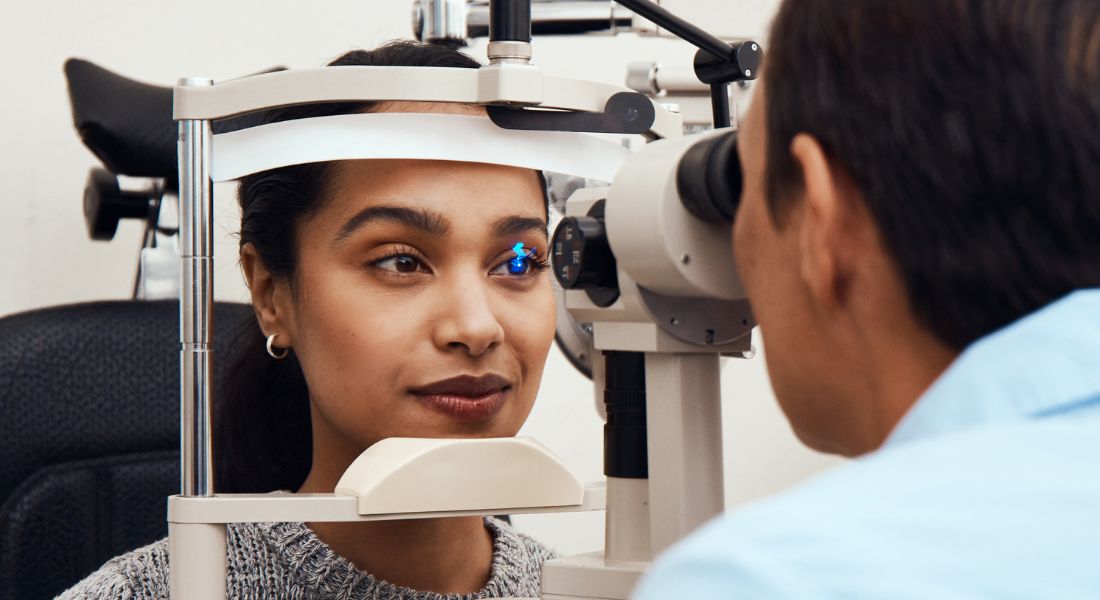
If you’ve been thinking about LASEK surgery but feel nervous about blinking, moving your eye, or being unable to stay perfectly still, you’re definitely not alone. This is one of the most common fears people have before any type of laser eye procedure. You might imagine your eye accidentally shifting at the wrong moment, or you may worry that blinking could interfere with the laser.
I want to reassure you immediately: blinking or moving your eye during LASEK surgery is not something you need to fear. Modern laser technology is far more advanced than most people realise. The systems used today actively track your eye faster than you can consciously move it. They compensate in real time, pause instantly if you look away, and resume once your eye is correctly positioned again.
In this article, I’m going to walk you through exactly what happens during LASEK surgery, how your eye is held in place, what the laser does if your eye moves, how blinking is physically prevented, and why involuntary movements pose no risk to your treatment. My goal is to help you understand the process so clearly that your anxiety naturally begins to melt away.
Why Many People Fear Blinking or Moving During LASEK
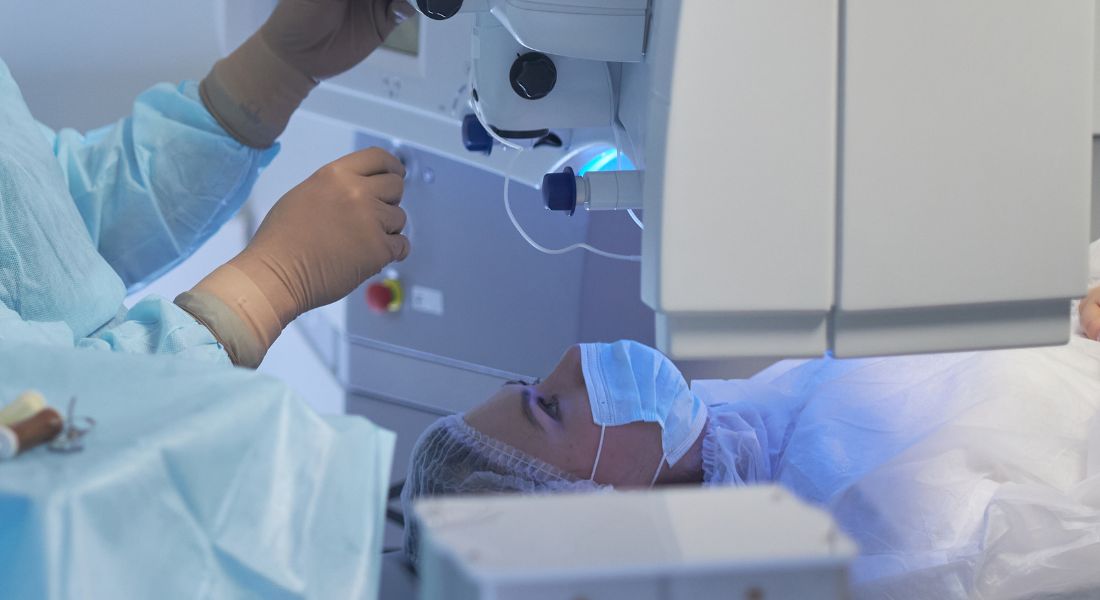
It’s completely normal to feel apprehensive about keeping your eyes still during LASEK. After all, your eyes are delicate, and the thought of a laser so close can naturally trigger a protective instinct. We blink thousands of times a day without thinking, so the idea of holding our eyes perfectly still during a procedure may seem impossible.
Patients often worry about:
- Their eyes reflexively rolling upward – A natural reaction that might seem uncontrollable during treatment.
- Being unable to control blinking – Even the thought of blinking can feel like it will disrupt the procedure.
- Looking in the wrong direction – Fear that any small deviation could affect the outcome.
- Sudden movement from anxiety – Feeling tense or startled and inadvertently shifting your eyes.
- Disrupting the laser with a tiny movement – Concern that even a small motion could compromise results.
These fears are understandable, but they mostly come from not knowing how the technology and surgical systems work. Modern LASEK equipment has advanced tracking systems and safety features that give the surgeon far more control than most patients realise. Once you understand this, you’ll see that scenarios like these simply cannot occur, allowing you to feel much calmer and more confident during the procedure.
Understanding the LASEK Procedure Before Discussing Eye Movement
LASEK is a surface-based laser procedure designed for patients who may not be ideal candidates for traditional LASIK. This includes those with thinner corneas, dry eyes, contact-lens intolerance, or certain occupations where creating a corneal flap could be risky. Unlike LASIK, which involves cutting a flap in the cornea, LASEK preserves more of the corneal structure, making it a safer option for these patients.
The key stages of the procedure are:
- Numbing the eye with anaesthetic drops: Ensures the procedure is completely painless and comfortable.
- Loosening the corneal surface layer (epithelium) with a gentle alcohol solution: This step carefully softens the epithelial layer so it can be moved aside without damage.
- Creating and moving the epithelial flap: The thin layer of cornea is delicately lifted to expose the underlying tissue for laser reshaping.
- Reshaping the cornea with an excimer laser: The laser precisely corrects your vision according to your personalised prescription.
- Repositioning the epithelial layer: Once the laser work is complete, the surface layer is carefully replaced.
- Placing a protective contact lens: This acts as a shield while your epithelium heals, supporting comfort and recovery.
The laser reshaping step is often the stage that causes the most anxiety about movement. However, this step is extremely controlled. Modern excimer lasers are incredibly precise, and even more importantly, they continuously track your eye to ensure the treatment remains perfectly aligned, even if you make tiny, natural movements.
Why You Physically Cannot Blink During LASEK Surgery
A key point to understand is that blinking is impossible during the procedure. Your surgeon gently places a device called a speculum between your eyelids. It holds your eye open comfortably so that you can’t blink even if you try.
Once the speculum is in place, the blinking reflex becomes irrelevant. Your eyelids are separated, and the muscles involved in blinking simply cannot close your eye.
Many people expect this to feel uncomfortable, but it surprisingly doesn’t. Your eye is numb, and the device gently supports your eyelids rather than forcing them open. Your brain quickly stops trying to blink because the reflex loses its function when the eye is held open.
So, if blinking is one of the things you’re scared of, you can set that fear aside completely. You won’t be able to blink, and you won’t feel an urge to.
What About Tear Production? Will Your Eye Dry Out?
You might worry that keeping your eye open during the procedure could cause dryness. The good news is that it won’t. Your surgeon continuously hydrates your eye with special drops throughout the treatment, ensuring comfort at all times.
The laser itself works on the cornea in just a few seconds, so there’s no prolonged exposure that could lead to dryness or irritation. Hydration is maintained consistently, preventing any discomfort. This is why blinking becomes less relevant during the procedure your eye stays moist even though it remains open. You can undergo treatment without worrying about dry-eye symptoms or irritation.
How Eye-Tracking Technology Works During the Laser Step
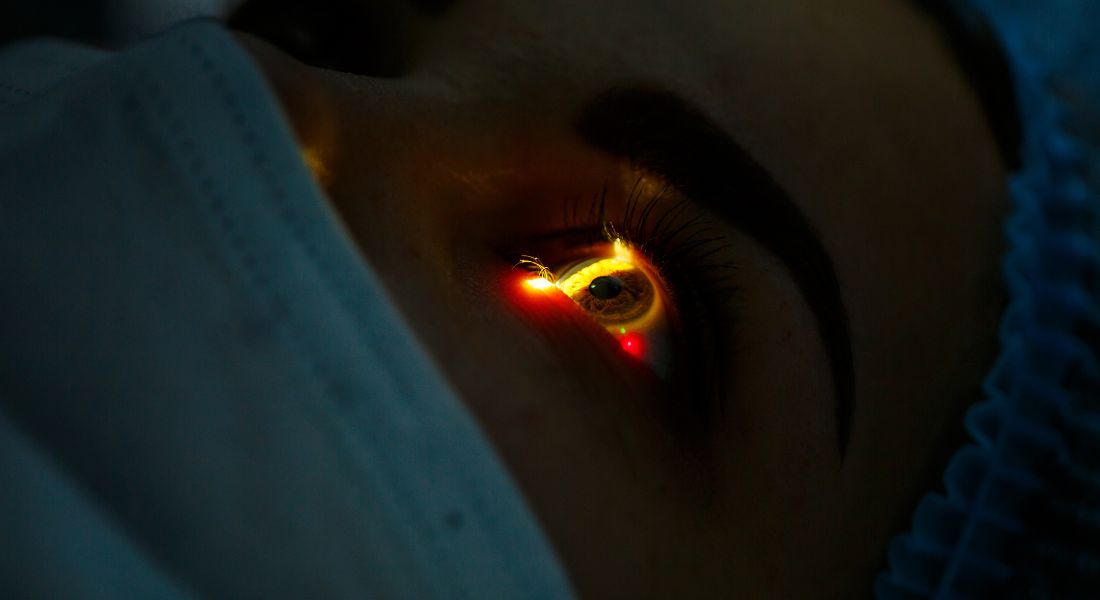
This is where modern laser technology really comes into its own. Eye-tracking systems are designed to react far faster than any voluntary or involuntary eye movement you could make. Even tiny shifts are anticipated and managed in real time.
The tracker continuously identifies key reference points, such as your pupil, iris pattern, or corneal centre. It monitors movement across multiple axes, including horizontal, vertical, rotational, and torsional shifts. If your eye moves, the laser automatically adjusts within fractions of a millisecond to stay perfectly aligned.
If movement goes beyond a preset safety threshold, the system immediately pauses the laser. Treatment only resumes once your eye returns to the correct position. This built-in safety mechanism ensures accuracy while protecting the eye at all times.
Because of this technology, you don’t need to worry about keeping your eye completely still. You can relax, breathe normally, and simply focus on the target light. Most patients are surprised by how natural this feels, as once your gaze is fixed, your eye instinctively stays centred.
What Happens If You Move Your Eye Suddenly?
This is the situation most people worry about before laser eye surgery. The fear is that a sudden movement could cause the laser to treat the wrong area. With modern eye-tracking systems, that simply doesn’t happen.
If you move your eye suddenly, the tracker detects the movement instantly. The laser shuts off automatically and treatment pauses straight away. Nothing continues until your eye is back in the correct position.
Your surgeon will calmly guide you to refocus on the target light. Once your eye is centred again, the laser resumes from the exact point it stopped, not from the beginning or a new area. Your safety is never compromised. The system is designed so the laser cannot fire in the wrong direction, making unintended treatment impossible.
Why Involuntary Movements Are Not a Risk
Involuntary eye movements are something many patients worry about before LASEK, but they are not a risk during the procedure. Small, unconscious movements happen naturally in every eye, even when you are trying your best to stay still. LASEK technology has been specifically designed with this in mind, ensuring these movements are anticipated, detected, and safely managed at all times.
- Micro-drifts: Tiny, natural shifts that occur even when you are trying to keep your eye still.
- Reflexive twitches: Automatic responses that happen without conscious control.
- Subconscious tracking of objects: Minor movements as your eye instinctively responds to light or shapes.
- Breathing-related motion: Very slight movement transferred from normal breathing.
- Small head shifts: Minimal changes in position that can occur as you relax.
Modern laser systems are specifically designed to compensate for all of these movements. Your head is supported in a comfortable, stable position, and a gentle eyelid holder prevents blinking. Your eye rests naturally and is only able to move within a very small, controlled range a range the laser is engineered to handle safely.
The key point is this: involuntary movements are not a risk. They are anticipated and fully accounted for. The technology exists precisely because human eyes cannot remain perfectly still, ensuring the procedure remains accurate and safe throughout.
What the Surgeon Does to Keep You Comfortable and Still
Staying still during LASEK is far easier than most people expect, largely because of how the procedure is carefully set up. Your surgeon and clinical team guide you through each step in a calm, reassuring manner, helping you feel relaxed and in control throughout.
To help your eye remain naturally centred and focused, they use:
- A fixation light above you: This gives your eye a clear point to focus on, encouraging natural stillness.
- Clear verbal reassurance: The surgeon talks you through what is happening, which helps reduce anxiety and tension.
- Gentle reminders: Simple prompts help you maintain focus without feeling pressured.
- A comfortable headrest: Proper head support keeps you relaxed and minimises any unintended movement.
- Constant hydration: Lubricating drops keep the eye comfortable and prevent the urge to blink.
Most people naturally keep their attention on the fixation light because it is the only object they can see clearly during treatment. As a result, your focus settles, your eyes relax into position, and staying still becomes effortless rather than forced.
Why Anxiety Doesn’t Cause Problems With Eye Movement
Many patients worry that nervousness might make them fidget or lose focus. But anxiety rarely causes issues for several reasons.
Firstly, your surgical team guides you calmly through everything. Secondly, your eye is held open, so blinking doesn’t matter. Thirdly, the laser watches your eye more closely than you could ever attempt to control. And finally, you’re lying down in a comfortable position where your body naturally becomes still.
Even if you feel your heart racing, your eyes will remain centred. No amount of nervousness can override the safety mechanisms of the laser. If anything, anxiety tends to make people stare more firmly at the fixation light.
Can You Look Away During the Procedure?
Technically, you could try to look away during the procedure, but it won’t cause any harm. If this happens, the eye-tracking system immediately detects the movement and the laser stops. Your surgeon will simply ask you to look back at the target fixation light. Once your eye is centred again, the laser resumes from the exact point it paused.
You can’t ruin your treatment by looking away, and you can’t accidentally “look at the laser.” The laser itself isn’t visible to you at any point you only see the fixation light that helps keep your eye aligned.
Common Myths About LASEK Surgery and Eye Movement
There are several common misunderstandings about eye movement during LASEK, so it’s helpful to clear them up. Many of these fears come from imagining older technology, not the highly advanced systems used today.
Myth: “If I move my eye, the laser will cut the wrong area.”
Reality: The laser immediately shuts off if movement exceeds safe limits, so it cannot treat the wrong spot.
Myth: “If I blink, it will ruin the surgery.”
Reality: You’re unable to blink during the laser step because a small eyelid speculum gently keeps your eye open.
Myth: “The surgeon needs me to stay completely still.”
Reality: Tiny, natural eye movements are expected and fully compensated for by the tracking system.
Myth: “If I panic, my eye will roll up suddenly.”
Reality: The fixation light helps keep your gaze centred, and the laser stops automatically if this happens.
Myth: “My eye might drift when the laser fires.”
Reality: Modern systems include drift tracking with millisecond accuracy, constantly adjusting for movement.
Once you understand how this safety systems work, worries about blinking or eye movement usually disappear.
How Long Do You Need to Keep Your Eye Still?
The actual laser time during LASEK is usually around 20–40 seconds per eye. Many people expect the laser step to last much longer, but it’s surprisingly quick.
During these seconds, all you do is look at a target light. It feels more like staring during an eye test than undergoing a surgical procedure. Because the laser time is so short, most people find the experience far easier than they imagined.
Why LASEK Is Extremely Safe Even If You’re a “Nervous Mover”
Some people describe themselves as blinky, twitchy, or unable to hold their gaze still. If you feel like this, you might think LASEK isn’t for you. But in reality, these patients do perfectly well.
You’re lying down, your eyelid is held open, your eye is numb, and the laser tracks your movement faster than any conscious or unconscious movement you could make. That combination means even people who normally fidget do extremely well with laser eye surgery.
Surgeons often say that the people who worry the most beforehand tend to do the best during the procedure because they follow instructions carefully.
How LASEK Compares to LASIK and SMILE Regarding Eye Movement
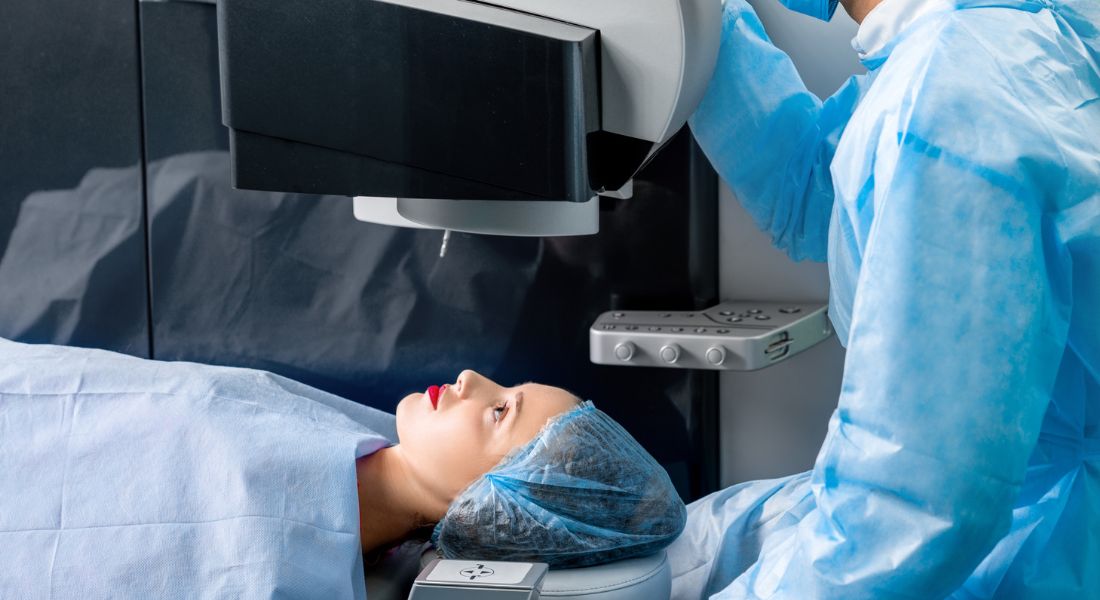
All modern laser eye surgery procedures use advanced eye-tracking technology, but LASEK is particularly forgiving when it comes to eye movement because it is a surface-based treatment and does not involve creating a corneal flap.
Compared with LASIK:
- No suction is applied to the eye: LASIK requires suction to stabilise the eye during flap creation, whereas LASEK does not.
- No flap creation step: This removes concerns related to flap positioning or movement during surgery.
- Shorter laser treatment time: The laser reshaping itself is very quick, reducing the time your eye needs to remain focused.
- Extremely precise eye tracking throughout: Any small movements are detected and compensated for instantly.
Compared with SMILE:
- LASEK relies on fixation rather than suction: You focus on a light, while the tracking system actively follows eye movement in real time.
- SMILE uses suction to hold the eye in place: While this is safe and effective, some patients find the sensation more noticeable.
All three procedures are highly safe and effective when performed on suitable candidates. However, LASEK’s surface-based approach makes it especially reassuring for people who are concerned about eye movement, blinking, or the idea of suction or flap creation.
If you are comparing treatment options and want expert guidance on suitability, it may be helpful to explore detailed clinical information about LASEK surgery in London, including how it compares with LASIK and SMILE in terms of safety, comfort, and expected outcomes.
What You Feel During the Laser And Why It Doesn’t Trigger Movement
Another common concern is that feeling something during the laser might cause a reflexive eye movement. In reality, during the laser step itself, you don’t feel anything. Your eye is fully numbed with anaesthetic drops, and the laser is either silent or makes only soft clicking sounds.
There’s no sensation of heat, pressure, or pain, so nothing startles your eye or triggers a reflex response. Because there’s no discomfort, your body has no reason to react suddenly.
This calm, sensation-free experience actually makes it easier to keep your gaze steady. Most patients find they can comfortably focus on the target light without feeling the urge to move at all.
FAQs:
- Can I blink during LASEK surgery?
No, you cannot blink during LASEK surgery because a small, gentle eyelid holder called a speculum is placed between your eyelids. This keeps the eye open comfortably throughout the procedure. Your eye is fully numbed with anaesthetic drops, so you don’t feel discomfort or strain, and the natural blinking reflex quickly fades once the speculum is in place. - What happens if I accidentally move my eye during the laser?
If your eye moves during the laser step, the eye-tracking system detects this instantly and automatically pauses the laser. Treatment only resumes once your eye is correctly centred again. The laser never fires in the wrong place, and your safety is not compromised at any point. - Do I need to keep my eye perfectly still during LASEK?
No, you do not need to keep your eye perfectly still. Modern LASEK lasers are designed to account for natural, tiny eye movements. The tracking system adjusts in real time, allowing you to relax and simply focus on the fixation light without fear of affecting the results. - Can anxiety cause problems with eye movement during surgery?
Anxiety does not cause problems during LASEK surgery. Even if you feel nervous, the eye-tracking system continuously monitors your eye position and pauses treatment if needed. Your body is supported in a comfortable position, your eye is numbed, and blinking is prevented, making anxiety-related movement irrelevant to the safety of the procedure. - What if I look away from the fixation light?
If you briefly look away from the fixation light, the laser automatically stops. Your surgeon will gently guide you to refocus, and the laser will resume exactly where it left off. Looking away cannot damage your eye or affect your treatment outcome. - Can involuntary eye movements affect the accuracy of LASEK?
Involuntary eye movements do not affect the accuracy of LASEK. The laser system is specifically designed to detect and compensate for micro-movements that naturally occur in all eyes. These movements are expected and fully accounted for during treatment. - Will my eye dry out because I can’t blink?
Your eye will not dry out during LASEK surgery. The surgeon continuously applies lubricating drops throughout the procedure to keep the eye hydrated. The laser itself works very quickly, so there is no prolonged exposure that could cause dryness or irritation. - How long do I need to keep my eye focused during the laser?
The laser step usually lasts only 20 to 40 seconds per eye. During this time, you simply look at a target light. Because the laser time is so short, most patients find it much easier than they expected to remain focused. - Can blinking or movement ruin the results of LASEK?
No, blinking or eye movement cannot ruin the results of LASEK. Blinking is physically prevented, and any eye movement immediately pauses the laser. The system is designed so treatment cannot continue unless the eye is in the correct position, ensuring consistent and accurate results. - Is LASEK still safe if I’m someone who struggles to keep my eyes still?
Yes, LASEK is extremely safe even for people who feel they struggle to keep their eyes still. The combination of anaesthetic drops, eyelid support, head positioning, and advanced eye-tracking technology means that conscious or unconscious movement does not pose a risk. Many patients who worry the most beforehand are surprised by how calm and straightforward the procedure feels.
Final Thought: Blinking and Eye Movement During LASEK
Worrying about blinking or moving your eye during LASEK surgery is completely natural, but it’s also unnecessary. Modern laser eye surgery has been designed with human behaviour in mind, recognising that eyes cannot remain perfectly still. From gentle eyelid support and anaesthetic drops to advanced eye-tracking technology that reacts faster than any movement you could make, every safety measure exists to protect you throughout the procedure. Even sudden or involuntary movements are anticipated, detected instantly, and managed without risk to your vision.
If you’d like to find out whether lasek surgery in London is suitable for you, feel free to contact us at Eye Clinic London to arrange a consultation and receive personalised advice based on your eyes, lifestyle, and visual goals.
References:
- Al‑Tobaigy, F.M. (2012) Efficacy, predictability, and safety of laser‑assisted subepithelial keratectomy (LASEK) for the treatment of myopia and myopic astigmatism. Middle East African Journal of Ophthalmology, 19(3), pp.304–308. Available at: https://pubmed.ncbi.nlm.nih.gov/22837624/
- Clinical Evaluation of Corneal Endothelial Parameters following Laser Refractive Surgery (2023), 13(6), 1665. Available at: https://www.mdpi.com/2077-0383/13/6/1665
- Autrata, R. et al. (2003) Laser‑assisted subepithelial keratectomy and photorefractive keratectomy for correction of hyperopia: a 2‑year follow up. J Cataract Refract Surg. Available at: https://pubmed.ncbi.nlm.nih.gov/14670418/
- The Effect of Flap Elevation on the Ocular Cyclotorsion in Refractive Surgery (2023) Journal of Clinical Medicine, MDPI, 14(8), 2596. Available at: https://www.mdpi.com/2077-0383/14/8/2596
- McGhee, C.N.J. (2007) Refractive surgery: what patients need to know. British Medical Bulletin, 83(1), pp.325–339. Available at: https://academic.oup.com/bmb/article/83/1/325/1089025