


Can Your Brain Adapt to Multifocal Lenses After RLE?

If you’re thinking about RLE surgery in London, it’s completely natural to wonder how your brain will cope with multifocal lenses. These lenses are designed to give you clear vision at different distances, but they work differently from your natural lens. Instead of focusing on a single point, they create multiple focal points at the same time, allowing you to see near, intermediate, and far objects more easily.
Because of this, your brain needs to learn how to interpret a new type of visual input. In the early stages, this can feel slightly unfamiliar, as your visual system adjusts to processing more information than it’s used to. You may notice subtle changes in clarity, contrast, or how lights appear, particularly in certain environments or lighting conditions.
The reassuring part is that your brain is incredibly adaptable. Through a process called neuroadaptation, it gradually learns to filter and prioritise the correct focal point for each task. Over time, vision begins to feel clearer, more natural, and more comfortable, helping you regain confidence in your everyday activities. Understanding this process makes it much easier to stay patient and positive during recovery.
What Is Neuroadaptation?
Neuroadaptation is the process through which your brain learns to adjust to new visual input after RLE surgery. Because multifocal lenses work differently from your natural lens, your eyes begin sending slightly different signals to your brain. Instead of receiving a single clear image, your brain is presented with multiple layers of focus at the same time, each corresponding to different distances.
In the early stages, this can feel unfamiliar or even a little confusing. Your brain hasn’t yet learned which image to prioritise, so you may notice slight blur, overlapping clarity, or changes in how objects appear at different distances. These sensations are completely normal and simply reflect your brain learning how to interpret a new visual system.
Over time, your brain becomes more efficient at processing this information. It gradually learns to select the most relevant image automatically, without any conscious effort from you. This is what ultimately makes your vision feel smooth, natural, and comfortable, allowing you to carry out everyday tasks with ease.
Why Multifocal Lenses Need Brain Adaptation
When you first receive multifocal lenses, your vision may feel slightly different from what you’re used to. This is because these lenses work in a more advanced way compared to your natural lens. Instead of focusing light at a single distance, they create multiple focal points to help you see both near and far. While this offers clear benefits, it also means your brain needs time to adjust to the new visual system.
- Light is split into multiple focal points: Multifocal lenses divide incoming light so it can focus at different distances at the same time. This allows you to switch between near, intermediate, and distance vision more easily. However, it also means your retina receives more than one image simultaneously, which can feel unusual at first.
- Your brain receives overlapping images: Because multiple images are formed, your brain initially sees overlapping visual information. This can sometimes lead to mild blurring, halos, or reduced contrast, especially in the early days. These effects are a normal part of the adjustment phase and usually improve with time.
- Your natural lens worked in a simpler way: Before surgery, your natural lens adjusted focus smoothly depending on where you were looking. Multifocal lenses, on the other hand, rely on fixed optical zones rather than continuous focusing. This change makes your visual system slightly more complex, which is why adaptation is necessary.
- Your brain learns to filter and prioritise images: Over time, your brain becomes better at selecting the most relevant image and ignoring the rest. This process is known as neural adaptation. As it progresses, your vision becomes clearer, and everyday tasks like reading or driving start to feel more natural again.
With a little patience, most people notice steady improvement in their vision. Your brain is highly adaptable, and it gradually learns how to make the most of your new lenses. As this adjustment continues, you’ll begin to experience the full benefits of multifocal vision in your daily life.
How Your Brain Filters Visual Information
Your brain is already very skilled at filtering visual information, even before surgery. After RLE, this natural ability becomes more refined as it adapts to the multifocal lens. Because the lens presents multiple focal points at once, your brain works a bit harder initially to decide which information is most relevant for what you’re doing.
For example, when you’re reading a book or looking at your phone, your brain quickly prioritises near vision. When you shift your gaze to something in the distance, such as a road sign or a person across the room, it automatically adjusts to focus on that instead. With time and practice, this switching between focal points becomes faster, smoother, and almost instantaneous.
Eventually, this entire process feels completely effortless. You won’t consciously notice your brain filtering or selecting images, but it will be happening in the background all the time. This is what allows you to function comfortably across different distances, giving you a more natural and seamless visual experience in everyday life.
The First Few Days After Surgery
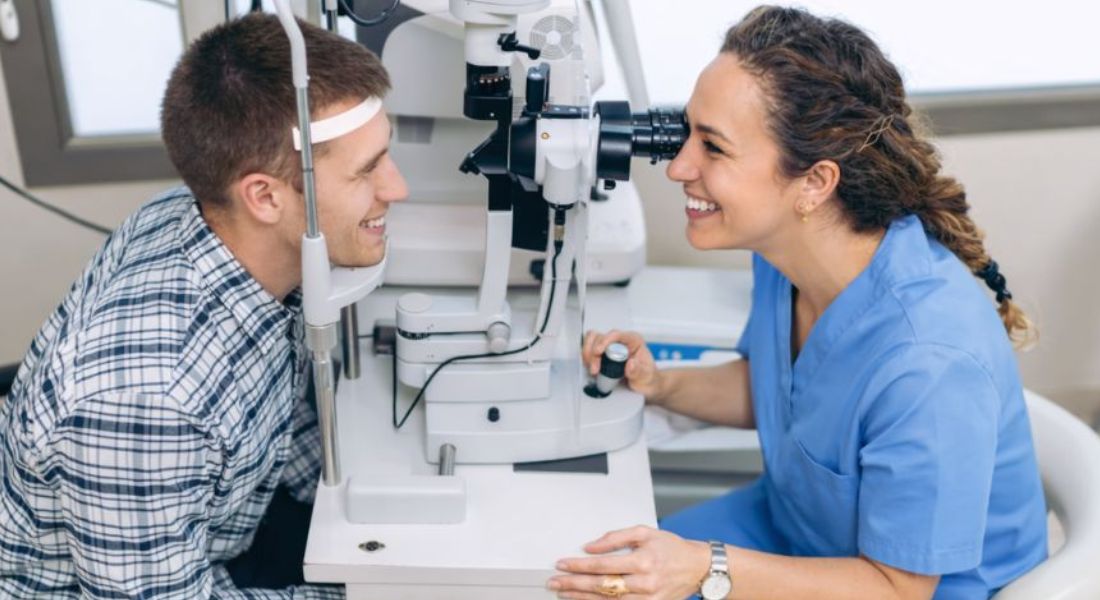
In the first few days after surgery, your vision may feel slightly different from what you expected. You might notice glare, halos around lights, or mild blurring, particularly in low-light environments such as evenings or dimly lit rooms. While these changes can feel unusual, they are completely normal and part of your eye’s natural adjustment process.
At this stage, your brain is only just beginning to understand the new visual signals created by the multifocal lens. It hasn’t yet fully learned how to filter and prioritise the different focal points, which can make your vision feel a little inconsistent or unpredictable. This early phase is simply your visual system starting to adapt to a new way of seeing.
As the days go on, these effects usually begin to settle and become less noticeable. Most patients start to see gradual improvements within the first couple of weeks, as the brain becomes more efficient at processing visual information. Staying patient during this period helps you feel more confident as your vision steadily improves.
Understanding Brain Plasticity
Your brain has an impressive ability known as plasticity, which allows it to adapt and respond to new experiences. When your vision changes, such as after receiving multifocal lenses, your brain doesn’t stay fixed in its old patterns. Instead, it begins adjusting to help you make sense of the new visual signals. This natural flexibility is what makes the adaptation process possible.
- Your brain can reorganise itself: Brain plasticity means your brain can form new connections and adjust existing ones. When your visual input changes, your brain starts to reorganise how it processes images. This helps you gradually become more comfortable with your new way of seeing.
- Learning continues even in adulthood: You might think adaptation becomes harder with age, but your brain remains capable of learning throughout your life. With regular use of your eyes in daily activities, your brain keeps adjusting to improve your visual clarity. This is why most people can successfully adapt to multifocal lenses over time.
- Repeated exposure strengthens adaptation: The more you use your vision in everyday situations, the better your brain becomes at handling the new input. Tasks like reading, walking, or using screens help reinforce the changes. Over time, your brain becomes quicker and more efficient at processing what you see.
- Your brain and lenses work together: Multifocal lenses don’t work alone. Your brain plays an active role in selecting and refining the images you see. As it adapts, the combination of lens technology and brain processing creates clearer, more functional vision.
With a bit of patience, this process becomes smoother and more natural. Your brain is constantly learning, and as it adapts, your vision will begin to feel more stable and comfortable. This partnership between your brain and your lenses is what allows modern vision correction to be so effective.
How Long Adaptation Takes
Adaptation doesn’t happen overnight, and it’s different for everyone. Some people begin to notice meaningful improvements within just a few weeks, while for others it may take a couple of months before their vision feels completely natural. This variation is entirely normal and simply reflects how each individual’s brain processes new visual information.
The timeline can be influenced by several factors, including your age, lifestyle, and previous visual habits. For example, people who regularly switch between near and distance tasks may find their brain adapts more quickly. Others may need a little more time for their visual system to fully adjust to the multiple focal points created by the lens.
What’s most important to remember is that progress is gradual. Even small improvements from week to week are a clear sign that your brain is adapting successfully. Staying patient and consistent with daily activities will support this process and help your vision become clearer and more natural over time.
Common Visual Effects During Adaptation
It’s completely normal to notice certain visual effects in the early stages after surgery. You may see halos around lights, experience glare in bright or low-light conditions, or notice slight ghosting when focusing on objects. These effects can feel unusual at first, but they are a recognised part of the adjustment process.
Importantly, these visual changes are not a sign that anything is wrong. They simply reflect your brain learning how to interpret the multiple focal points created by the multifocal lens. As your visual system becomes more familiar with this new way of seeing, it gradually improves its ability to filter and prioritise the correct image.
As adaptation progresses, these visual disturbances usually become less noticeable and often fade significantly. Most patients find that within a few weeks, their vision feels more stable and comfortable, allowing them to carry out daily activities with increasing confidence.
Why Some People Adapt Faster
Not everyone adapts to multifocal lenses at the same speed. Some people find their vision begins to feel natural quite quickly, while others may need a little more time to adjust fully. This variation is entirely normal and reflects how differently each person’s visual system responds after surgery.
One of the main reasons for this difference is how your brain processes visual information. People who regularly shift focus between near, intermediate, and distance tasks such as reading, using screens, and driving often find their brain adapts more quickly. Lifestyle, daily visual demands, and even previous reliance on glasses can all play a role in how smoothly adaptation progresses.
The most important thing is not to compare your experience with others. Your brain will adapt at its own pace, and that process is unique to you. Staying patient and continuing with normal daily activities will help your visual system adjust naturally over time.
The Importance of Using Your Eyes Normally
One of the most effective ways to support adaptation is simply to use your eyes as you normally would. Everyday activities naturally train your brain to select the right focal point without conscious effort. The more you engage in routine tasks, the more opportunities your visual system has to adjust.
Simple actions like reading, walking outdoors, watching television, or using digital devices all play an important role. These activities encourage your brain to practise switching between near, intermediate, and distance vision. Over time, this repetition helps your visual system become quicker and more efficient.
On the other hand, avoiding visual activity can actually slow down the adaptation process. Regular, balanced use of your eyes helps your brain learn faster and more effectively. Staying active with your vision will support a smoother and more confident recovery.
Reading and Near Vision Adjustment
When you first start using multifocal lenses, close-up tasks like reading may feel a little different. This is because your brain is still learning how to use the near-focus zones within the lens. At the beginning, your eyes and brain are working together in a new way, so it’s completely normal if things don’t feel perfect straight away. With a bit of time and practice, your vision usually becomes much more natural.
- Your brain learns to use the near-focus zones: Multifocal lenses are designed with different zones for different distances. When you read, your brain needs to identify and prioritise the near-vision area of the lens. At first, this may take a bit of effort, but it gradually becomes automatic with regular use.
- Text may appear slightly soft at first: In the early days, you might notice that words don’t look as sharp as you’d like. This happens because your brain is still adjusting to processing multiple focal points. As it adapts, clarity improves and the softness usually fades.
- Practice helps improve clarity: The more you read and perform close-up tasks, the better your brain becomes at refining your focus. Simple daily activities like checking your phone, reading a book, or working on a screen help speed up this adjustment process.
- Comfort improves over time: As your brain becomes more familiar with the lenses, reading starts to feel easier and more natural. You’ll likely notice that you no longer need to think about how to focus, as it begins to happen automatically.
With consistent use, most people feel more confident with near vision within a few weeks. Your brain is continuously adapting, and as it does, reading and other close-up tasks become clearer, smoother, and far more comfortable.
Intermediate Vision and Daily Tasks
Intermediate vision covers many of the tasks you do every day, such as using a computer, cooking, or checking items on a countertop. This range sits between near and distance vision, and it plays a key role in making your overall visual experience feel practical and seamless. Your brain gradually learns how to manage this range as part of the adaptation process.
In the early stages, you might find yourself adjusting your posture or the distance between your eyes and the object you’re focusing on. These small changes help your brain identify the most effective focal point provided by the multifocal lens. This is completely normal and simply part of learning how to use your new visual system efficiently.
With regular use and practice, this process becomes automatic. Your brain quickly adapts to deliver stable and clear intermediate vision without you needing to think about it. Over time, tasks like computer work and daily activities begin to feel comfortable and natural again.
Distance Vision Adaptation
Distance vision is often the easiest aspect of multifocal lenses to adjust to. Many patients notice that they can see clearly at longer distances quite soon after surgery. However, your brain still needs a little time to refine that clarity and reduce any minor visual effects that may be present in the early stages.
You might notice slight halos around lights or mild glare, particularly when driving at night or in low-light conditions. These effects are common during the initial phase of adaptation and are simply part of your brain learning how to interpret the new visual signals. As your brain becomes more efficient, these disturbances usually begin to fade.
Most patients find that distance vision becomes sharp, stable, and reliable relatively early in the process. With continued adaptation, your ability to see clearly at longer distances improves further, helping you feel more confident in everyday situations such as driving or outdoor activities.
Night Vision Challenges

You may notice changes in your vision more clearly at night, especially in the early stages of adapting to multifocal lenses. Low-light conditions make your visual system work a bit harder, as there is less contrast and detail available. Because of this, your brain may take a little longer to process what you’re seeing. While this can feel unfamiliar at first, it’s a common part of the adjustment process.
- Reduced lighting makes visual processing harder: In dim environments, your eyes receive less information, which can make it more difficult for your brain to interpret images. This can briefly affect clarity and sharpness, particularly when you’re trying to focus on distant lights or moving objects.
- Halos and glare may appear more noticeable: You might see rings or halos around lights, especially when driving at night. Glare from headlights or streetlights can also seem stronger than usual. These effects are expected during the early phase and are linked to how light is distributed through the lens.
- Your brain is still learning to filter visual input: At night, the challenge of managing multiple focal points becomes more noticeable. Your brain is still adapting and learning which visual signals to prioritise. As this process improves, these visual disturbances usually become less distracting.
- Gradual exposure helps improve comfort: Spending time in low-light environments helps your brain adjust more effectively. Using good ambient lighting at home and avoiding sudden transitions from bright to dark spaces can also make the experience more comfortable.
Over time, most people notice that night vision becomes clearer and more stable. As your brain continues to adapt, halos and glare tend to reduce, and you’ll feel more confident in low-light situations.
The Role of Attention
Your attention plays an important role in how your brain adapts to multifocal lenses. In the early stages, when you consciously focus on an object whether it’s something close, at arm’s length, or in the distance your brain starts to learn which visual signal it should prioritise. This deliberate focus helps guide the adaptation process.
By actively engaging with what you’re looking at, you give your brain valuable feedback. It begins to recognise patterns and understand which focal point is most useful for each task. This can help speed up adaptation, making your vision feel more stable and predictable over time.
As the process continues, your brain becomes more efficient and no longer needs conscious input. The result is effortless vision where you simply look at something, and your brain automatically selects the clearest image without you having to think about it.
Can Adaptation Be Difficult?
In some cases, adaptation can take a little longer or feel more challenging than expected. This doesn’t mean anything is wrong it simply means your brain needs more time to adjust to the new visual system created by the multifocal lens. Everyone’s adaptation process is slightly different, and variation is completely normal.
Factors such as anxiety or paying very close attention to every visual change can make the process feel slower or more noticeable. When you’re constantly analysing your vision, it can be harder for your brain to adapt naturally. Staying relaxed and allowing your visual system to adjust at its own pace can make a real difference.
With patience and the right guidance, most patients adapt successfully over time. Support from your clinician, along with reassurance about what’s normal, can help you feel more confident throughout the process and keep your recovery on track.
Supporting Your Brain During Recovery
You can actively support your brain during this adjustment period with a few simple habits. Using good lighting, especially for reading or close work, helps your eyes focus more comfortably. Taking regular breaks from screens and avoiding unnecessary strain can also make your vision feel more relaxed as it adapts.
Engaging in a variety of visual tasks is particularly helpful. Activities that involve switching between near, intermediate, and distance vision such as reading, using a computer, and looking outside encourage your brain to practise selecting the correct focal point. This variety helps strengthen and speed up the adaptation process.
These small, consistent habits can make a noticeable difference in your comfort and progress. By supporting your visual system in everyday situations, you help your brain adapt more efficiently and improve your overall experience during recovery.
Emotional Adjustment
It’s completely normal to feel a bit unsure when your vision first changes. Even positive improvements can feel unfamiliar at the beginning, especially when your eyes and brain are still adapting. You might notice moments of doubt or mild frustration, but this is all part of the process. Understanding what’s happening can help you feel more in control and reassured.
- Uncertainty is a natural response: When your vision feels different, it’s common to question whether everything is working as it should. These feelings usually settle as your brain begins to adapt and your vision becomes more stable.
- Awareness reduces stress: Knowing that these changes are temporary can make a big difference. When you understand that adaptation takes time, you’re less likely to feel anxious about early visual changes.
- Confidence supports smoother adjustment: Staying positive and trusting the process can help you adapt more comfortably. When you feel relaxed, it becomes easier for your brain to adjust to the new visual input.
- Progress builds reassurance: As your vision gradually improves, you’ll likely feel more confident in everyday tasks. Small improvements over time often provide reassurance that everything is moving in the right direction.
With a little patience, these early feelings usually fade. As your vision settles and becomes more consistent, you’ll feel more comfortable and confident in your day-to-day life.
Follow-Up Care and Monitoring

Follow-up appointments are an important part of your recovery after lens surgery. They give your clinician the opportunity to check how well your eyes are healing and how your brain is adapting to the new visual system. These visits help ensure everything is progressing as expected.
They’re also a valuable chance for you to discuss any concerns or questions you may have. Whether you’ve noticed visual changes or simply want reassurance, having professional guidance can make the adaptation process feel much more manageable and predictable.
Regular monitoring helps identify your progress over time and ensures that any adjustments or advice are provided when needed. This ongoing support plays a key role in helping you achieve the best possible visual outcome.
Long-Term Brain Adaptation
Once adaptation is complete, your brain becomes highly efficient at processing visual information. It automatically selects the correct focal point depending on what you’re looking at, without any conscious effort. This seamless coordination between your eyes and brain is what makes multifocal vision feel natural.
At this stage, your vision typically feels stable and consistent across different distances. You’re no longer aware of the lens working in the background, and everyday tasks whether near, intermediate, or far become comfortable and effortless.
This long-term adjustment is what makes multifocal lenses so effective for daily life. By adapting to the way these lenses distribute light, your brain allows you to enjoy clear, functional vision with significantly reduced reliance on glasses.
Reduced Dependence on Glasses
One of the main benefits of successful neuroadaptation is a reduced reliance on glasses. As your brain learns to interpret the multiple focal points provided by your multifocal lenses, it can naturally select the correct focus for near, intermediate, and distance tasks.
This newfound visual independence gives you greater freedom in daily activities. Whether reading a book, driving, or using digital devices, your vision feels more convenient and effortless.
Many patients report that this reduction in dependence on corrective eyewear significantly improves their quality of life. It allows for a more active, flexible lifestyle without constantly reaching for glasses.
Comparing With Monofocal Lenses
Monofocal lenses are designed to focus at a single distance, either near or far, which makes adaptation quicker and easier. Your brain doesn’t need to learn how to switch between multiple focal points, so the visual adjustment period is generally shorter.
The trade-off is that monofocal lenses usually require you to wear glasses for other distances, such as reading or intermediate tasks like computer work. In contrast, multifocal lenses provide flexibility across near, intermediate, and distance vision but rely on your brain’s neuroadaptation to work effectively.
Understanding this difference helps you make an informed decision about which lens type best suits your lifestyle and visual needs. It’s a balance between ease of adaptation and overall visual independence.
Why Patience Is Important
Adapting to multifocal lenses is a process that takes time, and expecting perfect vision immediately can be frustrating. Your brain needs a chance to learn how to work with the new visual signals, and rushing this process can create unnecessary worry. Understanding that progress happens gradually can make the experience much smoother and more reassuring.
- Adaptation doesn’t happen overnight: Your eyes and brain are adjusting to a completely new way of seeing. Each day of use helps your brain refine focus, filter images, and improve clarity. Instant perfection is rare, so giving yourself time is essential.
- Small improvements add up: Even subtle changes, like clearer text or reduced glare, are meaningful steps forward. Recognising these small wins helps you stay motivated and confident during the adaptation phase.
- Patience supports a positive mindset: Being patient reduces stress and anxiety, which in turn allows your brain to adapt more efficiently. When you approach the process calmly, your experience is often smoother and more comfortable.
- Successful outcomes rely on gradual adjustment: Most patients find that consistent use and steady adaptation lead to long-term satisfaction with their vision. Trusting the process ensures that you achieve the full benefits of your multifocal lenses.
Allowing yourself this time isn’t just about waiting it’s about giving your brain the opportunity to learn and work alongside your new lenses. With patience, each day brings you closer to clear, comfortable vision.
Individual Differences
Every patient’s experience with multifocal lenses is unique, and adaptation times can vary widely. Some people notice clear, comfortable vision within days, while others may take several weeks to feel fully adjusted.
Factors like your lifestyle, daily visual habits, and how your brain processes new visual input all play a role in this journey. There isn’t a single “normal” timeline, so it’s important to be patient with yourself.
Your clinician can provide personalised guidance and reassurance based on your progress, helping you feel confident and supported throughout the adaptation period.
When Vision Starts Feeling Natural
After a period of adjustment, you’ll likely notice that your vision begins to feel effortless. Focusing on objects no longer requires conscious effort it just happens naturally.
This stage indicates that neuroadaptation is complete, or very close to it. Your brain has successfully learned to interpret and prioritise the multiple focal points provided by your multifocal lenses.
Reaching this point brings a sense of confidence and comfort in your everyday vision. Tasks like reading, driving, or using digital devices feel smooth and natural, reflecting the full benefit of your RLE procedure.
FAQs:
- What is brain adaptation after RLE surgery?
Brain adaptation, also known as neuroadaptation, is the process where your brain learns to interpret new visual signals from multifocal lenses. Since these lenses create multiple focal points, your brain must decide which image to prioritise. This adjustment happens gradually and becomes automatic over time. It allows you to experience smooth and natural vision at different distances. - How long does neuroadaptation usually take?
Most patients notice improvement within the first 2-4 weeks after surgery. However, full adaptation can take up to three months in some cases. The timeline varies depending on your brain’s flexibility and visual habits. Gradual progress is completely normal. - Is it normal for vision to feel strange at first?
Yes, it’s very common for vision to feel slightly unusual in the beginning. You may notice mild blur, overlapping images, or changes in clarity. This is simply your brain adjusting to a new way of seeing. These sensations usually improve as adaptation progresses. - Why do multifocal lenses require brain adaptation?
Multifocal lenses split light into different focal points, allowing you to see at multiple distances. This creates more visual information for your brain to process. Unlike natural vision, your brain must learn to filter and prioritise images. That’s why adaptation is necessary. - What visual side effects might I notice?
You may experience temporary effects such as halos, glare, or ghosting, especially in low-light conditions. These are common during the early stages of adaptation. They occur because your brain is still learning to interpret multiple images. Most of these effects reduce significantly over time. - Can I speed up the adaptation process?
Yes, you can support adaptation by using your eyes regularly. Activities like reading, walking, and using digital devices help train your brain. Good lighting and taking breaks from screens also improve comfort. Consistency and patience are key. - Does age affect how quickly I adapt?
Age can influence how quickly your brain adapts, but it doesn’t prevent adaptation. Even older adults have strong neural plasticity. Some people may take slightly longer, but most adapt successfully. Individual variation is completely normal. - Will I eventually stop noticing the lens effects?
In most cases, yes. As neuroadaptation completes, your brain filters out unnecessary visual signals. This means halos, glare, or other effects become much less noticeable. Eventually, vision feels natural and effortless. - What happens if adaptation feels slow?
If adaptation takes longer, it usually just means your brain needs more time. This is not a sign that something is wrong. Staying patient and continuing normal activities helps. Your clinician can also provide reassurance and guidance. - When will my vision feel completely natural again?
Many patients feel comfortable within a few weeks, but full natural vision can take a few months. You’ll know adaptation is complete when you no longer think about focusing. Your brain will automatically select the correct image. At that stage, vision feels smooth, stable, and effortless.
Final Thoughts: Trusting Your Brain’s Ability to Adapt
Adapting to multifocal lenses after RLE is a gradual but highly effective process. While your eyes immediately benefit from advanced lens technology, it’s your brain that completes the transformation by learning how to interpret multiple focal points. Temporary visual changes such as halos or slight blur are a normal part of this adjustment and typically improve as neuroadaptation progresses.
With time, patience, and regular use of your vision in everyday activities, your brain becomes more efficient at selecting the right focus automatically. This is what allows your vision to feel natural, stable, and comfortable across near, intermediate, and distance tasks. Most patients find that this adaptation leads to greater independence from glasses and a noticeable improvement in their overall quality of life. If you’d like to find out whether RLE surgery in London is suitable for you, feel free to contact us at Eye Clinic London to arrange a consultation.
References:
- Alió, J.L., Soria, F.A., Abbouda, A. & Peña-García, P. (2016) ‘Laser in situ keratomileusis and photorefractive keratectomy retreatment after refractive lens exchange’, Journal of Cataract & Refractive Surgery, 42(5), pp. 715–721. https://www.sciencedirect.com/science/article/abs/pii/S0886335016000195
- Chen, X., Li, Y., Wang, Z., Zhang, H., Liu, Y. & Sun, X. (2026) ‘Advances in refractive lens exchange and intraocular lens technology’, Journal of Optometry. https://www.sciencedirect.com/science/article/pii/S1015958426007153
- Nicula, C.A., Popescu, R., Rednik, A.M., Nicula, D., Bulboacă, A.E. & Stănescu, I. (2020) ‘Refractive lens exchange in hyperopic presbyopes with the AcrySof IQ PanOptix intraocular lens: one-year results and analysis of the literature’, Therapeutics and Clinical Risk Management, 16, pp. 1125–1137. https://pmc.ncbi.nlm.nih.gov/articles/PMC7682609/
- Ong, L.F., Oh, A., Yi, J.K., Gu, J.S., Marvasti, A.H., Nguyen, B.B., Tran, D.B. & Lee, J.K. (2023) ‘Refractive lens exchange – who is getting it, what are they getting, how are they doing?’, Current Opinion in Ophthalmology, 34(4), pp. 280–289. https://pubmed.ncbi.nlm.nih.gov/37254862/
- Rodríguez-Calvo-de-Mora, M., Rocha-de-Lossada, C., Rodríguez-Vallejo, M., Zamora-de-la-Cruz, D. & Fernández, J. (2023) ‘Retinal detachment after refractive lens exchange: a narrative review’, Oftalmología, 98(9), pp. 507–520. https://pubmed.ncbi.nlm.nih.gov/37364678/