


New RLE Research Presented at ARVO

ARVO is widely recognised as one of the most influential ophthalmology research meetings in the world. You would have seen leading clinicians, surgeons, and vision scientists coming together each year to present cutting-edge findings in eye health and vision correction. This conference plays an important role in shaping how future clinical practice and surgical techniques develop.
Refractive Lens Exchange (RLE) continues to be a key topic within these discussions. You may already know that RLE involves replacing your eye’s natural lens with an artificial intraocular lens, and it is often explored in relation to refractive error correction, presbyopia management, and long-term visual outcomes. Researchers at ARVO frequently share new data that helps improve patient selection and refine surgical techniques.
Recent ARVO presentations have focused strongly on improving predictability, safety, and patient satisfaction in lens-based surgery. You would have noticed a clear shift towards more personalised refractive care, where treatment planning is increasingly tailored to your individual eye characteristics. This evolving evidence base continues to influence how surgeons approach RLE planning and outcomes.
If you are considering lens-based vision correction, understanding what leading research conferences reveal can help you feel more informed and confident about your treatment journey. You may find that these insights give you a clearer picture of how modern techniques are continually improving results and safety.
ARVO as a Leading Platform for Ophthalmic Research
ARVO (the Association for Research in Vision and Ophthalmology) is widely recognised as one of the leading platforms for advanced eye research. You would have seen researchers from around the world presenting clinical trials, laboratory findings, and surgical innovations that continue to shape modern eye care.
The conference covers a wide range of topics, including retinal disease, corneal science, and refractive surgery. You may notice that RLE is frequently included in these discussions because of its growing role in modern vision correction, particularly for refractive error and presbyopia management.
These presentations often go on to influence everyday clinical practice by introducing new evidence and refining existing surgical approaches. You are likely to see that what is shared at ARVO gradually helps improve how procedures like RLE are planned, performed, and understood in real-world treatment settings.
Growing Interest in Lens-Based Refractive Surgery
RLE has gained increasing attention in recent years as an alternative to laser vision correction. You would have noticed that it is particularly relevant if you have presbyopia or age-related changes in your natural lens, where laser procedures may not always be the ideal option.
Conference researchers often explore how lens replacement can offer long-term refractive stability. You may find this especially relevant if you are considering a more permanent solution for vision correction, as RLE replaces the eye’s natural lens rather than reshaping the cornea.
At ARVO, presentations frequently compare RLE with other refractive procedures to assess which patients are best suited to each option. You are likely to see ongoing discussion around outcomes, safety, and suitability, helping to refine how surgeons decide the most appropriate treatment for your needs.
Advances in Intraocular Lens Technology
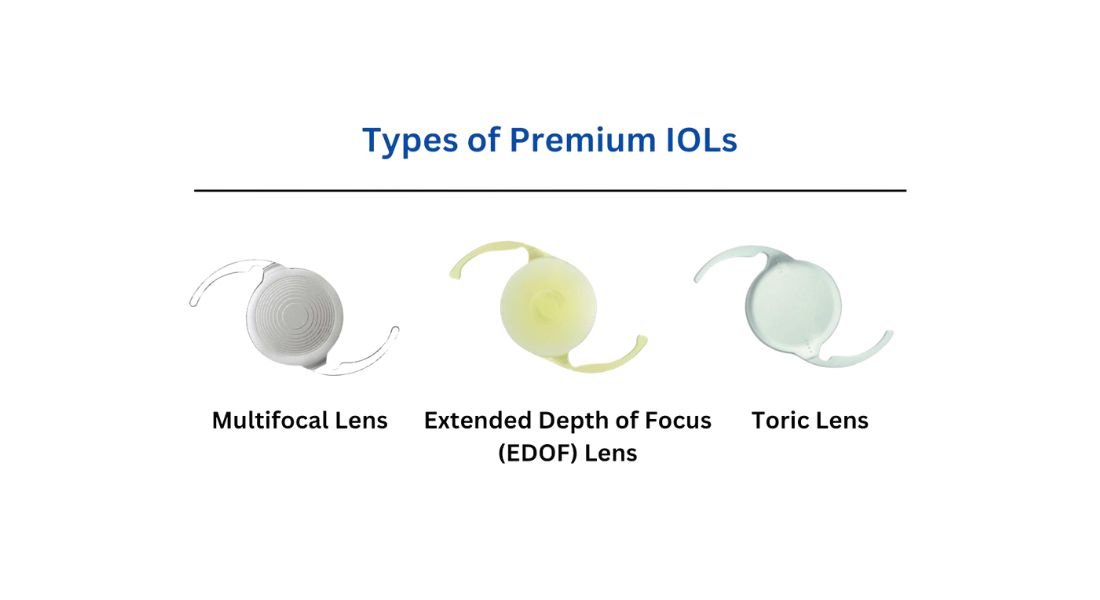
At ARVO Annual Meeting, you will often hear that innovation in intraocular lens (IOL) design is one of the most important areas of ongoing research. You will notice a strong focus on improving your visual quality after procedures like refractive lens exchange (RLE), with the aim of giving you clearer, more comfortable, and more versatile vision in everyday life.
- Modern lenses are designed for better overall vision: You will see that newer IOLs are being developed to improve clarity, reduce unwanted visual effects, and enhance your overall range of vision. The goal is to help you see well at different distances with greater comfort.
- Different lens types are being continuously refined: Researchers regularly evaluate multifocal, trifocal, and extended depth-of-focus (EDOF) lenses. These options are designed to support your vision in different ways, depending on your lifestyle and visual needs.
- Improving balance between clarity and side effects: A key focus at ARVO is finding the right balance between sharp vision and minimising side effects such as glare or halos. You will often hear that lens design is constantly evolving to improve this balance.
- Lens choice strongly influences your results: Conference discussions frequently highlight that the type of lens selected plays a major role in your final visual outcome. The right choice can significantly impact how satisfied you feel after surgery.
- Personalisation is becoming increasingly important: You will often hear experts emphasise that lens selection should be tailored to you. Your eye measurements, lifestyle, and visual expectations all help guide which lens may be most suitable.
Overall, the discussions at ARVO show that intraocular lens technology continues to advance rapidly. As designs improve, you can expect better visual quality, more personalised choices, and increasingly refined outcomes after RLE surgery.
Improved Predictability in Refractive Outcomes
Predictability remains a major focus of RLE research. You would have seen surgeons at ARVO aiming to achieve highly precise refractive targets after lens replacement, so your final visual outcome is as close as possible to the intended result.
ARVO studies often explore biometric accuracy and the methods used to calculate IOL power selection. You may find it interesting that even small improvements in these measurements can make a noticeable difference to your final vision and overall satisfaction after surgery.
This ongoing research is helping to refine how surgeons plan RLE procedures before you even enter the operating theatre. You are likely to benefit from more accurate preoperative planning strategies that improve consistency and reduce unexpected outcomes.
Patient Selection in RLE Surgery
Patient selection is a critical factor discussed extensively at ARVO. You would have heard experts emphasising that not everyone is an ideal candidate for RLE, and choosing the right patients is essential for achieving good outcomes.
Researchers carefully evaluate factors such as your age, refractive error, ocular health, and lifestyle when determining suitability. You may find that this thorough assessment helps ensure the procedure is well matched to your visual needs and long-term expectations, improving both safety and satisfaction.
This topic remains central to modern refractive surgery planning. You are likely to see continued focus on refining selection criteria so that RLE is offered to you only when it is the most appropriate and beneficial option.
Reducing Post-Surgical Visual Disturbances
One area of ongoing research is the reduction of glare, halos, and night vision disturbances. You would have heard experts explaining that these symptoms can occasionally occur after RLE, particularly as your visual system adapts to a new intraocular lens.
ARVO presentations often focus on improvements in lens design and surgical techniques aimed at minimising these effects. You may find it reassuring that continuous refinements in technology and planning are helping to reduce how frequently these visual disturbances occur and how noticeable they are when they do happen.
This remains an important factor in overall patient satisfaction. You are more likely to feel comfortable with your visual outcome when these potential effects are carefully considered during lens selection and preoperative planning.
Managing Expectations in Lens Replacement Procedures

Expectation management is frequently highlighted in ARVO presentations. You would have heard experts stressing that, with RLE, it’s important for you to clearly understand both the benefits and the limitations before making a decision.
Researchers place strong emphasis on preoperative counselling because it helps you form a realistic picture of what the surgery can achieve. You may find that clear communication at this stage makes the whole experience feel more straightforward and helps reduce uncertainty both before and after the procedure.
Studies consistently show that informed patients tend to report better overall satisfaction and outcomes. You are more likely to feel comfortable with your results when you understand the process well and have realistic expectations from the outset.
Biometry and Measurement Accuracy
Accurate eye measurements are essential for successful RLE outcomes. You would have heard ARVO researchers placing strong emphasis on improving the precision of biometric devices and calculation formulas used before surgery.
New technologies now allow for more detailed and reliable measurements of your corneal shape and axial length. You may find this important because even small improvements in measurement accuracy can make a meaningful difference when selecting the most suitable intraocular lens for your eyes.
Better accuracy ultimately leads to more predictable refractive results. You are more likely to achieve the intended visual outcome when your measurements are precise, as this helps surgeons tailor the lens choice more effectively to your individual eye characteristics.
Customised Lens Selection Approaches
At ARVO Annual Meeting, you will often hear that personalised medicine is becoming a major focus in refractive lens exchange (RLE) research. You will notice that surgeons are moving away from a one-size-fits-all approach and increasingly tailoring lens choices to your individual visual needs and lifestyle.
- Lens selection is becoming more personalised: You will hear experts explain that modern RLE planning is highly individualised. Instead of choosing a standard lens for everyone, your surgeon will consider what type of vision you rely on most in daily life.
- Your lifestyle plays an important role: Factors such as your occupation, hobbies, and daily visual demands are now central to decision-making. For example, your need for near work, computer use, or night driving can all influence the type of lens recommended for you.
- Visual preferences are carefully considered: You may have different priorities when it comes to vision quality, such as reading without glasses or achieving sharper distance vision. These preferences are increasingly taken into account when selecting your lens.
- More patient-specific outcomes are the goal: The aim of customised lens selection is to improve how closely your visual outcome matches your expectations. By tailoring the approach, surgeons can better balance clarity, range of vision, and comfort for you.
- Customised planning is a key research theme: ARVO presentations frequently highlight that personalised treatment planning is central to improving RLE results. As research advances, you can expect even more refined methods for matching lens types to individual patients.
Overall, the discussions at ARVO show a clear shift towards customised lens selection. As understanding of visual needs improves, you can expect more precise, tailored approaches designed to give you the best possible outcome for your lifestyle and expectations.
Long-Term Stability of RLE Outcomes
Long-term visual stability is a major focus in ARVO presentations. You would have heard researchers discussing how patients perform not just in the early weeks after surgery, but also years down the line, which gives a clearer picture of how reliable RLE is over time.
Most studies suggest that refractive outcomes remain stable in the long term. You may find this reassuring, as it supports the idea that RLE can provide a durable form of vision correction rather than one that changes significantly over time. This stability is one of the key reasons it continues to be widely studied.
Ongoing research continues to track long-term patient data to further strengthen the evidence base. You are likely to see future studies focusing even more on consistency, safety, and sustained visual quality over many years after surgery.
Cataract Prevention Considerations
Because RLE involves replacing your natural lens, it effectively removes the future risk of developing a cataract. You would have heard this discussed at ARVO as an important long-term consideration when comparing different vision correction options.
Researchers often compare outcomes between RLE and cataract surgery patients, since the procedures are closely related. You may find it interesting that this overlap helps surgeons better understand long-term visual results and refine how lens-based procedures are planned for you.
This adds another dimension to treatment decision-making. You are likely to see cataract prevention considered alongside visual improvement and refractive stability when discussing whether RLE is suitable for your needs.
Safety Improvements in Surgical Techniques
Safety remains a key focus in ARVO presentations. You would have heard experts discussing how continuous refinements in surgical techniques are helping to reduce the risk of complications in RLE and other lens-based procedures.
Modern approaches are designed to improve precision and minimise disruption to your ocular tissues during surgery. You may find it reassuring that these improvements not only enhance safety but also support smoother healing and potentially faster recovery times.
Ongoing training and technological advancements continue to play a major role in making procedures safer. You are likely to benefit from this combination of improved surgeon experience and evolving technology, which together help support more predictable and controlled outcomes.
Role of Artificial Intelligence in RLE Planning
Artificial intelligence is increasingly being explored in ophthalmic research. You would have heard ARVO presentations discussing how AI is being used to support predictive modelling for lens selection in RLE planning.
AI systems can help analyse large amounts of patient data and identify patterns that may improve surgical planning. You may find this useful because it has the potential to enhance accuracy when predicting your refractive outcome and selecting the most suitable intraocular lens.
The integration of AI continues to grow within ophthalmology. You are likely to see it increasingly used as a supportive tool in clinical decision-making, helping surgeons refine planning while still relying on their professional judgement.
Managing Dry Eye After RLE
Post-surgical dry eye is an important area of interest in refractive surgery research. You would have heard ARVO discussions explaining that some patients may experience temporary dryness after lens replacement, particularly during the early healing phase.
Research presentations often focus on ways to prevent and manage these symptoms effectively. You may find it reassuring that careful preoperative assessment of your ocular surface, along with structured postoperative care, can help reduce the likelihood and severity of dry eye after RLE.
A better understanding of ocular surface health continues to improve recovery outcomes. You are likely to benefit from evolving treatment protocols that aim to support comfort, stability, and overall visual quality during the healing process.
Presbyopia Correction Strategies
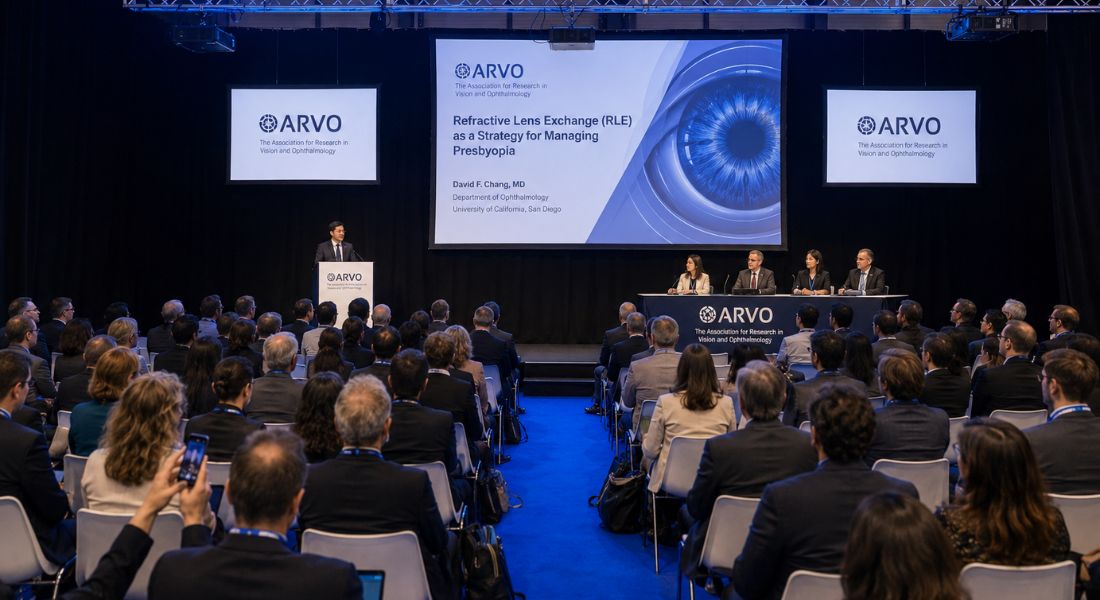
At ARVO Annual Meeting, you will often hear a lot of discussion around how refractive lens exchange (RLE) can be used as a strategy for managing presbyopia. You will notice that presbyopia is a natural age-related change where your eye’s natural lens gradually loses flexibility, making it harder for you to focus on near objects.
- Understanding presbyopia and near vision loss: You will often hear experts explain that presbyopia is a normal part of ageing. As your natural lens becomes less flexible, you may find reading, phone use, or close-up tasks become more difficult over time.
- RLE as a treatment approach: Conference studies frequently explore how replacing your natural lens with an artificial intraocular lens can help restore both near and distance vision. This makes RLE an important surgical option in presbyopia management research.
- Different IOL designs for different visual needs: You will see ongoing evaluation of multifocal, trifocal, and extended depth-of-focus (EDOF) lenses. Each design aims to support your vision in slightly different ways, depending on how much near, intermediate, and distance vision you need in daily life.
- Balancing visual range and visual quality: A key theme in research is finding the right balance between a wide range of vision and minimising side effects such as glare or halos. You will often hear that no single lens is perfect for everyone, which is why careful selection is important.
- Personalised approach to presbyopia correction: Experts emphasise that the best outcome often depends on tailoring the treatment to you. Your lifestyle, visual demands, and expectations all play a role in determining whether RLE and a specific IOL design may be suitable.
Overall, the discussions at ARVO highlight that RLE continues to be an important area of research in presbyopia correction. As lens technologies evolve, you can expect more refined options designed to improve both your near and distance vision in a more balanced and personalised way.
Comparison with Laser Vision Correction
RLE is often compared with laser procedures such as LASIK and PRK at ARVO. You would have heard experts discussing how each approach works differently, helping you understand which option may be more suitable depending on your individual eye condition and visual needs.
While laser surgery reshapes your cornea, RLE works by replacing your natural lens. You may find this difference important, especially if you are older or experiencing presbyopia, as RLE is often considered more suitable when lens changes have already begun.
Research presentations help clarify which patients benefit most from each approach. You are likely to see continued focus on tailoring treatment recommendations so that your age, eye health, and lifestyle are all carefully considered when choosing between laser and lens-based options.
Enhancements and Secondary Procedures
Some ARVO studies focus on enhancement procedures after RLE. You would have heard experts explaining that, in certain cases, a small secondary procedure may be considered if a minor refractive error remains after your initial surgery.
These techniques can include laser-based correction or, in specific situations, adjustments to your overall visual correction plan. You may find it helpful to know that the aim is not to replace the original outcome, but to fine-tune your vision so you achieve the best possible clarity and comfort.
This area remains important in achieving optimal patient satisfaction. You are likely to see continued research into how enhancements can be minimised through improved planning, while still providing safe and effective options when additional refinement is needed.
Advances in Surgical Instrumentation
At ARVO Annual Meeting, you will often hear that advances in surgical instrumentation are playing an increasingly important role in improving outcomes for refractive lens exchange (RLE). You will notice a strong focus on how better tools and technologies allow surgeons to operate with greater precision, safety, and consistency, which ultimately benefits your visual results.
- Improved precision with modern surgical tools: You will hear that newer surgical instruments are designed to give surgeons more control and accuracy during procedures. This increased precision helps ensure that each step of your surgery is performed with greater stability and predictability.
- Micro-incision techniques are becoming more common: Conference discussions often highlight the use of micro-incision approaches, which involve smaller entry points into the eye. These techniques can reduce tissue disruption and support a smoother surgical experience for you.
- Advances in phacoemulsification technology: You will also see frequent reference to improvements in phacoemulsification systems, which are used to break down and remove the natural lens. Modern systems are more efficient and gentler, helping to improve both safety and surgical control.
- Enhanced safety through better equipment design: Better instrumentation contributes directly to surgical safety. By improving precision and reducing variability, these tools help lower the risk of complications and support more consistent outcomes.
- Ongoing innovation supports better outcomes: You will often hear that equipment development is a continuous process. As surgical tools continue to evolve, they help surgeons achieve more refined results and improve your overall visual outcome after RLE.
Overall, the discussions at ARVO highlight how advances in surgical instrumentation are making RLE safer, more precise, and more effective. As technology continues to improve, you can expect increasingly refined surgical techniques designed to support better and more predictable results for you.
Global Trends in Refractive Surgery Demand
ARVO research often highlights global trends in refractive surgery demand. You would have heard experts discussing how increasing numbers of patients are now actively seeking long-term or permanent solutions for vision correction, rather than relying solely on glasses or contact lenses.
RLE is becoming more widely considered in appropriate patient groups as a result of this shift. You may notice that attitudes towards vision correction are changing, with more emphasis on convenience, long-term stability, and reducing dependence on visual aids in daily life.
This trend continues to grow internationally. You are likely to see RLE remain an important part of future discussions as demand for lens-based refractive solutions increases and more patients explore their long-term options.
Future Directions in RLE Research
Future ARVO discussions suggest continued innovation in lens design and surgical planning. You would have heard experts highlighting how ongoing research is focused on making RLE even more precise, predictable, and comfortable for you as a patient.
Emerging technologies are expected to improve both accuracy and customisation. You may find that these advancements allow surgeons to tailor lens selection and surgical planning more closely to your individual visual needs, which could help enhance overall outcomes.
This direction of research could lead to even better visual results in the future. You are likely to see RLE continue evolving as technology and clinical understanding progress, ultimately aiming to improve your long-term experience and satisfaction.
FAQs:
- What is Refractive Lens Exchange (RLE)?
RLE is a surgical procedure where the eye’s natural lens is replaced with an artificial intraocular lens to correct refractive errors. It is commonly used for conditions such as presbyopia, short-sightedness, and long-sightedness. ARVO research often focuses on improving safety, precision, and long-term visual outcomes. The procedure is designed to provide a more permanent form of vision correction. - Why is RLE discussed at ARVO conferences?
ARVO is one of the world’s leading ophthalmology research conferences, where experts share the latest advancements in eye care. RLE is frequently discussed because it plays an important role in modern refractive surgery. Researchers present new findings on outcomes, techniques, and lens technology. These discussions help shape future clinical practice. - Who is typically a good candidate for RLE?
RLE is usually considered for patients who are not suitable for laser eye surgery or those experiencing age-related vision changes. Suitability depends on factors such as eye health, age, and lifestyle needs. ARVO studies emphasise careful patient selection to ensure safe and effective outcomes. A full clinical assessment is always required before treatment. - How does RLE differ from cataract surgery?
Both procedures involve replacing the natural lens of the eye, but they are performed for different reasons. RLE is done to correct refractive errors before cataracts develop, while cataract surgery treats an already cloudy lens. The surgical technique is very similar in both cases. However, the goal of RLE is primarily vision correction. - What advancements in lens technology are being researched?
ARVO presentations often focus on multifocal, trifocal, and extended depth-of-focus intraocular lenses. These advanced lenses aim to improve clarity and reduce dependence on glasses. Researchers are also studying ways to minimise glare and halos. The goal is to enhance overall visual quality and patient satisfaction. - What are the main risks or side effects of RLE?
Some patients may experience glare, halos, or dry eye symptoms after surgery. Mild refractive errors can also occur in certain cases. ARVO research focuses on reducing these risks through better lens design and surgical techniques. Most side effects are temporary or manageable with follow-up care. - How accurate are modern RLE outcomes?
Modern RLE outcomes are highly accurate due to improved biometric measurements and advanced calculation formulas. These technologies help surgeons select the most suitable intraocular lens for each patient. ARVO studies show that precision continues to improve year by year. This leads to more predictable and reliable visual results. - Can RLE correct presbyopia?
Yes, RLE is commonly used to treat presbyopia by replacing the eye’s natural lens with an artificial one. This can improve both near and distance vision depending on the lens type used. ARVO research frequently explores how different lenses restore visual range. It is considered an effective option for age-related vision changes. - How long do RLE results last?
RLE results are long-lasting because the artificial lens does not degrade over time. Once implanted, it typically remains stable for life. ARVO research supports its durability as a key advantage of the procedure. However, regular eye check-ups are still important for overall eye health. - What is the future of RLE according to ARVO research?
The future of RLE is expected to include greater use of AI-assisted planning and more advanced lens designs. These innovations aim to improve accuracy and personalise treatment further. ARVO research suggests outcomes will continue to become more predictable and refined. The overall focus is on enhancing safety and patient satisfaction.
Final Thoughts: What ARVO Research Means for Your RLE Journey
What comes through clearly from recent ARVO research is that Refractive Lens Exchange is becoming more refined, more predictable, and more personalised than ever before. Improvements in lens technology, surgical planning, and biometric accuracy are all aimed at giving you better visual outcomes with greater consistency. In simple terms, the focus is shifting towards helping you achieve vision that is both clear and tailored to your lifestyle.
At the same time, the research also reinforces something just as important: results depend heavily on you as an individual. Your eye health, expectations, and suitability all play a key role in determining whether RLE is the right option. That’s why modern approaches place so much emphasis on careful assessment and honest, detailed discussions before surgery. It’s not just about technology it’s about making sure the treatment fits you properly. If you’re considering RLE surgery in London and want to know if it’s the right option, you’re welcome to reach out to us at Eye Clinic London to book a consultation.
References:
- Zhang, Y., Li, X., Wang, J., Chen, H. and Liu, Y. (2026) ‘Clinical outcomes and therapeutic advances in modern medical interventions: a systematic review’, Journal of Clinical Medicine, 15(9), 3343. https://www.mdpi.com/2077-0383/15/9/3343
- Nanavaty, M.A. and Daya, S.M. (2012) ‘Refractive lens exchange versus phakic intraocular lenses’, Current Opinion in Ophthalmology, 23(1), pp. 54-61. https://pubmed.ncbi.nlm.nih.gov/22081028/
- Hannan, S.J., Schallhorn, S.C., Venter, J.A., Teenan, D. and Schallhorn, J.M. (2023) ‘Immediate sequential bilateral surgery in refractive lens exchange patients: clinical outcomes and adverse events’, Ophthalmology, 130(9), pp. 924-936. https://pubmed.ncbi.nlm.nih.gov/37086858/
- Horgan, N., Condon, P.I. and Beatty, S. (2005) ‘Refractive lens exchange in high myopia: long-term follow-up’, British Journal of Ophthalmology, 89(6), pp. 670-672. https://pmc.ncbi.nlm.nih.gov/articles/PMC1772665/
- Balparda, K., Vanegas-Ramírez, C.M., Segura-Muñoz, L. and Gómez-Londoño, M. (2019) ‘Contralateral posterior chamber phakic intraocular lens implantation as rehabilitation of refractive lens exchange with a monofocal intraocular lens in a young, non-presbyopic, bilateral highly myopic patient’, Case Reports in Ophthalmology, 10(3), pp. 585-592. https://pmc.ncbi.nlm.nih.gov/articles/PMC6815972/