


How Artificial Intelligence Is Changing Eye Care?
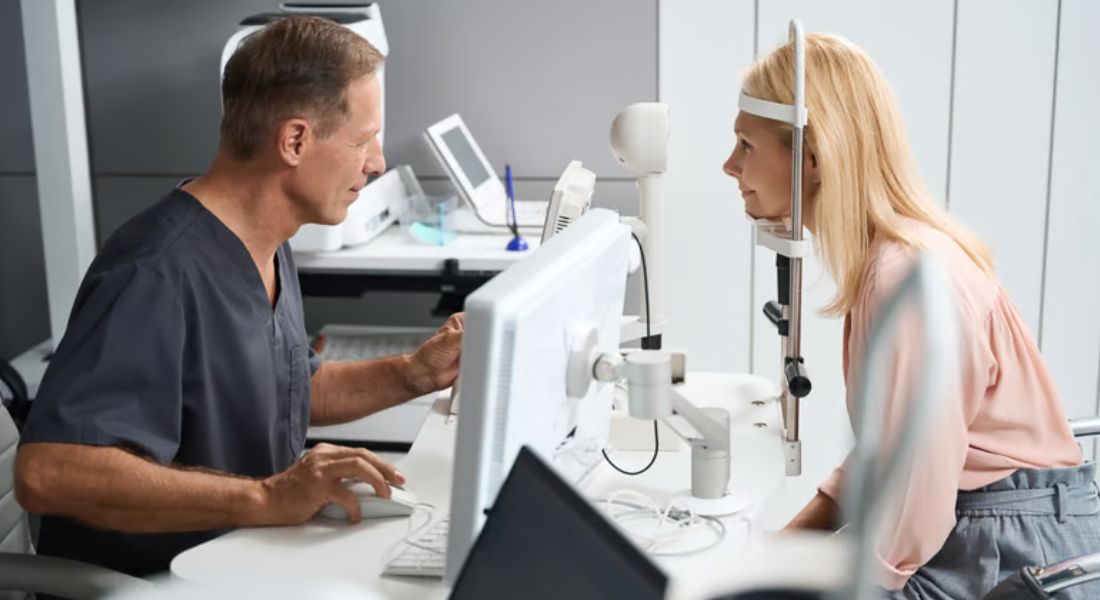
Artificial intelligence, often called AI, is becoming an increasingly important part of modern healthcare, and you are beginning to see its impact in eye care. Researchers and clinicians are exploring how this technology can improve how eye conditions are detected, monitored, and managed. You may benefit from earlier diagnosis and more personalised treatment as these systems continue to develop. This progress is opening new possibilities for improving patient care and outcomes.
Your eyes produce a large amount of complex medical information through retinal images, OCT scans, visual field tests, and other assessments. AI systems can analyse this information quickly and identify patterns that may be difficult to detect using traditional methods alone. You may not notice these subtle changes, but AI can assist specialists in recognising them earlier. This allows for more timely intervention and better management of eye conditions.
Although AI is not designed to replace ophthalmologists, you can think of it as a powerful support tool in clinical decision-making. It works alongside specialist expertise to improve accuracy and efficiency in diagnosing and monitoring eye diseases. You benefit when technology and human judgement are combined in a balanced way. This partnership has the potential to improve outcomes across many areas of eye care.
UK Guidance Note
In the UK, AI software used for diagnosis, screening, monitoring or treatment planning may be regulated as a medical device by the Medicines and Healthcare products Regulatory Agency. Availability varies between NHS and private services, and an AI-enabled tool may not be appropriate for every patient or clinical setting. Your results should be reviewed within a suitable clinical pathway by a qualified eye care professional.
How Artificial Intelligence Works in Eye Care
Artificial intelligence in eye care uses computer systems trained on large datasets of eye images and clinical information. In ophthalmology, AI algorithms are trained using thousands of eye scans, photographs, and clinical records. These systems learn to recognise patterns linked to different eye conditions over time. This allows them to support clinicians in identifying early or subtle signs of disease.
When your eye data is analysed, AI systems compare it with previously studied information to detect similarities and possible concerns. You may not notice any changes in your vision, but the system can highlight areas that need closer review. This can help your specialist focus on specific findings that may require further investigation. This may provide additional information for your clinician to consider when deciding whether further assessment is needed.
AI-supported tools are increasingly being studied and introduced in selected screening and clinical settings, although their availability and role vary between services. They can help clinicians make faster and more informed decisions while still relying on medical expertise. AI does not replace your doctor but works alongside them. This balance helps ensure your care remains accurate, safe and personalised.
Evidence Note
Evidence is strongest for selected image-based tasks, including the analysis of retinal photographs and OCT scans. Performance can vary according to image quality, the patient population, disease prevalence, the version of the technology and the clinical setting. High accuracy reported in a study does not mean that an AI tool will be correct for every patient.
AI and Earlier Detection of Eye Diseases
Many eye diseases develop gradually, and you may not notice any symptoms in the early stages. This can make early diagnosis more challenging, even though timely treatment is important for protecting your vision. You might feel your eyesight is normal while subtle changes are already taking place.
AI systems can analyse detailed eye images and detect small changes that may indicate the early stages of disease. You may not be aware of these changes, but the technology can highlight patterns that require closer attention. This allows your clinician to monitor your eye health more carefully over time.
Earlier diagnosis is particularly important for conditions where vision loss cannot be reversed once it occurs. Earlier identification may allow closer monitoring or treatment before further damage occurs, although AI findings still require appropriate clinical interpretation. This gives your specialist more opportunity to guide your care and support better long-term eye health.
Clinical Tip
Do not delay an eye assessment because an AI result appears reassuring. Seek urgent medical advice if you experience sudden loss or blurring of vision, a sudden increase in flashes or floaters, a dark curtain or shadow across your vision, or severe eye pain accompanied by nausea or reduced vision.
Artificial Intelligence in Glaucoma Detection
Glaucoma is one of the leading causes of irreversible blindness, and you may not notice symptoms until the condition has progressed. It affects the optic nerve and can develop slowly over time without obvious warning signs. This is why early detection is important for protecting your vision.
AI systems are being developed to analyse optic nerve photographs, OCT scans, and visual field results with a high level of detail. You may benefit from these tools as they can identify patterns linked with glaucoma that are not always easy to detect. These tools may help your specialist assess images and identify patterns that warrant closer clinical review or monitoring.
If you are exploring options for glaucoma treatment in London, your assessment may include optic nerve imaging, OCT scans and visual field testing. Where an appropriately validated AI-supported tool is available, it may provide additional information for your clinician to consider. Diagnosis, monitoring and treatment decisions should still be based on your complete clinical assessment.
AI and Retinal Disease Screening
Retinal conditions such as diabetic retinopathy, age-related macular degeneration, and retinal vascular diseases are major causes of vision problems, and you may not notice symptoms early on. Detecting these conditions at an early stage can make a meaningful difference to your treatment outcomes. You may benefit from regular screening even if your vision seems stable.
AI-powered systems can review retinal photographs and identify features linked with disease more efficiently. You may find that these systems help healthcare providers assess large numbers of patients in a shorter time. This allows those who need specialist care to be identified and prioritised more quickly.
| Area | Traditional Retinal Screening | AI-Assisted Retinal Screening |
| Image review | Images are assessed manually by eye care professionals | AI systems analyse retinal images and highlight possible abnormalities |
| Speed of assessment | May take longer when reviewing large numbers of scans | Can process large volumes of images efficiently |
| Early detection support | Depends on clinical review and available resources | May highlight disease-related features for clinical review |
| Screening access | Availability can vary between locations | May support wider access where validated systems, imaging equipment and suitable referral pathways are available |
| Clinical role | Healthcare professionals make the diagnosis and treatment decisions | AI supports clinicians but does not replace specialist judgement |
AI-assisted retinal grading is being evaluated for wider use, but its availability and role vary between services. In the UK, automated AI grading is not currently recommended for routine incorporation into the NHS Diabetic Eye Screening Programme, although the evidence continues to be reviewed. Any AI result should be interpreted within an established screening, clinical-review and referral pathway.
Improving Diabetic Eye Screening
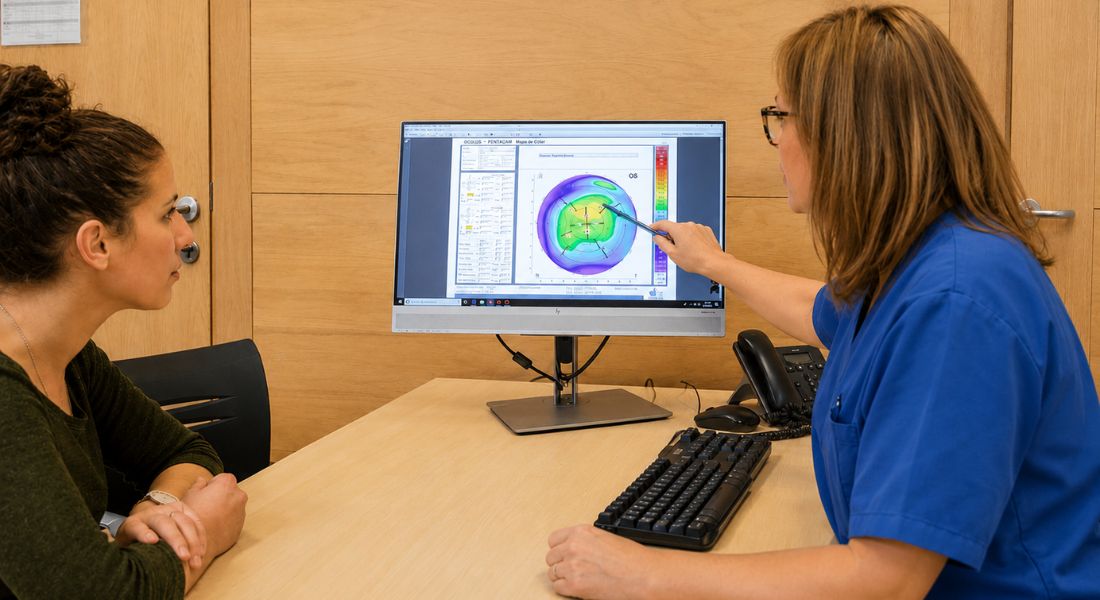
Diabetic retinopathy develops when diabetes affects the small blood vessels in your retina, and you may not notice symptoms in the early stages. This is why regular eye screening is important if you are living with diabetes. You may feel your vision is stable even when early changes are present.
AI can support diabetic eye screening by analysing retinal images and identifying signs that may need further assessment. You may benefit from this as it helps healthcare teams detect potential problems at an earlier stage. This allows your clinician to monitor your condition more closely and guide timely care.
By improving the speed and efficiency of screening, AI may help reduce delays in diagnosis for you and other patients. Earlier identification may support timely referral and assessment. Where clinically significant disease is confirmed, appropriate monitoring or treatment may help reduce the risk of avoidable diabetes-related sight loss.
AI and Optical Coherence Tomography (OCT)
OCT has transformed eye care by allowing your specialist to see detailed images of the retina and other structures inside your eye. These scans provide important information for diagnosing and monitoring many conditions. You may have this test as part of a routine or specialist eye examination.
However, OCT images can be complex and require careful interpretation by experienced clinicians. AI systems can support this process by analysing scans and identifying patterns linked with disease changes. You may benefit from this added layer of analysis, especially when changes are subtle.
Validated AI tools may support more consistent analysis of OCT images and help clinicians compare changes over time. Any highlighted changes still need to be interpreted alongside image quality, your symptoms and the rest of your clinical assessment. AI works alongside your specialist to support safe and informed clinical decisions.
Personalised Treatment Planning Using AI
One of the most promising uses of AI in eye care is personalised treatment planning, and you may benefit from care that is tailored to your individual needs. Every patient has different eye anatomy, medical history, and risk factors that can influence treatment decisions. This means your care plan should be based on your specific situation rather than a one-size-fits-all approach.
AI can analyse multiple sources of information, including imaging results, previous treatments, and your individual characteristics. Researchers are studying whether AI can combine imaging, clinical history and treatment-response data to support more individualised risk assessment and treatment planning. This supports more informed decision-making while keeping your clinical needs at the centre.
This personalised method may allow your doctor to provide more targeted and efficient care. Where appropriately validated, these tools may eventually help clinicians tailor monitoring and treatment decisions more closely to individual risk. AI supports your specialist, helping ensure your care remains accurate, safe, and tailored to you.
AI in Laser Eye Surgery Planning
Laser eye surgery relies on highly accurate measurements of your cornea, including its thickness, shape, and optical properties. Careful planning is essential to achieve safe and predictable outcomes. You may undergo detailed assessments before surgery to ensure the procedure is suitable for your eyes.
AI technology is being explored to analyse complex corneal measurements and support surgeons in planning treatment. You may benefit from this as it can identify patterns within your data that are not always obvious. This may provide surgeons with additional information when assessing suitability and planning treatment.
Future developments may make procedures such as LASIK and other refractive surgeries even more personalised for you. Your treatment could be tailored more closely to your individual eye characteristics. AI tools do not replace detailed pre-operative assessment, surgeon judgement or discussion of the procedure’s potential risks and limitations.
AI in Cataract Surgery
Cataract surgery is one of the most commonly performed eye procedures, and you may expect good visual outcomes when it is carefully planned. Accurate measurements of your eye and the selection of the right intraocular lens are essential. You usually undergo detailed assessments before surgery to guide these decisions.
AI systems are being explored to improve lens calculations and predict how your vision may be after surgery. You may benefit from this technology as it can analyse your individual eye measurements and previous data. This helps your surgeon make more precise and informed choices.
AI-based calculation methods may help surgeons refine intraocular-lens selection, although no calculation method can guarantee a particular visual outcome.
Your surgeon will consider these calculations alongside your eye measurements, visual priorities and clinical findings. AI supports your surgeon’s expertise to enhance safety, accuracy, and overall satisfaction.
AI in Childhood Eye Care
Children’s vision develops quickly, and you may not always notice early signs of eye problems. Conditions such as amblyopia, strabismus, and refractive errors can affect long-term vision if they are not identified early. This makes regular checks and early detection especially important for your child.
AI-based screening tools are being studied to help identify children who may need further assessment. Your child may benefit if these tools help highlight a potential concern and support timely referral. However, AI-based screening does not replace a complete assessment by an appropriately qualified eye care professional.
Screening tools may help identify children who require a full assessment, allowing confirmed problems to be managed at an appropriate stage. You can take action earlier with guidance from eye care professionals. This approach may support earlier assessment and treatment when a problem is confirmed.
AI and Remote Eye Screening
Teleophthalmology is making eye care more accessible by allowing some assessments to be carried out remotely. AI can support this process by helping analyse eye images and identifying changes that may need further clinical assessment.
- Remote eye assessments: Some eye checks can be carried out outside traditional clinics using digital images and collected health data. This can make screening more convenient and easier to access.
- AI-supported image analysis: AI tools can review eye images and highlight signs that may require further investigation. A healthcare professional can then decide whether a detailed examination is needed.
- Earlier identification of concerns: Remote screening may help identify potential eye problems sooner, even before you visit a specialist in person. Early assessment can support timely follow-up when appropriate.
- Improved access to specialists: People living in areas with limited eye care services may benefit from initial screening closer to home. Their results can still be reviewed by eye care professionals.
- Combination of technology and expertise: AI does not replace your eye specialist but works alongside clinical judgement. Combining remote screening with professional review can support safer and more accessible eye care.
AI and teleophthalmology are changing how some eye assessments are delivered. However, regular clinical examinations remain important because a complete eye assessment involves more than image analysis alone.
AI and Patient Monitoring
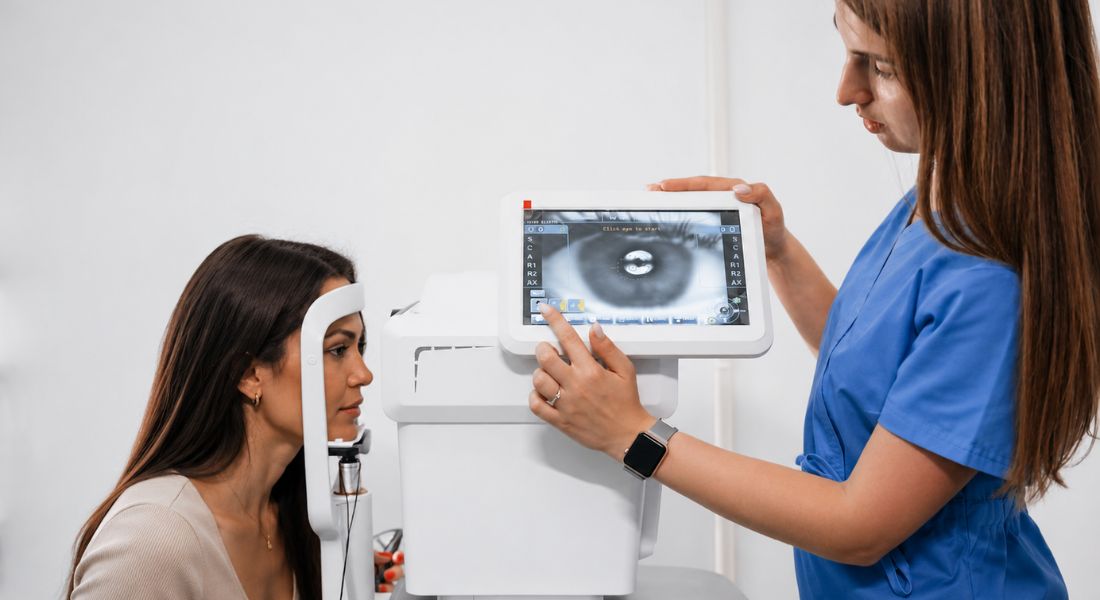
Many eye conditions require regular monitoring over time, and you may need follow-up visits to track changes in your vision. AI can support this process by comparing your previous test results with new ones. This helps identify patterns or changes that may indicate disease progression.
For example, AI systems can analyse multiple OCT scans and highlight small differences that could be important. You may not notice these changes yourself, but they can be significant for your eye health. This allows your specialist to assess your condition more accurately.
With this support, your doctor can create more personalised follow-up plans for you. You benefit from decisions that are based on detailed and consistent information. This approach helps ensure your treatment remains appropriate as your condition changes over time.
AI and Wearable Eye Technology
Researchers are exploring wearable devices that may collect information about eye-pressure patterns or other ocular signals outside conventional clinic visits. If appropriately validated, these devices could eventually provide additional information between appointments.
When combined with AI, wearable devices may help identify trends or changes in data collected over time. However, most wearable eye-monitoring technologies are still being studied and are not yet part of routine eye care.
Information collected by a wearable device would still need to be interpreted alongside your symptoms, examination findings and other clinical tests.
Challenges of Artificial Intelligence in Eye Care
Despite its potential benefits, AI also has important limitations that you should be aware of. These systems rely on large amounts of accurate and diverse data to work reliably across different patient groups. If the data is limited or unbalanced, the results may not fully reflect your individual situation.
There are also important concerns about patient privacy and how your data is stored and used. You may want reassurance that your personal health information is protected and handled securely. It is also essential that AI findings are carefully interpreted by trained healthcare professionals rather than used in isolation.
Careful regulation and ongoing research are needed to ensure AI is introduced safely into clinical practice. You benefit most when technology is used alongside expert medical judgement. This balanced approach helps ensure your care remains safe, accurate, and appropriate.
Why Eye Specialists Remain Essential
AI is designed to support your doctor, not replace them, and you still rely on specialist expertise for your care. Ophthalmologists consider many important factors, including your symptoms, medical history, lifestyle, and personal needs. This broader understanding ensures that your treatment is appropriate and tailored to you.
While AI can analyse patterns and provide useful insights, it cannot fully interpret your individual experience. You benefit from clinical judgement that takes into account details beyond data alone. This human perspective is essential for accurate diagnosis and effective treatment planning.
The future of eye care will involve a balance between advanced technology and professional expertise. You are likely to receive care that combines both precision and personal understanding. This collaboration helps ensure your eye health is managed safely and effectively.
AI and Improving Access to Eye Care
One major advantage of AI is its potential to improve your access to eye care services, especially when availability is limited. Automated screening tools can help identify whether you may need specialist assessment more quickly. This means you may be guided toward appropriate care without unnecessary delays.
This approach can be particularly helpful if you live in areas with fewer eye specialists or longer waiting times. You may benefit from earlier screening closer to home or through community-based services. This can reduce the need for multiple visits before seeing a specialist.
By improving efficiency, AI may help more patients receive timely care and attention. AI-supported screening may help identify people who require further assessment, although access, image quality and referral pathways influence its effectiveness. This may help reduce the risk of preventable vision loss and support better long-term eye health.
Future Research in AI Eye Care
Research into artificial intelligence and eye care is continuing to grow, and you may benefit from ongoing advances in this field. Scientists are exploring how AI can support diagnosis, treatment planning, and long-term monitoring. These developments aim to improve how your eye health is assessed and managed.
Future systems may combine information from your eye scans, genetics, lifestyle factors, and medical history. You may receive more detailed and personalised assessments as a result. This allows your care to be better tailored to your individual needs and risks.
As research progresses, AI may become a routine part of your eye examinations. You are likely to see more technology integrated into everyday clinical care. This could lead to earlier detection, more precise treatments, and improved long-term outcomes for your vision.
Benefits of AI for Patients
For you as a patient, AI offers several potential advantages in eye care, particularly in supporting earlier diagnosis, improved monitoring, and more personalised treatment decisions. By analysing complex clinical information quickly, AI may help your specialist identify concerns sooner and plan your care more efficiently. This can be especially helpful when subtle changes need close attention.
AI may also make your healthcare experience more convenient. You could benefit from remote monitoring, faster screening processes, and fewer delays in receiving results. This may reduce the need for repeated clinic visits while still ensuring your eye health is carefully assessed.
It is important to understand that AI supports, rather than replaces, medical professionals. You continue to benefit from the expertise and judgement of your eye specialist. This combination of technology and clinical care helps ensure your treatment remains safe, accurate, and tailored to your needs.
How AI May Support Earlier Detection and Reduce Avoidable Vision Loss
AI may support earlier identification of selected eye conditions by highlighting abnormalities on scans for clinical review. However, its value depends on the use of appropriately validated tools, good-quality images, suitable patient populations and effective referral pathways. AI does not replace routine eye examinations or urgent assessment when you develop new symptoms.
Key Takeaways
- Artificial intelligence can help analyse retinal images, OCT scans, visual field results and other eye-health data.
- AI may support earlier detection of conditions such as glaucoma, diabetic retinopathy and retinal disease.
- AI-assisted tools can help clinicians monitor changes over time and identify patients who may need further assessment.
- Some AI applications in cataract surgery, remote screening and treatment planning are already developing, while others remain under research.
- AI does not replace ophthalmologists and should always be used alongside clinical judgement and a complete eye examination.
- The safety and reliability of AI depend on accurate data, proper validation, secure handling of patient information and professional oversight.
- Future AI systems may support more personalised monitoring and treatment, but they cannot guarantee a diagnosis or treatment outcome.
Myth vs Fact
| Myth | Fact |
| AI will replace eye specialists in the future. | AI is designed to support ophthalmologists, not replace them. Your eye specialist still uses clinical judgement, experience and your individual circumstances to make treatment decisions. |
| AI can diagnose every eye condition without human input. | AI can identify patterns in scans and images, but results still need to be reviewed and interpreted by trained eye care professionals. |
| If AI analyses my eye scan, I do not need regular eye examinations. | AI is an additional support tool and does not replace routine eye examinations or specialist monitoring of your eye health. |
| AI can detect every eye disease at an early stage. | AI may help identify early signs of some conditions, but it has limitations and cannot detect every eye problem. |
| AI technology is only useful for detecting diseases. | AI is also being explored for treatment planning, monitoring disease progression, improving screening and supporting personalised eye care. |
| AI-assisted eye care means my personal health data is not safe. | Healthcare organisations must apply relevant data-protection, privacy and information-security requirements when AI systems process patient information. However, no digital system is completely free from privacy or security risk. |
| AI makes eye care completely automated. | AI works alongside eye specialists by providing additional information while doctors remain responsible for diagnosis and treatment decisions. |
| AI is only useful in advanced hospitals and research centres. | AI may help improve access to eye care by supporting remote screening and helping identify patients who may need specialist assessment. |
| AI results are always perfect and cannot make mistakes. | AI systems can make errors, especially if trained on limited data, which is why specialist review remains essential. |
| AI will reduce the need for human expertise in eye surgery. | AI may improve surgical planning and precision, but experienced surgeons remain essential for safe and effective treatment. |
FAQs
- How is artificial intelligence used in eye care?
Artificial intelligence is used in eye care to analyse scans, images, and clinical information to help detect patterns linked with eye conditions. It supports ophthalmologists by providing additional insights that can improve diagnosis, monitoring and treatment planning. - Can AI detect eye diseases earlier?
AI may help identify early signs of eye diseases before noticeable symptoms appear. By analysing detailed images such as retinal photographs and OCT scans, AI can highlight changes that may require further assessment by an eye specialist. - Can artificial intelligence replace an eye doctor?
No. AI is designed to support eye specialists rather than replace them. Ophthalmologists use their medical knowledge, experience, and understanding of each patient’s individual circumstances to make final clinical decisions. - How can AI help with glaucoma detection?
AI can analyse optic nerve images, OCT scans, and visual field results to identify patterns associated with glaucoma. This may help specialists detect changes earlier and support the interpretation of changes over time when used alongside full clinical assessment. - Can AI improve diabetic eye screening?
AI can support diabetic eye screening by analysing retinal images and identifying possible signs of diabetic retinopathy. This may help healthcare teams identify patients who need further assessment or specialist care sooner. - How does AI improve personalised eye treatment?
AI can analyse information such as eye scans, medical history, and previous treatment responses to help specialists understand individual risks and needs. These approaches are being studied as possible ways to support more individualised monitoring and treatment decisions. - Is AI used in laser eye surgery and cataract surgery?
AI is being explored in procedures such as laser eye surgery and cataract surgery to support measurements, calculations and surgical planning. It may help analyse eye measurements and support surgeons when selecting treatment approaches suited to each patient. - What are the limitations of artificial intelligence in eye care?
AI depends on accurate and diverse data to provide reliable results. It also requires careful regulation, secure handling of patient information, and interpretation by trained healthcare professionals to ensure safe use. - Can AI help people access eye care more easily?
AI may improve access to eye care by supporting remote screening and helping identify patients who need specialist assessment. This can be particularly useful in areas where access to eye specialists may be limited. - What is the future of artificial intelligence in eye care?
The future of AI in eye care may include improved disease prediction, remote monitoring, wearable technology, and more personalised treatment approaches. Future clinical use will depend on appropriate validation, regulation, professional oversight and evidence that AI tools benefit patients in real-world settings.
Final Thoughts: The Future of Artificial Intelligence in Eye Care
Artificial intelligence is transforming modern eye care by supporting earlier diagnosis, improved monitoring, and more personalised treatment planning. Although AI can analyse complex eye data and help identify patterns that may not be easily detected, it is designed to work alongside ophthalmologists rather than replace specialist expertise. The combination of advanced technology and clinical judgement helps ensure your eye care remains safe, accurate, and tailored to your individual needs.
As AI continues to advance, it may play an increasing role in areas such as disease screening, OCT analysis, surgical planning, and remote eye assessments. These developments have the potential to improve access to care and support better long-term vision outcomes. If you would like to explore the latest diagnostic and treatment options, book a consultation with us at the the Eye Clinic London.
References
- Hashemian, H. et al. (2024) ‘Application of artificial intelligence in ophthalmology: an updated comprehensive review’, Journal of Ophthalmic and Vision Research, 19(3), pp. 354–367. Available at: https://pubmed.ncbi.nlm.nih.gov/39359529/
- De Fauw, J. et al. (2018) ‘Clinically applicable deep learning for diagnosis and referral in retinal disease’, Nature Medicine, 24(9), pp. 1342–1350. Available at: https://pubmed.ncbi.nlm.nih.gov/30104768/
- Abràmoff, M.D., Lavin, P.T., Birch, M., Shah, N. and Folk, J.C. (2018) ‘Pivotal trial of an autonomous AI-based diagnostic system for detection of diabetic retinopathy in primary care offices’, npj Digital Medicine, 1, article 39. Available at: https://pmc.ncbi.nlm.nih.gov/articles/PMC6550188/
- Shi, N.-N., Li, J., Liu, G.-H. and Cao, M.-F. (2024) ‘Artificial intelligence for the detection of glaucoma with SD-OCT images: a systematic review and meta-analysis’, International Journal of Ophthalmology, 17(3), pp. 408–419. Available at: https://pmc.ncbi.nlm.nih.gov/articles/PMC11074164/
- Akpinar, M.H., Sengur, A., Faust, O., Tong, L., Molinari, F. and Acharya, U.R. (2024) ‘Artificial intelligence in retinal screening using OCT images: a review of the last decade (2013–2023)’, Computer Methods and Programs in Biomedicine, 254, article 108253. Available at: https://pubmed.ncbi.nlm.nih.gov/38861878/