


How Artificial Intelligence Is Shaping the Future of LASIK Surgery
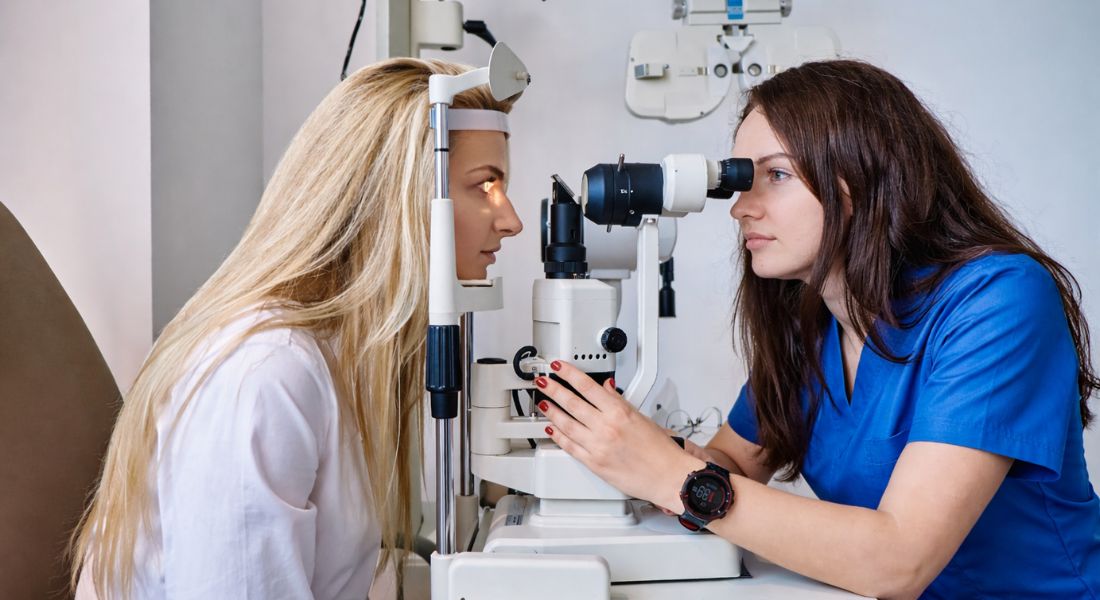
Artificial intelligence is becoming an increasingly important topic in ophthalmology, and LASIK surgery is part of this wider development. At international eye meetings, specialists are discussing how AI may support areas such as diagnostics, patient screening, surgical planning, outcome prediction, and long-term follow-up for you as a patient.
For you, this does not mean that a robot is performing LASIK surgery. Instead, AI refers to computer systems that help your surgeon analyse complex eye data more efficiently and consistently. This can improve how information from scans and tests is reviewed and interpreted.
Modern LASIK already depends on detailed imaging, corneal mapping, and precise measurements to guide treatment planning. AI builds on these tools by helping identify patterns, assess risk factors, and support more personalised decision-making for individual patients like you.
However, AI does not replace your surgeon’s clinical judgement. Experienced surgeons remain essential for interpreting results, considering your overall eye health, and making final treatment decisions. The future of LASIK is therefore a combination of advanced technology and skilled human expertise working together for your safety and visual outcomes.
Why AI Is Being Discussed in LASIK
LASIK is a highly precise procedure that requires careful assessment of several factors, including your corneal shape, prescription, tear film quality, pupil size, optical performance, and overall eye health. These details are essential in determining whether you are suitable for surgery and what type of correction is appropriate for you.
Artificial intelligence is being explored in this field because it can analyse large volumes of complex eye data and detect patterns that may not always be obvious during manual review. This can help improve the consistency and efficiency of interpreting diagnostic measurements in your assessment.
A 2025 review has noted that AI is increasingly being integrated into refractive surgery due to its reliance on imaging and structured clinical decision-making. In this context, AI is seen as a supportive tool that may enhance screening and planning, while still working alongside the judgement of experienced surgeons.
AI in Pre-Surgery Screening
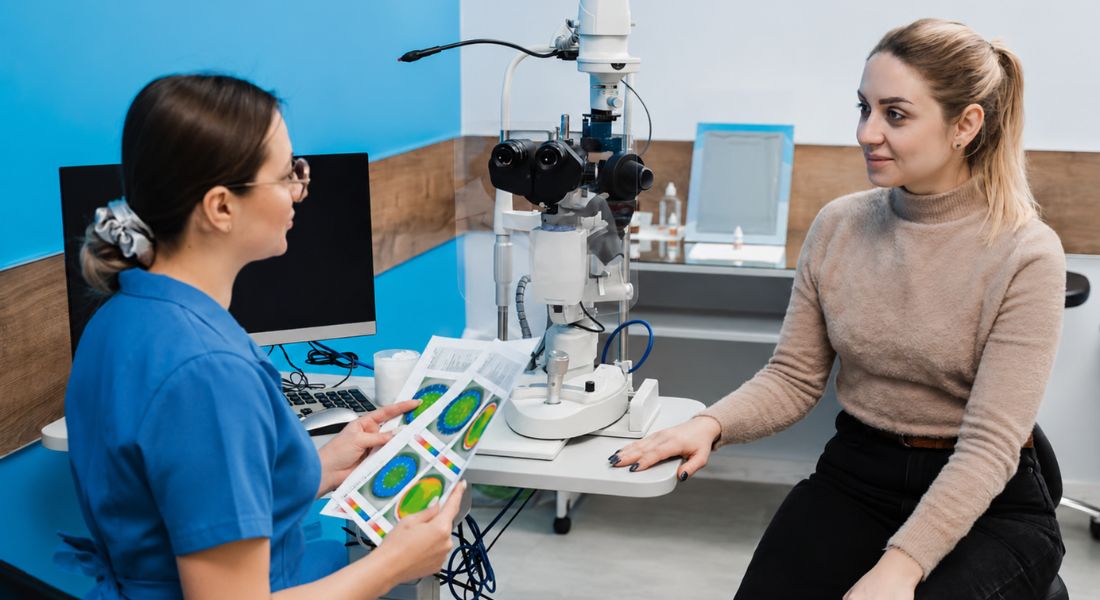
Before LASIK, the most important question is not simply whether your prescription can be corrected, but whether LASIK is safe and suitable for your eyes. This involves a detailed assessment of corneal structure, tear film quality, and overall ocular health.
Artificial intelligence may support this process by helping to review corneal scans, topography, tomography, wavefront data, and other diagnostic measurements. It can process large amounts of information and assist in identifying patterns across multiple test results.
In addition, AI may contribute to risk assessment by comparing an individual patient’s data with large clinical datasets. This could help highlight cases that require extra caution, additional testing, or consideration of alternative treatment options.
Detecting Keratoconus Risk
Keratoconus is one of the most important conditions that must be ruled out before LASIK surgery for you. It causes the cornea to become thinner and progressively more irregular in shape, which can make laser reshaping unsafe and increase the risk of poor visual outcomes.
Artificial intelligence is being studied as a tool for detecting keratoconus because it can analyse corneal images and identify subtle structural patterns that may not always be obvious in early stages. A review on AI in keratoconus detection suggests that AI-based analysis of corneal imaging may improve identification of early disease and reduce the chance of it being missed.
For you as a LASIK patient, this is particularly important because accurate screening is the foundation of safe surgery. By supporting earlier and more consistent detection of corneal abnormalities, AI may help improve patient selection and reduce surgical risk.
Machine Learning and Corneal Shape
Machine learning is a branch of artificial intelligence that can learn patterns from large sets of data. In refractive surgery, it may be used to analyse your corneal shape, thickness, curvature, and biomechanical properties in a more detailed and systematic way.
A 2025 study has explored machine learning models for identifying keratoconus using corneal topography and biomechanical data. This type of research shows how AI systems can combine multiple measurements to improve pattern recognition in complex cases.
For LASIK screening, this approach may be particularly useful for you in borderline or early cases where changes are subtle and not always easy to detect with standard interpretation alone. By enhancing sensitivity in data analysis, machine learning may help support safer and more accurate patient selection in the future.
AI and Corneal Tomography
Corneal tomography provides you with a three-dimensional view of the cornea and is already an essential part of LASIK screening. It can reveal structural details that may not be detected through a standard eye examination, helping your surgeon assess corneal health more accurately.
Artificial intelligence may assist in interpreting your tomography scans by identifying suspicious patterns, comparing the front and back surfaces of the cornea, and flagging potential areas of risk. This can help support more consistent and detailed analysis of complex scan data.
A diagnostic study published in JAMA Ophthalmology found that a deep learning model used for refractive surgery candidate screening achieved strong accuracy in assessing corneal tomography. For you as a patient, this suggests that AI could act as an additional layer of support in improving safety and decision-making during LASIK assessment.
AI in Corneal Topography Interpretation
Corneal topography maps the surface shape of your cornea and is an important part of LASIK screening. It helps your surgeon assess whether your cornea has a regular shape that is suitable for safe laser correction.
AI-supported interpretation of topography scans may help detect subtle irregularities that can be difficult to identify in the early stages of corneal disease. It may also help improve consistency by standardising how scan results are analysed across different clinics and practitioners.
However, this does not replace your specialist. Instead, AI acts as a supportive tool by providing additional information for the clinician to review, helping them make a more informed and carefully considered decision before recommending LASIK.
AI and Epithelial Thickness Mapping
AI is increasingly being explored in the analysis of epithelial thickness mapping, which measures your cornea’s outermost layer. This layer can sometimes compensate for or mask subtle irregularities in the underlying corneal structure, so mapping it gives your surgeon a more complete understanding of corneal health. When combined with other diagnostic tools such as corneal topography and tomography, epithelial mapping adds an extra layer of detail that can be especially useful in borderline or unclear cases.
- More detailed corneal assessment: Epithelial thickness data helps reveal patterns that may not be visible through standard imaging alone, improving overall diagnostic insight for your LASIK evaluation.
- Better interpretation of borderline scans: AI systems may assist in comparing epithelial maps with other corneal measurements, helping highlight subtle inconsistencies that could be clinically important in your case.
- Improved LASIK screening accuracy: By combining multiple imaging sources, your clinician may be better able to identify whether you are suitable for LASIK or whether an alternative approach would be safer.
- More integrated diagnostic evaluation: The trend in refractive surgery is moving towards combining several layers of corneal data into a single, more comprehensive assessment framework.
This development supports a more cautious and structured approach to your LASIK planning, where decisions are based on multiple forms of evidence rather than a single scan. It may help improve safety by identifying subtle corneal abnormalities earlier and ensuring that only appropriately selected patients are offered corneal laser surgery.
Predicting LASIK Outcomes
One of the emerging applications of artificial intelligence in LASIK surgery is outcome prediction. AI systems may be able to estimate how you are likely to respond to treatment by analysing factors such as your eye measurements, prescription strength, age, corneal shape, and large sets of previous surgical outcome data.
This type of analysis could help your surgeon provide more personalised and realistic expectations before surgery. It may also assist in identifying patients who have a higher likelihood of needing an enhancement procedure or those who may not be ideal candidates for LASIK.
By improving pre-operative prediction, AI has the potential to support more informed decision-making for you as a patient. This can help both you and your surgeon approach treatment planning with greater clarity, accuracy, and confidence before proceeding with surgery.
AI and Personalised Treatment Planning

LASIK planning is becoming increasingly personalised for you, moving beyond simply correcting a glasses prescription. Modern treatment decisions may take into account your corneal shape, higher-order aberrations, pupil size, optical quality, and individual lifestyle needs.
A 2025 review on AI in refractive surgery highlights the growing role of artificial intelligence in laser vision correction and its potential to support more individualised treatment planning. By analysing multiple layers of clinical data, AI may help refine how these factors are combined during your pre-surgical assessment.
This is particularly important for you because two people with the same prescription can still have very different eye characteristics and visual requirements. As a result, you may benefit from a different surgical approach compared with someone else, even if your basic refractive error appears similar.
AI and Ray-Tracing LASIK
Ray-tracing LASIK is a newer approach to surgical planning that models how light travels through your entire optical system. Instead of focusing only on your glasses prescription, it uses detailed optical measurements to help create a more personalised treatment plan for you.
Research in 2025 has evaluated ray-tracing guided LASIK and compared outcomes in terms of refractive accuracy and visual quality. These studies highlight growing interest in more advanced, data-driven methods of planning laser vision correction.
Artificial intelligence may further support this process by helping to analyse and interpret complex optical data more efficiently for you. However, your surgeon’s oversight remains essential to ensure that all findings are correctly interpreted and that treatment decisions are appropriate for your individual eyes.
AI and Visual Quality
LASIK success is not only measured by how well you can read an eye chart. In real life, you are more concerned with how your vision performs in everyday situations such as night driving, screen use, reading comfort, glare, haloes, contrast sensitivity, and whether your vision feels natural and stable.
Artificial intelligence may help researchers and clinicians study patterns linked with your visual quality after surgery. By analysing large datasets of patient outcomes, AI could identify which pre-operative factors are associated with a higher chance of symptoms like glare or reduced night vision, and which factors are linked with better overall visual comfort.
This information may also support your surgeon in refining treatment planning so that the risk of unwanted visual effects is reduced, not just the refractive error corrected. In this way, future LASIK care may place even greater emphasis on your real-world visual performance and overall patient experience, alongside standard clinical test results.
AI and Dry Eye Risk
Dry eye is one of the most common concerns for you after LASIK and can significantly affect comfort during healing as well as your overall satisfaction with vision. For this reason, careful assessment of your ocular surface is an important part of pre-surgery screening.
Artificial intelligence may help identify patients like you who are at higher risk of dryness by analysing tear film tests, ocular surface findings, contact lens history, and symptom patterns. By combining multiple data points, AI systems may be able to highlight early or subtle signs that dryness could become an issue.
This information could allow your surgeon to treat dry eye before surgery, optimise your ocular surface, or in some cases recommend an alternative procedure. It may also help improve aftercare by identifying patients who need closer follow-up, making comfort and recovery a more predictable part of your LASIK outcomes.
AI and Workflow in Refractive Clinics
Artificial intelligence may also play an important role in improving workflow within your refractive and LASIK clinic. It can assist in organising large volumes of diagnostic data, flagging missing or incomplete measurements, summarising scan results, and supporting more structured clinical decision-making for you.
A 2025 review in CRSToday described how AI and digital tools are transforming preoperative planning in cataract and refractive surgery by improving accuracy, efficiency, workflow management, and patient-facing technologies. This highlights how AI is increasingly being integrated into everyday clinical processes, not just advanced research applications.
By streamlining administrative and diagnostic tasks, AI may help make your consultation more efficient and better organised. This can allow your surgeon to spend more time focusing on your individual needs, answering your questions, and making personalised treatment decisions based on a complete and well-structured set of clinical information.
AI as a Second Opinion Tool
Artificial intelligence may eventually function as a “second-check” system during your LASIK assessment. It could help flag unusual corneal patterns, inconsistent measurements, or potential risk factors that may require further review by your clinician.
This type of support can be useful for you because refractive surgery decisions often depend on many small but important details across multiple scans and tests. A second layer of automated analysis may help reduce the chance of overlooking subtle abnormalities and improve overall consistency in screening.
However, AI should not be viewed as replacing your surgeon or making independent decisions. The final responsibility for determining whether LASIK is safe and appropriate always remains with your surgeon, who must interpret AI output within your full clinical context.
AI and Patient Education

Artificial intelligence may also play an important role in improving how you understand LASIK. Patient-facing tools could help explain scan results, treatment options, recovery processes, and potential risks in simpler and more accessible language for you.
The ARVO community has highlighted that AI research in eye care is increasingly influencing clinical decision-making, workflow design, and patient education tools that support more personalised care planning. This reflects a broader shift toward making complex medical information easier for you to interpret and engage with.
By improving your understanding, these tools may help you feel more informed and confident when discussing your options with a surgeon. Better education can also encourage more meaningful questions and support shared decision-making throughout your LASIK journey.
AI and Long-Term Follow-Up
After your LASIK surgery, follow-up appointments are important to monitor your healing, vision stability, dryness, and any ongoing symptoms. These reviews help ensure that your recovery is progressing as expected and allow any concerns to be addressed early for you.
Artificial intelligence may support your long-term follow-up by comparing patient results over time and identifying changes that could need closer attention. This can be especially useful in busy clinics, where large numbers of patients are being monitored and data needs to be reviewed efficiently.
By organising your information and highlighting cases that may require further review, AI could help make follow-up care more structured and responsive. The goal is not to replace your clinical review, but to support it, ensuring you continue to receive appropriate care throughout your recovery journey.
AI and Safety Standards
AI is being explored as a supportive tool in LASIK screening and surgical planning, particularly in areas such as risk detection, data interpretation, and consistency of preoperative assessment. By analysing large datasets of corneal measurements and patient outcomes, AI systems may help highlight patterns that could indicate higher surgical risk or borderline suitability for you. This has the potential to make screening more structured and less variable between different clinicians and clinics.
- Improved screening consistency: AI may help standardise how your corneal data and diagnostic results are interpreted, reducing variability in decision-making between different practitioners.
- Identification of subtle risk patterns: Machine learning systems can sometimes detect complex or early warning signs in corneal shape, thickness, or biomechanics that may not be immediately obvious during routine analysis of your eyes.
- Support for reviewing complex cases: In challenging or borderline cases, AI tools may assist your surgeon by providing additional data-driven insights to complement clinical judgement.
However, the effectiveness of AI in safety-critical applications like LASIK depends heavily on how these systems are developed, tested, and regulated. They require high-quality training data, rigorous validation across different populations, and clear communication of their limitations. A model that performs well in one clinical environment may not necessarily produce the same accuracy or reliability for you in another.
The Limits of AI in LASIK
Artificial intelligence has clear potential in LASIK planning and assessment, but it also has important limitations for you. It cannot fully understand your concerns, expectations, or personal circumstances in the way an experienced surgeon can during a consultation.
AI systems are also dependent on the quality of the data they are trained on. If the data is incomplete, poor quality, biased, or not representative of a specific patient group, the outputs may be less reliable for your situation. This means AI results always need careful interpretation rather than automatic acceptance.
For this reason, your surgeon’s clinical judgement remains central to safe and effective LASIK decision-making. The most reliable approach is not AI replacing doctors, but AI acting as a supportive tool that helps skilled clinicians make better-informed and more consistent decisions for you.Top of Form
What AI Means for Patients Considering LASIK
For patients, artificial intelligence may make LASIK assessment more detailed, personalised, and data-driven. It may support surgeons in screening candidates more carefully, improving outcome prediction, and explaining treatment options in a clearer and more structured way.
However, if you are considering LASIK surgery in London, or anywhere else, the most important factor is still the quality of clinical care and judgement. Clinics may use advanced technology, but it should always be applied to support careful assessment rather than replace a thorough human evaluation.
Good LASIK care should continue to include detailed eye scans, proper dry eye assessment, honest counselling about risks and benefits, and realistic expectations about outcomes. AI may enhance the process, but safe and effective treatment still depends on experienced clinicians making the final decision in the context of each individual patient.
FAQs:
- Can artificial intelligence perform LASIK surgery on its own?
No. Artificial intelligence does not perform LASIK surgery independently. AI is mainly used to help analyse diagnostic data, support screening, assist with treatment planning, and improve clinical decision-making. Your surgeon still performs the procedure and makes all final treatment decisions. - How is AI used during LASIK assessment?
AI may help analyse corneal scans, topography, tomography, wavefront measurements, tear film data, and other diagnostic information. This can support more detailed and consistent screening before surgery. - Can AI improve LASIK safety?
AI has the potential to improve LASIK safety by helping detect subtle risk factors, identifying irregular corneal patterns, and supporting more structured patient screening. However, safety still depends heavily on the experience and judgement of the surgeon reviewing the results. - Can AI detect keratoconus before LASIK?
AI is increasingly being studied for early keratoconus detection. By analysing detailed corneal imaging and biomechanical data, AI systems may help identify subtle abnormalities that could increase the risk of complications after LASIK. - Will AI replace LASIK surgeons in the future?
No. AI is designed to support surgeons rather than replace them. LASIK decisions involve clinical judgement, patient expectations, lifestyle considerations, and individual eye health factors that still require human expertise. - Can AI predict LASIK results?
AI may help predict LASIK outcomes by analysing large amounts of patient and surgical data. This could improve personalised treatment planning and help surgeons provide more realistic expectations about vision results and recovery. - How can AI help with personalised LASIK treatment?
AI may support personalised treatment planning by analysing multiple factors such as corneal shape, prescription strength, optical quality, pupil size, and higher-order aberrations. This can help tailor treatment more specifically to your eyes and visual needs. - Can AI help reduce dry eye problems after LASIK?
AI may help identify patients who are at higher risk of dry eye symptoms after surgery by analysing tear film tests, ocular surface measurements, and symptom history. This could support earlier treatment and more careful surgical planning. - Is AI currently used in all LASIK clinics?
No. AI integration varies between clinics and technologies. Some clinics may already use AI-supported diagnostic systems or imaging software, while others rely mainly on traditional clinical assessment methods. - What is the future of AI in LASIK surgery?
The future of AI in LASIK is likely to focus on improved screening, earlier risk detection, personalised treatment planning, workflow efficiency, and long-term outcome analysis. However, experienced surgeons will remain central to safe and effective patient care.
Final Thoughts: The Future of AI and Human Expertise in LASIK Care
Artificial intelligence is likely to become an increasingly valuable part of LASIK surgery in the years ahead. From improving corneal screening and detecting subtle risk patterns to supporting personalised treatment planning and long-term follow-up, AI has the potential to make LASIK assessments more detailed, data-driven, and consistent for you as a patient. As imaging technology and machine learning continue to evolve, AI may also help surgeons better predict outcomes, improve visual quality analysis, and identify patients who may require additional care or alternative treatment options.
However, even with these technological advances, safe and effective LASIK surgery will still depend on experienced clinical judgement, careful patient selection, and personalised decision-making. AI can support the process, but it cannot replace the expertise of a skilled surgeon who understands your individual eye health, lifestyle needs, expectations, and overall suitability for treatment. If you’re exploring whether Lasik surgery in London could benefit you, get in touch with us at Eye Clinic London to schedule your consultation.
References:
- Ting, D.S.W., Pasquale, L.R., Peng, L., Campbell, J.P., Lee, A.Y., Raman, R., Tan, G.S.W., Schmetterer, L., Keane, P.A. and Wong, T.Y. (2019) Artificial intelligence and deep learning in ophthalmology, British Journal of Ophthalmology, 103(2), pp. 167–175. Available at: https://pubmed.ncbi.nlm.nih.gov/30361278/
- Rocha, K.M., Ferreira-Mendes, J., Silva, K.M., Ambrósio, R. and Krueger, R.R. (2024) Advances in corneal imaging and biomechanical assessment for refractive surgery screening, Clinical Ophthalmology, 18, pp. 2145–2158. Available at: https://pubmed.ncbi.nlm.nih.gov/38965655/
- Belin, M.W. and Khachikian, S.S. (2023) Corneal tomography and epithelial thickness mapping in refractive surgery evaluation, Journal of Ophthalmology, 2023, Article ID 10418018, pp. 1–12. Available at: https://pmc.ncbi.nlm.nih.gov/articles/PMC10418018/
- Reinstein, D.Z., Archer, T.J. and Gobbe, M. (2024) Epithelial mapping and modern LASIK screening technologies, Therapeutic Advances in Ophthalmology, 16, pp. 1–15. Available at: https://pmc.ncbi.nlm.nih.gov/articles/PMC10907411/
- Kanellopoulos, A.J. and Asimellis, G. (2026) Ray-tracing and AI-supported imaging systems in customised LASIK planning, Journal of Optometry, 19(2), pp. 100–112. Available at: https://www.sciencedirect.com/science/article/pii/S1572100026001250