


Latest Research on Artificial Intelligence in Glaucoma Diagnosis

Artificial intelligence (AI) is rapidly changing the way many medical conditions are detected and managed, and glaucoma is one of the areas seeing significant advances. If you are concerned about protecting your vision, you may be interested to know that AI is helping researchers develop new ways to identify glaucoma earlier, when treatment is often most effective.
Glaucoma is often called the “silent thief of sight” because it can progress without obvious symptoms in its early stages. You may not notice any changes in your vision until permanent damage has already occurred, which is why early diagnosis and regular eye examinations are so important.
Traditionally, glaucoma is diagnosed using clinical examinations, imaging scans, and visual field tests. However, some of the earliest signs can be subtle, making them difficult to detect. AI is now being trained to analyse complex eye images quickly and accurately, helping clinicians identify patterns that might otherwise be overlooked.
Understanding Glaucoma Diagnosis
Glaucoma diagnosis involves a series of tests that help your eye specialist assess the health of your eyes and identify any early signs of damage. If you are at risk of glaucoma or have symptoms that raise concern, these assessments play an important role in detecting the condition before noticeable vision loss occurs. Early diagnosis gives you the best chance of protecting your long-term eyesight.
One of the key parts of diagnosis involves examining your optic nerve, which carries visual information from your eye to your brain. Your specialist may also measure your eye pressure and use advanced imaging technology to detect subtle changes that may not be visible during a routine eye examination. These tests provide valuable information about the structure of your eye.
Visual field testing is another important assessment because it measures how well you can see in your peripheral vision. Since glaucoma often affects side vision first, this test can identify areas of vision loss before you become aware of any changes. By combining the results of these examinations, your specialist can make a more accurate diagnosis and recommend the most appropriate management plan for your individual needs.
Why Early Detection Matters
Early detection is one of the most important factors in protecting your vision because damage caused by glaucoma is permanent. Once the optic nerve has been damaged, it cannot regenerate, which means treatment focuses on preventing further vision loss rather than restoring sight that has already been lost.
You may not notice any symptoms during the early stages of glaucoma, as the condition often develops slowly and without obvious warning signs. This is why having regular eye examinations is so important, even if you feel that your vision is perfectly normal.
Researchers believe AI may help identify subtle signs of glaucoma that are not always easy for the human eye to detect. By supporting earlier diagnosis, AI could help you begin treatment sooner and improve your chances of preserving your vision over the long term.
How Artificial Intelligence Works in Eye Care
Artificial intelligence works by learning from thousands of medical images and clinical records. As it analyses more information, it becomes better at recognising patterns linked to different eye conditions, including glaucoma.
In glaucoma diagnosis, AI can analyse optic nerve photographs, retinal scans, and visual field test results in a matter of seconds. By comparing your results with large amounts of existing data, it can provide a risk assessment or highlight findings that may require closer examination by an eye specialist.
AI does not replace your ophthalmologist, but it can support faster and more consistent clinical decision-making. As this technology continues to improve, you can expect AI to become an increasingly valuable tool in helping clinicians diagnose glaucoma as early and accurately as possible.
AI and Optical Coherence Tomography (OCT)
If you are being investigated for glaucoma, you may come across a test called optical coherence tomography (OCT). This imaging technique is one of the most important tools used in modern eye care because it allows your specialist to see detailed, cross-sectional images of your retina and optic nerve. These images can reveal early structural changes that may not be visible during a routine eye examination. In recent years, researchers have started combining OCT with artificial intelligence (AI) to improve how glaucoma is detected and monitored.
- OCT Provides Detailed Images of Your Eye: If you have an OCT scan, it produces high-resolution images of your retina and optic nerve. This allows your eye specialist to closely assess important structures involved in vision.
- AI Can Analyse OCT Scans Quickly: Artificial intelligence systems are being developed to examine OCT images and identify subtle changes. If used in your care pathway, these tools may help highlight areas that need closer clinical attention.
- Earlier Detection May Be Possible for You: AI may help detect early signs of glaucoma before you notice any symptoms. This means you could potentially receive treatment earlier, helping to protect your vision.
- AI and OCT Work Together in Diagnosis: When OCT imaging is combined with AI analysis, it may improve both accuracy and efficiency. If this approach is used, your clinician can make more informed decisions about your eye health.
- Ongoing Research Is Improving Accuracy: Researchers are continually refining AI systems to make OCT interpretation more reliable. As these technologies develop, you may benefit from earlier diagnosis and more personalised glaucoma management.
AI combined with OCT represents an important step forward in glaucoma care. If you are undergoing monitoring, these tools may help your specialist detect changes sooner and manage your condition more effectively. Over time, continued research is expected to improve both diagnostic accuracy and long-term outcomes for patients like you.
Machine Learning in Glaucoma Detection
Machine learning is a branch of artificial intelligence that becomes more accurate as it processes larger amounts of data. If you are interested in how AI is improving glaucoma diagnosis, machine learning systems are trained using thousands of eye scans so they can recognise patterns linked to the disease.
By analysing optic nerve images, retinal scans, and other clinical data, these models learn to distinguish between healthy eyes and those affected by glaucoma. As researchers provide more high-quality data, you can expect these systems to continue improving their accuracy and reliability.
Machine learning is showing strong potential as a tool for early glaucoma screening. Although it does not replace your ophthalmologist, it can help identify subtle changes that may otherwise be difficult to detect, allowing you to receive earlier assessment and treatment when needed.
Deep Learning Systems
Deep learning is an advanced form of machine learning that uses artificial neural networks to analyse complex information. If you are wondering how AI can detect eye disease so effectively, deep learning systems are designed to recognise subtle patterns in medical images that may be difficult for the human eye to identify.
In glaucoma diagnosis, these systems can examine optic nerve photographs, retinal scans, and other imaging results with remarkable precision. By analysing your eye images in detail, they may help clinicians identify early signs of glaucoma and support more accurate diagnostic decisions.
Research into deep learning is expanding rapidly, with scientists continuing to refine these technologies. As further advances are made, you can expect deep learning to become an increasingly valuable tool for improving the early detection and management of glaucoma while supporting, rather than replacing, specialist eye care.
AI in Visual Field Testing
Visual field testing measures your peripheral vision and is an important part of diagnosing and monitoring glaucoma. Although this test provides valuable information, the results can sometimes vary because they depend on your concentration, responses, and overall test performance.
Artificial intelligence can help interpret visual field results more consistently by analysing large amounts of data and identifying patterns that may be difficult to recognise. By assessing your test results alongside other clinical information, AI may detect early signs of vision loss that could otherwise be overlooked.
This technology can improve the reliability of glaucoma monitoring over time. As AI continues to develop, you can expect it to support your ophthalmologist by providing more consistent assessments and helping track changes in your vision more accurately.
Early Screening Potential
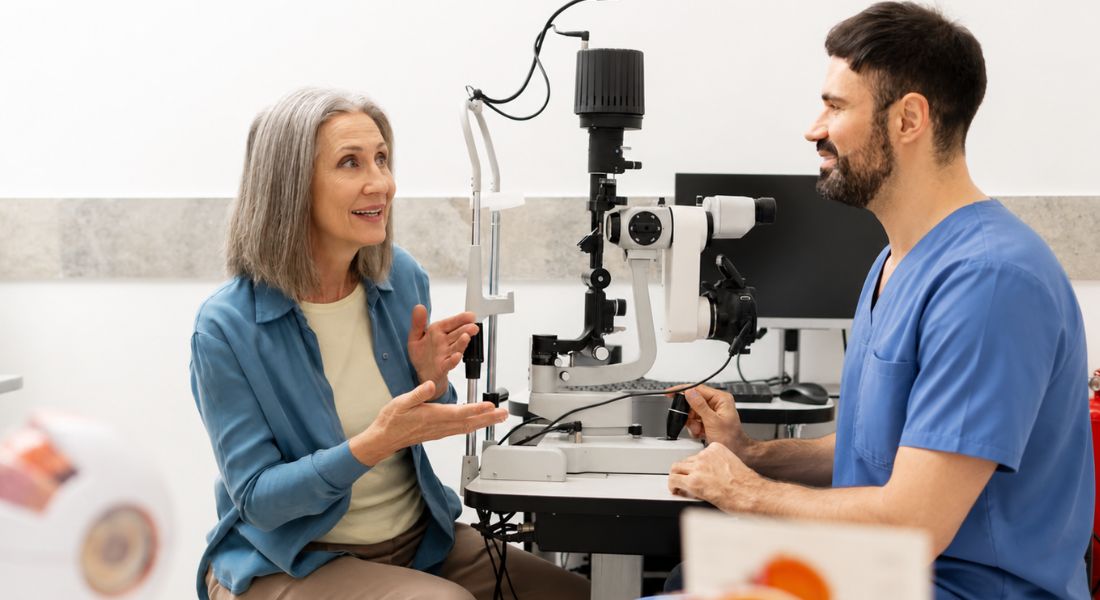
One of the most promising applications of artificial intelligence (AI) is its potential to improve early screening for glaucoma. If you are at risk, AI systems can analyse large volumes of eye scans and patient records quickly, helping to identify early signs of disease. This may support earlier referral, faster treatment, and better long-term protection for your vision.
Community screening programmes may also benefit from this technology. If you take part in such programmes, AI can help identify whether you require further eye examinations. This could improve access to early diagnosis for you and others in the wider population.
Earlier identification supports faster treatment for you if glaucoma is detected. This allows you to start management sooner, which may help preserve your vision and reduce the risk of long-term damage. As AI continues to develop, screening processes are expected to become even more accurate and efficient for your benefit.
Reducing Diagnostic Errors
Even experienced eye specialists can sometimes miss the earliest signs of glaucoma, particularly when the changes are very subtle. If you are being assessed for glaucoma, AI may provide an additional layer of analysis that helps identify findings requiring closer attention.
Rather than replacing your ophthalmologist, AI acts as a second layer of review by analysing eye scans and highlighting potential abnormalities. This gives your clinician another source of information to consider when evaluating your results and making a diagnosis.
By supporting clinical decision-making, AI has the potential to improve overall diagnostic accuracy and reduce the risk of missed or delayed diagnoses. As these technologies continue to evolve, you can expect them to play an increasingly valuable role in helping protect your long-term vision.
AI and Risk Prediction
If you have glaucoma or are at risk of developing it, you may find that artificial intelligence can help assess your condition in more detail and estimate your future risk. AI can analyse large amounts of clinical data and may identify patterns that are not immediately obvious to you. This can help highlight risks that you might not notice during routine assessments.
By assessing factors such as your eye scans, visual field results, and clinical history, AI may help determine whether you need closer monitoring or earlier intervention. This allows your ophthalmologist to create a care plan that is better suited to you and your specific risk profile, supporting more personalised decision-making for you.
As this technology continues to develop, you can expect AI to play a greater role in supporting glaucoma care for you. It can assist clinicians in making more informed decisions for you by highlighting subtle changes over time. This can help you receive more personalised care over the long term.
Telemedicine and Remote Diagnosis

If you are being monitored for glaucoma, you may notice that eye care is increasingly being delivered through telemedicine. This approach allows you to access specialist advice without always needing to attend a clinic in person. It is becoming especially important in improving access to eye care in remote or underserved areas. When combined with artificial intelligence (AI), telemedicine can also support the remote analysis of eye scans, helping clinicians make quicker and more informed decisions about your eye health.
- Telemedicine Expands Access to Eye Care: If you live far from a specialist clinic, telemedicine can make it easier for you to receive expert eye assessments. You may be able to have your condition reviewed without travelling long distances.
- AI Can Support Remote Analysis of Eye Scans: Your eye scans can be uploaded and analysed using AI systems that help detect possible signs of glaucoma. This may allow specialists to review your results more efficiently.
- Remote Diagnosis Connects You to Specialists: If you are in an area with limited access to ophthalmologists, telemedicine can help connect you with experienced specialists. This ensures you can still receive expert input on your condition.
- Earlier Detection May Be Possible for You: With faster remote assessment, you may benefit from earlier identification of glaucoma changes. This can support timely referral and treatment when needed.
- Telemedicine Is Becoming More Widely Used: If you follow developments in healthcare, you will see that more clinics are adopting remote eye care services. This growing trend aims to improve access and convenience for patients like you.
Telemedicine and AI together are transforming how glaucoma is diagnosed and monitored. If you are part of a remote care pathway, you may find it easier to access specialist input and ongoing follow-up. Over time, these advances are expected to improve both the speed and accessibility of eye care services, helping protect vision more effectively for patients like you.
Limitations of AI in Glaucoma
Although artificial intelligence offers exciting possibilities for glaucoma diagnosis, it is not without limitations. If you are considering how AI may influence your eye care, it is important to understand that these systems rely heavily on the quality and diversity of the data used to train them.
If the training data is limited, incomplete, or biased, the accuracy of AI may be affected, particularly when assessing patients from different populations or with unusual eye conditions. This is why researchers continue to validate and refine AI systems before they are introduced into routine clinical practice.
Human expertise remains essential throughout the diagnostic process. While AI can support your ophthalmologist by providing additional analysis, you can expect all important clinical decisions to continue being made by experienced eye specialists who interpret the results within the context of your overall eye health.
Ethical Considerations
The growing use of artificial intelligence in healthcare raises several important ethical questions. If you are comfortable with AI being used to support your care, you also need reassurance that your personal health information is handled safely and securely. Protecting patient privacy and data security remains a top priority.
Researchers are also working to make AI systems more transparent so that clinicians can better understand how they reach their conclusions. This helps ensure that you and your healthcare team can have confidence in the recommendations provided by these technologies.
Although AI can support clinical decision-making, it does not replace medical professionals. Your ophthalmologist remains responsible for making the final diagnosis and recommending the most appropriate treatment, while ethical guidelines continue to evolve alongside advances in AI technology.
Clinical Validation and Trials
Before artificial intelligence tools can be introduced into routine glaucoma care, they must undergo rigorous clinical testing. If you are considering how AI may be used in the future, you should know that these systems are carefully evaluated to ensure they are safe, accurate, and effective before they are used to support your care.
Several research studies are currently assessing AI-based glaucoma detection systems in hospitals and eye clinics. By testing these technologies in real-world settings, researchers can determine how well they perform across different patient groups. This helps ensure that you receive reliable assessments, regardless of your individual circumstances.
Clinical trials are an essential part of developing new medical technologies. As more evidence becomes available, you can expect AI systems to become increasingly refined, and you can have greater confidence that any technology used to support your glaucoma diagnosis has been thoroughly tested before becoming part of routine clinical practice.
AI Compared with Traditional Diagnosis
Artificial intelligence is not designed to replace traditional methods of diagnosing glaucoma. Instead, it works alongside clinical examinations, imaging scans, and visual field tests to support your ophthalmologist in making accurate and informed decisions about your eye health.
By combining AI with the knowledge and experience of an eye specialist, you can benefit from both advanced technology and expert clinical judgement. AI can analyse large amounts of data quickly, while your ophthalmologist considers your medical history, symptoms, and examination findings before making a diagnosis.
This collaborative approach is gaining strong support within the research community. As AI technology continues to improve, you can expect it to become an increasingly valuable tool that enhances, rather than replaces, the care you receive from your ophthalmologist.
Global Access to Eye Care
If you are concerned about glaucoma, you may find it encouraging that artificial intelligence (AI) is being explored as a way to improve access to eye care worldwide. In many regions, specialist ophthalmology services are limited, and AI has the potential to help identify people who may be at risk earlier. This could make it easier for you to receive timely assessment and referral, even if you do not have immediate access to a specialist clinic. However, while the technology is promising, its full benefit depends on continued improvements in healthcare systems, training, and infrastructure.
- AI May Improve Access to Glaucoma Diagnosis: If you live in an area with limited eye care services, AI tools may help identify early signs of glaucoma risk. This could allow you to be referred for specialist assessment sooner.
- Earlier Detection Can Help Protect Your Vision: If glaucoma is identified early for you, treatment can begin sooner. This may help reduce the risk of long-term or irreversible vision loss.
- Underserved Communities May Benefit Most: If you are in a region with fewer eye care professionals, AI could play an important role in bridging the gap. You may find it easier to access initial screening and follow-up care.
- Infrastructure and Training Are Essential for You: For AI systems to work effectively in your care, healthcare providers must have the right equipment and training. Without this, the accuracy and reliability of results may be affected.
- Global Rollout Will Take Time: Even though AI is advancing quickly, widespread access will take time to develop. As systems improve, you may gradually benefit from better screening and earlier detection in the future.
Global access to eye care is an important focus of modern glaucoma research. If you are at risk, future developments in AI may help make diagnosis and monitoring more accessible and efficient for you. Over time, these improvements could play a key role in reducing preventable vision loss worldwide.
Future Improvements in AI Technology
Artificial intelligence technology is continuing to evolve at a remarkable pace. If you benefit from AI-supported eye care in the future, you can expect these systems to become faster, more accurate, and more widely available, helping clinicians diagnose glaucoma with even greater confidence.
Researchers are also developing multi-modal AI systems that combine imaging scans, genetic information, and clinical data into a single analysis. By bringing together several sources of information, these technologies may provide you with more precise assessments and support more personalised glaucoma care.
The future of AI in ophthalmology looks highly promising. As research continues to advance, you can expect AI to play an even greater role in supporting earlier diagnosis, improving treatment planning, and helping you receive more accurate and individualised eye care.
The Role of Clinicians in the AI Era
Even as artificial intelligence becomes more advanced, clinicians will continue to play the central role in your glaucoma care. While AI can support decision-making by analysing large amounts of data, it cannot replace the experience, knowledge, and clinical judgement that your ophthalmologist brings to every consultation.
Your ophthalmologist interprets AI findings alongside your symptoms, medical history, examination results, and individual risk factors. This personalised approach helps ensure that you receive a diagnosis and treatment plan that is tailored to your specific needs rather than relying on technology alone.
Human expertise will remain essential as AI continues to evolve. As these technologies become more widely used, you can expect AI to work as a valuable support tool, while your ophthalmologist remains responsible for making the final clinical decisions and providing safe, effective, and compassionate care.
Seeking Specialist Care

If you are concerned about glaucoma or believe you may be at risk, arranging a professional eye examination is one of the most important steps you can take to protect your vision. Even if you have not noticed any symptoms, you should not delay seeking advice, as glaucoma often develops silently in its early stages.
Although artificial intelligence can support the diagnostic process, it does not replace a comprehensive assessment by an experienced ophthalmologist. Your specialist will evaluate your eye health, interpret your test results, and recommend the most appropriate investigations or treatment based on your individual needs.
Early detection gives you the best chance of preserving your vision and slowing the progression of glaucoma. By attending regular eye examinations and following your ophthalmologist’s advice, you can take an active role in protecting your long-term eye health.
FAQs:
- How is artificial intelligence used in glaucoma diagnosis?
Artificial intelligence analyses eye scans, optic nerve images, and visual field test results to identify patterns linked to glaucoma. It helps support ophthalmologists by providing additional insights that may improve the accuracy and speed of diagnosis. - Can AI detect glaucoma earlier than traditional methods?
Research suggests that AI may be able to identify subtle changes in the eye that are difficult to detect during routine examinations. This could support earlier diagnosis, giving you a better chance of starting treatment before significant vision loss occurs. - Will AI replace ophthalmologists in diagnosing glaucoma?
No. AI is designed to support ophthalmologists rather than replace them. Your specialist will always interpret your test results, assess your overall eye health, and make the final diagnosis and treatment recommendations. - What types of eye tests can AI analyse?
AI can analyse several types of eye examinations, including optical coherence tomography (OCT) scans, retinal images, optic nerve photographs, and visual field tests. Combining this information helps provide a more detailed assessment of your eye health. - How accurate is AI in detecting glaucoma?
Many studies have shown promising results, with AI achieving high levels of accuracy when analysing eye images. However, these systems still require further clinical validation and should always be used alongside expert clinical assessment. - Can AI predict how glaucoma may progress?
Yes, researchers are developing AI systems that can estimate your risk of disease progression by analysing imaging results, eye pressure measurements, and other clinical information. This may help your specialist create a more personalised monitoring plan. - What are the limitations of AI in glaucoma diagnosis?
AI depends on high-quality data and careful training to perform accurately. It may be less reliable if the data is incomplete or biased, which is why human oversight remains essential throughout the diagnostic process. - How could AI improve access to glaucoma screening?
AI has the potential to support large-scale screening programmes by quickly identifying people who may be at risk of glaucoma. This could help you receive an earlier referral to a specialist, particularly in areas where access to eye care is limited. - Is AI currently used in routine glaucoma care?
Some AI technologies are already being introduced into clinical practice and research settings, but many are still undergoing evaluation. As further studies confirm their safety and effectiveness, you can expect AI to become more widely integrated into glaucoma care. - Why should you still see a glaucoma specialist?
Although AI is becoming a valuable diagnostic tool, it cannot replace the expertise of an experienced ophthalmologist. If you are concerned about glaucoma or have noticed changes in your vision, a comprehensive eye examination remains the best way to receive an accurate diagnosis and appropriate treatment.
Final Thoughts on Artificial Intelligence in Glaucoma Diagnosis
Artificial intelligence is rapidly reshaping the way glaucoma is detected and managed, offering you the potential for earlier, faster and more accurate diagnosis. By analysing complex data such as OCT scans, optic nerve images and visual field tests, AI can help highlight subtle changes that may be difficult to detect during a standard clinical examination. This added layer of analysis supports ophthalmologists in making more informed decisions, particularly in the early stages when glaucoma is often symptomless but most treatable.
Despite these advances, AI is not a replacement for specialist care. Your ophthalmologist remains central to diagnosis and treatment, using their clinical expertise to interpret results in the context of your overall eye health. As research continues to evolve, AI is expected to become an even more powerful support tool in screening, risk prediction and long-term monitoring. If you’re exploring whether glaucoma treatment in London could benefit you, get in touch with us at Eye Clinic London to schedule your consultation.
Reference:
- Tham, Y.C., Li, X., Wong, T.Y., Quigley, H.A., Aung, T. and Cheng, C.Y. (2014) Global prevalence of glaucoma and projections of glaucoma burden through 2040: A systematic review and meta-analysis. Ophthalmology, 121(11), pp. 2081–2090. Available at: https://pubmed.ncbi.nlm.nih.gov/24974815/
- Ji, P.X., Ramalingam, V., Balas, M., Pickel, L. and Mathew, D.J. (2024) Artificial Intelligence in Glaucoma: A New Landscape of Diagnosis and Management. Journal of Clinical and Translational Ophthalmology, 2(2), pp. 47–63. Available at: https://www.mdpi.com/2804096
- Lan, C.H., Chiu, T.H., Yen, W.T. and Lu, D.W. (2025) Artificial Intelligence in Glaucoma: Advances in Diagnosis, Progression Forecasting, and Surgical Outcome Prediction. International Journal of Molecular Sciences, 26(10), Article 4473. Available at: https://www.mdpi.com/1422-0067/26/10/4473
- Barão, R.C., Hemelings, R., Abegão Pinto, L., Pazos, M. and Stalmans, I. (2024) Artificial intelligence for glaucoma: state of the art and future perspectives. Current Opinion in Ophthalmology, 35(2), pp. 104–110. Available at: https://pubmed.ncbi.nlm.nih.gov/38018807/
- Nunez, R., Harris, A., Ibrahim, O. and colleagues (2022) Artificial Intelligence to Aid Glaucoma Diagnosis and Monitoring: State of the Art and New Directions. Photonics, 9(11), Article 810. Available at: https://pmc.ncbi.nlm.nih.gov/articles/PMC9934292/