
Can Glaucoma Affect Your Balance or Increase Fall Risk? (Explained)

2026-02-02T06:52:04+00:00

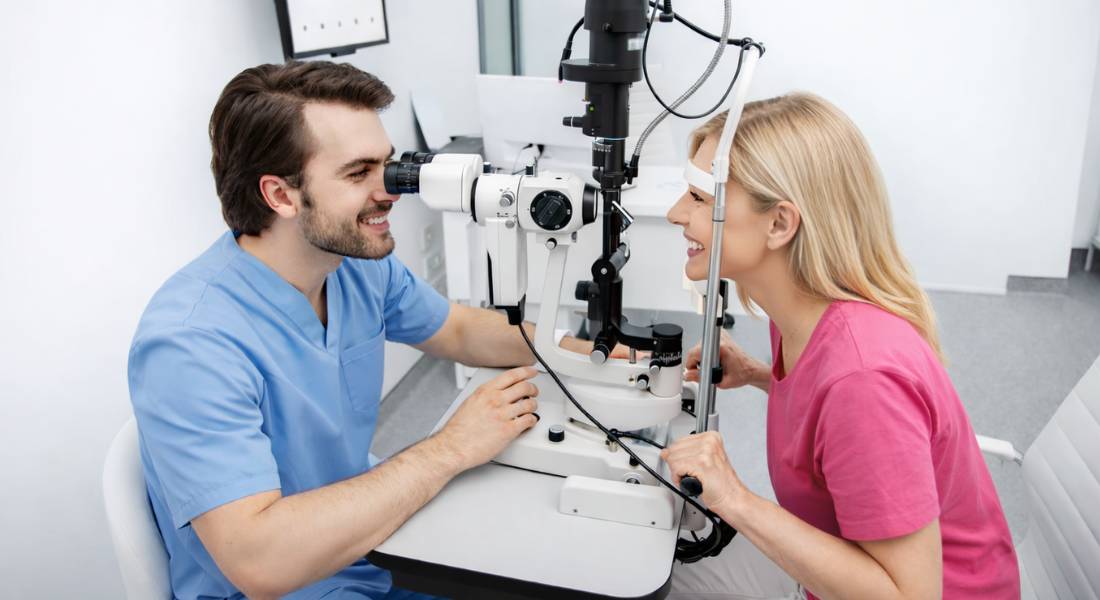
Glaucoma is often thought of as a condition that only affects your vision, but it can have wider effects on your daily life. As it progresses, it may quietly influence your balance and how safe you feel when moving around. These changes are not always obvious at first.  Your eyes play an important role in helping you stay balanced and aware of your surroundings. When glaucoma affects your vision, especially at the edges, it can make judging distances and spotting hazards more

Can Glaucoma Affect Your Balance or Increase Fall Risk? (Explained)2026-02-02T06:52:04+00:00

Why Eye Floaters Are More Noticeable in Bright Light (Explained)

2026-01-30T10:25:54+00:00

You may notice eye floaters much more clearly when you step into bright sunlight or look at a white wall. This sudden increase in visibility can feel alarming, especially if floaters were barely noticeable before. We understand why brighter light can make it seem as though the problem is getting worse. We often reassure you that this change is usually optical rather than pathological. Bright environments increase contrast inside the eye, which makes existing floaters easier to detect. The floaters

Why Eye Floaters Are More Noticeable in Bright Light (Explained)2026-01-30T10:25:54+00:00

Can Dry Eye Be Caused by Hormonal Changes? (Research Guide)

2026-01-30T09:48:10+00:00

Hormones quietly regulate many systems in your body, and your eyes are no exception. They influence tear production, eyelid function, and the stability of the ocular surface. When hormone levels fluctuate, this delicate balance can be disrupted, making your eyes more prone to dryness, irritation, or the feeling of a foreign body.  Many people notice dry eye symptoms around menopause, thyroid disorders, or other hormonal changes, and these experiences are real. Research confirms that hormonal shifts can significantly affect tear film quality

Can Dry Eye Be Caused by Hormonal Changes? (Research Guide)2026-01-30T09:48:10+00:00

Why Artificial Tears Sometimes Stop Working in Dry Eye Disease (Guide)

2026-01-30T09:42:25+00:00

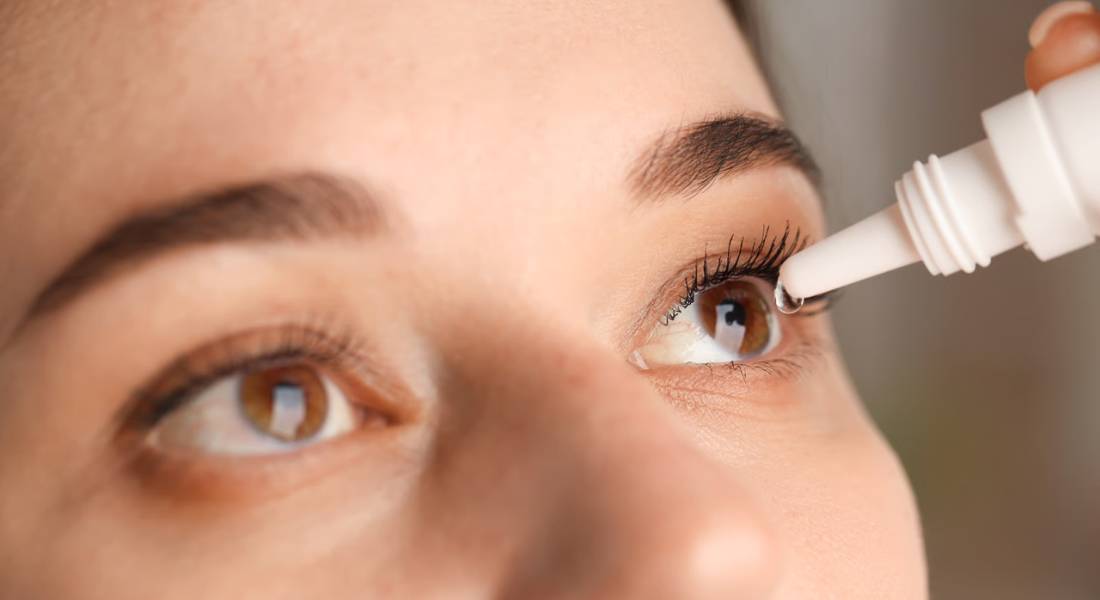
Artificial tears are usually the first thing you try when dry eye symptoms appear. They are easy to buy, simple to use, and marketed as a quick solution to discomfort. In the early stages, you often feel genuine relief, with less dryness, irritation, or grittiness. That initial improvement can make it seem like the problem is under control.  Over time, though, the effect often starts to fade. The burning sensation slowly returns, and your eyes may feel sore again soon after applying the

Why Artificial Tears Sometimes Stop Working in Dry Eye Disease (Guide)2026-01-30T09:42:25+00:00

Why Dry Eye Symptoms Can Fluctuate From Day to Day (Explained)

2026-01-29T10:34:11+00:00

Dry eye is often described as a chronic condition, yet many people notice that their symptoms change from one day to the next. You may feel relatively comfortable one day and significantly irritated the next, even without changing your routine. This unpredictability can be confusing and frustrating.  Dry eye symptoms are not static because the tear film is highly sensitive to internal and external influences. Small changes in environment, behaviour, or inflammation can shift tear stability quickly. Understanding this helps explain why symptoms fluctuate rather than

Why Dry Eye Symptoms Can Fluctuate From Day to Day (Explained)2026-01-29T10:34:11+00:00

Evaporative vs Aqueous Deficient Dry Eye (Guide)

2026-01-29T10:40:17+00:00

Dry eye is often spoken about as a single condition, but this oversimplification creates confusion. You may be told you have dry eye without any explanation of what type is involved. We see that this lack of clarity frequently leads to ineffective treatment and persistent symptoms. We now understand that dry eye exists in distinct subtypes, each with a different underlying cause. You are affected in different ways depending on which part of the tear film is disrupted. Identifying the

Evaporative vs Aqueous Deficient Dry Eye (Guide)2026-01-29T10:40:17+00:00

LASIK and Contrast Sensitivity: What the Evidence Says

2026-01-29T10:39:04+00:00

When people think about LASIK, they usually focus on visual sharpness measured on an eye chart. Seeing 20/20 is often considered the ultimate goal. However, visual quality involves more than just reading letters clearly.  Contrast sensitivity describes how well you can distinguish objects from their background, especially in low-light or low-contrast situations. This includes driving at night, seeing faces in dim lighting, or navigating foggy or rainy conditions. For many patients, this aspect of vision matters just as much as clarity. 

LASIK and Contrast Sensitivity: What the Evidence Says2026-01-29T10:39:04+00:00

The Biomechanics of the Cornea in LASIK: What Patients Should Know

2026-01-28T09:26:55+00:00

LASIK reshapes the cornea to correct vision, but the success of the procedure depends on more than laser accuracy alone. If you are considering LASIK, understanding corneal biomechanics helps you see why strength, stability, and healing matter just as much as achieving clear vision. These factors influence both safety and long-term results.  The cornea is not simply a transparent surface. It is a load-bearing structure designed to maintain shape while constantly resisting pressure from inside the eye. LASIK works within these natural limits,

The Biomechanics of the Cornea in LASIK: What Patients Should Know2026-01-28T09:26:55+00:00

LASIK Enhancement: Why and When Touch-Ups Are Needed

2026-01-28T10:03:15+00:00

Some patients are often surprised when a LASIK enhancement is suggested years after their initial surgery. You might feel puzzled if your vision was excellent at first but has slowly changed over time. Understanding why enhancements exist can help ease any unnecessary worry.  It’s important to know that a LASIK enhancement doesn’t mean your original surgery failed. Eyes heal, age, and respond to treatment in different ways, so changes over time are completely natural. Even though modern laser vision correction is highly precise, your biology still

LASIK Enhancement: Why and When Touch-Ups Are Needed2026-01-28T10:03:15+00:00

Understanding Higher-Order Aberrations After LASIK (Clinical Guide)

2026-01-28T09:39:23+00:00

LASIK surgery is designed to correct refractive errors such as short-sightedness, long-sightedness, and astigmatism, helping you see clearly without relying on glasses or contact lenses. Most people achieve excellent results after treatment. However, good vision is not just about reading letters on an eye chart.  After LASIK, you may notice subtle changes in how your vision feels, particularly in low-light conditions. This can include glare, halos, or starbursts around lights, as well as reduced contrast at night. These effects are

Understanding Higher-Order Aberrations After LASIK (Clinical Guide)2026-01-28T09:39:23+00:00