


Can Parkinson’s Medication Affect Your Eyes and Vision?

You may notice blurred vision, double vision, hallucinations or other visual changes while taking Parkinson’s medication. You should know that Parkinson’s itself can also affect your eyes, so a new symptom is not always caused by your medicine.
Parkinson’s itself can contribute to dry eyes, reduced blinking and difficulty focusing, while medicines such as amantadine and some anticholinergics can cause additional or more specific eye problems. You should discuss persistent or unusual changes with your doctor, and seek prompt eye assessment if your symptoms are sudden, painful or significantly affect your vision.
Why Can Parkinson’s and Its Treatments Both Affect Vision?
You may experience visual changes because Parkinson’s can affect the brain pathways that control eye movements, focusing, colour, contrast and spatial awareness. You may also develop dry eyes from reduced blinking, difficulty reading because of impaired eye coordination or double vision.
Your Parkinson’s medicines can also influence visual perception and eye function by changing nervous system signalling. You should discuss persistent or unusual symptoms with your Parkinson’s specialist and eye care professional, as both the condition and your treatment may contribute.
Parkinson’s Disease vs Medication-Related Visual Changes
| Visual Problem | Parkinson’s Disease Itself | Parkinson’s Medication | Important Point |
| Dry or irritated eyes | Reduced blinking and ocular-surface changes can contribute to dry eye | Some medicines may worsen dryness in certain people | Persistent pain, redness or reduced vision should not simply be assumed to be dry eye |
| Double vision | Convergence insufficiency and eye-movement abnormalities can cause diplopia, particularly during close work | Some medicines, including levodopa preparations and dopamine agonists, can also be associated with diplopia | New or persistent double vision should be assessed because there are many possible causes |
| Blurred vision | Dry eye, focusing difficulties and other Parkinson’s-related visual changes can cause blurring | Pramipexole, amantadine, procyclidine and other medicines can cause blurred vision | Timing in relation to medication doses or dose changes can provide useful clues |
| Visual hallucinations | Parkinson’s itself, cognitive changes and impaired vision can contribute | Dopaminergic treatment can increase the likelihood of hallucinations in some people | New or worsening hallucinations should be discussed with the Parkinson’s team rather than medication being changed independently |
| Cloudy or hazy vision | Not a typical specific feature of Parkinson’s itself | Amantadine can rarely cause corneal oedema | Persistent hazy vision while taking amantadine requires eye assessment |
| Difficulty focusing on near objects | Eye-movement and convergence problems can interfere with reading | Anticholinergic medicines such as procyclidine can interfere with accommodation | Symptoms should be interpreted alongside the medicine being used |
| Dim or narrowing vision when standing | Parkinson’s can itself involve autonomic dysfunction and orthostatic hypotension | Levodopa preparations and dopamine agonists can also lower blood pressure | Recurrent light-headedness or near-fainting should be discussed with the Parkinson’s team |
What Eye Problems Can Parkinson’s Disease Cause Without Medication?
You may develop dry eyes because Parkinson’s can reduce how often you blink, while changes in eye movements can make tracking objects, shifting your gaze or reading more difficult. You may also notice reduced contrast or difficulty distinguishing certain colours, particularly in low light.
You should know that these visual changes can occur even when your medication has not changed. You should discuss persistent symptoms with your doctor, as adjusting your Parkinson’s treatment may not always improve problems caused by the condition itself.
Why Are Dry Eyes Common in Parkinson’s?
You may develop dry, gritty or burning eyes because Parkinson’s can reduce how often you blink, allowing your tears to evaporate more quickly. You may also notice intermittent blurred vision that improves after blinking, while irritation can sometimes make your eyes water excessively.
You should know that dry eyes are not always caused by your medication. You may benefit from lubricating eye drops, but persistent redness, pain or changes in your vision should be assessed by an optometrist or ophthalmologist.
Can Parkinson’s Cause Double Vision?

You may develop double vision if Parkinson’s affects how well your eyes work together, particularly when you look at something close. You may notice two images while reading or using your phone, and symptoms can sometimes vary with tiredness or changes in your Parkinson’s symptoms.
You should tell your specialist if you develop persistent or new double vision, especially after a medication change. You may benefit from treatments such as prism lenses if convergence problems are responsible, but other causes should also be considered.
Can Levodopa Affect Your Eyesight?
You may notice changes in your visual symptoms when your Parkinson’s symptoms are better or worse controlled. Levodopa can also be associated with visual side effects in some people. However, you may also experience blurred or double vision, abnormal eye movements or other visual side effects in some cases.
You should tell your specialist if visual symptoms repeatedly appear after taking or increasing levodopa. You should not reduce or stop levodopa yourself, as your Parkinson’s treatment needs to be adjusted carefully to avoid worsening your symptoms.
Can Dopamine Agonists Cause Blurred or Double Vision?
You may experience blurred or double vision while taking dopamine agonists such as pramipexole, ropinirole or rotigotine. You may also notice difficulty focusing or reduced visual sharpness, which can affect reading, walking or driving.
You should tell your Parkinson’s specialist if these symptoms begin after starting the medicine or changing your dose. You should not assume the medication is always responsible, as Parkinson’s itself and other eye conditions can also cause visual changes.
Are Visual Hallucinations Caused by Parkinson’s or Its Medication?
You may experience visual hallucinations because of Parkinson’s itself, its medicines, or a combination of both. You may see people, animals, shapes or movements that are not actually present, and poor vision, illness, sleep problems or changes in thinking can make these experiences more likely.
You should tell your Parkinson’s team if hallucinations begin or become more frequent, particularly after a medication change. Your treatment may need reviewing, but you should not change or stop your medicines without medical advice.
UK Guidance Note
NICE recommends reviewing medicines that may contribute to orthostatic hypotension. If Parkinson’s medicines may have triggered hallucinations or delusions, a specialist may consider reducing the dose while taking account of symptom severity and possible withdrawal effects.
Medicine-specific warnings should be considered when reviewing visual symptoms. Amantadine has been associated with rare corneal oedema, while anticholinergic medicines such as procyclidine may require caution in people with certain eye conditions.
Can Amantadine Cause Eye Problems?
You may experience blurred or hazy vision while taking amantadine, although serious eye complications are uncommon. Rarely, amantadine can cause corneal oedema, where the clear front surface of your eye becomes swollen and your vision may seem misty or blurred.
You should tell your doctor or eye specialist if you develop persistent or new visual changes while taking amantadine. You should not stop the medicine yourself, as your medical team can assess your eyes and decide whether treatment needs to be changed.
Evidence Note
Visual problems in Parkinson’s are often multifactorial rather than being caused by medication alone. Research has identified dry eye, reduced blinking, problems with eye movements, reduced contrast and colour discrimination, double vision and visual hallucinations among the visual difficulties associated with Parkinson’s disease itself.
Medication can add further effects. Amantadine, for example, can rarely cause corneal oedema, while dopamine agonists and levodopa-containing medicines can contribute to symptoms such as blurred vision, double vision, hallucinations or low blood pressure. This is why the timing of symptoms, medication changes and a detailed eye examination can all be important when identifying the cause.
How Can Anticholinergic Parkinson’s Medicines Affect Vision?
You may experience blurred vision while taking anticholinergic medicines such as procyclidine, particularly when focusing on close tasks such as reading. These medicines can affect your eye’s normal focusing mechanism and may require extra caution if you have glaucoma or a risk of increased eye pressure.
You should make sure your doctor knows if you have glaucoma before starting treatment. If you develop sudden severe eye pain, redness, rapidly blurred vision, headache or halos around lights, you should seek urgent medical assessment rather than assuming it is a routine medication side effect.
Can Parkinson’s Medication Affect Your Eyelids or Eye Movements?

You may experience involuntary eyelid closure or difficulty opening your eyes because Parkinson’s can affect the muscles and brain pathways controlling your eyelids and eye movements. Medicines such as co-careldopa can also occasionally contribute to blepharospasm, so the cause is not always easy to identify.
You should tell your specialist if eyelid problems interfere with reading, walking or everyday activities. Your treatment may need reviewing, and selected cases may benefit from treatments such as botulinum toxin.
Can Low Blood Pressure From Parkinson’s Medication Affect What You See?
You may notice blurred, dim or narrowing vision when your blood pressure drops after standing up, particularly while taking Parkinson’s medicines such as co-careldopa or pramipexole. You may also feel light-headed, weak or close to fainting, and these episodes can increase your risk of falling.
You should tell your Parkinson’s specialist if these symptoms happen regularly, as your medication, fluid intake or blood pressure may need reviewing. If your vision remains blurred or changed after the dizziness settles, you should have your eyes assessed rather than assuming low blood pressure is the cause.
How Can You Tell Whether Medication or Parkinson’s Is Causing the Problem?
You may not always be able to tell whether your visual symptoms are caused by Parkinson’s or your medication. The timing and type of symptoms can provide useful clues, such as changes after starting a medicine, increasing a dose or when medication starts to wear off.
You should also consider other eye conditions such as cataracts, glaucoma or macular degeneration, which can cause similar problems. If the cause is unclear, your Parkinson’s specialist may review your treatment and an ophthalmologist can check for eye changes that cannot be identified from symptoms alone.
Could Your Vision Problem Be Completely Unrelated to Parkinson’s?
You may develop common eye conditions such as cataracts, glaucoma, macular degeneration, dry eye or changes in your glasses prescription alongside Parkinson’s. You should not assume every visual change is caused by Parkinson’s or its medication, as separate eye problems can occur at any time.
You should have regular eye examinations to check for treatable conditions that may affect your vision. If you notice sudden flashes, new floaters, a shadow across your vision or other significant changes, you should seek prompt eye assessment.
Which Visual Symptoms Need Urgent Assessment?
You should seek urgent medical assessment if you develop sudden loss of vision, a painful red eye with worsening sight, or sudden persistent double vision. New flashes, a sudden increase in floaters or a dark curtain across your vision can also indicate a serious retinal problem.
You should also seek prompt eye assessment if your vision becomes persistently cloudy while taking amantadine, as corneal oedema needs to be excluded. If visual symptoms occur with weakness, facial drooping or speech problems, you should seek emergency help rather than assuming they are related to Parkinson’s.
Should You Stop Parkinson’s Medication If Your Eyesight Changes?
You should not stop or change your Parkinson’s medication yourself because your eyesight has changed. Sudden changes can worsen your movement symptoms, although some visual side effects may require a medicine to be reduced, replaced or stopped under medical supervision.
You should tell your Parkinson’s specialist when your symptoms occur in relation to your medication doses, as this can help guide a treatment review. If your visual symptoms are severe or sudden, you should seek urgent medical attention and tell the clinician which Parkinson’s medicines you take.
How Can an Eye Specialist Investigate Vision Changes in Parkinson’s?
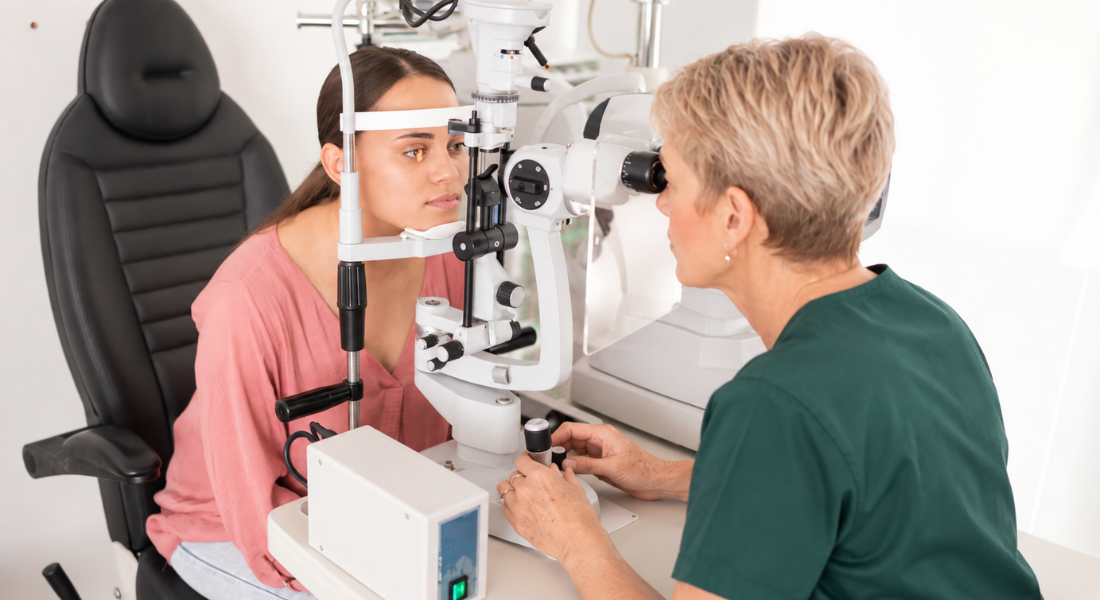
You may have several checks during an eye examination to find out whether your symptoms are related to your eyes, Parkinson’s or your medication. Your specialist may check your vision, glasses prescription, eye surface, cornea, cataracts, eye pressure, retina and optic nerve, while double vision may require tests of your eye alignment and movements.
You should bring an up-to-date list of your Parkinson’s medicines and, if possible, note when your visual symptoms occur in relation to each dose. This can help your eye specialist and Parkinson’s team understand whether your symptoms change as your medication starts working or wears off.
Myth vs Fact
| Myth | Fact |
| Every visual problem in Parkinson’s is caused by medication. | Parkinson’s disease itself can affect blinking, eye movements, contrast sensitivity, colour perception, spatial processing and visual perception. Medication is only one possible cause. |
| Blurred vision means your Parkinson’s medicine is damaging your eyes. | Not necessarily. Blurring may result from dry eye, focusing problems, low blood pressure, the underlying condition, medication or an unrelated eye problem. |
| Visual hallucinations always mean the medication dose is too high. | Hallucinations can be influenced by Parkinson’s itself, medication, cognitive changes, sleep problems, illness and impaired eyesight. Treatment should be reviewed individually. |
| Amantadine only causes harmless temporary blurring. | Most people do not develop serious eye problems, but amantadine can rarely cause corneal oedema and reduced visual acuity. Persistent hazy or blurred vision needs assessment. |
| All glaucoma is a problem for every Parkinson’s medicine. | The risk depends on the medicine and type of glaucoma. Procyclidine is specifically contraindicated in angle-closure glaucoma. |
| You should stop Parkinson’s medication immediately if your eyesight changes. | Do not independently stop or change Parkinson’s treatment. Abrupt or inappropriate changes can worsen symptoms, and your specialist should decide whether medication needs adjusting. |
Key Takeaways
- Parkinson’s disease itself can cause dry eye, reduced blinking, double vision, problems with eye movements, reduced contrast or colour perception and visual hallucinations.
- Parkinson’s medication can sometimes contribute to visual symptoms, so the cause is not always obvious from symptoms alone.
- Pramipexole and some other dopamine agonists can cause blurred vision or other visual disturbance and may also contribute to hallucinations or low blood pressure.
- Amantadine can rarely cause corneal oedema, which may produce persistent hazy or blurred vision and requires ophthalmic assessment.
- Anticholinergic medicines such as procyclidine can blur near vision and are unsuitable in people with angle-closure glaucoma.
- Hallucinations may result from Parkinson’s itself, medication, poor vision, illness, sleep disturbance or cognitive changes.
- Sudden vision loss, a painful red eye, persistent sudden double vision, or new flashes, numerous floaters or a curtain-like shadow require urgent assessment.
- Do not independently stop or change Parkinson’s medication because of an eye symptom. Your Parkinson’s team and eye specialist can decide whether treatment needs adjusting.
Frequently Asked Questions
- Can Parkinson’s medication affect your eyesight?
Yes, you may experience blurred vision, double vision, difficulty focusing or other visual changes while taking Parkinson’s medication. However, Parkinson’s disease itself can also affect your vision. - Can levodopa cause blurred or double vision?
Levodopa may sometimes cause blurred or double vision, abnormal eye movements or other visual effects. You should tell your specialist if these symptoms repeatedly occur after taking or increasing your dose. - Can dopamine agonists affect your vision?
Yes, medicines such as pramipexole, ropinirole and rotigotine may cause blurred or double vision or difficulty focusing. You should discuss new symptoms with your Parkinson’s specialist. - Can amantadine cause eye problems?
Amantadine can cause blurred or hazy vision and, rarely, corneal oedema. If your vision becomes persistently cloudy while taking amantadine, you should have your eyes assessed. - Can Parkinson’s medication cause visual hallucinations?
Yes, you may experience visual hallucinations because of Parkinson’s disease, its medication or a combination of both. You should tell your Parkinson’s team if you develop new or increasingly frequent hallucinations. - Can Parkinson’s cause dry eyes and double vision?
Yes, Parkinson’s can reduce blinking and cause dry, gritty or burning eyes. Changes in eye coordination can also cause double vision, particularly when you are reading or looking at something close. - Can anticholinergic Parkinson’s medicines cause blurred vision?
Yes, medicines such as procyclidine can cause blurred vision, particularly when you are focusing on nearby objects. You should seek urgent help if you develop severe eye pain, redness, rapidly blurred vision or halos around lights. - Can Parkinson’s medication affect your eyelids or eye movements?
Yes, Parkinson’s and medicines such as co-careldopa can sometimes contribute to involuntary eyelid closure or difficulty opening your eyes. Your specialist can assess the cause and discuss suitable treatment. - When should you seek urgent help for vision changes?
You should seek urgent assessment for sudden vision loss, a painful red eye, sudden persistent double vision, new flashes, a sudden increase in floaters or a dark curtain across your vision. - Should you stop your Parkinson’s medication if your eyesight changes?
No. You should not stop or change your Parkinson’s medication yourself. Tell your Parkinson’s specialist about your symptoms so your treatment can be reviewed safely.
Final Thoughts: Parkinson’s Medication and Your Eye Health
Parkinson’s disease and its medicines can both contribute to visual changes, including dry eyes, blurred or double vision, focusing difficulties and visual hallucinations. If you notice a new or persistent change in your eyesight, particularly after starting or changing medication, you should discuss it with your Parkinson’s specialist and have your eyes assessed where appropriate.
If you have concerns about your eyesight, the team at Eye Clinic London can provide a comprehensive eye assessment and work alongside your Parkinson’s team where appropriate.
References:
- Galletti, J.G. et al. (2022) ‘Ocular Surface Features in Patients with Parkinson Disease on and off Treatment: A Narrative Review’, International Journal of Molecular Sciences, 23(21), 12991. DOI: 10.3390/ijms232112991. Available at: https://www.mdpi.com/1422-0067/23/21/12991
- Zhang, Y. et al. (2023) ‘Visual dysfunction and Parkinson’s disease: current perspectives and future directions’, Cells, 12(8), 1126. DOI: 10.3390/cells12081126. Available at: https://www.mdpi.com/2073-4409/12/8/1126
- Kubo, S., Iwatake, A., Ebihara, N., Murakami, A. and Hattori, N. (2008) ‘Visual impairment in Parkinson’s disease treated with amantadine: case report and review of the literature’, Parkinsonism & Related Disorders, 14(2), pp. 166–169. DOI: 10.1016/j.parkreldis.2007.03.003. Available at: https://pubmed.ncbi.nlm.nih.gov/17509924/
- Gallagher, D.A., Parkkinen, L., O’Sullivan, S.S., Spratt, A., Shah, A., Davey, C.C. and Schrag, A. (2011) ‘Testing an aetiology-based classification of visual hallucinations in Parkinson’s disease’, Movement Disorders, 26(5), pp. 906–911. DOI: 10.1002/mds.23516. Available at: https://pubmed.ncbi.nlm.nih.gov/21484886/
- Armstrong, R.A. (2017) ‘Visual dysfunction in Parkinson’s disease’, Parkinson’s Disease, 2017, Article ID 5091741. DOI: 10.1155/2017/5091741. Available at: https://pmc.ncbi.nlm.nih.gov/articles/PMC5091042/
- Savitt, J.M. and Aouchiche, R. (2020) ‘Management of Visual Dysfunction in Patients with Parkinson’s Disease’, Journal of Parkinson’s Disease, 10(4), pp. 1395–1409. DOI: 10.3233/JPD-202103. Available at: https://pmc.ncbi.nlm.nih.gov/articles/PMC7592686/