


How Did Sammy Davis Jr. Lose His Eye?
Sammy Davis Jr. lost his left eye after a serious car accident near San Bernardino, California, on 19 November 1954. The impact threw his face against the steering wheel, causing severe damage to the eye that doctors could not save.
Historical accounts report that Davis’s damaged left eye was surgically removed after the accident, and he later wore an artificial eye. If you experienced a similar injury today, you would receive urgent specialist treatment, although severe trauma can still result in permanent sight loss. You may also need time to adjust to changes in depth perception and your visual field after losing vision in one eye.
What Happened to Sammy Davis Jr. in 1954?
Sammy Davis Jr. was 28 when a car accident near San Bernardino, California, on 19 November 1954 changed his life. He had been travelling from Las Vegas to Los Angeles when his face struck the steering wheel during the collision, severely injuring his left eye.
The accident left him dependent on his right eye for vision. If you suddenly lost sight in one eye, you would need to adjust to changes in depth perception and your visual field. Davis also had to adapt to these visual changes while continuing to perform demanding dance routines and move quickly across a stage.
How Was His Left Eye Injured?
Sammy Davis Jr.’s injury was far more serious than a simple black eye. During the crash, Davis’s face struck the steering wheel, causing severe facial trauma and extensive damage to his left eye. You can see how a high-impact injury like this can cause extensive damage.
A severe eye injury can damage the cornea, lens, retina or optic nerve. You may retain some vision after serious trauma, but extensive damage can make this impossible. If you suffered a similar injury, you would need emergency eye treatment to assess whether the eye could be saved.
What Is Severe Ocular Trauma?
Ocular trauma is the medical term for an injury affecting your eye or the surrounding structures. If you have a mild injury, you might experience a corneal abrasion or bruising, while severe trauma can rupture or penetrate the eyeball and cause permanent sight loss.
An open-globe injury occurs when the cornea or sclera is torn through completely. You can also suffer serious damage from a blunt impact, which may injure the iris, lens, retina or optic nerve. If you experience severe eye pain, a sudden change in vision or an injury involving a sharp or high-speed object, you should seek emergency medical attention immediately. Davis’s accident was an extreme example of ocular trauma, ultimately resulting in the permanent loss of his left eye.
Why Can a Car Accident Cause Permanent Sight Loss?
Your eyes are partly protected by the bony sockets in your skull, but a high-impact collision can still cause severe damage. If you are thrown forwards, your face may strike the steering wheel, dashboard or glass, potentially injuring the cornea, lens, retina or other internal structures.
You can also suffer retinal tears, bleeding or damage to the optic nerve, which carries visual information from your eye to your brain. If you experience serious trauma, modern surgery may repair some injuries, but you should know that severe damage can still cause permanent sight loss. In Davis’s case, the injury was considered so extensive that his left eye was removed rather than reconstructed.
Why Would Doctors Ever Need to Remove an Injured Eye?
Eye removal may be necessary after exceptionally severe trauma when the globe cannot be reconstructed, or later when an eye remains blind and painful or develops other serious complications. However, poor vision alone does not automatically mean that an injured eye should be removed.
You may still be able to save an injured eye when meaningful recovery is possible, so removal is not automatic. Doctors assess the extent of damage, pain and the condition of the surrounding tissues before deciding what is safest. In Davis’s case, historical accounts indicate that the left-eye injury was severe enough for the eye to be surgically removed. Concern about the remaining eye was also reported historically, although modern evidence has changed how specialists assess this risk.
What Operation Did Sammy Davis Jr. Have?
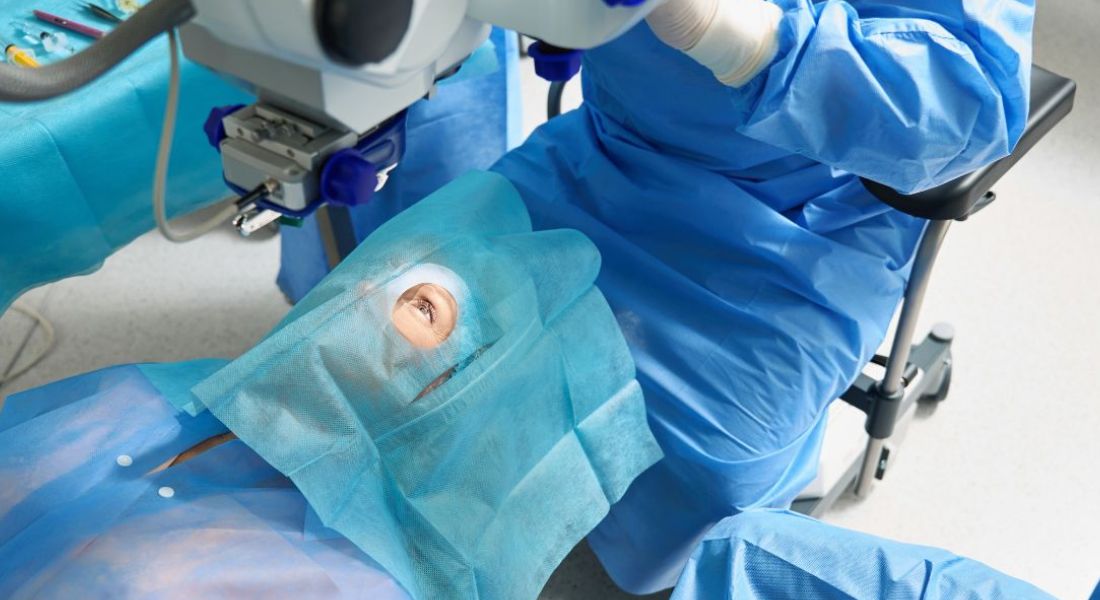
Historical accounts confirm that Davis’s left eye was surgically removed after the 1954 accident. The available historical records do not reveal the exact surgical technique, so you should not assume whether it was enucleation or evisceration.
Today, enucleation removes the entire eyeball, while evisceration removes the internal contents and leaves the outer shell. If you needed this surgery, your doctor would choose the most appropriate option based on the damage and surrounding tissues. Davis’s eye was considered too severely injured to preserve.
Was There a Risk to Davis’s Other Eye?
Doctors were concerned about protecting Sammy Davis Jr.’s healthy right eye after his left eye was badly injured. You may hear that using one eye too much can weaken the other, but this is not supported by modern ophthalmology.
A rare condition called sympathetic ophthalmia can affect both eyes after severe eye trauma. You should know that it is uncommon, and you would not normally damage your healthy eye simply by relying on it more.
Evidence Note
Historically, doctors sometimes removed an eye with devastating trauma partly because of concern about sympathetic ophthalmia. Davis himself later recalled being told that removal was necessary because of a possible threat to his remaining sight.
Modern evidence makes this issue more nuanced. A 2024 meta-analysis estimated the rate of sympathetic ophthalmia at approximately 0.12% after open-globe injury. It found no evidence that primary enucleation or evisceration reduces the risk compared with primary repair, although the certainty of the available evidence was low. Modern specialists therefore assess whether an eye can be reconstructed and do not routinely remove a traumatised eye simply as prophylaxis against sympathetic ophthalmia.
What Is an Artificial Eye?
An artificial eye, or ocular prosthesis, is designed to improve appearance rather than restore vision. If you need one, it can be custom-made to match your natural eye in shape and colour.
After enucleation or evisceration, an orbital implant is often used to restore volume within the socket, while the visible ocular prosthesis is fitted later over the healed tissues. The exact approach depends on the surgery and the individual socket.
Why Did Sammy Davis Jr. Wear an Eye Patch?
Sammy Davis Jr. wore an eye patch after his 1954 accident while his left eye area healed after surgery. You may have seen photographs of him wearing it during 1955, including while performing. If you had undergone similar surgery, an eye patch could provide a simple way to protect the area during recovery.
A definitive ocular prosthesis is generally fitted after the socket has had time to heal and swelling has settled. Modern post-operative care may include a temporary conformer or other covering during healing, depending on the surgery performed.
How Does Losing One Eye Change Your Vision?
Losing one eye does not mean you lose half of your vision. Your overall visual field becomes narrower, and you may initially find it harder to judge distances because you no longer have binocular depth perception.
If you suddenly lose an eye, you may misjudge steps, reach inaccurately or struggle to pour liquids. You can gradually adapt by relying more heavily on monocular depth cues such as relative size, overlap, perspective and movement, although true stereoscopic depth perception does not return.
How Vision Changes After Losing One Eye
| Vision change | What you may notice |
| Depth perception | Judging distances accurately may initially become more difficult |
| Visual field | Your field of vision may be narrower on the side of the lost eye |
| Reaching for objects | You may initially reach too far or not far enough |
| Steps and kerbs | Changes in height or distance may be harder to judge at first |
| Pouring liquids | Aligning a cup, bottle or container may require more concentration |
| Movement and positioning | You may need to turn your head more to check the affected side |
| Long-term adaptation | Your brain can increasingly use clues such as size, shadows, overlap and movement to judge distance |
Can You Still Judge Depth With Only One Eye?
Yes. If you lose one eye, you no longer have binocular depth perception, but you can still judge distance using clues such as object size, shadows, overlap and movement.
You may initially struggle with steps or reaching for objects, but your brain can adapt over time. If you perform activities such as dancing, you would need to rely more on these visual clues to judge your position and nearby objects.
How Might Losing an Eye Affect a Dancer or Performer?
Suddenly losing one eye can make steps, stage levels and distances harder to judge at first. You may also need to turn your head more often because your visual field is narrower on the affected side.
For a dancer or performer, you would need to adapt to these changes while moving around the stage. Davis clearly adapted, continuing to sing, dance and perform successfully for decades after losing his left eye.
Did Losing an Eye End Sammy Davis Jr.’s Career?
No. Sammy Davis Jr. continued his career after losing his left eye, releasing his first album in 1955 and making his Broadway debut in Mr. Wonderful in 1956.
Losing one eye can initially affect depth perception and spatial awareness, but people can adapt over time by relying more heavily on monocular visual cues. Davis successfully adapted to these changes and continued his singing, dancing and performing career for decades.
Why Is Protecting the Remaining Eye So Important?
If you rely on one eye for useful vision, protecting your remaining eye becomes especially important. Simple precautions can help reduce the risk of avoidable injury.
- Regular eye checks: Routine examinations can help detect problems affecting your remaining eye early.
- Protective eyewear: Wear suitable eye protection during DIY, gardening, sports or other higher-risk activities.
- Everyday use: Reading, watching television and normal visual tasks will not wear out your healthy eye.
- Early assessment: Seek prompt advice if you notice pain, injury or changes in vision.
Taking extra care of your remaining eye can help protect your independence and long-term vision.
What Does Rehabilitation After Losing an Eye Involve?
Rehabilitation after losing an eye involves healing, adapting to changes in vision and adjusting to your new appearance. You may need time to get used to reduced depth perception and a narrower visual field, but your brain can gradually adapt.
An ocularist can create an artificial eye to match your remaining eye. If you lose an eye suddenly, you may also benefit from support from eye specialists, rehabilitation teams and counselling services while you adjust.
When Does an Eye Injury Need Emergency Treatment?

You should seek emergency medical help if a sharp object pierces your eye, something hits it at high speed or your vision changes after an injury. You should also get urgent care if you have severe pain, bleeding, light sensitivity, nausea or difficulty opening or moving the eye.
If you suspect a serious eye injury, do not rub or press on your eye or try to remove an embedded object yourself. You may not be able to see the full extent of the damage, so you would need urgent specialist assessment to protect your remaining vision.
UK Guidance Note
A serious eye injury should not be managed through a routine eye appointment first. The NHS advises A&E or 999 for penetrating injuries, high-speed impacts, sight changes after trauma and other severe symptoms.
Where an open-globe injury is suspected, modern ophthalmic care focuses on protecting the eye from further pressure or trauma, urgent specialist assessment and prompt surgical repair when appropriate. Severe trauma can still lead to permanent sight loss despite modern treatment.
Myth vs Fact
| Myth | Fact |
| Sammy Davis Jr. was born with vision in only one eye. | No. He lost his left eye after a serious car accident on 19 November 1954. |
| Losing one eye means losing exactly half of your vision. | No. You lose stereoscopic depth perception and some binocular visual-field advantage, but a healthy remaining eye can still provide detailed vision and people often adapt substantially. |
| Using your remaining eye more will wear it out. | No. Reading, television and normal visual tasks do not weaken a healthy eye simply because the other eye has been lost. |
| An artificial eye restores vision. | No. An ocular prosthesis primarily restores appearance; it does not provide sight. |
| A badly injured eye must always be removed to protect the other eye. | No. Modern evidence does not show a clear sympathetic-ophthalmia prevention benefit from routine primary eye removal, and specialists try to preserve a repairable eye when appropriate. |
| A penetrating eye injury can wait if the pain is not severe. | No. A sharp object piercing the eye requires emergency assessment through A&E or 999. |
Key Takeaways
- Sammy Davis Jr. lost his left eye after a car accident on 19 November 1954 near San Bernardino, California.
- Severe ocular trauma can permanently damage the eye even with modern emergency treatment.
- Losing one eye removes stereoscopic depth perception and narrows the available visual field, but many people adapt by using monocular depth cues.
- An ocular prosthesis can restore appearance after eye removal but cannot restore vision.
- Penetrating eye trauma, high-speed impact or any sight change after injury requires emergency assessment through A&E or 999.
Frequently Asked Questions
- How Did Sammy Davis Jr. Lose His Eye?
Sammy Davis Jr. lost his left eye after his face struck the steering wheel during a car accident in November 1954. The injury was so severe that doctors eventually removed the damaged eye. - What happened to Sammy Davis Jr.’s left eye?
The crash caused extensive trauma to his left eye and the surrounding tissues. Historical accounts indicate that the injury was severe enough for Davis’s left eye to be surgically removed. He later wore an artificial eye. - What is severe ocular trauma?
Severe ocular trauma refers to a serious injury affecting the eye or surrounding structures. If you suffer a high-impact injury, it can damage the cornea, lens, retina or optic nerve and may result in permanent sight loss. - Why might doctors remove a severely injured eye?
Eye removal may be necessary when severe trauma leaves the globe impossible to reconstruct, or when an eye later remains blind and painful or develops other serious complications. Poor visual potential alone does not automatically mean that the eye must be removed. - Did Sammy Davis Jr. wear an artificial eye?
Yes, Davis eventually used an artificial eye after his left eye was removed. An ocular prosthesis can improve appearance, but it does not restore sight. - Why did Sammy Davis Jr. wear an eye patch?
He wore an eye patch while the injured area was healing after surgery. If you undergo similar surgery, a patch or temporary covering may help protect the area during recovery. - Can you see normally with only one eye?
You can continue to see detailed vision with one healthy eye, but your overall visual field is reduced and you lose stereoscopic depth perception. Over time, you can adapt by relying more heavily on monocular cues such as movement, relative size, overlap and perspective. - Could losing an eye affect your ability to dance?
Losing an eye can initially make judging distances, steps and stage positions more difficult. Davis adapted to these changes and continued performing as a singer and dancer for many years. - How can you protect your remaining eye?
You should have regular eye examinations and wear suitable protective eyewear during activities where an eye injury could occur. Simple precautions can be particularly important when you rely on one eye for most of your useful vision. - When should an eye injury be treated as an emergency?
You should seek emergency medical attention after a penetrating injury, high-speed impact or sudden change in vision. Do not rub or press the injured eye or try to remove an embedded object yourself.
Final Thoughts: Living With Vision Loss After Eye Trauma
Sammy Davis Jr.’s experience shows how a severe eye injury can lead to permanent vision loss and significant changes in how you see depth and your surroundings. If you experience an eye injury, getting urgent specialist care can be crucial, particularly when your vision changes or you have severe pain or bleeding. With appropriate treatment and rehabilitation, you can gradually adapt to changes caused by losing vision in one eye.
If you have any concerns about your eyesight, you can contact our team at Eye Clinic London for a comprehensive assessment and guidance on the next steps that may be appropriate for your eye health.
References:
- Mayer, C.S., Reznicek, L., Baur, I.D. and Khoramnia, R. (2021) ‘Open globe injuries: classifications and prognostic factors for functional outcome’, Diagnostics, 11(10), 1851. Available at: https://www.mdpi.com/2075-4418/11/10/1851
- Blanch, R.J., McMaster, D. and Patterson, T.J. (2024) ‘Management of open globe injury: a narrative review’, Eye, 38(16), pp. 3047–3051. Available at: https://pmc.ncbi.nlm.nih.gov/articles/PMC11543839
- Steeves, J.K.E., González, E.G. and Steinbach, M.J. (2008) ‘Vision with one eye: a review of visual function following unilateral enucleation’, Spatial Vision, 21(6), pp. 509–529. Available at: https://pubmed.ncbi.nlm.nih.gov/19017480
- Aggarwal, H., Kumar, P., Eachempati, P. and Alvi, H.A. (2016) ‘Different intraorbital implant situations and ocular prosthetic rehabilitation’, Journal of Prosthodontics, 25(8), pp. 687–693. Available at: https://pubmed.ncbi.nlm.nih.gov/26447725
- Patterson, T.J. et al. (2024) ‘The risk of sympathetic ophthalmia associated with open-globe injury management strategies: a meta-analysis’, Ophthalmology, 131(5), pp. 557–567. Available at: https://www.sciencedirect.com/science/article/pii/S0161642023008874